
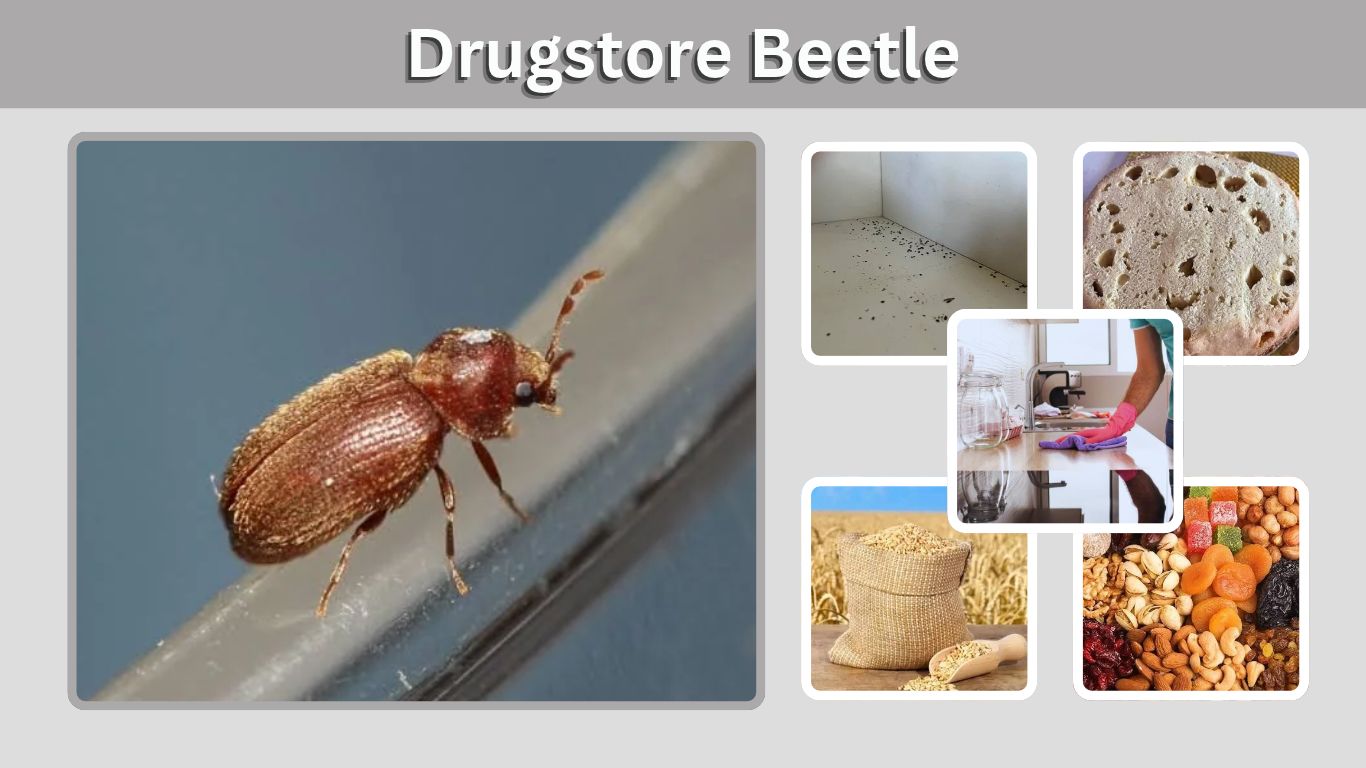
Drugstore beetles are tiny, reddish-brown insects commonly found in kitchens, pantries, bedrooms, and food storage areas. Despite their small size, these beetles can cause significant problems by infesting flour, cereals, spices, dried foods, and pet food. Their ability to reproduce inside stored products makes infestations difficult to eliminate without proper cleaning and inspection. Although drugstore beetles do not normally harm humans directly, they can contaminate household food supplies. Understanding their appearance, life cycle, feeding habits, and hiding places helps homeowners identify infestations and choose effective control methods.
What Is a Drugstore Beetle?
The drugstore beetle (Stegobium paniceum) is a small, reddish-brown beetle belonging to the family Ptinidae. It is also called the biscuit beetle or bread beetle because it frequently infests dried food products.
These insects occur worldwide and thrive in buildings where suitable food is available. Their larvae feed within stored materials, while adults can fly and spread to other locations.
Why Are They Called Drugstore Beetles?
Drugstore beetles received their common name because they historically infested dried medicinal materials stored in pharmacies.
However, they are not limited to medicines. They consume numerous dry products, including grains, spices, biscuits, and animal feed.
Drugstore Beetle Identification
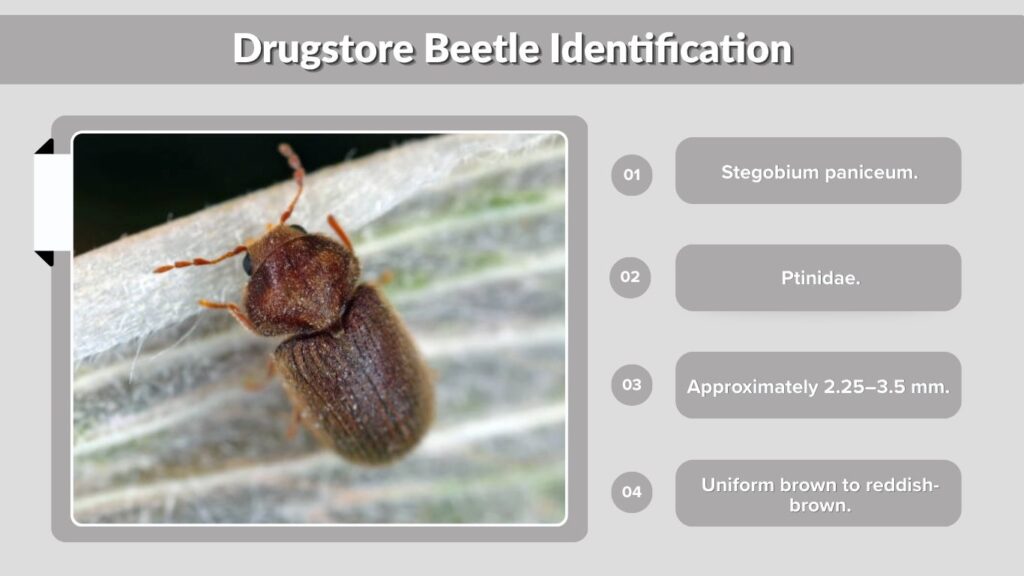
Drugstore beetles are often mistaken for other small brown household insects. Their rounded bodies, downward-facing heads, and fine grooves on their wing covers provide useful identification features.
What Does a Drugstore Beetle Look Like?
- Scientific Name: Stegobium paniceum
- Family: Ptinidae
- Body Length: Approximately 2.25–3.5 mm
- Body Color: Uniform brown to reddish-brown
- Body Shape: Small, oval, and cylindrical
- Head: Usually hidden beneath the thorax when viewed from above
- Antennae: End in a distinctive three-segmented club
- Wing Covers: Fine longitudinal grooves and short hairs
- Flight Ability: Adults can fly
- Habitat: Pantries, kitchens, warehouses, and food storage areas
What Do Drugstore Beetle Larvae Look Like?
Drugstore beetle larvae are small, creamy-white grubs with brownish heads and tiny legs. Their bodies are curved into a C shape and covered with fine hairs.
Larvae usually remain hidden inside infested foods, making them harder to detect than adults. They cause most of the feeding damage.
Where Do Drugstore Beetles Come From?
Drugstore beetles commonly enter homes through infested packaged foods, dried herbs, spices, pet food, or other stored products.
Adult beetles can also fly through open windows and doors. Once inside, females lay eggs in suitable materials, allowing infestations to develop unnoticed.
Why Are Drugstore Beetles in My Bedroom?
Finding drugstore beetles in a bedroom does not necessarily mean they are breeding there.
Adult beetles are attracted to light and may fly toward bedroom windows or lamps from another part of the house.
However, hidden food, dried flowers, stored pet treats, or other susceptible materials can occasionally support an infestation.
Can Drugstore Beetles Live in Bathrooms?
Drugstore beetles sometimes appear in bathrooms after wandering or flying from nearby rooms.
Bathrooms are generally not their preferred breeding locations because they need suitable dry materials for larval development.
Repeated sightings should prompt an inspection of nearby cupboards, storage spaces, and food sources.
What Do Drugstore Beetles Eat?
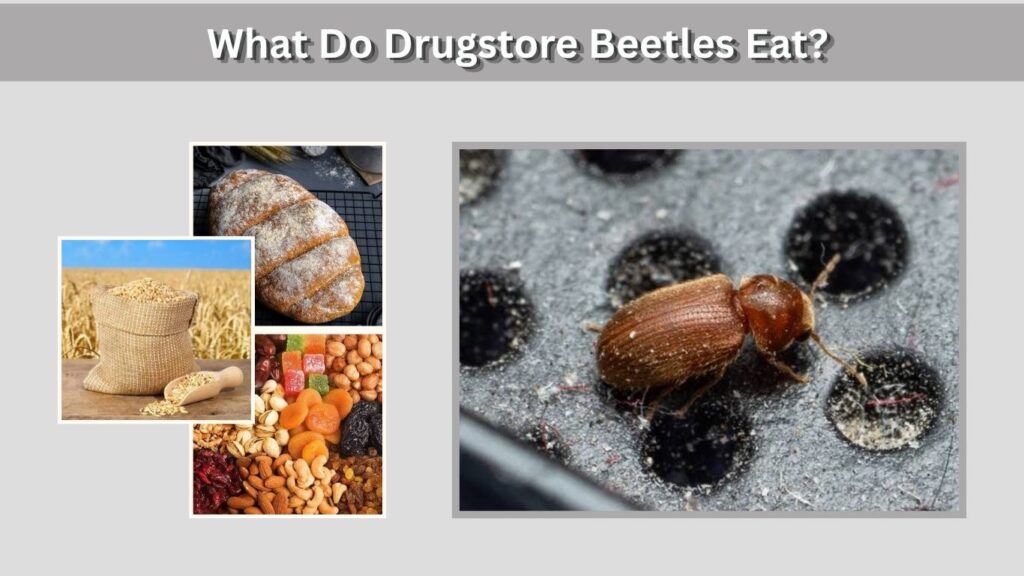
Drugstore beetles feed on a wide range of dried plant and animal materials. Their larvae are particularly damaging because they tunnel through stored products while developing.
Common food sources include flour, bread, cereals, pasta, spices, dried fruits, seeds, chocolate, and dry pet food.
They may also damage dried flowers, bookbindings, and certain nonfood materials.
Can Drugstore Beetles Eat Through Plastic?
Drugstore beetles can penetrate some thin or poorly sealed food packaging. Adults may also chew exit holes while emerging from infested materials.
Storing vulnerable products in sturdy, airtight glass, metal, or hard-plastic containers helps prevent access.
Drugstore Beetle Life Cycle
Drugstore beetles undergo complete metamorphosis, passing through egg, larva, pupa, and adult stages.
Females lay eggs near suitable food. After hatching, larvae feed and grow within the material before pupating.
Development time varies depending on temperature, humidity, and food quality. Warm conditions generally allow faster development, enabling populations to increase indoors.
Signs of a Drugstore Beetle Infestation
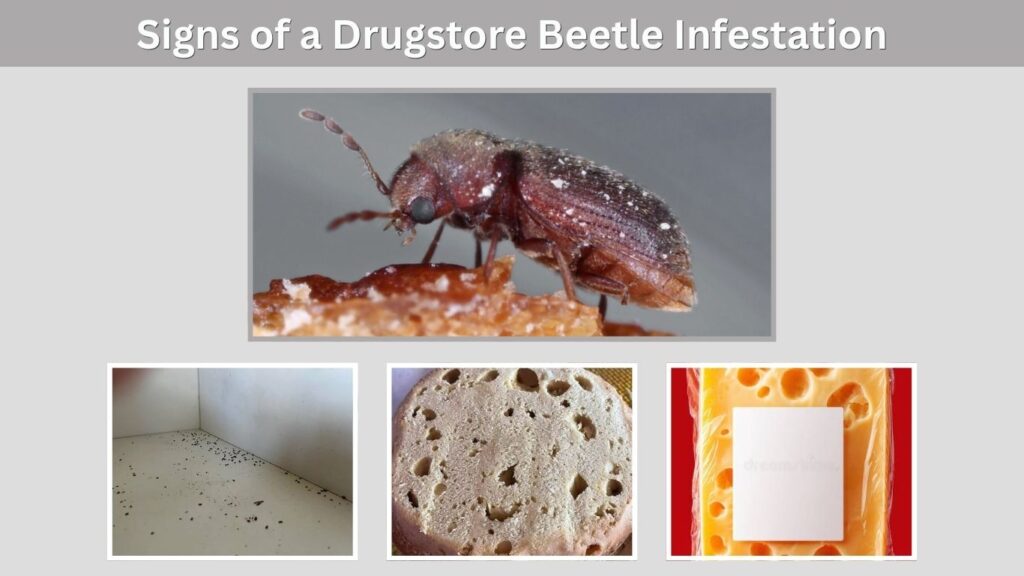
Drugstore beetle infestations often remain hidden until adult beetles emerge from contaminated food. Recognizing early warning signs can help prevent the insects from spreading throughout a home.
Common Signs of Infestation
- Small Brown Beetles: Tiny adults crawling on pantry shelves or countertops
- Flying Insects: Beetles gathering near windows and lights
- Food Packaging Holes: Small openings in bags or containers
- White Larvae: Cream-colored grubs inside stored products
- Food Debris: Fine particles and insect waste inside infested materials
- Damaged Dry Foods: Tunneling or unusual holes in biscuits and grains
- Repeated Sightings: Beetles appearing in several rooms over time
How to Get Rid of Drugstore Beetles
Eliminating drugstore beetles requires locating the infested food source and thoroughly cleaning affected storage areas.
Killing visible adult beetles alone will not solve the problem because eggs and larvae may remain hidden inside packaged materials.
Step-by-Step Drugstore Beetle Removal
- Inspect stored foods: Examine flour, cereals, spices, pasta, pet food, and other dry products for insects or damage.
- Discard infested materials: Seal contaminated products in bags and dispose of them outside.
- Vacuum storage areas: Clean shelves, corners, cracks, and crevices where insects or spilled foods may remain.
- Wash surfaces: Clean pantry shelves and allow them to dry completely before restocking.
- Store food securely: Transfer vulnerable products into sturdy, airtight containers.
- Monitor beetle activity: Check storage areas regularly for newly emerging insects.
Do Drugstore Beetle Traps Work?
Pheromone traps attract certain adult drugstore beetles and help identify or monitor infestations.
However, traps do not eliminate eggs and larvae hidden inside food products. They work best alongside inspection, cleaning, and proper storage.
Drugstore Beetle Insecticide and Extermination
Insecticides are generally unnecessary for minor drugstore beetle infestations. Removing contaminated materials and eliminating food sources are usually more effective.
When infestations continue despite thorough cleaning, professional pest control may be appropriate.
Never spray insecticides directly onto food, dishes, or food-contact surfaces unless the product is specifically authorized for that application.
Drugstore Beetle vs. Similar Household Beetles
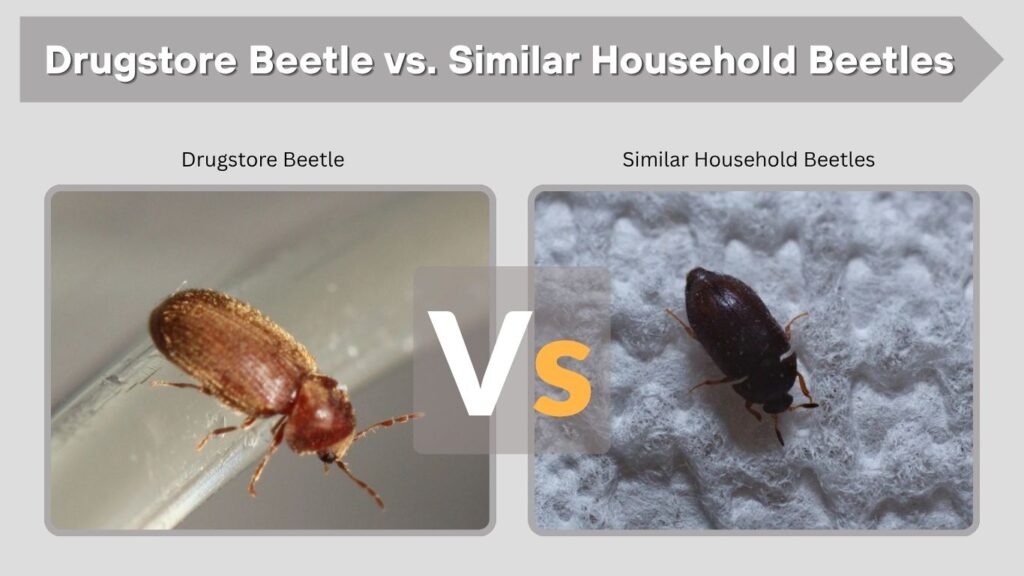
Drugstore beetles resemble cigarette beetles, carpet beetles, and occasionally bed bugs. However, their appearance and feeding behavior differ.
Drugstore Beetle vs. Cigarette Beetle
Drugstore beetles have grooved wing covers and antennae ending in three enlarged segments.
Cigarette beetles have smoother wing covers and saw-like antennae.
Both insects infest stored products and require similar sanitation-based control methods.
Drugstore Beetle vs. Bed Bug
Drugstore beetles have hard wing covers, rounded bodies, and the ability to fly.
Bed bugs are flatter, cannot fly, and feed on blood. Drugstore beetles do not feed on humans or cause bed bug-style infestations.
How to Prevent Drugstore Beetles
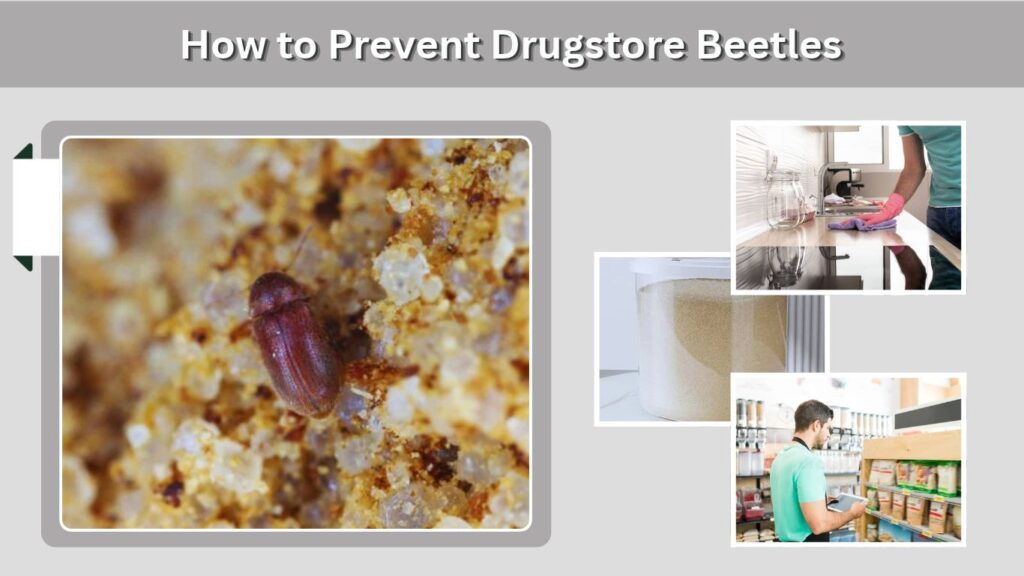
Preventing drugstore beetles mainly involves maintaining clean storage areas and reducing access to vulnerable products.
Drugstore Beetle Prevention Tips
- Use airtight containers: Store flour, cereals, and pet food securely.
- Inspect groceries: Check dry products before putting them into storage.
- Clean regularly: Remove crumbs and spilled food from shelves.
- Rotate supplies: Use older products before purchasing replacements.
- Avoid long-term storage: Do not leave unused dry food products forgotten in cupboards.
- Check pet food: Keep animal feed sealed and inspect it regularly.
FAQs
1. Are Drugstore Beetles Harmful to Humans?
Drugstore beetles do not normally bite, sting, or feed on humans. However, they can contaminate stored food with larvae, insect waste, and body fragments. Discarding infested products is recommended to maintain proper household food hygiene.
2. Do Drugstore Beetles Bite Humans?
No, drugstore beetles are not known to bite humans as part of their normal behavior. Their mouthparts are adapted for feeding on stored materials. If unexplained bites occur, another insect or medical cause should be investigated.
3. Can Drugstore Beetles Fly?
Yes, adult drugstore beetles can fly and frequently gather near windows or artificial lights. Their ability to fly allows them to spread between rooms. However, larvae remain associated with suitable food materials during development.
4. Does Vinegar Kill Drugstore Beetles?
Vinegar is not a reliable treatment for eliminating drugstore beetle infestations. Although it can help clean household surfaces, it does not consistently destroy hidden eggs or larvae. Removing contaminated food and vacuuming storage areas are more effective.
5. How Long Does It Take to Get Rid of Drugstore Beetles?
Elimination time depends on the infestation’s size and whether all breeding materials have been removed. Visible activity may decline after thorough cleaning, but remaining adults can continue appearing temporarily. Persistent infestations usually indicate an overlooked food source.
