
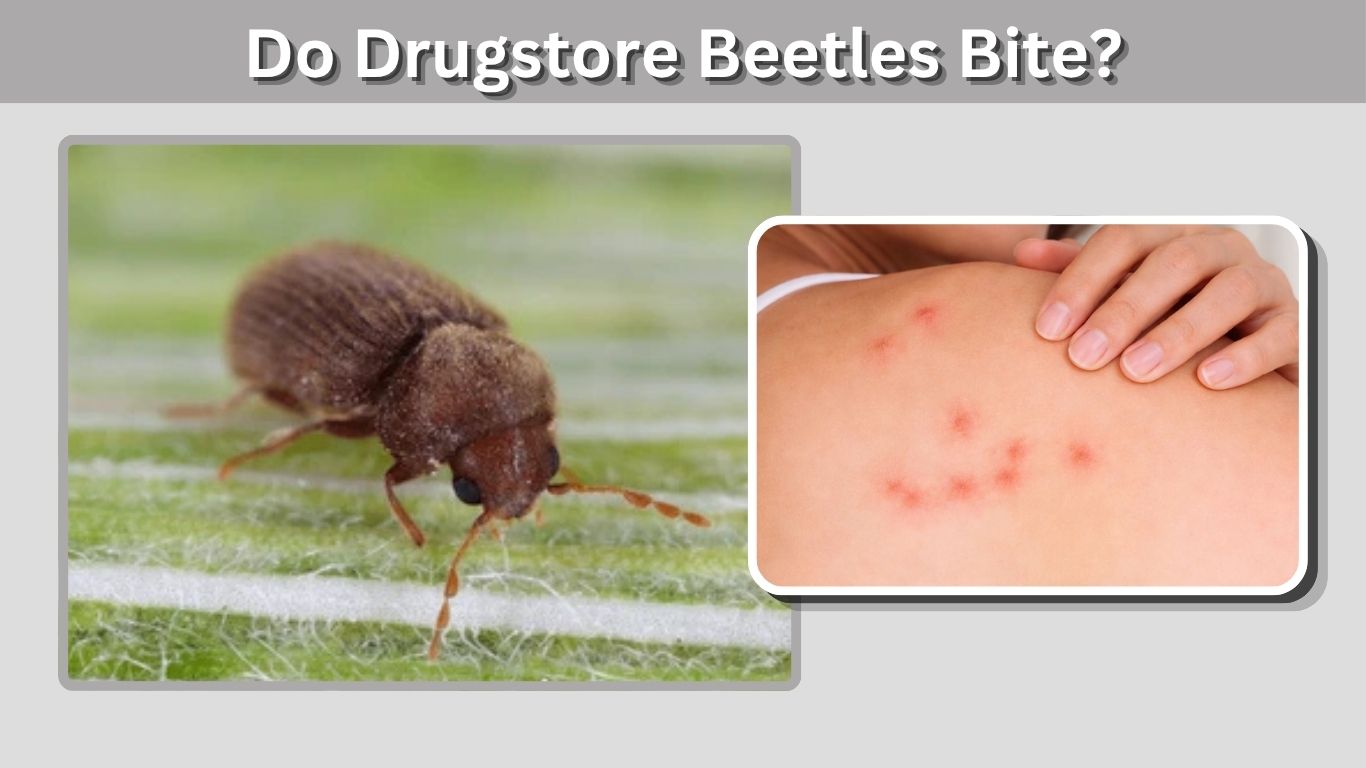
Drugstore beetles are tiny, reddish-brown insects commonly found in kitchens, pantries, bedrooms, and food storage areas. Because they occasionally appear on beds, furniture, or clothing, many homeowners wonder whether drugstore beetles bite humans. Although these insects resemble certain biting household pests, their feeding habits are completely different. Drugstore beetles primarily infest dried foods and stored materials rather than feeding on human skin or blood. Understanding their behavior, identification, potential health risks, and infestation signs can help you distinguish them from bed bugs and other insects. This guide explains everything you need to know.
Do Drugstore Beetles Bite Humans?
No, drugstore beetles (Stegobium paniceum) are not known to bite humans. These small pantry insects do not feed on blood or use people as food sources.
Unlike bed bugs, fleas, and mosquitoes, drugstore beetles have chewing mouthparts adapted for consuming dry organic materials.
Although they may crawl across human skin, they do not normally attack or bite people.
Can Drugstore Beetles Bite If Threatened?
Drugstore beetles are not aggressive insects. They usually attempt to escape when disturbed rather than defend themselves by biting.
Their tiny mandibles are designed for feeding on stored products, not penetrating human skin.
Finding one crawling on your arm or hand does not mean it intends to bite.
What Does a Drugstore Beetle Look Like?
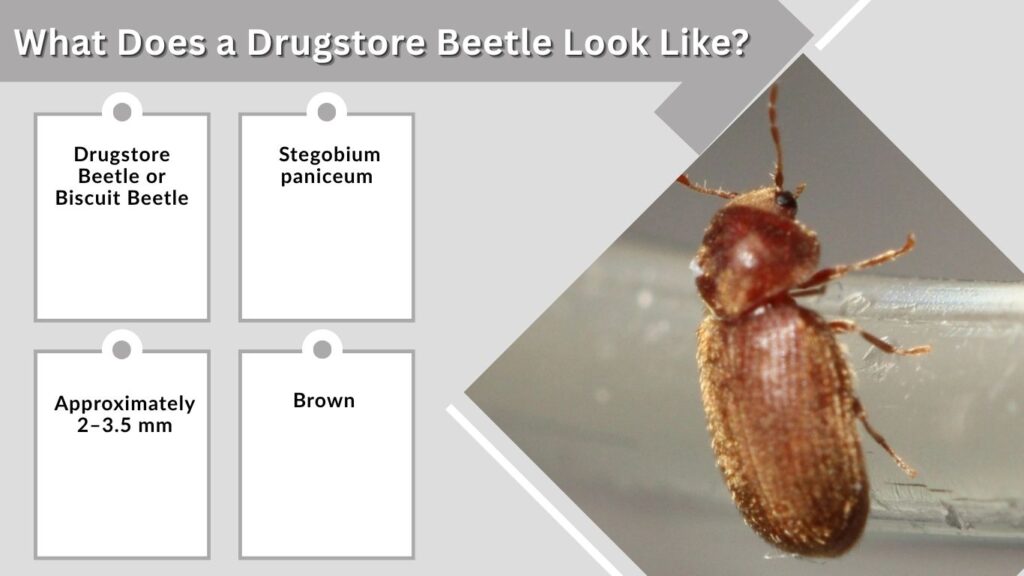
Drugstore beetles are small, oval insects belonging to the family Ptinidae. Their reddish-brown bodies and rounded thoraxes often make them resemble miniature brown seeds.
They can be confused with cigarette beetles, furniture beetles, and other pantry insects.
Drugstore Beetle Identification
- Common Name: Drugstore Beetle or Biscuit Beetle
- Scientific Name: Stegobium paniceum
- Family: Ptinidae
- Body Length: Approximately 2–3.5 mm
- Body Color: Brown to reddish-brown
- Body Shape: Small, oval, and cylindrical
- Head: Mostly hidden beneath the thorax
- Antennae: End in three enlarged segments
- Wings: Functional wings that allow adults to fly
- Habitat: Kitchens, pantries, bedrooms, and storage areas
Can Drugstore Beetles Fly?
Yes, adult drugstore beetles can fly. They often gather around windows, lamps, and other light sources.
Their flying ability allows them to move between rooms and search for suitable breeding materials.
However, their larvae remain associated with stored products during development.
Can Drugstore Beetles Cause Skin Irritation?
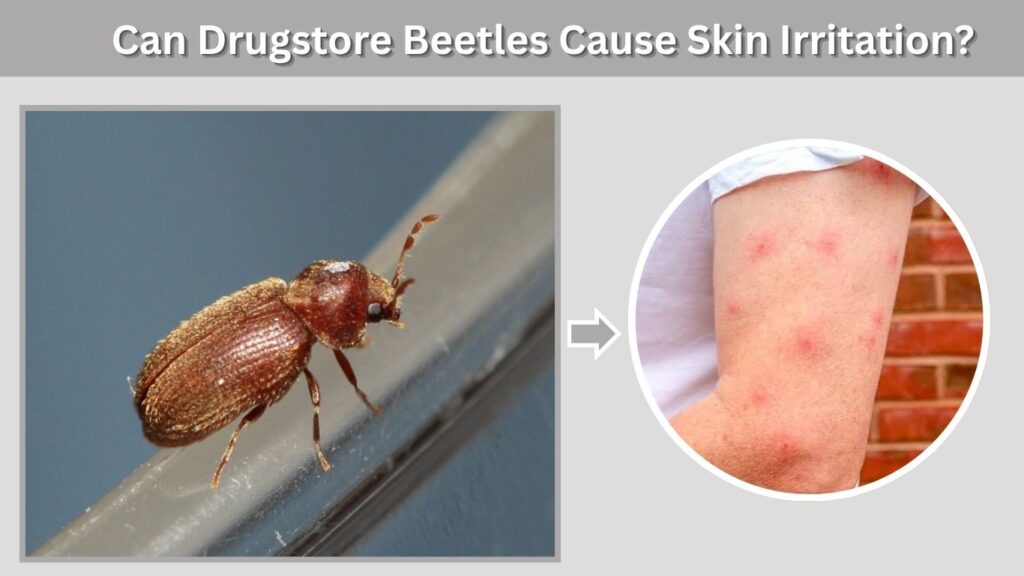
Drugstore beetles are not recognized as biting or stinging pests. Their presence does not normally cause skin irritation.
However, finding these insects near an itchy area may lead homeowners to assume they caused the symptoms.
Why Do I Have Bite-Like Marks Near Drugstore Beetles?
Skin redness, itching, or small bumps may result from unrelated insect bites or skin conditions.
Bed bugs, fleas, mosquitoes, allergic reactions, and contact dermatitis can produce similar symptoms.
Because different conditions resemble insect bites, identifying the insect and examining additional evidence is more reliable than relying on skin marks alone.
Drugstore Beetle vs. Bed Bug Bites
Drugstore beetles and bed bugs are sometimes confused because both are small, brown insects found indoors.
However, their feeding habits and physical appearances are significantly different.
How Are Drugstore Beetles Different From Bed Bugs?
Drugstore beetles have rounded bodies, hardened wing covers, and functional wings. They primarily infest dried food products and may fly toward artificial lights.
Bed bugs have flattened, oval bodies and cannot fly. They feed on blood and commonly hide around mattresses, bed frames, and furniture.
Bed bug bites may cause itchy bumps, although some people experience no visible reaction.
How Can You Identify Bed Bug Activity?
Bed bug infestations may leave dark fecal spots, shed skins, eggs, and living insects around sleeping areas.
However, these signs should be examined carefully because other household pests can also appear near beds.
Finding only drugstore beetles does not confirm a bed bug infestation.
What Bugs Look Like Drugstore Beetles and Bite?
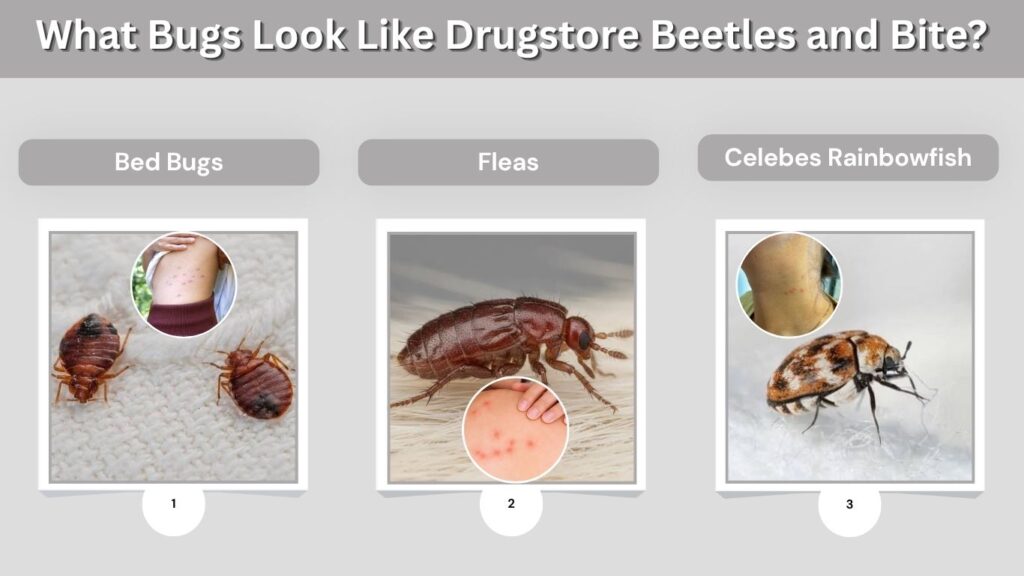
Several small household insects resemble drugstore beetles at first glance. Correct identification is essential because different pests require different treatments.
Common Insects That May Cause Confusion
- Bed Bugs: Flattened, brown, blood-feeding insects that may cause itchy bites.
- Fleas: Small, laterally flattened insects that jump and bite humans or animals.
- Carpet Beetles: Small beetles that do not bite, although larval hairs may irritate sensitive skin.
- Cigarette Beetles: Reddish-brown pantry insects that resemble drugstore beetles but do not normally bite.
- Spider Beetles: Small, rounded beetles that may resemble other pantry pests but are not typical biting insects.
Why Are Drugstore Beetles in My Bedroom?
Drugstore beetles commonly appear in bedrooms because adults can fly and are attracted to light.
They may enter through windows or travel from kitchens and pantries. Their presence does not necessarily indicate that they are breeding inside the bedroom.
Do Drugstore Beetles Live in Beds?
Drugstore beetles do not normally establish infestations in mattresses or feed on sleeping humans.
However, they may temporarily crawl across bedding or furniture while moving between rooms.
Stored snacks, dried flowers, pet treats, and other suitable materials can occasionally provide breeding sources near bedrooms.
Are Drugstore Beetles Dangerous to Humans?
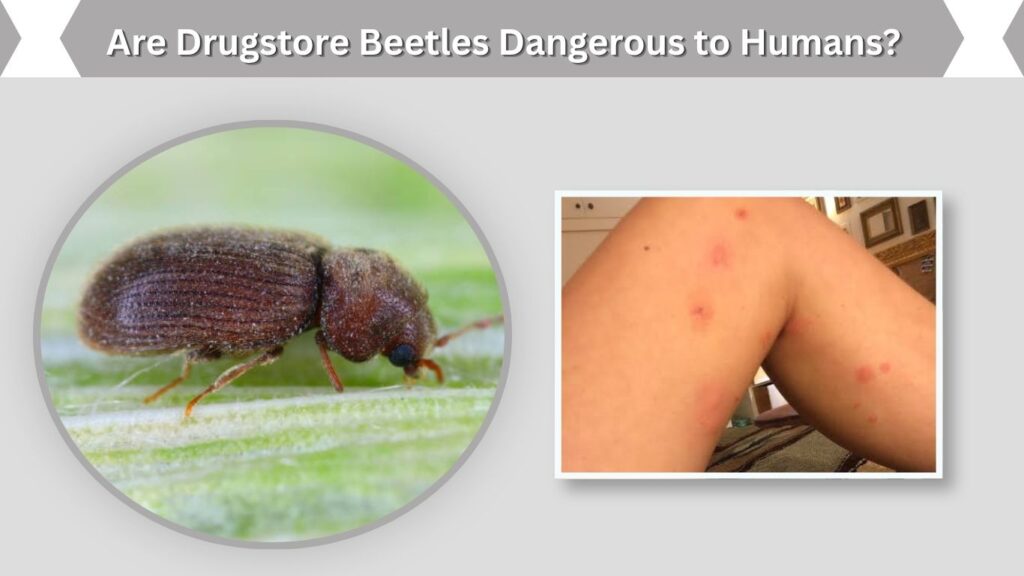
Drugstore beetles are generally harmless to humans because they do not bite, sting, or feed on blood.
Their main importance is as stored-product pests. Both adults and larvae may contaminate foods, although larvae cause most of the feeding damage.
Can Drugstore Beetles Make You Sick?
Drugstore beetles are not known to transmit diseases through bites.
However, infested foods may contain insect fragments, larvae, and waste materials.
Discarding contaminated products is recommended because food quality and hygiene may be compromised.
How to Get Rid of Drugstore Beetles
The most effective drugstore beetle control method is locating their breeding source and removing infested materials.
Simply killing adult beetles will not eliminate hidden larvae or eggs inside stored foods.
Steps to Eliminate Drugstore Beetles
- Inspect Stored Foods: Examine flour, cereals, spices, pasta, and pet food for insect activity.
- Discard Infested Materials: Place contaminated products in sealed bags and dispose of them outside.
- Vacuum Thoroughly: Clean pantry shelves, cabinet corners, and cracks where food particles accumulate.
- Wash Storage Areas: Clean shelves using mild detergent and water, then dry completely.
- Use Airtight Containers: Store unaffected dry foods in sturdy glass, metal, or hard-plastic containers.
- Monitor Beetle Activity: Check cupboards and windows regularly for newly emerging adults.
- Seek Professional Assistance: Contact a pest control specialist if infestations continue despite thorough cleaning.
How to Prevent Drugstore Beetles
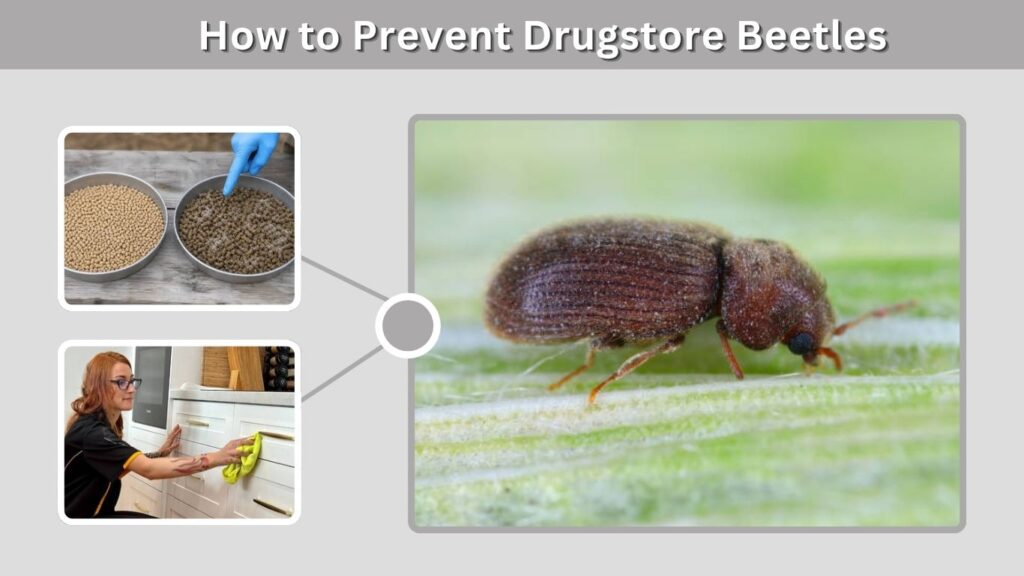
Preventing drugstore beetles requires proper food storage and regular household cleaning. These insects often enter homes through contaminated groceries or animal feed.
Drugstore Beetle Prevention Tips
- Store Dry Foods Securely: Use airtight containers for cereals, flour, and spices.
- Inspect New Groceries: Check packaging for tiny holes or visible insects.
- Clean Pantry Shelves: Remove food crumbs and spilled ingredients regularly.
- Check Pet Food: Inspect and securely store dry animal feed.
- Rotate Food Supplies: Avoid keeping unused dry products for extended periods.
- Monitor Bedrooms: Investigate repeated beetle sightings near windows and lights.
What Should You Do If You Have Unexplained Bites?
If you notice itchy bumps while finding drugstore beetles indoors, avoid assuming these beetles caused them.
Inspect your sleeping area for bed bugs and examine pets for fleas. Consider other possible sources of skin irritation.
A healthcare professional can evaluate persistent or worsening symptoms. If the insect is difficult to identify, a local extension service or qualified pest specialist may help.
FAQs
1. Do Drugstore Beetles Bite Humans at Night?
No, drugstore beetles are not known to bite humans at night or during the day. They feed on dried materials rather than blood. If unexplained bites appear after sleeping, inspect for bed bugs, fleas, or other possible causes.
2. Can Drugstore Beetles Bite Through Clothing?
Drugstore beetles do not normally bite human skin, whether covered or uncovered. Although they can chew through certain food packaging materials, their mouthparts are not adapted for feeding on people. Finding them on clothing does not indicate biting behavior.
3. Are Drugstore Beetles Harmful to Humans?
Drugstore beetles are generally harmless to humans because they do not sting or feed on blood. However, they can contaminate stored food with larvae, insect fragments, and waste. Removing infested products helps maintain proper household hygiene.
4. Why Are Drugstore Beetles Crawling on My Bed?
Drugstore beetles may accidentally crawl onto beds while traveling through a bedroom. Adults can fly and are attracted to lights. Their presence does not mean they are feeding on humans or breeding inside the mattress.
5. How Can I Tell a Drugstore Beetle From a Bed Bug?
Drugstore beetles are small, cylindrical, reddish-brown insects with hardened wing covers and the ability to fly. Bed bugs are flatter, wingless, and feed on blood. Examining body shape, movement, and infestation signs helps distinguish the two insects.
