
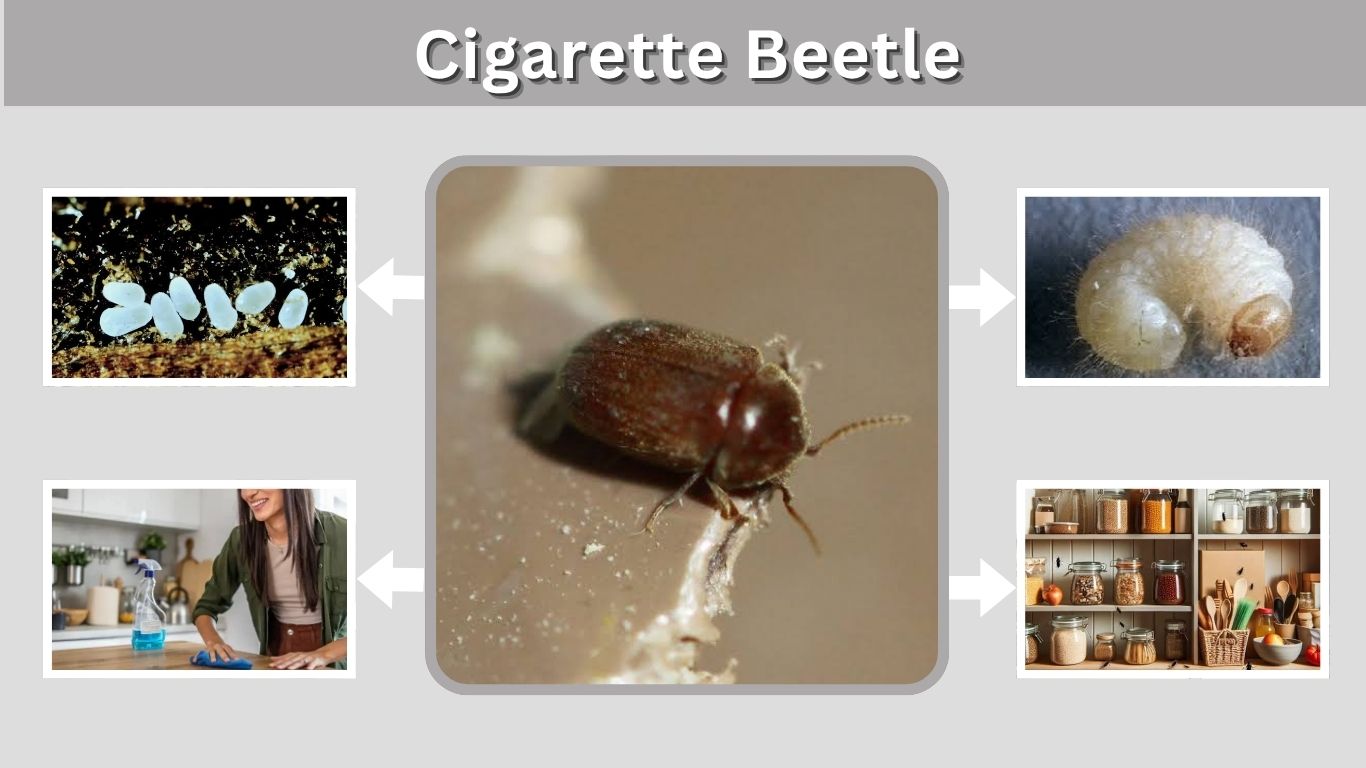
Cigarette beetles are tiny, reddish-brown insects commonly found in kitchens, pantries, warehouses, and food storage areas. Despite their name, these beetles infest much more than cigarettes and tobacco products. They can damage spices, cereals, dried fruits, pet food, and other stored materials. Their small size and ability to fly make infestations difficult to detect until adult beetles appear around windows or cupboards. Understanding cigarette beetle identification, larvae, feeding habits, life cycle, and infestation signs is important for effective pest management. This guide explains how to identify, control, and prevent cigarette beetles.
What Is a Cigarette Beetle?
The cigarette beetle (Lasioderma serricorne) is a small stored-product pest belonging to the family Ptinidae. It is also called the tobacco beetle because its larvae commonly infest dried tobacco products.
These insects occur worldwide, particularly in warm climates and heated buildings. Although adults can fly, most feeding damage comes from larvae developing inside stored materials.
Why Are They Called Cigarette Beetles?
Cigarette beetles received their common name because they frequently damage tobacco leaves, cigars, and cigarettes.
However, their diet extends far beyond tobacco. They can survive in numerous dried plant and animal products, making them common household and commercial storage pests.
Cigarette Beetle Identification
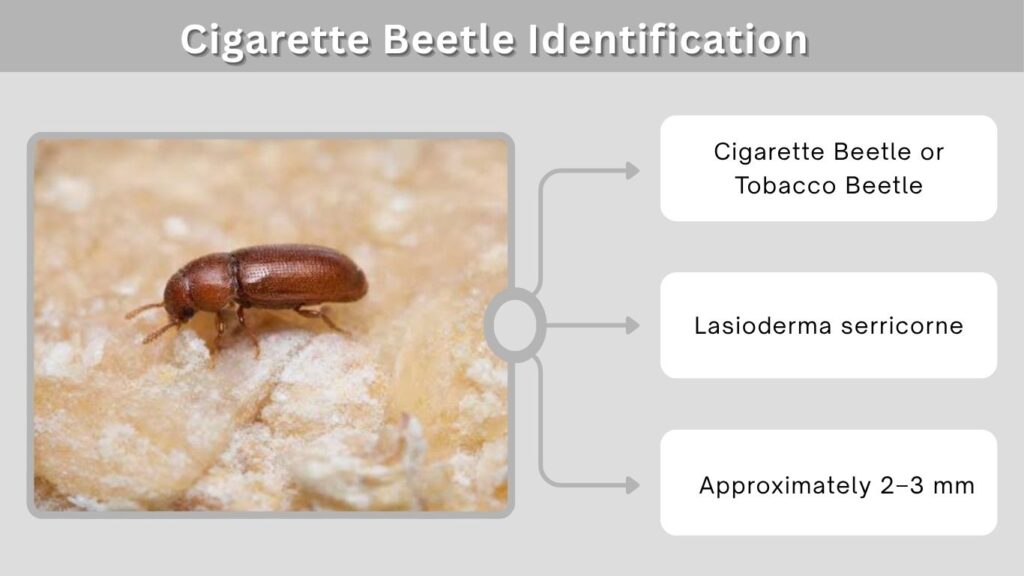
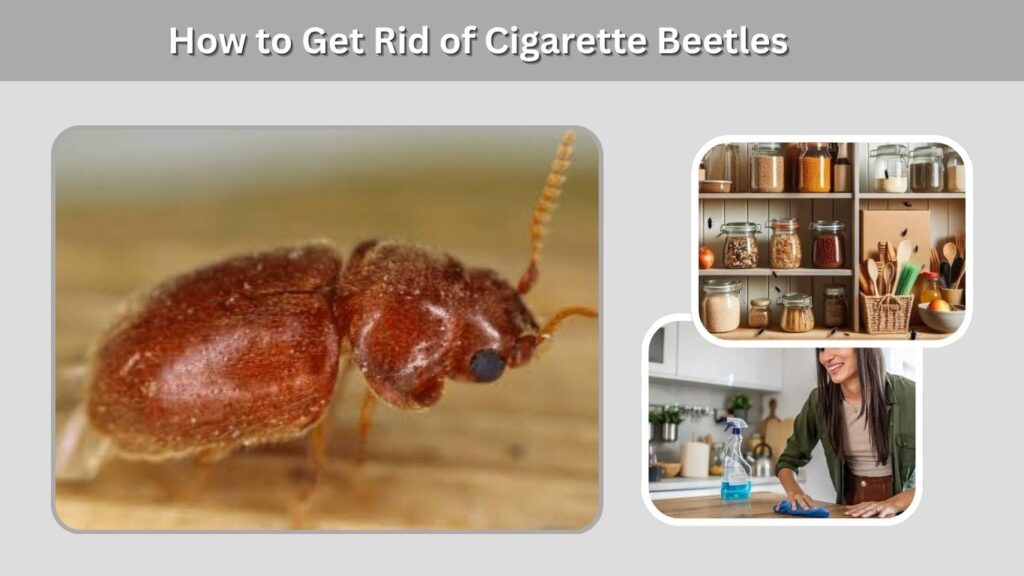
Cigarette beetles have small, oval bodies with a rounded, humpbacked appearance. Their reddish-brown coloration makes them resemble drugstore beetles and several other pantry insects.
Examining their antennae and wing covers provides useful identification clues.
What Does a Cigarette Beetle Look Like?
- Common Name: Cigarette Beetle or Tobacco Beetle
- Scientific Name: Lasioderma serricorne
- Family: Ptinidae
- Body Length: Approximately 2–3 mm
- Body Color: Light brown to reddish-brown
- Body Shape: Oval, rounded, and slightly humpbacked
- Head: Mostly hidden beneath the thorax
- Antennae: Serrated, resembling tiny saw teeth
- Wing Covers: Smooth-looking, without distinct longitudinal grooves
- Flight Ability: Adults can fly
What Do Cigarette Beetle Larvae Look Like?
Cigarette beetle larvae are creamy-white, C-shaped grubs with brownish heads and fine body hairs.
They remain hidden within infested products while feeding and growing. Unlike adults, larvae do not fly.
The larval stage causes most of the damage to stored foods and tobacco products.
Where Do Cigarette Beetles Come From?
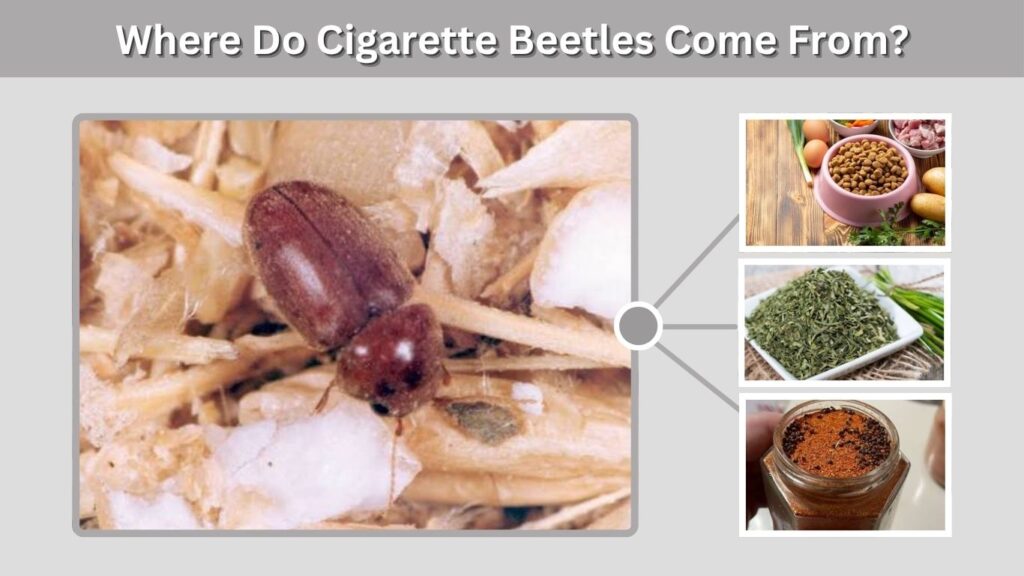
Cigarette beetles commonly enter homes through infested groceries, dried spices, pet food, tobacco, and decorative plant materials.
Once indoors, suitable storage conditions allow them to reproduce. Adults may also enter through open windows or doors.
Why Are Cigarette Beetles in My Bedroom?
Adult cigarette beetles can fly and are attracted to artificial lights, explaining why they sometimes appear around bedroom windows.
Their presence does not necessarily mean they are breeding in the bedroom.
However, dried flowers, forgotten snacks, or stored plant materials may provide suitable infestation sources.
What Do Cigarette Beetles Eat?
Cigarette beetles feed on various dried materials, although most feeding occurs during their larval stage.
Common food sources include flour, cereals, spices, dried fruits, seeds, pet food, and tobacco.
Larvae may also damage dried flowers, books, and certain animal-derived materials.
Do Cigarette Beetles Eat Spices?
Yes, cigarette beetles frequently infest spices such as paprika, cayenne pepper, ginger, and other dried seasonings.
These products provide suitable conditions for larval development when stored improperly.
Finding adult beetles near spice cabinets should prompt careful inspection of both opened and unopened containers.
Cigarette Beetle Life Cycle
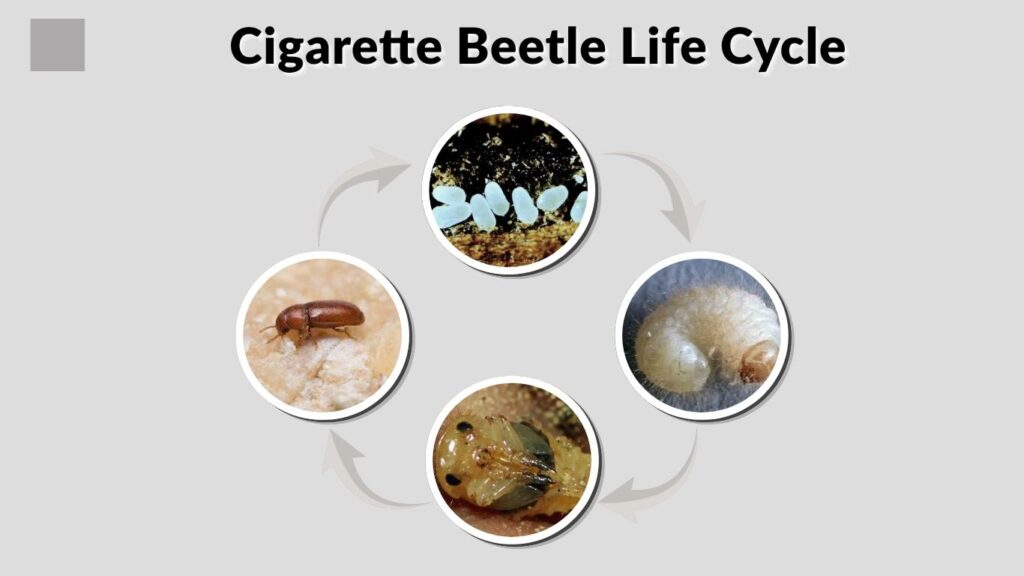
Cigarette beetles undergo complete metamorphosis, progressing through egg, larva, pupa, and adult stages.
Female beetles deposit eggs on or near suitable materials. After hatching, larvae feed within the product before pupating and emerging as adults.
How Long Do Cigarette Beetles Live?
Under favorable warm conditions, development from egg to adult can take approximately one to two months. Cooler temperatures and food quality can extend this period considerably.
Adult beetles generally live for several weeks.
Because development can occur continuously inside warm buildings, multiple generations may appear throughout the year.
Signs of a Cigarette Beetle Infestation
Cigarette beetle infestations often remain unnoticed because eggs and larvae develop inside stored materials.
Adult beetles appearing near lights, cupboards, or windows may be the first visible indication of an infestation.
Common Infestation Signs
- Small Brown Beetles: Adults crawling around pantry shelves or storage areas
- Flying Insects: Beetles gathering near windows and indoor lights
- Damaged Packaging: Tiny holes in paper, cardboard, or thin packaging
- White Larvae: Small, hairy grubs inside dried products
- Food Debris: Fine particles, larval cocoons, and insect waste
- Contaminated Spices: Insects appearing inside seasoning containers
- Repeated Sightings: Beetles emerging from different household locations
How to Get Rid of Cigarette Beetles
Effective cigarette beetle control begins with identifying and removing the infested material.
Simply killing visible adult beetles will not eliminate eggs and larvae hidden inside food packages. Thorough inspection and sanitation are essential.
Step-by-Step Cigarette Beetle Control
- Inspect Stored Products: Examine spices, cereals, flour, pet food, tobacco, and dried decorations.
- Discard Infested Materials: Seal contaminated products in bags and dispose of them outside.
- Empty Storage Cabinets: Remove all products to inspect corners and hidden spaces.
- Vacuum Thoroughly: Clean shelves, cracks, and areas containing spilled food.
- Wash Surfaces: Clean storage areas with mild detergent and allow them to dry completely.
- Use Airtight Containers: Store unaffected dry products in glass, metal, or sturdy plastic containers.
- Monitor Activity: Check for newly emerging beetles and investigate overlooked infestation sources.
Does Insecticide Kill Cigarette Beetles?
Certain registered insecticides can kill cigarette beetles, but chemical treatment is usually unnecessary for minor household infestations.
Spraying adults does not reliably eliminate larvae hidden within stored materials.
Never spray food or food-contact surfaces with insecticides. Persistent infestations may require professional pest control assistance.
Do Cigarette Beetle Pheromone Traps Work?
Cigarette beetle pheromone traps use chemical attractants to capture adult male beetles.
These traps are useful for detecting activity and monitoring populations, particularly in warehouses and food storage facilities.
Can Pheromone Traps Eliminate an Infestation?
Pheromone traps alone generally cannot eliminate cigarette beetle infestations because they do not capture larvae, eggs, or all adult females.
Their primary purpose is monitoring.
For effective results, combine species-specific traps with inspection, removal of contaminated materials, and proper storage practices.
Cigarette Beetle vs. Drugstore Beetle
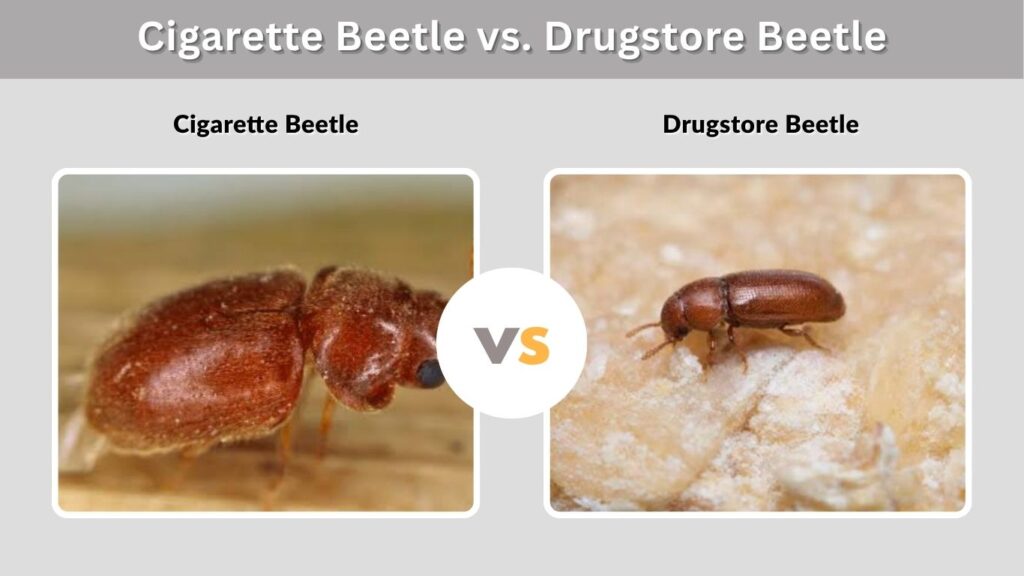
Cigarette beetles and drugstore beetles look remarkably similar. Both are small, reddish-brown insects that infest dried household products.
However, their antennae and wing covers provide reliable identification differences.
How Can You Tell Them Apart?
Cigarette beetles have saw-like antennae and relatively smooth wing covers without obvious longitudinal grooves.
Drugstore beetles (Stegobium paniceum) have antennae ending in three enlarged segments and wing covers with visible rows of pits.
Both species can fly and require similar sanitation-based control methods.
Are Cigarette Beetles Harmful to Humans?
Cigarette beetles are not considered dangerous biting or stinging pests. They do not feed on human blood and are not known to transmit diseases through bites.
Their primary concern is contamination and damage to stored products.
Do Cigarette Beetles Bite?
Cigarette beetles are not known to bite humans during normal activity.
Although their larvae chew dried materials, they are not adapted to feed on skin.
If unexplained bites occur while cigarette beetles are present, another insect or skin condition may be responsible.
How to Prevent Cigarette Beetles
Preventing cigarette beetles requires proper food storage, regular inspections, and good household sanitation.
Because infestations often begin inside purchased products, prevention should start before materials are placed in cupboards.
Cigarette Beetle Prevention Tips
- Store Dry Foods Securely: Use airtight containers.
- Inspect New Products: Check packaging for insects or holes.
- Clean Storage Areas: Remove crumbs and spilled food.
- Rotate Pantry Supplies: Use older products first.
- Check Pet Food: Store dry animal feed in sealed containers.
- Inspect Dried Decorations: Monitor dried flowers and plant materials.
- Use Monitoring Traps: Check for recurring adult beetle activity.
FAQs
1. Are Cigarette Beetles Harmful to Humans?
Cigarette beetles are generally harmless to humans because they do not sting or normally bite. However, they can contaminate stored foods with larvae, insect waste, and body fragments. Infested products should be discarded to maintain proper food hygiene.
2. Can Cigarette Beetles Fly?
Yes, adult cigarette beetles are capable of flying and frequently gather near windows and artificial lights. Their flight ability allows them to spread between rooms. However, the larvae remain within suitable stored products during development.
3. How Do You Get Rid of Cigarette Beetles Naturally?
Remove infested materials, vacuum affected storage areas, and keep dried foods in airtight containers. Suitable nonfood materials may be treated using carefully controlled freezing. Pheromone traps can help monitor activity but cannot eliminate an infestation independently.
4. What Is the Difference Between Cigarette and Drugstore Beetles?
Cigarette beetles have serrated antennae and smooth-looking wing covers, while drugstore beetles have three-segmented antennal clubs and grooved wing covers. Both infest dried materials and can fly, making close examination necessary for accurate identification.
5. Why Do Cigarette Beetles Keep Coming Back?
Recurring cigarette beetles usually indicate that eggs or larvae remain hidden inside infested materials. Forgotten spices, pet food, tobacco products, or dried decorations may contain developing insects. Repeated inspections and removing breeding sources are essential for lasting control.
