
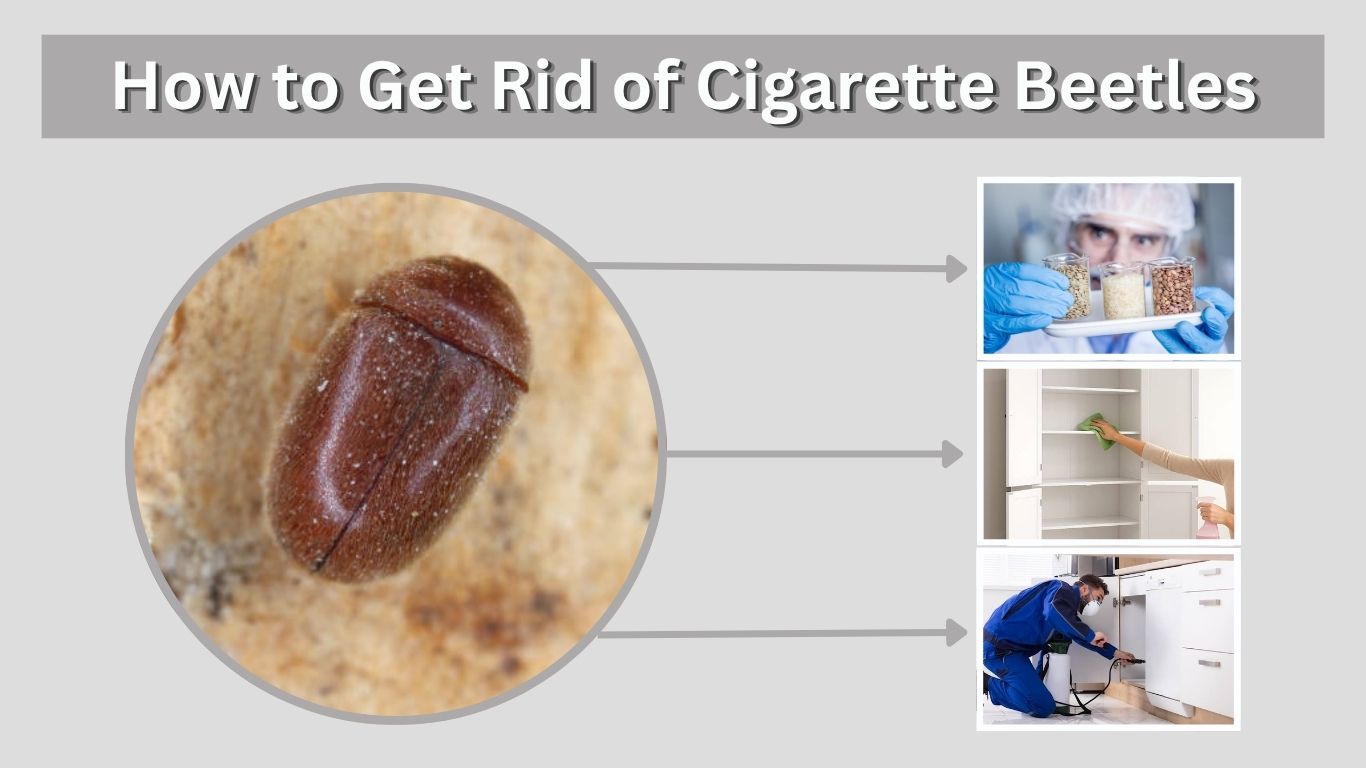
Cigarette beetles (Lasioderma serricorne) are small pantry pests that infest stored foods, spices, tobacco, dried flowers, and pet food. Although they do not bite people, their larvae can contaminate food and damage various household materials. Finding adult beetles crawling around kitchen cabinets, bedrooms, or windows often indicates a hidden infestation. Getting rid of them requires identifying the source, removing infested products, cleaning storage areas, and protecting susceptible items. With proper inspection and prevention, you can eliminate an infestation and reduce the chances of these beetles returning.
What Are Cigarette Beetles?
Cigarette beetles are small, reddish-brown insects belonging to the family Ptinidae (formerly Anobiidae). Their scientific name is Lasioderma serricorne, and they are commonly associated with stored tobacco products. However, they also infest many household items, including flour, spices, grains, dried fruits, seeds, and pet food. Their larvae cause most of the damage by feeding and developing inside stored materials.
How to Identify Cigarette Beetles
Adult cigarette beetles have several recognizable characteristics:
- Size: Approximately 2–3 mm long.
- Color: Shiny light brown to reddish-brown.
- Body shape: Small, oval, and slightly humpbacked.
- Head: Bent downward and difficult to see from above.
- Antennae: Serrated or saw-like along their length.
- Larvae: Creamy-white, C-shaped grubs covered with fine hairs.
Cigarette beetles are often confused with drugstore beetles. However, drugstore beetles have grooved wing covers and antennae with a three-segmented club, while cigarette beetles have smooth wing covers and serrated antennae.
How to Get Rid of Cigarette Beetles
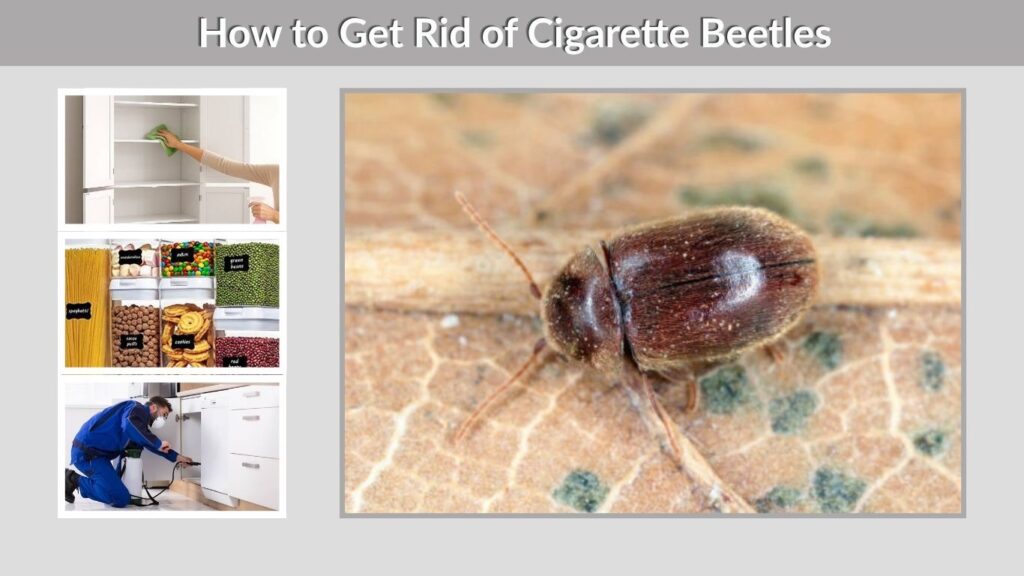
Getting rid of cigarette beetles starts with finding the infested materials where eggs and larvae are developing. Killing visible adults alone will not eliminate the problem because immature beetles may remain hidden inside food packages, dried plants, and other stored products. A combination of inspection, disposal, vacuuming, and proper storage provides the most reliable household control.
1. Find and Remove Infested Products
Inspect your kitchen cabinets, pantry shelves, drawers, and other storage areas. Look for tiny beetles, larvae, small holes in packaging, and contaminated food.
Common products to inspect include:
- Flour, rice, cereal, and pasta.
- Dried herbs, spices, and seasoning powders.
- Nuts, seeds, and dried fruits.
- Dry dog food, cat food, and birdseed.
- Tobacco products and cigarettes.
- Dried flowers, potpourri, and decorative plant materials.
Discard heavily infested food in a sealed bag and remove it from your home. Do not attempt to consume contaminated products.
2. Vacuum Cabinets and Storage Areas
After removing infested materials, thoroughly vacuum the affected shelves, drawers, corners, and cracks. Pay particular attention to small spaces where beetles, larvae, and food particles may accumulate.
Empty the vacuum cleaner immediately after cleaning and dispose of its contents outside. This prevents captured insects from remaining inside the vacuum and potentially spreading.
3. Clean Pantry Shelves and Drawers
Clean the affected storage areas to remove food residues, insect remains, and other debris. Use a suitable household cleaning solution and allow shelves to dry completely before returning stored products.
Check the undersides of shelves, cabinet joints, and gaps around storage units. Even small amounts of spilled flour, spices, or pet food can provide suitable conditions for pantry pests.
4. Freeze Suspected Infested Items
Freezing can kill cigarette beetles and their immature stages in suitable stored products. For salvageable dry goods, place them in sealed freezer-safe bags and freeze at 0°F (-18°C) for at least four days.
Allow the products to return to room temperature while still sealed to reduce condensation. Discard items that are heavily contaminated, damaged, or unsuitable for treatment.
5. Store Food in Airtight Containers
Replace vulnerable paper bags, cardboard boxes, and loosely sealed packages with airtight glass, metal, or heavy-duty plastic containers.
This prevents beetles from reaching susceptible foods and helps contain any undetected infestation. Label containers with purchase dates and use older products first to avoid keeping forgotten supplies in storage.
6. Use Cigarette Beetle Pheromone Traps
Cigarette beetle pheromone traps can help detect and monitor adult beetle activity. These traps use attractants to draw beetles toward a sticky surface.
Place them in suitable locations near suspected storage areas, following the manufacturer’s instructions. However, traps should not replace inspection, disposal, and cleaning because they cannot eliminate eggs and larvae hidden inside infested products.
7. Consider Professional Pest Control
If cigarette beetles continue appearing after removing suspected sources and cleaning storage areas, a professional inspection may be necessary.
A pest management specialist can identify hidden infestation sources, inspect difficult-to-reach areas, and recommend suitable treatments. Insecticide applications should be considered only when necessary and must follow product labeling. Never spray pesticides directly onto food, dishes, or pantry shelves where food is stored.
How Do Cigarette Beetles Get Into Your House?
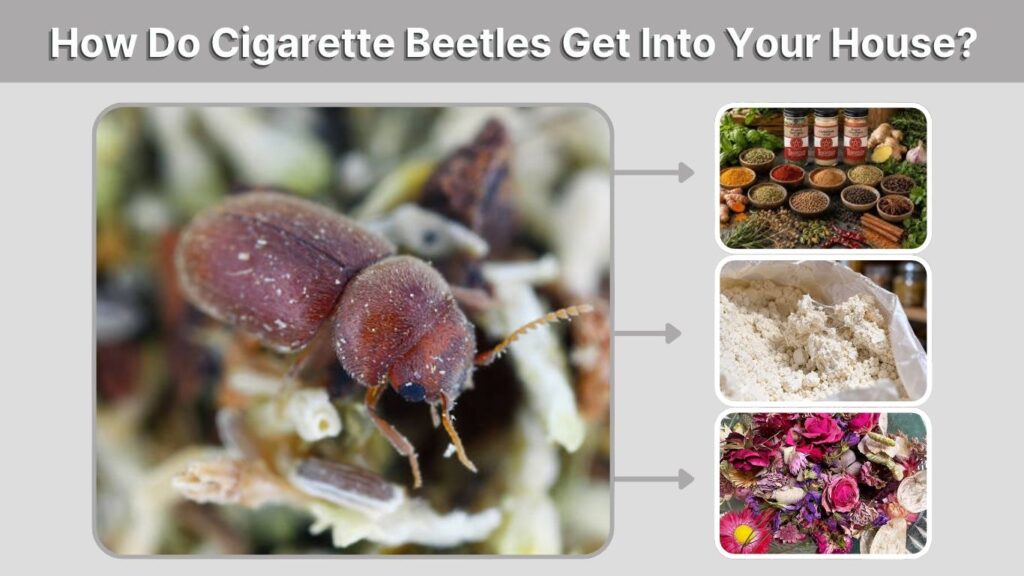
Cigarette beetles commonly enter homes through infested food packages and other stored materials. Adults can also fly indoors through open windows and doors because they are attracted to light. Once inside, females lay eggs in suitable food sources, allowing larvae to develop in hidden locations.
Common Sources of Cigarette Beetle Infestations
Several household items can introduce these pests:
- Newly purchased spices and dried herbs.
- Infested cereal, flour, and packaged food.
- Dry pet food and birdseed.
- Dried flowers and potpourri.
- Tobacco and stored cigarettes.
- Previously infested rodent nests or old food caches.
Sometimes, the original source is difficult to find because larvae remain concealed inside packaging or decorative materials.
How to Get Rid of Cigarette Beetles in the Bedroom
Cigarette beetles can appear in bedrooms even when there is no food stored there. Dried flower arrangements, potpourri, decorative seeds, and forgotten pet food can provide suitable breeding materials. Adult beetles may also fly toward bedroom lights or windows after emerging from an infestation elsewhere in the home.
Bedroom Cigarette Beetle Treatment
Start by checking decorative items, stored fabrics, dried plants, and any food or pet supplies kept in the bedroom. Remove infested materials and vacuum around furniture, window frames, drawers, and floor edges.
If you regularly find beetles near bedroom windows, inspect nearby kitchens, storage cupboards, and other rooms to locate the original source. Cigarette beetles are pantry pests, not bedbugs, and their presence does not mean that your mattress is infested.
How to Get Rid of Cigarette Beetles Naturally
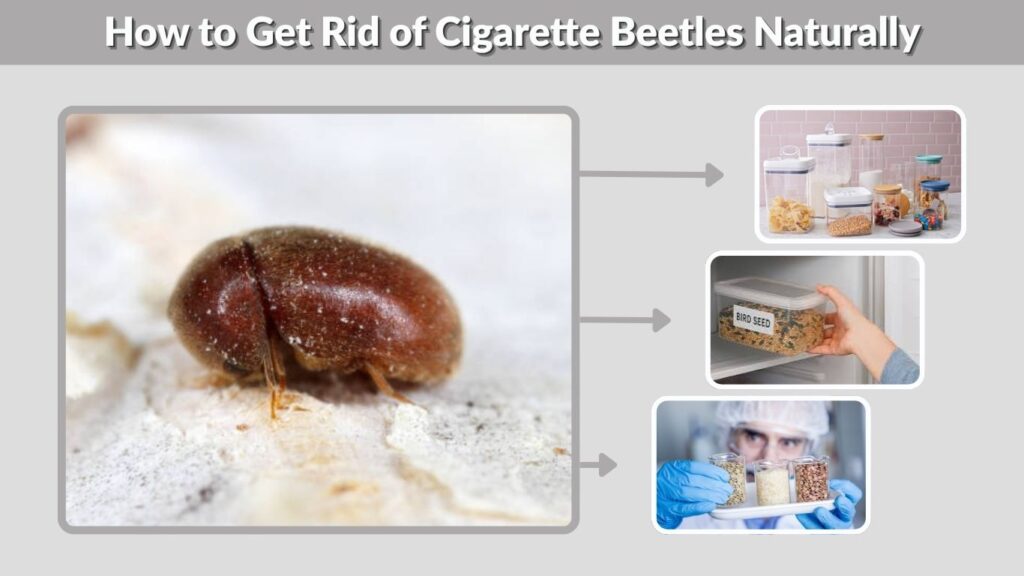
Natural cigarette beetle control mainly involves sanitation, careful storage, and physical removal rather than relying on homemade insect repellents. These methods are particularly useful around food storage areas, where unnecessary pesticide applications can create additional risks.
Effective Nonchemical Control Methods
- Freezing: Treat suitable suspect dry goods in a freezer to eliminate hidden insects.
- Vacuuming: Remove adult beetles, larvae, and food debris from cracks and corners.
- Airtight storage: Protect susceptible foods using sealed containers.
- Regular inspection: Check newly purchased spices, grains, seeds, and dried products.
- Pheromone monitoring: Use suitable traps to detect continuing adult activity.
- Source removal: Dispose of infested materials instead of allowing larvae to continue developing.
Do Essential Oils Get Rid of Cigarette Beetles?
Essential oils such as peppermint, eucalyptus, and lavender are sometimes promoted as natural insect repellents. However, they are not proven substitutes for removing infested products and cleaning storage areas. Their effectiveness against established cigarette beetle infestations is unreliable.
Avoid applying concentrated essential oils to food containers or surfaces that contact food. Some oils can also irritate people and harm pets.
How to Prevent Cigarette Beetle Infestations
Preventing cigarette beetles requires maintaining clean storage areas and checking products before placing them in cabinets. Because these insects can enter through contaminated packages, even a clean home can experience an infestation. Consistent inspection and proper storage are the most useful long-term preventive measures.
Cigarette Beetle Prevention Tips
- Inspect dried foods and spices when purchasing them.
- Transfer vulnerable products into airtight containers.
- Keep pantry shelves free from spilled food and crumbs.
- Avoid storing pet food in open or damaged bags.
- Regularly inspect dried flowers and decorative plant materials.
- Remove forgotten food supplies from cupboards and storage areas.
- Rotate stored products and avoid keeping old ingredients indefinitely.
FAQs
1. How Long Does It Take to Get Rid of Cigarette Beetles?
The time required depends on the size of the infestation and how quickly its source is located. A small infestation may be controlled within a few weeks after removing contaminated materials and cleaning thoroughly. Larger infestations may require repeated inspections and professional assistance.
2. Why Do I Have Cigarette Beetles in My Bedroom?
Cigarette beetles may enter bedrooms from infested dried flowers, potpourri, stored seeds, or pet food. Adults can also fly toward indoor lights. Finding them in a bedroom does not necessarily mean they are breeding in your mattress or bedding.
3. Can Cigarette Beetles Damage Furniture?
Yes, cigarette beetles can occasionally damage nonfood materials, including books, furniture stuffing, leather, silk, and dried decorative materials. However, stored foods, spices, tobacco, and other dried products are their more common household sources.
4. Are Cigarette Beetles and Drugstore Beetles the Same?
No. Cigarette beetles (Lasioderma serricorne) and drugstore beetles (Stegobium paniceum) are different species, although they look similar and infest many of the same stored products. Their antennae and wing-cover markings help distinguish them.
5. What Is the Fastest Way to Get Rid of Cigarette Beetles?
The fastest practical approach is to locate and discard heavily infested materials, vacuum affected cabinets, and transfer remaining susceptible products into airtight containers. Freezing suitable stored goods can eliminate hidden life stages. Pheromone traps help monitor whether adult beetles remain active.
