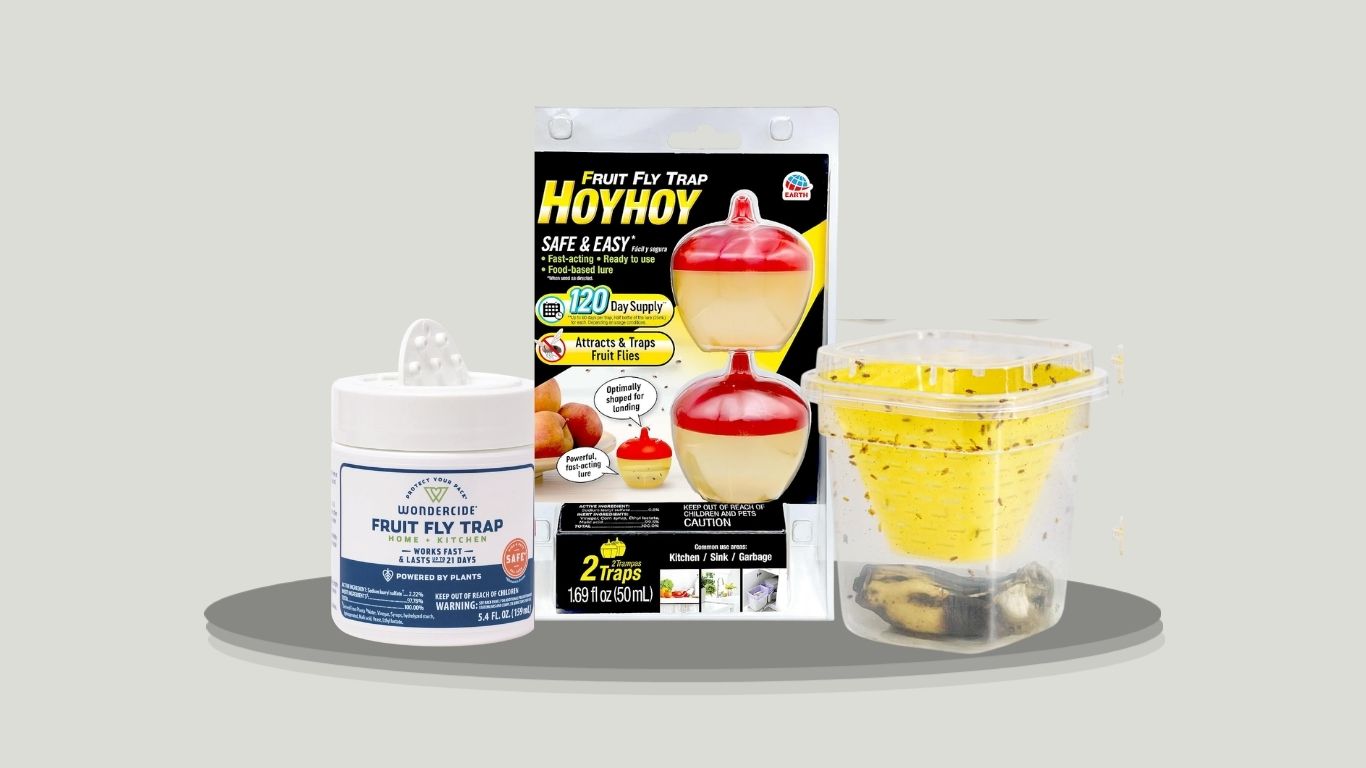
Fruit flies can quickly gather around ripe fruit, trash bins, drains, and kitchen counters, making them difficult to ignore once an infestation starts. DIY-style fruit fly traps offer a simple way to capture adult flies using reusable containers, food-based lures, or easy refill systems. Many are compact enough for countertops and other indoor problem areas. In this guide, we review 10 of the best DIY fruit fly traps based on ease of setup, reusability, attraction method, maintenance, indoor suitability, and overall convenience for everyday fruit fly control.
1. DIY Fruit Fly Traps for Indoor Use
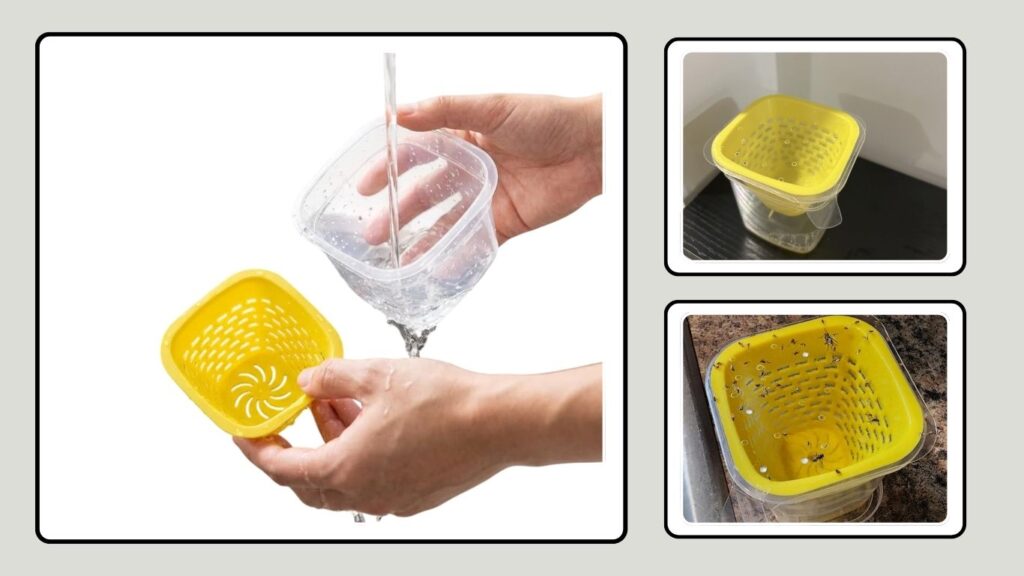
This DIY-style fruit fly trap is designed for kitchens, countertops, and other indoor areas where fruit flies tend to gather. Its simple trap format makes it useful for people who want a low-maintenance way to capture adult fruit flies without relying on complicated equipment. It can be placed near fruit bowls, trash areas, sinks, or other common breeding and feeding locations.
Key Features
- Designed for indoor fruit fly control
- DIY-style trapping concept
- Compact countertop-friendly design
- Suitable for kitchens and food-preparation areas
- Easy to place near fruit fly activity
- Useful for repeated monitoring
- Simple setup for everyday use
Why It’s Best for Simple Home Use
This option is particularly suitable for homeowners who want a straightforward fruit fly trap that does not require much preparation. Fruit flies often concentrate around ripe produce, recycling containers, drains, and food waste, so being able to position a trap close to these areas is useful.
The compact design also means it can remain on a counter or shelf without taking up much space. For small infestations, this type of trap can provide a practical first line of control while users clean up the sources attracting the flies.
Trapping Performance & Ease of Maintenance
Performance depends heavily on lure quality and placement. Positioning the trap near the highest concentration of fruit flies generally produces better results than placing it randomly in the room.
The trap should be checked regularly so captured flies and old lure can be removed. Refreshing the attractant when needed can help maintain performance.
Fruit fly traps work best alongside sanitation. Wiping spills, refrigerating ripe fruit, cleaning drains, and emptying trash frequently can greatly improve overall control.
Pros & Cons and Overall Verdict
Pros
- Easy indoor placement
- Compact and discreet
- Simple DIY-style setup
- Useful for kitchens and counters
- Good for monitoring adult flies
Cons
- Does not remove breeding sources
- Lure may need refreshing
- Heavy infestations may require multiple traps
Overall Verdict: This is a practical option for anyone wanting a simple indoor fruit fly trap that can be positioned close to problem areas. Its uncomplicated design makes it especially suitable for everyday kitchen use.
2. LFSYS Fruit Fly Traps for Indoors
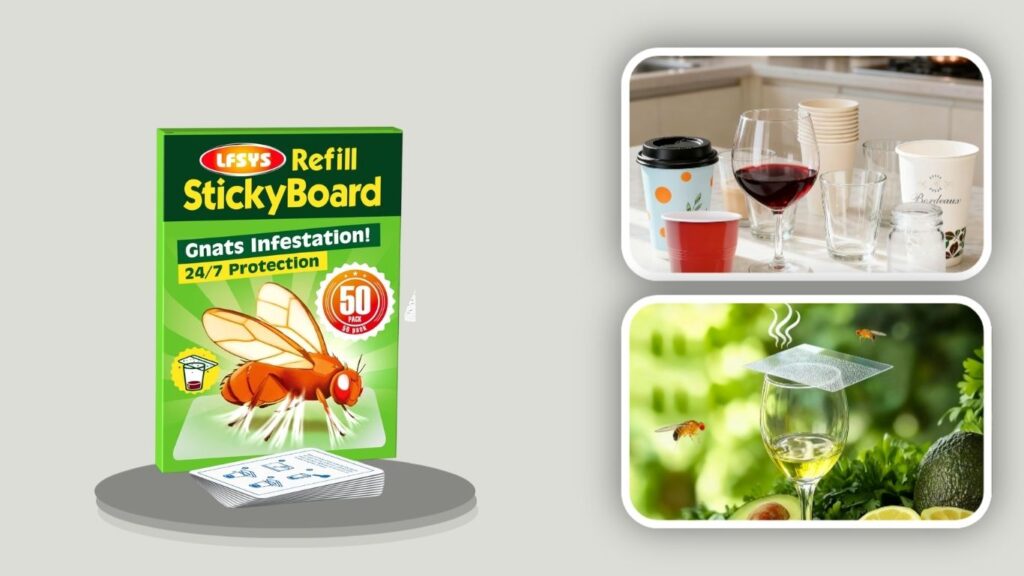
The LFSYS Fruit Fly Trap is designed for indoor spaces where fruit flies commonly appear, including kitchens, dining areas, and food storage zones. Its easy-to-place design makes it useful for targeting specific problem areas rather than treating an entire room. It can work particularly well as part of a routine that combines trapping with cleaning and removal of attractants.
Key Features
- Designed for indoor fruit fly control
- Compact trap design
- Easy to position near problem areas
- Suitable for kitchens and dining spaces
- Useful for ongoing fruit fly monitoring
- Simple maintenance
- Works well as part of a broader control routine
Why It’s Best for Kitchen Problem Areas
The LFSYS trap is particularly useful for homes where fruit flies keep returning to the same places. Kitchens often provide several attractants at once, including fruit, juice residue, food scraps, and damp organic material.
Placing the trap close to these sources can help capture adults before they continue flying throughout the home.
Its indoor-focused design is also convenient for people who want something that can remain near a countertop or food storage area without occupying much space.
Trapping Performance & Everyday Use
A trap like this performs best when placed where fruit flies are already active. Users should monitor areas around sinks, fruit bowls, compost containers, and trash bins to identify the strongest activity.
The lure should be kept fresh so the trap remains attractive. If captures decrease while fruit flies are still visible, replacing or refreshing the attractant may improve results.
Regular cleaning around the trap is equally important because competing food odors can reduce how strongly flies respond to the lure.
Pros & Cons and Overall Verdict
Pros
- Convenient for indoor use
- Good for targeted placement
- Compact kitchen-friendly size
- Simple to maintain
- Useful for monitoring fly activity
Cons
- Requires proper placement
- Attractant may need periodic replacement
- Cannot control larvae at breeding sites
Overall Verdict: The LFSYS Fruit Fly Trap is a useful choice for kitchens with recurring fruit fly activity. Its compact format and targeted placement make it easy to include in a regular indoor pest-control routine.
3. Super Ninja Fruit Fly Traps for Indoors
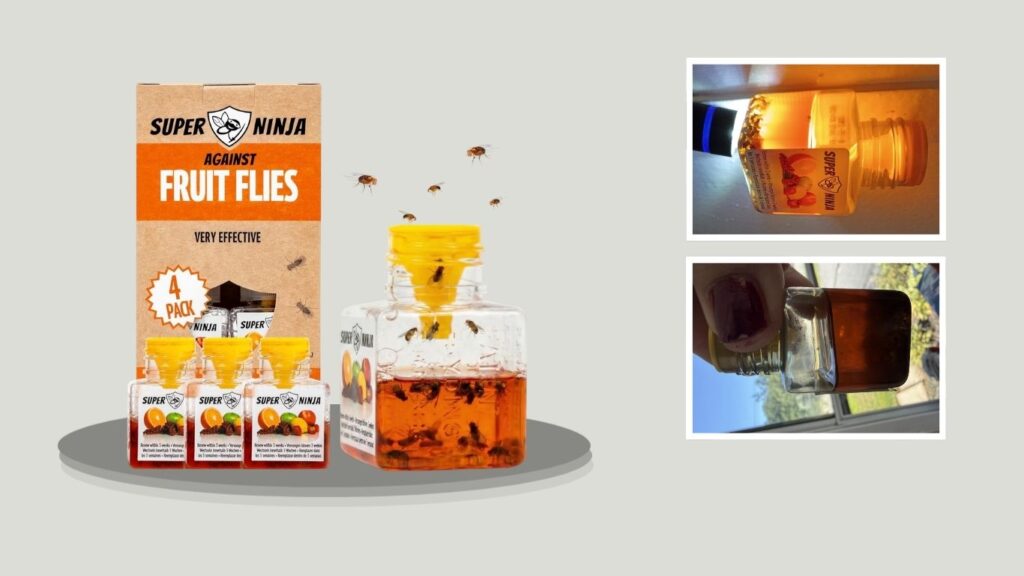
Super Ninja Fruit Fly Traps are designed to help capture adult fruit flies around kitchens and other indoor spaces. The compact trapping approach makes them easy to position close to common attractants without adding bulky equipment to countertops. They can be particularly useful when users want to monitor fruit fly activity while also reducing the number of adults flying around food-preparation areas.
Key Features
- Indoor fruit fly trapping design
- Suitable for kitchen and countertop placement
- Compact and easy to position
- Useful near fruit and food waste
- Designed for adult fruit fly capture
- Simple setup
- Helpful for routine infestation monitoring
Why It’s Best for Recurring Fruit Fly Problems
This trap is a good fit for households where fruit flies return regularly, especially during warmer weather. Rather than waiting until numbers become large, keeping traps near common hotspots can help detect activity early.
It is particularly practical around fruit bowls, trash cans, recycling containers, or sink areas. These locations often attract adult flies even after visible food has been removed.
Because of its small size, users can place more than one trap in different problem zones if needed.
Performance & Placement Efficiency
Placement has a major effect on trapping performance. A trap positioned directly beside the main attractant will usually perform better than one placed across the room.
Reducing competing food odors also helps. Clean counters, rinse containers, and remove overripe produce so the trap becomes one of the strongest available attractants.
Maintenance should include checking captures, replacing old lure, and cleaning the surrounding area. This keeps the trap useful over a longer period.
Pros & Cons and Overall Verdict
Pros
- Compact indoor design
- Easy to place in multiple locations
- Good for recurring fly problems
- Simple monitoring method
- Suitable for kitchens
Cons
- Requires regular lure maintenance
- Adult trapping alone will not stop breeding
- May need several traps for widespread infestations
Overall Verdict: Super Ninja Fruit Fly Traps are a practical option for homes with recurring indoor fruit fly activity. Their compact format makes them especially useful for targeted placement around multiple kitchen hotspots.
4. TERRO Fruit Fly Trap & Lure System
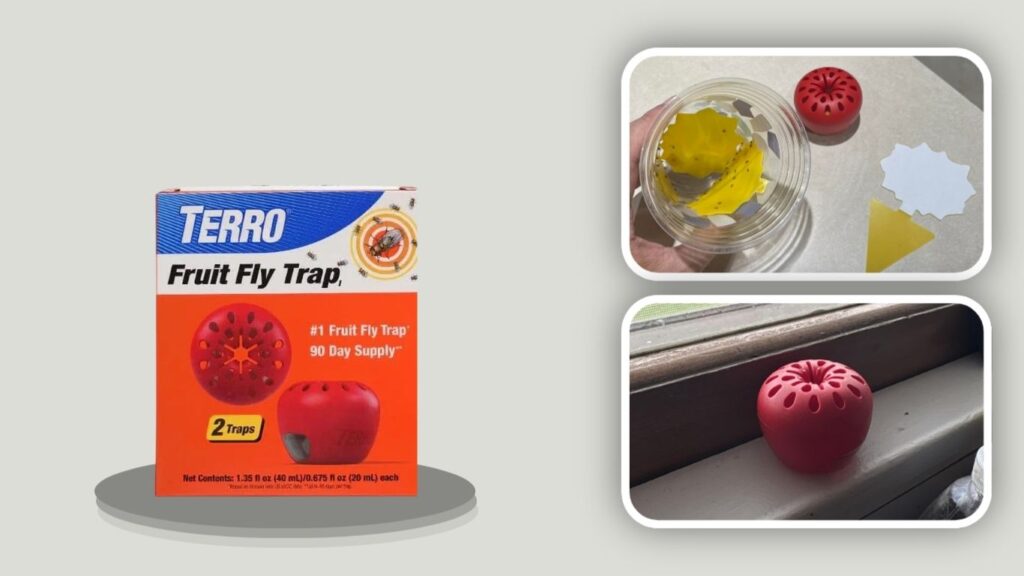
The TERRO Fruit Fly Trap & Lure System is one of the more recognizable options for indoor fruit fly control. It combines a dedicated trap with a liquid lure designed to attract adult fruit flies into the container. Its compact design makes it suitable for placement near fruit bowls, sinks, trash cans, or other areas where fruit flies are frequently seen.
Key Features
- Dedicated fruit fly trapping system
- Includes lure-based attraction
- Compact indoor design
- Suitable for countertops
- Easy to monitor captured flies
- Designed for targeted fruit fly control
- Convenient ready-to-use concept
Why It’s Best for Lure-Based Trapping
The main advantage of the TERRO system is that the trap and lure are designed to work together. This can be more convenient than assembling a homemade container and experimenting with different attractant mixtures.
It is particularly useful for people who want a more standardized trapping method while still keeping the process simple.
The small design also makes it easy to position close to active fruit fly areas without taking up much kitchen space.
Trapping Performance & Lure Longevity
Performance depends on the lure remaining attractive and the trap being positioned near fruit fly activity. The strongest results generally come when competing food sources are cleaned up first.
As flies enter the trap, users can visually monitor whether activity is increasing or decreasing.
The lure will eventually lose strength or become contaminated, so it should be replaced according to the product instructions. Combining the trap with drain cleaning and food-storage improvements can produce better overall control.
Pros & Cons and Overall Verdict
Pros
- Integrated trap-and-lure system
- Easy to use
- Compact countertop design
- Recognizable pest-control brand
- Good for monitoring adult fruit flies
Cons
- Lure needs replacement
- Does not eliminate breeding material
- Multiple units may be necessary
Overall Verdict: TERRO Fruit Fly Trap is a strong option for homeowners who want a simple, purpose-built lure system instead of creating a homemade trap from scratch. It works particularly well for targeted kitchen monitoring.
5. Fly Away Reusable Fruit Fly Trap
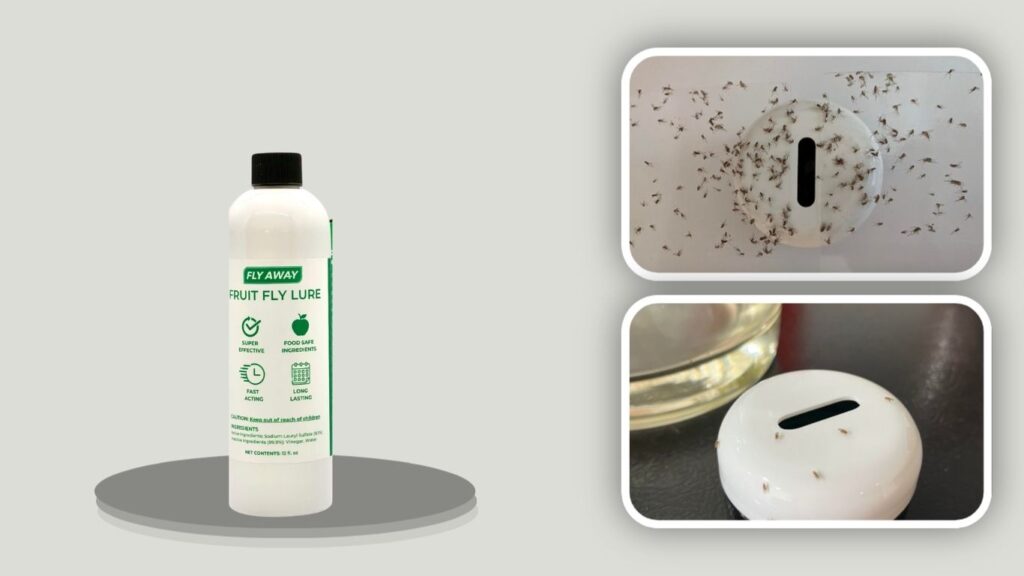
The Fly Away Reusable Fruit Fly Trap is designed for repeated use, making it particularly attractive for homes, restaurants, wineries, and other locations where fruit fly activity can return regularly. Instead of discarding the entire trap after use, the reusable container can be cleaned and refilled with an appropriate attractant, helping reduce waste over time.
Key Features
- Reusable fruit fly trap design
- Suitable for home and commercial-style settings
- Can be cleaned and refilled
- Useful around kitchens and food-service areas
- Designed for repeated fruit fly control
- Compact placement
- Reduces reliance on disposable traps
Why It’s Best for Repeated Use
Reusability is the strongest feature of this trap. Fruit flies often return seasonally or whenever ripe produce and organic waste become available, so a trap that can be cleaned and reused can be more convenient over the long term.
It can be especially useful in busy kitchens, restaurants, or wineries where fruit-based odors may attract flies more frequently.
For homeowners, it also provides flexibility because the trap can be stored and brought back out whenever activity begins again.
Performance, Cleaning & Durability
Reusable traps perform best when they are cleaned thoroughly between lure changes. Old organic residue can develop unpleasant odors or become less attractive than a fresh lure.
The trap should be placed close to known hotspots and checked regularly. If activity remains high, adding more than one trap can improve coverage.
Because the container is intended for repeated use, careful cleaning and drying can help maintain its condition over time.
Pros & Cons and Overall Verdict
Pros
- Reusable design
- Suitable for frequent fruit fly problems
- Can reduce disposable waste
- Good for kitchens and food-related spaces
- Easy to reposition
Cons
- Requires cleaning between uses
- Attractant needs regular replacement
- Does not address hidden breeding sources
Overall Verdict: Fly Away Reusable Fruit Fly Trap is a particularly good choice for people dealing with fruit flies more than once a year. Its refillable design makes it convenient for long-term use while providing a simple way to monitor and reduce adult fly activity.
6. Pestoptek Reusable Non-Toxic Fruit Fly Catcher
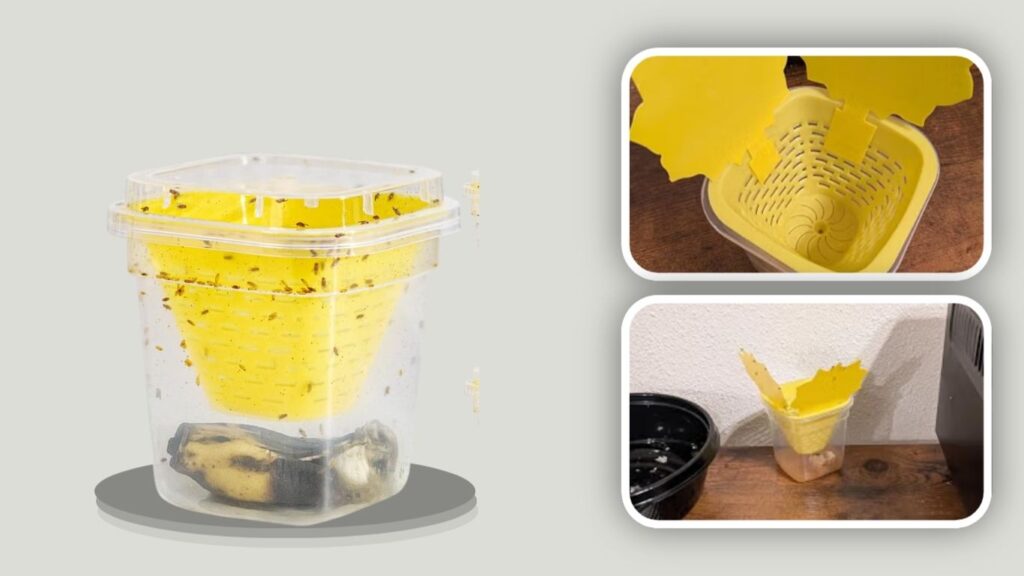
The Pestoptek Reusable Fruit Fly Catcher is designed for households that prefer a refillable trapping solution instead of disposable sticky products. Its reusable container can be positioned around kitchens, fruit storage areas, sinks, or trash zones where fruit flies commonly gather. The non-toxic-style trapping concept also makes it appealing for users who want a simple mechanical or lure-based approach to reducing adult fruit fly activity indoors.
Key Features
- Reusable fruit fly catcher
- Non-toxic-style trapping approach
- Suitable for indoor use
- Easy to refill and reposition
- Useful around kitchens and food storage areas
- Compact countertop-friendly design
- Reduces dependence on disposable traps
Why It’s Best for Reusable Indoor Control
This trap is especially useful for people who experience fruit fly problems several times throughout the year. Instead of replacing the entire unit after each infestation, the container can be cleaned and prepared again with a fresh attractant.
That makes it practical for kitchens where fruit, vegetables, compost, or recycling regularly create conditions that attract flies.
The reusable design also allows users to experiment with placement until they find the most active location.
Trapping Performance & Maintenance
Performance depends on keeping the lure fresh and positioning the trap close to the main source of activity. Fruit bowls, sink areas, recycling bins, and trash cans are often productive locations.
The trap should be emptied and cleaned whenever the lure becomes old or heavily contaminated with captured flies. Regular cleaning prevents odor buildup and prepares the container for another cycle of use.
Removing competing food sources will also help make the trap more attractive.
Pros & Cons and Overall Verdict
Pros
- Reusable design
- Easy to reposition
- Suitable for repeated infestations
- Compact for kitchen use
- Reduces disposable waste
Cons
- Requires cleaning between uses
- Lure must be refreshed
- Does not eliminate breeding sites
Overall Verdict: Pestoptek is a practical choice for households that want a reusable fruit fly catcher rather than continuously purchasing disposable traps. Its simple design works best when paired with good kitchen sanitation.
7. Mysora Ceramic Fruit Fly Trap – Green
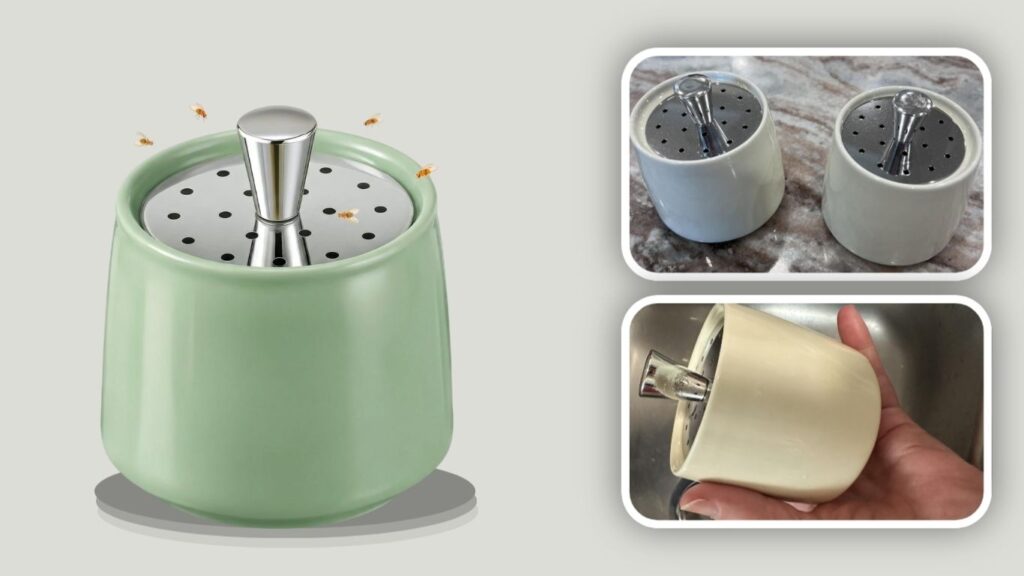
The Mysora Ceramic Fruit Fly Trap combines pest control with a more decorative appearance. Its ceramic construction makes it look less like a conventional insect trap, which can be useful for kitchens, dining rooms, and countertops where appearance matters. The reusable design allows users to add an attractant inside while maintaining a cleaner, more discreet look than open cups or homemade jars.
Key Features
- Reusable ceramic construction
- Decorative green finish
- Designed for indoor fruit fly trapping
- Suitable for countertops and kitchens
- Can be refilled with attractant
- Discreet alternative to plastic traps
- Easy to integrate with home décor
Why It’s Best for Stylish Kitchen Use
Many homemade fruit fly traps work effectively but look unattractive when left on a countertop. The Mysora ceramic trap provides a more polished solution for people who want pest control without displaying an obvious DIY container.
Its decorative design can blend more naturally with kitchen accessories, plant pots, or countertop décor.
This makes it particularly appealing for dining areas, guest-facing kitchens, or homes where visual appearance is important.
Performance, Reusability & Cleaning
The trap works best when filled with a suitable fruit fly attractant and placed near active areas. It may be positioned around fruit bowls, sinks, or food-waste zones.
Because the container is reusable, regular cleaning is essential. Old lure should be discarded, and the ceramic interior should be washed and dried before refilling.
Correct placement is equally important. Even an attractive trap will perform poorly if it is too far from the primary fruit fly source.
Pros & Cons and Overall Verdict
Pros
- Attractive ceramic design
- Reusable
- Discreet countertop placement
- Easy to refill
- Blends better with home décor
Cons
- Ceramic can break if dropped
- Requires regular cleaning
- Attractant must be supplied or replaced
Overall Verdict: The Mysora Ceramic Fruit Fly Trap is a strong choice for homeowners who want a reusable trap that looks more attractive than standard plastic or homemade containers.
8. Mysora Reusable Ceramic Indoor Fruit Fly Trap
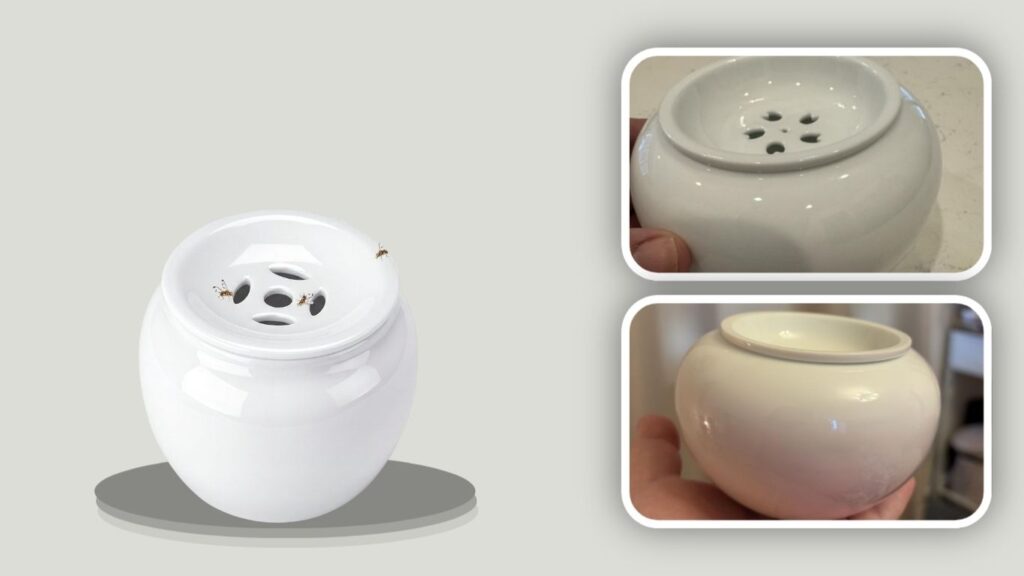
The Mysora Reusable Ceramic Indoor Fruit Fly Trap offers another decorative option for managing fruit flies in kitchens and living spaces. Its glossy ceramic construction gives it a more finished appearance while still supporting a refillable trapping setup. This makes it suitable for people who want a trap that can remain visible on a counter without looking overly industrial or disposable.
Key Features
- Glossy ceramic construction
- Reusable indoor trap design
- Suitable for kitchen countertops
- Can be refilled with fruit fly attractant
- Compact and decorative appearance
- Easy to reposition
- Designed for repeated indoor use
Why It’s Best for Long-Term Countertop Placement
This trap is best for homeowners who want to keep a fruit fly trap available throughout the warmer months without sacrificing the appearance of the kitchen.
The ceramic body feels more permanent than a disposable plastic trap and can be washed and reused whenever fruit fly activity returns.
It is especially useful in homes where fruit is frequently kept on counters and occasional fruit fly activity is expected.
Trapping Performance & Durability
Performance depends primarily on the quality of the lure used inside and the trap’s proximity to active flies. A strong attractant combined with good placement can make reusable traps highly practical.
The ceramic body can last through many cycles of use if handled carefully. However, it should be kept in a stable location where it is unlikely to be knocked from the counter.
Cleaning after each lure cycle helps prevent residue from affecting future performance.
Pros & Cons and Overall Verdict
Pros
- Attractive glossy finish
- Reusable over multiple seasons
- Suitable for visible kitchen locations
- Easy to clean and refill
- More decorative than standard traps
Cons
- Breakable ceramic construction
- Requires separate attractant
- Needs routine cleaning
Overall Verdict: This Mysora reusable ceramic trap is a good fit for homeowners who prefer a more permanent and visually appealing fruit fly solution for regular countertop use.
9. Wondercide Kitchen Indoor Fruit Fly Killer
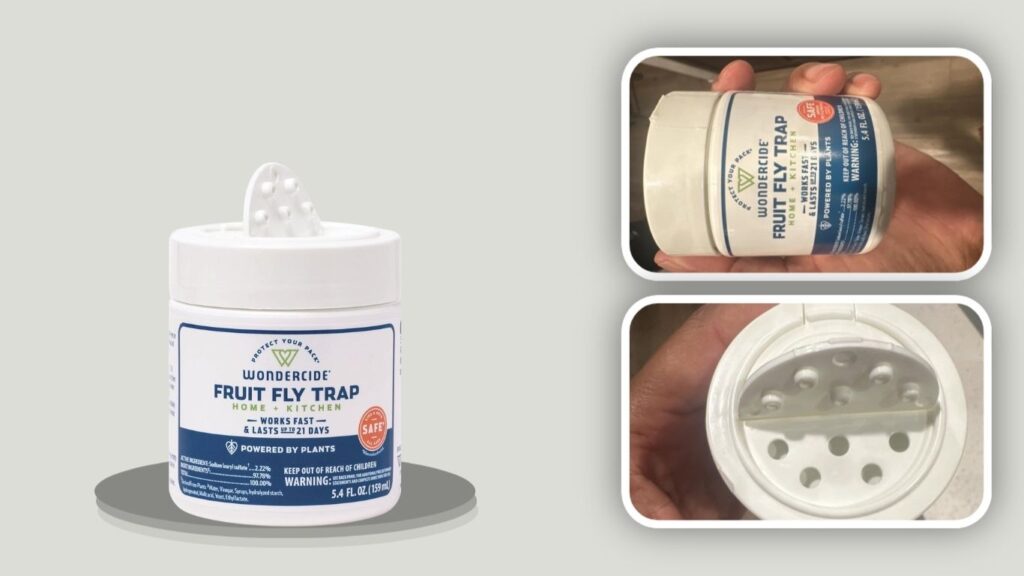
Wondercide Kitchen Indoor Fruit Fly Killer offers a different approach from container-based traps. Rather than relying solely on a passive lure, it is designed as an indoor pest-control product for use around kitchen problem areas. This makes it useful for homeowners who want a more active treatment option when adult fruit flies are already visible around counters, sinks, or food-related areas.
Key Features
- Designed for indoor kitchen pest control
- Useful against visible fruit flies
- Convenient targeted application
- Suitable for common indoor problem areas
- Can complement passive fruit fly traps
- Easy to incorporate into routine cleaning
- Useful for spot treatment
Why It’s Best for Active Fruit Fly Problems
This product is particularly useful when fruit flies are actively flying around the kitchen and a passive trap alone feels too slow.
A targeted spray-style treatment can complement reusable traps by addressing visible insects while the traps continue capturing others over time.
It can also be used as part of a larger fruit fly control routine that includes cleaning drains, refrigerating ripe produce, and removing food waste.
Performance & Practical Use
Targeted application is more efficient than spraying entire rooms. Users should focus on areas where fruit flies consistently gather and follow all label directions, especially around food-contact surfaces.
Because adult fruit flies can continue emerging from breeding material, a spray should not be considered a complete solution on its own.
Combining treatment with sanitation is essential. Cleaning sink drains, wiping sugary spills, and removing overripe fruit can prevent new generations from replacing the adults that are killed.
Pros & Cons and Overall Verdict
Pros
- Useful for visible adult flies
- Convenient targeted treatment
- Works well alongside traps
- Suitable for kitchen problem areas
- Faster action than passive trapping alone
Cons
- Does not remove breeding sources
- Repeated treatment may be needed
- Requires careful use around food areas
Overall Verdict: Wondercide Kitchen Indoor Fruit Fly Killer is best suited for users who want an active treatment to complement traps and sanitation. It can be particularly useful when adult flies are already highly visible.
10. HOY Food-Based Fruit Fly Trap
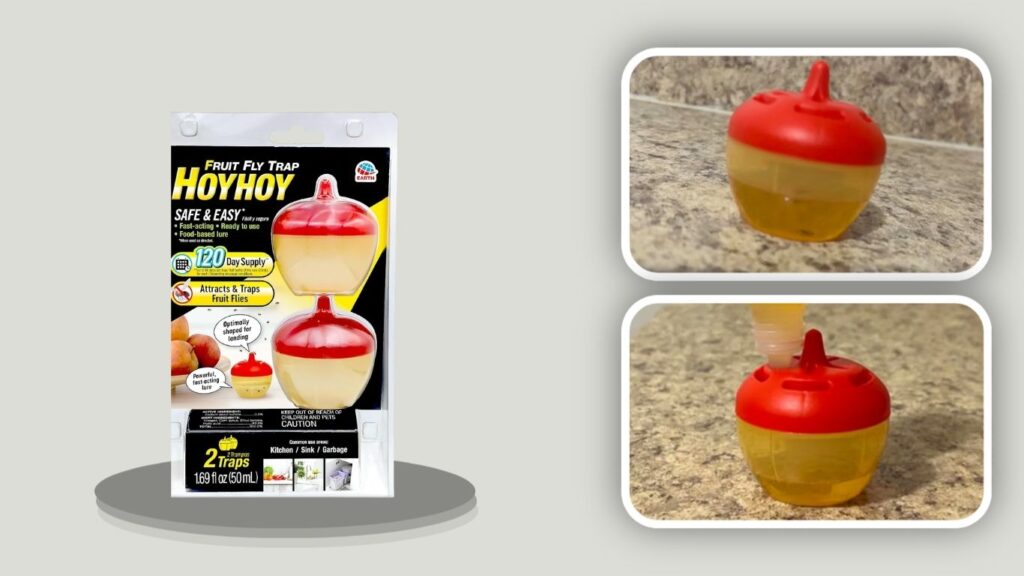
The HOY Food-Based Fruit Fly Trap uses a food-based attraction strategy to draw adult fruit flies away from surrounding kitchen areas. This approach is similar to classic DIY traps that rely on fermented or sweet-smelling ingredients, but it provides a more organized trapping setup. It can be especially useful near fruit bowls, compost containers, recycling areas, or other places where fruit flies are naturally attracted to food odors.
Key Features
- Food-based fruit fly attraction
- Designed for indoor use
- Suitable for kitchens and counters
- Compact trap format
- Useful near common fruit fly hotspots
- Simple passive trapping method
- Helps monitor adult fly activity
Why It’s Best for Natural Attraction
Fruit flies naturally seek out fermenting sugars and organic material, so food-based attractants can be highly relevant to their behavior.
The HOY trap takes advantage of that feeding response by providing a dedicated attraction point. This can make it particularly useful for users who prefer passive trapping rather than spraying adult flies.
It also fits well into a DIY-style control routine where food-based lures are preferred.
Trapping Performance & Placement
For best results, the trap should be positioned near the strongest fruit fly activity. Placing it beside ripe fruit, compost, or food waste may initially seem logical, but competing odors can reduce attraction.
Cleaning nearby food residue first can make the trap more noticeable to flies.
The food-based lure should also be replaced when it becomes old or less attractive. Checking the trap frequently helps users monitor whether the infestation is improving.
Pros & Cons and Overall Verdict
Pros
- Uses food-based attraction
- Passive trapping method
- Easy countertop placement
- Useful for kitchen hotspots
- Good for monitoring activity
Cons
- Lure requires periodic replacement
- Competing food odors can reduce performance
- Does not eliminate eggs or larvae
Overall Verdict: The HOY Food-Based Fruit Fly Trap is a practical option for homeowners who prefer a passive, lure-focused approach. It works especially well when competing food sources are removed and the trap is positioned close to active fruit fly areas.
FAQs
1. What is the best DIY fruit fly trap?
A good DIY fruit fly trap usually combines a container with an attractive food-based lure. Apple cider vinegar, ripe fruit, or other fermented-smelling ingredients are commonly used because fruit flies are drawn to these odors. Reusable commercial containers can make the setup cleaner and easier to maintain.
2. Does apple cider vinegar really attract fruit flies?
Yes. Fruit flies are attracted to the fermented aroma of apple cider vinegar. A small amount placed inside a suitable trap can attract adult flies. Adding a tiny amount of dish soap is also commonly used in homemade traps to reduce surface tension so flies are less likely to escape.
3. Where should I put a fruit fly trap?
Place traps near areas where fruit flies are most active, such as fruit bowls, sinks, trash cans, compost containers, recycling bins, or food-preparation areas. For better performance, remove competing food sources before setting the trap.
4. How often should I change the lure in a DIY fruit fly trap?
Replace the lure whenever it becomes dirty, heavily filled with flies, develops an unpleasant odor, or stops attracting insects effectively. During a significant infestation, refreshing the lure every few days may help maintain strong attraction.
5. Why do fruit flies keep coming back after using traps?
Traps mainly capture adult flies. If eggs and larvae remain in drains, overripe fruit, trash, recycling, or other moist organic material, new adults can continue emerging. Complete control requires finding and cleaning the breeding source while using traps to reduce the adult population.