
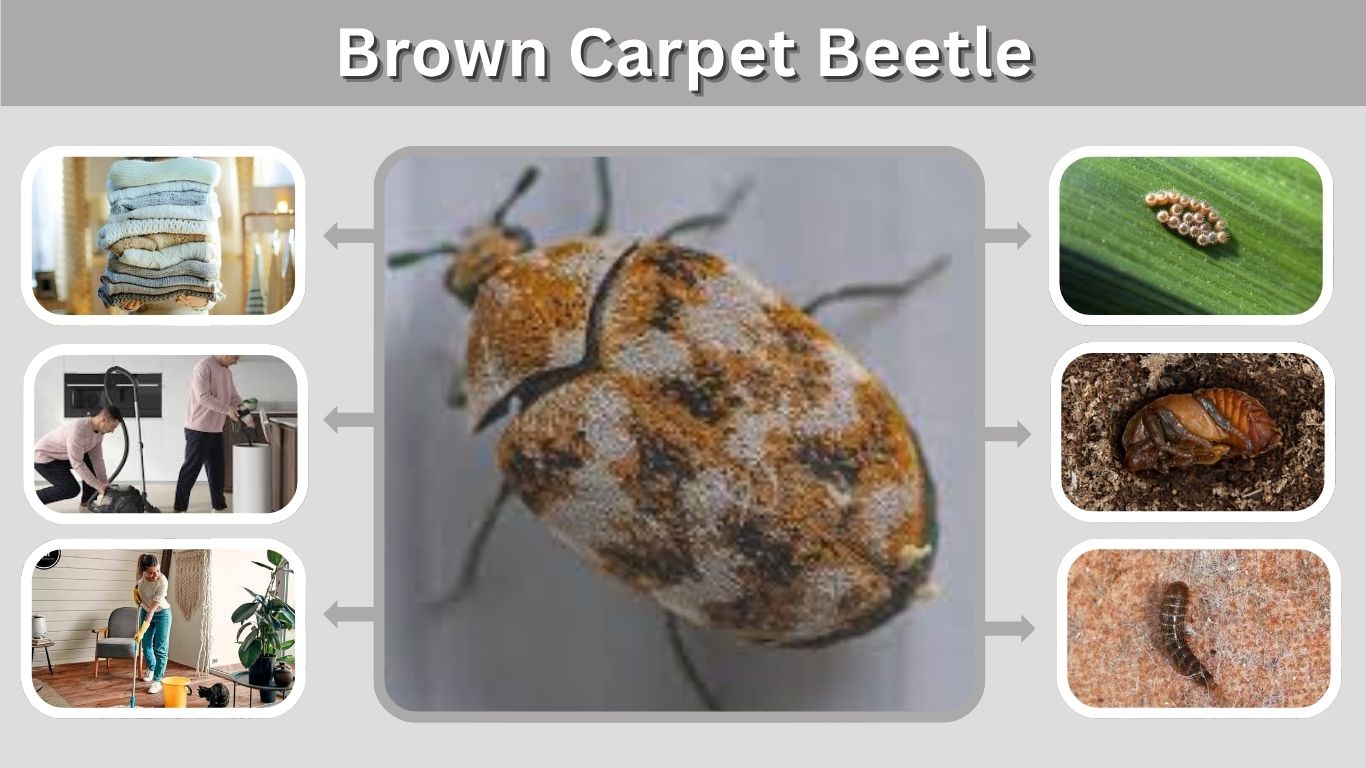
The brown carpet beetle is a tiny household insect that can damage carpets, clothing, furniture, and other natural materials. Although these beetles appear harmless, their larvae feed on wool, fur, feathers, and organic debris, sometimes causing significant damage before homeowners notice them. Brown carpet beetles are often confused with bed bugs or other small brown insects because of their size and appearance. Understanding their identification features, life cycle, feeding habits, and hiding places can help you recognize infestations early and protect your home from expensive fabric damage.
What Is a Brown Carpet Beetle?
The brown carpet beetle (Attagenus smirnovi) is a small beetle belonging to the family Dermestidae. It is sometimes called the vodka beetle and is particularly associated with buildings in parts of Europe. Although several carpet beetle species appear brown, this species has distinctive reddish-brown wing covers and a darker head and thorax.
Brown Carpet Beetle Identification
Adult brown carpet beetles have an oval, slightly elongated body covered with fine hairs.
Their main identification features include:
- Size: Approximately 2–5 millimeters long.
- Color: Brown to reddish-brown wing covers.
- Head: Dark brown to nearly black.
- Body: Oval and slightly elongated.
- Antennae: Short and clubbed, with longer terminal segments in males.
- Wings: Fully developed and capable of flight.
Are All Brown Carpet Beetles the Same?
No, several carpet beetle species can appear brown. Varied carpet beetles have mottled patterns containing brown, white, and dark scales, while black carpet beetles may appear dark brown under certain lighting.
Accurate identification requires examining body shape, coloration, and sometimes microscopic features.
What Do Brown Carpet Beetle Larvae Look Like?
Brown carpet beetle larvae look considerably different from adults. They have elongated, segmented bodies covered with fine hairs. Unlike adults, which may fly toward light, larvae prefer dark, undisturbed environments. They feed on natural materials and cause most of the household damage associated with carpet beetles.
Brown Carpet Beetle Larvae Identification
Mature larvae of Attagenus smirnovi can reach approximately 8 millimeters long. Their bodies are tapered and often described as torpedo-shaped.
They have bronze-brown coloring, visible body segments, and a distinctive tuft of longer hairs at the rear. Their undersides are generally lighter than their upper surfaces.
Where Do Brown Carpet Beetle Larvae Hide?
Larvae commonly hide beneath furniture, along carpet edges, inside closets, and between floorboards.
They may also develop around bird nests, accumulated animal hair, and stored wool fabrics. Their preference for darkness makes infestations difficult to detect during the early stages.
Brown Carpet Beetle Life Cycle
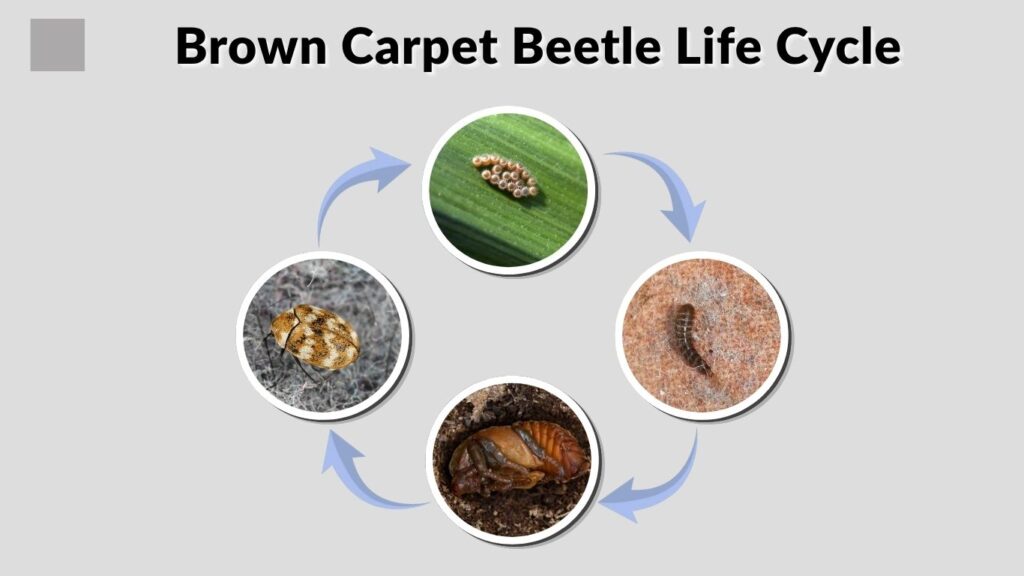
Brown carpet beetles undergo complete metamorphosis, passing through four developmental stages: egg, larva, pupa, and adult. Development depends on temperature, food availability, and environmental conditions. The larval stage is particularly important because this is when the insects feed on animal-based materials and potentially damage household belongings.
Egg and Larval Development
Female beetles lay eggs near suitable food sources. After hatching, the larvae begin feeding and gradually grow through several molts.
Larval development can take many months. Under some indoor conditions, the complete life cycle takes approximately one year, although development varies considerably.
Pupal and Adult Stages
Mature larvae eventually pupate before emerging as adult beetles.
Adults are mobile and can fly, often appearing near windows or light sources. Their primary role in an infestation is reproduction and dispersal rather than damaging fabrics.
Are Brown Carpet Beetles Harmful?
Brown carpet beetles are not generally dangerous to humans, but their larvae can cause household damage. Like other carpet beetle species, they are not blood-feeding insects and do not actively attack people. However, contact with larval hairs may cause skin irritation in sensitive individuals.
Do Brown Carpet Beetles Bite?
No, brown carpet beetles do not bite humans. They do not feed on blood or possess stingers.
Some people develop itchy skin reactions after exposure to larval hairs, sometimes confusing the symptoms with insect bites.
Can Brown Carpet Beetles Damage Furniture?
Yes, larvae can damage furniture upholstery, wool carpets, natural-fiber clothing, and other animal-based materials.
They digest keratin, a protein present in wool, feathers, fur, and similar substances. Their feeding can create irregular holes and damaged patches.
Brown Carpet Beetle vs. Bed Bug
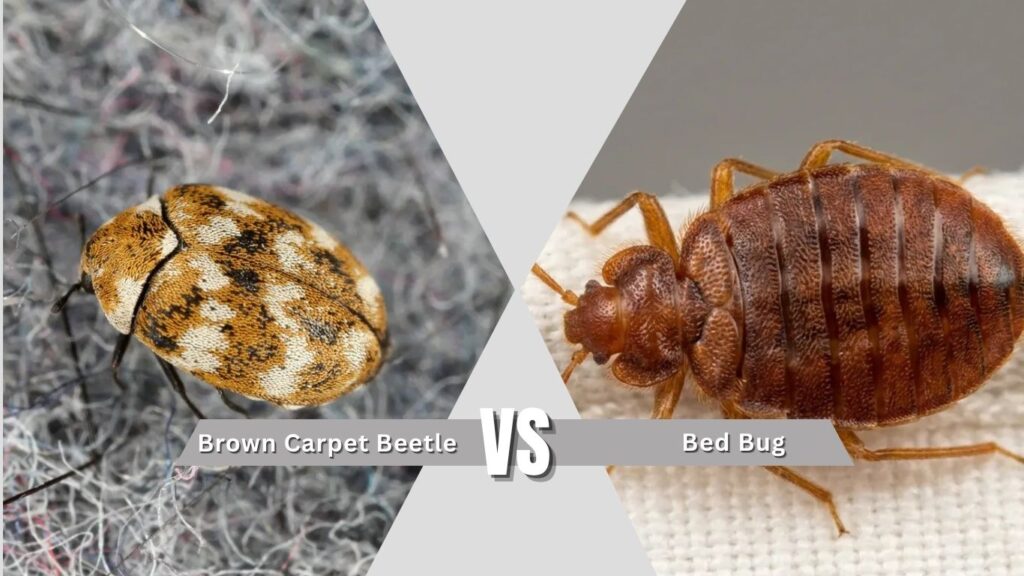
Brown carpet beetles and bed bugs are sometimes confused because both may be found inside homes. However, they differ significantly in appearance, behavior, and feeding habits. Brown carpet beetles mainly threaten natural fabrics, while bed bugs feed on human blood and hide close to sleeping areas.
How to Tell Them Apart
| Feature | Brown Carpet Beetle | Bed Bug |
| Body shape | Oval, convex | Broad, flattened |
| Adult size | 2–5 mm | About 4–7 mm |
| Color | Brown with darker head | Reddish-brown |
| Flight | Can fly | Cannot fly |
| Human bites | No | Yes |
| Main damage | Natural fabrics | Bites and skin reactions |
Which Insect Is More Dangerous?
Bed bugs are generally more concerning for human comfort because they bite and can disrupt sleep.
Brown carpet beetles primarily cause damage to household materials. Correct identification helps homeowners avoid using ineffective pest-control methods.
Signs of a Brown Carpet Beetle Infestation
Brown carpet beetle infestations often remain unnoticed because larvae develop in concealed areas. Homeowners may discover adult beetles near windows before identifying the source. Examining vulnerable materials and hidden spaces is essential for determining whether beetles are reproducing indoors.
Common Infestation Signs
Look for the following warning signs:
- Small, irregular holes in wool clothing.
- Brown, hairy larvae beneath furniture.
- Empty larval skins in closets.
- Adult beetles near windowsills.
- Damage to carpets and upholstered furniture.
- Fine debris around infested materials.
Does Finding One Brown Carpet Beetle Mean Infestation?
Finding one adult does not necessarily indicate an infestation. Adults can enter homes through open windows or doors.
However, discovering multiple larvae, shed skins, or fabric damage suggests that the insects may be reproducing indoors.
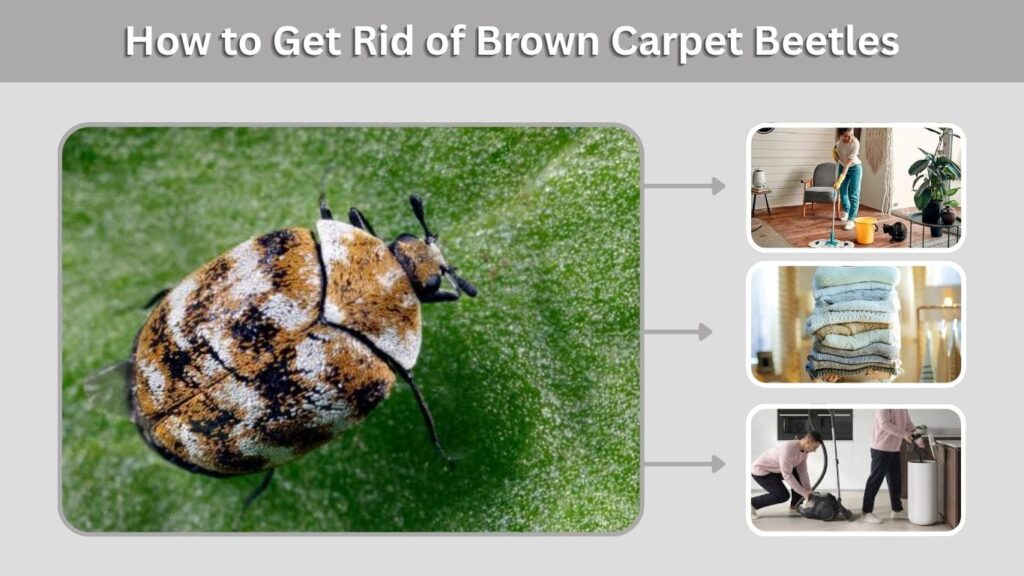
How to Get Rid of Brown Carpet Beetles
Removing brown carpet beetles requires locating their breeding areas, eliminating larval food sources, and thoroughly cleaning affected spaces. Vacuuming and laundering are usually the first steps. Insecticides may be considered for persistent infestations, but removing the source remains essential for successful control.
Effective Brown Carpet Beetle Removal Methods
- Inspect hidden areas: Check carpets, closets, furniture, and storage containers.
- Vacuum thoroughly: Clean carpet edges, baseboards, and furniture crevices.
- Wash infested fabrics: Use hot water when permitted by care labels.
- Dry-clean delicate materials: Professional cleaning can eliminate insects from suitable fabrics.
- Remove organic debris: Clear pet hair, lint, feathers, and dead insects.
- Discard heavily infested items: Remove materials that cannot be properly cleaned.
Do Insecticides Kill Brown Carpet Beetles?
Products specifically labeled for carpet beetle control may help treat persistent infestations.
However, insecticides should not replace cleaning and food-source removal. Always follow label instructions and avoid treating clothing, mattresses, or bedding unless the product expressly permits those applications.
How to Prevent Brown Carpet Beetles
Preventing brown carpet beetles involves reducing suitable larval food sources and restricting adult entry into the home. Routine cleaning and proper storage can significantly reduce the risk of infestations. Natural fabrics require particular attention because they provide food for developing larvae.
Keep Your Home Clean
Vacuum regularly, especially beneath furniture, around carpet edges, and inside storage spaces.
Remove accumulated pet hair, dust, and dead insects. Check window screens and seal gaps that may allow adult beetles indoors.
Store Wool and Natural Fabrics Properly
Wash or dry-clean clothing before long-term storage. Keep wool sweaters, blankets, and other natural materials inside sealed containers.
Regular inspections can reveal early feeding damage before an infestation becomes extensive.
FAQs
1. Are Brown Carpet Beetles Dangerous?
Brown carpet beetles are generally not dangerous to humans because they do not bite or sting. However, their larvae can damage wool, fur, feathers, and other natural materials. Sensitive individuals may occasionally develop irritation after contact with larval hairs.
2. Can Brown Carpet Beetles Fly?
Yes, adult brown carpet beetles have developed wings and can fly. They may enter buildings through windows or doors and are often attracted to light. Their larvae cannot fly and prefer dark areas near suitable food sources.
3. How Big Are Brown Carpet Beetles?
Adult brown carpet beetles typically measure approximately 2–5 millimeters long. Their small, oval bodies are brown or reddish-brown with darker heads. Mature larvae may reach around 8 millimeters and have elongated, hairy bodies.
4. Are Brown Carpet Beetles Common in Homes?
Brown carpet beetles occur in homes and buildings, particularly in parts of Europe. However, other carpet beetle species are more commonly encountered in some regions. Finding a small brown beetle does not automatically confirm the species.
5. What Is the Fastest Way to Remove Brown Carpet Beetles?
The most effective approach is locating the infestation source, vacuuming thoroughly, and cleaning affected fabrics. Removing larvae, eggs, and food sources helps interrupt their development. Persistent infestations may require a professional pest-control inspection.
