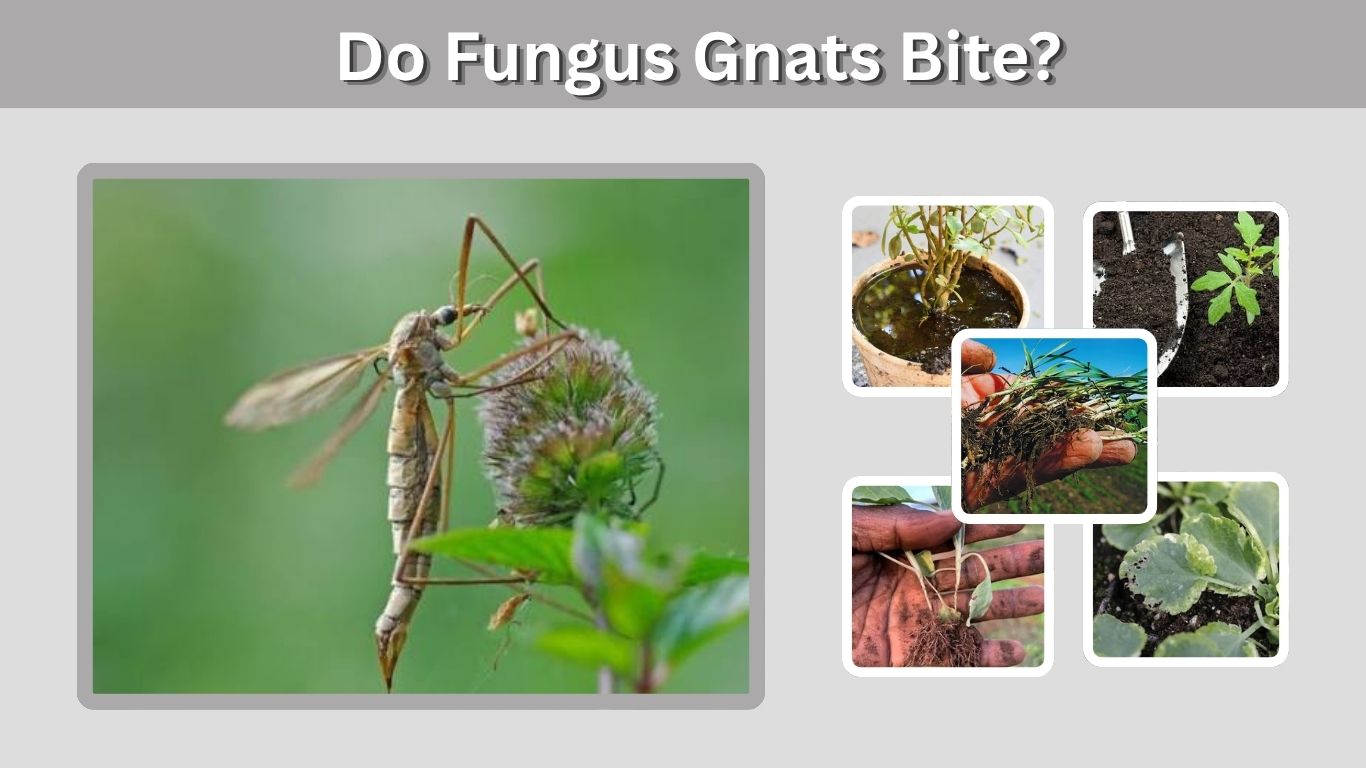
No, fungus gnats do not bite humans, dogs, or cats. These tiny dark flies may hover around your face, houseplants, and windows, making them seem more threatening than they actually are. Adult fungus gnats do not have mouthparts designed to pierce human or animal skin. Their larvae live in damp soil and mainly feed on fungi, decaying organic matter, and sometimes delicate plant roots. Although fungus gnats are harmless to people, a large infestation can become annoying and may damage young or vulnerable plants.
Do Fungus Gnats Bite Humans?
Fungus gnats are frequently mistaken for mosquitoes or other small biting flies because of their slender bodies, long legs, and habit of flying close to people. Despite their appearance, they are not blood-feeding insects.
Can Fungus Gnats Bite People?
No. Fungus gnats cannot normally bite people.
Adult fungus gnats spend much of their short lives searching for suitable places to reproduce. They are attracted to moist soil and organic material rather than human blood.
You may notice them:
- Flying around your face
- Hovering near houseplants
- Resting on windows
- Gathering around lights
- Crawling across damp potting soil
Their presence can be irritating, but they are not trying to bite you.
Do Fungus Gnats Sting Humans?
Fungus gnats do not sting either. They do not possess a stinger and are not defensive insects like bees or wasps.
If you have small itchy bumps while fungus gnats are present in your home, another pest may be responsible.
Do Fungus Gnats Bite Humans in the House?
Fungus gnats are primarily indoor plant pests, so houses are one of the most common places people encounter them. They can reproduce rapidly when potting soil remains consistently damp.
Why Fungus Gnats Fly Around People
Fungus gnats may fly close to your head because they are attracted to moisture, carbon dioxide, odors, and their surroundings. Their erratic flight can make it seem as though they are attacking.
However, even when fungus gnats land on your skin, they do not normally bite.
Do Fungus Gnats Bite Humans at Night?
No. Fungus gnats do not become biting insects at night.
Adults may continue flying around indoor lights during the evening, but their feeding behavior does not change after dark. If you regularly wake up with bites, consider mosquitoes, fleas, bed bugs, or another biting insect rather than fungus gnats.
Do Fungus Gnats Bite Dogs or Cats?
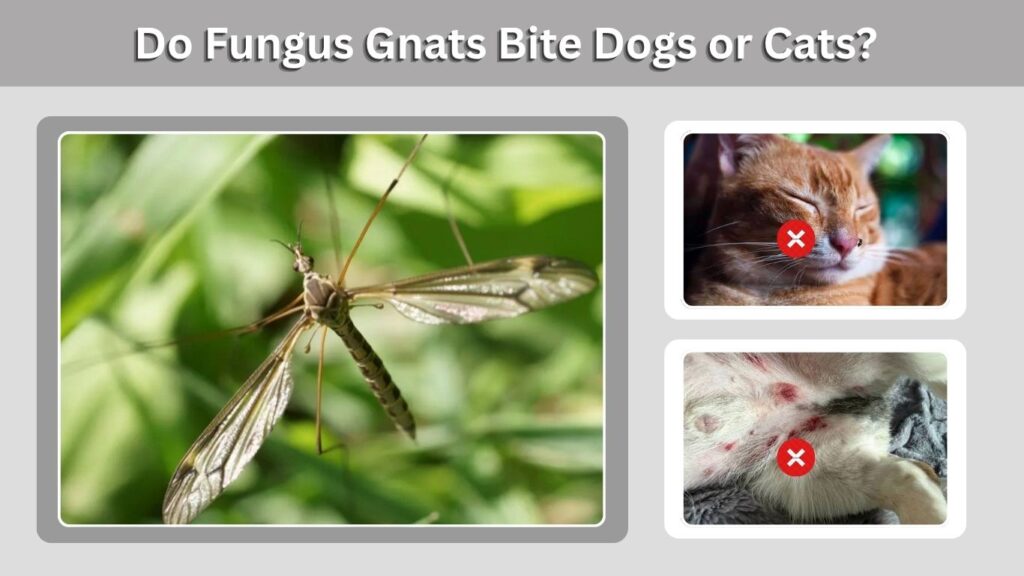
Fungus gnats do not normally bite household pets. Dogs and cats may notice the tiny flies and try to catch them, but fungus gnats are not blood feeders.
Do Fungus Gnats Bite Dogs?
No. Adult fungus gnats do not have the specialized mouthparts required to bite dogs.
If your dog is scratching excessively while small flies are present, investigate other possible causes such as fleas, ticks, mosquitoes, skin irritation, or allergies.
Do Fungus Gnats Bite Cats?
Fungus gnats do not bite cats either. Cats may become interested in fungus gnats because the adults move unpredictably around plants and windows.
A cat repeatedly scratching, licking, or showing irritated skin should not automatically be assumed to have fungus gnat bites.
Do Fungus Gnats Bite Plants?
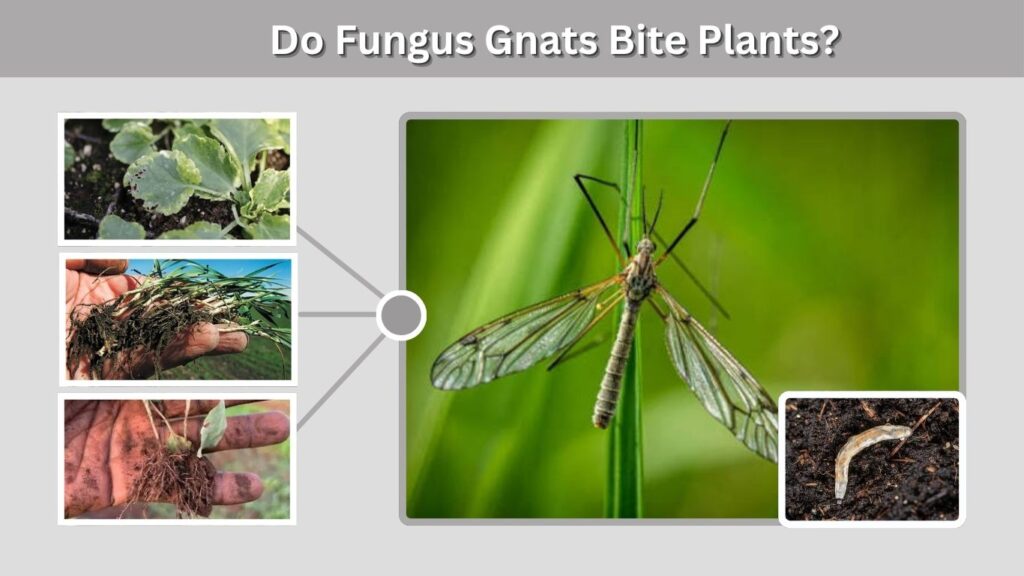
Fungus gnats do not bite plants in the way an insect bites a person. However, their larvae can feed on tender roots and other organic material in potting soil.
This is where fungus gnats can become a genuine plant problem.
How Fungus Gnat Larvae Affect Plants
Fungus gnat larvae are tiny, translucent worms with dark-colored heads. They live just beneath the soil surface.
Large populations may damage:
- Seedlings
- Young roots
- Root hairs
- Newly propagated cuttings
- Weak or stressed plants
Healthy mature houseplants can often tolerate small numbers, but seedlings and young plants are more vulnerable.
Signs of Fungus Gnat Damage
Possible signs include:
- Seedlings growing slowly
- Plants wilting despite adequate moisture
- Yellowing leaves
- Weak root development
- Large numbers of adults around the soil
- Tiny larvae visible in damp potting mix
Keep in mind that overwatering itself can cause many similar plant symptoms while also creating ideal conditions for fungus gnats.
Why Do Fungus Gnats Appear in Your House?
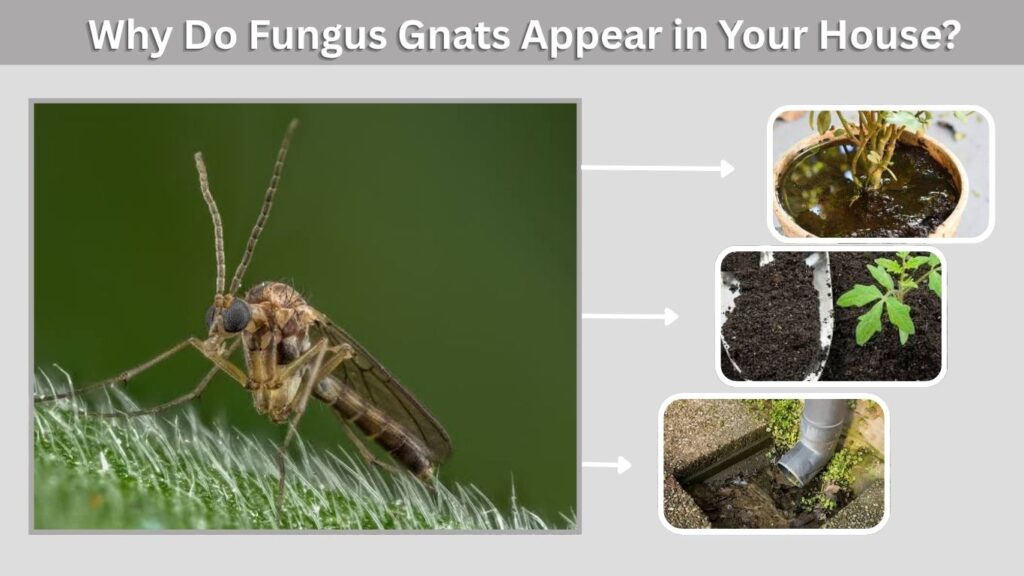
Fungus gnats thrive in consistently moist environments. Their larvae require damp organic material to survive, which makes frequently watered houseplants ideal breeding sites.
Common Causes of Fungus Gnats
Infestations are commonly associated with:
- Overwatered houseplants
- Continuously damp potting soil
- Organic-rich growing media
- Poor drainage
- New plants carrying eggs or larvae
- Decaying plant material
Female fungus gnats lay eggs in moist soil. Larvae hatch and develop below the surface before eventually emerging as adults.
Breaking this life cycle is essential for long-term control.
Do Mosquito Bits Kill Fungus Gnats?
Yes, Mosquito Bits can help control fungus gnat larvae when the product contains Bacillus thuringiensis israelensis, commonly abbreviated as Bti.
Bti is a naturally occurring bacterium used to control certain fly and mosquito larvae.
How Do Mosquito Bits Work on Fungus Gnats?
When used according to the product directions, Bti becomes available in the moist growing medium.
Fungus gnat larvae consume the active material while feeding. Bti then affects their digestive system, eventually killing susceptible larvae.
The important point is that Mosquito Bits primarily target the larval stage, not adult fungus gnats already flying around your home.
Do Mosquito Bits Work Immediately?
You should not expect every adult gnat to disappear immediately.
Existing adults may continue flying until they die naturally. Meanwhile, treating larvae helps prevent the next generation from developing.
Repeated treatment according to label instructions may be necessary because fungus gnats have multiple life stages present at the same time.
How to Get Rid of Fungus Gnats
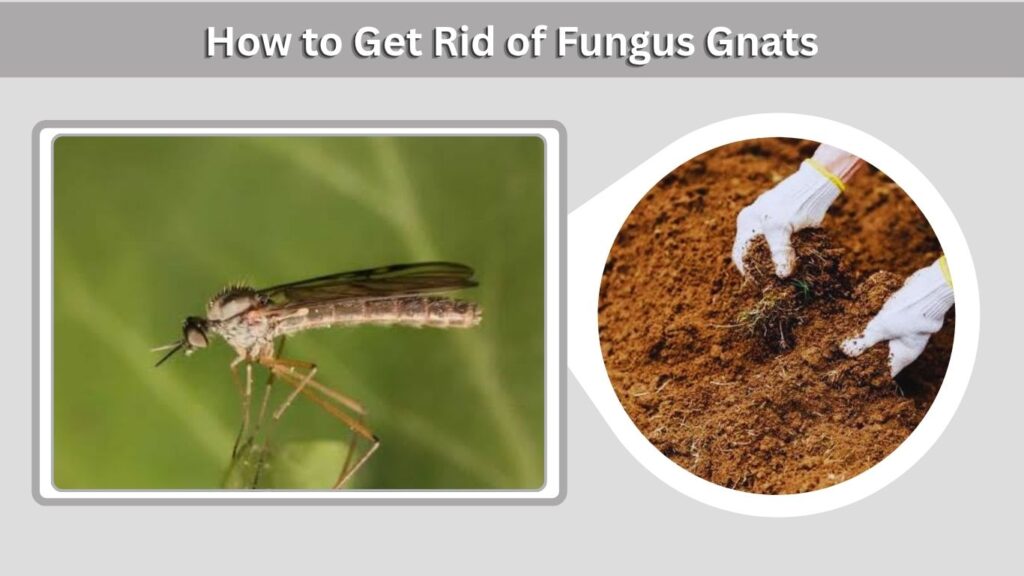
Successful control works best when both adults and larvae are addressed. Simply killing flying adults may temporarily reduce numbers without stopping reproduction in the soil.
Let the Soil Dry
Fungus gnat larvae thrive in moist soil.
Allow the upper layer of potting mix to dry between waterings whenever the plant can tolerate it. This makes the environment less suitable for eggs and larvae.
Avoid allowing plants that require consistently moist conditions to become dangerously dry.
Use Yellow Sticky Traps
Yellow sticky cards placed near houseplants can capture adult fungus gnats.
Sticky traps are useful for:
- Reducing adult numbers
- Monitoring infestation levels
- Identifying which plants have the worst problems
They will not eliminate larvae already living in the soil.
Treat the Larvae
A Bti-based treatment such as appropriately labeled Mosquito Bits can help interrupt the fungus gnat life cycle.
Always follow the manufacturer’s instructions regarding preparation, application, frequency, and where the product can safely be used.
Improve Plant Care
Also consider:
- Emptying water from saucers
- Improving pot drainage
- Removing dead plant material
- Avoiding unnecessary watering
- Inspecting new houseplants
- Replacing severely contaminated potting mix when necessary
Reducing excessive moisture is one of the most important long-term prevention measures.
Fungus Gnats vs. Biting Gnats
The word “gnat” covers many different tiny flying insects. This is why people sometimes hear that gnats bite even though fungus gnats do not.
Key Differences
Fungus gnats primarily live around moist soil and do not normally bite people.
Biting midges, sometimes called no-see-ums, can bite humans and leave intensely itchy red bumps.
Black flies or buffalo gnats can also bite humans and animals.
Therefore, an insect being described as a “gnat” does not automatically identify whether it can bite.
FAQs
Do Fungus Gnats Bite You?
No. Fungus gnats do not normally bite humans because they are not blood-feeding insects.
Do Fungus Gnats Bite Humans at Night?
No. Fungus gnats may fly around lights at night, but they do not begin biting humans after dark.
Do Fungus Gnats Bite or Sting?
Fungus gnats neither normally bite nor sting humans. They do not have a stinger and lack mouthparts designed for feeding on human blood.
Do Mosquito Bits Work for Fungus Gnats?
Bti-containing Mosquito Bits can be effective against fungus gnat larvae when used according to label directions. They primarily target larvae in moist growing media rather than flying adults.
Are Fungus Gnats Harmful?
Fungus gnats are generally harmless to humans, dogs, and cats. However, heavy larval populations can damage seedlings, young plants, and delicate roots.