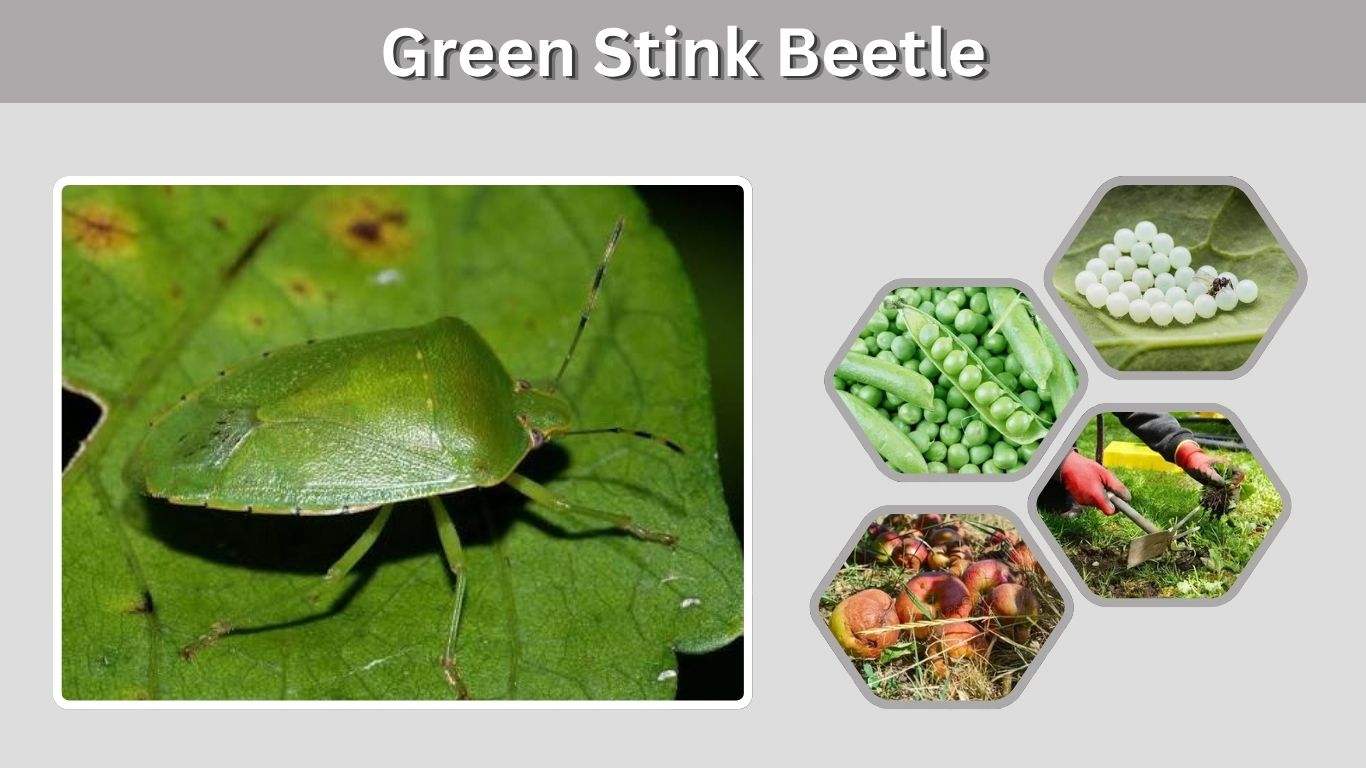
A bright green insect that releases a strong odor is often called a green stink beetle. However, this common name can be confusing. In most cases, the insect is actually a green stink bug, not a beetle. Green stink bugs have broad, shield-shaped bodies and release an unpleasant defensive scent when disturbed. Large metallic insects may instead be green June beetles. Understanding their shape, size, feeding habits, and eggs makes accurate identification much easier.
What Is a Green Stink Beetle?
“Green stink beetle” is an informal name rather than the accepted common name of one particular species. People commonly use it for one of three insects:
- Green stink bug (Chinavia hilaris)
- Southern green stink bug (Nezara viridula)
- Green June beetle (Cotinis nitida)
The first two are true bugs belonging to the order Hemiptera. The green June beetle is a genuine beetle belonging to the order Coleoptera. Oklahoma State University identifies Chinavia hilaris as the green stink bug and Nezara viridula as the southern green stink bug.
Is It a Beetle or a Stink Bug?
A green stink bug has a broad, flattened body shaped somewhat like a shield. Its wings overlap across the back, and it has a long piercing mouthpart used to suck fluids from plants.
A green June beetle has a thicker, oval body with hardened wing covers that meet in a straight line down the middle. It also has short, clubbed antennae and a shiny or velvety green surface.
| Feature | Green stink bug | Green June beetle |
| Insect order | Hemiptera | Coleoptera |
| Body shape | Flat and shield-shaped | Thick, oval and rounded |
| Typical color | Leaf green | Metallic or velvety green |
| Mouthparts | Piercing and sucking | Chewing |
| Main foods | Seeds, pods and fruits | Ripe fruit and organic matter |
| Odor | Strong scent when disturbed | May have a noticeable odor |
| Eggs | Clusters on plants | Deposited in soil |
Green Stink Beetle Identification
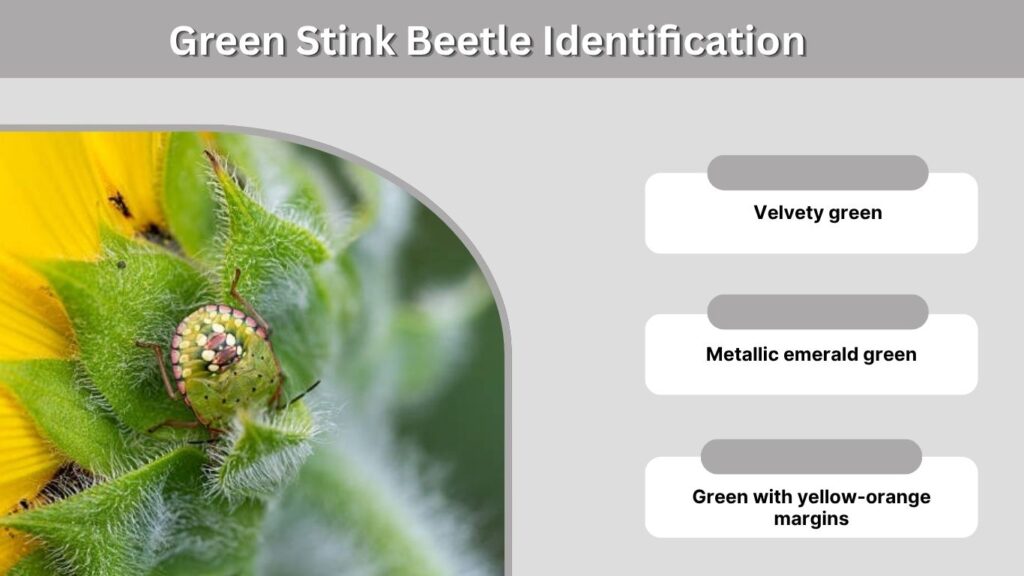
The appearance varies depending on which insect is being described. Careful observation of the body shape is more reliable than color alone.
Size and Body Shape
Adult green stink bugs are generally around one-half to three-quarters of an inch long. Their bodies are broad near the shoulders and narrow toward the rear, producing the characteristic shield shape.
Green June beetles are noticeably larger, usually measuring approximately ¾ to 1 inch. Their bodies are strongly rounded, and their hardened front wings form a protective shell.
Color and Markings
A green stink bug is usually light or medium green. Small dark dots may appear along the outer edge of the abdomen. Some individuals develop yellow, reddish or pale borders.
The southern green stink bug is normally a more uniform green. Adults may have three small pale spots between the shoulders.
Green June beetles can be:
- Velvety green
- Metallic emerald green
- Bronze-green
- Green with yellow-orange margins
- Dark green with a brownish underside
Penn State describes the upper body of the green June beetle as velvety green to dull brown, with green stripes and yellow-orange margins along the hardened wings.
Green and Black Stink Beetles
Young stink bugs, known as nymphs, may look very different from adults. Depending on their age and species, they can be green and black, black and orange, or patterned with pale spots. Their wings are not fully developed, but they retain the rounded or shield-like body.
Therefore, a small green-and-black insect clustered around eggs or feeding on a plant may be an immature stink bug rather than a beetle.
Why Does the Green Stink Beetle Smell?
Stink bugs possess scent glands that release defensive chemicals. When the insect is handled, crushed or threatened, these chemicals create a sharp odor that may resemble coriander, cut vegetation or strong herbs.
The smell helps discourage birds, reptiles and other predators. It does not mean that the insect is poisonous. However, the odor can remain on fingers, clothing, furniture or vacuum-cleaner parts.
Avoid crushing stink bugs indoors. Capture one gently in a container or vacuum it with a disposable bag that can be removed promptly.
Green June beetles are not members of the stink bug family, but some large beetles can also produce unpleasant-smelling defensive secretions. This may explain reports of a “big green beetle that stinks.”
What Do Green Stink Beetles Eat?
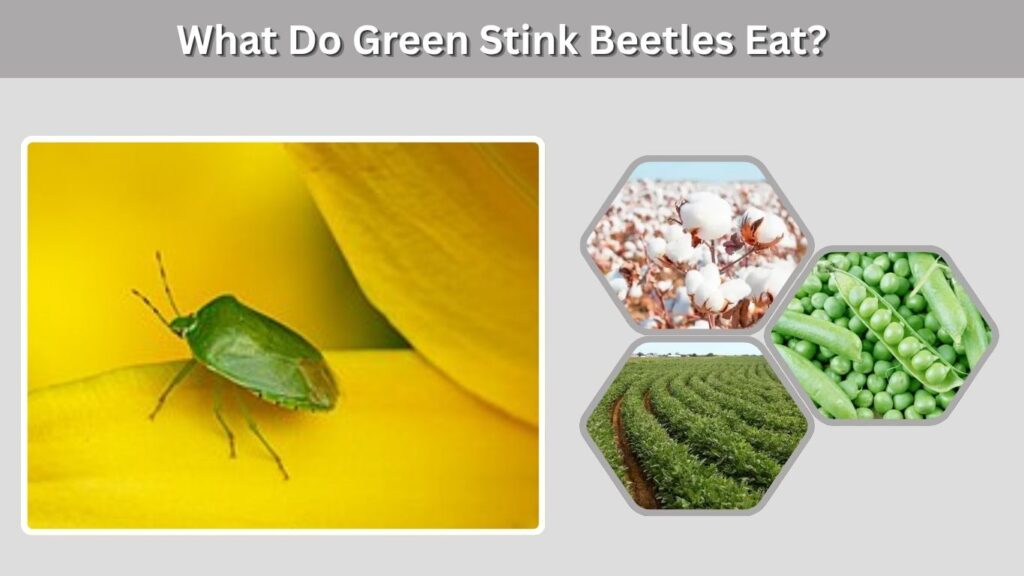
Green stink bugs are plant feeders. Both adults and nymphs insert their needle-like mouthparts into developing plant tissue and draw out fluids.
Common Food Plants
They may feed on:
- Soybeans
- Cotton
- Tomatoes
- Beans and peas
- Corn
- Peaches
- Apples
- Berries
- Nuts
- Various weeds
Seeds, pods, fruits and other reproductive plant structures are especially attractive. Mississippi State University notes that green stink bugs feed on plant seeds and fruits, while nymphs and adults can both cause damage.
Feeding Damage
Stink bug feeding can leave small punctures that later become discolored, sunken or corky. Damaged fruit may grow unevenly, develop hard spots or become unsuitable for sale.
On tomatoes, feeding may produce pale yellow or white corky areas beneath the skin. Developing beans, peas and soybeans may have shriveled or malformed seeds.
Green June beetles have different feeding habits. Adults commonly visit ripe or overripe peaches, figs, grapes and other soft fruits. Their larvae live in soil and feed mainly on decaying organic material, although their tunneling can disturb turf and plant roots.
Green Stink Bug Eggs and Life Cycle
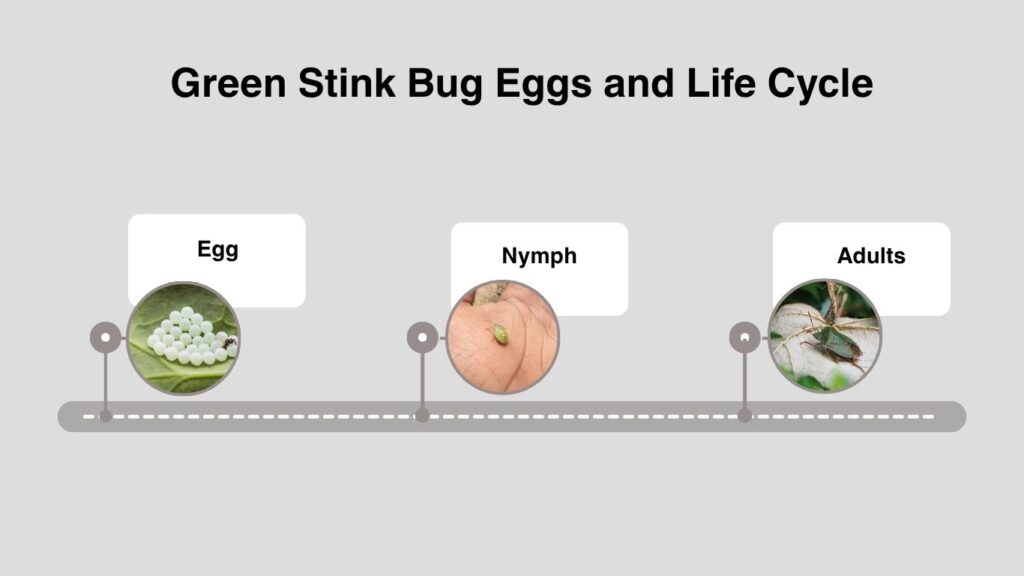
Female stink bugs usually attach their eggs to leaves in neat groups. The eggs are small, barrel-shaped and tightly arranged in rows.
What Do the Eggs Look Like?
Southern green stink bug eggs are white to light yellow and are normally glued in a single-layer mass to the underside of a leaf. As hatching approaches, they may darken or show visible markings.
Newly hatched nymphs often remain near the empty eggshells for a short period. They then disperse and begin feeding.
Development
The life cycle includes:
- Egg
- First-stage nymph
- Several additional nymph stages
- Winged adult
Unlike beetles, stink bugs do not have a caterpillar-like larval stage or a pupa. Their nymphs gradually become more adult-like after each molt.
Green June beetles undergo complete metamorphosis. Their eggs are placed in soil, where they hatch into white grubs. The grubs later pupate underground before emerging as adult beetles.
Where Are Green Stink Beetles Found?
Green stink bugs occur across much of North America. They are frequently encountered in gardens, orchards, farms, woodland edges and weedy areas. The southern green stink bug is particularly common in warmer regions and has spread through tropical and subtropical parts of multiple continents.
Green June beetles are native to the eastern United States, with a range extending from parts of the Northeast south to Florida and west into Texas, Oklahoma and Kansas.
In Australia, “green stink beetle” may be used informally for different green shield bugs or odor-producing beetles. Because common names vary by region, a photograph and location are needed for reliable species identification.
Are Green Stink Beetles Harmful?
Green stink bugs are not considered dangerous to people. They do not feed on blood, spread household diseases or normally bite humans. Their primary concern is plant damage and the unpleasant odor released when disturbed.
Green June beetles are also not dangerous. Their large size and noisy flight can appear intimidating, but they do not sting. They may occasionally collide with people while flying, especially during sunny summer days.
Control is usually necessary only when numerous insects are damaging fruits, vegetables or field crops.
How to Manage Green Stink Bugs
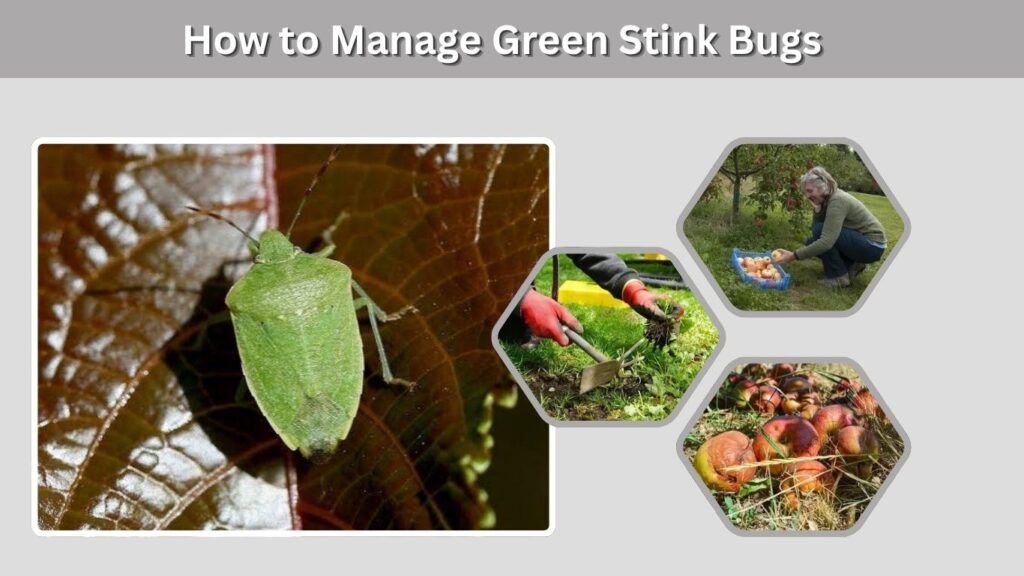
Begin by inspecting the undersides of leaves and removing egg masses by hand. Drop adults and nymphs into a container of soapy water rather than crushing them.
Other helpful methods include:
- Removing weeds around vegetable beds
- Harvesting ripe fruit promptly
- Discarding fallen or damaged fruit
- Using fine insect netting before plants flower
- Encouraging birds and beneficial insects
- Checking plants regularly for eggs and nymphs
- Following local extension recommendations before using insecticides
Chemical treatment is rarely needed for one or two insects. Large agricultural infestations should be assessed according to crop-specific thresholds rather than treated automatically.
FAQs
What is the scientific name of the green stink beetle?
The name usually refers to the green stink bug, Chinavia hilaris, formerly widely listed as Acrosternum hilare. It may also describe the southern green stink bug, Nezara viridula. A large metallic insect may instead be the green June beetle, Cotinis nitida.
Can a green stink beetle bite?
Plant-feeding green stink bugs are not aggressive and do not normally bite people. Their mouthparts are designed to pierce fruits, seeds and other plant tissues. Handling them may cause an unpleasant smell, so moving them with a container is preferable.
Why is a large green beetle flying around my yard?
A large, noisy, metallic-green insect is probably a green June beetle. Adults are active during summer and often fly close to lawns, fruit trees and compost-rich soil. They may visit ripe peaches, grapes, figs and other soft fruits.
Are green stink bug eggs harmful to plants?
The eggs themselves do not damage plants, but the nymphs that hatch from them begin feeding on plant fluids. Removing egg masses early can prevent larger groups of nymphs from damaging developing vegetables, fruits, pods or seeds.
What is a small green stink bug found on juniper?
A small green insect on juniper may be the juniper stink bug or jade stink bug, Banasa euchlora. It is a shield-shaped true bug rather than a beetle. Location, markings and a clear photograph are important because several green stink bug species look similar.