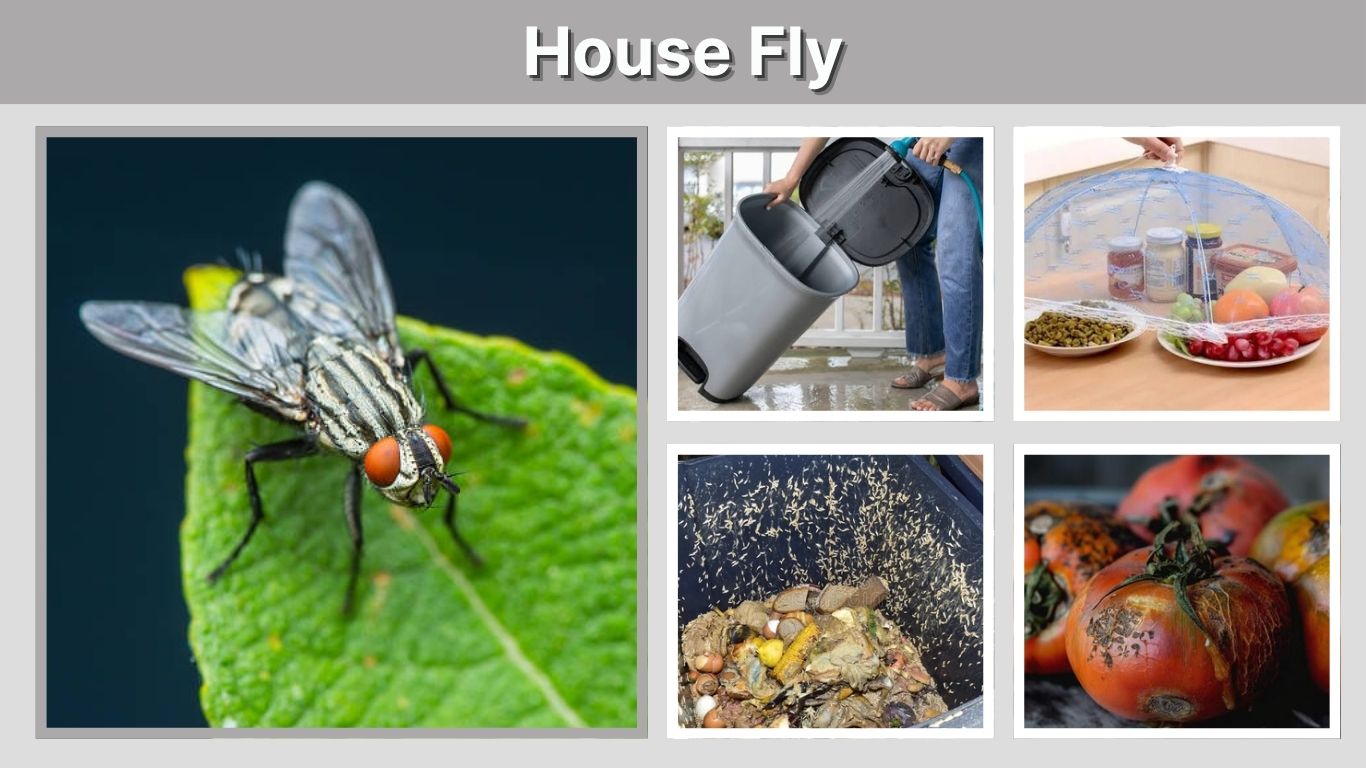
The house fly is one of the most familiar insects found around homes, restaurants, farms, and other places where food and organic waste are available. Although a single fly may seem like a minor nuisance, house flies reproduce quickly and can become a serious indoor problem when breeding conditions are suitable. Understanding the house fly’s appearance, lifespan, eggs, larvae, life cycle, and behavior makes infestations much easier to recognize. Proper sanitation, trapping, and removal of breeding sources are the most important steps for controlling house flies.
What Is a House Fly?
The common house fly, scientifically known as Musca domestica, is a widespread fly closely associated with people and human environments. Adults frequently enter buildings searching for food, warmth, moisture, and suitable resting places.
House flies do not have chewing mouthparts. Instead, they feed primarily on liquid or dissolved food using sponge-like mouthparts.
House Fly Identification
Common characteristics include:
- Gray body
- Four dark stripes on the thorax
- One pair of functional wings
- Large reddish compound eyes
- Short antennae
- Approximately 1/4 inch long
- Transparent wings
- Rapid, active flight
The abdomen often has yellowish or pale areas, although coloration can vary between individuals.
Common House Fly Behavior
House flies are active mainly during daylight hours. They frequently land on walls, ceilings, windows, food, garbage, and other surfaces.
At night, they usually rest in protected locations such as ceiling corners, curtains, wires, walls, and vegetation.
Their ability to move rapidly between waste and food preparation areas is one reason large populations should not be ignored.
House Fly Life Cycle
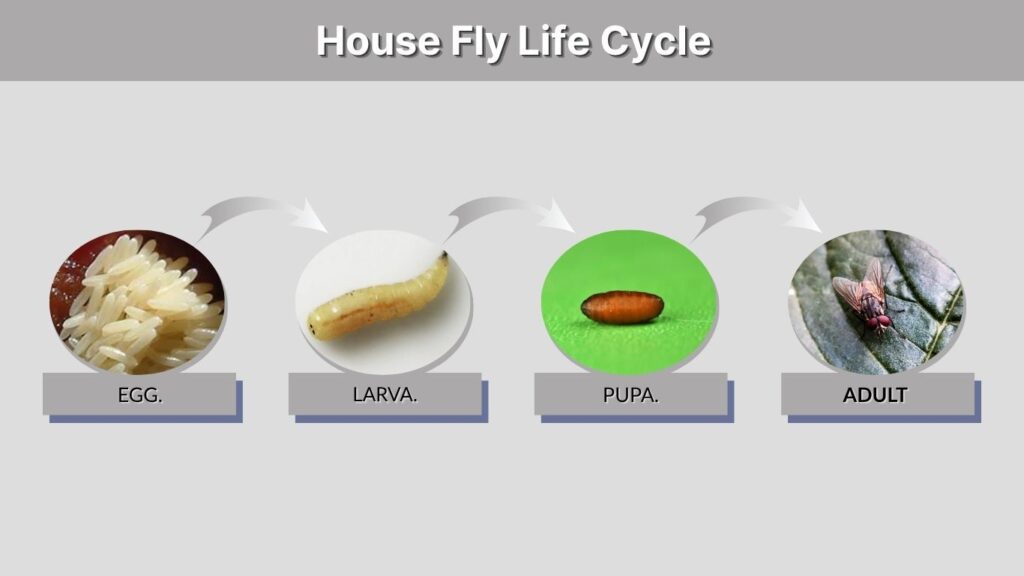
The house fly life cycle consists of four stages: egg, larva, pupa, and adult. Under warm conditions, development can happen quickly, allowing multiple generations to appear during a single season.
A female can lay many eggs over her lifetime, which is why a small breeding source may eventually create a noticeable infestation.
House Fly Eggs
House fly eggs are tiny, white, elongated structures that are usually deposited in moist decomposing organic material.
Common egg-laying sites include:
- Garbage
- Animal manure
- Rotting food
- Compost
- Decaying plant material
- Soiled pet bedding
- Organic waste
Eggs can hatch quickly when temperatures and moisture levels are favorable.
House Fly Larvae and Maggots
After the eggs hatch, small legless larvae emerge. These larvae are commonly called house fly maggots.
They are usually:
- Creamy white
- Legless
- Soft-bodied
- Narrow toward one end
- Found inside moist organic matter
Larvae feed intensively and grow through several stages before leaving the feeding material to pupate.
House Fly Pupae
Mature larvae usually move toward a somewhat drier location before forming pupae.
The pupal case gradually becomes brown or reddish-brown and resembles a small capsule.
Adult flies develop inside these cases before emerging to begin the cycle again.
House Fly Lifespan
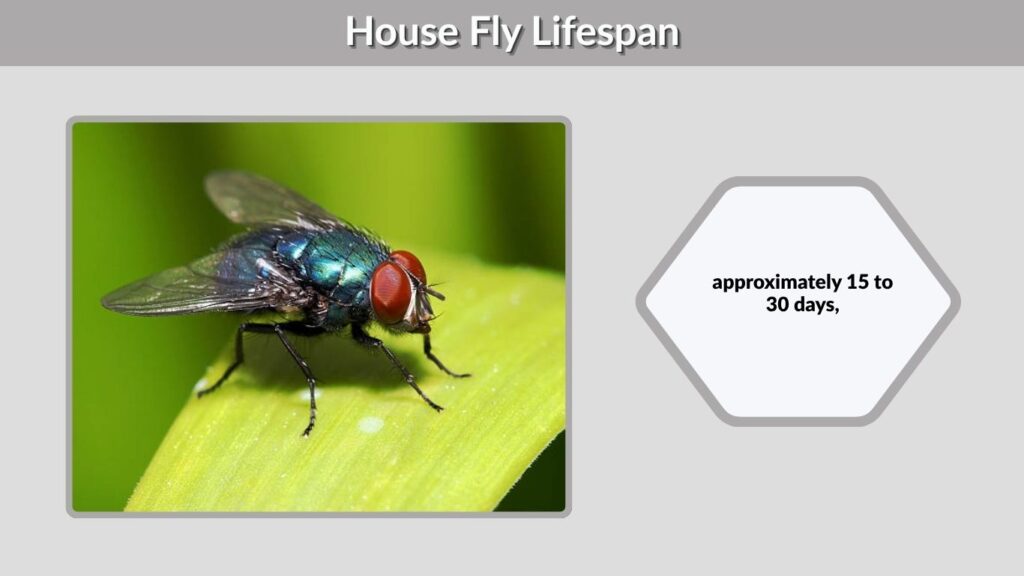
The house fly lifespan is usually measured in weeks rather than months. Adult house flies commonly live for approximately 15 to 30 days, although temperature, food, humidity, predators, and other environmental factors can influence survival.
How Long Does a House Fly Live?
A house fly may survive for several weeks when conditions are favorable.
Its life can be shortened by:
- Lack of food
- Low humidity
- Extreme temperatures
- Predators
- Insecticides
- Fly traps
- Physical removal
Because females can reproduce during their relatively short adult lives, even temporary access to a suitable breeding source can produce new flies.
How Long Can a Fly Live in a House?
An indoor house fly may potentially survive for several weeks if it has access to food, moisture, and appropriate temperatures.
Indoor environments can protect flies from rain, extreme temperatures, and some predators. However, a fly trapped in a clean environment with little food may die much sooner.
House Fly Infestation
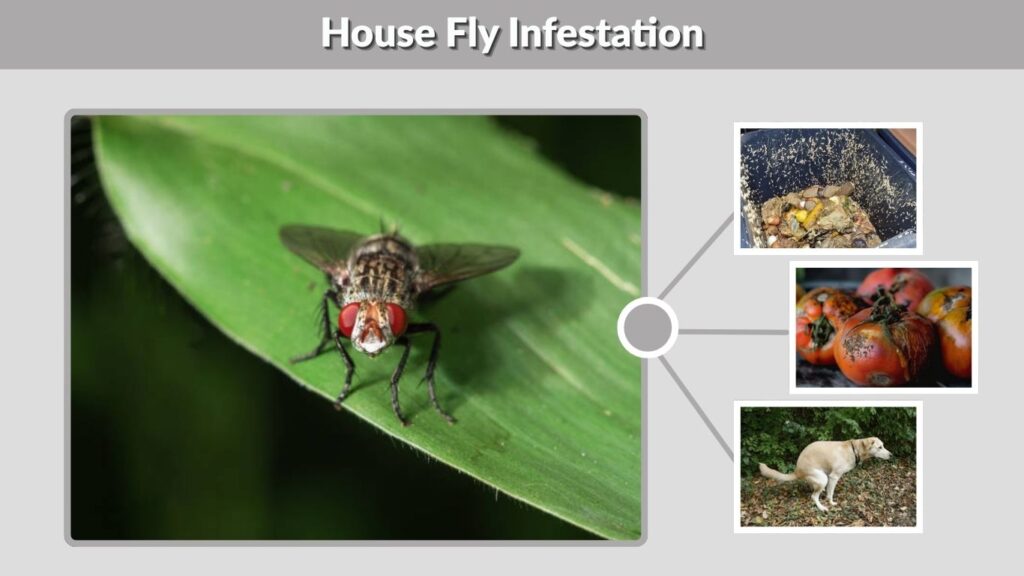
A house fly infestation usually means that flies are either entering the building repeatedly or breeding somewhere nearby.
A sudden increase in flies deserves attention, especially if many appear in the same room.
Signs of a House Fly Infestation
Look for:
- Numerous adult flies
- Maggots around garbage or organic waste
- Small dark fly spots on surfaces
- Pupae in cracks or dry areas
- Flies repeatedly appearing near kitchens
- Activity around trash containers
- Flies gathering around windows
- Persistent flies despite killing individual adults
Finding larvae is particularly important because it suggests that a breeding source may be close.
Why Are There So Many House Flies?
Large numbers of house flies may be associated with:
- Open garbage
- Rotting food
- Pet waste
- Animal manure
- Dirty garbage cans
- Compost
- Dead animals
- Food residue
- Poor sanitation
- Open doors or damaged screens
Removing the breeding material is usually more effective than simply killing adult flies.
Does a House Fly Bite?
A common question is whether a house fly can bite humans. Common house flies do not normally bite.
Their mouthparts are designed for sponging and absorbing liquids rather than piercing human skin.
Why Does It Feel Like a House Fly Is Biting?
If a fly around the home appears to bite, it may actually be another species.
Possible biting flies can include:
- Stable flies
- Horse flies
- Deer flies
- Black flies
Correct identification is important before deciding how to control the insect.
House Fly vs. Other Common Flies
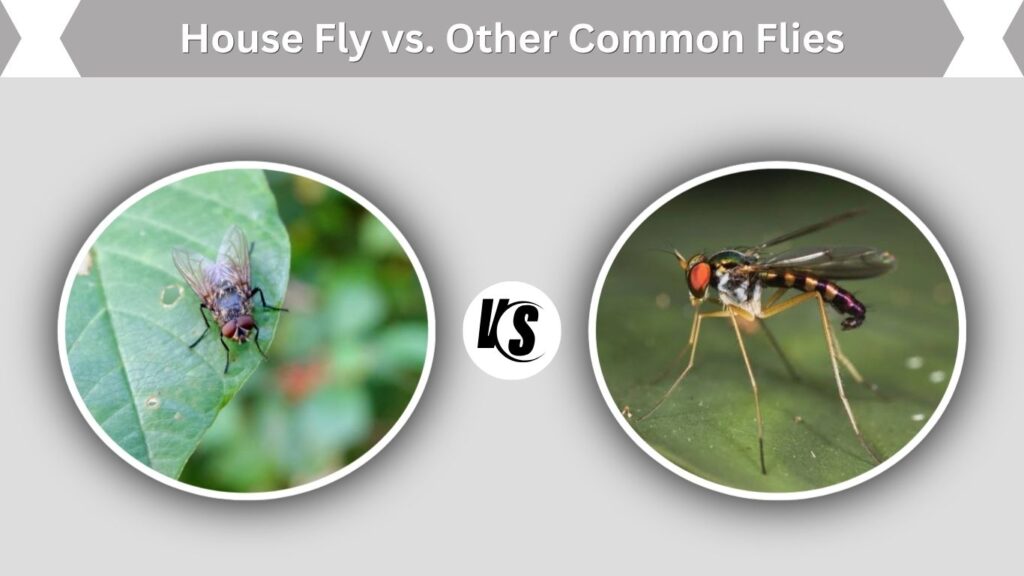
Several flies may enter homes and be mistaken for ordinary house flies. Size, color, behavior, and breeding habits can help separate them.
House Fly vs. Horse Fly
Horse flies are generally much larger and more robust than common house flies.
Female horse flies can bite because they feed on blood. House flies cannot.
Horse flies are more strongly associated with outdoor environments, livestock, and wetlands.
House Fly vs. Cluster Fly
Cluster flies often enter buildings in large numbers when seeking protected locations for colder months.
They tend to be slower and less active than house flies.
House flies, on the other hand, are strongly associated with garbage, food, manure, and other decomposing organic materials.
House Fly vs. Fruit Fly
Fruit flies are much smaller than house flies and are commonly found around overripe fruit, fermented liquids, drains, and food residues.
House flies are noticeably larger and can breed in a much wider range of decaying organic matter.
House Fly vs. Blow Fly
Blow flies are often larger and may have metallic blue, green, or bronze coloration.
Their presence indoors can sometimes indicate dead animals or other decomposing material.
The common house fly is mostly gray rather than metallic.
How to Get Rid of House Flies
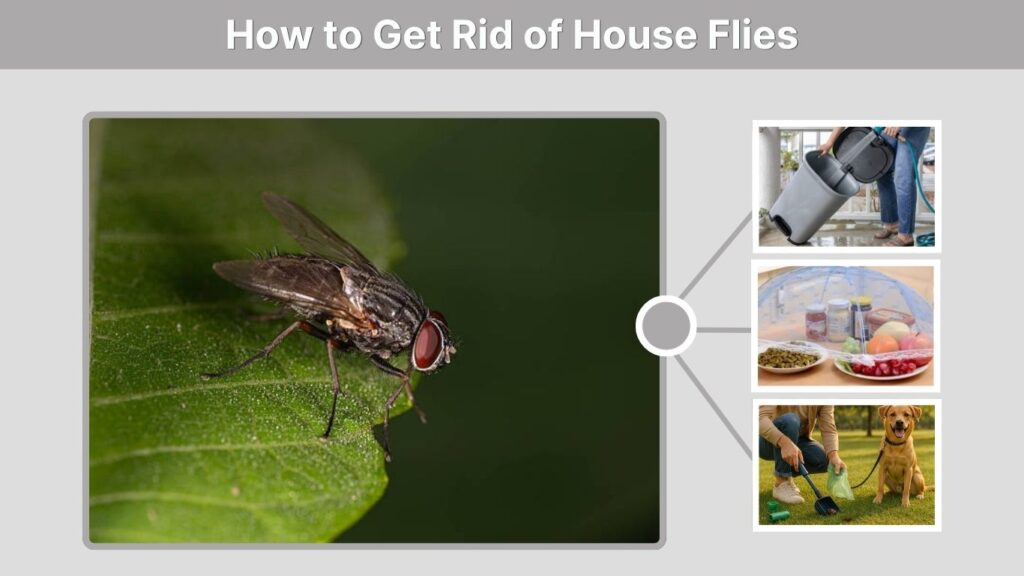
Successful house fly control begins by removing whatever allows the flies to feed and reproduce. Traps may reduce adult numbers, but they will not completely solve an infestation while maggots continue developing.
Remove House Fly Breeding Sources
Start by:
- Taking garbage outside regularly.
- Cleaning garbage containers.
- Removing spoiled food.
- Cleaning pet waste promptly.
- Keeping food covered.
- Cleaning spills and crumbs.
- Managing compost correctly.
- Checking for dead animals.
- Cleaning beneath appliances.
- Fixing sanitation problems around outdoor bins.
This targets the source instead of only the visible adults.
Use House Fly Traps
Several types of house fly traps can help reduce adult populations.
Options include:
- Sticky fly ribbons
- Window traps
- Light traps
- Disposable outdoor fly traps
- Baited traps
- DIY bottle traps
Place traps where flies are active while keeping them away from food preparation surfaces.
Homemade House Fly Trap
A simple DIY trap can be made using a container with an attractive bait such as sugar water or another fermenting food source.
The goal is to lure flies into the container while making escape difficult.
Homemade traps may help with a few flies, but sanitation remains more important when dealing with an established infestation.
Prevent House Flies From Returning
Long-term prevention includes:
- Repairing window screens
- Keeping doors closed
- Installing door sweeps
- Covering trash cans
- Cleaning food waste quickly
- Keeping drains and garbage areas clean
- Removing pet waste regularly
- Storing food in sealed containers
Regular sanitation greatly reduces the resources house flies need.
Are House Flies Dangerous?
House flies do not inject venom or normally bite people. However, they frequently land on garbage, feces, decomposing material, and food.
Because they move between contaminated and clean surfaces, their presence around kitchens and food storage areas should be controlled.
Avoid allowing flies to land on exposed food, cooking surfaces, or utensils.
FAQs
What is the scientific name of the house fly?
The scientific name of the common house fly is Musca domestica.
How long does a house fly live?
An adult house fly commonly survives for approximately 15 to 30 days, although environmental conditions can shorten or extend its life.
Can a house fly bite humans?
No. Common house flies do not have mouthparts designed to bite human skin.
Where do house flies lay eggs?
They commonly lay eggs in moist decomposing organic matter such as garbage, manure, rotting food, and other waste.
What is the fastest way to control a house fly infestation?
Finding and removing the breeding source is usually the most important step. Combine sanitation with traps, screens, and proper waste management to reduce adult flies and prevent new generations.