
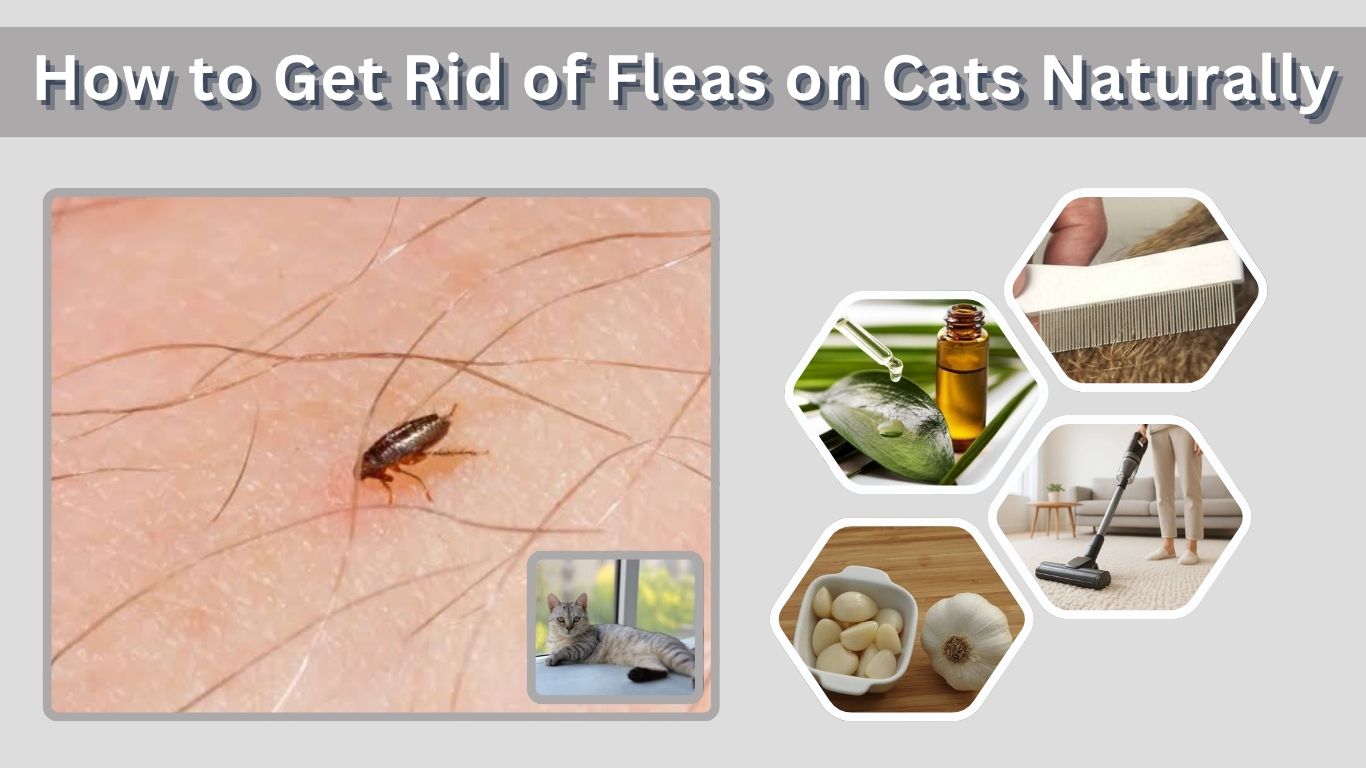
Fleas can make your cat uncomfortable, causing constant scratching, irritated skin, and restless behavior. If you prefer gentle solutions, you may wonder how to get rid of fleas on cats naturally without exposing your pet to unnecessary chemicals. Fortunately, simple methods such as flea combing, regular cleaning, and washing bedding can help reduce flea populations. However, not every homemade remedy is safe or effective. Understanding which natural approaches work, which ones to avoid, and when veterinary treatment becomes necessary can help protect your cat.
Can You Get Rid of Fleas on Cats Naturally?
Natural flea control involves physically removing fleas and reducing the number developing around your home. These methods can provide relief, especially when only a few fleas are present. However, fleas reproduce quickly, and their eggs often fall into carpets, furniture, and bedding. Therefore, natural methods alone may not completely eliminate an established infestation.
How Natural Flea Removal Works
Physical flea removal focuses on removing adult insects rather than poisoning them. A flea comb captures fleas trapped between its closely spaced teeth, while washing and vacuuming reduce the immature stages in your home.
These methods can help interrupt flea development, but they do not provide lasting protection against new fleas. If fleas continue appearing, veterinary-approved treatment is usually necessary.
How to Identify Fleas on Your Cat
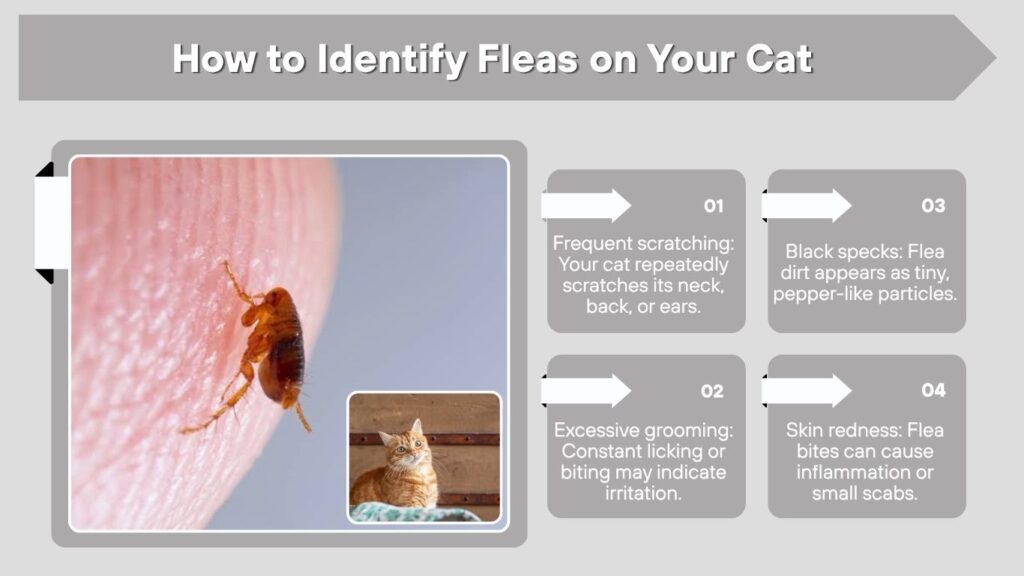
Before choosing a natural flea treatment, determine whether your cat actually has fleas. These tiny, dark-colored insects move quickly through the fur and can be difficult to detect. Some cats develop intense itching after only a few bites, while others show little discomfort. Examining your cat’s skin and coat can reveal several recognizable signs.
Common Signs of Fleas on Cats
- Frequent scratching: Your cat repeatedly scratches its neck, back, or ears.
- Excessive grooming: Constant licking or biting may indicate irritation.
- Black specks: Flea dirt appears as tiny, pepper-like particles.
- Skin redness: Flea bites can cause inflammation or small scabs.
- Hair loss: Repeated scratching may produce thin or bald patches.
How to Check for Flea Dirt
Use a fine-toothed flea comb and gently brush through your cat’s fur, particularly around the neck and base of the tail.
Collect the black particles on a damp white paper towel. If they turn reddish-brown, they may be flea dirt containing digested blood.
Natural Ways to Remove Fleas From Cats
Several gentle techniques can help physically remove fleas without applying homemade pesticides to your cat’s skin. The most useful methods include regular flea combing and carefully managed grooming. Although these approaches cannot guarantee complete elimination, they can temporarily reduce the number of adult fleas and help you monitor whether an infestation is improving.
Use a Flea Comb Daily
Flea combing is one of the safest natural ways to remove fleas from cats.
Choose a fine-toothed flea comb designed for pets and brush gently in the direction of hair growth. Concentrate on the neck, lower back, belly, and base of the tail.
After each pass, dip the comb into a bowl of warm, soapy water to trap the captured fleas. Keep the bowl away from your cat to prevent accidental drinking.
Repeat the process daily during an active infestation. Be especially gentle around irritated skin.
Give Your Cat a Gentle Bath When Appropriate
Bathing may help physically remove some adult fleas, but many cats find it stressful.
If your cat tolerates water, ask your veterinarian whether bathing is suitable. Use lukewarm water and a mild, cat-safe shampoo rather than household cleaning products.
Avoid getting shampoo into your cat’s eyes, nose, or ears. Rinse thoroughly and dry the coat comfortably.
Bathing does not provide lasting flea prevention, and frequent washing may irritate sensitive skin.
How to Get Rid of Fleas in Your Home Naturally
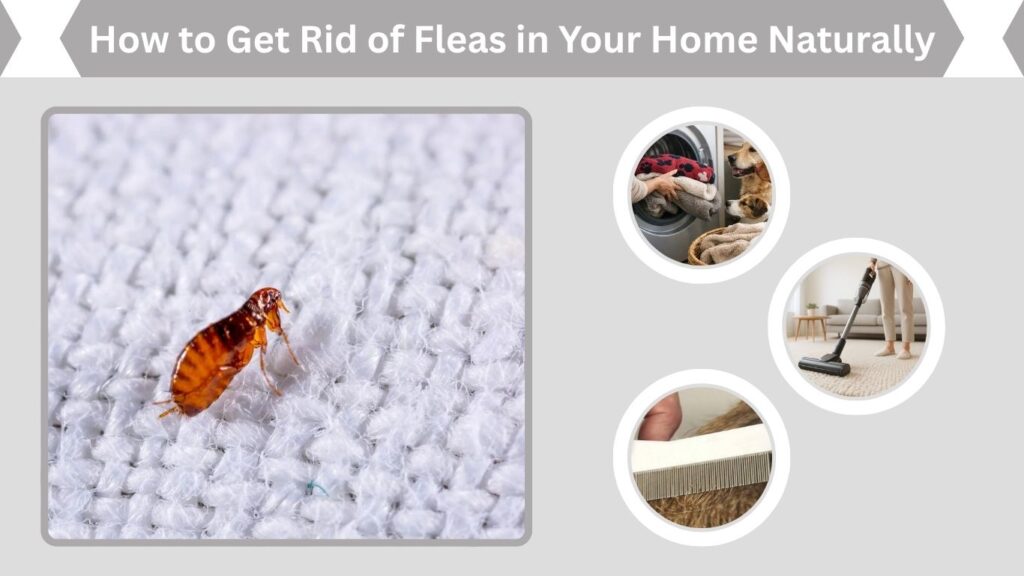
Eliminating fleas from the household environment is essential for preventing reinfestation. Flea eggs fall from cats into carpets, upholstery, bedding, and floor cracks. After hatching, larvae develop in sheltered areas before becoming pupae. Cleaning these locations reduces the number of developing fleas and helps prevent new adults from returning to your cat.
Natural Household Flea Removal Methods
- Vacuum daily: Clean carpets, rugs, furniture, floor cracks, and baseboards thoroughly.
- Wash pet bedding: Use hot water and a suitable detergent according to fabric instructions.
- Steam-clean carpets: Steam treatment can help kill fleas at different life stages.
- Clean furniture: Pay attention to cushions and places where your cat frequently sleeps.
- Dispose of vacuum debris: Empty the vacuum into a sealed bag outside.
- Repeat regularly: Continue cleaning while monitoring for emerging adult fleas.
Can Natural Cleaning Remove Flea Eggs?
Vacuuming and laundering can remove many flea eggs and larvae from household surfaces.
However, flea pupae are protected inside cocoons and can be difficult to eliminate. Adult fleas may continue emerging even after extensive cleaning.
Therefore, household flea control requires consistency rather than a single cleaning session.
Does Vinegar Kill Fleas on Cats Naturally?
Apple cider vinegar and white vinegar frequently appear in homemade flea treatment recommendations. Their strong smell is sometimes claimed to discourage fleas. However, vinegar has not been demonstrated to reliably kill fleas or interrupt their life cycle. Understanding its limitations is important because relying on ineffective remedies can allow an infestation to become more severe.
Can Apple Cider Vinegar Remove Cat Fleas?
Apple cider vinegar does not reliably kill adult fleas, larvae, or eggs.
Although some people believe its smell temporarily discourages fleas, convincing evidence of effective flea control is lacking.
Spraying vinegar onto your cat can also irritate sensitive skin, especially when flea bites have already caused inflammation.
Avoid applying vinegar directly to irritated areas or adding it to drinking water as a flea remedy.
Does Baking Soda Kill Fleas on Cats?
Baking soda is another popular homemade flea remedy, but there is no reliable evidence that it eliminates fleas from cats or their surroundings.
Applying baking soda to a cat’s coat is not recommended because grooming may cause the animal to swallow it.
Regular vacuuming and washing bedding are more dependable approaches than sprinkling baking soda around the home.
Natural Flea Remedies That Are Unsafe for Cats
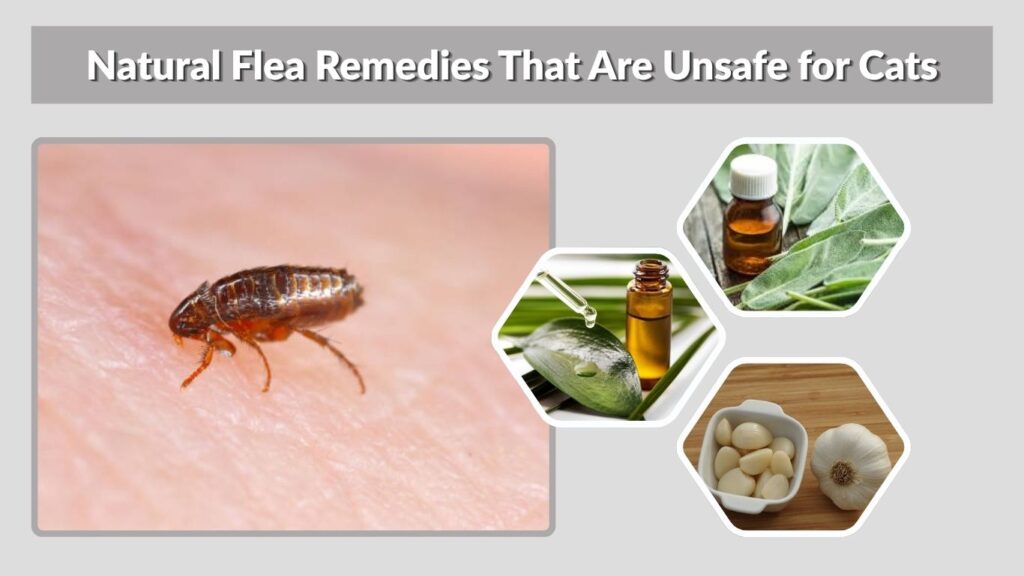
Not every plant-based or homemade flea remedy is safe for pets. Cats are particularly sensitive to certain substances because their bodies process some chemicals differently from humans. Additionally, cats frequently lick their fur, which increases the risk of swallowing products applied to their skin. Several commonly recommended ingredients should therefore be avoided.
Homemade Ingredients to Avoid
- Tea tree oil: Concentrated tea tree oil can cause serious poisoning in cats.
- Peppermint and eucalyptus oils: These essential oils may cause harmful reactions.
- Garlic: Garlic is toxic to cats and does not provide reliable flea prevention.
- Citrus oil or lemon sprays: Citrus-derived compounds can irritate or poison cats.
- Rubbing alcohol: Alcohol may cause poisoning if absorbed or swallowed.
Why Natural Does Not Always Mean Safe
Natural substances can contain powerful chemical compounds.
Essential oils may enter a cat’s body through the skin, breathing, or grooming. Some exposures can cause vomiting, drooling, weakness, tremors, or other serious symptoms.
Choose grooming-based methods rather than experimenting with concentrated homemade flea sprays.
How to Get Rid of Fleas on Cats Fast Naturally
If your cat is constantly scratching, immediate flea removal may provide temporary comfort. Flea combing is a practical first step because it removes visible fleas directly from the coat. However, natural treatment usually cannot eliminate every flea quickly. Developing fleas hidden around the home may continue emerging for weeks, requiring ongoing cleaning and effective prevention.
How Long Does Natural Flea Removal Take?
Flea combing can remove adult fleas immediately, but it does not eliminate hidden eggs, larvae, and pupae.
A household infestation may take weeks or months to control completely, depending on its severity and whether effective veterinary treatment is included.
If fleas continue appearing after repeated cleaning and grooming, ask your veterinarian about proven flea-control medication.
When Should You Contact a Veterinarian?
Veterinary attention becomes important when your cat develops severe itching, open sores, unusual weakness, or persistent flea problems.
Young kittens are particularly vulnerable because heavy flea infestations can cause dangerous blood loss and anemia.
Pale gums, extreme lethargy, or difficulty breathing require urgent veterinary care.
How to Prevent Fleas on Cats Naturally
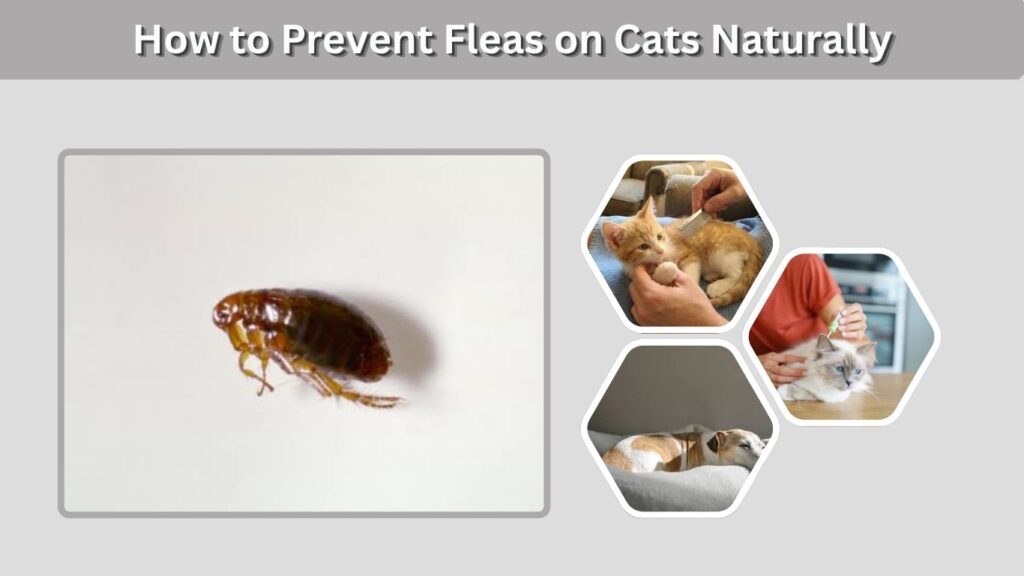
Prevention helps reduce the likelihood of another flea infestation. Although natural household habits cannot guarantee complete protection, they can reduce flea exposure and make problems easier to detect. Keeping your cat’s environment clean, checking its coat, and limiting contact with infested animals are useful preventive measures alongside veterinarian-recommended flea protection.
Simple Natural Flea Prevention Tips
- Inspect your cat regularly with a flea comb.
- Wash blankets and pet bedding frequently.
- Vacuum carpets and upholstered furniture.
- Limit contact with flea-infested animals.
- Keep indoor sleeping areas clean and dry.
- Monitor every household pet for signs of fleas.
FAQs
1. What Is the Best Natural Way to Get Rid of Fleas on Cats?
Daily flea combing is one of the safest natural methods. Combine it with regular vacuuming and washing bedding to reduce fleas in the surrounding environment.
2. Can Vinegar Get Rid of Fleas on Cats Naturally?
No. Vinegar does not reliably kill fleas or their eggs. Applying it to your cat may also irritate the skin.
3. How Can I Remove Fleas From My Cat Naturally Without Bathing?
Use a fine-toothed flea comb to remove adult fleas. Repeat daily and clean household surfaces to reduce reinfestation.
4. Can Baking Soda Naturally Kill Flea Eggs on Cats?
There is no reliable evidence that baking soda kills flea eggs. It should not be applied to a cat’s coat as a flea treatment.
5. Can Natural Methods Completely Eliminate Cat Fleas?
Natural cleaning and grooming can reduce flea numbers, but established infestations usually require effective veterinary-approved flea treatment.
