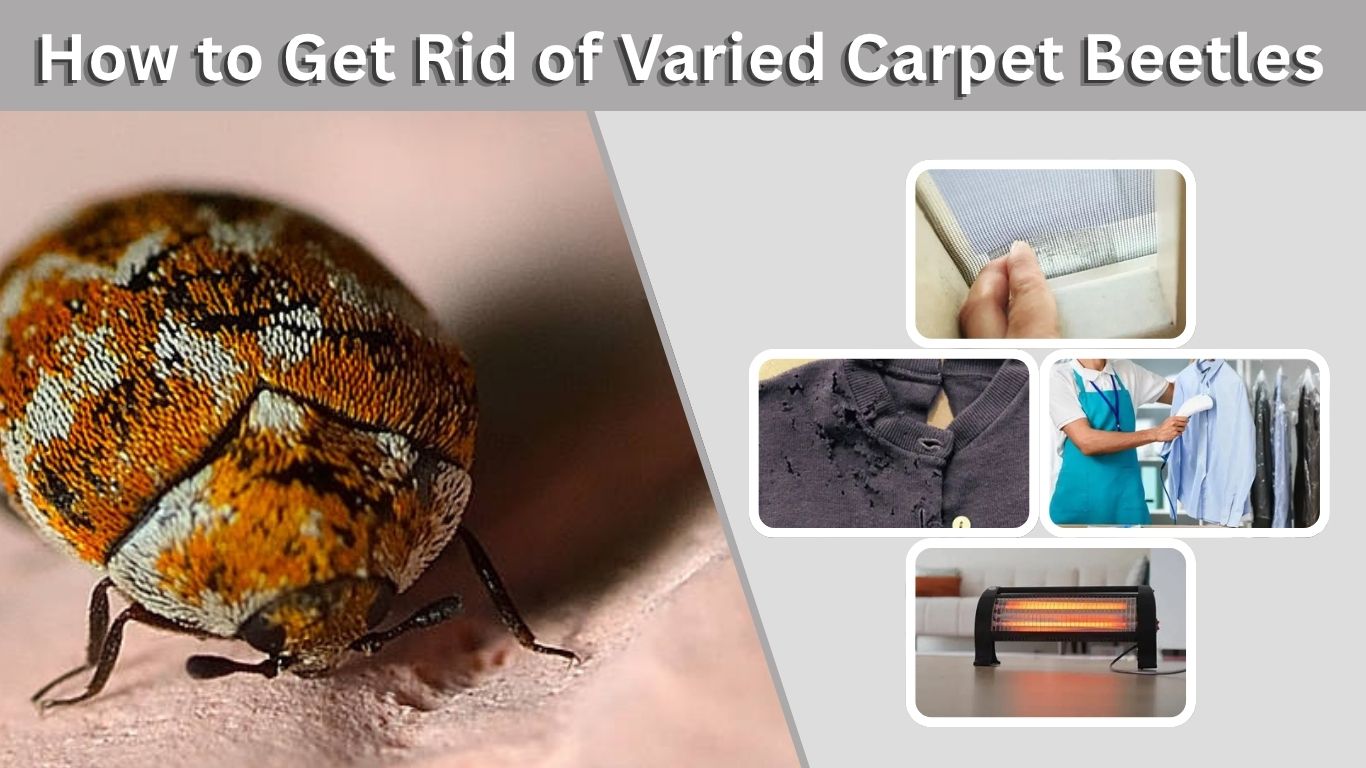
Varied carpet beetles are small household pests whose hairy larvae damage wool, fur, feathers, silk and other animal-based materials. Adults often appear near windows, but killing visible beetles alone will not end an infestation. Successful removal depends on locating the larvae’s food source, vacuuming hidden areas, treating affected fabrics and preventing adults from entering again.
Confirm That You Have Varied Carpet Beetles
The varied carpet beetle, Anthrenus verbasci, has a tiny, rounded body covered with mottled white, yellow, brown and black scales. Adults can fly and usually feed on pollen outdoors. The larvae cause indoor damage.
Identification
- Adults are approximately 1.5–3.5 mm long.
- Their bodies are rounded and covered with mottled scales.
- Larvae are elongated, brown and densely hairy.
- Mature larvae have noticeable hair tufts near the rear.
- Shed skins look like dry, brown, hollow larval shells.
- Larvae prefer dark, undisturbed locations.
- Adults are often seen on windowsills.
One or two adults near a window do not always indicate an infestation. Finding larvae, shed skins or damaged natural-fiber materials provides stronger evidence that they are breeding indoors.
Find the Source of the Infestation
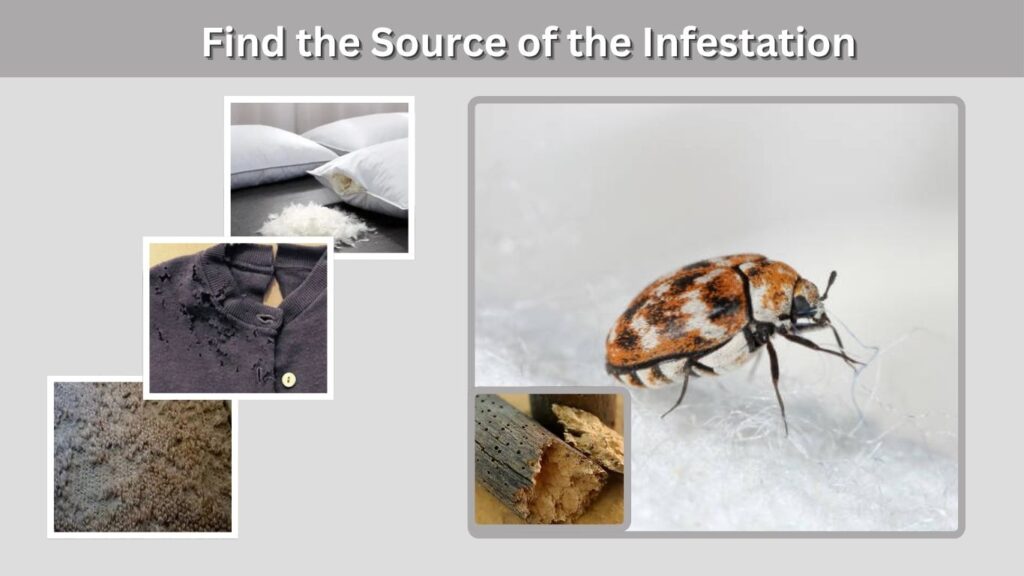
Before using traps or insecticides, identify what the larvae are eating. Varied carpet beetles can survive in obscure locations where lint, hair and dead insects accumulate.
Inspect Likely Problem Areas
Start where you have found the largest number of larvae, adults or shed skins. Examine carpet edges, closets, baseboards, heating vents and areas beneath furniture.
Also inspect:
- Wool carpets, rugs and clothing
- Feather pillows and decorations
- Fur, silk and leather items
- Upholstered furniture
- Pet bedding and accumulated pet hair
- Dried pet food
- Natural-bristle brushes
- Stored blankets and seasonal clothes
- Dead insects inside light fixtures
- Old spider webs
- Bird, rodent, bee or wasp nests
- Taxidermy and insect collections
A concentrated area containing larvae, shed skins and damaged material is sometimes called a nest, but varied carpet beetles do not construct an organized nest. They gather wherever suitable food is available.
Vacuum the Entire Infested Area
Thorough vacuuming removes larvae, eggs, adults, shed skins and the organic debris they eat. A quick pass over the center of a carpet is not enough.
Areas That Need Vacuuming
Use a crevice attachment along baseboards, carpet edges, closet corners and floor cracks. Move beds, sofas and cabinets so you can reach areas that are normally undisturbed.
Vacuum both sides of removable rugs and clean:
- Beneath beds and upholstered furniture
- Around heating vents and radiators
- Inside closets and drawers
- Behind curtains
- Under appliance edges
- Sofa seams and cushion spaces
- Around pet sleeping areas
- Window tracks and sills
Dispose of the vacuum contents promptly in a sealed outdoor bin. Repeat the process every few days at first, then weekly until you stop finding new larvae and cast skins. Frequent vacuuming is one of the most effective ways to remove both the pests and their food sources.
Treat Infested Clothing and Fabrics
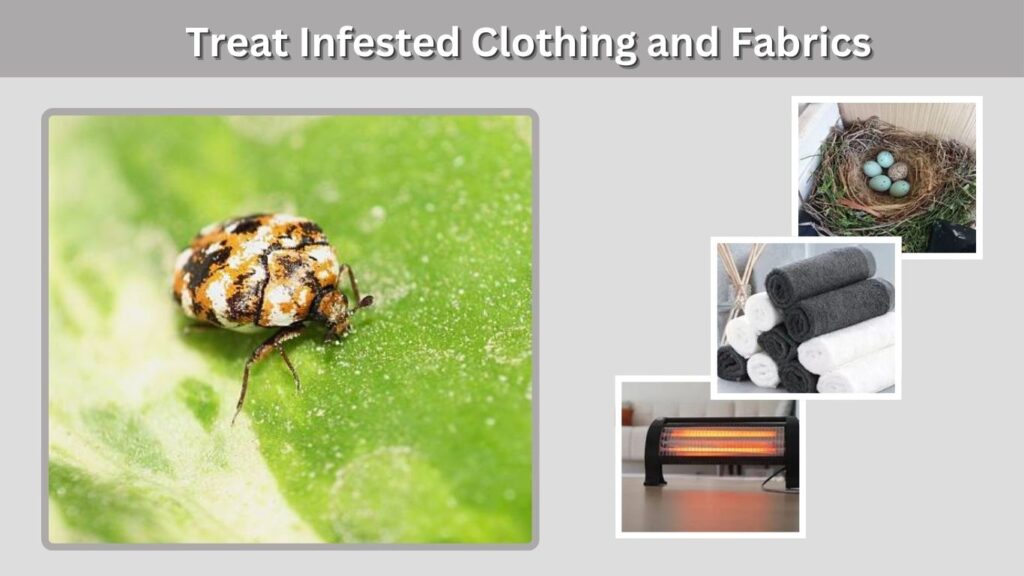
Cleaning affected belongings kills hidden eggs and larvae while removing perspiration, food residue and body oils that can make fabrics more attractive.
Wash or Dry-Clean Items
Wash suitable clothing, bedding and curtains according to their care labels. Use hot water and a heated drying cycle when the material can tolerate them.
Have wool, silk, fur and delicate garments professionally dry-cleaned. Clean items before returning them to storage; placing infested clothes in a sealed container can preserve the infestation instead of stopping it.
Badly damaged or heavily infested items may be easier to discard. Seal them in bags before carrying them through the house.
Use Heat or Freezing for Suitable Objects
UC IPM advises that appropriate objects can be heated to at least 120°F for 30 minutes or sealed and frozen below 18°F for approximately two weeks. Heat or cold may damage delicate materials, adhesives, finishes or electronic components, so check the item first.
Remove Varied Carpet Beetle Larvae from Beds
Varied carpet beetles do not feed on people, but larvae may wander onto beds from nearby carpets, furniture or stored fabrics.
Strip the bed and wash suitable bedding. Vacuum the mattress seams, bed frame, headboard, box spring and floor beneath the bed. Inspect feather pillows, wool blankets, upholstered headboards and natural-fiber rugs.
Do not spray mattresses, pillows or sheets unless a product label explicitly permits that application. The infestation often originates beside or beneath the bed rather than inside a synthetic mattress.
Larval hairs can cause itching, red bumps and allergic skin irritation, but the beetles do not bite or drink blood.
How to Get Rid of Varied Carpet Beetles in a Car
A car infestation can develop when larvae find pet hair, wool seat covers, natural-fiber floor mats, food debris or dead insects.
Remove the floor mats and inspect beneath the seats, inside seat tracks, around the spare-tire compartment and along carpet edges. Vacuum every seam and crevice, including the trunk.
Wash removable covers and mats according to their care instructions. Remove pet hair, food crumbs and dead insects. Repeat vacuuming after several days because hidden larvae may wander out later.
Avoid applying household pesticide sprays inside a vehicle unless the product is specifically labeled for use in vehicle interiors. Heat can increase pesticide vapors and exposure risks.
Do Pheromone Traps Eliminate Varied Carpet Beetles?
Species-specific pheromone traps attract adult male beetles and can reveal where activity is concentrated. Plain sticky traps near windows may also capture adults moving toward light.
However, traps do not remove larvae hidden beneath furniture or inside clothing. Use them to monitor the problem and evaluate whether cleaning is working—not as the only treatment. Check pheromone traps once or twice each week and ensure they are labeled for the correct carpet beetle species.
Should You Use Insecticide?
Insecticide may be useful when larvae continue appearing after thorough cleaning and source removal. Choose only a product labeled for carpet beetles and the intended indoor location.
Treat cracks, baseboard edges, carpet boundaries and inaccessible crevices rather than spraying the entire room. Never apply insecticide to clothing, bedding, pillows or food-storage surfaces unless the label expressly allows it.
Diatomaceous earth and silica-based desiccant dusts may be used in dry cracks or wall voids when their labels permit that application. Avoid creating airborne dust, and keep treatments away from children and pets. Pesticides cannot provide lasting control while larvae still have access to food.
Prevent Varied Carpet Beetles from Returning
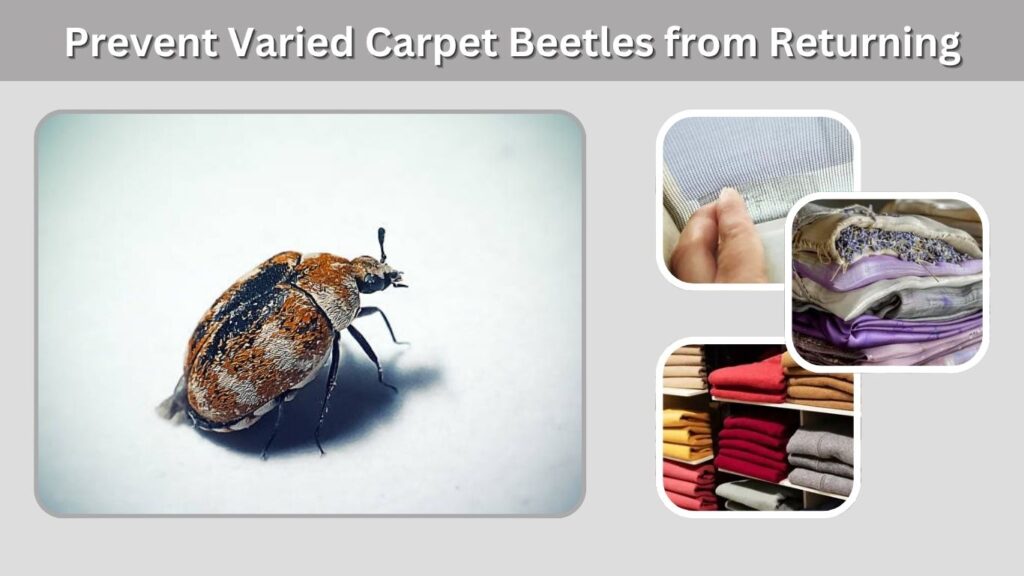
Store freshly cleaned wool, silk, fur and feather items in airtight containers. Keep closets clean and inspect stored fabrics periodically.
Repair damaged window screens and seal gaps around doors, vents and utility openings. Examine cut flowers before bringing them indoors because adults may arrive on blossoms.
Remove old animal nests after confirming they are inactive and legal to remove. Clean pet areas regularly and avoid allowing lint, hair and dead insects to accumulate beneath furniture.
Cedar alone is unreliable because its protective oils weaken over time. A tightly sealed storage container offers better long-term protection.
FAQs
How long does it take to get rid of varied carpet beetles?
A small infestation may decline within several weeks after the source is removed. Hidden larvae can remain active longer, so continue cleaning and monitoring for several months.
Do varied carpet beetles bite humans?
No. Adults and larvae do not bite or feed on blood. Hair from the larvae can cause an itchy allergic rash that may resemble insect bites.
What kills varied carpet beetle larvae?
Vacuuming removes exposed larvae, while suitable laundering, heated drying, dry cleaning, freezing and controlled heat can kill larvae inside belongings. Removing their food source is essential for complete control.
Why do varied carpet beetles keep appearing?
A hidden source may remain beneath furniture, inside a vent, among stored fabrics or near an old animal nest. Adults may also continue entering through windows and doors.
When should you call pest control?
Contact a professional when larvae continue appearing despite repeated cleaning, several rooms are affected, valuable rugs or furniture are infested, or the source appears to be inside walls, ducts or inaccessible cavities.