
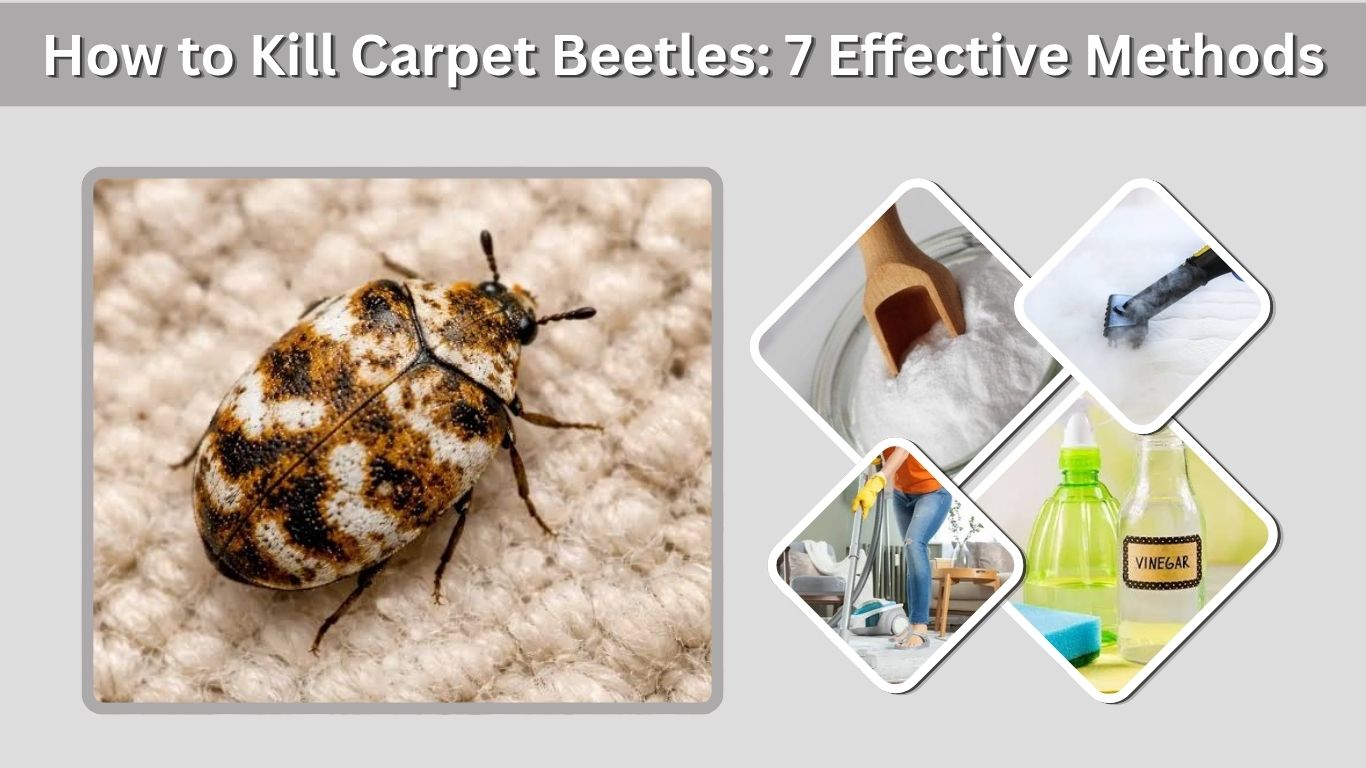
Learning how to kill carpet beetles is essential when these tiny household pests begin damaging carpets, clothing, furniture, and stored fabrics. Although adult carpet beetles rarely cause direct damage, their larvae feed on wool, fur, feathers, and other organic materials. Fortunately, effective treatments include vacuuming, heat, dry cleaning, and targeted insecticides. Some popular home remedies, such as vinegar and baking soda, are less reliable than many people believe. This guide explains what kills carpet beetles and their larvae, which treatments work best, and how to prevent future infestations.
What Kills Carpet Beetles and Their Larvae?
Carpet beetles can be controlled through physical removal, high temperatures, professional dry cleaning, and appropriately labeled insecticides. However, finding and eliminating their breeding sources is essential because hidden larvae can continue feeding after visible adults disappear.
The most effective methods include:
- Vacuuming: Physically removes adult beetles, larvae, eggs, and shed skins.
- Hot laundering: Kills carpet beetles in fabrics that tolerate high washing temperatures.
- Clothes dryers: Provide effective heat treatment for suitable washable materials.
- Dry cleaning: Eliminates carpet beetles from delicate fabrics.
- Freezing: Kills insects when items are held at sufficiently low temperatures for the required duration.
- Targeted insecticides: Help control insects in approved treatment areas.
Combining these methods generally provides better results than relying on a single carpet beetle killer.
How to Kill Carpet Beetles: 7 Effective Methods
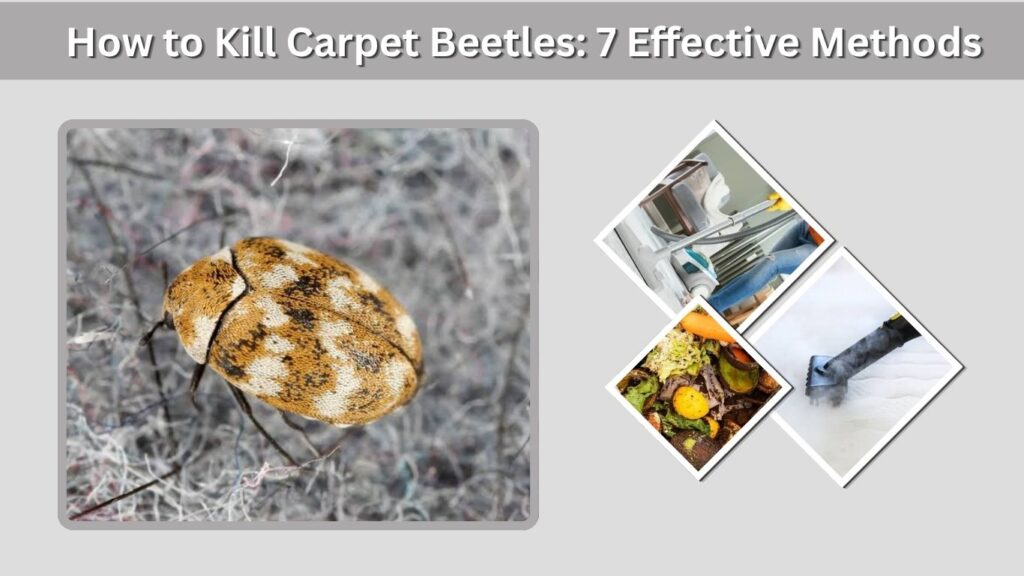
Getting rid of carpet beetles requires treating the insects and removing the materials they feed on. The following methods can control small infestations and help prevent continued damage.
1. Vacuum Carpets and Furniture Thoroughly
Vacuuming is one of the easiest ways to eliminate visible carpet beetles and larvae. It removes insects, eggs, shed skins, and organic debris that supports their development.
Focus on carpet edges, upholstered furniture, baseboards, closets, and spaces beneath beds. Use narrow attachments to reach cracks and furniture seams.
Repeat vacuuming regularly while activity continues. Dispose of collected debris promptly in a sealed bag outdoors to prevent insects from escaping.
2. Kill Carpet Beetles With Heat
Heat is effective against carpet beetles when the entire infested item reaches an adequate temperature for sufficient time.
Wash suitable clothing, blankets, and other fabrics using hot water according to their care labels. A heated clothes-dryer cycle can also kill beetles and larvae in compatible materials.
Avoid exposing delicate fabrics to temperatures that could cause shrinking or damage. Professional dry cleaning is usually preferable for valuable woolen garments.
3. Use Professional Dry Cleaning
Dry cleaning is particularly useful for carpet beetle infestations involving wool sweaters, coats, rugs, and delicate clothing.
The cleaning process eliminates eggs, larvae, and adults while reducing the risk of damage from unsuitable home washing.
Inspect affected garments before cleaning and store them in sealed containers afterward. This prevents surviving insects elsewhere in the home from reinfesting treated items.
4. Remove Infested Materials and Food Sources
Carpet beetle larvae feed on natural fibers, animal hair, feathers, dead insects, and accumulated organic debris.
Inspect stored fabrics, carpets, furniture, closets, and neglected storage spaces. Remove pet hair, lint, insect remains, and other suitable feeding materials.
Severely infested items that cannot be cleaned may require disposal. Place them in sealed bags before removing them from the home.
5. Apply Carpet Beetle Killer Spray
A carpet beetle killer spray may help control persistent infestations when cleaning alone is insufficient.
Choose an insecticide labeled for carpet beetles and the intended indoor surfaces. Follow the directions for application, protective equipment, ventilation, and reentry.
Treatment may be appropriate along carpet edges, beneath furniture, or in accessible cracks when permitted by the label.
Never spray clothing or bedding with ordinary household insecticides. Avoid applying chemicals where children or pets may contact them unless the label allows that use.
6. Freeze Small Infested Items
Freezing can eliminate carpet beetles in materials that cannot tolerate hot washing.
According to University of Kentucky guidance, holding infested objects at 0°F (-18°C) for at least one week can kill carpet beetles and clothes moths.
Seal suitable items in plastic bags before freezing to protect them from moisture. After treatment, allow them to return to room temperature before opening the bags.
This method is particularly useful for small, delicate objects when appropriate temperature control is available.
7. Hire Professional Pest Control
Professional treatment may be necessary when carpet beetles repeatedly appear despite thorough cleaning.
Pest control specialists can inspect wall voids, attics, carpets, and other inaccessible locations where infestations may develop.
They may use targeted insecticides or specialized treatments when appropriate.
Professional services are especially useful when valuable furnishings are affected or when the source of infestation cannot be identified.
How to Kill Carpet Beetle Larvae and Eggs
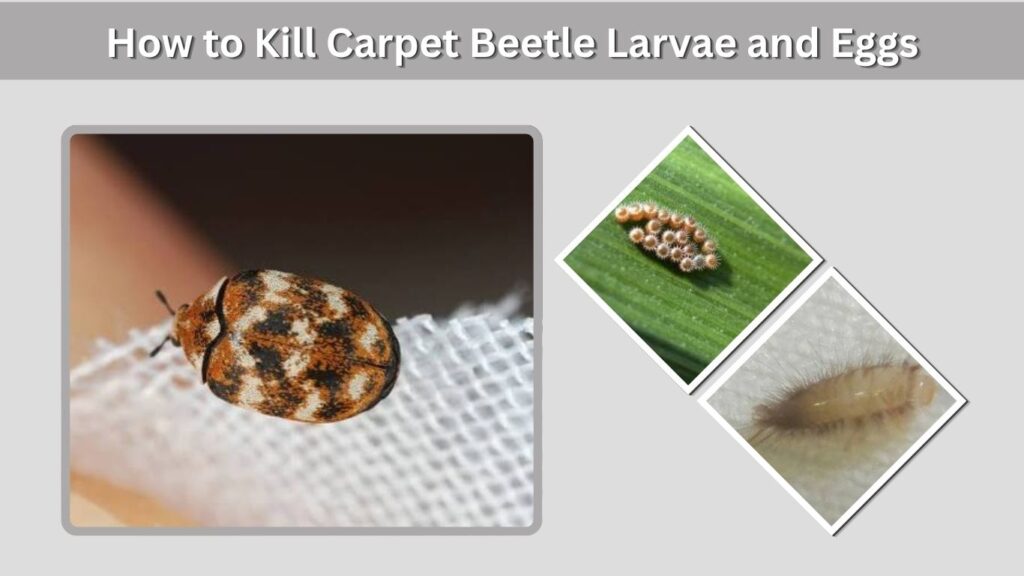
Killing carpet beetle larvae is essential because the larval stage causes most household fabric damage. Their small, hairy bodies allow them to remain hidden inside carpets, furniture, and stored clothing.
Begin by finding the breeding source and thoroughly vacuuming affected areas. Launder or dry-clean contaminated materials and remove accumulated animal hair or organic debris.
Eggs are more difficult to locate because they are tiny and often deposited in concealed places. Proper laundering, dry cleaning, and controlled heat or freezing treatments can eliminate eggs in affected items.
Continue inspecting hidden areas because untreated materials may contain additional larvae.
Do Home Remedies Kill Carpet Beetles?
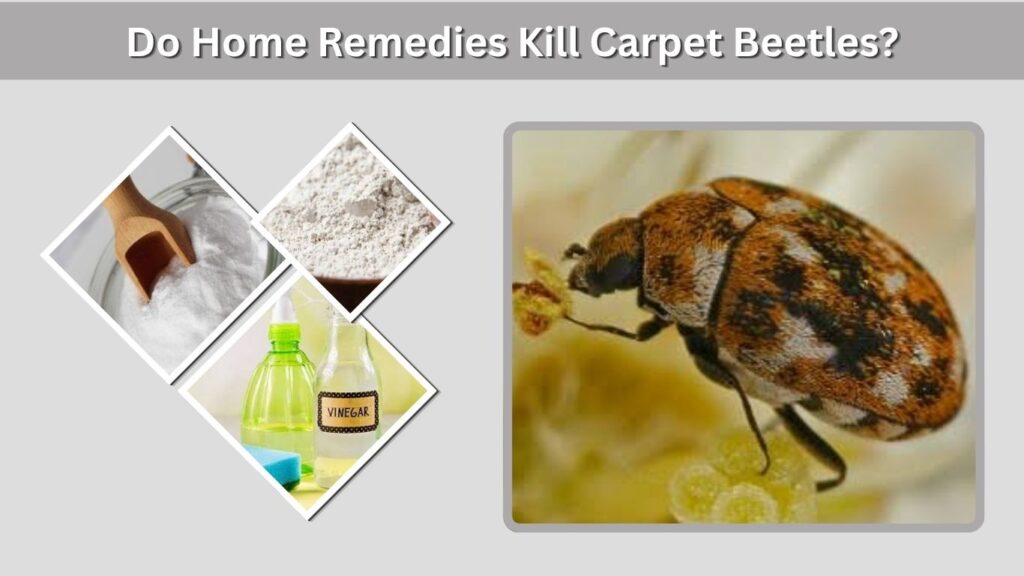
Several household substances are promoted as natural carpet beetle killers. However, their effectiveness varies, and some lack reliable evidence for controlling established infestations.
Does Vinegar Kill Carpet Beetles?
Vinegar is a popular home remedy, but it is not a proven, reliable carpet beetle treatment.
While diluted vinegar can clean compatible household surfaces, there is insufficient evidence that it eliminates carpet beetle eggs and larvae hidden in fabrics.
Use vacuuming and appropriate fabric cleaning instead of depending on vinegar.
Does Baking Soda Kill Carpet Beetles?
Baking soda is not an established carpet beetle insecticide. There is no reliable evidence that sprinkling baking soda on carpets consistently kills adults, larvae, or eggs.
Vacuuming directly removes insects and food sources, making it a more dependable treatment.
Does Diatomaceous Earth Kill Carpet Beetles?
Diatomaceous earth can kill certain insects by damaging their protective outer coating and causing dehydration.
However, it is not a substitute for locating and removing carpet beetle breeding sources.
Use only a pesticide-labeled product approved for the intended application. Avoid spreading loose dust across living areas because inhalation can irritate the respiratory system.
Does Boric Acid or Borax Kill Carpet Beetles?
Boric acid has insecticidal properties, but its effectiveness depends on formulation, exposure, and application.
Household borax should not automatically be treated as a carpet beetle pesticide.
Only use products specifically labeled for the pest and location. Keep insecticidal dusts away from children, pets, food, and exposed living surfaces.
Does Rubbing Alcohol Kill Carpet Beetles?
Rubbing alcohol may kill some insects through direct contact, but it is not a dependable treatment for hidden carpet beetle infestations.
Alcohol is flammable and can damage furniture finishes or fabrics.
It should not be sprayed over carpets, mattresses, or upholstery as a carpet beetle treatment.
How to Prevent Carpet Beetles From Returning
Even after successful treatment, carpet beetles may return if suitable food sources remain or adult beetles enter through windows and doors.
Regular household maintenance reduces the risk of repeated infestations.
Essential Prevention Tips
- Vacuum regularly: Clean baseboards, carpets, and furniture edges.
- Store fabrics properly: Keep clean wool, fur, and seasonal clothing in airtight containers.
- Remove organic debris: Eliminate pet hair, lint, and dead insects.
- Inspect secondhand items: Check used rugs and upholstered furniture before bringing them indoors.
- Repair window screens: Reduce opportunities for adult beetles to enter.
Continue monitoring areas where larvae previously appeared.
FAQs
1. What Kills Carpet Beetles Instantly?
Direct contact with a suitable insecticide can kill carpet beetles, depending on the product. Vacuuming immediately removes visible insects, while correctly applied heat treatments can eliminate carpet beetles from compatible materials.
2. Does Raid Kill Carpet Beetles?
Some Raid insecticide products may kill carpet beetles, but effectiveness depends on the specific formulation and label. Check whether the product is approved for carpet beetles and the intended indoor application.
3. Do Bug Bombs Kill Carpet Beetles?
Bug bombs may kill exposed insects, but they often fail to reach hidden larvae. They also create unnecessary pesticide exposure and possible fire hazards. Targeted treatment and cleaning are generally better approaches.
4. Does Steam Cleaning Kill Carpet Beetles?
Steam can kill carpet beetles and larvae when sufficient heat reaches them directly. However, steam cleaning may not eliminate insects deep inside inaccessible materials, and excessive moisture or heat can damage certain fabrics.
5. What Is the Best Pet-Safe Carpet Beetle Killer?
Vacuuming, laundering, and appropriate heat treatment are useful options for households with pets because they avoid routine pesticide application. No chemical pesticide should be assumed completely pet-safe; always follow its label and keep pets away from treated areas as directed.
