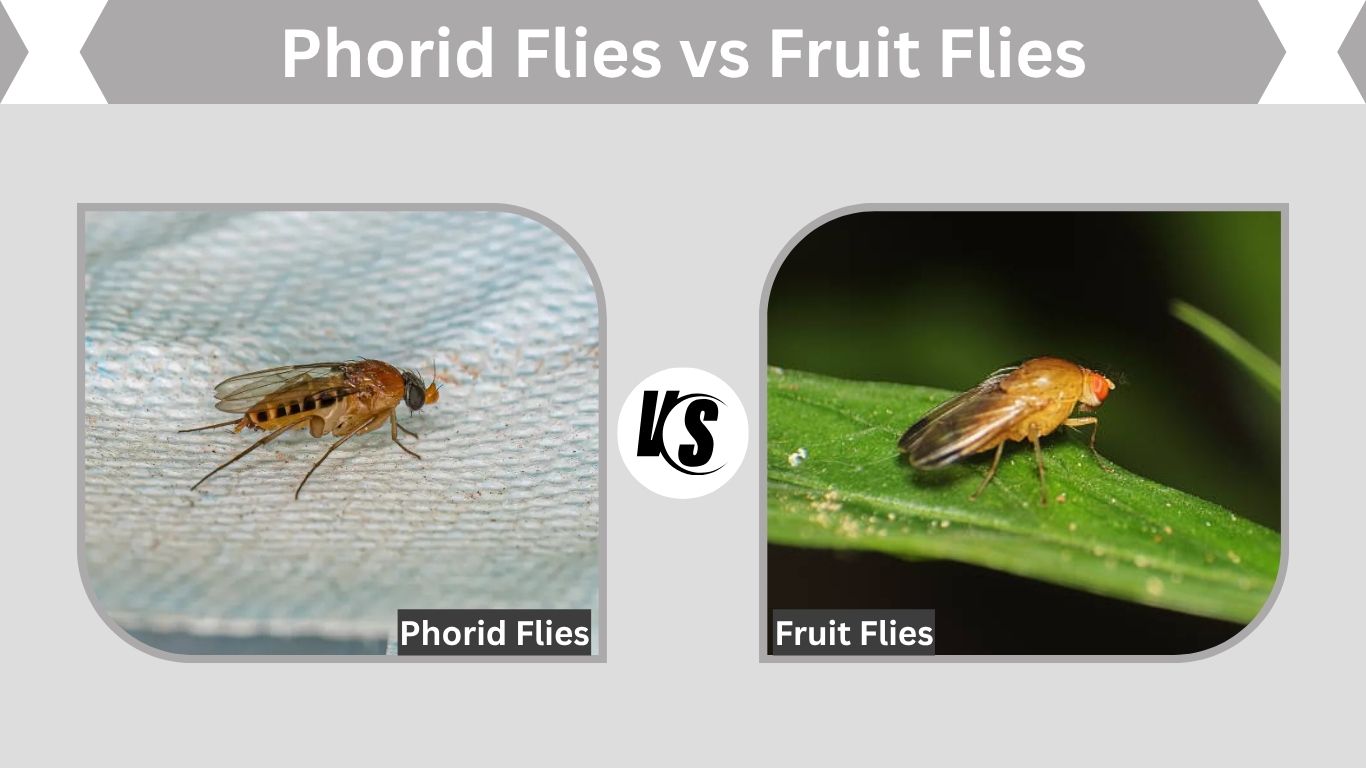
Phorid flies and fruit flies are tiny household pests that are easy to confuse, but they differ in appearance, movement, and breeding habits. Fruit flies commonly gather around ripe or fermenting fruits, vegetables, and beverages, while phorid flies are more strongly associated with decaying organic matter, drains, garbage, and sometimes plumbing or sewer leaks. The easiest clues are their eyes and behavior: fruit flies often have noticeable red eyes, while phorid flies usually have dark eyes, a humpbacked body, and a distinctive habit of rapidly running across surfaces.
Phorid Flies vs Fruit Flies: Quick Comparison
Both flies are only a few millimeters long and may appear in kitchens or around drains. Looking at several characteristics together is more reliable than judging by size alone.
| Feature | Phorid Fly | Fruit Fly |
| Typical size | About 2–3 mm | About 3 mm |
| Body shape | Humpbacked or arched | Rounder, compact |
| Eyes | Usually dark | Usually red |
| Color | Brown, tan, yellowish or dark | Yellowish-brown to brown |
| Movement | Frequently runs rapidly | More commonly flies or hovers |
| Main attraction | Decaying organic matter | Fermenting fruits and vegetables |
| Common locations | Drains, trash, plumbing leaks | Fruit bowls, trash, beverages |
| Other name | Scuttle or humpbacked fly | Vinegar fly |
University of Minnesota Extension describes household phorid flies as brownish, humpbacked flies that frequently run erratically, while Penn State describes common fruit flies as yellowish-brown to dark brown and usually red-eyed.
What Do Phorid Flies Look Like?
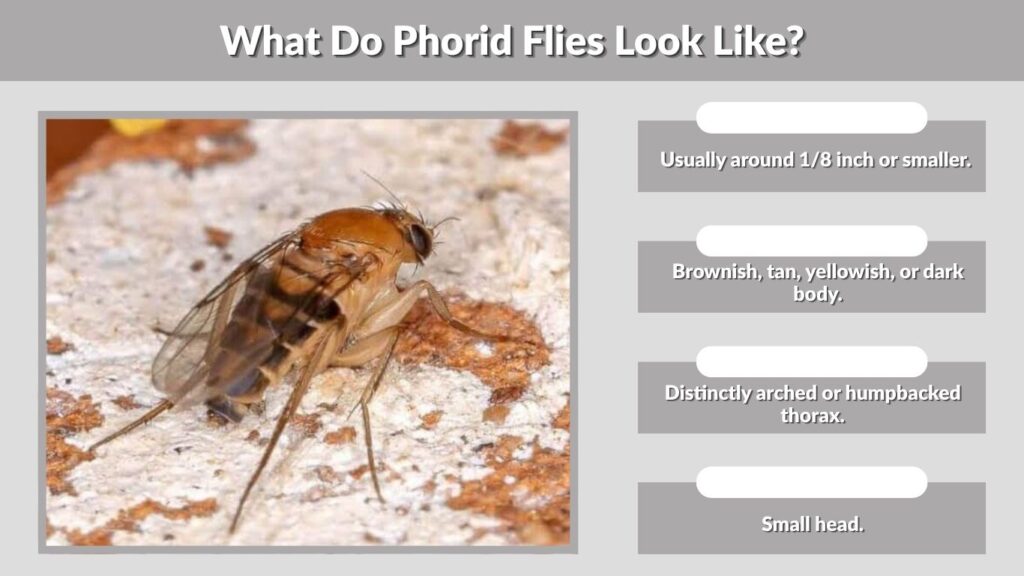
Phorid flies belong to the family Phoridae. Numerous species exist, so individuals do not all look identical. Household species are extremely small and can easily be mistaken for other gnats or flies.
Phorid Fly Identification
- Usually around 1/8 inch or smaller
- Brownish, tan, yellowish, or dark body
- Distinctly arched or humpbacked thorax
- Small head
- Usually dark eyes
- Wings with relatively few obvious veins
- Frequently runs rapidly across surfaces
Their habit of running in quick, erratic movements gives phorid flies the common name scuttle flies.
Where Are Phorid Flies Found?
Inside homes, they may occur around drains, garbage containers, moist decomposing material, and plumbing or sewer leaks.
Finding many phorid flies in one part of a house can therefore indicate a hidden source of moisture or organic waste rather than simply forgotten fruit.
What Do Fruit Flies Look Like?
Fruit flies are also tiny, but their overall shape and eye color usually separate them from phorid flies when viewed closely.
Fruit Fly Identification
- About 1/8 inch or 3 mm long
- Yellowish-brown to darker brown body
- Usually conspicuous red eyes
- Compact, rounded appearance
- Frequently flies around food
- Strongly attracted to fermenting material
Some fruit flies can have darker eyes, so red eyes alone should not be the only identification feature.
Where Are Fruit Flies Found?
Fruit flies commonly gather around ripe or overripe fruits and vegetables. They may also reproduce around garbage disposals, trash containers, drains, spilled beverages, and other moist areas containing fermenting material.
Phorid Fly vs Fruit Fly: Movement
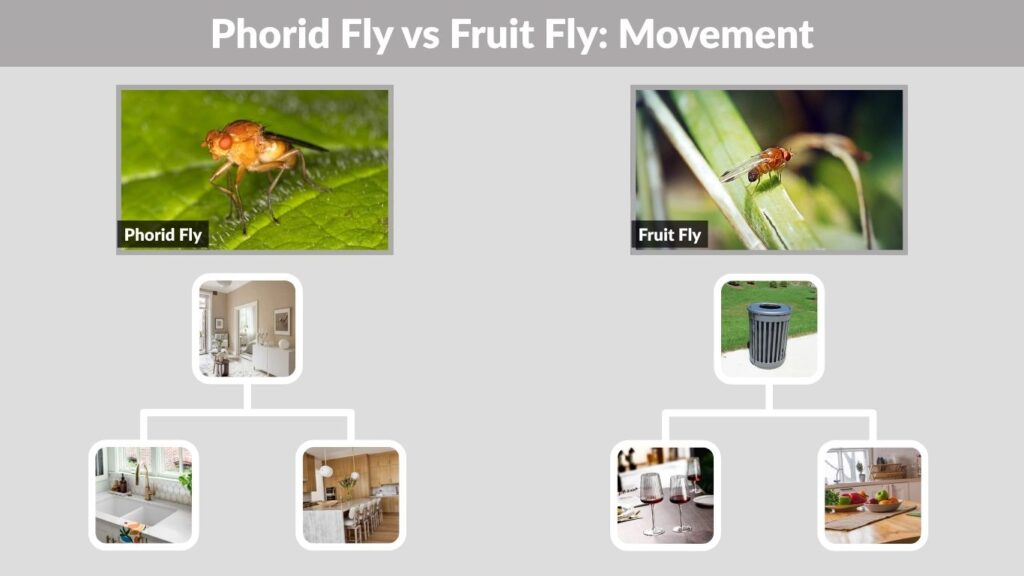
Behavior is one of the quickest ways to distinguish these pests without a magnifying glass.
Phorid Flies Run
Phorid flies often run rapidly across countertops, walls, windows, sinks, and other surfaces.
They can fly, but their distinctive scurrying behavior is often immediately noticeable.
Fruit Flies Hover and Fly
Fruit flies are more likely to be noticed hovering or flying around a fruit bowl, trash container, wine glass, or kitchen counter.
If a tiny fly repeatedly races across a surface instead of remaining airborne, a phorid fly becomes more likely.
Phorid Fly vs Fruit Fly: Breeding Sites
Correctly identifying the breeding source is essential because controlling one species as though it were the other can allow an infestation to continue.
Phorid Fly Breeding Sites
Phorid larvae develop in various forms of moist, decomposing organic matter.
Possible sources include drains, trash, grease, rotting food, animal waste, plumbing leaks, and sewage-contaminated material.
Persistent infestations can sometimes be connected with inaccessible plumbing or sewer problems.
Fruit Fly Breeding Sites
Fruit flies strongly favor fermenting plant material.
Common sources include overripe bananas, peaches, tomatoes, potatoes, onions, fruit scraps, wine or beer residue, recycling containers, garbage disposals, and sticky food spills.
Removing fermenting produce and keeping food-storage areas clean and dry are important control measures.
Dark-Eyed Fruit Fly vs Phorid Fly
Not every fruit fly has bright red eyes, which can make identification more difficult.
A dark-eyed fruit fly can resemble a phorid fly at first glance.
How to Tell Them Apart
Focus on body shape and movement rather than relying only on eye color.
Phorid flies typically have a noticeably arched thorax and frequently scuttle quickly across surfaces. Fruit flies tend to have a more typical compact fly shape and are commonly concentrated around fermenting foods.
Location also provides an important clue.
If removing fruit and cleaning food residues does not reduce the population, check drains and hidden moisture sources.
Phorid Flies vs Fungus Gnats
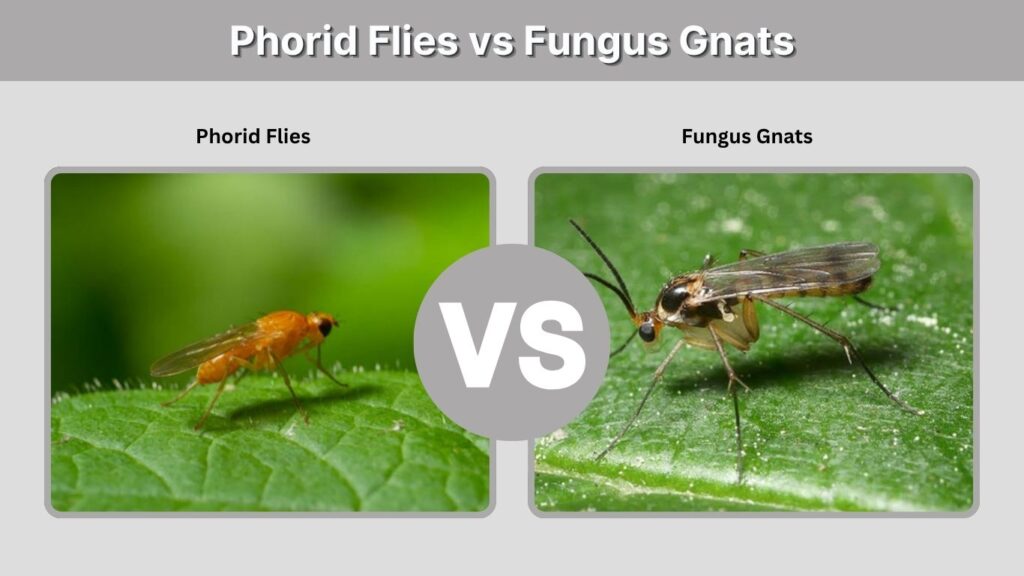
Fungus gnats are another tiny indoor fly commonly mistaken for phorid flies.
They are particularly common around houseplants.
Fungus Gnat Identification
- About 1/16–1/8 inch long
- Slender body
- Usually dark colored
- Longer, gnat-like appearance
- Noticeable antennae
- Wings with visible veins
- Commonly associated with moist potting soil
University of Minnesota Extension notes that fungus gnats are strongly associated with overwatered houseplant soil or soil containing abundant organic matter.
Phorid Fly vs Fungus Gnat
A fungus gnat generally resembles a miniature mosquito, while a phorid fly looks more compact and humpbacked.
If tiny flies consistently rise from plant soil when you water or move a pot, fungus gnats are more likely.
If they run across kitchen or bathroom surfaces and appear near drains or waste, phorid flies are more likely.
Phorid Flies vs Gnats
“Gnat” is an informal term used for several groups of small flies, so simply describing an insect as a gnat is not enough for identification.
The most common indoor comparison involves fungus gnats.
Easiest Difference
Look at where they concentrate.
Fungus gnats usually indicate damp potting soil, while household phorid flies more often indicate decaying organic matter, drains, trash, or plumbing-related moisture.
Their movement also differs: phorid flies are especially well known for running.
Phorid Flies vs Drain Flies
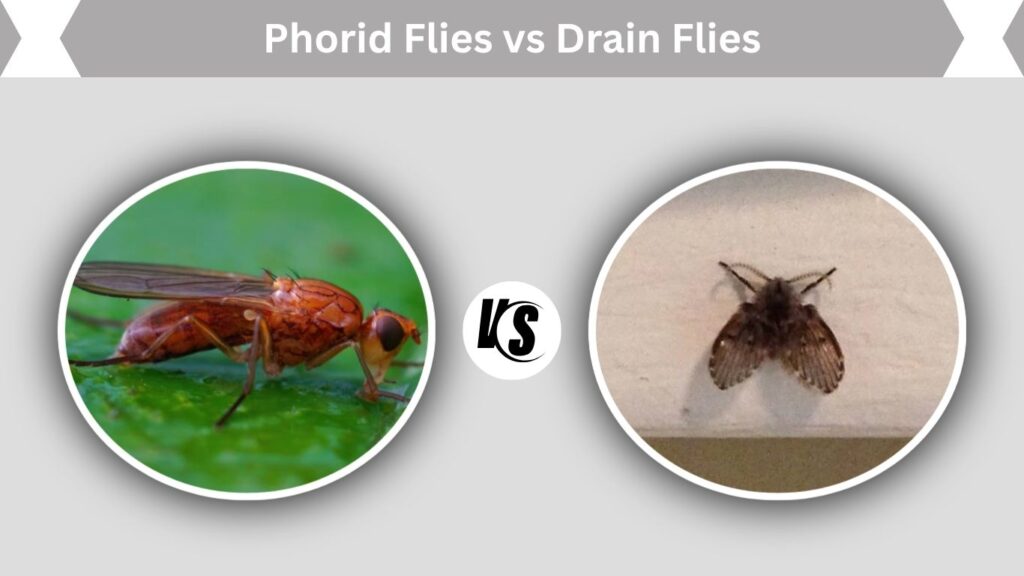
Drain flies, also called moth flies, can share some breeding locations with phorid flies, particularly dirty drains.
Their appearance is very different when viewed closely.
Drain Fly Identification
- Around 1/12–1/8 inch long
- Dark or grayish
- Very hairy or fuzzy
- Broad, pointed wings
- Wings often held roof-like over the body
- Moth-like appearance
- Common around sinks, showers, and floor drains
Drain fly larvae commonly develop in the gelatinous organic film that builds up inside drains.
Drain Fly vs Phorid Fly
A drain fly looks fuzzy and almost like a tiny moth.
A phorid fly is smoother, humpbacked, and more likely to run rapidly.
Both can occur near plumbing, which means their location alone cannot always identify them.
Which Fly Is in My House?
Use the location and behavior as your first clues.
If the flies cluster around ripe fruit, wine, juice, or produce, suspect fruit flies. If they emerge from houseplant soil, suspect fungus gnats. Fuzzy flies resting near bathroom drains are probably drain flies.
Tiny humpbacked flies running rapidly around drains, floors, or kitchen surfaces are more consistent with phorid flies.
For severe or persistent phorid fly problems, investigate possible hidden moisture and plumbing issues rather than relying only on traps.
FAQs
1. What is the main difference between phorid flies and fruit flies?
Phorid flies usually have dark eyes, a humpbacked body, and a tendency to run across surfaces. Fruit flies commonly have red eyes and gather around fermenting fruits and vegetables.
2. Are phorid flies the same as fruit flies?
No. They belong to different fly families and have different appearance, behavior, and preferred breeding materials.
3. How can I tell a fungus gnat from a phorid fly?
Fungus gnats are slender and mosquito-like and usually originate from moist houseplant soil. Phorid flies are more compact and humpbacked and frequently run across surfaces.
4. How can I tell drain flies from phorid flies?
Drain flies are hairy and moth-like with broad wings. Phorid flies have smoother bodies, an arched thorax, and characteristic running behavior.
5. Which is harder to eliminate, phorid flies or fruit flies?
Phorid flies can be particularly difficult when their breeding source is hidden in plumbing, sewage-contaminated material, or inaccessible organic debris. Fruit fly infestations often improve once fermenting food and residues are removed.