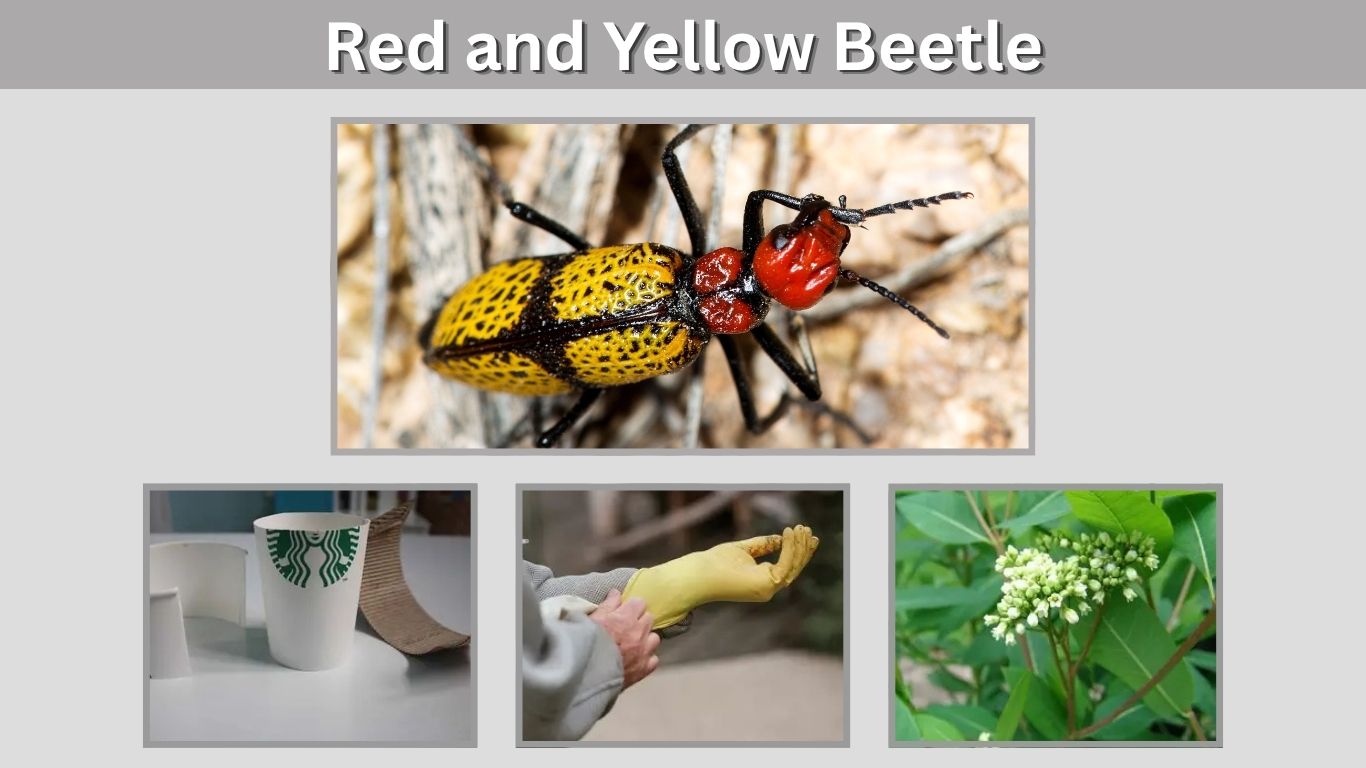
A red and yellow beetle can be hard to identify because many beetles use bright warning colors. Some are harmless flower visitors, some are garden pests, and a few can irritate skin if handled. The most likely match depends on the beetle’s body shape, markings, location, and host plant. A black and yellow beetle with a red head in Arizona, for example, may be a blister beetle, while a yellow striped beetle on potatoes is often a Colorado potato beetle.
What Is a Red and Yellow Beetle?
“Red and yellow beetle” is a color description, not one exact species. Beetles may be red, orange, yellow, black, or mixed because these colors help with warning, camouflage, or mimicry. Some bright beetles are toxic or irritating, while others simply look dangerous.
The safest way to identify one is to look at four clues: body shape, pattern, plant, and location. A long narrow beetle with a red head and yellow-black wing covers is very different from a round yellow beetle with red markings or a striped beetle feeding on potatoes.
Quick Identification Table
| Beetle or Lookalike | Color Pattern | Common Place | Main Concern |
| Iron cross blister beetle | Red head, yellow/black wing pattern | Arizona, desert Southwest | Can irritate skin |
| Colorado potato beetle | Yellow wing covers with black stripes, orange-red head area | Potatoes, tomatoes, eggplants | Garden pest |
| Soldier beetle | Yellow, red, brown, or black markings | Flowers and gardens | Usually beneficial |
| Red milkweed beetle | Red/orange with black spots | Milkweed plants | Mostly harmless |
| Asian lady beetle | Yellow, orange, or red with black spots | Indoors, walls, windows | Nuisance pest |
| Milkweed bug | Red/orange/yellow with black markings | Milkweed | Not a beetle |
Iron Cross Blister Beetle
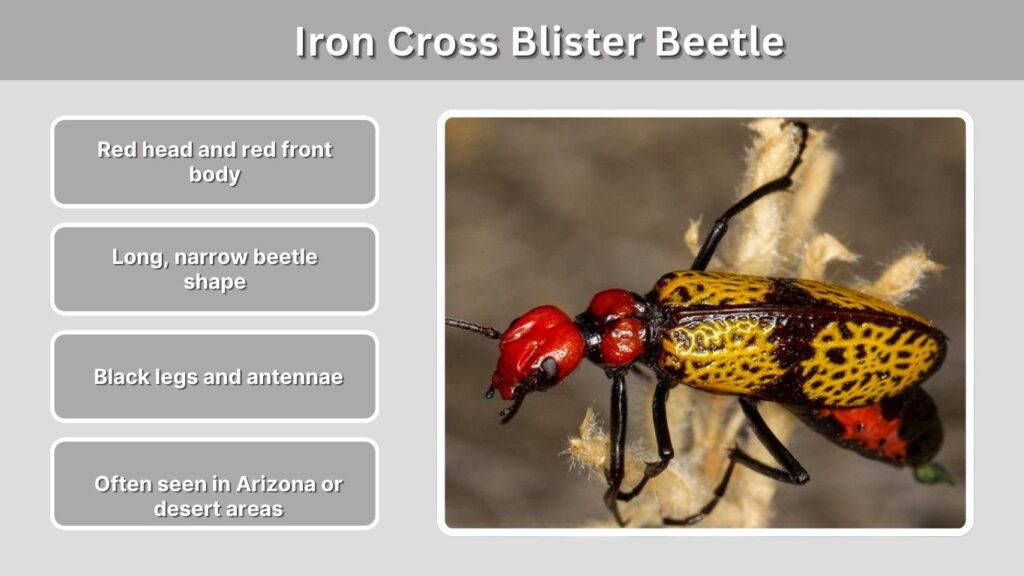
If you searched for a red and yellow beetle in Arizona, one strong possibility is the iron cross blister beetle. This insect is often seen in the Sonoran Desert in spring. It has a bright red head and thorax, with yellow and black markings on the wing covers. Sabino Canyon Volunteer Naturalists describe it as up to 1.5 inches long, with a brilliant red head and a yellow back marked by a strong black cross.
Identification
- Red head and red front body
- Yellow wing covers with black cross-like pattern
- Long, narrow beetle shape
- Black legs and antennae
- Often seen in Arizona or desert areas
This beetle should not be handled. Arizona Cooperative Extension explains that blister beetles produce cantharidin, an irritating compound released in body fluids, especially when the beetle is crushed or handled roughly.
Colorado Potato Beetle
A yellow beetle with black stripes and a red or orange head area is often the Colorado potato beetle. It is one of the most common garden pests that fits this red-yellow-black color pattern. Adults are oval and about 3/8 inch long, with a yellow-orange area behind the head and yellowish-white wing covers with 10 narrow black stripes.
Identification
- Oval, rounded beetle body
- Yellowish wing covers
- 10 black stripes on the back
- Orange-yellow or reddish area behind the head
- Often found on potatoes, tomatoes, eggplants, and peppers
Colorado potato beetles are not dangerous to people, but they can damage plants. They feed on potato-family crops, and both adults and larvae can defoliate leaves if numbers are high.
Black and Yellow Beetle With Red Head
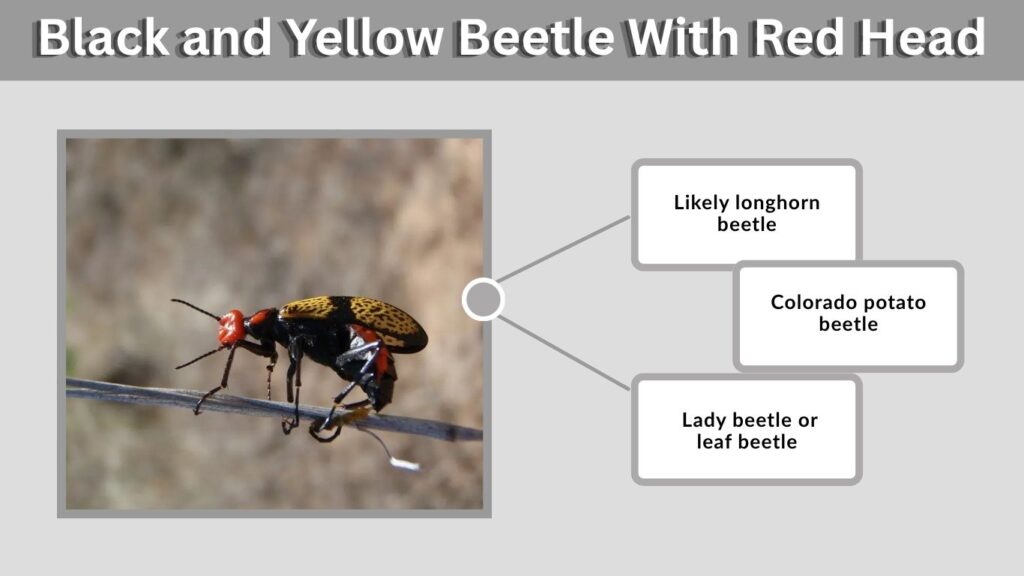
A black and yellow beetle with a red head may be a blister beetle, longhorn beetle, or soldier beetle. The exact ID depends on the shape.
If the beetle is long and narrow, with a red head and yellow-black wing covers, think of a blister beetle first, especially in Arizona, California, New Mexico, or the desert Southwest. If it has very long antennae, it may be a longhorn beetle. If it has soft-looking wing covers and is sitting on flowers, it may be a soldier beetle.
Key Clues to Check
- Long antennae: likely longhorn beetle
- Soft, flexible-looking body: likely soldier beetle
- Red head plus black/yellow cross pattern: possible iron cross blister beetle
- Oval striped body on potatoes: Colorado potato beetle
- Round body with spots: lady beetle or leaf beetle
Soldier Beetles
Some red and yellow beetles in gardens are soldier beetles. They are usually harmless and often beneficial because adults visit flowers and some larvae prey on small insects. The University of Kentucky notes that soldier beetle colors vary from yellow to red with brown or black wings or trim.
Soldier beetles are commonly seen on flowers, especially in late summer. They may look like wasps or fire-colored beetles, but they do not sting. If you find one on goldenrod, daisies, or garden flowers, it usually does not need control.
Red Milkweed Beetle
A red or orange beetle with black spots on milkweed may be a red milkweed beetle or another milkweed longhorn. These beetles are not yellow in the strict sense, but many people describe their bright orange-red color as red-yellow.
Missouri Department of Conservation describes milkweed longhorns as red with black spots and notes that the red milkweed beetle has all-black antennae, all-black legs, and relatively large black spots.
Where You Find It
- Common milkweed
- Butterfly weed
- Dogbane
- Prairies, roadsides, and wildflower areas
- Sunny gardens with milkweed plants
These beetles are not household pests. They feed on milkweed and are part of the milkweed insect community.
Asian Lady Beetle
A small round red, yellow, or orange beetle with black spots may be a lady beetle. One common indoor nuisance is the multicolored Asian lady beetle. It can range from orange to yellow to red and usually has black spots, although the spots may be faint or missing. The University of Minnesota Extension also notes the black M-shaped marking behind the head.
Asian lady beetles often gather on buildings and enter homes in fall. They do not damage wood or reproduce indoors, but they can be annoying when many appear around windows and lights.
Is a Red and Yellow Beetle Dangerous?
Most red and yellow beetles are not dangerous. The main exception is blister beetles, which can irritate skin because of cantharidin. They do not need to bite or sting to cause a reaction; crushing or rough handling can release the chemical.
| Situation | Risk Level | What to Do |
| Beetle on flowers | Low | Leave it alone |
| Beetle on potatoes | Plant risk | Check for eggs and larvae |
| Red/yellow beetle in Arizona | Possible blister beetle | Do not touch |
| Beetles entering house | Low to moderate nuisance | Seal gaps and vacuum |
| Skin irritation after contact | Possible blister beetle exposure | Wash skin and avoid scratching |
What to Do If You Find One
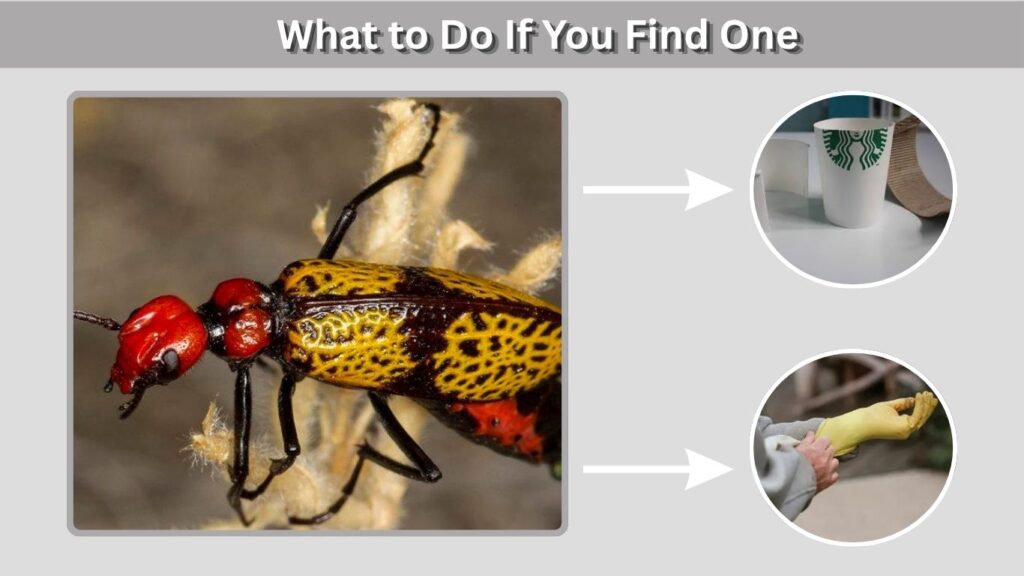
If you find a red and yellow beetle, do not crush it with bare hands. Use a cup, paper, or gloves to move it. This is especially important in Arizona or the Southwest, where blister beetles may occur.
For garden pests like Colorado potato beetles, inspect the underside of leaves for yellow-orange egg clusters and remove adults or larvae by hand if the infestation is small. For indoor lady beetles, seal cracks around windows, doors, vents, and siding, then vacuum beetles that enter.
FAQs
What is a red and yellow beetle?
A red and yellow beetle may be a blister beetle, soldier beetle, milkweed beetle, lady beetle, or Colorado potato beetle. The exact species depends on its body shape, markings, location, and host plant. A photo and location make identification much easier.
What is the red and yellow beetle in Arizona?
In Arizona, a red and yellow beetle with black markings may be an iron cross blister beetle. It has a red head and yellow-black wing covers. Avoid handling it because blister beetles can release cantharidin, which may irritate skin.
What beetle has a red head and yellow wings?
A beetle with a red head and yellow wings may be an iron cross blister beetle, especially in the desert Southwest. If the yellow wings have black stripes and the beetle is on potatoes, it may instead be a Colorado potato beetle.
Are red and yellow beetles poisonous?
Most are not poisonous to people, but blister beetles can cause skin blisters if crushed or handled roughly. They contain cantharidin, an irritating chemical. It is best to avoid touching unknown red, yellow, and black beetles with bare hands.
Are red and yellow beetles harmful to plants?
Some are harmful to plants. Colorado potato beetles damage potatoes, tomatoes, eggplants, and related crops. Soldier beetles are usually beneficial, while milkweed beetles mostly feed on milkweed. Identify the beetle before using any control method.