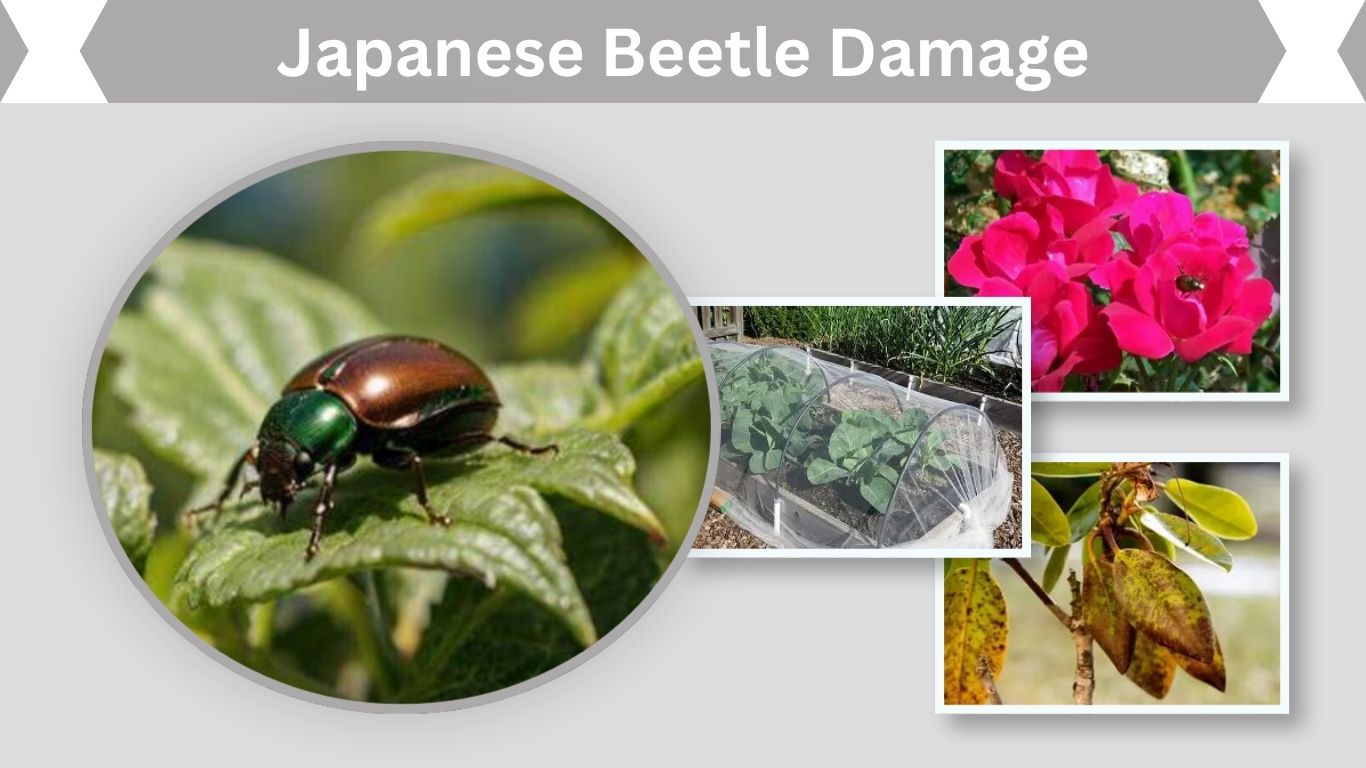
Japanese beetle damage is easy to recognize once you know the signs. Adult beetles chew leaves, flowers, fruits, and crops, while Japanese beetle grubs damage lawns by feeding on grass roots. The most common sign is “skeletonized” leaves, where the soft tissue is eaten but the leaf veins remain. Roses, grapes, linden trees, birch, basil, soybeans, corn, and turfgrass can all show damage during active beetle season.
What Does Japanese Beetle Damage Look Like?
Japanese beetle damage usually appears as thin, lace-like leaves, ragged flower petals, and brown lawn patches. Adult beetles feed above ground, while larvae stay in the soil and attack grass roots.
| Plant Area | Damage Type | Main Cause |
| Leaves | Skeletonized, lacy foliage | Adult beetles |
| Roses | Chewed petals and leaves | Adult beetles |
| Trees | Brown, thin, damaged leaves | Adult beetles |
| Lawns | Brown patches, loose turf | Grubs |
| Crops | Leaf feeding, silk clipping | Adult beetles |
Japanese Beetle Leaf Damage
Japanese beetle leaf damage often looks like the leaf has turned into lace. The beetles eat the soft green tissue between veins, leaving a thin network behind. This is called skeletonizing. Severe feeding can make leaves turn brown, dry, and drop early.
Common plants with leaf damage include:
- Roses
- Grapes
- Linden trees
- Birch trees
- Japanese maple
- Apple trees
- Cherry trees
- Basil
- Hibiscus
- Beans
- Soybeans
Healthy mature trees and shrubs can often tolerate some feeding, but young, weak, or newly planted plants may suffer more serious injury.
Japanese Beetle Damage on Roses
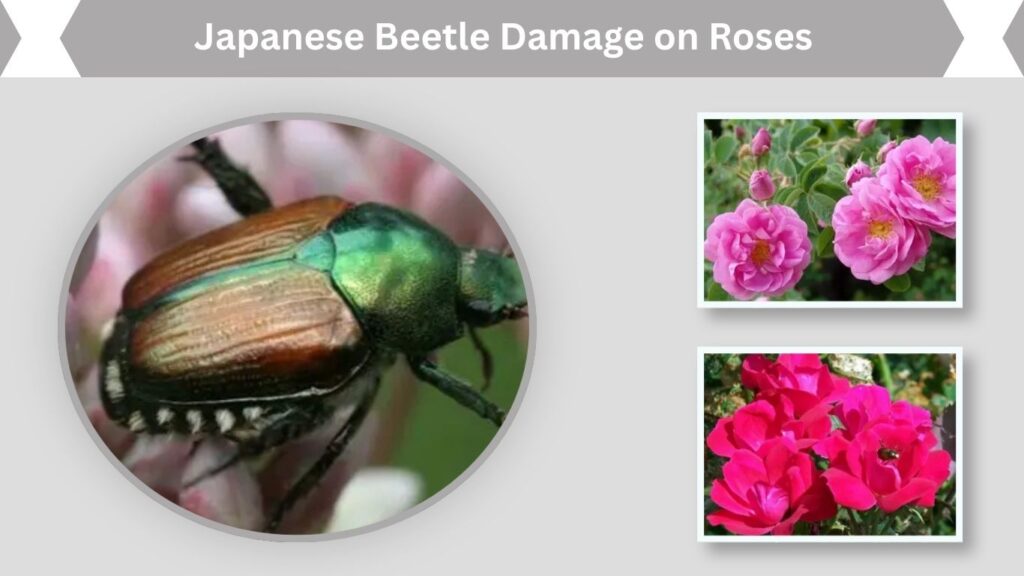
Japanese beetle damage on roses is one of the most frustrating garden problems. Adults feed on rose petals, buds, and leaves. The flowers may look shredded, brown, or ruined before they fully open.
Signs on Rose Bushes
Japanese beetle rose damage may include:
- Chewed flower petals
- Ragged rose buds
- Skeletonized rose leaves
- Brown edges on petals
- Clusters of beetles on blooms
- Fewer attractive flowers
Roses can often survive Japanese beetle feeding, but the blossoms are commonly ruined by the insects. Handpicking beetles into soapy water is a common control option for small infestations.
Japanese Beetle Lawn Damage
Japanese beetle lawn damage is caused by the grub stage, not the adult beetles. Grubs live underground and feed on grass roots. When roots are damaged, turf may turn brown, wilt, or lift up easily like loose carpet.
Signs of Grub Lawn Damage
Look for these signs:
- Irregular brown patches
- Grass that peels back easily
- Weak turf roots
- Skunks, birds, or raccoons digging in the lawn
- Lawn thinning in late summer or fall
- Dry-looking grass even after watering
Japanese beetle grubs are especially damaging in turfgrass because they feed directly on roots. Lawn damage is often more noticeable when the grass is stressed by heat or drought.
Japanese Beetle Tree Damage
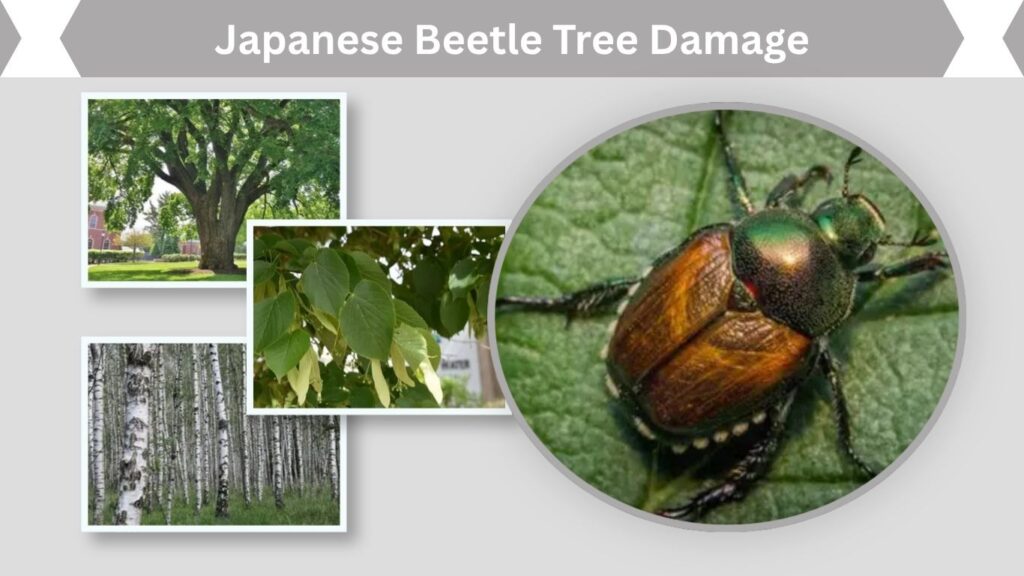
Japanese beetle tree damage usually appears on leaves rather than trunks or bark. These beetles feed on many trees and shrubs during the day, especially in sunny areas. Michigan State University notes that Japanese beetles may seriously damage roses, linden trees, grapes, and other plants.
Trees Commonly Damaged
Trees that may show Japanese beetle damage include:
- Linden
- Birch
- Elm
- Maple
- Japanese maple
- Apple
- Cherry
- Plum
- Crabapple
- Willow
Most established trees can recover from moderate feeding. However, repeated heavy defoliation can stress young trees, newly transplanted trees, or trees already weakened by drought, disease, or poor soil.
Japanese Beetle Damage to Crops
Japanese beetles can also damage field crops and garden crops. In soybeans, they feed on leaves and contribute to defoliation. In corn, they may feed on silks, which can affect pollination if beetle pressure is high during the silking stage.
| Crop | Damage Sign | Concern |
| Soybeans | Leaf defoliation | Yield loss if severe |
| Corn | Silk clipping | Poor pollination risk |
| Grapes | Skeletonized leaves | Reduced plant strength |
| Basil | Chewed leaves | Lower harvest quality |
| Beans | Leaf feeding | Reduced plant growth |
Iowa State Extension lists soybean treatment thresholds at 30% defoliation before bloom and 20% defoliation after bloom. Because Japanese beetles are mobile, fields may need continued scouting even after treatment.
How Do Japanese Beetles Damage Plants?
Adult Japanese beetles damage plants by chewing leaves, flowers, and fruit surfaces. They often feed in groups, so damage can increase quickly once beetles gather on a plant. Their feeding can attract more beetles, especially on preferred plants.
Grubs damage plants differently. They stay underground and feed on roots. In lawns, this weakens turf and makes it easier for the grass to dry out, die, or pull away from the soil.
Should You Remove Leaves Damaged by Japanese Beetles?
You do not need to remove every damaged leaf. Light leaf damage is mostly cosmetic, especially on healthy trees and shrubs. Remove leaves only if they are badly damaged, diseased, or making the plant look messy.
For roses and vegetables, removing heavily damaged flowers or leaves can improve appearance and reduce hiding places. However, removing too many leaves can stress the plant, so avoid heavy pruning during active beetle feeding.
How to Treat Japanese Beetle Damage
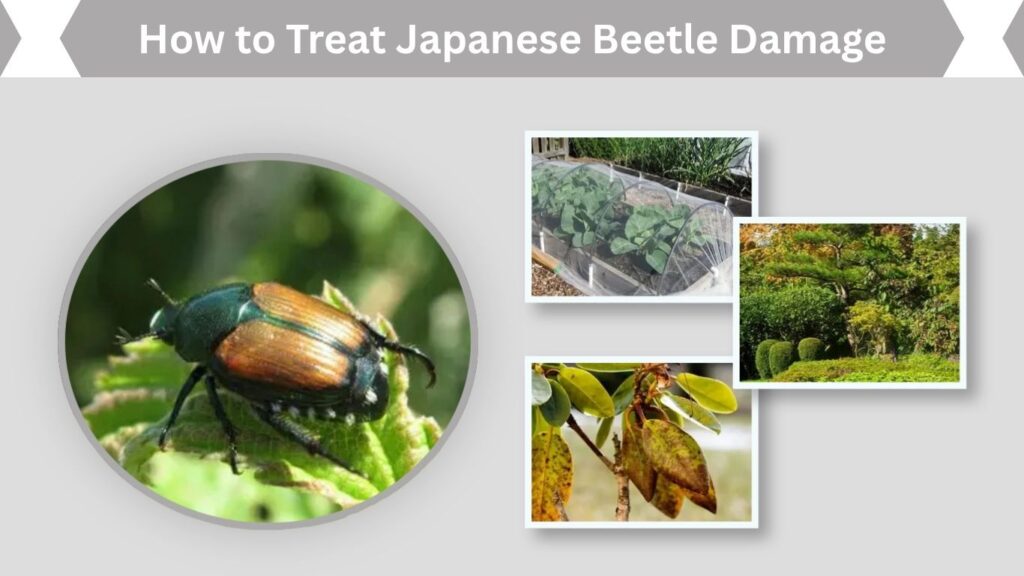
Treatment depends on the plant, the level of damage, and whether you are dealing with adults or grubs. For small gardens, hand removal is often the safest first step.
Treatment Options
Useful treatment methods include:
- Handpick beetles into soapy water.
- Remove beetles early in the morning.
- Protect valuable plants with fine mesh.
- Choose less-favored plants when landscaping.
- Keep plants healthy with proper watering.
- Avoid overusing traps near the garden.
- Spot-treat only when damage is serious.
- Treat grubs at the correct life stage.
University of Maryland Extension recommends handpicking beetles into soapy water, planting non-favored host plants, and using registered insecticides only when needed.
Preventing Japanese Beetle Damage
Preventing Japanese beetle damage is easier when you combine several methods. There is no single perfect solution because adults fly in from nearby areas, and grubs may already be present in the soil.
Good prevention steps include:
- Inspect plants during beetle season.
- Pick beetles before they gather in large numbers.
- Avoid planting too many preferred host plants together.
- Keep lawns healthy but avoid overwatering.
- Check turf for grubs before treating.
- Use row covers on small crops before flowering.
- Encourage plant diversity in the garden.
Traps can catch beetles, but they may also attract more beetles into the area if placed too close to valuable plants. For many home gardens, direct removal and plant protection are more practical.
FAQs
What damage do Japanese beetles cause?
Japanese beetles cause leaf, flower, fruit, crop, and lawn damage. Adults skeletonize leaves and chew flowers, especially roses. Their grubs damage lawns by feeding on grass roots, which can create brown patches and loose turf.
What does Japanese beetle damage look like on leaves?
Japanese beetle damage on leaves looks lacy or skeletonized. The beetles eat the soft tissue between the veins, leaving a thin network behind. Heavy feeding can turn leaves brown, dry, and ragged.
Do Japanese beetles damage lawns?
Yes, Japanese beetles damage lawns during the grub stage. The grubs live in soil and feed on grass roots. Damaged turf may turn brown, thin out, or lift up easily because the roots are weakened.
How do you treat Japanese beetle damage on roses?
Treat Japanese beetle damage on roses by handpicking beetles into soapy water, removing badly damaged flowers, and protecting plants when beetle numbers are high. Avoid spraying open flowers when pollinators are active.
Do Japanese beetles damage trees?
Yes, Japanese beetles can damage trees by feeding on leaves. They commonly skeletonize foliage on trees such as linden, birch, maple, cherry, apple, and elm. Mature healthy trees often recover, but young or stressed trees can suffer more.