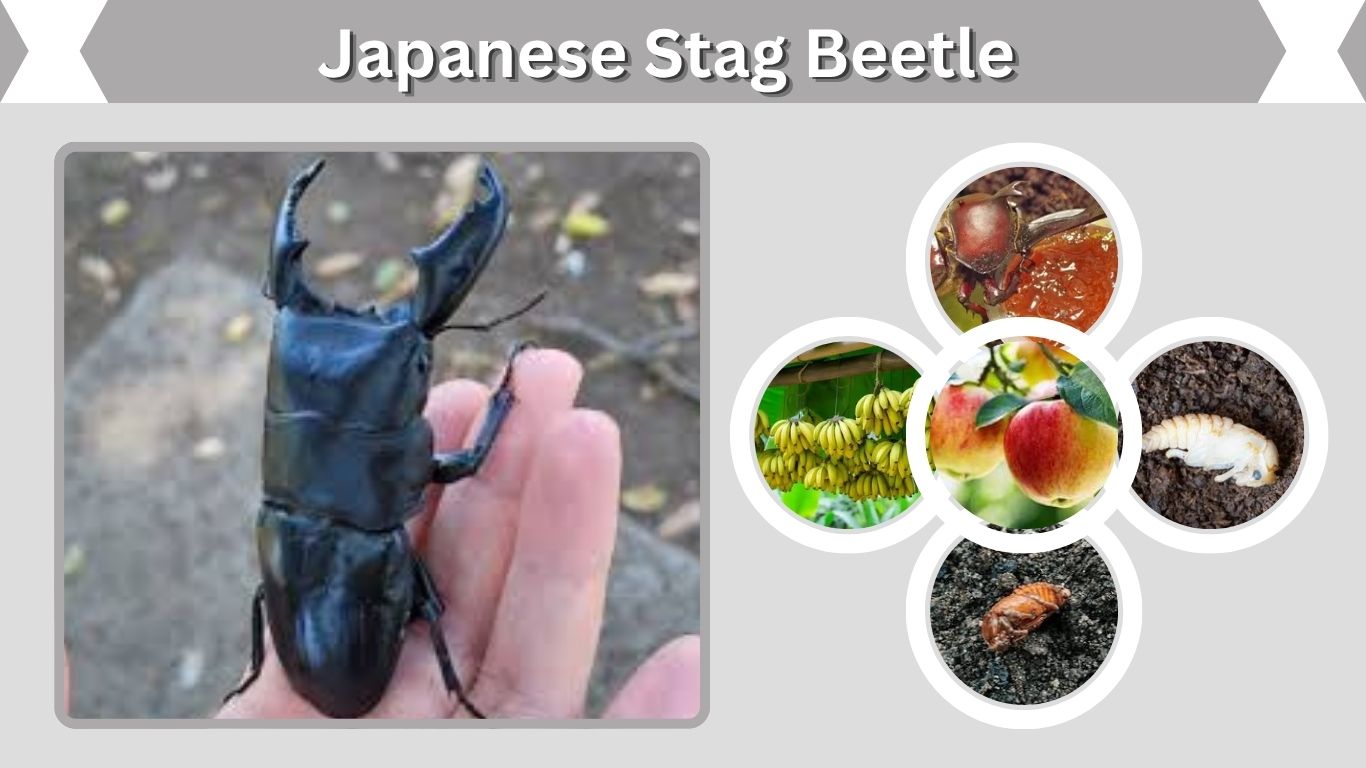
The Japanese stag beetle is one of the most popular beetles in Japan, especially among insect keepers and children. In Japan, stag beetles are often called kuwagata, and several species are kept as pets. The best-known Japanese giant stag beetle is often linked with Dorcus hopei binodulosus, a large black stag beetle with strong curved mandibles. It should not be confused with the Japanese beetle, Popillia japonica, which is a garden pest with a different life cycle and feeding behavior.
Japanese Stag Beetle Overview
Japanese stag beetles belong to the stag beetle family, Lucanidae. Males are famous for their large jaws, which look like antlers. These jaws are not mainly for eating; they are used for fighting other males, gripping, and competing for mates.
| Feature | Japanese Stag Beetle |
| Common Japanese name | Kuwagata |
| Family | Lucanidae |
| Famous type | Japanese giant stag beetle |
| Example scientific name | Dorcus hopei binodulosus |
| Main habitat | Forests, wooded areas, decaying logs |
| Larval food | Rotten wood and fungal material |
| Adult food | Tree sap, fruit, beetle jelly in captivity |
| Popular as a pet? | Yes, especially in Japan |
Japanese Stag Beetle Identification
Japanese stag beetles vary by species, but many have a shiny black or dark brown body. Males are usually easier to recognize because of their enlarged mandibles. Females have smaller jaws and a rounder, less dramatic appearance.
Male Japanese Stag Beetle
Male Japanese stag beetles usually have:
- Large curved mandibles
- Glossy black or dark brown body
- Strong legs with small claws
- Hard wing covers
- Wider head than females
- Larger body size in many species
Female Japanese Stag Beetle
Female stag beetles are smaller and less showy, but they are still important for breeding. They have shorter jaws, a compact body, and strong chewing mouthparts for digging into decaying wood to lay eggs.
Japanese Giant Stag Beetle
The Japanese giant stag beetle is one of the most admired stag beetles in Japan. The name is commonly associated with Dorcus hopei binodulosus, also known as a large Japanese stag beetle. Research records describe this subspecies as one of the largest stag beetles in Japan.
Why Is It Popular?
Japanese giant stag beetles are popular because they are large, glossy, long-lived compared with many beetles, and impressive to observe. Web Japan notes that beetles such as rhinoceros beetles and stag beetles are commonly kept in plastic cages by children and families in Japan.
They are also popular because they are easy to display. They do not need much space compared with many reptiles or mammals, and they can be kept in small beetle enclosures with proper substrate, food, moiture, and ventilation.
Japanese Stag Beetlse Life Cycle
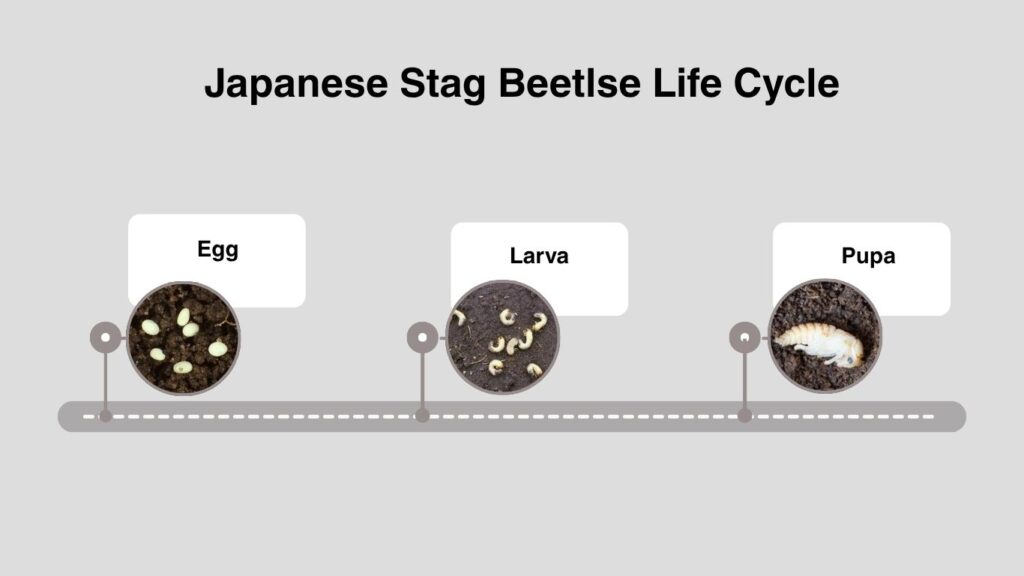
The Japanese stag beetle life cycle has four main stages: egg, larva, pupa, and adult. Like other beetles, they go through complete metamorphosis. The larval stage is often the longest and most important stage for growth.
| Stage | What Happens |
| Egg | Female lays eggs in or near decaying wood |
| Larva | Grub feeds on rotten wood and fungal material |
| Pupa | Larva transforms into adult form |
| Adult | Beetle emerges, feeds, mates, and reproduces |
Japanese Stag Beetle Larvae
Japanese stag beetle larvae are thick, pale grubs that live inside decaying wood or prepared breeding substrate. They feed on rotting wood and fungi. In captivity, keepers often use fermented wood substrate or kinshi bottles, depending on the species and breeding method.
Larvae need stable moisture, suitable temperature, and enough food. If the substrate becomes too dry, too wet, or moldy, larvae may become stressed or die.
Pupa Stage
After the larva finishes growing, it forms a pupal chamber. During this stage, it changes from a grub into an adult beetle. The beetle should not be disturbed because damage to the pupal chamber can cause deformities.
Japanese Stag Beetle Lifespan
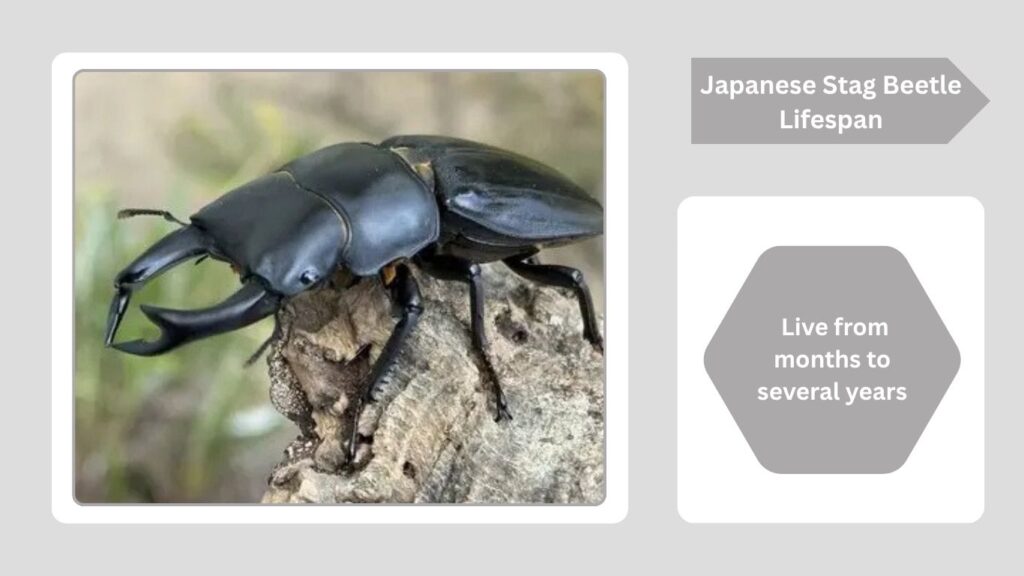
The lifespan of a Japanese stag beetle depends on species, temperature, care, and whether you count only the adult stage or the full life cycle. Some Dorcus-type stag beetles are known for living longer as adults than many other beetles. Breeder care listings often describe Dorcus hopei binodulosus adults as living multiple years in captivity.
In general:
- Eggs hatch into larvae.
- Larvae may grow for months to more than a year.
- Pupation can take several weeks.
- Adults may live from months to several years, depending on species.
Dorcus stag beetles are especially valued because many have a longer adult life than short-lived rhinoceros beetles.
Japanese Stag Beetle Diet
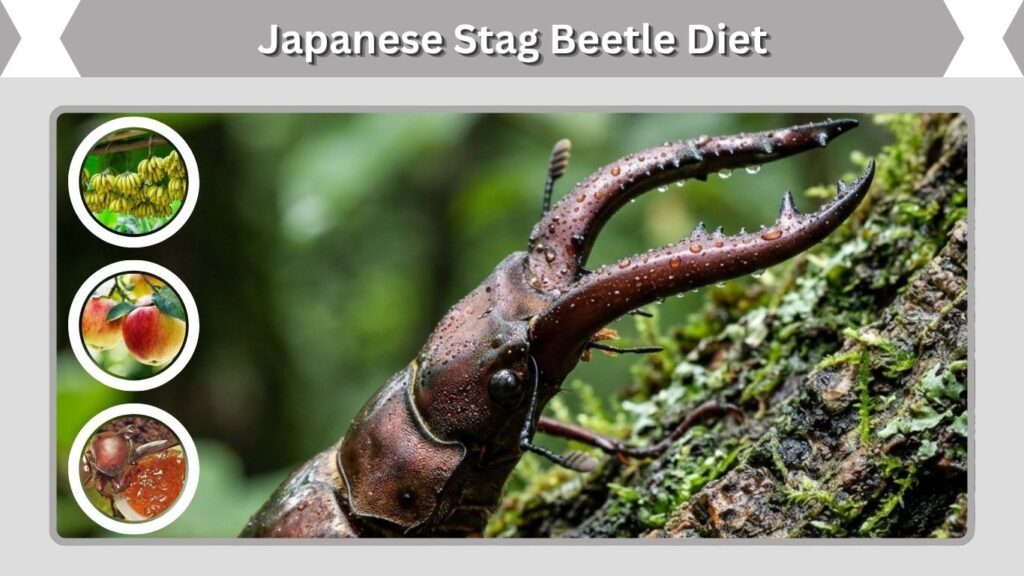
Adult Japanese stag beetles usually feed on tree sap in the wild. They may visit oak and other sap-producing trees at night. In captivity, keepers often feed beetle jelly, ripe fruit, or a special beetle diet.
What Do Japanese Stag Beetles Eat?
Adult Japanese stag beetles may eat:
- Tree sap
- Beetle jelly
- Banana
- Apple slices
- Peach
- Watermelon in small amounts
- Commercial beetle food
Fruit should be removed before it spoils. Beetle jelly is often cleaner and safer for long-term feeding because it does not rot as quickly as soft fruit.
Japanese Stag Beetle Pet Care
Japanese stag beetles are popular pets, but they still need correct care. A simple enclosure should provide moisture, hiding areas, food, and proper ventilation. Males should not be kept together because they may fight.
Basic Enclosure Setup
A good Japanese stag beetle pet enclosure includes:
- Ventilated plastic or glass container
- Beetle substrate
- Bark pieces for hiding
- Beetle jelly cup
- Moist but not wet bedding
- Secure lid
- Room-temperature location
- No direct sunlight
Avoid keeping the enclosure too hot, too dry, or too wet. Direct sunlight can overheat a small beetle cage quickly.
Breeding Setup
For breeding, females need decaying hardwood or suitable laying substrate. Many stag beetle species lay eggs in rotten wood. The female may dig into the wood or substrate to deposit eggs. After laying, larvae should be separated or managed carefully because overcrowding can cause stress or cannibalism in some beetles.
Japanese Stag Beetle in Japanese Culture
Stag beetles are deeply connected with Japanese summer insect culture. Children often collect or keep beetles, and stores sell beetle cages and supplies. Web Japan explains that beetles are kept at home and even in elementary school classes, helping children learn responsibility and connect with nature.
The Japanese word kuwagata is associated with stag beetles. Another famous Japanese beetle is kabutomushi, the Japanese rhinoceros beetle. These two insects are often compared because both are large, horned or jawed beetles popular with children and collectors.
Japanese Stag Beetle vs Japanese Beetle
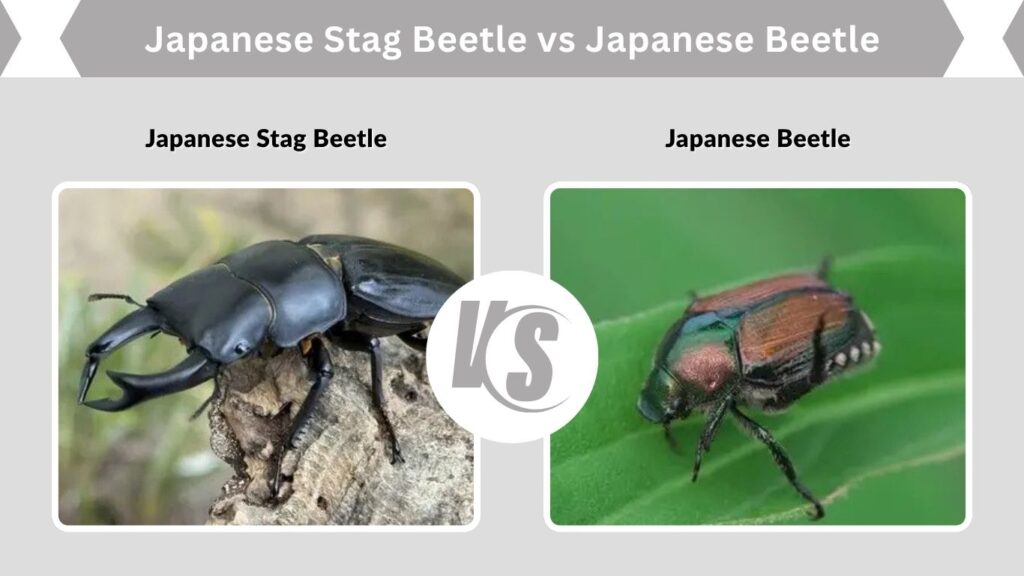
The keyword list also includes “Japanese beetle life stages,” but this refers to a different insect. The Japanese beetle is Popillia japonica, a metallic green and copper garden pest. The Japanese stag beetle is a larger forest beetle in the stag beetle family.
| Feature | Japanese Stag Beetle | Japanese Beetle |
| Main group | Stag beetle | Scarab beetle |
| Common role | Pet, forest insect | Garden and lawn pest |
| Adult appearance | Large jaws in males | Metallic green body, copper wings |
| Larvae | Feed in decaying wood | White grubs feed on grass roots |
| Damage | Usually not a garden pest | Damages leaves, roses, lawns, crops |
Japanese Beetle Life Stages
Japanese beetles have four life stages: egg, larva, pupa, and adult. The larvae are white grubs that live in soil and feed mainly on grass roots. University of Minnesota Extension notes that eggs hatch in about two weeks and grubs pass through three growth stages, called instars.
Illinois Extension explains that Japanese beetles usually have a one-year life cycle and spend much of that time as grubs in the soil. Adults commonly emerge in late June, with many present in July.
This is different from Japanese stag beetles, whose larvae develop in decaying wood instead of turfgrass roots.
FAQs
What is a Japanese stag beetle?
A Japanese stag beetle is a beetle from the family Lucanidae. Males often have large antler-like jaws used for fighting and mating competition. In Japan, stag beetles are commonly called kuwagata and are popular as summer pets.
What is the scientific name of the Japanese stag beetle?
There are several Japanese stag beetle species. One famous Japanese giant stag beetle is commonly known as Dorcus hopei binodulosus. Other Japanese stag beetles may belong to different genera or species, so the scientific name depends on the exact beetle.
How long do Japanese stag beetles live?
Japanese stag beetle lifespan depends on species and care. Some adults live only months, while Dorcus-type stag beetles may live for several years in captivity. The larval stage can also last many months or more than a year before pupation.
What do Japanese stag beetles eat?
Adult Japanese stag beetles eat tree sap in the wild. In captivity, they are usually fed beetle jelly, banana, apple, peach, or other soft fruit. Larvae eat decaying wood, fungal material, or prepared beetle substrate.
Are Japanese stag beetles the same as Japanese beetles?
No, Japanese stag beetles and Japanese beetles are different insects. Japanese stag beetles are large forest beetles often kept as pets. Japanese beetles are metallic garden pests whose adults damage leaves and flowers, while their grubs damage lawns.