
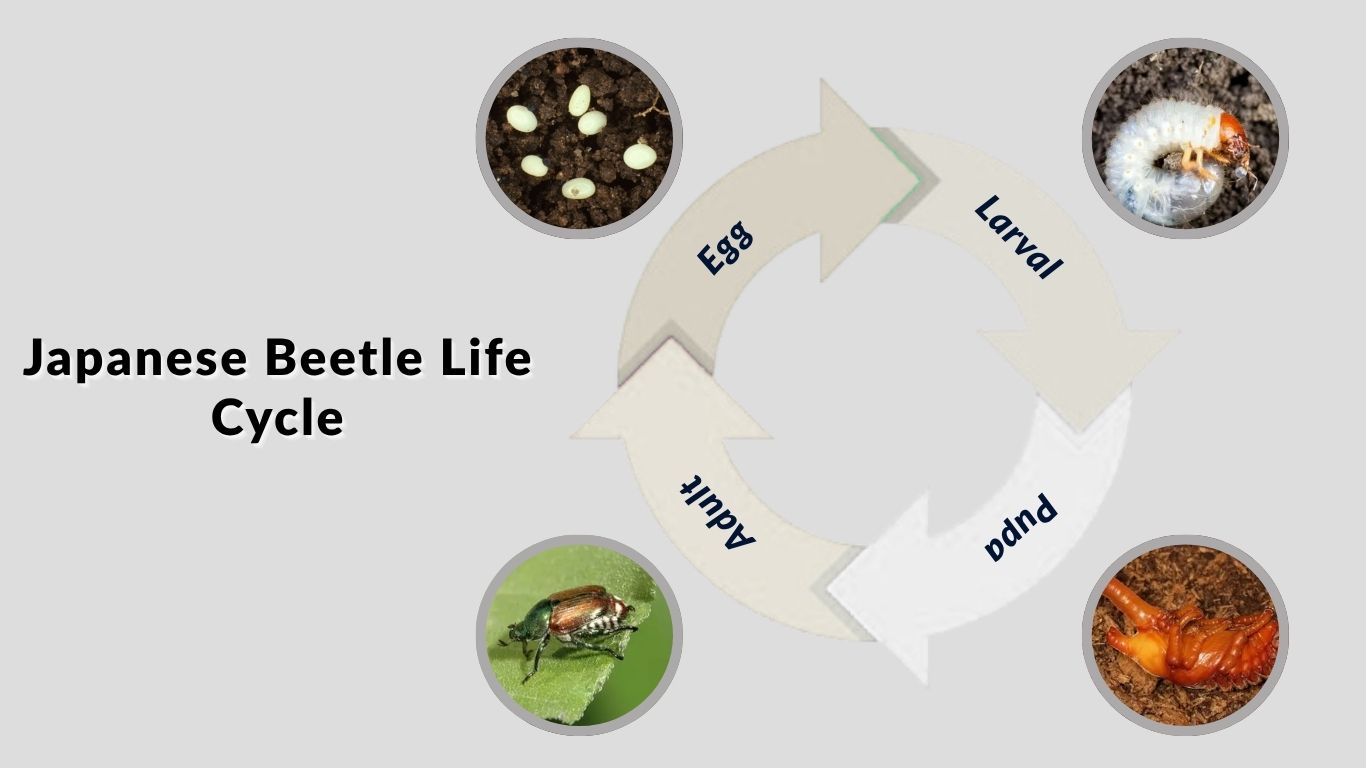
The Japanese beetle life cycle includes four distinct stages: egg, larva, pupa, and adult. This is known as complete metamorphosis. Although the shiny adult beetles are visible for only a few summer weeks, the insect usually spends most of the year underground as a white grub. Understanding when each stage occurs helps gardeners recognize damage and choose the best time to protect lawns, flowers, fruit trees, and other vulnerable plants.
Japanese Beetle Life Cycle Chart
Japanese beetles generally complete one generation per year. Their timing varies with soil temperature, rainfall, latitude, and local climate, but the following chart represents the typical cycle in much of the United States.
| Life stage | Typical time of year | Approximate duration | Main activity |
| Egg | July–August | About two weeks | Develops in moist soil |
| Young grub | July–September | Several weeks | Feeds near the soil surface |
| Overwintering grub | Fall–early spring | Several months | Remains deep underground |
| Mature grub | Spring | About 4–6 weeks | Returns upward and feeds |
| Pupa | Late spring–early summer | A few weeks | Changes into an adult |
| Adult beetle | June–September | About 4–8 weeks | Feeds, mates, and lays eggs |
Is the Japanese Beetle Life Cycle Complete or Incomplete?
Japanese beetles undergo complete metamorphosis, also called a holometabolous life cycle. This means the insect passes through four separate stages:
- Egg
- Larva or white grub
- Pupa
- Adult beetle
The larva looks and behaves very differently from the adult. Grubs live underground and eat roots, while adult Japanese beetles live above ground and feed on leaves, flowers, and fruit.
Stage 1: Japanese Beetle Eggs
After mating, a female leaves the host plant and burrows approximately one to three inches into suitable soil. She deposits a small group of eggs, returns to feeding, and may repeat this process several times during summer.
A female can produce approximately 40–60 eggs during her four-to-eight-week adult life. Moist turfgrass soil is especially attractive for egg laying because the eggs and newly hatched larvae are vulnerable to drying.
What Do the Eggs Look Like?
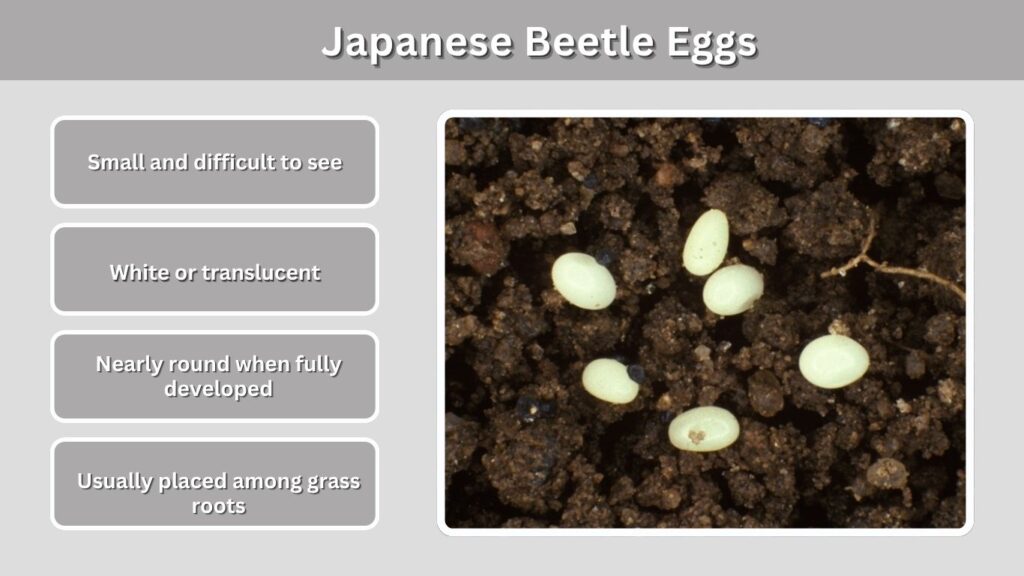
Japanese beetle eggs are:
- Small and difficult to see
- White or translucent
- Nearly round when fully developed
- Deposited beneath the soil surface
- Usually placed among grass roots
The eggs absorb moisture as they develop and normally hatch in about two weeks. Dry summer soil can kill many eggs before they hatch, while moist, irrigated lawns may support greater survival.
Stage 2: Japanese Beetle Grubs
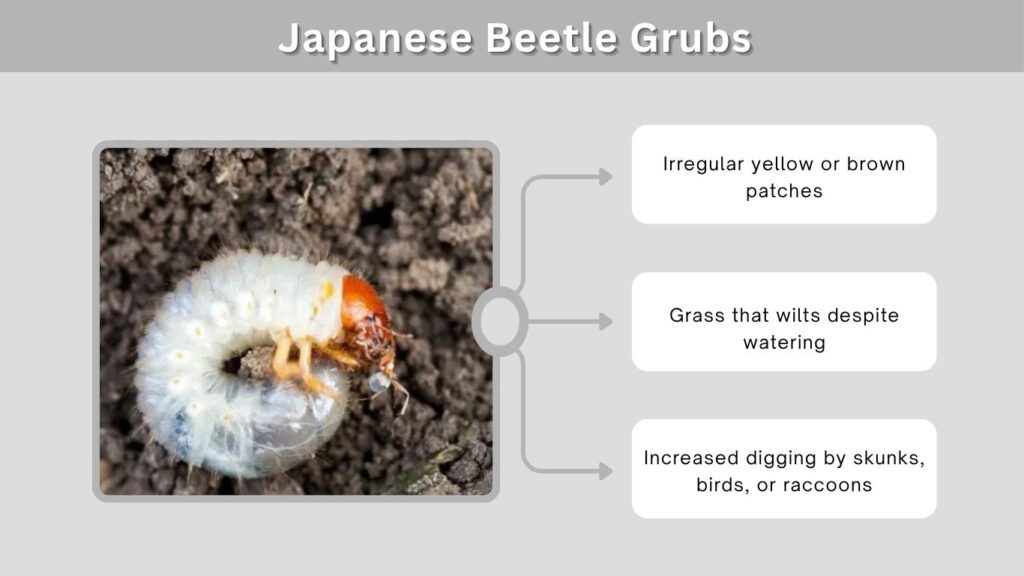
The eggs hatch into larvae commonly called white grubs. Japanese beetle grubs have cream-colored, C-shaped bodies, brown heads, six visible legs, and soft skin. Mature grubs may reach approximately one inch long.
The larval phase is the longest part of the life cycle. Grubs pass through three growth stages, known as instars, becoming larger after each molt.
Summer and Fall Feeding
Young grubs remain close to the soil surface and feed primarily on grass roots. Their feeding may reduce the lawn’s ability to absorb moisture and nutrients.
Signs of significant grub activity include:
- Irregular yellow or brown patches
- Grass that wilts despite watering
- Turf that pulls up like loose carpet
- Increased digging by skunks, birds, or raccoons
- White C-shaped larvae beneath damaged sod
By early fall, the larvae are nearly full-sized. As soil temperatures decline, they move deeper underground to avoid freezing conditions.
How Grubs Survive Winter
Japanese beetles usually overwinter as third-instar grubs. They remain below the frost line or in deeper, protected soil and become largely inactive during cold weather.
Colorado State University reports that feeding declines as soil temperatures fall to around 60°F and activity stops below approximately 50°F. The grubs remain underground until spring warmth allows them to move upward again.
Spring Grub Activity
As the soil warms, mature grubs return to the root zone. They feed for approximately four to six weeks before creating small earthen chambers in which to pupate.
Spring feeding is usually shorter than late-summer feeding. Because mature spring grubs are large and difficult to control, treatment at this stage is often less effective than management directed at smaller larvae during late summer.
Stage 3: The Pupal Stage
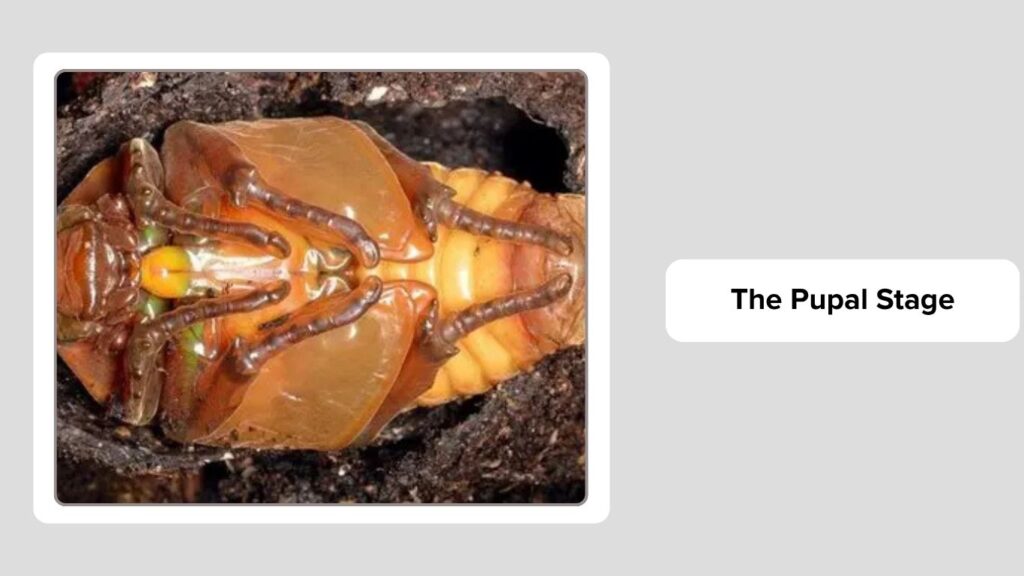
A mature grub stops feeding and forms an earthen cell beneath the soil. Inside this chamber, it transforms into a pupa.
The pupa begins as a pale cream color and gradually darkens as adult features develop. During this stage, the legs, wings, antennae, and metallic body of the adult beetle form.
Pupation generally lasts a few weeks. The exact duration depends on soil temperature and weather. Once development is complete, the new adult remains underground briefly before emerging.
Stage 4: Adult Japanese Beetles
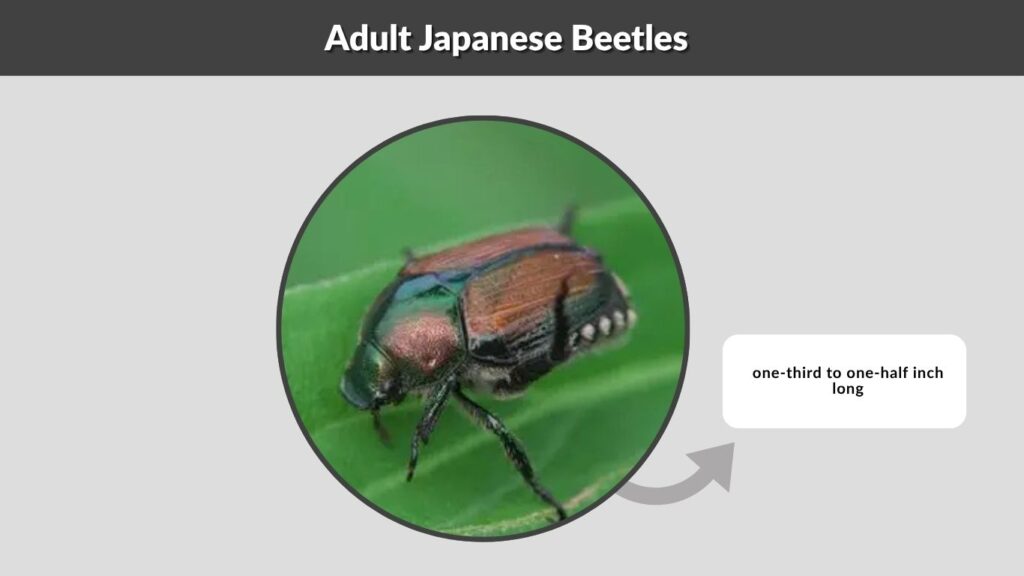
Adults usually emerge from late June through early July, although regional timing differs. Southern locations may see beetles earlier, while cooler northern areas may experience later emergence.
Adult Japanese beetles measure approximately one-third to one-half inch long. They have metallic-green heads and bodies, copper-brown wing covers, and distinctive white hair patches along the abdomen.
Adult Feeding and Reproduction
Adults gather on favored plants to eat and mate. They can damage more than 300 plant species, including:
- Roses
- Grapevines
- Raspberries
- Apples and cherries
- Linden trees
- Basil
- Beans
- Corn silks
- Ornamental flowers
Their feeding removes leaf tissue between the major veins, producing a lace-like appearance called skeletonization. Damaged foliage releases odors that attract additional beetles, which explains why large groups often gather on one plant.
Adult beetles commonly remain active for four to eight weeks. Most feeding occurs during July and August, but some adults may persist into September. After mating, females enter the soil and begin the cycle again by laying eggs.
When Is the Best Time to Control Japanese Beetles?
The best timing depends on whether the goal is to protect plants from adults or repair turf affected by grubs.
Controlling Adult Beetles
Begin checking vulnerable plants as soon as adults appear in early summer. Hand removal is most effective in the morning, when beetles are cooler and less active. Knock them into a container of soapy water and repeat regularly throughout the feeding season.
Japanese beetle traps are generally not recommended in established infestations because they may attract more beetles into the surrounding landscape than they capture.
Controlling Grubs
Grub management is generally most effective when the larvae are young and feeding near the surface in late summer. The University of Minnesota notes that curative treatment may be considered from late July through mid-September when damaging grubs are confirmed and still relatively small.
Do not treat a lawn simply because adult beetles are feeding nearby. Adults can fly several miles, so the beetles on garden plants may have developed in another property’s turf. Always inspect beneath damaged grass before choosing a grub treatment.
Why Timing Varies by State
Keywords such as “Japanese beetle life cycle in Ohio,” “Illinois,” “Minnesota,” “Colorado,” and “Missouri” reflect regional differences in emergence.
The basic four-stage cycle remains the same, but warmer climates usually experience earlier adult emergence. Cooler climates, high elevations, and cold springs can delay pupation and adult activity. For example, Illinois Extension reports emergence beginning in late June in southern Illinois and early July farther north.
Local extension services provide the most useful guidance because treatment timing should follow local temperatures and insect development rather than a fixed national date.
FAQs
How long is the Japanese beetle life cycle?
The complete Japanese beetle life cycle normally takes approximately one year. Most of that time is spent underground as a white grub. Adults are present for only about four to eight weeks during summer.
How many stages are in the Japanese beetle life cycle?
There are four stages: egg, larva, pupa, and adult. Because the immature grub and adult differ greatly in appearance and behavior, Japanese beetles are classified as insects that undergo complete metamorphosis.
When do Japanese beetle grubs become active?
Young grubs begin feeding after eggs hatch in midsummer. They feed into fall, move deeper for winter, and return to the root zone when the soil warms in spring. They then feed briefly before pupating.
Do Japanese beetles survive winter?
Adult Japanese beetles normally do not survive winter. The population persists as partially developed grubs underground. These larvae remain protected in deeper soil before returning toward the surface in spring.
When do adult Japanese beetles emerge?
Adults commonly emerge from late June through early July and feed mainly during July and August. Exact timing varies according to location, soil temperature, elevation, and seasonal weather.
