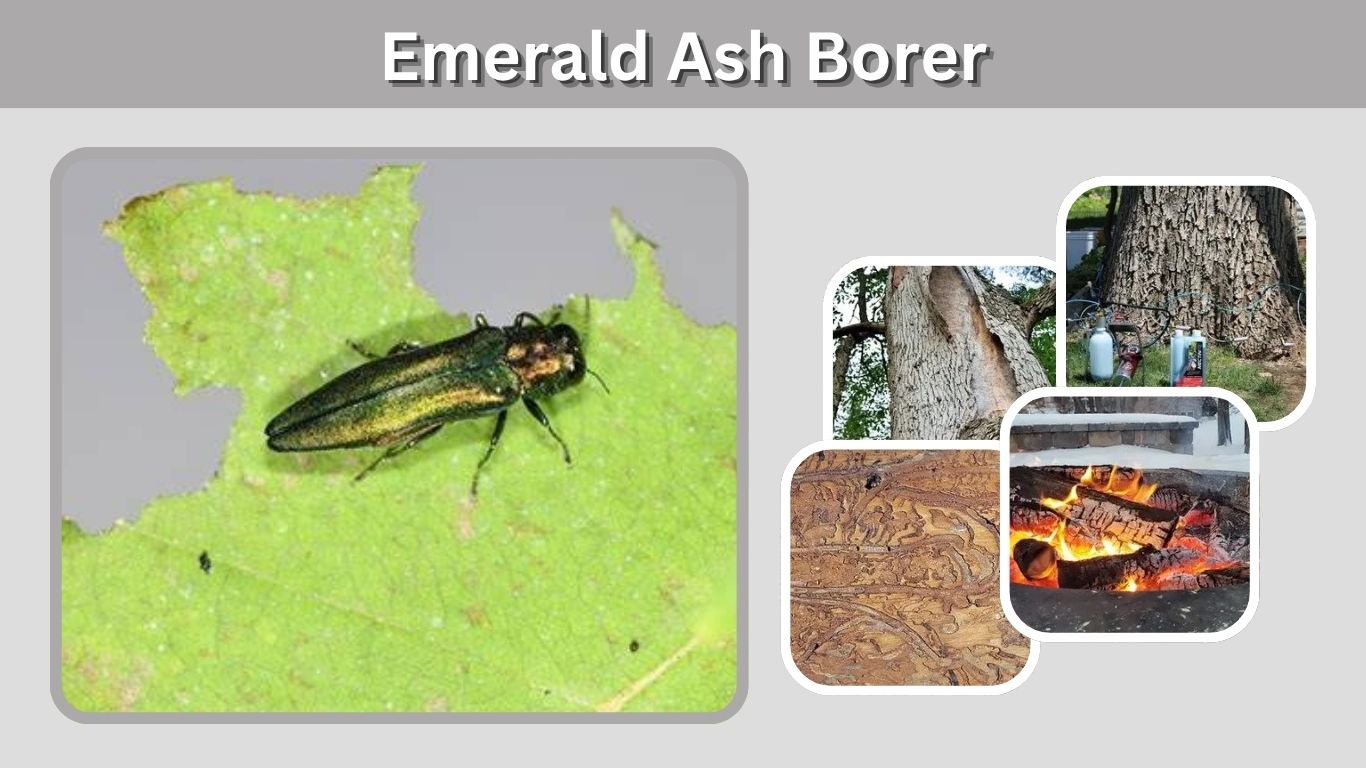
The emerald ash borer is a small invasive beetle capable of killing healthy ash trees within only a few years. Because most of its destructive activity occurs beneath the bark, an infestation may remain unnoticed until the canopy begins thinning. Recognizing emerald ash borer signs early can make the difference between saving a valuable tree and having to remove it. This guide explains how to identify the beetle, recognize ash tree damage, understand its life cycle, and choose an appropriate treatment or control strategy.
What Is the Emerald Ash Borer?
The emerald ash borer, scientifically known as Agrilus planipennis, is a metallic wood-boring beetle that attacks trees in the ash genus, Fraxinus. It is not a tree disease or fungus. The real damage is caused by its larvae, which feed beneath the bark and interfere with the tree’s internal transport system.
Identification
Adult emerald ash borers are narrow, elongated beetles with shiny metallic-green bodies. They are generally about one-third to one-half inch long, making them smaller than many people expect.
Important identification features include:
- A bright or dark metallic-green outer body
- A slender, bullet-shaped appearance
- Copper-red or purplish coloring beneath the wings
- Short antennae and relatively large dark eyes
- Small, cream-colored larvae with flattened, segmented bodies
Seeing a green beetle does not automatically confirm an infestation. Several native insects look similar, so suspicious beetles or tree damage should be examined by an arborist, Extension specialist, or local plant-health authority.
Where Did It Come From?
The emerald ash borer is native to parts of eastern Russia and Asia, including northern China, Japan, and Korea. It was accidentally transported to North America in cargo or wood-packing materials and was identified near Detroit, Michigan, in 2002. It has since spread through natural beetle movement and the transportation of infested firewood, logs, nursery trees, and other ash materials.
Emerald Ash Borer Life Cycle
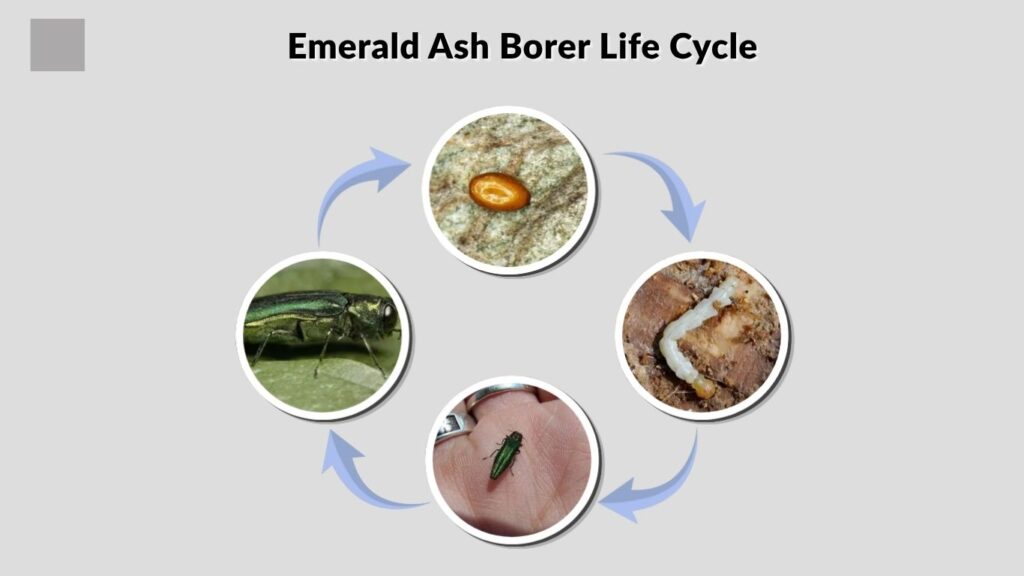
Understanding the emerald ash borer life cycle helps explain why the insect can be difficult to find and why treatment timing matters. The beetle undergoes complete metamorphosis, progressing through egg, larval, pupal, and adult stages.
Egg and Larval Stages
Adult females deposit tiny eggs in cracks and crevices on ash bark. After hatching, the young larvae tunnel through the bark and begin feeding on the inner bark and phloem.
As a larva grows, it produces winding, S-shaped galleries packed with waste material. The insect usually passes through several larval stages before becoming a pupa beneath the bark. The larvae may remain inside the tree through winter, protected from weather and difficult for homeowners to detect.
Adult Stage
Adults usually emerge during warm weather by chewing distinctive D-shaped exit holes through the bark. They feed lightly on ash leaves, mate and begin laying eggs. Adults live for only a few weeks, but a female can start another generation during that period.
The life cycle commonly takes one year, although it may extend to two years under certain conditions. Adults are usually active from spring through summer, depending on local temperatures.
How Emerald Ash Borers Damage Ash Trees
Emerald ash borer damage begins beneath the bark, where larvae feed on tissues responsible for transporting sugars, nutrients and water. As the galleries increase, they gradually girdle branches and the trunk.
When enough tissue is destroyed, the roots receive less energy from the leaves, while water movement toward the canopy becomes restricted. Branches begin dying from the top downward, and the entire ash tree can eventually fail.
| Stage | Common symptoms | Likelihood of recovery |
| Early infestation | Few visible symptoms, scattered D-shaped holes or light bark splitting | Usually favorable with proper treatment |
| Moderate infestation | Thinning canopy, woodpecker damage and new shoots on trunk | Possible after professional evaluation |
| Advanced infestation | Extensive dieback, loose bark and large dead branches | Low; removal may be safer |
| Dead tree | No healthy canopy and brittle branches | Treatment is not possible |
Ash trees may lose much of their canopy within approximately two years of infestation and can die within three to four years, although decline rates vary with tree health, climate and local beetle pressure.
Signs of Emerald Ash Borer Infestation
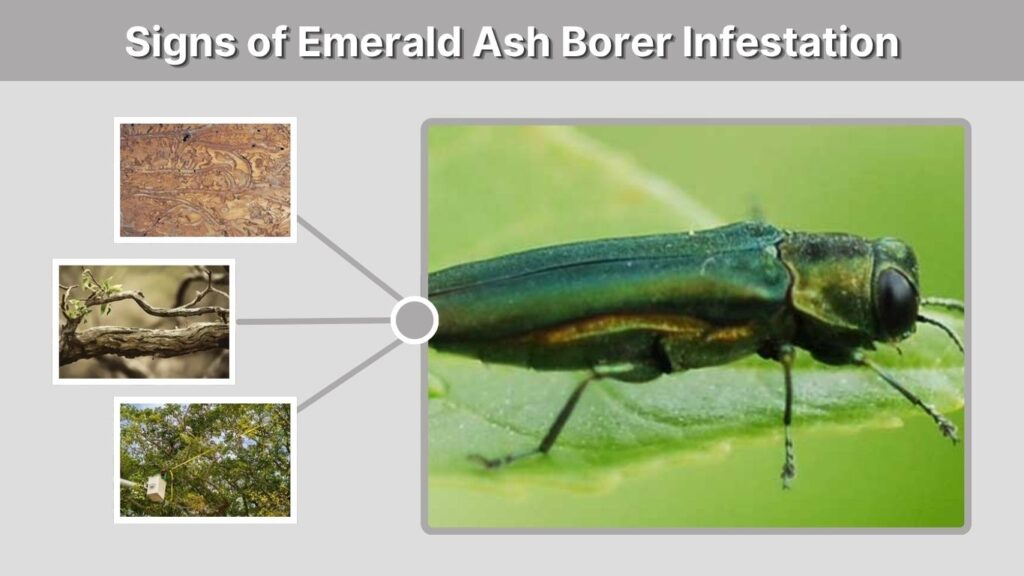
Early signs of emerald ash borer can be subtle. Symptoms such as dead branches or sparse foliage can also result from drought, disease, root damage or other insects. A combination of several characteristic signs offers stronger evidence.
Common Signs and Symptoms
Look for the following symptoms on ash trees:
- Canopy thinning beginning near the top
- Dead branches in the upper crown
- D-shaped exit holes in the bark
- Vertical cracks or splits in the trunk
- S-shaped tunnels beneath loose bark
- Increased woodpecker activity
- Light-colored areas where woodpeckers removed bark
- Leafy shoots growing from the trunk or lower branches
- Small leaves or premature yellowing
- Loose bark exposing larval galleries
D-shaped holes are particularly useful because they reflect the shape of the adult beetle’s body. However, the holes are small and may be concentrated high in the canopy during the early stages.
How to Inspect a Tree
First, confirm that the tree is a true ash in the Fraxinus genus. Ash trees commonly have opposite branches and compound leaves. Mountain ash, prickly ash and several other plants containing “ash” in their common names are not true ash trees and are not typical emerald ash borer hosts.
Examine the upper crown with binoculars, inspect the trunk for bark splitting and look for unusual woodpecker feeding. Avoid peeling healthy bark from a living tree because doing so creates additional injury. USDA APHIS identifies branch dieback, trunk shoots, bark peeling, D-shaped holes and S-shaped larval damage as important reporting signs.
Emerald Ash Borer Treatment Options
There is no simple treatment that permanently eliminates emerald ash borers from an entire region. However, properly selected systemic insecticides can protect individual ash trees. Treatment works best before heavy canopy decline occurs.
Is There a Cure?
Emerald ash borer treatment is better understood as continuing protection rather than a one-time cure. A treated tree can remain healthy, but applications usually must be repeated according to the product label and treatment method.
Trees with little or no canopy loss are generally the best candidates. Some lightly or moderately affected trees may recover, but trees with severe dieback often cannot distribute systemic insecticide effectively through their damaged vascular tissues.
Common Insecticide Treatments
| Active ingredient | Application method | Typical use |
| Emamectin benzoate | Professional trunk injection | High-value, medium or large ash trees |
| Imidacloprid | Soil treatment or trunk injection, depending on label | Preventive treatment, often for smaller trees |
| Dinotefuran | Basal bark spray or soil application | Rapid systemic uptake |
| Azadirachtin | Professional trunk injection | Systemic protection in certain programs |
Emamectin benzoate trunk injection is one of the most effective professional options and can often provide protection for two years or longer. Imidacloprid, dinotefuran and azadirachtin may also be effective when applied correctly under suitable conditions. Product availability, allowed application methods and treatment intervals vary, so the pesticide label and local regulations must always be followed.
DIY or Professional Treatment?
Some insecticide products are sold for homeowner use, particularly soil-applied systemic treatments. However, incorrect measurements, poor timing or treating an unsuitable tree can waste money and expose nearby soil or water unnecessarily.
Professional help is recommended when:
- The tree is large or close to a building
- Canopy thinning has already appeared
- Trunk injection is being considered
- The tree’s species is uncertain
- The roots extend near drains, wells or surface water
- Large branches create a safety concern
A certified arborist can assess canopy loss, trunk diameter, structural condition and treatment value before recommending insecticide use.
Should You Treat or Remove the Ash Tree?
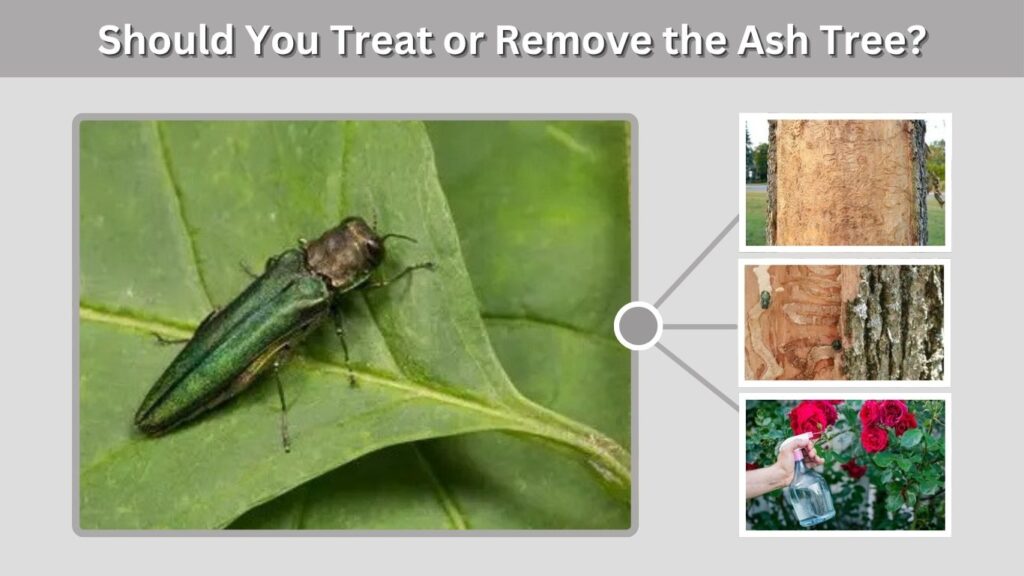
Treatment is usually most practical for a healthy, structurally sound tree that provides substantial shade, landscape value or energy-saving benefits. Long-term treatment expenses should be compared with removal and replacement costs.
Consider treatment when the tree:
- Has a mostly full, healthy canopy
- Has limited visible emerald ash borer damage
- Is well positioned and structurally stable
- Provides valuable shade or landscape benefits
- Can receive repeated treatment when needed
Removal may be more appropriate when the tree has extensive crown loss, severe trunk injury, major structural defects or a location where falling branches could injure people or damage property. Dead emerald ash borer trees can become brittle quickly, making delayed removal more hazardous and potentially more expensive.
Emerald Ash Borer Treatment Cost
Emerald ash borer treatment cost depends on the tree’s trunk diameter, treatment product, application method, regional labor rates and treatment frequency. Large trees usually cost more because dosage is commonly based on trunk size.
A professional quote should explain the active ingredient, application method, expected protection period and retreatment schedule. Homeowners should also compare the projected cost of protecting the tree over several years with the cost of removal, stump grinding and planting a replacement.
Choosing the lowest initial price is not always the most economical approach. An ineffective application may allow hidden damage to continue until the tree becomes unsalvageable.
How to Prevent Emerald Ash Borer Spread
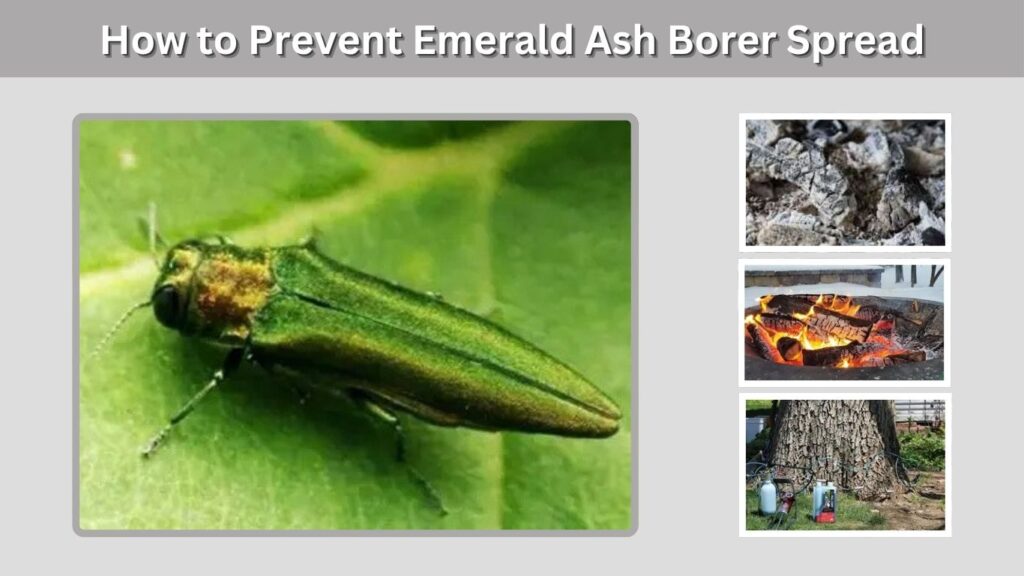
People can move emerald ash borers much farther than the beetles normally travel on their own. Firewood and unfinished ash materials may contain larvae even when the wood appears normal.
To reduce the spread:
- Buy local or certified heat-treated firewood
- Burn firewood near the location where it was purchased
- Do not transport ash logs or branches from infested areas
- Follow state or provincial wood-movement rules
- Chip, process or dispose of ash waste properly
- Inspect ash trees regularly for canopy decline
- Report suspicious insects or new infestations
- Plant a diversity of replacement tree species
USDA APHIS recommends using local or certified heat-treated firewood because untreated wood can carry invasive insects into new areas. Current detections can be checked through the official emerald ash borer infestation map.
FAQs
Can an ash tree recover from emerald ash borer damage?
An ash tree may recover when the infestation is detected early and the canopy remains mostly healthy. Systemic treatment can kill developing insects and prevent additional damage. Trees with extensive canopy loss or severely disrupted vascular tissue are less likely to recover and may require removal.
Does emerald ash borer attack trees other than ash?
Emerald ash borer primarily attacks true ash trees belonging to the genus Fraxinus. Plants such as mountain ash and prickly ash are not true ash trees. Correct tree identification is therefore an essential first step before purchasing or applying any treatment.
What do emerald ash borer holes look like?
Adult beetles leave small D-shaped exit holes in the bark. The flat side of the hole distinguishes it from the round or oval holes produced by many other insects. Early holes may be difficult to find because infestations often begin in upper branches.
Can emerald ash borer be controlled naturally?
Natural predators, including woodpeckers and introduced parasitoid wasps, can kill some emerald ash borers. However, natural control alone normally cannot protect an individual landscape tree during a serious infestation. Avoiding firewood movement and maintaining tree diversity remain important nonchemical management practices.
When should an ash tree be treated?
Treatment is most effective when the tree is healthy and emerald ash borer has been detected nearby or is expected to arrive soon. Applications are commonly timed around spring growth, but exact timing varies by product, climate and method. Always follow the pesticide label or an arborist’s recommendation.