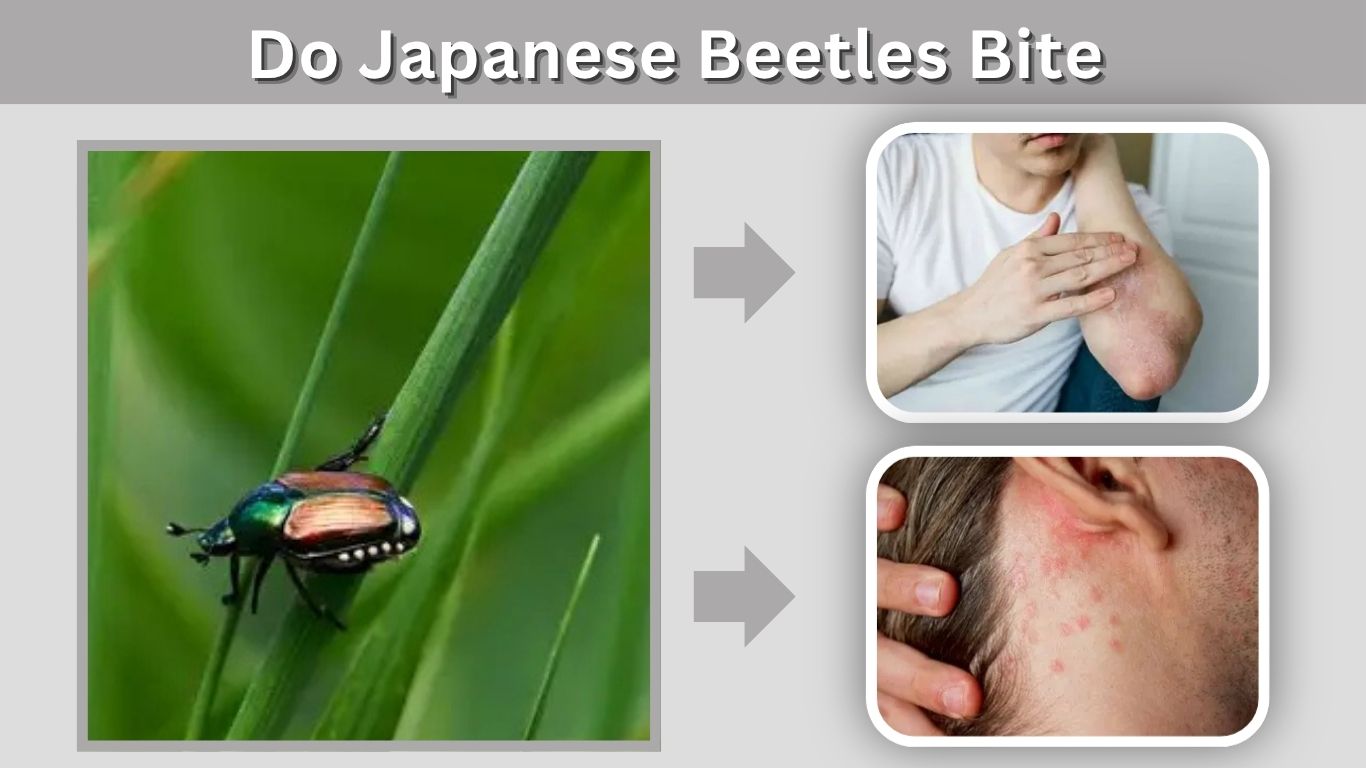
Japanese beetles do not bite humans in any meaningful way, and they do not sting. Their mouthparts are made for chewing plant leaves, flowers, and fruit, not human skin. They may feel prickly if they crawl on your hand because they have small spines on their legs, but this is often mistaken for a bite. Japanese beetles are mainly a plant pest, not a people or pet pest.
Do Japanese Beetles Bite?
Japanese beetles are not known to bite people. Washington State Department of Health states that Japanese beetles do not bite or spread disease to humans. They are a problem because they feed on more than 300 plant species, not because they attack people.
| Question | Answer |
| Do Japanese beetles bite humans? | No, not normally |
| Do Japanese beetles sting? | No |
| Are they poisonous? | No evidence they poison people |
| Do they spread disease to humans? | No |
| Main problem | Plant, crop, rose, and lawn damage |
Why Do People Think Japanese Beetles Bite?
People often think Japanese beetles bite because the beetle’s legs can feel sharp or scratchy on skin. Orkin explains that Japanese beetles have mandibles for chewing leaves, but those mouthparts are too weak to break human skin. Their leg spines can feel prickly, which may be mistaken for a bite.
Common Reasons for Confusion
Japanese beetle “bite” confusion may happen because:
- The beetle’s legs feel scratchy.
- It grips skin tightly while walking.
- People confuse it with Asian lady beetles.
- Skin may already be irritated from gardening.
- A different insect may have caused the bite.
Do Japanese Beetles Bite Humans?
No, Japanese beetles do not bite humans like mosquitoes, ants, fleas, or biting flies. They do not feed on blood, and they do not seek out people. Their main food sources are leaves, flowers, fruits, and crops.
What Do Japanese Beetles Do Instead?
Adult Japanese beetles feed on plants. They often chew leaves into a lace-like pattern called skeletonization. University of Minnesota Extension notes that adult Japanese beetles feed on more than 300 plant species and are serious pests of flowers, trees, shrubs, fruits, vegetables, field crops, and turf.
Do Japanese Beetles Bite or Sting?
Japanese beetles do not bite or sting. They do not have a stinger like bees, wasps, hornets, or yellowjackets. They also do not inject venom.
Bite vs Sting
| Term | Japanese Beetle? | Explanation |
| Bite | No true human bite | Mouthparts are for plants |
| Sting | No | No stinger or venom |
| Scratchy feeling | Possible | Leg spines may feel prickly |
| Disease spread | No known human disease spread | Not a human health pest |
Terminix also says Japanese beetles are not known to bite or sting humans or animals and do not carry harmful diseases.
What Do Japanese Beetle Bites Look Like?
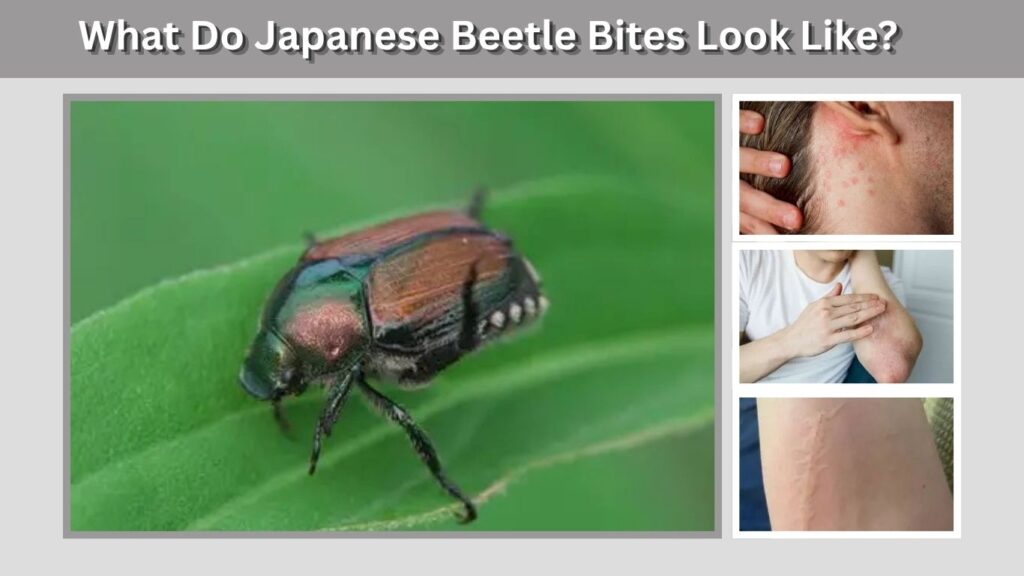
A real Japanese beetle bite is unlikely. If someone thinks they were bitten, the mark may be from a scratch, skin irritation, another insect, or contact with plants while gardening. A Japanese beetle walking on skin may leave a brief prickly feeling, but it should not create a serious bite wound.
Possible minor signs may include:
- Tiny red spot
- Mild itching
- Brief irritation
- Scratch-like mark
- No visible mark at all
If swelling, spreading redness, pain, pus, or an allergic reaction appears, another cause may be involved, and medical advice may be needed.
Do Japanese Beetles Bite Dogs?
Japanese beetles are not known to bite dogs. If a dog sniffs, licks, or eats a few Japanese beetles, the main concern is usually stomach upset, not biting. However, beetle traps, pesticides, or chemical lures can be more concerning than the beetles themselves.
Dog Safety Tips
- Do not let dogs eat beetle traps.
- Keep pesticides away from pets.
- Remove dead beetles from treated areas.
- Call a vet if a dog eats many insects or trap materials.
- Watch for vomiting, drooling, or unusual behavior.
Japanese beetles are mainly plant-feeding insects, and adults damage leaves and flowers while larvae damage grass roots.
Do Japanese Lady Beetles Bite?
This is a different insect issue. Many people use names like “Japanese lady beetle” when they actually mean Asian lady beetle. Asian lady beetles can sometimes nip or pinch skin, especially when they enter homes in large numbers. Japanese beetles and Asian lady beetles are not the same insect.
Japanese Beetle vs Asian Lady Beetle
| Feature | Japanese Beetle | Asian Lady Beetle |
| Body color | Metallic green and copper | Orange, red, or yellow with spots |
| Shape | Oval scarab beetle | Round ladybug-like beetle |
| Main problem | Plant damage | Home invasion, occasional nipping |
| Bites humans? | No | Sometimes may nip |
| Feeds on | Leaves, flowers, fruit | Aphids and small insects |
Orkin notes that online claims about Japanese beetle biting may come from confusion with Asian lady beetles.
Why Do Japanese Beetles Have Mouthparts?
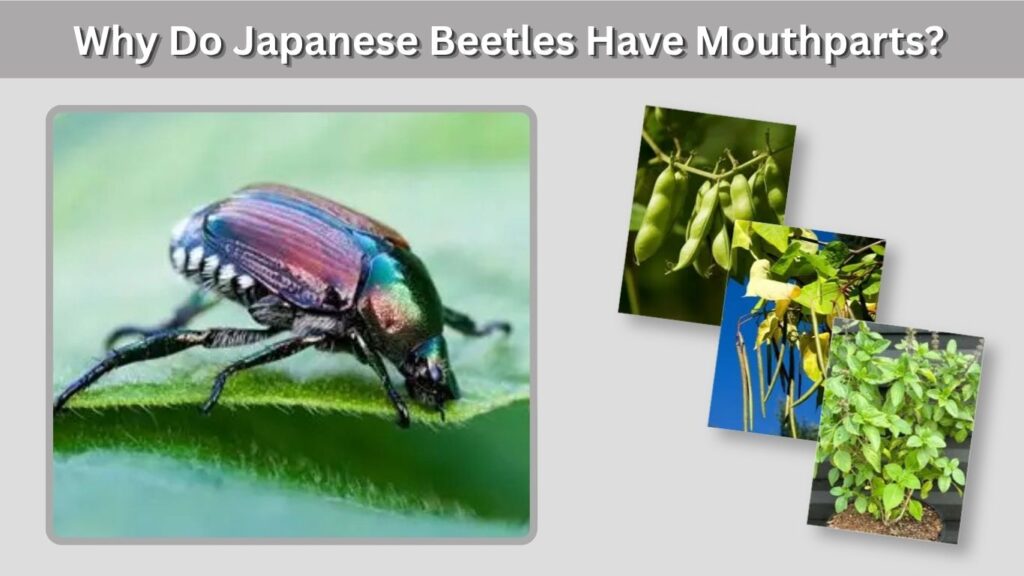
Japanese beetles have chewing mouthparts because they eat plant material. Their jaws help them chew leaves, flowers, and fruit skin. These mouthparts are strong enough for plants but not designed to bite people.
What They Eat
Japanese beetles commonly feed on:
- Rose leaves and flowers
- Grape leaves
- Linden tree leaves
- Birch leaves
- Fruit trees
- Basil
- Beans
- Soybeans
- Corn silk
- Many ornamental plants
This is why gardeners worry about Japanese beetles. They are not dangerous to touch, but they can quickly damage favorite plants.
Are Japanese Beetles Dangerous?
Japanese beetles are not dangerous to humans, but they can be damaging to gardens, landscapes, crops, and lawns. Adults chew leaves and flowers, while larvae live in soil and feed on grass roots. The Washington State Department of Health describes them as invasive insects that can become serious pests for residents and agriculture.
How to Handle Japanese Beetles Safely
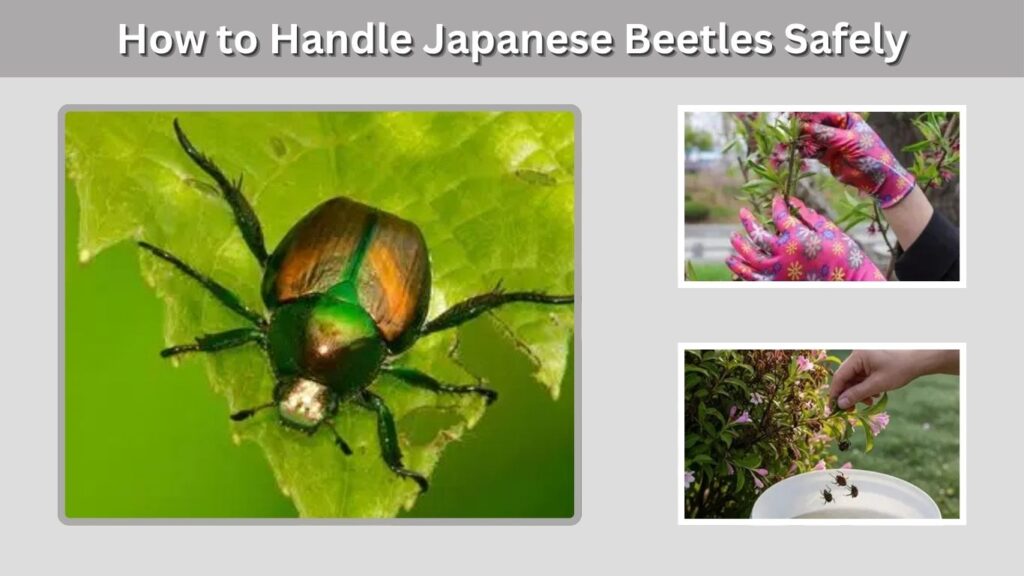
You can remove Japanese beetles by hand if you are comfortable touching insects. They do not sting, but some people prefer gloves because the legs may feel prickly.
Safe removal tips:
- Wear garden gloves if desired.
- Pick beetles early in the morning.
- Drop them into soapy water.
- Avoid crushing beetles on plants.
- Wash hands after handling garden insects.
- Do not spray pesticides near pets or pollinators without reading the label.
FAQs
Do Japanese beetles bite?
No, Japanese beetles do not bite people. Their mouthparts are used for chewing leaves and flowers. If one crawls on your skin, its leg spines may feel prickly, but that is not a true bite.
Do Japanese beetles bite humans?
Japanese beetles do not bite humans or spread disease to humans. They are considered plant pests because they feed on leaves, flowers, fruits, crops, and turfgrass roots during the grub stage.
Do Japanese beetles bite or sting?
Japanese beetles do not bite or sting. They have no stinger and no venom. Their main damage is to plants, especially roses, grapes, trees, crops, and lawns.
What do Japanese beetle bites look like?
A true Japanese beetle bite is unlikely. If you see a red mark, it may be from skin irritation, a scratch, another insect, or plant contact. Japanese beetles may feel prickly because of their legs, but they do not normally break skin.
Do Japanese beetles bite dogs?
Japanese beetles are not known to bite dogs. A dog may get mild stomach upset if it eats many insects, but traps, pesticides, or chemical lures are a bigger concern. Keep beetle control products away from pets.