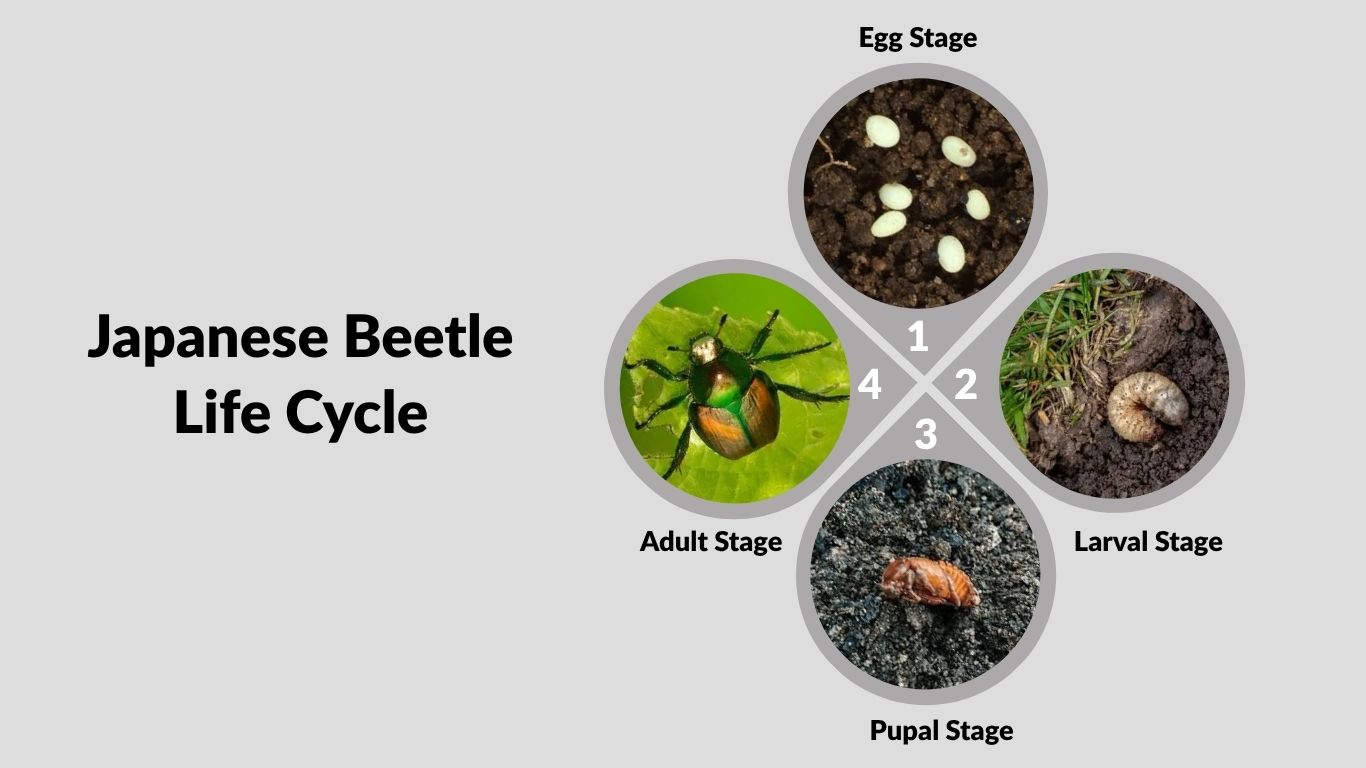
The Japanese beetle life cycle has four stages: egg, larva or grub, pupa, and adult beetle. This means Japanese beetles have a complete life cycle, also called complete metamorphosis. In most areas, the life cycle of the Japanese beetle takes about one year. Adults feed on leaves, flowers, and fruit in summer, while grubs live underground and feed on grass roots for much of the year.
Japanese Beetle Life Cycle Overview
Japanese beetles spend most of their life underground as grubs. The adult stage is the most visible because beetles gather on roses, grapes, trees, and garden plants during summer. However, the grub stage is often the longest and most important stage for lawn damage.
| Life Stage | Where It Happens | Main Activity | Typical Timing |
| Egg | Soil | Female lays eggs | Summer |
| Larva/grub | Soil near roots | Feeds on roots | Summer, fall, spring |
| Pupa | Soil | Changes into adult | Late spring |
| Adult | Plants above ground | Feeds and lays eggs | June to September |
Stage 1: Japanese Beetle Eggs
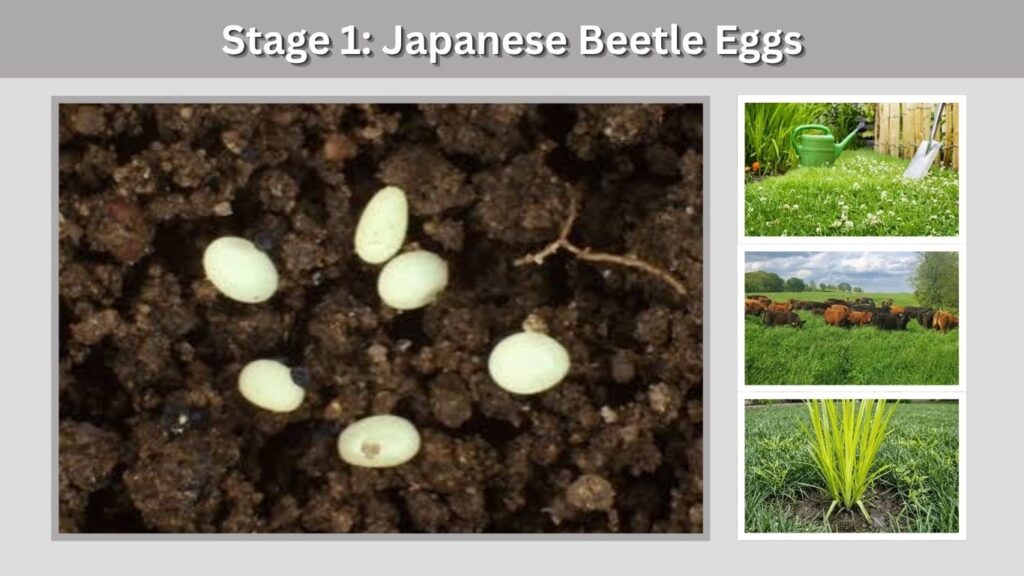
The life cycle begins when adult females lay eggs in the soil. Females usually leave feeding plants, burrow into the soil, and lay eggs in grassy or moist areas. The eggs hatch into small white grubs after about two weeks, depending on soil temperature and moisture.
Egg-Laying Sites
Japanese beetles often lay eggs in:
- Lawns
- Pastures
- Moist turfgrass
- Irrigated soil
- Grassy areas near feeding plants
Moist soil helps eggs survive. Dry soil can reduce egg survival, while irrigated lawns may be more attractive for egg laying.
Stage 2: Japanese Beetle Grub Life Cycle
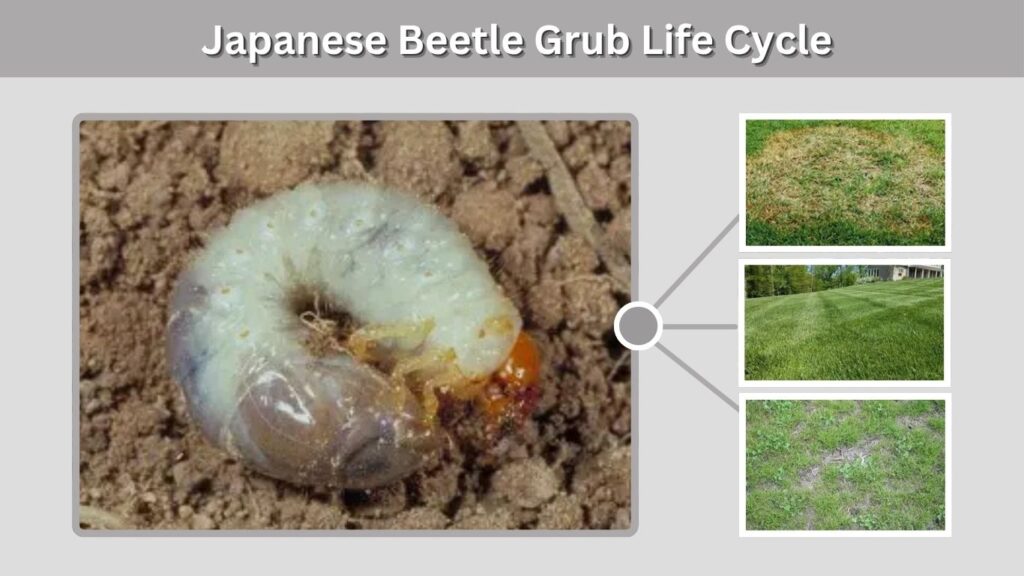
The grub stage is the longest part of the Japanese beetle life cycle. Grubs are cream-colored, C-shaped larvae with brown heads. They live underground and feed on grass roots and organic material. Illinois Extension notes that Japanese beetles spend about 10 months as grubs in the soil.
Japanese Beetle Larvae Stages
Japanese beetle larvae grow through several grub stages before pupating. Young grubs feed near the soil surface in late summer and fall. As temperatures cool, they move deeper into the soil to survive winter. In spring, they move back upward and feed again before becoming pupae.
Signs of grub activity include:
- Brown lawn patches
- Turf that pulls up easily
- Weak grass roots
- Skunks or birds digging for grubs
- Lawn damage in late summer or fall
Stage 3: Japanese Beetle Pupa Stage
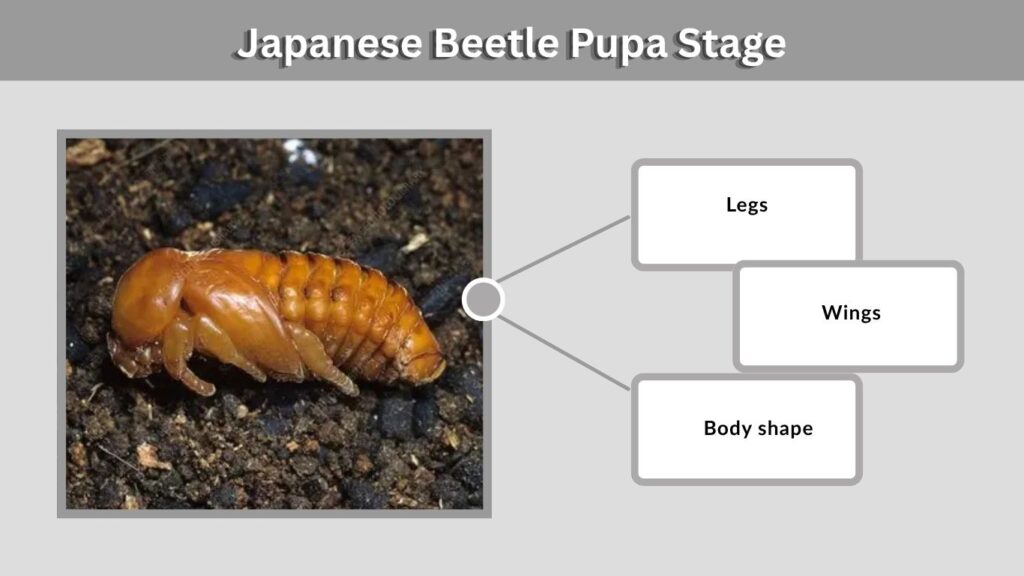
After the grub finishes feeding in spring, it changes into a pupa in the soil. The pupa stage is the transformation stage between grub and adult beetle. During this time, the insect develops adult legs, wings, body shape, and color.
Michigan State University Extension says larvae pupate in early June, and adults usually emerge from late June through mid-August, with most adults appearing in July in a normal year.
Stage 4: Adult Japanese Beetle
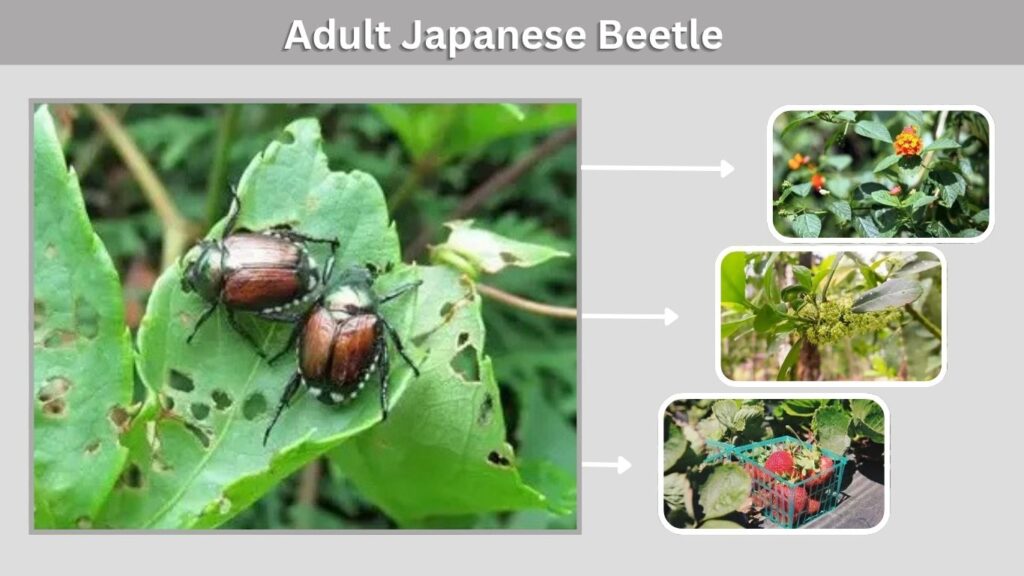
Adult Japanese beetles are the metallic green and copper beetles commonly seen on roses, grapes, linden trees, birch, basil, beans, corn, and many ornamentals. Adults chew leaves, flowers, and fruit. Their feeding often creates skeletonized leaves.
Adult Beetle Timing
Adults usually emerge in late June or early July in many northern areas. University of Minnesota Extension says adults mainly feed in July and August, though some may remain active into September.
Adult Japanese beetles:
- Feed on leaves, flowers, and fruit
- Mate on host plants
- Fly to new plants
- Lay eggs in soil
- Live for several weeks as adults
University of Kentucky Extension notes that individual adults usually live about 30–45 days, and activity is often most intense for 4–6 weeks beginning in late June.
Japanese Beetle Life Cycle Chart
This simple Japanese beetle life cycle chart shows the usual seasonal pattern. Timing can shift by region, weather, and soil temperature.
| Month/Season | Common Life Cycle Activity |
| Late June–July | Adults emerge and begin feeding |
| July–August | Mating and egg laying |
| Mid to late summer | Eggs hatch into young grubs |
| Late summer–fall | Grubs feed on grass roots |
| Winter | Grubs move deeper into soil |
| Spring | Grubs move upward and feed again |
| Late spring–early summer | Pupation occurs |
| Summer | New adults emerge |
How Long Is the Japanese Beetle Life Cycle?
The Japanese beetle life cycle usually takes one year in most of its range. Colorado State University Extension also describes Japanese beetles as having a one-year life cycle, with adults emerging from the soil in early summer and often being most abundant from late June through early August.
In colder areas, timing may be slower, and adult emergence may happen later. In warmer areas, adults may appear earlier. This is why searches like “Japanese beetle life cycle Ohio,” “Illinois,” “Colorado,” or “Minnesota” can have slightly different timing.
Japanese Beetle Life Cycle Control
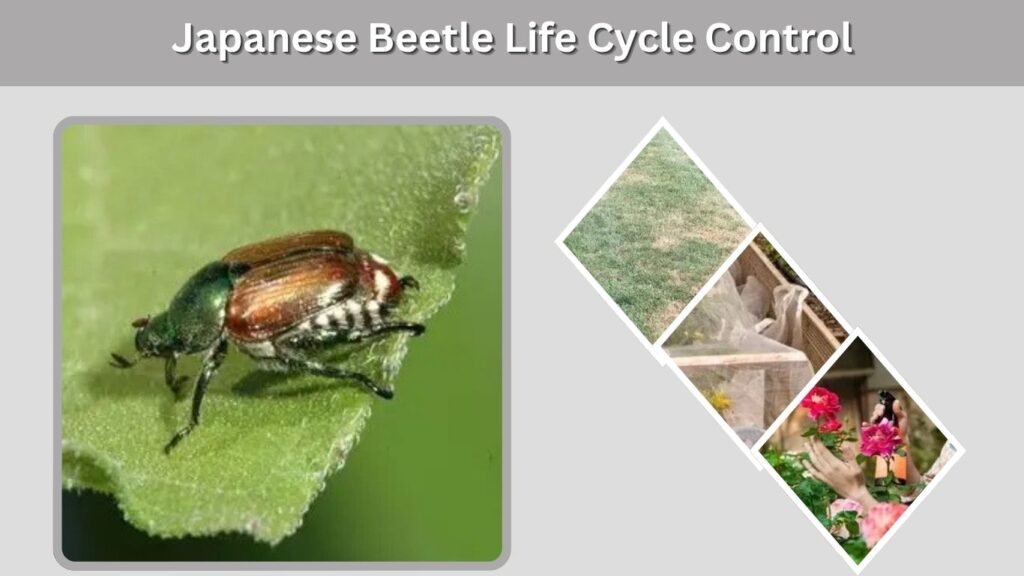
Understanding the life cycle helps you choose the best control timing. Adult control and grub control are not the same. Adult beetles damage leaves and flowers, while grubs damage lawns from underground.
Best Timing for Control
Useful timing tips include:
- Handpick adults in the early morning during summer.
- Protect roses and small plants before beetles gather.
- Avoid placing traps beside valuable plants.
- Check lawns for grubs in late summer.
- Treat grubs when they are small and near the soil surface.
- Water correctly if using grub treatments that need soil movement.
- Follow pesticide labels carefully.
Grub control works best when grubs are young and actively feeding near roots. Treating large grubs in spring is often less effective because they are closer to pupation.
Do Japanese Beetles Have a Complete Life Cycle?
Yes, Japanese beetles have a complete life cycle. They pass through egg, larva, pupa, and adult stages. The larva looks very different from the adult. The grub lives in soil, while the adult beetle lives above ground and feeds on plants.
This is different from insects with incomplete metamorphosis, where young insects look more like small versions of adults.
Japanese Beetle vs Japanese Stag Beetle Life Cycle
Japanese beetle and Japanese stag beetle are different insects. Japanese beetle means Popillia japonica, the invasive garden and lawn pest. Japanese stag beetles are usually forest beetles, often linked with pet beetle keeping in Japan. Their larvae develop in decaying wood, not turfgrass roots.
FAQs
What is the life cycle of a Japanese beetle?
The Japanese beetle life cycle has four stages: egg, larva or grub, pupa, and adult. Eggs are laid in soil, grubs feed underground, pupae develop in soil, and adults emerge in summer to feed, mate, and lay eggs.
How long is the life cycle of a Japanese beetle?
The life cycle of a Japanese beetle usually takes about one year in most areas. The insect spends much of that time as a grub underground. Adults are most visible in summer, especially during July and August.
What is the grub stage of the Japanese beetle life cycle?
The grub stage is the larval stage. Japanese beetle grubs are white, C-shaped larvae that live in soil and feed on grass roots. This stage can cause brown lawn patches and weak turf that pulls up easily.
When do Japanese beetles become adults?
Japanese beetles usually become adults in early to mid-summer. In many northern states, adults emerge in late June or early July, with peak activity often in July and August. Timing changes by region and weather.
Is the Japanese beetle life cycle complete or incomplete?
The Japanese beetle life cycle is complete. It includes egg, larva, pupa, and adult stages. The grub looks very different from the adult beetle, which is a key sign of complete metamorphosis.