
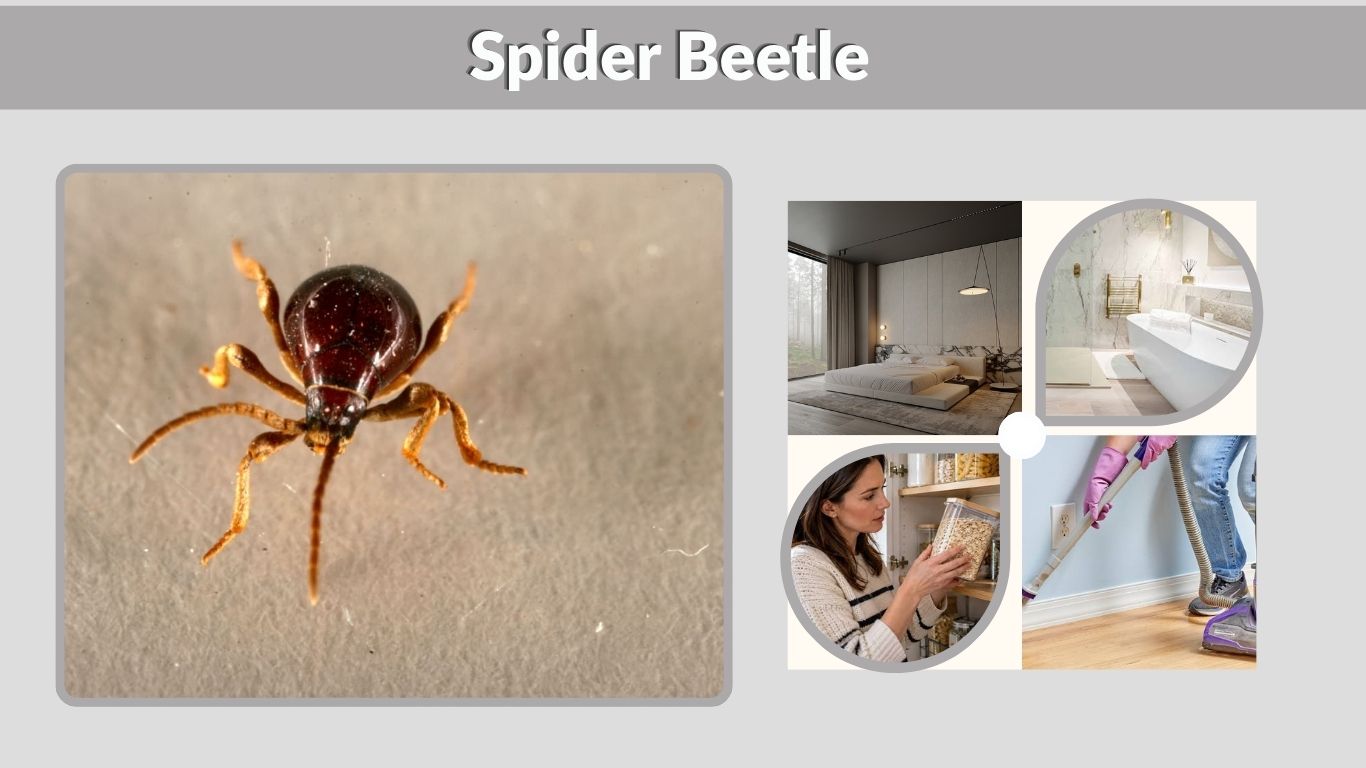
Spider beetles are tiny household insects that often look like miniature spiders because of their rounded bodies and long, slender legs. These beetles commonly appear in kitchens, bedrooms, storage rooms, and other areas containing dried food or organic materials. Although their unusual appearance can be alarming, spider beetles are generally harmless to humans. However, they can become troublesome when they infest stored products. Understanding their appearance, behavior, feeding habits, and hiding places makes identification easier. This guide explains spider beetle identification, common types, potential problems, and effective ways to control infestations.
What Is a Spider Beetle?
A spider beetle is a small insect belonging to the beetle family Ptinidae, particularly the subfamily Ptininae. Despite its name, it is not a spider. Spider beetles are scavengers that feed on dried plant materials, stored foods, and organic debris. They frequently inhabit dark, undisturbed areas where suitable food sources are available.
Why Are They Called Spider Beetles?
Spider beetles get their name from their spider-like appearance. Their rounded abdomens, narrow front bodies, long legs, and prominent antennae create the illusion of a small spider.
However, spider beetles have six legs, while true spiders have eight. Their antennae can sometimes resemble an additional pair of legs.
Spider Beetle Size and Lifespan
Most spider beetles measure approximately 2–5 millimeters long, although size varies among species.
Their development depends on temperature, humidity, and food availability. Some species complete their life cycle within several months, while others develop more slowly under unfavorable conditions.
What Does a Spider Beetle Look Like?
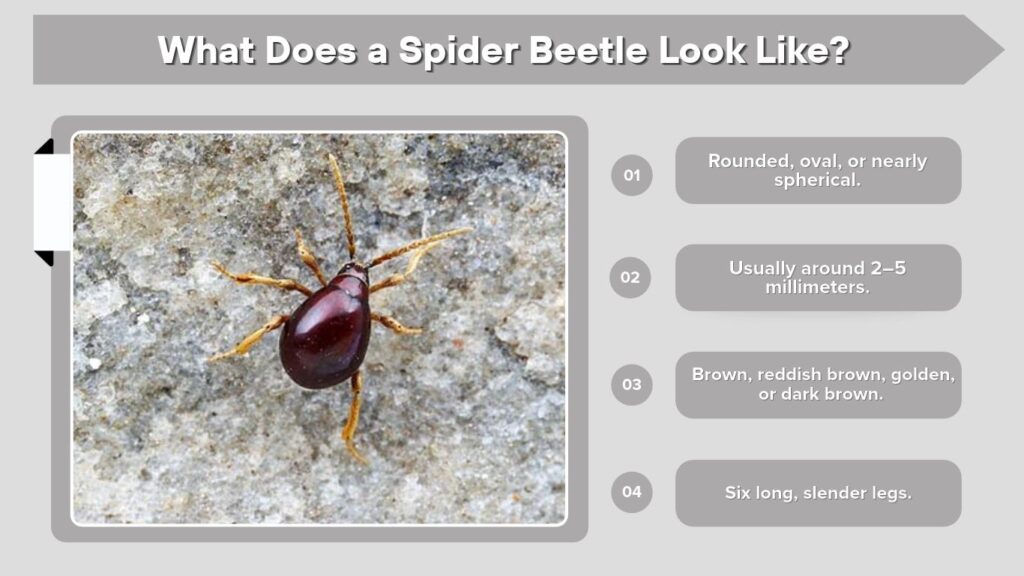
Identifying spider beetles requires examining their body shape, coloration, legs, and antennae. Most species have rounded or oval bodies with relatively small heads. Their colors range from yellowish brown to reddish brown or nearly black. Some possess smooth, glossy wing covers, while others have noticeable hairs.
Common Spider Beetle Identification Features
- Body shape: Rounded, oval, or nearly spherical.
- Size: Usually around 2–5 millimeters.
- Color: Brown, reddish brown, golden, or dark brown.
- Legs: Six long, slender legs.
- Antennae: Two noticeable antennae extending from the head.
- Body texture: Smooth and shiny or covered with fine hairs.
Spider Beetle Eggs and Larvae
Spider beetles develop through four stages: egg, larva, pupa, and adult.
Their eggs are small and difficult to notice. Larvae are usually whitish, curved, and grub-like. They develop within food materials or organic debris before becoming pupae and eventually adult beetles.
Common Types of Spider Beetles
Several spider beetle species occur in homes, warehouses, and storage buildings. Although they share similar characteristics, their body textures, colors, and shapes can differ. Recognizing these variations helps distinguish spider beetles from other household insects and provides clues about their likely habitats.
Smooth Spider Beetle
The smooth spider beetle, including species in the genus Gibbium, has a rounded, glossy body resembling a tiny reddish-brown bead.
Its smooth wing covers and slender legs make it particularly easy to confuse with a tick.
American Spider Beetle
The American spider beetle (Mezium americanum) has a rounded, shiny abdomen and a relatively narrow front body.
It is associated with stored products and organic debris, particularly in sheltered indoor environments.
Golden Spider Beetle
The golden spider beetle (Niptus hololeucus) has a rounded body covered in dense golden hairs.
It commonly occurs in stored food, old buildings, and areas containing bird nesting materials or other organic remains.
Where Do Spider Beetles Live in Your House?
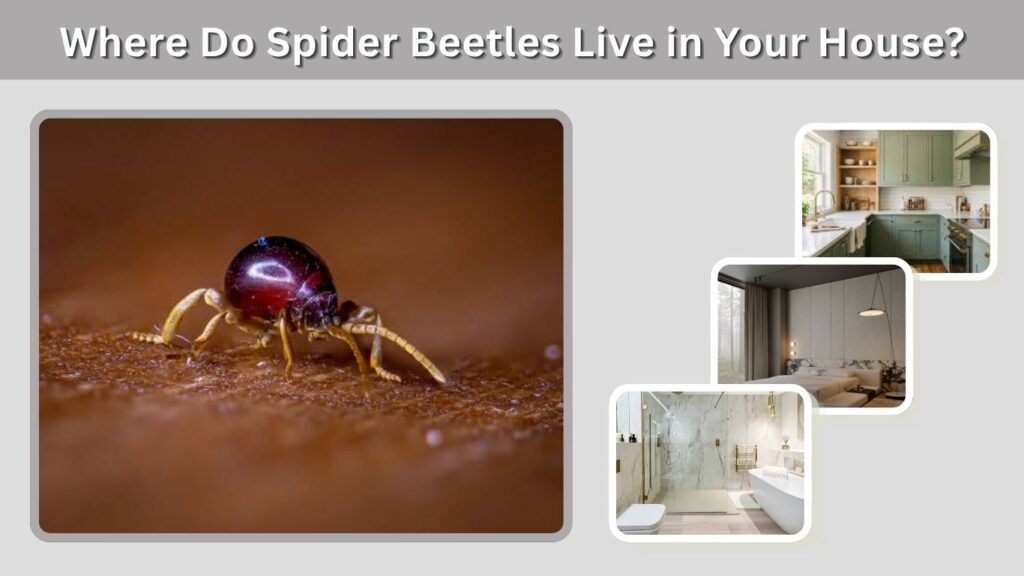
Spider beetles prefer sheltered environments where food and organic debris accumulate. They may enter homes through infested products or move from hidden nesting materials inside buildings. Their presence does not necessarily indicate poor housekeeping, but repeated sightings suggest that a suitable food source may be nearby.
Common Spider Beetle Hiding Places
- Kitchen cabinets: Around flour, cereals, grains, and dried foods.
- Bedrooms: Behind furniture, along baseboards, or near stored materials.
- Bathrooms: Inside cracks and sheltered spaces where debris accumulates.
- Attics: Near abandoned bird nests and organic remains.
- Storage rooms: Around old boxes, seeds, pet food, and forgotten supplies.
- Wall cavities: In spaces containing insect remains or other organic matter.
Why Are Spider Beetles Found in Beds?
Finding a spider beetle in bed does not mean it feeds on human blood.
These insects may accidentally wander onto bedding while searching for food or shelter. If sightings continue, inspect nearby furniture, stored materials, and adjoining rooms for possible infestation sources.
Spider Beetle vs. Bed Bug vs. Tick
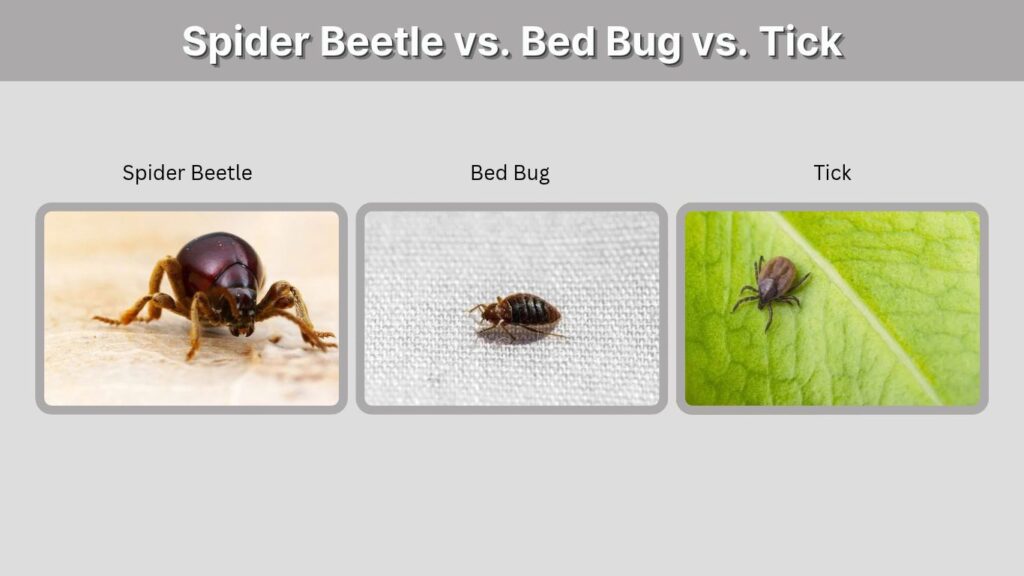
Spider beetles are frequently mistaken for bed bugs or ticks because of their small size and brownish coloration. However, these organisms differ significantly in body structure and feeding behavior. Understanding the distinctions helps homeowners identify the insect correctly before choosing a treatment method.
Spider Beetle vs. Bed Bug
Spider beetles usually have rounded, raised bodies and comparatively long legs. Bed bugs have flatter, broader bodies and feed on blood.
Unlike bed bugs, spider beetles do not seek humans as hosts. Finding one in a bedroom is not evidence of a bed bug infestation.
Spider Beetle vs. Tick
Ticks are arachnids, not insects. Adult ticks have eight legs and lack antennae, while spider beetles have six legs and two antennae.
Spider beetles feed on stored materials and organic matter. Ticks feed on animal blood and may transmit diseases.
Are Spider Beetles Dangerous?
Spider beetles are not generally considered dangerous to people. They do not feed on blood and are not recognized as biting household pests. Their main importance comes from their ability to contaminate dried food products and damage certain stored organic materials. Large infestations can become persistent if their food sources remain undetected.
Do Spider Beetles Bite Humans?
Spider beetles do not normally bite humans or pets. Their mouthparts are adapted for consuming organic materials rather than feeding on people.
If you develop unexplained bites, consider other possible causes rather than assuming spider beetles are responsible.
How to Get Rid of Spider Beetles
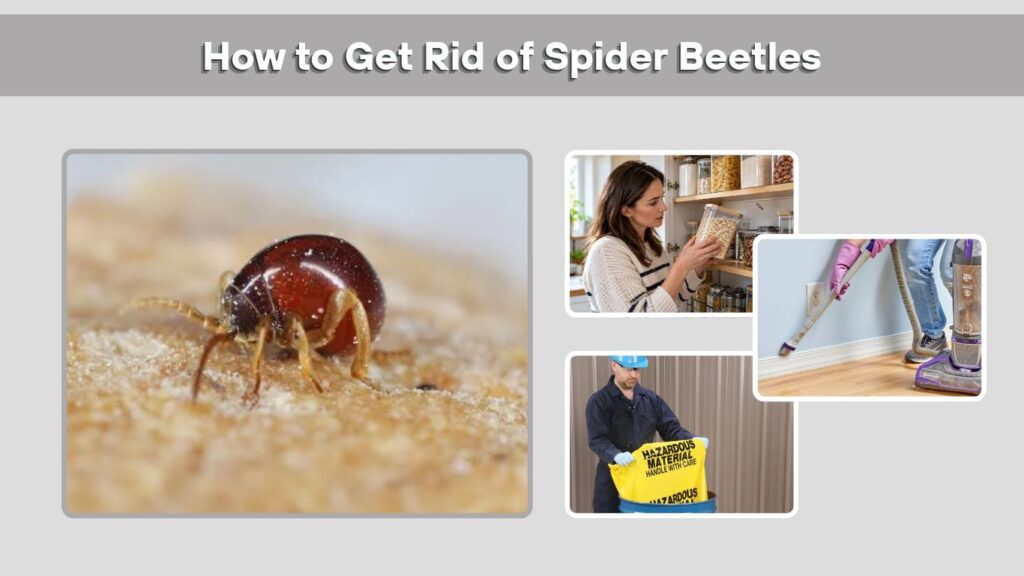
Successful spider beetle control begins with locating the material supporting their development. Killing visible adults alone will not eliminate an infestation if larvae remain inside food packages or hidden debris. Thorough inspection, cleaning, and improved storage conditions are generally more effective than routine insecticide spraying.
Effective Spider Beetle Control Methods
- Inspect stored foods: Check flour, grains, cereals, spices, and pet food for insects or larvae.
- Discard infested products: Remove contaminated materials in sealed disposal bags.
- Vacuum thoroughly: Clean shelves, corners, baseboards, and inaccessible crevices.
- Use airtight containers: Store dried foods in tightly sealed glass, metal, or sturdy plastic containers.
- Check hidden sources: Inspect attics and storage spaces for old nesting materials or organic debris.
- Monitor activity: Continue checking affected areas for newly emerging beetles.
When Should You Call Pest Control?
Professional assistance may be necessary when spider beetles continue appearing despite thorough cleaning and food inspection.
Persistent infestations sometimes originate from concealed wall cavities, inaccessible storage areas, or old animal nests. A pest specialist can help identify these sources and recommend appropriate treatment.
FAQs
1. Are spider beetles harmful to humans?
Spider beetles are generally harmless to humans because they do not normally bite or feed on blood. However, they can contaminate stored foods and damage certain organic materials. Their presence becomes a household concern when populations increase or infestations persist.
2. Why do I keep finding spider beetles in my bedroom?
Spider beetles may enter bedrooms while moving from nearby food sources, storage spaces, or concealed organic debris. Repeated sightings can indicate an infestation elsewhere in the building. Inspect furniture, baseboards, stored belongings, and adjoining rooms for possible sources.
3. Can spider beetles fly?
Flight ability varies among spider beetle species. Some possess functional wings, while others are flightless. Many common household spider beetles move primarily by crawling. Their ability to spread indoors also depends on access to food and suitable hiding places.
4. Do spider beetles infest mattresses?
Spider beetles do not normally infest mattresses to feed on people as bed bugs do. Individual beetles may wander across bedding, but they generally develop in stored foods or organic debris. Repeated sightings warrant further inspection of surrounding areas.
5. How long does it take to eliminate spider beetles?
Elimination time depends on infestation size and whether the breeding source has been removed. Some infestations improve after thorough cleaning and disposal of contaminated materials. Hidden sources may cause continued activity, making further inspection or professional treatment necessary.
