
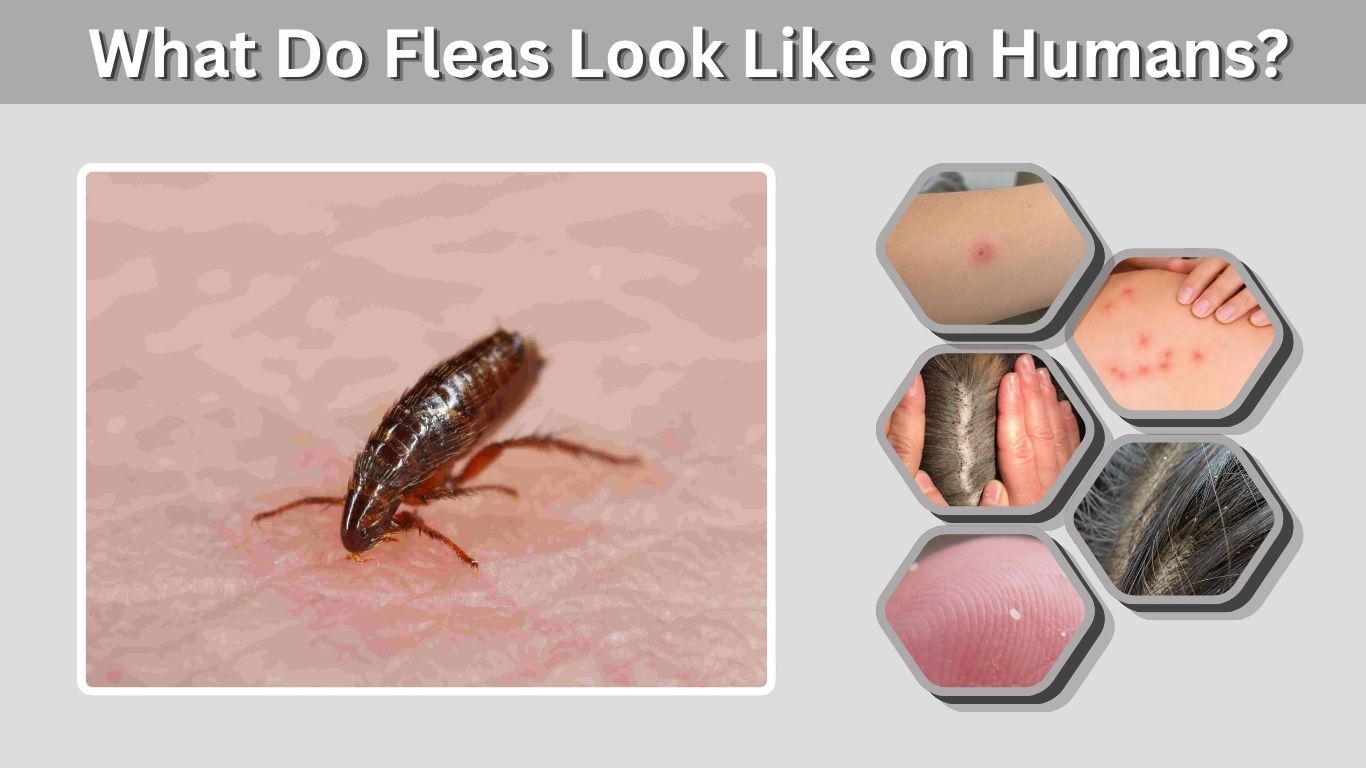
Fleas are tiny, blood-feeding insects that can bite humans and cause uncomfortable skin irritation. Although they usually prefer animals such as dogs and cats, people can encounter fleas in homes, yards, and other infested environments. Understanding what fleas look like on humans helps distinguish these parasites from lice, bed bugs, and other small insects. Adult fleas appear as dark, fast-moving specks, while their bites often leave itchy bumps on the skin. This guide explains how to identify fleas on human skin, recognize their bites, and determine whether they can live in human hair.
What Do Fleas Look Like on Human Skin?
Fleas on human skin appear as tiny, reddish-brown or dark brown insects that crawl quickly or jump when disturbed. Most adult fleas measure approximately 1–4 millimeters long, making them visible without magnification. However, their small size and rapid movements can make them difficult to recognize. Unlike ticks, fleas generally do not remain attached to the skin after feeding.
Physical Characteristics of Fleas on Humans
- Size: Approximately 1–4 millimeters long, depending on the species.
- Color: Reddish-brown, dark brown, or almost black.
- Body shape: Narrow, oval, and flattened from side to side.
- Legs: Six legs, including powerful hind legs designed for jumping.
- Wings: Fleas are wingless and cannot fly.
- Movement: They crawl rapidly and can jump away when disturbed.
Can You See Fleas on Humans With the Naked Eye?
Yes, adult fleas are visible to the naked eye. On lighter skin, they may appear as tiny dark specks moving across the surface. On darker skin, their bodies may be harder to distinguish.
Their jumping behavior provides an important identification clue. A small insect that suddenly leaps away when approached may be a flea, although other jumping arthropods exist.
What Do Human Fleas Look Like?
The human flea, scientifically known as Pulex irritans, is a blood-feeding insect that can infest humans and several other mammals. Despite its name, it does not exclusively feed on people. Human fleas have flattened, reddish-brown bodies and strong jumping legs. Their general appearance closely resembles that of other flea species, making identification difficult without magnification.
Appearance of Human Fleas
Human fleas typically measure about 2–3.5 millimeters long. Their bodies are flattened sideways, allowing them to move through animal fur and other narrow spaces.
Unlike cat and dog fleas, human fleas lack certain comb-like rows of spines around the head and thorax.
These structural differences are usually visible only under magnification. To the human eye, they generally resemble other small, dark fleas.
What Do Cat and Dog Fleas Look Like on Humans?
Cat fleas (Ctenocephalides felis) and dog fleas (Ctenocephalides canis) can both bite people.
They appear as small, reddish-brown insects with flattened bodies and powerful hind legs. Cat fleas are particularly common on household pets and can jump onto humans from infested animals or surrounding environments.
Although these species can feed on human blood, they typically prefer furry animal hosts.
What Do Flea Bites Look Like on Humans?
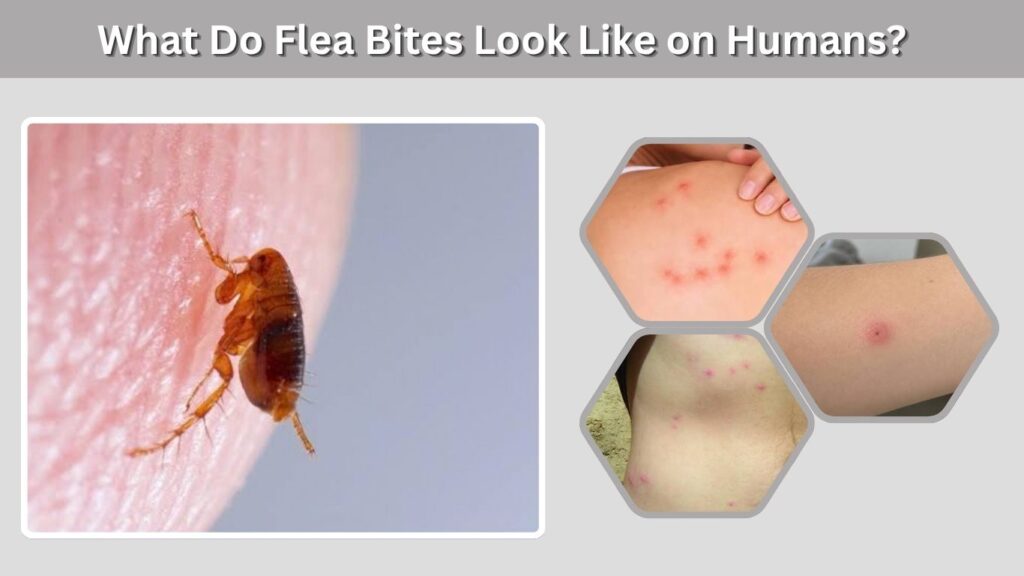
Flea bites commonly appear as small, itchy, raised bumps on the skin. They frequently occur around the ankles, feet, calves, and lower legs because fleas often jump from floors, carpets, and other low surfaces. Several bites may appear close together or in short lines, although their arrangement alone cannot confirm the cause.
Common Signs of Flea Bites
- Small bumps: Slightly raised spots that may resemble tiny pimples.
- Itching: Persistent irritation around the affected skin.
- Discoloration: Red, pink, purple, or darker areas depending on skin tone.
- Bite clusters: Several bumps appearing close together.
- Mild swelling: Localized inflammation surrounding the bites.
What Do Flea Bites Look Like on Dark Skin?
On darker skin tones, flea bites may appear purple, dark brown, or slightly darker than the surrounding skin instead of bright red.
Raised texture, swelling, and itching may be more noticeable than changes in color.
Repeated scratching can also cause post-inflammatory hyperpigmentation, leaving dark marks after the initial irritation has disappeared.
What Do Fleas Look Like in Human Hair?
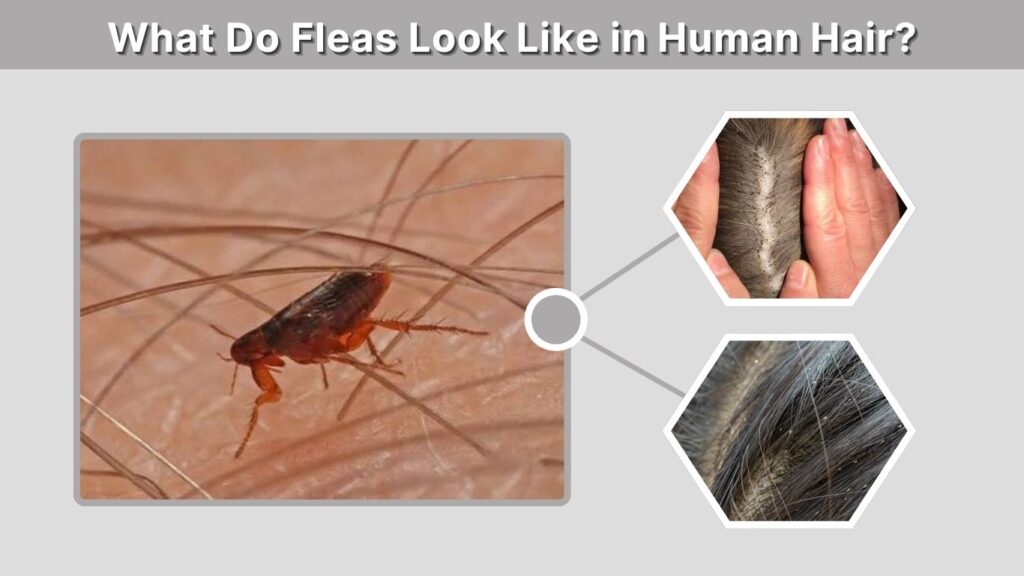
Fleas may occasionally jump into human hair, but they generally do not establish permanent infestations on the scalp. Human hair provides a less suitable environment than the dense fur of dogs and cats. Consequently, finding insects repeatedly attached to hair is more likely to suggest head lice than fleas.
How to Tell Fleas From Head Lice
Head lice are small, wingless insects adapted to living among human scalp hairs. They crawl rather than jump and attach their eggs firmly to individual hair shafts.
Fleas, however, have powerful jumping legs and usually move between hosts or sheltered environments.
Finding eggs attached firmly to hair strands is therefore more consistent with head lice than fleas.
Can Fleas Bite the Human Scalp?
Fleas can occasionally bite the scalp, although bites around the lower legs are more common.
Scalp irritation caused by fleas may resemble other insect bites or skin conditions. If itching persists, examining the scalp and identifying any insects present is important.
What Do Flea Eggs and Baby Fleas Look Like on Humans?
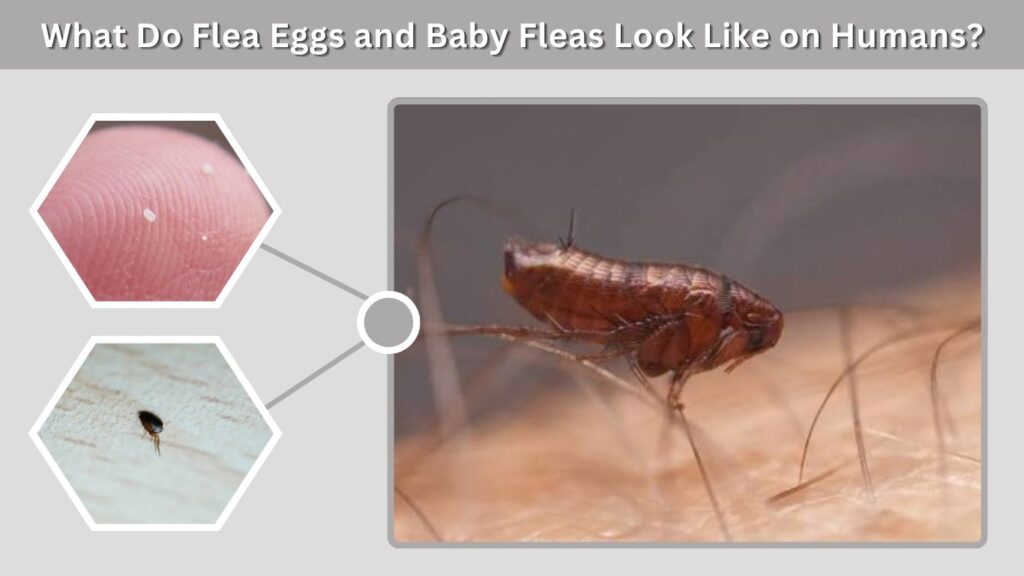
Fleas develop through four stages: egg, larva, pupa, and adult. The immature stages look very different from adult fleas. Although adult fleas may bite humans, common household fleas generally do not complete their life cycle on human bodies. Instead, eggs and developing fleas are primarily found in animal bedding, carpets, furniture, and other protected environments.
What Do Flea Eggs Look Like?
Flea eggs are tiny, white, oval structures measuring approximately 0.5 millimeters long.
They resemble miniature grains of salt and are difficult to identify without close inspection.
Unlike lice eggs, flea eggs are not firmly attached to human hair. They usually fall into surrounding environments after being laid on animal hosts.
What Do Baby and Dead Fleas Look Like?
Baby fleas in their larval stage resemble small, pale, segmented worms. They do not have legs or the jumping ability of adult fleas.
Dead adult fleas look similar to living ones but remain motionless. Their bodies may become curled, dried, or flattened.
Neither appearance alone confirms an active infestation without additional evidence.
What Do Sand Fleas Look Like on Humans?
The term “sand flea” refers to several different organisms, so their appearance and effects vary. Some beach-dwelling creatures called sand fleas are small crustaceans rather than true fleas. Others, particularly the parasitic flea Tunga penetrans, can burrow into human skin and cause a condition known as tungiasis.
Appearance of Sand Flea Bites
Bites attributed to beach-associated organisms may appear as itchy, raised bumps, sometimes clustered around the feet and ankles.
Tungiasis produces a different appearance. An embedded flea can create a raised lesion with a dark central point, commonly on the feet or toes.
Suspected tungiasis requires medical evaluation rather than attempting removal with unsterilized tools.
Fleas vs. Bed Bugs vs. Head Lice on Humans
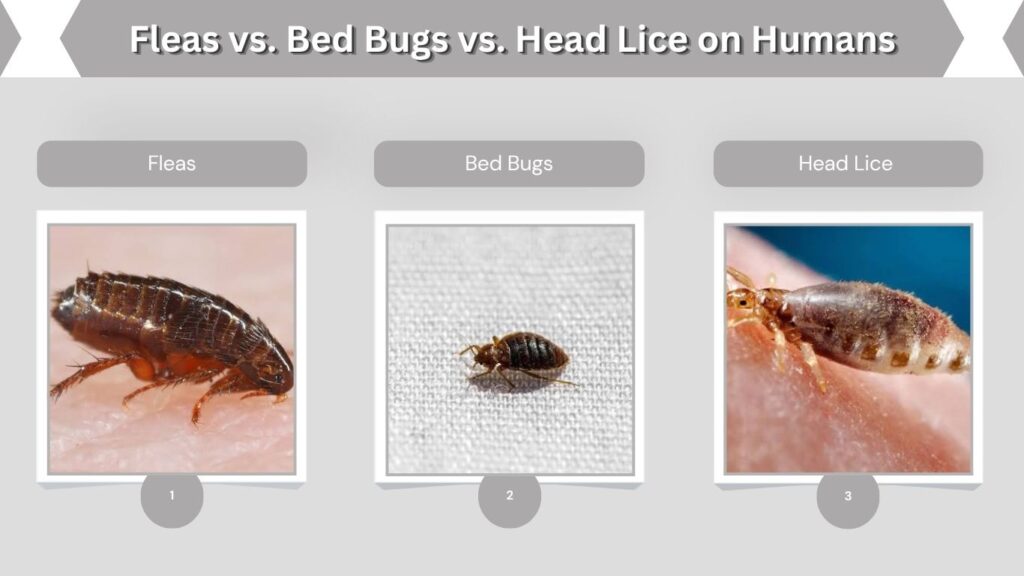
Fleas, bed bugs, and head lice are small insects that can cause itching and discomfort. However, their body shapes, movements, and preferred environments differ. Identifying the insect is more reliable than relying on bite patterns alone, since several pests can produce similar skin reactions.
| Feature | Fleas | Bed Bugs | Head Lice |
| Adult size | 1–4 mm | 4–7 mm | 2–3 mm |
| Color | Reddish-brown | Brown | Grayish or tan |
| Movement | Crawl and jump | Crawl | Crawl |
| Body shape | Flattened sideways | Broad and oval | Elongated |
| Common location | Pets and surroundings | Beds and furniture | Human scalp hair |
| Jumping ability | Yes | No | No |
How to Identify Fleas on Humans and Prevent Bites
Identifying a possible flea problem involves examining both the affected person and the surrounding environment. Since fleas frequently originate from infested pets or household surfaces, inspecting only human skin may not reveal their source. Checking sleeping areas, carpets, and pet fur can provide stronger evidence.
Steps to Check for Fleas
- Inspect your skin: Look for tiny dark insects, especially around your ankles and legs.
- Check your pets: Examine their fur using a fine-toothed flea comb.
- Inspect bedding: Look for adult fleas and dark flea dirt.
- Examine carpets: Pay attention to areas where pets frequently sleep.
- Observe movement: Adult fleas often jump suddenly when disturbed.
How to Prevent Fleas From Biting Humans
Regular vacuuming, washing pet bedding, and keeping household animals on veterinarian-recommended flea prevention can reduce exposure.
Wearing long socks and trousers may help protect your lower legs in flea-infested environments.
If bites occur, gently clean the affected skin, avoid scratching, and consider appropriate over-the-counter anti-itch treatment.
Seek medical attention for worsening redness, pus, fever, or other concerning symptoms. Difficulty breathing or facial or throat swelling requires emergency care.
FAQs
1. Can Fleas Live on Human Skin?
Fleas can crawl on and bite human skin, but common cat and dog fleas generally do not live permanently on people. They usually prefer furry animal hosts.
2. What Do Fleas Look Like on Human Legs?
They appear as tiny, dark brown insects that move quickly or jump. Their bites may leave small, itchy bumps around the ankles, feet, and calves.
3. Can Humans Have Flea Eggs in Their Hair?
Flea eggs are not normally found attached to human hair. Unlike head lice, fleas do not glue their eggs to hair shafts.
4. What Do Flea Bites Look Like on Human Arms?
Flea bites on arms may appear as small, raised, itchy bumps, sometimes grouped together. Their appearance can resemble other insect bites.
5. Do Fleas Burrow Into Human Skin?
Ordinary cats, dogs, and human fleas do not burrow into human skin. However, the parasitic sand flea Tunga penetrans can penetrate the skin and cause tungiasis.
