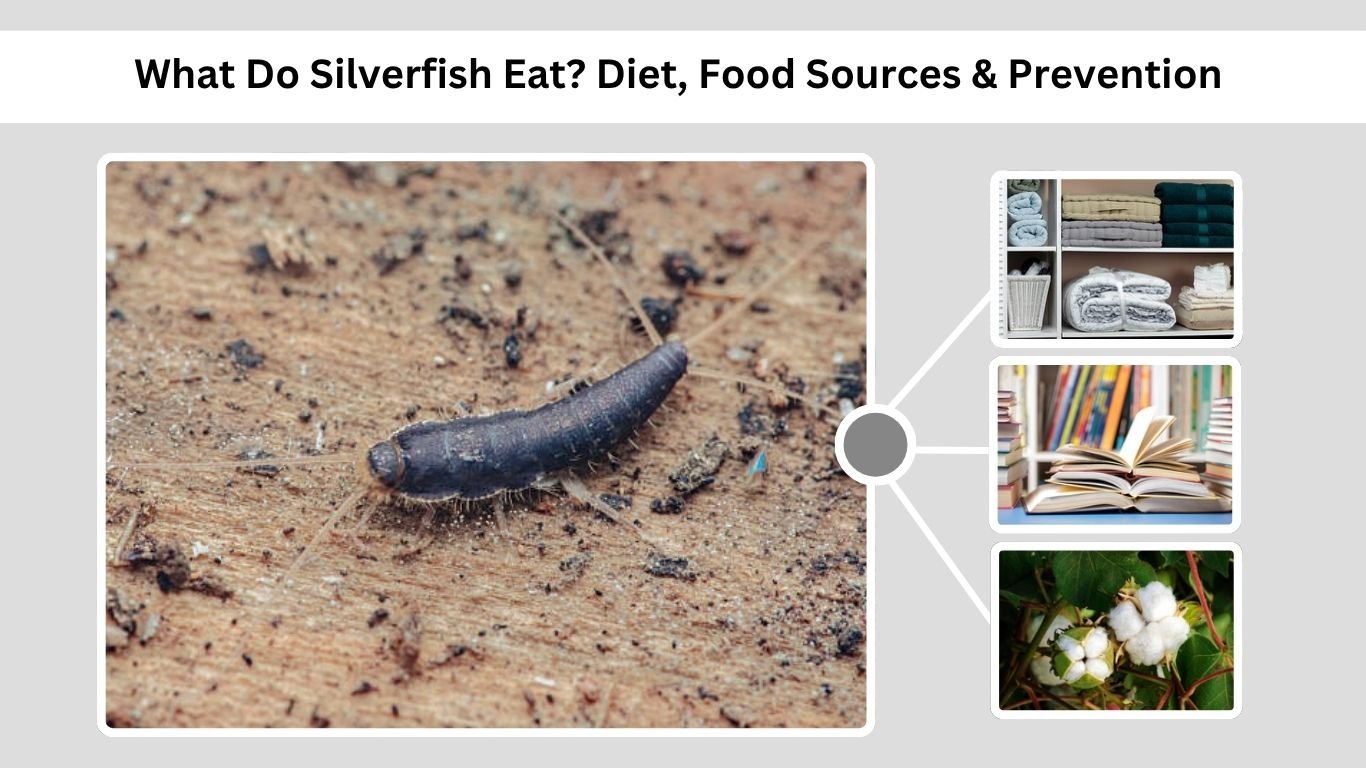
Silverfish are small, fast-moving insects that often appear in dark, damp areas of the home. While they may look harmless, they can cause damage to books, clothing, and other household items. One of the most important steps in controlling a silverfish problem is understanding what they eat and why they are attracted to certain areas.
Silverfish are not picky eaters. They survive on a wide range of materials commonly found in homes, especially those rich in starch and carbohydrates. In this guide, you’ll learn what silverfish eat, where they find food indoors, and why removing their food sources is key to getting rid of them.
What Do Silverfish Eat? (Quick Answer)

Silverfish primarily eat starch, sugar, and carbohydrate-rich materials. Their diet includes both natural and household items.
Common food sources include:
- Paper and cardboard
- Glue and adhesives
- Fabrics made from natural fibers
- Food crumbs and dry goods
One of the reasons silverfish are difficult to control is their ability to survive for long periods without food, especially in humid environments.
What Do Silverfish Eat in a House?

Inside homes, silverfish feed on materials that contain starch or organic matter. Many of these items are found in everyday living spaces, which is why infestations can occur even in clean homes.
Typical indoor food sources include:
- Books, newspapers, and magazines
- Cardboard boxes and packaging
- Wallpaper paste and glue
- Pantry items like flour and cereals
- Dust and debris
Because these materials are so common, silverfish can easily find enough food to survive and reproduce.
What Do Silverfish Eat in the Bathroom?

Bathrooms are one of the most common places to find silverfish due to the combination of moisture and hidden food sources.
In bathrooms, they may feed on:
- Soap residue and organic buildup
- Mold and mildew
- Damp toilet paper or tissues
- Hair and skin particles
The constant humidity in bathrooms makes it easier for silverfish to survive, even if food sources are limited.
What Do Silverfish Eat in the Kitchen?
Kitchens provide both food and shelter, making them another common area for silverfish activity.
In kitchens, silverfish are attracted to:
- Flour, sugar, and cereals
- Crumbs and spills on floors and counters
- Dry food stored in cardboard packaging
- Pantry items that are not sealed properly
Even small amounts of food residue can attract silverfish, especially if combined with moisture from sinks or appliances.
What Do Silverfish Eat in Bedrooms and Closets?
Although less obvious, bedrooms and closets can also provide plenty of food for silverfish.
They may feed on:
- Clothing made from cotton, linen, or silk
- Books and stored papers
- Dust, which contains organic material
- Cardboard storage boxes
Silverfish are particularly attracted to dark, undisturbed areas, which makes closets and storage spaces ideal hiding and feeding spots.
What Fabrics Do Silverfish Eat?

Silverfish can damage a variety of fabrics, especially those made from natural fibers.
Common Fabrics Affected
- Cotton
- Linen
- Silk
These materials often contain starch or residues that silverfish can digest.
Why Silverfish Eat Fabrics
Silverfish are not eating the fabric itself in all cases—they are often attracted to:
- Starch used in fabric finishing
- Sweat or food stains
- Natural fibers that are easier to digest
Clothing stored in humid or dark conditions is more likely to be affected.
What Do Silverfish Eat in the Wild?
Outside of homes, silverfish survive on similar types of organic material found in nature.
Their natural diet includes:
- Decaying plant matter
- Dead insects
- Mold and fungi
- Natural starch sources
This explains why they adapt so easily to indoor environments, where similar materials are readily available.
Do Silverfish Eat Other Bugs?
Silverfish are not predators, but they can occasionally feed on dead insects if no other food sources are available.
However:
- They do not hunt live insects
- Their diet is mostly plant-based and starch-focused
- Dead bugs are only a secondary food source
This behavior helps them survive in environments where food is scarce.
Do Silverfish Eat Wood or Furniture?
Silverfish do not eat solid wood, but they can still be found around wooden furniture and structures.
What attracts them is not the wood itself, but:
- Glue used in furniture joints
- Paper backing on wood products
- Coatings or finishes that contain starch
They are also drawn to moist or damp wood areas, which provide the humidity they need to survive. So while they don’t directly damage wood like termites, they may still appear in wooden areas of your home.
What Attracts Silverfish to Food Sources?
Silverfish are drawn to environments that offer the right combination of food, moisture, and shelter.
The biggest factors include:
- High humidity (bathrooms, basements, kitchens)
- Dark, undisturbed spaces
- Easy access to starch-based materials
- Warm indoor temperatures
Even a clean home can attract silverfish if these conditions are present. Moisture is especially important—without it, silverfish struggle to survive.
How Long Can Silverfish Live Without Food?
One of the reasons silverfish are hard to eliminate is their ability to survive without food for long periods.
They can:
- Live for weeks to several months without food
- Survive by relying on moisture in the environment
- Slow down their activity when food is scarce
This means that simply removing visible food sources may not immediately eliminate them. A long-term approach is necessary.
How to Stop Silverfish by Removing Food Sources
The most effective way to control silverfish is to remove what they eat and make your home less suitable for them.
Reduce Food Sources
- Remove piles of paper, magazines, and cardboard
- Clean up crumbs and food spills quickly
- Declutter storage areas
Store Items Properly
- Keep dry food in airtight containers
- Store books and important documents in dry places
- Use sealed bins for clothing and fabrics
Control Moisture
- Use a dehumidifier in damp areas
- Fix leaks in pipes, walls, or ceilings
- Improve ventilation in bathrooms and kitchens
By combining these steps, you can make your home far less attractive to silverfish and reduce the chances of infestation.
Do Silverfish Eat in Minecraft?
In Minecraft, silverfish behave very differently from real-life insects.
They:
- Do not eat anything
- Spawn from certain blocks (like stone)
- Attack players instead of feeding on materials
This version is purely fictional and does not reflect the real behavior of silverfish.
FAQs
Do silverfish eat hair or skin?
Yes, silverfish can feed on hair, dead skin cells, and other organic debris. These materials provide small amounts of nutrients, especially in dusty or undisturbed areas.
Do silverfish eat carpet?
They may damage carpets, especially if they are made from natural fibers like wool or contain food stains or organic matter.
Do silverfish eat cardboard boxes?
Yes, silverfish often feed on cardboard because it contains starch and glue, making it an ideal food source for them.
Do silverfish eat dry food like rice or pasta?
Yes, silverfish can eat dry pantry items such as rice, pasta, and cereals, especially if they are not stored in airtight containers.
Do silverfish eat dust?
Yes, silverfish can survive on dust because it contains organic particles like hair, skin flakes, and food residue.