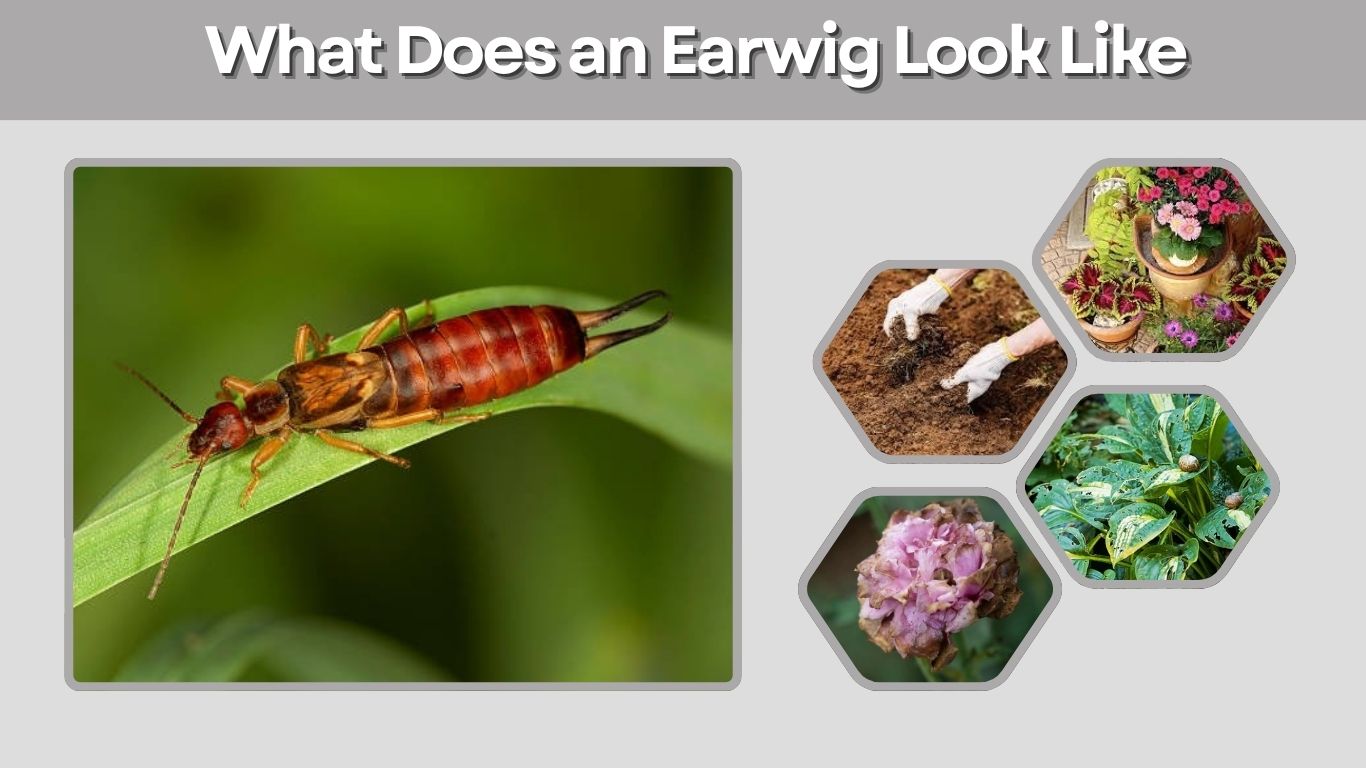
Earwigs are small insects that often look more alarming than they actually are. Their long bodies, fast movement, and noticeable pincers can make them easy to mistake for dangerous pests. However, once you know their key features, earwigs are fairly simple to identify. This guide explains what earwigs look like, where they are commonly found, and how to tell them apart from similar insects.
What Is an Earwig?
Earwigs are insects from the order Dermaptera. They are commonly found in gardens, mulch beds, damp soil, basements, bathrooms, and other moist areas. Most earwigs are active at night and hide during the day under rocks, logs, leaves, plant pots, and outdoor debris.
Although their appearance can be unsettling, earwigs are not usually dangerous to people. They do not crawl into ears as old myths suggest, and they are not poisonous. Their most recognizable feature is the pair of forceps-like pincers at the end of the abdomen.
Basic Earwig Appearance
Most earwigs have a narrow, flattened body that allows them to squeeze into tight spaces. Their color usually ranges from reddish-brown to dark brown or black, depending on the species and age of the insect.
A typical earwig has:
- A long, slender body
- Six legs
- Two antennae
- A pair of pincers at the rear
- A shiny or smooth-looking outer body
- Short wings or wing covers on some species
Earwigs usually look darker when they are mature, while younger nymphs may appear lighter in color.
Key Features That Help Identify an Earwig
Earwigs have several body features that separate them from other common household and garden insects. Looking at the body shape, color, pincers, antennae, and movement can help confirm whether the insect is an earwig.
Body Size and Shape
Most adult earwigs are about 1/4 inch to 1 inch long. Their bodies are elongated, somewhat flattened, and flexible. This shape helps them hide in narrow cracks, soil gaps, mulch, and under outdoor objects.
Unlike rounder insects such as beetles, earwigs look more stretched out. Their abdomen is segmented and tapers slightly toward the end where the pincers are located.
Color and Texture
Earwigs are usually brown, reddish-brown, or dark brown. Some may appear almost black in low light. Their bodies often have a smooth, slightly shiny appearance.
The legs and antennae may be lighter than the main body. In some species, the head and abdomen are darker while the legs are yellowish-brown. Young earwigs are often pale or light brown before they darken with age.
Pincers at the Rear
The most obvious sign of an earwig is the pair of pincers, also called forceps, at the back of the body. These pincers may look intimidating, but they are mostly used for defense, mating, and handling food.
Male earwigs usually have larger, more curved pincers. Female earwigs tend to have straighter, smaller pincers. This difference can help identify the sex of an adult earwig, although it may not always be obvious without a close look.
Earwig Identification Table
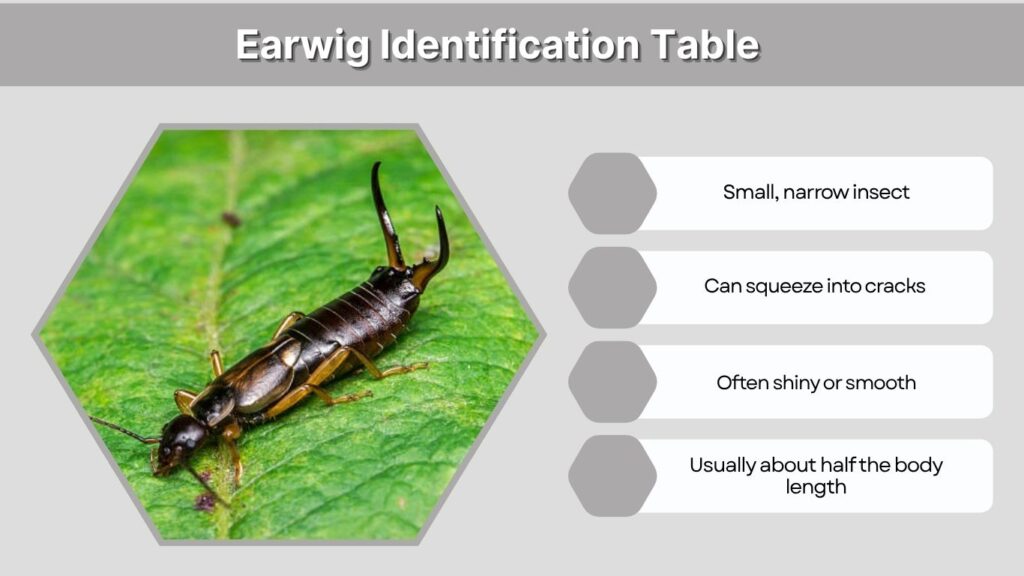
Use the table below to quickly compare the main features of an earwig.
| Feature | What It Looks Like | Identification Clue |
|---|---|---|
| Body length | About 1/4 to 1 inch long | Small, narrow insect |
| Body shape | Long, flat, and segmented | Can squeeze into cracks |
| Color | Brown, reddish-brown, dark brown, or black | Often shiny or smooth |
| Antennae | Long and thin | Usually about half the body length |
| Legs | Six legs | Confirms it is an insect |
| Pincers | Forceps-like pair at the rear | Most important earwig feature |
| Wings | Short wing covers; some species can fly | Wings are not always obvious |
| Movement | Quick, crawling movement | Often runs when disturbed |
What Do Baby Earwigs Look Like?
Baby earwigs, also called nymphs, look like smaller versions of adult earwigs. They have the same basic body shape, six legs, antennae, and rear pincers. However, they are usually lighter in color and do not have fully developed wings.
Nymphs may appear pale brown, grayish, or tan when young. As they grow and molt, their bodies become darker and more similar to adult earwigs. The pincers are also smaller and less developed in young earwigs.
Signs You Are Seeing Earwig Nymphs
Baby earwigs are often found near adult earwigs, especially in damp outdoor areas. You may see them under mulch, stones, boards, leaf piles, or inside moist cracks near the foundation.
Common signs include:
- Tiny pale or light-brown insects with pincers
- Groups of small insects hiding in moist areas
- Young insects that resemble adults but are smaller
- Activity at night or after watering the garden
If you see many small earwigs around your home, it may indicate a nearby breeding area with moisture and shelter.
Do Earwigs Have Wings?
Many earwigs do have wings, but they are not always easy to see. Their wings are folded under short, leathery wing covers on the back. Because of this, some people assume earwigs are wingless.
Even though some earwigs can fly, they rarely do. Most prefer crawling and hiding in dark, damp places. If you see an insect with pincers crawling quickly across a floor, wall, patio, or garden bed, it is more likely to be an earwig than a flying insect.
Why Earwig Wings Are Hard to Notice
Earwig wings are folded very tightly and neatly beneath the wing covers. When not in use, they are hidden from view. This makes the insect look like it has only a smooth back or short plates behind the head.
You may only notice wings if the earwig spreads them, which is uncommon in normal household situations.
Where You Might Find Earwigs
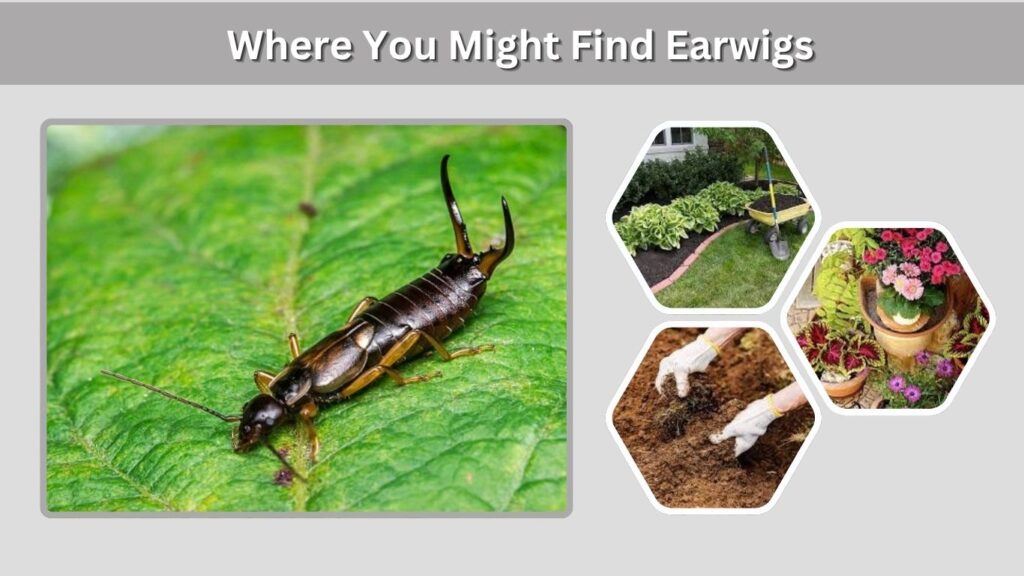
Earwigs prefer moisture, darkness, and shelter. They are most common outdoors, but they may enter homes when conditions are too dry, too wet, too hot, or when outdoor populations grow.
Common Outdoor Locations
Earwigs are often found in gardens and landscaped areas. They hide during the day and come out at night to feed on plant material, decaying matter, and small insects.
You may find earwigs in:
- Mulch beds
- Leaf litter
- Garden soil
- Under stones or bricks
- Beneath logs or wood piles
- Around flower pots
- Near compost piles
- Under patio furniture
They may also gather around outdoor lights or damp foundation areas.
Common Indoor Locations
Inside homes, earwigs usually appear in damp or dark areas. They do not typically infest indoor spaces the way cockroaches or ants might, but they can enter through gaps, cracks, doors, windows, and utility openings.
Indoor hiding places include:
- Bathrooms
- Basements
- Laundry rooms
- Crawl spaces
- Garages
- Kitchen cabinets near plumbing
- Door thresholds
- Window frames
Seeing one or two earwigs indoors may not mean there is a major problem. However, repeated sightings may suggest moisture issues or easy entry points around the home.
Earwig vs. Similar Insects
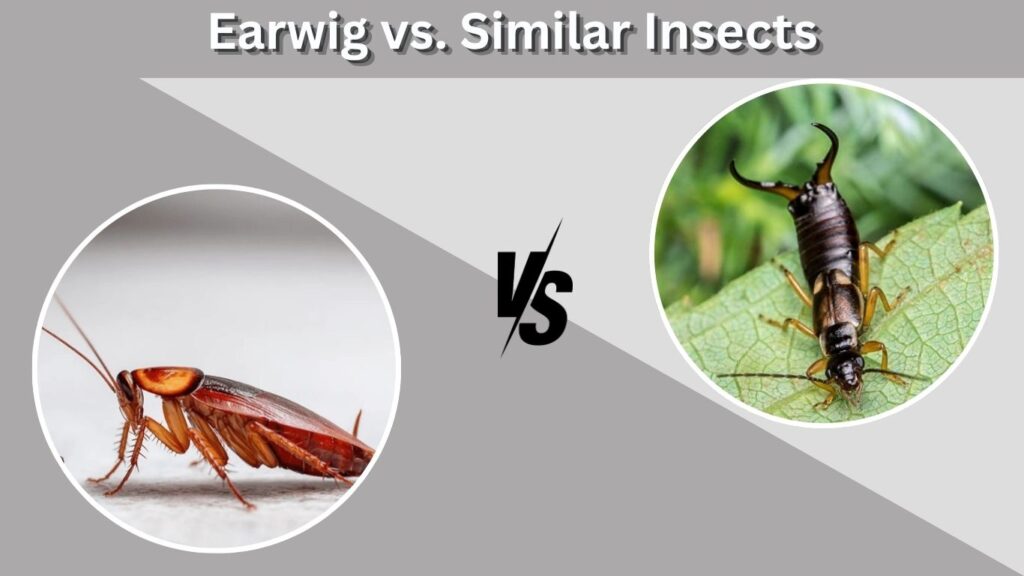
Earwigs can be confused with other insects because of their long bodies and fast movement. However, the rear pincers are the easiest way to tell them apart.
Earwig vs. Cockroach
Cockroaches and earwigs are both fast-moving insects, but they look different when viewed closely. Cockroaches usually have broader, oval-shaped bodies and do not have pincers at the rear. Earwigs are narrower and have a clearly visible pair of forceps.
Cockroaches are also more strongly associated with indoor infestations, food contamination, and sanitation problems. Earwigs are more commonly linked to moisture, mulch, and outdoor hiding areas.
Earwig vs. Silverfish
Silverfish have long, flat bodies like earwigs, but they do not have pincers. Instead, silverfish have three long, tail-like bristles at the end of the body. They also have a silvery or gray appearance and move in a wiggling, fish-like motion.
Earwigs are usually brown and have two rear pincers, making them easier to identify.
Earwig vs. Ground Beetle
Ground beetles may look dark and shiny like earwigs, but they usually have harder, more rounded bodies. They also lack rear pincers. Beetles often have more obvious wing covers that meet in a straight line down the back.
If the insect has forceps-like pincers at the end of its abdomen, it is much more likely to be an earwig.
Are Earwigs Dangerous?
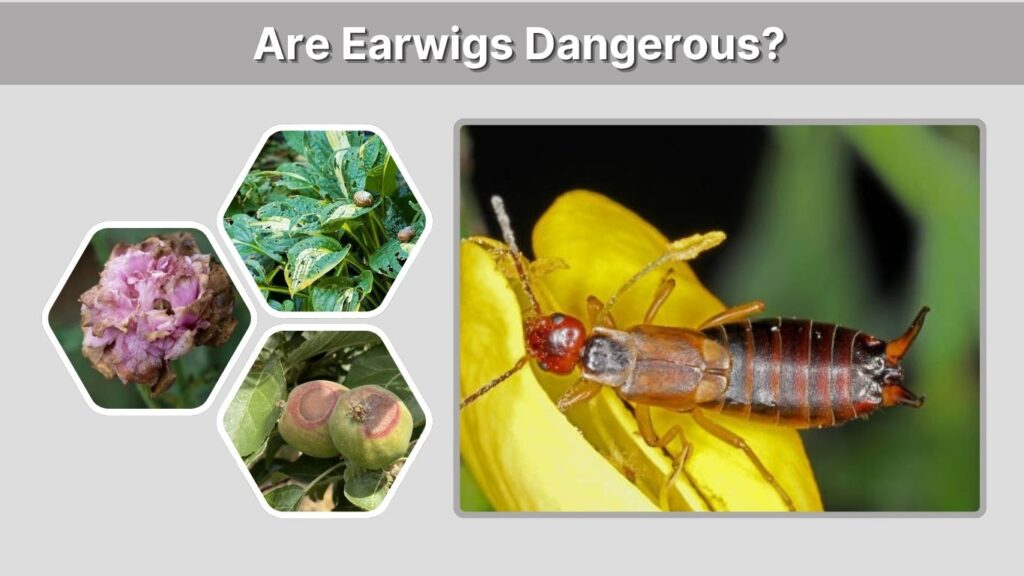
Earwigs may look threatening because of their pincers, but they are not considered dangerous pests. They do not have venom, and they do not spread disease in the same way some household pests can.
An earwig may pinch if handled or trapped, but the pinch is usually mild. It may feel like a small pressure or brief sting, but it rarely breaks the skin.
Can Earwigs Damage Plants?
Earwigs can sometimes damage plants, especially seedlings, soft fruits, flowers, and tender leaves. They may chew small holes in petals, leaves, and produce. However, they can also be beneficial because they feed on decaying organic matter and some smaller pests.
Plant damage from earwigs may look like:
- Irregular holes in leaves
- Chewed flower petals
- Damage to soft fruits
- Feeding marks on seedlings
- Nighttime activity around garden plants
Because they feed at night, you may need to inspect plants after dark with a flashlight to confirm earwig activity.
How to Confirm You Have Found an Earwig
The easiest way to identify an earwig is to look for the combination of a long body, six legs, antennae, and rear pincers. No other common household insect has the same distinct forceps-like structure at the back.
Quick Identification Checklist
You are likely looking at an earwig if the insect has:
- A narrow, flattened body
- Brown or reddish-brown coloring
- Six legs
- Long antennae
- A shiny or smooth appearance
- Two pincers at the rear
- Fast crawling movement
- A preference for dark, damp hiding places
If all of these features match, the insect is probably an earwig.
FAQs
What does an earwig look like?
An earwig is a small, narrow insect with a long, flattened body, six legs, two antennae, and a pair of pincers at the rear. Most earwigs are brown, reddish-brown, or dark brown. Their pincers are the easiest feature to recognize and help separate them from similar insects.
Do earwigs really have pincers?
Yes, earwigs have forceps-like pincers at the end of their abdomen. Male earwigs usually have larger, more curved pincers, while females often have smaller, straighter ones. These pincers are used for defense, mating, and handling food, but they are not venomous or highly dangerous.
Are baby earwigs easy to identify?
Baby earwigs look like smaller, lighter versions of adults. They have six legs, antennae, and tiny rear pincers, but their wings are not fully developed. Young earwigs are often pale brown, tan, or grayish before becoming darker as they mature through several molts.
Why do I keep seeing earwigs in my house?
Earwigs usually enter homes while searching for moisture, shelter, or better conditions. They may come inside through cracks, gaps, doors, windows, or foundation openings. Indoor sightings are more common in bathrooms, basements, laundry rooms, garages, and other damp areas with hiding spots.
How can I tell an earwig from a cockroach?
Earwigs are usually narrower than cockroaches and have a distinct pair of pincers at the rear. Cockroaches have broader, oval bodies and no pincers. If the insect is brown, fast-moving, and has forceps-like structures at the end of its body, it is more likely an earwig.