
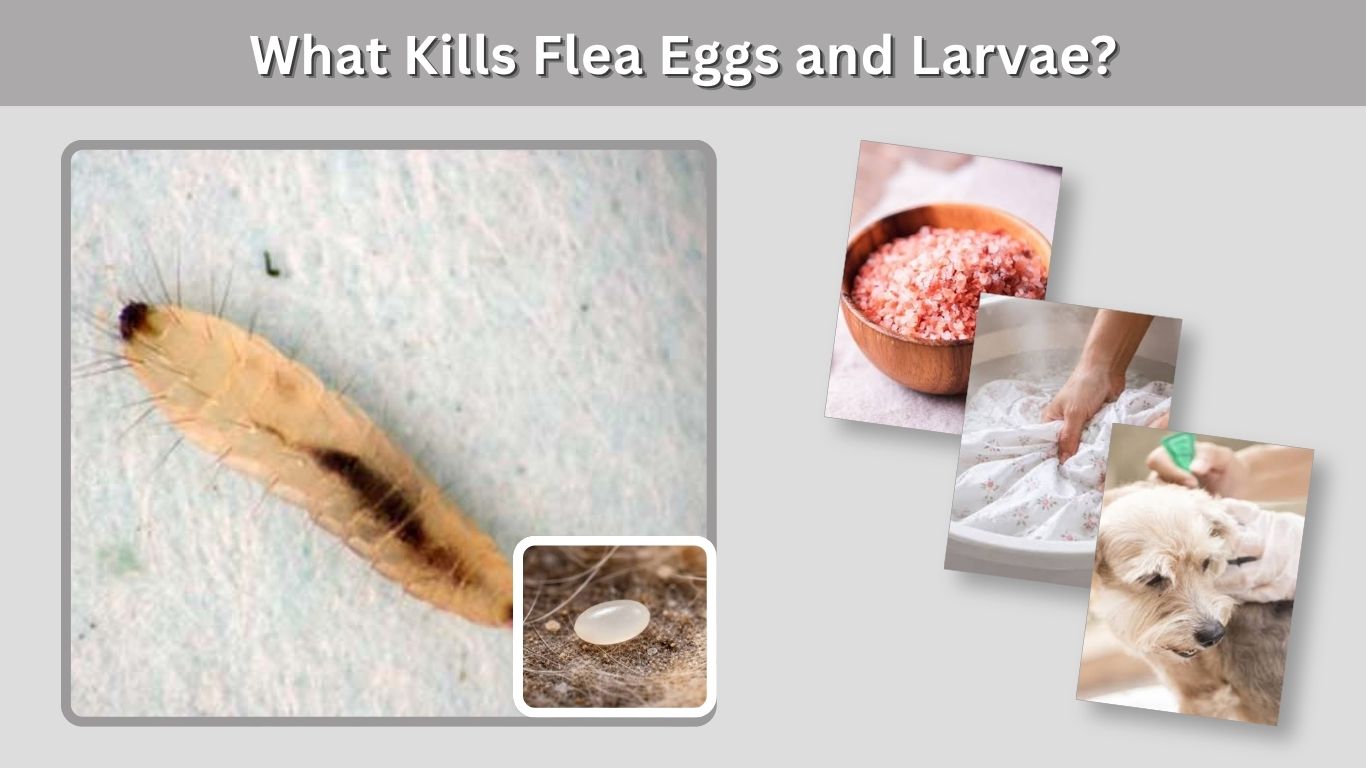
Flea eggs and larvae can hide in carpets, pet bedding, furniture, and other areas of your home, making infestations difficult to eliminate. Even after adult fleas disappear, developing fleas may continue the infestation. Understanding what kills flea eggs and larvae is essential for stopping their life cycle. Fortunately, several effective methods, including vacuuming, steam cleaning, hot-water washing, and specialized flea treatments, can help. This guide explores proven solutions, natural approaches, and common household remedies to help you control flea infestations safely and effectively.
What Kills Flea Eggs and Larvae Instantly?
Heat and certain insecticides can kill flea larvae and eggs, although effectiveness depends on the treatment and whether it reaches the pests. Steam cleaning and hot-water washing are useful for washable materials and suitable household surfaces. Insect growth regulators provide another approach by preventing immature fleas from developing successfully.
Most Effective Methods for Killing Flea Eggs and Larvae
Several treatments can reduce or eliminate immature fleas in household environments.
- Steam cleaning: High-temperature steam can kill flea eggs, larvae, and other stages when sufficient heat reaches them.
- Hot-water washing: Washing bedding and washable fabrics in hot, soapy water helps eliminate flea eggs and larvae.
- Vacuuming: Thorough vacuuming removes eggs, larvae, adults, and organic debris from carpets and furniture.
- Insect growth regulators: Products containing methoprene or pyriproxyfen interrupt flea development.
- Targeted flea sprays: Properly labeled insecticides can kill exposed larvae and help control infestations.
No single method reliably eliminates every flea stage throughout a home. Combining treatments produces more dependable results.
What Kills Flea Eggs and Larvae Naturally?
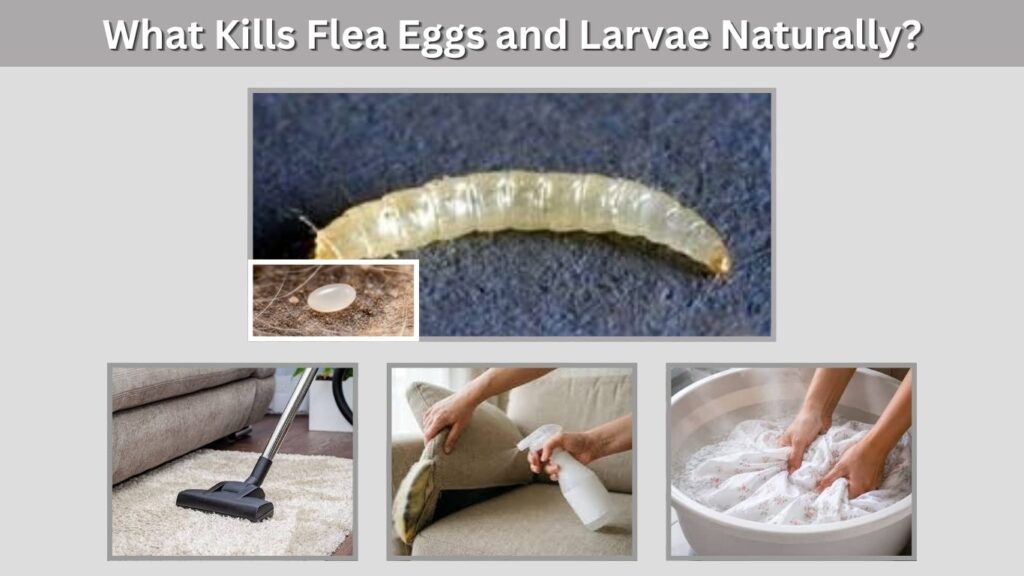
Natural flea-control methods are especially appealing to households seeking to minimize pesticide exposure. Fortunately, physical cleaning methods can substantially reduce immature flea populations without requiring chemical sprays. However, natural does not always mean effective or completely safe, so choosing proven methods remains important.
Vacuuming Carpets and Furniture
Vacuuming is one of the most effective nonchemical methods for controlling flea eggs and larvae.
Flea eggs frequently fall from pets into carpets, rugs, and upholstered furniture. Meanwhile, larvae crawl into protected spaces where dust and adult flea droppings accumulate.
Thorough vacuuming removes immature fleas and their food sources. Concentrating on pet sleeping areas, underneath furniture, and along baseboards improves results.
During an active infestation, vacuum daily or every other day and dispose of collected debris securely.
Washing Bedding With Hot Water
Hot-water washing helps eliminate flea eggs and larvae from blankets, removable cushion covers, pet beds, and washable fabrics.
Use the hottest water permitted by the fabric-care label, followed by thorough drying. Heat is particularly useful because flea eggs and larvae are sensitive to sufficiently high temperatures.
Repeat washing regularly while treating the infestation, especially when pets frequently sleep on beds or upholstered furniture.
Steam Cleaning Infested Areas
Steam cleaning is another effective method for eliminating flea eggs and larvae naturally.
High-temperature steam can penetrate suitable carpet fibers and upholstery, helping kill developing fleas that ordinary surface cleaning may miss.
Focus on carpeted areas, furniture edges, and locations where pets regularly rest.
However, steam must reach the pests to work, and some materials cannot tolerate heat or moisture. Always check the manufacturer’s cleaning recommendations.
What Flea Sprays Kill Eggs and Larvae?
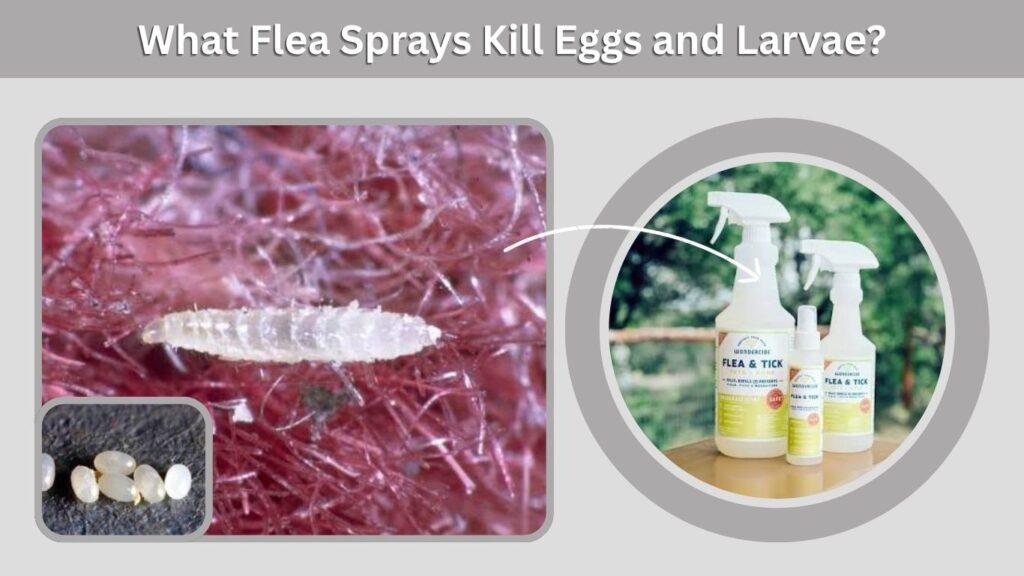
Not all flea sprays affect every developmental stage. Some insecticides mainly kill adult fleas, while others target immature stages or interrupt their growth. Choosing a treatment specifically labeled for flea control is essential, particularly when eggs and larvae are present in carpets, furniture, and pet resting areas.
Insect Growth Regulators
Insect growth regulators, commonly called IGRs, are valuable for controlling immature fleas.
Two frequently used ingredients include methoprene and pyriproxyfen. These compounds interfere with normal flea development, helping prevent eggs and larvae from producing reproductive adults.
IGRs do not necessarily kill every flea immediately. Instead, they interrupt the life cycle and reduce future adult populations.
For severe infestations, a properly labeled indoor flea treatment containing an IGR may be useful alongside cleaning and veterinary-approved pet protection.
Do Flea Bombs Kill Eggs and Larvae?
Flea bombs, also known as total-release foggers, may kill exposed fleas, but they are often less effective against larvae hiding deep inside carpets and furniture.
Their insecticides may fail to reach protected locations, while flea pupae can survive many treatments inside their cocoons.
Foggers also introduce pesticide exposure and flammability risks. Targeted treatments, vacuuming, and pet flea control are generally more useful than relying on flea bombs alone.
Does Diatomaceous Earth Kill Flea Eggs and Larvae?
Diatomaceous earth is a fine mineral powder sometimes used for insect control. It works by damaging or absorbing protective materials on insects’ outer surfaces, causing dehydration. However, its effectiveness depends heavily on moisture, contact, and the developmental stage of the flea.
How Diatomaceous Earth Affects Flea Larvae
Diatomaceous earth may kill exposed flea larvae when it remains completely dry and contacts their bodies.
However, it is not a reliable treatment for flea eggs and may perform poorly in humid environments.
Airborne dust can also irritate human and animal respiratory systems. Never apply it directly to pets, and do not spread loose powder around occupied sleeping areas.
Use only pest-control products labeled for the intended application.
What Kills Flea Eggs and Larvae on Dogs and Cats?
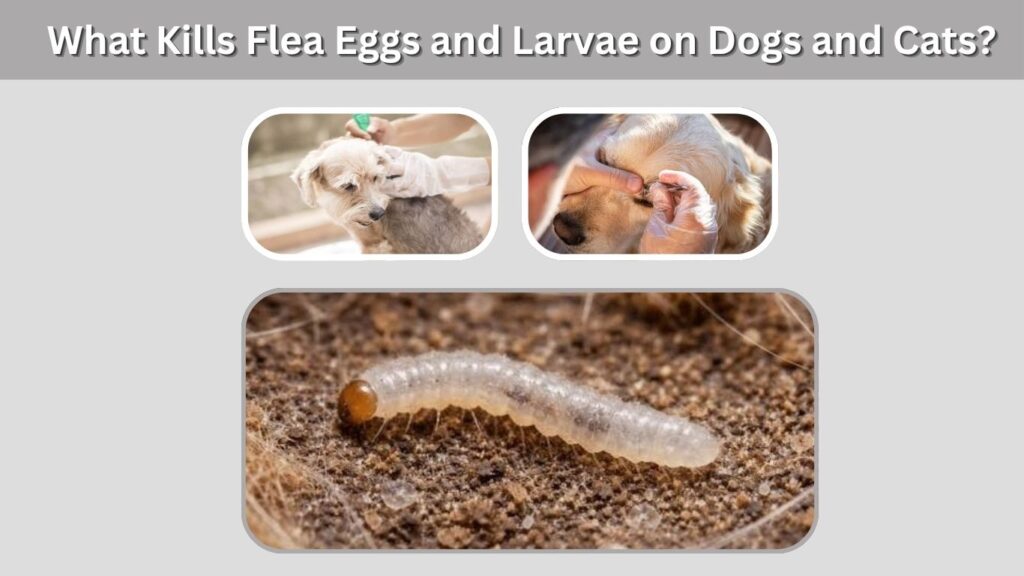
Adult fleas commonly live on dogs and cats, but their eggs usually fall into the surrounding environment. Flea larvae therefore develop mainly in bedding, carpets, and protected household areas rather than remaining on pets. Successful treatment must address both adult fleas on animals and developing fleas throughout the home.
Effective Flea Treatment for Pets
Veterinarian-recommended flea products can reduce or eliminate adult fleas and prevent further egg production.
Common treatment categories include:
- Oral flea medications: Kill adult fleas or control additional stages, depending on the active ingredient.
- Topical treatments: Provide flea protection through formulations applied to the skin.
- Flea collars: Certain formulations provide extended protection and may contain ingredients affecting immature fleas.
- Flea combs: Physically remove adult fleas and help monitor an infestation.
Some medications, such as products sold under the NexGard, Bravecto, Advantage, and Frontline names, have different formulations and developmental-stage claims. Their effects should be checked on the specific product label.
Always choose products suitable for your pet’s species, age, health, and weight. Never use dog-only treatments on cats.
Cleaning Pet Bedding
Treating pets alone may not eliminate an infestation because developing fleas can remain in their surroundings.
Wash pet bedding regularly, vacuum nearby carpets, and clean furniture where animals frequently rest.
Coordinating pet treatment with environmental cleaning reduces the chance of adult fleas returning.
What Kills Flea Eggs and Larvae in Carpets?
Carpets provide favorable hiding places for flea eggs and larvae because their fibers collect pet hair, organic debris, and flea dirt. Larvae often settle deep in protected areas, making simple surface cleaning insufficient. Consistent cleaning and targeted treatments are necessary to interrupt their development.
Best Way to Kill Flea Larvae in Carpets
Begin by vacuuming thoroughly, particularly around furniture legs, baseboards, and pet sleeping areas.
Steam-clean suitable carpets when possible. The combination of heat and cleaning can reduce several flea developmental stages.
For persistent infestations, consider an indoor flea-control product containing an IGR and specifically labeled for carpet use.
Continue vacuuming after treatment because surviving pupae may release adult fleas over the following weeks.
Do Household Remedies Kill Flea Eggs and Larvae?
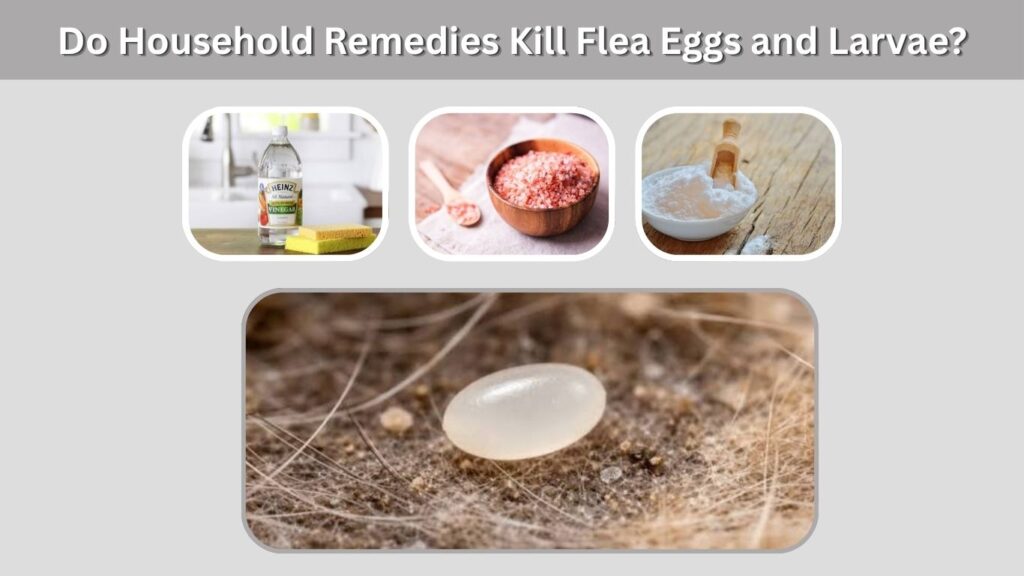
Several household ingredients are promoted online as inexpensive flea killers. However, many lack reliable evidence that they eliminate flea eggs and larvae. Some can damage household surfaces or expose pets to unnecessary hazards.
Vinegar, Salt, Baking Soda, and Bleach
Vinegar is not a dependable flea egg or larvae treatment. Its acidity does not make it a reliable solution for controlling hidden flea populations.
Salt and baking soda are sometimes recommended as drying agents, but there is insufficient evidence that sprinkling them on carpets provides effective flea elimination.
Bleach can kill exposed organisms through direct chemical contact, but it is unsuitable as a general flea treatment for carpets, bedding, or animals.
Borax and essential oils also carry exposure risks and should not replace proven flea-control methods.
How to Prevent Flea Eggs and Larvae From Returning
Preventing recurring infestations requires interrupting the flea life cycle consistently. Even after cleaning and treatment, protected flea pupae may continue developing, allowing new adults to emerge. Regular household maintenance and appropriate pet protection help reduce this problem.
Practical Flea Prevention Tips
- Maintain veterinarian-recommended flea prevention for household pets.
- Vacuum carpets, rugs, and upholstered furniture regularly.
- Wash pet bedding frequently with appropriate cleaning settings.
- Inspect pets for adult fleas and flea dirt.
- Clean shaded outdoor pet resting areas when necessary.
- Continue monitoring after treatment rather than stopping immediately.
Moderate or severe infestations may require several weeks or longer to control completely.
FAQs
1. Does Dawn Dish Soap Kill Flea Eggs and Larvae?
Dish soap can kill adult fleas through direct contact during bathing, but it is not a reliable treatment for eliminating flea eggs and larvae throughout a home. Pet-specific treatments and environmental cleaning are more dependable.
2. Does Steam Kill Flea Eggs and Larvae?
Yes. Steam cleaning can kill flea eggs and larvae when sufficiently high temperatures reach them. Results depend on the equipment, surface, and depth of heat penetration.
3. Does Vinegar Kill Flea Larvae?
Vinegar is not a proven or dependable flea larvae treatment. Vacuuming, washing, and appropriate flea-control products are more effective approaches.
4. What Temperature Kills Flea Eggs and Larvae?
Flea eggs and larvae are vulnerable to sufficiently high temperatures, but there is no single universally reliable household treatment temperature. Exposure duration, humidity, and whether heat penetrates the material all influence effectiveness.
5. How Long Does It Take to Kill Flea Eggs and Larvae?
Vacuuming and properly applied heat treatments can eliminate many immature fleas immediately. However, controlling the entire infestation may take weeks or months because protected flea pupae can survive initial treatment.
