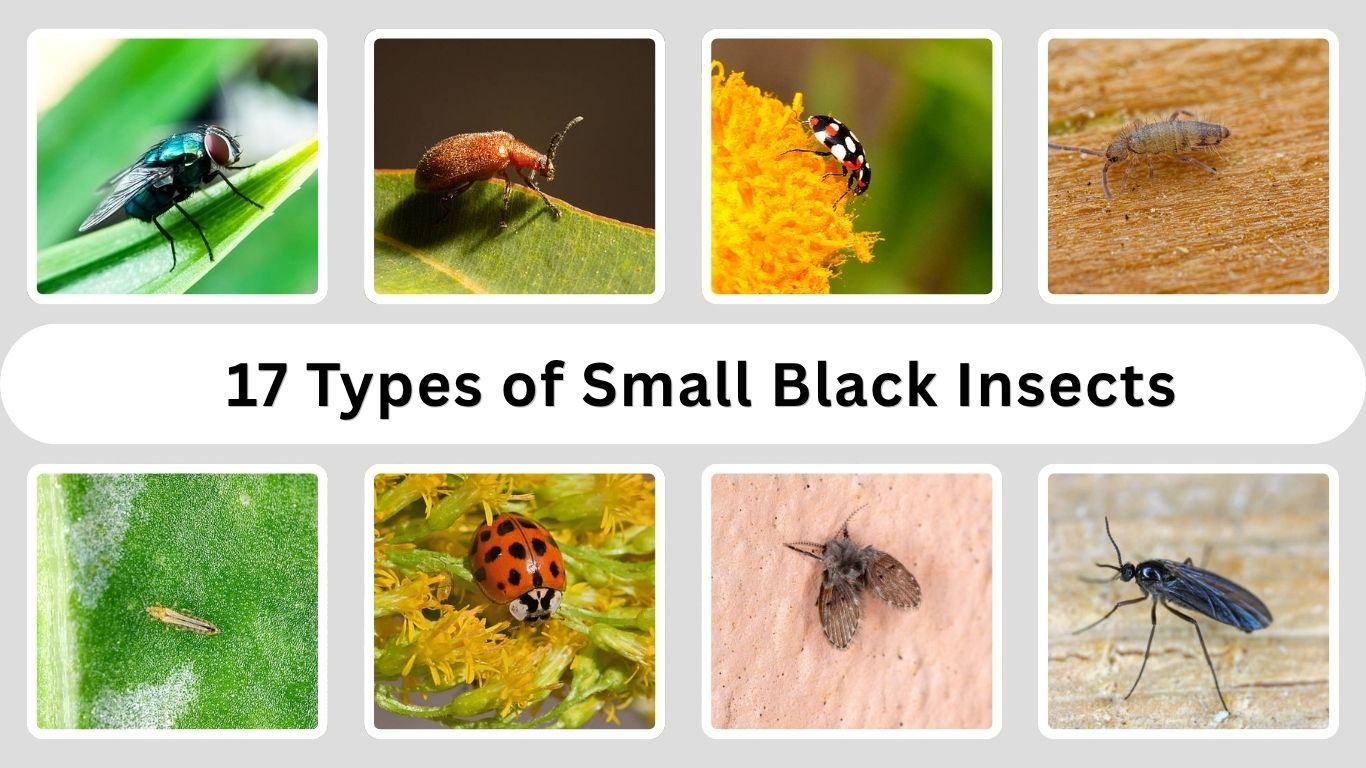
Small black insects are a common problem in many homes, appearing in places like kitchens, bathrooms, beds, and even on plants or pets. You may notice small black insects in the house that crawl, fly, or even jump, depending on the species. Some are harmless, while others can bite, damage food, or affect plants.
This guide covers 17 common types of small black insects, including those with wings, those that jump, and those found in specific areas like bathrooms, kitchens, and indoor plants. Whether you’re dealing with small black insects that bite or just trying to identify a nuisance pest, this list will help you quickly recognize and understand them.
1. Black Carpet Beetle

Black carpet beetles are small, dark-colored insects commonly found in homes. They are one of the most common small black insects in house environments, especially where natural fibers are present. While adults are harmless, their larvae can damage fabrics, carpets, and stored items.
Identification
- Small, oval-shaped body (3–5 mm long)
- Solid black or very dark brown color
- Smooth, shiny appearance
- Larvae are elongated, brownish, and covered with bristles
Habitat
Black carpet beetles are usually found indoors in areas with natural materials. Common places include carpets, closets, upholstered furniture, and storage boxes. They prefer dark, undisturbed areas but may also be seen near windows as adults are attracted to light.
Behavior
Adult beetles feed on pollen and are often found near windows or light sources. The larvae are the damaging stage, feeding on wool, silk, leather, and pet hair. They hide in cracks and fabric folds, making them difficult to detect early.
Risk
Black carpet beetles do not bite humans, but their larvae can cause damage to household items. They are not considered small black insects that bite, but their tiny hairs may irritate sensitive skin. If left untreated, they can ruin clothing, carpets, and upholstery.
2. Black Ant

Black ants are among the most common small black insects in house settings. They often appear in kitchens and bathrooms in search of food and water. While most species are harmless, their presence can quickly become a nuisance.
Identification
- Small, segmented body (2–6 mm long)
- Shiny black color
- Three distinct body parts (head, thorax, abdomen)
- Elbowed antennae
Habitat
Black ants typically build nests outdoors in soil, but they frequently enter homes. Indoors, they are often found in kitchens, bathrooms, and wall voids. They are especially common as small black insects in kitchen areas where food is available.
Behavior
These ants follow scent trails to locate food sources. They are attracted to sugary and greasy foods and can form long visible lines. Colonies can grow large, and ants may reappear even after cleaning if the nest remains active.
Risk
Black ants do not usually pose serious harm, but some species can bite. They are considered small black insects that bite in rare cases, though bites are generally mild. Their main issue is contaminating food and surfaces.
3. Carpenter Ant

Carpenter ants are larger than typical black ants but may still be noticed as small black insects, especially in early stages. They are known for damaging wood structures, making them more serious than common household ants.
Identification
- Medium to large size (6–12 mm long)
- Solid black or dark brown color
- Strong mandibles (jaws)
- Smooth, rounded thorax
Habitat
Carpenter ants prefer moist or decaying wood to build their nests. Indoors, they are often found in walls, wooden beams, and window frames. They may also appear in kitchens or bathrooms if moisture is present.
Behavior
Unlike termites, carpenter ants do not eat wood but tunnel through it to create nests. They are mostly active at night and may travel long distances from their colony to find food.
Risk
Carpenter ants can bite if disturbed, making them another example of small black insects that bite. More importantly, they can cause structural damage over time by hollowing out wood, which may lead to costly repairs if ignored.
4. Black Flea

Black fleas are tiny, jumping insects often found on pets and in homes. They are well known as small black insects that jump and are commonly seen on dogs, carpets, and bedding.
Identification
- Very small size (1–3 mm long)
- Dark brown to black color
- Flattened body from side to side
- Long hind legs adapted for jumping
Habitat
Fleas are commonly found on pets like dogs and cats, as well as in carpets, bedding, and furniture. They are a major example of small black insects on dogs and can quickly spread throughout the home if not controlled.
Behavior
Fleas are active jumpers and move easily between hosts. They feed on blood and reproduce rapidly. Eggs often fall off pets and develop in carpets or cracks, making infestations hard to eliminate.
Risk
Fleas are well-known small black insects that bite, causing itching and irritation in both humans and animals. In some cases, they can transmit diseases or parasites. Quick treatment is important to prevent spreading.
5. Bed Bug (Dark Form)

Bed bugs are small, dark insects that feed on human blood, usually at night. They are often noticed as small black insects on bed and can cause discomfort and sleep disturbances.
Identification
- Small, oval, flat body (4–7 mm long)
- Dark brown to nearly black color after feeding
- Wingless with visible body segments
- Swollen appearance after a blood meal
Habitat
Bed bugs are typically found in mattresses, bed frames, and furniture near sleeping areas. They hide in seams, cracks, and crevices, making them a common example of small black insects in house environments.
Behavior
They are nocturnal and come out at night to feed on exposed skin. During the day, they remain hidden. Bed bugs spread easily through luggage, clothing, and used furniture.
Risk
Bed bugs are classic small black insects that bite, leaving itchy red marks on the skin. While they do not transmit diseases, their bites can cause allergic reactions, discomfort, and sleep problems.
6. Black Weevil

Black weevils are small beetles commonly found in stored food products. They are a frequent example of small black insects in kitchen areas, especially in grains and dry goods.
Identification
- Small, elongated body (3–5 mm long)
- Dark brown to black color
- Distinct long snout (rostrum)
- Elbowed antennae
Habitat
Black weevils are typically found in pantries, cupboards, and food storage areas. They infest grains such as rice, wheat, pasta, and cereals. They often enter homes through already infested packaged food.
Behavior
Female weevils lay eggs inside grains, where larvae develop and feed. Adults emerge by boring out of the grain. They tend to stay close to food sources and spread slowly compared to flying insects.
Risk
Black weevils do not bite and are not considered small black insects that bite. However, they contaminate food, making it unsafe to eat. Infestations can lead to significant food waste if not addressed.
7. Black Flour Beetle

Black flour beetles are tiny insects commonly found in processed food products. They are often seen as small black insects in kitchen spaces, especially where flour and dry goods are stored.
Identification
- Small, flat body (3–4 mm long)
- Dark brown to black color
- Slender shape with visible body segments
- Antennae gradually widen toward the tip
Habitat
These beetles are commonly found in flour, cereal, baking mixes, and packaged foods. They live in pantries, cupboards, and storage containers, often hiding in cracks or near food sources.
Behavior
Both adults and larvae feed on stored food products. They are active crawlers and may spread throughout storage areas. Unlike weevils, they do not live inside grains but feed externally.
Risk
Black flour beetles do not bite humans, but they contaminate food with waste and secretions. Infested products may develop an unpleasant smell and must be discarded. They are a persistent pantry pest if not controlled properly.
8. Ground Beetle

Ground beetles are dark-colored insects that occasionally enter homes, especially at night. They are often mistaken for harmful pests but are generally beneficial outdoors. Indoors, they may appear as small black insects in house environments.
Identification
- Medium-sized, elongated body (5–15 mm long)
- Shiny black or dark brown color
- Hard wing covers with ridges
- Long legs adapted for running
Habitat
Ground beetles usually live outdoors in soil, gardens, and under rocks or debris. They may enter homes through cracks or open doors, especially during cooler weather or at night when attracted to light.
Behavior
These beetles are fast runners and mostly active at night. They feed on other insects, making them beneficial in gardens. Indoors, they do not reproduce and usually die if they cannot return outside.
Risk
Ground beetles are not harmful and are not considered small black insects that bite. They do not damage property or contaminate food. Their presence indoors is usually temporary and more of a nuisance than a threat.
9. Black Spider Beetle

Black spider beetles are small, round insects that resemble tiny spiders. They are often found in stored food and organic materials, making them another example of small black insects in house settings.
Identification
- Small, round body (2–4 mm long)
- Dark brown to black color
- Long, thin legs like a spider
- Smooth, shiny body
Habitat
These beetles are typically found in pantries, basements, and storage areas. They infest grains, dried foods, animal products, and even debris. They prefer dark, undisturbed places.
Behavior
Black spider beetles are mostly nocturnal and slow-moving. They hide during the day and come out at night to feed. Both larvae and adults consume a wide range of organic materials.
Risk
They do not bite humans and are not small black insects that bite. However, they contaminate stored food and materials. Infestations can lead to food waste and require proper storage and cleaning to control.
10. Fungus Gnat

Fungus gnats are tiny flying insects often seen around indoor plants. They are a common example of small black insects with wings and are frequently noticed hovering near soil.
Identification
- Very small size (2–4 mm long)
- Slender, mosquito-like body
- Dark gray to black color
- Transparent wings and long legs
Habitat
Fungus gnats are commonly found around houseplants, making them typical small black insects on plants. They thrive in moist soil and are often seen in kitchens or near windows where plants are kept.
Behavior
Adult gnats fly weakly and hover around plants, while larvae live in the soil and feed on organic matter and roots. Overwatering plants creates ideal conditions for their growth and reproduction.
Risk
Fungus gnats do not bite humans, so they are not small black insects that bite. However, their larvae can damage plant roots, affecting plant health. They are mainly a nuisance rather than a direct threat.
11. Drain Fly

Drain flies are small, dark insects commonly found in bathrooms and kitchens. They are well known as small black insects in bathroom areas, especially near sinks and drains.
Identification
- Tiny size (2–5 mm long)
- Dark gray to black color
- Fuzzy, moth-like appearance
- Broad wings held roof-like over the body
Habitat
Drain flies live and breed in moist, organic matter found in drains, pipes, and sewage systems. They are often seen in bathrooms and kitchens, especially around sinks, showers, and floor drains.
Behavior
These flies are weak fliers and usually stay close to their breeding site. They are most active at night and rest on walls or surfaces during the day. Their larvae develop in the slimy buildup inside drains.
Risk
Drain flies do not bite and are not small black insects that bite. However, they can indicate poor sanitation or clogged drains. While mostly harmless, large numbers can become a nuisance in the home.
12. Black Aphid

Black aphids are tiny insects that commonly infest plants. They are often seen in clusters and are a major example of small black insects on plants, especially in gardens and indoor plant pots.
Identification
- Very small size (1–3 mm long)
- Soft, pear-shaped body
- Black or dark brown color
- Long antennae and small tube-like structures (cornicles) on the back
Habitat
Black aphids are typically found on plant stems, leaves, and buds. They thrive on indoor and outdoor plants, making them common small black insects on plants in homes and gardens.
Behavior
They feed by sucking sap from plants, often forming large colonies. Aphids reproduce quickly and can spread rapidly between plants. They also produce a sticky substance called honeydew, which can attract ants.
Risk
Black aphids do not bite humans, so they are not small black insects that bite. However, they can damage plants by weakening them and spreading plant diseases. Heavy infestations can stunt plant growth.
13. Thrips (Black Species)

Thrips are tiny, slender insects that can appear black in color. They are commonly found on plants and are another example of small black insects with wings.
Identification
- Extremely small (1–2 mm long)
- Thin, elongated body
- Black or dark brown color
- Narrow wings with fringed edges
Habitat
Thrips are usually found on flowers, leaves, and indoor plants. They are common small black insects on plants and may also be found near windows or light sources.
Behavior
Thrips feed by piercing plant cells and sucking out their contents. They are active and can move quickly. Some species can fly short distances, helping them spread between plants.
Risk
Thrips do not bite humans, but they can damage plants by causing discoloration and deformities. They are a serious pest for both indoor and outdoor plants and can spread plant viruses.
14. Springtail (Dark Type)

Springtails are tiny, dark-colored insects often found in damp environments. They are well known as small black insects that jump due to their unique ability to spring into the air when disturbed.
Identification
- Very small size (1–3 mm long)
- Dark gray to black color
- Soft, elongated body
- Forked tail-like structure (used for jumping)
Habitat
Springtails thrive in moist areas such as bathrooms, basements, and around sinks. They are commonly seen as small black insects in bathroom spaces, especially where humidity is high.
Behavior
These insects are attracted to moisture and feed on mold, fungi, and organic matter. When disturbed, they use their tail-like structure to jump suddenly, which can make them noticeable.
Risk
Springtails do not bite humans and are not small black insects that bite. They are harmless but may indicate excess moisture or mold issues in the home. Controlling humidity usually eliminates them.
15. Black Cockroach Nymph

Black cockroach nymphs are the immature stage of cockroaches and are often mistaken for small black insects. Their presence usually signals a larger infestation nearby.
Identification
- Small, oval-shaped body
- Dark brown to black color
- Wingless or with undeveloped wings
- Similar shape to adult cockroaches
Habitat
Cockroach nymphs are found in warm, dark, and moist areas. Common locations include kitchens, bathrooms, drains, and behind appliances, making them typical small black insects in house environments.
Behavior
They are mostly active at night and hide during the day. Nymphs feed on food scraps, grease, and organic waste. As they grow, they shed their skin multiple times before becoming adults.
Risk
Cockroach nymphs do not usually bite but can contaminate food and surfaces. They are not considered small black insects that bite, but they can spread bacteria and trigger allergies. Immediate control is important to prevent infestation growth.
16. Black Housefly

Black houseflies are common flying insects often seen indoors. They are a typical example of small black insects with wings and are frequently found around food and waste.
Identification
- Small to medium size (4–7 mm long)
- Dark gray to black body
- Transparent wings
- Large red or dark eyes
Habitat
Houseflies are commonly found in kitchens, garbage areas, and near food sources. They are often seen as small black insects in kitchen environments where food is exposed or waste is present.
Behavior
They are active during the day and are strong fliers. Houseflies are attracted to food, garbage, and organic waste. They land frequently on different surfaces, increasing the risk of contamination.
Risk
Houseflies do not bite but can carry bacteria and pathogens. They are not small black insects that bite, but they can contaminate food and surfaces, posing potential health risks if not controlled.
17. Black Leaf Beetle

Black leaf beetles are small plant-feeding insects often found outdoors and sometimes on indoor plants. They are another example of small black insects on plants.
Identification
- Small, oval body (3–6 mm long)
- Shiny black color
- Hard wing covers
- Short antennae
Habitat
These beetles are commonly found on leaves of garden plants, shrubs, and sometimes indoor plants. They thrive in outdoor environments but may enter homes with plants.
Behavior
Black leaf beetles feed on plant leaves, creating small holes or damage. They are active during the day and may move between plants in search of food.
Risk
They do not bite humans and are not small black insects that bite. However, they can damage plants by feeding on leaves. Severe infestations may weaken plants and affect their growth.
FAQs
What are the most common small black insects in the house?
The most common small black insects in the house include ants, fleas, carpet beetles, fungus gnats, and drain flies. These insects usually appear in kitchens, bathrooms, or near plants and food sources. Identifying where they are found can help narrow down the exact type.
Why do I see small black insects in my bathroom?
Small black insects in the bathroom are often caused by moisture and organic buildup. Common examples include drain flies and springtails. These pests thrive in damp environments, so reducing humidity and cleaning drains can help eliminate them.
Are small black insects that bite dangerous?
Some small black insects that bite, like fleas or bed bugs, can cause itching and irritation but are usually not dangerous. However, repeated bites may lead to allergic reactions or discomfort. Proper pest control is important to prevent infestations from spreading.
What are small black insects that jump?
Small black insects that jump are usually fleas or springtails. Fleas are often found on pets and can bite humans, while springtails are harmless and live in moist areas. Their jumping ability makes them easy to notice when disturbed.
How do I get rid of small black insects in the kitchen?
To get rid of small black insects in the kitchen, keep food sealed, clean surfaces regularly, and remove garbage promptly. Many pests like ants, beetles, and flies are attracted to food and moisture, so maintaining cleanliness is key to prevention.