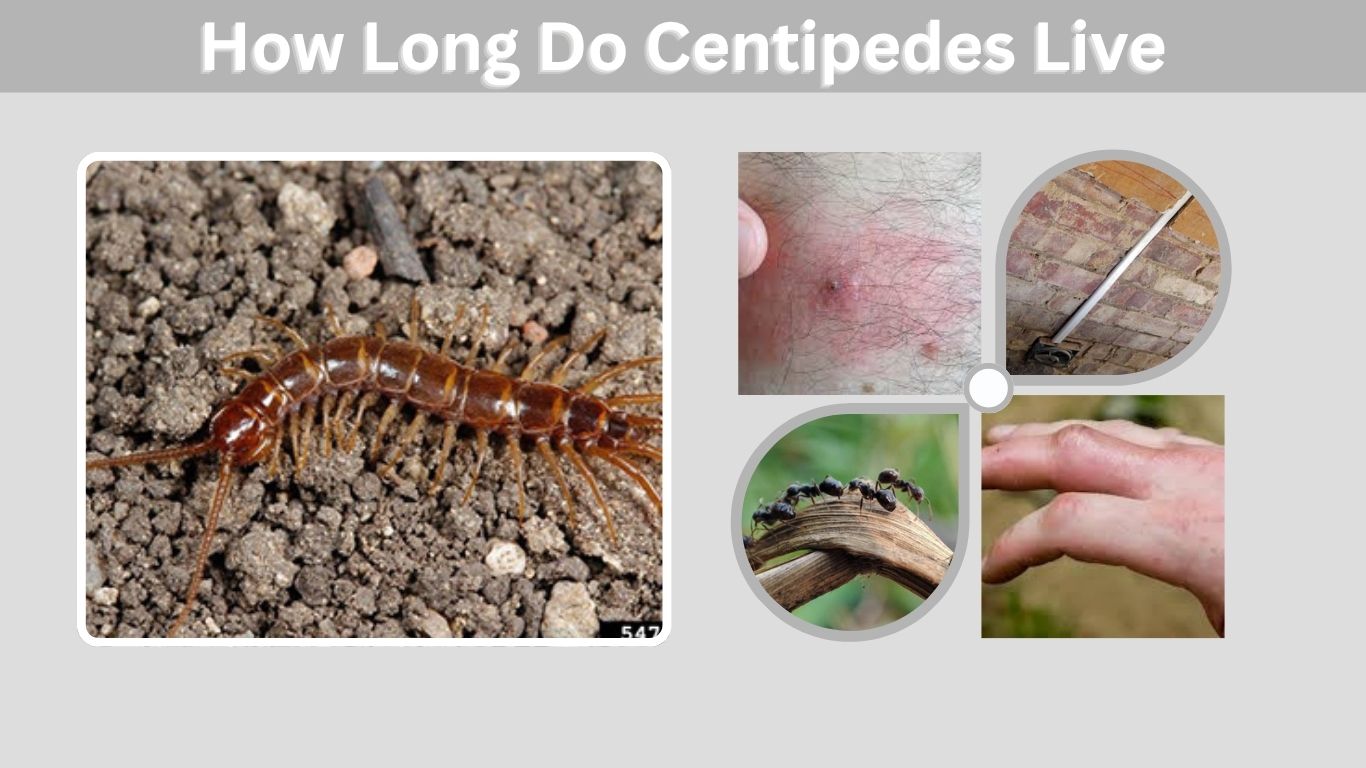
House centipedes are fast-moving arthropods commonly found in damp indoor areas such as bathrooms, basements, and laundry rooms. Many homeowners are surprised to learn that these unusual creatures can live much longer than most household insects. Their lifespan depends on factors like food availability, moisture, temperature, and safety from predators. Because they feed on pests such as silverfish and cockroaches, house centipedes often survive comfortably indoors for years. Understanding their lifespan and behavior can help homeowners manage indoor centipede activity more effectively.
What Is a House Centipede?
House centipedes are thin-bodied arthropods known for their extremely long legs and rapid movement. Unlike many outdoor centipedes, they adapt very well to indoor environments with stable temperatures and moisture. House centipedes are nocturnal hunters that spend most of the day hiding in cracks, dark corners, and damp rooms. At night, they emerge to hunt insects and other small arthropods commonly found inside homes.
House Centipede Identification
House centipedes have a very unique appearance that makes them easy to recognize compared to other indoor pests.
- Thin yellow-gray body
- Dark stripes along the back
- Very long legs
- Long antennae
- Fast movement across walls
- Small lightweight body
Scientific Classification
The scientific name of the common house centipede is Scutigera coleoptrata. It belongs to the Chilopoda class and the Scutigeridae family. Originally native to the Mediterranean region, this species spread worldwide and is now commonly found in homes across many climates.
Why House Centipedes Enter Homes
House centipedes enter homes because indoor environments provide warmth, humidity, and food. Damp spaces attract insects, which become prey for centipedes searching for easy meals.
Bathrooms, basements, crawl spaces, and kitchens are common hiding spots because moisture levels stay high in these areas. House centipedes also prefer dark spaces where they can remain hidden during the daytime before hunting at night.
How Long Do House Centipedes Live?
House centipedes can live much longer than many people expect. While many household insects survive only a few weeks or months, house centipedes may live for several years under favorable indoor conditions. Their slow development and ability to adapt to indoor environments contribute to their relatively long lifespan compared to other common household arthropods.
Average House Centipede Lifespan
Most house centipedes live several years when moisture and food are available consistently indoors.
- Average lifespan: 3 to 7 years
- Some may survive longer indoors
- Juveniles take time to mature
- Lifespan depends on humidity and food
- Safe hiding places improve survival
Lifespan Compared to Other Household Pests
House centipedes generally live longer than many insects commonly found inside homes.
- Longer lifespan than ants
- Often outlive flies
- Similar lifespan to some spiders
- Can survive longer than cockroaches
- Longer development cycle than silverfish
Why House Centipedes Live So Long
House centipedes grow slowly and face fewer predators indoors than in outdoor environments. Stable indoor temperatures and year-round insect populations help them survive much longer inside homes.
Unlike many insects that reproduce quickly and die young, house centipedes mature gradually through repeated molting stages. Their ability to hide effectively and hunt efficiently also increases their chances of long-term survival indoors.
How Long Do Centipedes Live in a House?
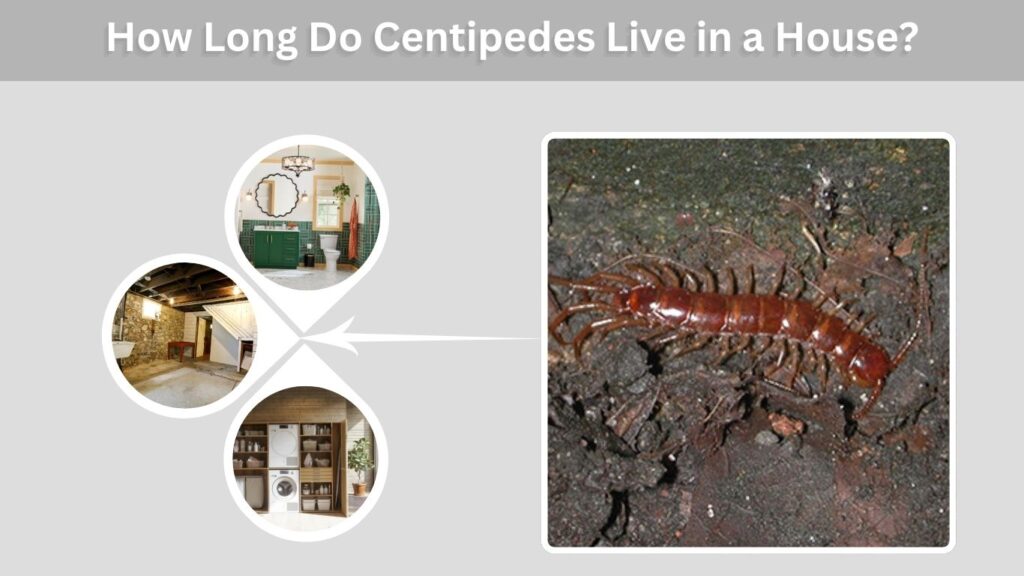
Indoor environments often provide ideal conditions for house centipedes because temperatures remain stable and moisture levels stay relatively high. If food sources are available, house centipedes can survive inside homes for years without needing to move outdoors. Their secretive behavior allows them to remain hidden most of the time, which is why homeowners may not realize centipedes have been living indoors for extended periods.
Indoor Survival Conditions
Several environmental conditions help house centipedes survive comfortably inside homes.
- High humidity
- Warm indoor temperatures
- Presence of insects
- Dark hiding places
- Limited predators
- Safe wall cracks and gaps
Where House Centipedes Hide Indoors
House centipedes hide during the day and become active at night while searching for prey around the home.
- Bathrooms
- Basements
- Laundry rooms
- Under sinks
- Crawl spaces
- Wall cracks
Signs a House Centipede Is Living Indoors
House centipedes are nocturnal, so homeowners usually notice them at night when lights suddenly turn on in dark rooms. Their fast movement across floors or walls is often the first sign they are living indoors.
Repeated sightings near damp areas may indicate stable indoor populations. Seeing other insects like silverfish or cockroaches can also suggest favorable conditions for house centipedes inside the home.
How Long Can House Centipedes Live Without Food?
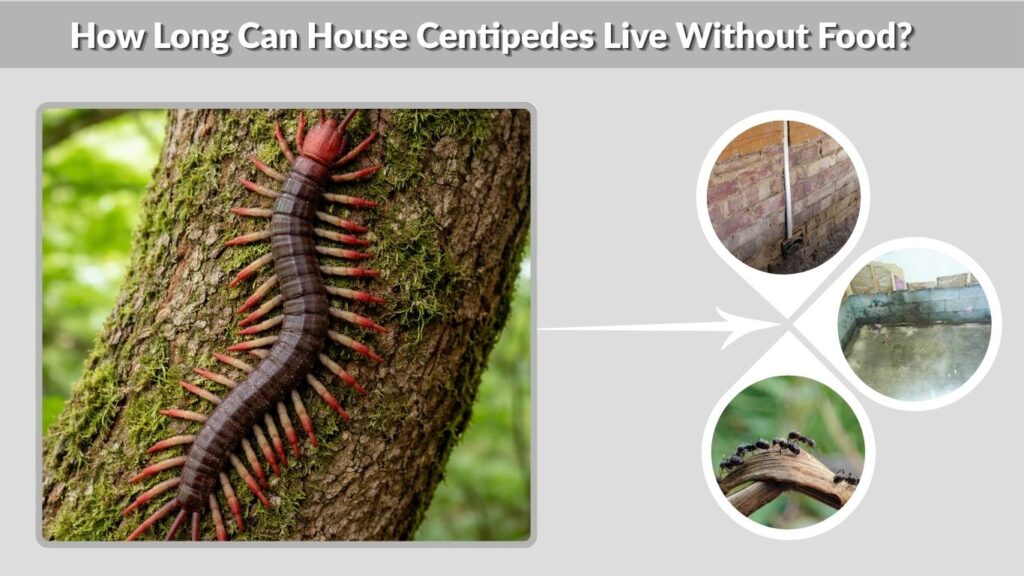
House centipedes are skilled predators that rely on insects and small arthropods for survival. However, they can survive surprisingly long periods without eating because their metabolism slows down when food becomes limited. Moisture is often more important than constant feeding because dehydration can kill them faster than temporary hunger. Their ability to survive with little food helps explain why they remain successful indoor predators in many homes.
Survival Without Food
House centipedes can survive for weeks without food under stable indoor conditions.
- Slow metabolism during food shortages
- Reduced movement to conserve energy
- Better survival in humid environments
- Longer survival than many insects
- Hunting resumes quickly when prey returns
Water and Moisture Needs
Moisture is critical for house centipede survival because their bodies lose water easily in dry conditions.
- Prefer damp rooms
- Risk dehydration in dry air
- Thrive in humid basements
- Need moisture more than frequent feeding
- Avoid extremely hot environments
Why They Stay Near Insects
House centipedes remain in homes because indoor insects provide a reliable food source throughout the year. They commonly hunt cockroaches, silverfish, ants, spiders, and flies hiding in dark damp areas.
If insect populations decrease, house centipedes may eventually leave or die from starvation. Their presence often suggests there are other insects living inside the home even if homeowners rarely notice them directly.
House Centipede Life Cycle
House centipedes develop slowly compared to many household pests. They go through several growth stages before reaching adulthood and continue molting even after becoming mature. Their long development process contributes to their unusually long lifespan. Understanding the life cycle of house centipedes helps explain why they can remain indoors for years under favorable environmental conditions.
Egg Stage
Female house centipedes lay eggs in hidden moist areas where young centipedes have protection from predators and dry conditions.
- Eggs hidden in cracks
- Damp locations preferred
- Small clusters of eggs
- Protected from light and heat
Juvenile Development
Young house centipedes hatch with fewer legs than adults and gradually gain more body segments through repeated molting stages.
- Multiple molting stages
- Gradual leg growth
- Slow body development
- Increased hunting ability with age
- Juveniles resemble small adults
Adult Stage
Adult house centipedes become highly active nighttime hunters capable of reproducing and surviving for several years indoors.
Adults continue molting throughout life, unlike many insects that stop growing after reaching maturity. Their long lifespan allows them to hunt pests continuously inside homes over extended periods.
Factors That Affect House Centipede Lifespan
Several environmental and biological factors influence how long house centipedes survive indoors. Stable temperatures, moisture, and food availability improve survival rates significantly. On the other hand, dry conditions, pest control chemicals, and predators can shorten their lifespan. Homes with high humidity and large insect populations often support long-term house centipede activity.
Moisture and Humidity
Humidity is one of the most important survival factors for house centipedes because dry conditions quickly weaken them.
- Damp basements improve survival
- Bathrooms provide ideal humidity
- Dry air reduces lifespan
- Water leaks attract centipedes
- Humid climates increase activity
Food Supply
A stable food supply helps house centipedes survive longer and reproduce successfully indoors.
- Cockroach populations support survival
- Silverfish attract centipedes
- More prey increases lifespan
- Insect-free homes reduce activity
- Hunting success affects health
Predators and Human Activity
Pets, pest control, and cleaning habits can reduce house centipede populations indoors.
- Cats may hunt centipedes
- Vacuuming removes hiding places
- Pesticides reduce survival
- Humans often kill visible centipedes
- Reduced moisture discourages activity
Are House Centipedes Dangerous?
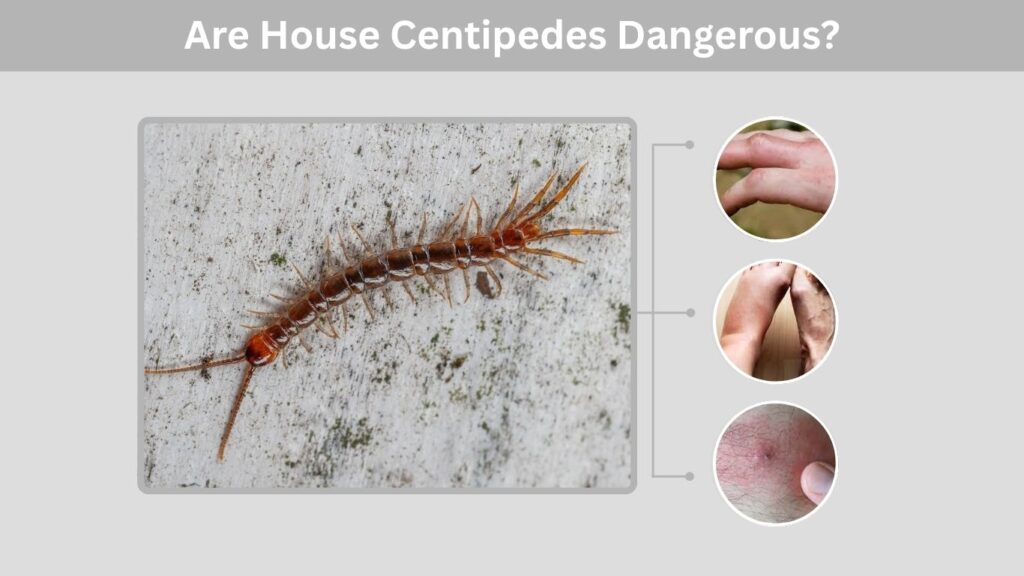
House centipedes may look frightening because of their many legs and rapid movement, but they are generally harmless to humans. Their venom is designed for hunting insects rather than attacking large animals. Most house centipedes avoid contact with people and quickly run away when disturbed. In many homes, they are considered more beneficial than dangerous because they naturally control pest populations.
Can House Centipedes Bite?
House centipedes can bite, but bites are uncommon and usually mild.
- Temporary redness
- Mild swelling
- Minor pain
- Rare allergic reactions
- More likely if handled roughly
Are They Harmful Indoors?
House centipedes are not considered dangerous household pests. They do not damage furniture, spread disease, or contaminate food.
Instead, they help reduce populations of insects such as silverfish, ants, cockroaches, and spiders. Many pest experts consider them beneficial predators despite their frightening appearance indoors.
Benefits of House Centipedes
Although many people fear house centipedes because of their appearance, these arthropods provide useful pest control inside homes. They hunt many common indoor insects and help reduce infestations naturally without chemicals. House centipedes are active mainly at night, so they quietly control pests while remaining hidden most of the day. Their presence often indicates they are feeding on other insects already living inside the home.
Natural Pest Control
House centipedes are efficient predators that hunt many unwanted household pests.
- Eat cockroaches
- Hunt silverfish
- Reduce spider populations
- Feed on ants
- Catch flies
- Control insect larvae
Why They Stay in Homes
House centipedes remain indoors because homes provide stable temperatures, moisture, and year-round food sources.
Bathrooms, basements, and crawl spaces offer ideal humidity levels where insects gather. As long as food and moisture remain available, house centipedes may continue living inside the same building for several years without being noticed often.
Drawbacks of House Centipedes
Despite their benefits, many homeowners still dislike having house centipedes indoors because of their unusual appearance and sudden movements.
- Scary appearance
- Fast running speed
- Sudden nighttime sightings
- Prefer damp indoor areas
- May indicate insect problems
How to Prevent House Centipedes From Living Indoors
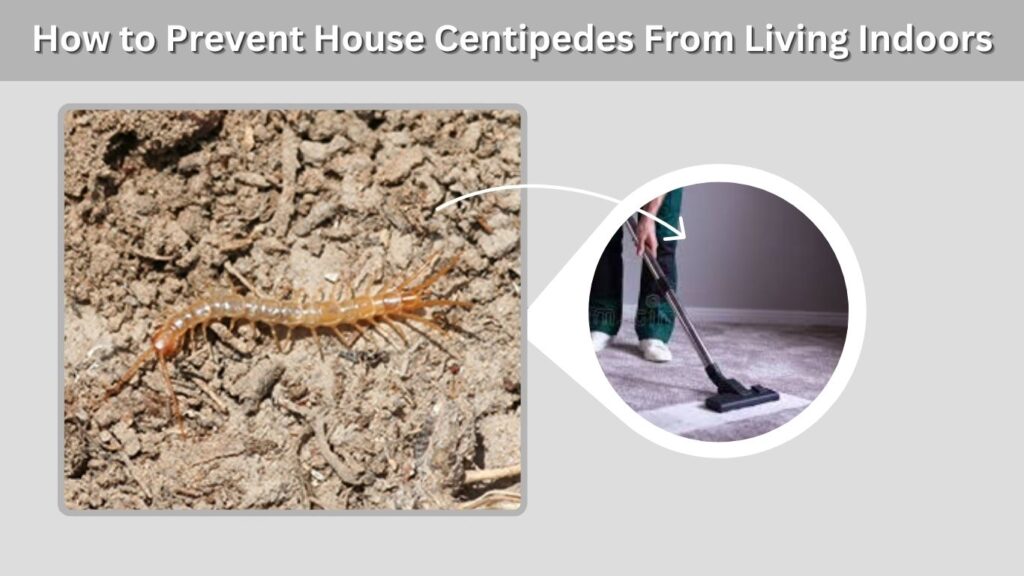
Preventing house centipedes usually involves removing the conditions that attract them into homes. Since they depend on moisture and insect prey, reducing humidity and controlling other pests are the most effective long-term solutions. Home maintenance and proper cleaning habits can greatly reduce the chances of house centipedes surviving indoors for extended periods.
Reduce Moisture
Lowering indoor humidity makes homes less suitable for house centipedes and the insects they hunt.
- Fix leaking pipes
- Use dehumidifiers
- Improve ventilation
- Dry wet surfaces
- Repair water damage
Remove Food Sources
Reducing indoor insect populations removes the primary reason house centipedes remain inside homes.
- Vacuum regularly
- Store food properly
- Clean dark corners
- Remove clutter
- Control cockroaches
- Reduce silverfish activity
Seal Entry Points
House centipedes often enter homes through small cracks and openings around foundations, windows, and doors.
Repairing damaged screens, sealing wall cracks, and closing gaps around pipes can reduce indoor centipede activity. Preventing easy access is one of the best ways to stop house centipedes from establishing long-term indoor populations.
Interesting Facts About House Centipedes
House centipedes are unusual arthropods with impressive survival abilities and hunting skills. Their long lifespan and speed make them different from many common household insects. Although they often scare homeowners, they play an important ecological role by controlling pest populations naturally in damp indoor environments.
Unique Lifespan Facts
House centipedes live much longer than many people expect for a household arthropod.
- Can survive several years indoors
- Continue molting as adults
- Longer lifespan than many insects
- Slow growth increases survival
- Adapt well to indoor environments
Speed and Hunting Ability
House centipedes are among the fastest arthropods commonly found indoors. Their long legs help them move rapidly while chasing prey across walls and ceilings.
They also use highly sensitive antennae to detect movement and locate insects in dark spaces. Their speed allows them to capture prey efficiently and escape predators quickly.
Ecological Importance
House centipedes help maintain balance in indoor ecosystems by reducing populations of unwanted pests.
- Natural pest control predators
- Reduce insect infestations
- Help limit cockroach activity
- Lower silverfish populations
- Support indoor ecological balance
FAQs
How long do house centipedes live?
House centipedes usually live between 3 and 7 years under favorable indoor conditions. Stable temperatures, high humidity, and reliable food sources help them survive much longer than many common household insects found inside homes.
How long can house centipedes live without food?
House centipedes can survive for several weeks without food by slowing their metabolism and conserving energy. However, they still require moisture to avoid dehydration, which is why they stay in damp indoor environments.
Why do house centipedes stay indoors?
House centipedes remain indoors because homes provide warmth, moisture, and insect prey. Bathrooms, basements, and crawl spaces are especially attractive because these areas support the insects they hunt and maintain high humidity levels.
Are house centipedes dangerous?
House centipedes are generally harmless to humans and rarely bite. Their venom is designed for catching insects rather than attacking people. Most homeowners experience no direct harm from house centipedes living indoors.
How do I stop house centipedes from living in my house?
Reduce indoor moisture, repair leaks, improve ventilation, and control insect populations. Sealing cracks around windows, doors, and foundations can also help prevent house centipedes from entering and surviving indoors.