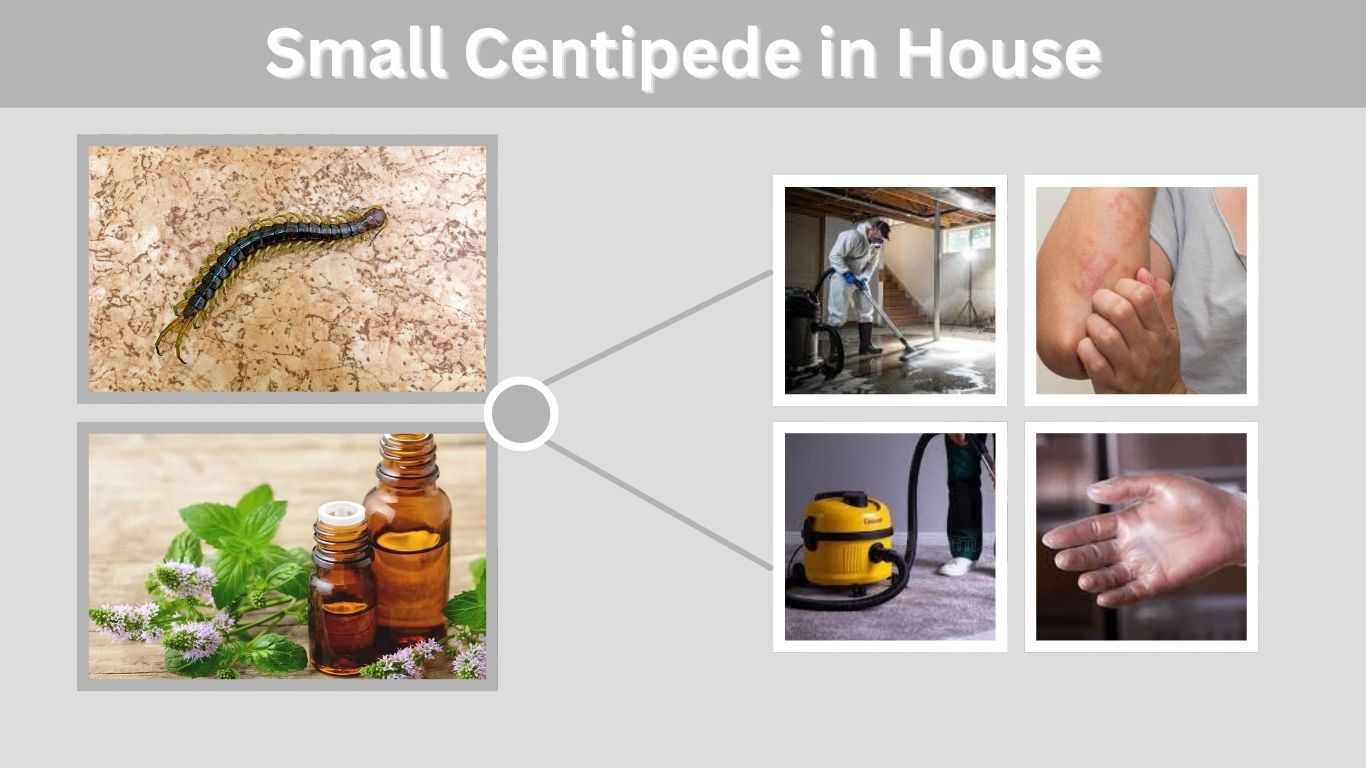
Seeing a small centipede running across your floor or bathroom wall can be alarming, especially because of its many legs and fast movement. However, most small house centipedes are harmless and actually help control indoor pests like silverfish, ants, and cockroaches. These arthropods usually enter homes searching for moisture, shelter, and insects to eat. Knowing what to do immediately after spotting a small centipede can help you stay calm, remove it safely, and prevent more from appearing inside your home in the future.
Why Is There a Small Centipede in Your House?
Small centipedes usually enter homes because indoor conditions provide moisture, warmth, and food. Bathrooms, basements, kitchens, and laundry rooms are especially attractive because they stay humid and often contain insects. In many cases, seeing a centipede means other bugs are already living inside the house. Understanding why centipedes appear indoors is the first step toward preventing future sightings and reducing conditions that attract them.
Moisture and Humidity Problems
House centipedes thrive in damp environments where humidity levels stay high. Moisture helps them survive and hunt insects more effectively indoors.
- Leaking pipes
- Damp bathrooms
- Wet basements
- Poor ventilation
- Condensation on walls
- Humid laundry rooms
Presence of Other Insects
Centipedes are predators, so they follow insect populations into homes. If you see house centipedes regularly, other pests may already be present nearby.
- Cockroaches
- Silverfish
- Ants
- Spiders
- Small flies
- Insect larvae
Outdoor Weather Changes
Weather changes can also push centipedes indoors. Heavy rain, cold temperatures, or dry outdoor conditions may force them to search for safer shelter inside homes.
During colder months, house centipedes often move deeper indoors where temperatures stay warmer and moisture levels remain stable. Rainstorms may also flood outdoor hiding places, causing centipedes to wander inside accidentally through cracks and gaps.
What Should You Do Immediately After Seeing a Small Centipede?
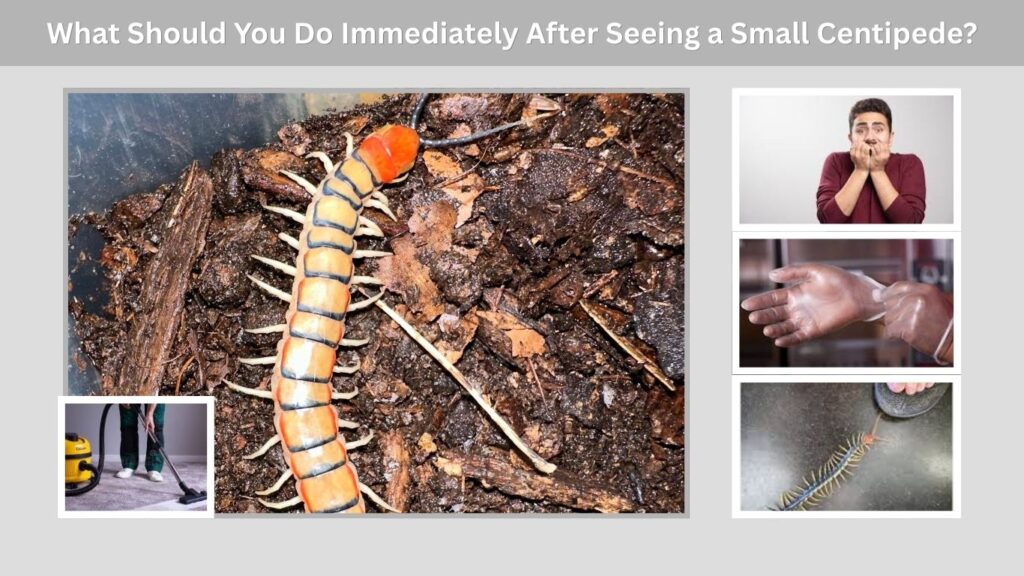
Most people panic when they suddenly notice a centipede running across the floor. However, immediate action should focus on staying calm and removing the centipede safely without spreading chemicals unnecessarily. House centipedes rarely harm humans, and quick inspection of nearby areas can often reveal why the arthropod appeared indoors in the first place.
Stay Calm and Avoid Touching It
Although centipedes look intimidating, most small house centipedes are harmless and avoid human contact whenever possible.
- Do not panic
- Avoid grabbing it with bare hands
- Keep pets away temporarily
- Watch where it moves
- Stay cautious but calm
Remove the Centipede Safely
There are several simple ways to remove a centipede from your home without dangerous chemicals or pesticides.
- Use a tissue or paper towel
- Catch it with a cup
- Vacuum it carefully
- Release it outdoors
- Use gloves if necessary
Check Nearby Areas
After removing the centipede, inspect the surrounding area for moisture problems or signs of insect activity. Bathrooms, sinks, and dark corners should be checked carefully.
Look behind furniture, near drains, and around leaking pipes where humidity levels stay high. If you notice multiple insects or damp conditions, the centipede may simply be following its food source into your home.
Are Small House Centipedes Dangerous?
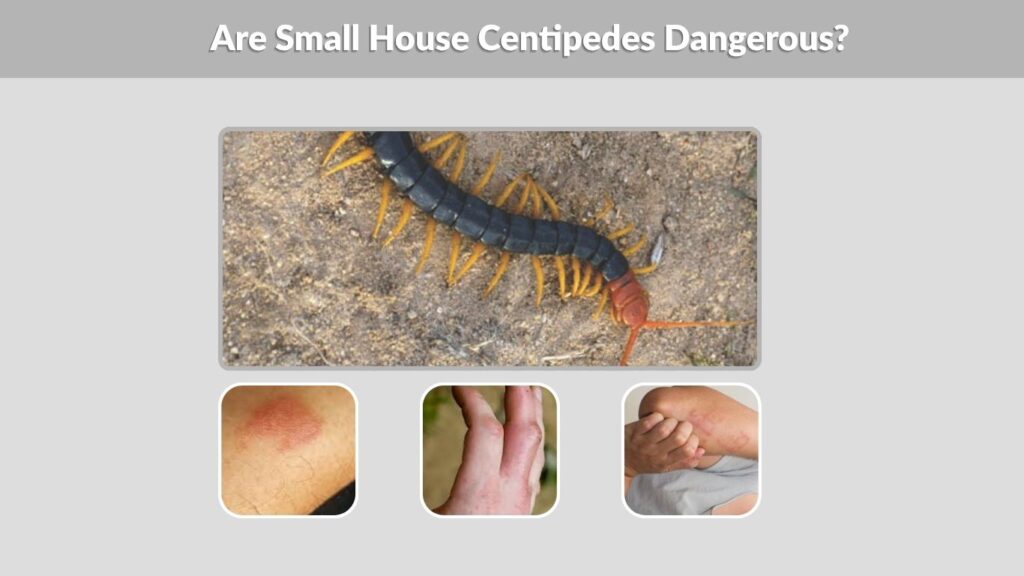
Small house centipedes may look frightening because of their long legs and rapid movement, but they are usually harmless to people. Their venom is mainly designed for catching insects rather than attacking humans. Bites are rare and normally happen only if the centipede is handled roughly. In most homes, they are considered more helpful than dangerous because they reduce populations of unwanted pests indoors.
Can Small Centipedes Bite?
Small centipedes can bite using modified front legs called forcipules, but house centipede bites are uncommon and usually mild.
- Mild redness
- Temporary swelling
- Slight pain
- Rare allergic reactions
- More common in large species
Are They Dangerous to Pets?
House centipedes are generally not dangerous to cats or dogs. Most pets simply ignore them or try to chase them around the house.
Small centipedes do not contain dangerous venom levels for household pets. However, pets that repeatedly eat insects may still experience mild stomach irritation depending on the species involved.
Why House Centipedes Look Scary
Many people fear house centipedes because of their unusual appearance and sudden movements. Their long legs and quick speed can make them seem more dangerous than they actually are.
House centipedes are nocturnal hunters that prefer hiding during the day. When lights suddenly turn on at night, they often run quickly for cover, creating a startling experience for homeowners.
Signs You May Have More Centipedes
Seeing one small centipede does not always mean there is a serious infestation. However, repeated sightings can indicate moisture problems or large numbers of insects inside the home. House centipedes stay where food and humidity are available, so frequent appearances may signal hidden conditions that need attention. Identifying these warning signs early can help prevent larger pest problems and make indoor spaces less attractive to centipedes.
Frequent Sightings at Night
House centipedes are nocturnal, meaning they become most active after dark when insects are easier to hunt.
- Centipedes in bathrooms
- Basement sightings
- Laundry room activity
- Fast movement near walls
- Repeated nighttime appearances
Moisture Problems in the Home
Excess moisture creates ideal living conditions for house centipedes and the insects they hunt indoors.
- Water leaks
- Damp walls
- Mold growth
- Condensation
- Poor airflow
- Wet flooring
Other Pest Infestations
House centipedes often appear where other insects are already living. Their presence can sometimes be a warning sign of hidden pest activity.
If you notice silverfish, cockroaches, ants, or spiders regularly, house centipedes may simply be feeding on these pests. Removing the main insect problem usually reduces centipede activity naturally over time.
How to Get Rid of Small Centipedes in the House
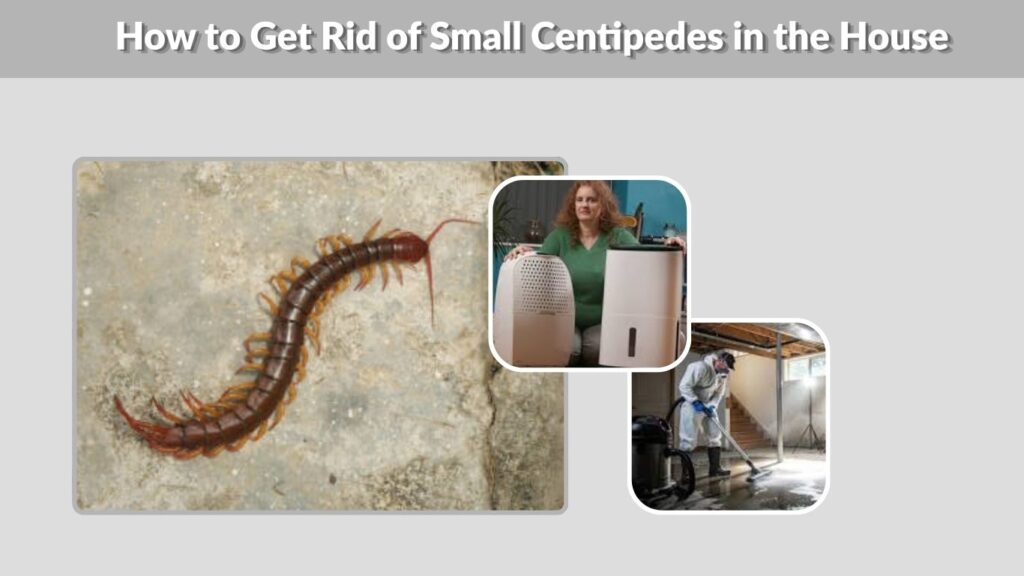
The best way to eliminate house centipedes is by making your home less attractive to them. Since they depend on moisture and insect prey, reducing humidity and controlling other pests are usually more effective than killing individual centipedes. Long-term prevention methods help stop future infestations and improve indoor conditions that attract unwanted arthropods into living spaces.
Reduce Indoor Moisture
Lowering humidity levels is one of the most effective ways to discourage house centipedes from staying indoors.
- Use dehumidifiers
- Fix leaking pipes
- Improve ventilation
- Dry wet surfaces
- Clean damp basements
- Repair water damage
Remove Food Sources
Reducing insect populations removes the main reason house centipedes enter and remain inside homes.
- Vacuum regularly
- Store food properly
- Remove crumbs
- Clean dark corners
- Control cockroaches
- Reduce clutter
Seal Entry Points
Centipedes often enter homes through small cracks and gaps around foundations, doors, and windows. Sealing these openings can reduce indoor activity significantly.
Repair damaged screens, seal wall cracks, and close gaps around pipes or utility lines. Preventing easy access is one of the most effective long-term solutions for keeping centipedes outside where they naturally belong.
Natural Ways to Keep Centipedes Away
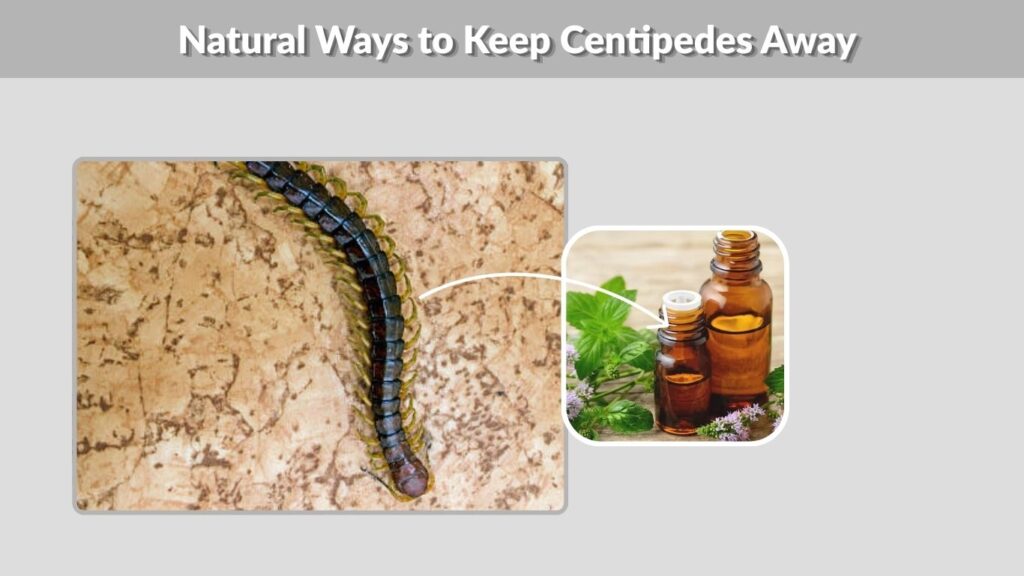
Many homeowners prefer natural prevention methods instead of chemical pesticides. Fortunately, simple home maintenance and natural repellents can help reduce centipede activity effectively. Keeping rooms dry, improving airflow, and reducing insect populations are usually enough to discourage house centipedes from staying indoors for long periods of time.
Essential Oils and Natural Repellents
Certain strong-smelling oils may help discourage centipedes from entering specific areas of the home.
- Peppermint oil
- Tea tree oil
- Vinegar spray
- Citrus oils
- Eucalyptus oil
Improve Home Ventilation
Good airflow reduces humidity levels and makes indoor environments less attractive to moisture-loving pests like centipedes.
Bathrooms, basements, and laundry rooms should have proper ventilation systems or fans to remove excess moisture. Opening windows regularly and allowing sunlight into damp rooms may also help reduce indoor humidity naturally.
Keep Storage Areas Dry
Dark storage spaces often attract insects and centipedes if moisture levels remain high.
- Avoid cardboard piles
- Store items off the floor
- Organize storage boxes
- Keep closets dry
- Remove damp clutter
When to Call Pest Control
Occasional sightings of a single house centipede are usually not serious. However, large numbers of centipedes or repeated sightings may indicate hidden moisture problems or significant insect infestations. Professional pest control services can help identify the root cause and recommend effective treatment solutions if home prevention methods are not working properly.
Large Indoor Infestations
Professional help may be necessary if centipedes appear frequently throughout the home.
- Multiple sightings daily
- Heavy basement activity
- Centipedes in several rooms
- Persistent moisture issues
- Large insect infestations
Structural Moisture Problems
Hidden leaks and severe humidity problems often require professional inspection and repair before pest problems improve.
Water-damaged walls, mold growth, and flooded basements create ideal conditions for both insects and centipedes. Fixing structural moisture problems is often the most important step in long-term prevention.
Small Centipede vs House Centipede
Many people use the terms “small centipede” and “house centipede” interchangeably, but not every small centipede found indoors is actually a house centipede. Some outdoor species occasionally wander inside homes by accident. Comparing these arthropods helps homeowners identify what they are seeing and understand whether the centipede is likely to stay indoors or simply pass through temporarily.
Key Differences Table
| Feature | Small House Centipede | Outdoor Centipede |
| Habitat | Mostly indoors | Mostly outdoors |
| Body Shape | Thin and delicate | Thick-bodied |
| Leg Length | Very long | Shorter |
| Speed | Extremely fast | Fast |
| Danger Level | Mostly harmless | Some species bite harder |
Which One Is More Common Indoors?
House centipedes are much more common indoors because they adapt well to human environments with stable moisture and insect populations.
Bathrooms, basements, kitchens, and laundry rooms provide ideal hunting areas for house centipedes. Outdoor species usually prefer soil, leaf litter, and garden debris rather than permanent indoor living conditions.
Which One Should Concern You More?
Most small house centipedes are harmless and beneficial because they help control indoor insects naturally. Large outdoor centipedes may have stronger venom and more painful bites, although serious medical problems are still uncommon.
If you repeatedly see centipedes indoors, the bigger concern is usually excess moisture or hidden insect infestations rather than the centipedes themselves. Addressing these conditions often solves the problem naturally.
Interesting Facts About House Centipedes
House centipedes are among the fastest and most efficient insect hunters commonly found indoors. Although their appearance scares many people, they actually play a useful role in controlling pests. Their unique body structure, hunting behavior, and survival abilities make them very different from many other household arthropods found inside homes.
Benefits of House Centipedes
House centipedes help reduce many common household pests by hunting them at night.
- Eat cockroaches
- Hunt silverfish
- Reduce spider populations
- Kill ants
- Feed on flies
- Natural pest control
Speed and Hunting Ability
House centipedes rely heavily on speed and agility to catch prey. Their long legs allow them to move rapidly across walls, ceilings, and floors while chasing insects.
They also use sensitive antennae to detect movement and locate prey in dark indoor spaces. Their excellent hunting ability helps control insect populations naturally without relying on chemical pesticides.
Lifespan and Reproduction
House centipedes live longer than many common indoor insects and continue hunting pests throughout their lives.
- Females lay eggs in hidden areas
- Young centipedes molt several times
- Adults may live several years
- Growth occurs gradually over time
FAQs
What should I do immediately after seeing a small centipede?
Stay calm and avoid touching it with bare hands. You can remove the centipede safely using a cup, tissue, or vacuum cleaner. After removing it, check nearby areas for moisture problems or insect activity that may have attracted the centipede indoors.
Are small centipedes dangerous?
Most small house centipedes are harmless to humans and rarely bite. Their venom is mainly used for catching insects, not attacking people. While they may look frightening because of their long legs and fast movement, they are generally considered low-risk household arthropods.
Why do centipedes appear in bathrooms?
Bathrooms provide moisture, warmth, and insects that attract house centipedes. Damp conditions, leaking pipes, and poor ventilation create ideal environments for them. Since bathrooms also attract insects like silverfish and flies, centipedes often enter these areas while hunting prey.
Do house centipedes mean my home is dirty?
Not necessarily. House centipedes are more attracted to moisture and insect activity than dirt itself. Even clean homes can have humidity problems or small insect populations that attract centipedes indoors, especially in basements, bathrooms, or laundry rooms.
How do I prevent centipedes from entering my house?
Reduce indoor moisture, repair leaks, improve ventilation, and seal cracks around doors and foundations. Controlling insects such as cockroaches and silverfish also helps because house centipedes follow their food sources into homes.