Many people confuse centipedes with house centipedes because both have long bodies and many legs. However, house centipedes are actually a specific type of centipede that commonly lives indoors. While regular centipedes are usually found outside under rocks or soil, house centipedes prefer damp indoor areas like basements and bathrooms. Understanding the differences between centipedes and house centipedes can help homeowners identify them correctly, learn whether they are dangerous, and decide if they should remove them from the house or leave them as natural pest hunters.
What Is a Centipede?
Centipedes are fast-moving arthropods known for their long segmented bodies and multiple pairs of legs. They are predators that hunt insects and other small creatures using venomous claws located near their heads. Most centipedes live outdoors in moist environments where they hide during the day and become active at night. Although many species look frightening, most are harmless to humans and help control pest populations naturally.
Centipede Definition
A centipede is a multi-legged arthropod belonging to the class Chilopoda. Despite the name meaning “100 legs,” most centipedes have far fewer legs depending on their species and age. They are carnivorous hunters that use speed and venom to capture prey.
Types of Centipedes
There are thousands of centipede species around the world. Some are small and harmless, while others grow very large and have painful bites.
- Soil centipedes
- Giant tropical centipedes
- Stone centipedes
- Bark centipedes
- House centipedes
General Characteristics of Centipedes
Most centipedes share several common traits that make them effective nighttime hunters.
- Long segmented body
- One pair of legs per segment
- Venomous front claws
- Fast movement
- Nocturnal behavior
- Sensitive antennae
What Is a House Centipede?
The house centipede is a unique species of centipede commonly found indoors. Unlike thicker outdoor centipedes, house centipedes have extremely long legs and a thin body that allows them to move quickly across walls and floors. They prefer humid indoor environments where insects are plentiful. Although many people dislike their appearance, house centipedes are actually beneficial predators that help reduce household pest populations naturally.
House Centipede Identification
House centipedes have a very different appearance from most outdoor centipedes. Their long legs and striped bodies make them easy to recognize.
- Thin yellow-gray body
- Dark stripes along the back
- Very long legs
- Long antennae
- Extremely fast runners
Scientific Classification
The scientific name of the common house centipede is Scutigera coleoptrata. It belongs to the Scutigeridae family and originally came from the Mediterranean region before spreading to homes around the world through human activity and trade.
Why House Centipedes Live Indoors
House centipedes enter homes because indoor spaces provide moisture, warmth, and food sources. Bathrooms, basements, and kitchens are especially attractive because insects often gather in these areas.
They hide in cracks, under furniture, and behind walls during the daytime. At night, they emerge to hunt insects such as cockroaches, silverfish, ants, and flies. Their presence often indicates there are other insects available inside the home.
Centipede vs House Centipede Appearance
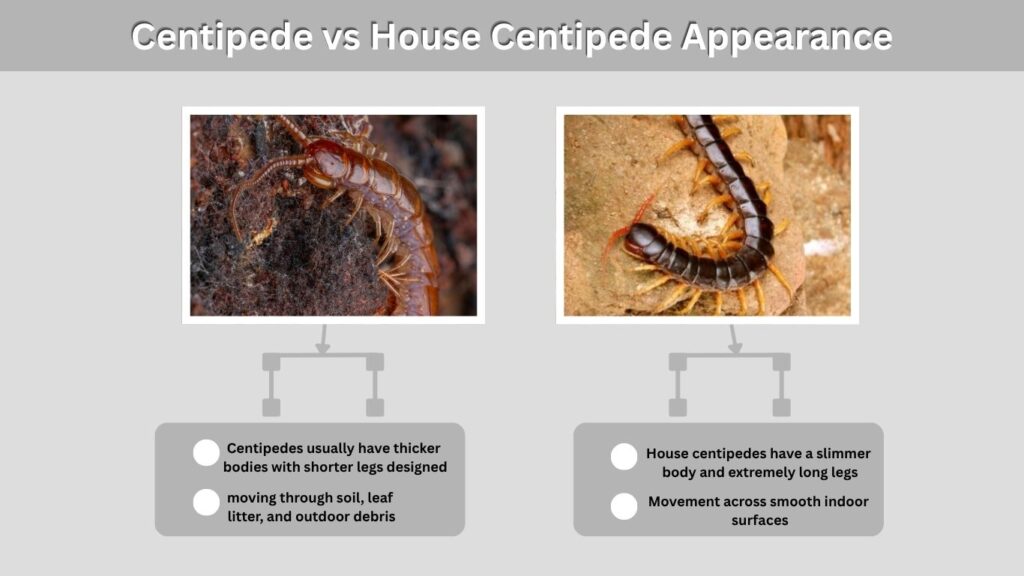
Although house centipedes are technically centipedes, they look very different from the thicker species commonly found outdoors. Their body shape, leg length, and movement patterns make them easy to distinguish. Comparing physical features helps homeowners identify which type they are seeing and understand whether the species is likely to remain outdoors or adapt to indoor living conditions.
Body Shape Differences
Regular centipedes usually have thicker bodies with shorter legs designed for moving through soil, leaf litter, and outdoor debris. House centipedes have a slimmer body and extremely long legs that allow rapid movement across smooth indoor surfaces.
Color and Size Comparison
The colors and body sizes of centipedes vary depending on species and habitat conditions. House centipedes usually appear lighter than outdoor centipedes.
- Outdoor centipedes are often brown or reddish
- House centipedes are pale yellow or gray
- Giant centipedes grow much larger
- House centipedes usually stay smaller and thinner
Speed and Movement
House centipedes are among the fastest arthropods commonly seen indoors. Their long legs help them move quickly across floors, walls, and ceilings while chasing prey.
Most outdoor centipedes are also fast, but they generally move through soil and natural debris rather than climbing walls inside homes. House centipedes rely heavily on speed to catch insects and avoid predators indoors.
Habitat and Living Environment
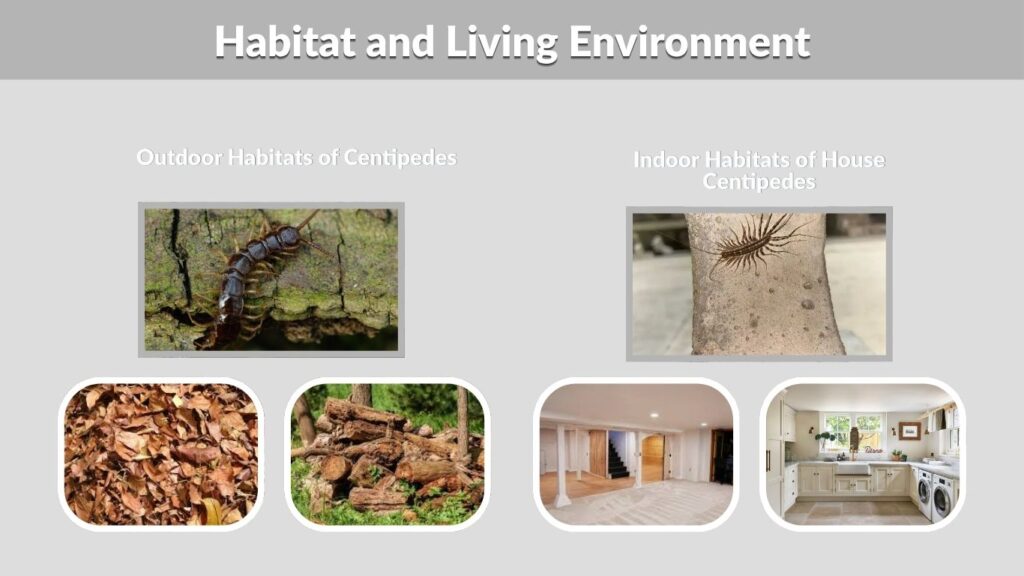
Centipedes and house centipedes prefer dark, damp places where they can hide during the day and hunt at night. Most centipedes stay outdoors under rocks, logs, and soil, while house centipedes adapt well to indoor environments with moisture and insects. Their choice of habitat depends on humidity, temperature, and food availability. Homes with excess moisture or insect problems often attract house centipedes searching for shelter and prey.
Outdoor Habitats of Centipedes
Most centipedes naturally live outdoors in moist environments that provide protection from heat and predators.
- Under rocks
- Leaf litter
- Rotten logs
- Garden soil
- Compost piles
- Forest floors
Indoor Habitats of House Centipedes
House centipedes commonly hide in humid indoor areas where insects gather and moisture levels stay high.
- Bathrooms
- Basements
- Laundry rooms
- Kitchens
- Crawl spaces
- Wall cracks
Why They Enter Homes
House centipedes usually enter homes while searching for moisture, warmth, and prey. Buildings with insect infestations provide a steady food source that attracts these predators indoors.
Outdoor centipedes may also wander inside accidentally during heavy rain or cold weather. However, unlike house centipedes, most outdoor species do not permanently live inside homes and usually prefer natural environments with soil and organic debris.
Centipede vs House Centipede Diet
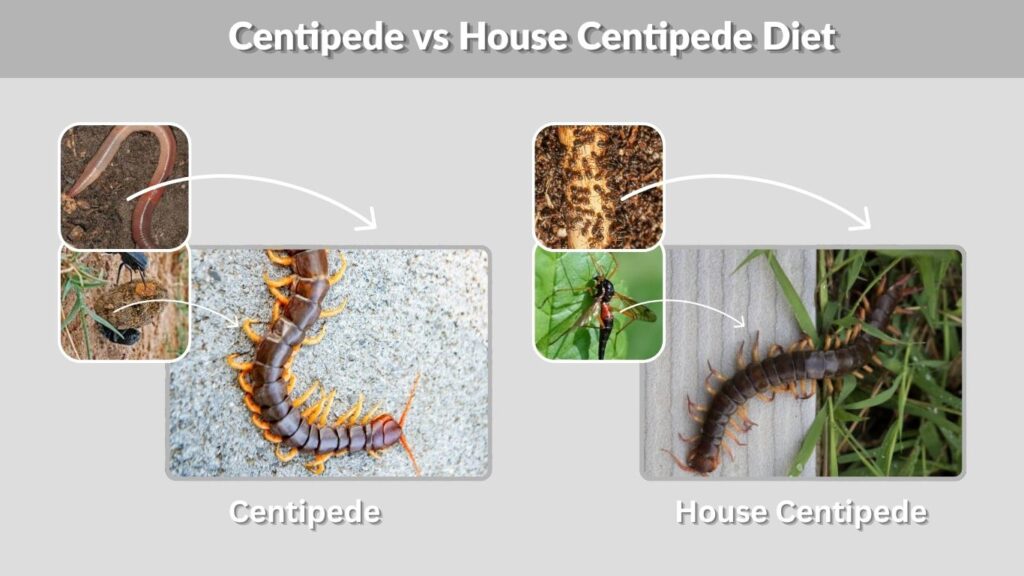
Centipedes are carnivorous predators that help control insect populations in both outdoor and indoor environments. They hunt using speed, venom, and strong front claws that immobilize prey quickly. House centipedes are especially useful indoors because they feed on many common household pests. Their diet makes them beneficial in some situations, even though many homeowners dislike seeing them inside the house.
What Centipedes Eat
Outdoor centipedes feed on a wide variety of small animals and insects found in soil and natural habitats.
- Insects
- Spiders
- Worms
- Beetles
- Small arthropods
- Insect larvae
What House Centipedes Eat
House centipedes target many common indoor pests that hide in damp or dark areas of homes.
- Cockroaches
- Silverfish
- Ants
- Flies
- Termites occasionally
- Bed bugs sometimes
Hunting Behavior Comparison
Both centipedes and house centipedes are active nighttime hunters that rely on speed and venom instead of webs or traps. House centipedes often chase prey across walls and ceilings, while outdoor centipedes hunt through soil and leaf litter where insects hide during the day.
Are Centipedes Dangerous?
Centipedes may look scary because of their many legs and fast movement, but most species are not dangerous to humans. They use venom mainly for hunting insects and self-defense. Large tropical centipedes can deliver painful bites, while house centipedes rarely bite people at all. Understanding the difference between harmful myths and actual risks helps reduce unnecessary fear about these common arthropods.
Can Centipedes Bite Humans?
Centipedes can bite humans using modified front legs called forcipules that inject venom. Most bites cause mild pain, redness, and swelling similar to a bee sting.
- Temporary pain
- Mild swelling
- Redness around bite area
- Rare allergic reactions
- More painful in large species
Are House Centipedes Dangerous?
House centipedes are generally harmless to humans and rarely bite unless handled roughly. Their venom is designed for catching small insects rather than defending against large animals.
Most people never experience bites from house centipedes because these arthropods prefer escaping instead of attacking. They are considered more beneficial than dangerous because they help reduce indoor pest populations naturally.
Centipede vs House Centipede Venom
Outdoor centipedes, especially tropical giant species, usually have stronger venom than house centipedes. House centipede venom is very mild and rarely causes significant symptoms in humans.
Large tropical centipedes may cause more painful bites with stronger swelling and discomfort. However, severe medical complications remain uncommon in healthy individuals.
Benefits of House Centipedes
House centipedes may appear frightening, but they are actually useful predators that help control many indoor pests. Unlike insects that damage food or furniture, house centipedes hunt other unwanted bugs hiding inside homes. Their presence can sometimes indicate an existing pest problem because they follow insect populations into damp indoor spaces. Understanding their ecological role helps explain why some homeowners tolerate them instead of removing them immediately.
Natural Pest Control
House centipedes feed on many insects commonly found indoors and can help reduce pest populations naturally.
- Hunt cockroaches
- Eat silverfish
- Reduce spider populations
- Kill ants
- Feed on flies
- Target insect larvae
Why Some People Keep Them Around
Some homeowners choose not to remove house centipedes because they help control pests without chemicals. These predators quietly hunt at night and rarely interact with people directly.
House centipedes can reduce populations of insects that damage property or contaminate food. Since they do not build nests or spread disease, many people consider them less problematic than the pests they consume indoors.
Drawbacks of House Centipedes
Despite their benefits, many people still dislike house centipedes because of their appearance and fast movement.
- Scary appearance
- Sudden fast movement
- Can appear in large numbers
- Prefer damp indoor spaces
- May indicate moisture problems
How to Get Rid of Centipedes and House Centipedes
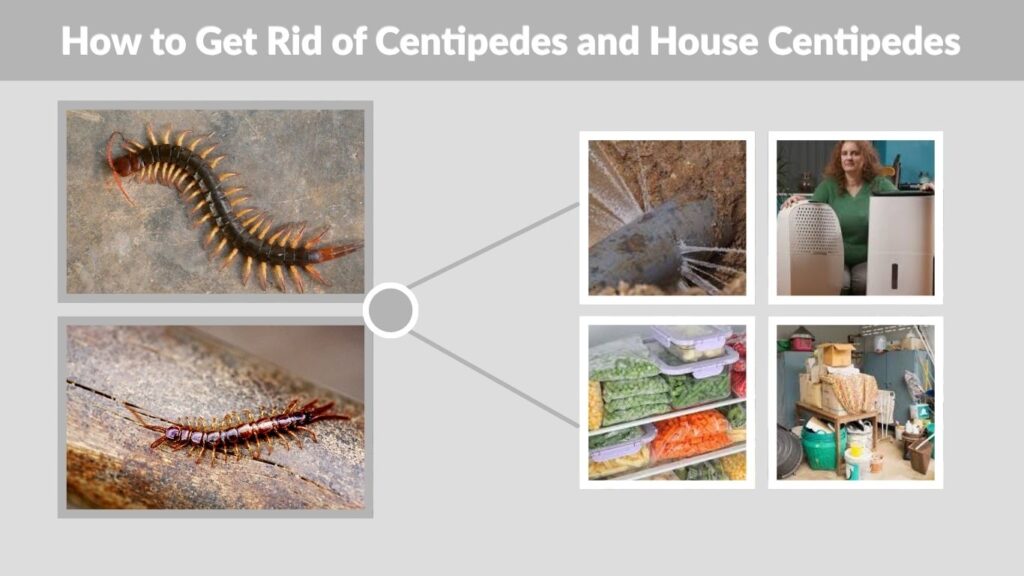
Reducing centipede populations usually involves removing moisture and limiting insect prey inside the home. Since house centipedes depend on humidity and food sources, improving indoor conditions can make homes less attractive to them. Prevention methods are often more effective than trying to eliminate individual centipedes after they appear indoors.
Reduce Moisture Indoors
Centipedes prefer humid environments, so lowering moisture levels can discourage them from staying inside.
- Fix leaking pipes
- Use dehumidifiers
- Improve ventilation
- Dry damp areas quickly
- Clean basement moisture
Remove Food Sources
House centipedes stay where insects are abundant. Reducing indoor pests can help decrease centipede activity naturally.
- Vacuum regularly
- Store food properly
- Remove clutter
- Control cockroaches
- Seal trash containers
Seal Entry Points
Preventing centipedes from entering the home is an important part of long-term control.
Cracks around windows, doors, foundations, and pipes provide easy entry points for centipedes searching for shelter. Sealing these gaps and repairing damaged screens can help reduce the number entering indoor spaces during wet or cold weather.
Centipede vs House Centipede Comparison Table
Although house centipedes belong to the centipede group, they differ greatly from most outdoor species in appearance, habitat, and behavior. Comparing the two side by side makes identification easier for homeowners. Understanding these differences also helps determine whether the arthropod is likely to remain indoors or simply wandered inside temporarily from outdoor environments.
Key Differences Table
| Feature | Centipede | House Centipede |
| Habitat | Mostly outdoors | Mostly indoors |
| Body Shape | Thick-bodied | Thin-bodied |
| Leg Length | Shorter | Extremely long |
| Speed | Fast | Extremely fast |
| Color | Brown or reddish | Yellow-gray |
| Danger Level | Some painful species | Mostly harmless |
Which One Is More Common Indoors?
House centipedes are far more common indoors because they adapt well to human environments. They thrive in damp rooms where insects are available year-round.
Outdoor centipedes may occasionally enter homes, but most cannot survive indoors for long periods because they prefer soil, leaf litter, and natural outdoor hiding places.
Which One Is More Dangerous?
Large tropical centipedes are generally more dangerous than house centipedes because they possess stronger venom and larger biting claws. Their bites can be painful and may cause significant swelling.
House centipedes, on the other hand, rarely bite humans and are considered mostly harmless. In most situations, they pose little risk and are more beneficial than harmful inside homes.
FAQs
What is the difference between a centipede and a house centipede?
A house centipede is a specific type of centipede that commonly lives indoors. Regular centipedes are usually thicker, shorter-legged, and found outdoors under rocks or soil. House centipedes have very long legs, thinner bodies, and move much faster across walls and floors inside homes.
Are house centipedes dangerous to humans?
House centipedes are generally harmless to humans and rarely bite people. Their venom is mainly used to hunt insects, not defend against humans. Most house centipedes try to escape rather than attack, making them one of the less dangerous arthropods commonly found inside homes.
Why do house centipedes appear in bathrooms?
Bathrooms provide moisture, warmth, and hiding spots that attract house centipedes. These areas also often contain insects such as silverfish and flies, which serve as food. Poor ventilation and damp conditions make bathrooms one of the most common indoor habitats for house centipedes.
Do house centipedes kill other bugs?
Yes, house centipedes are effective predators that feed on many household pests. They commonly hunt cockroaches, silverfish, ants, spiders, flies, and other small insects. Their presence can actually help reduce indoor pest populations naturally without the use of chemical pesticides.
Should I remove house centipedes from my home?
Removing house centipedes is a personal choice. While many people dislike their appearance, they are beneficial because they eat household pests. If you want fewer house centipedes, reducing moisture, sealing entry points, and controlling indoor insects are the most effective long-term solutions.