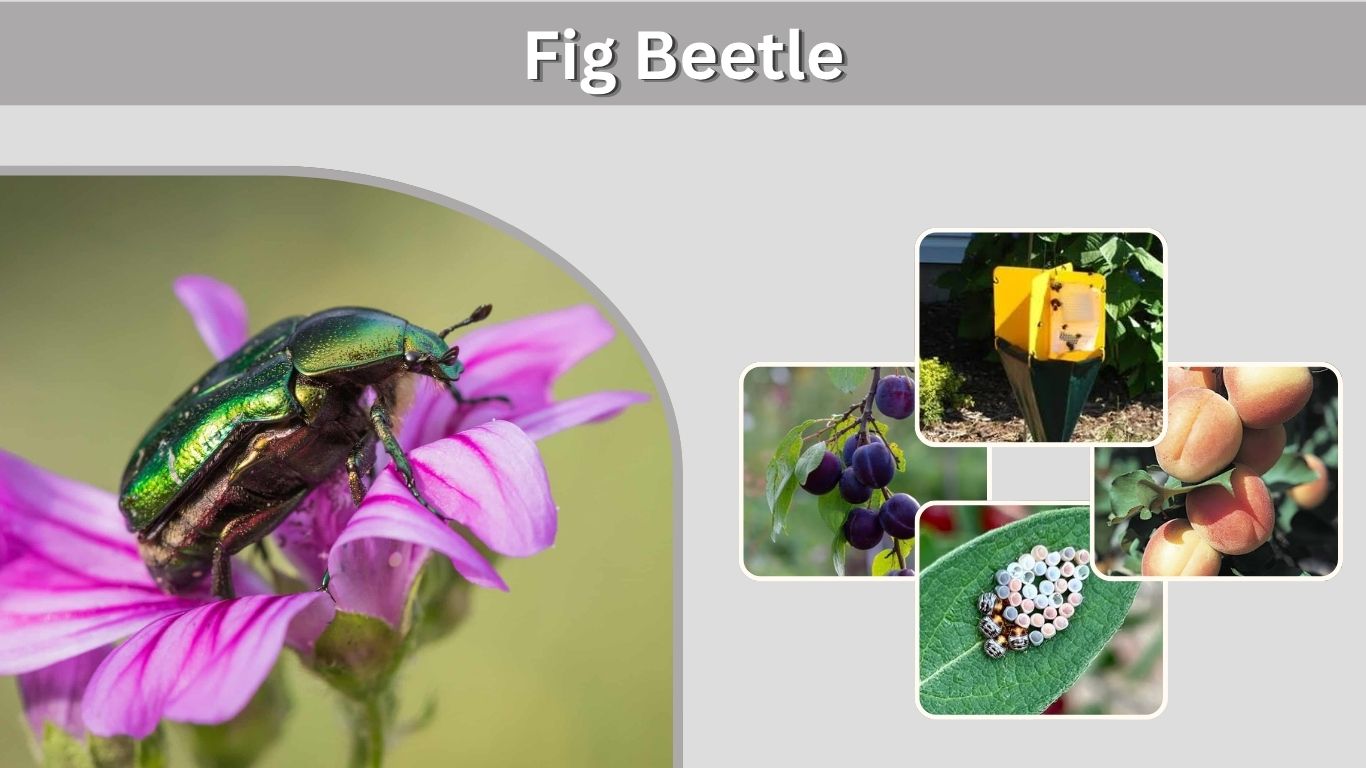
The fig beetle, also called the figgeater beetle, green fig beetle, green fruit beetle, or western green June beetle, is a large metallic-green scarab commonly seen around gardens and fruit trees. Its scientific name is Cotinis mutabilis, although older sources may use Cotinis texana. Despite its loud buzzing and clumsy-looking flight, this beetle does not normally bite or threaten people. Adults primarily visit ripe fruit, while their large white grubs live in decomposing organic material.
What Is a Fig Beetle?
Fig beetles belong to the scarab beetle family, Scarabaeidae. They are best known for their shimmering green bodies and their attraction to ripe or fermenting fruit.
They are particularly noticeable during summer because they fly during daylight and produce a loud buzzing sound. Adults can travel considerable distances while looking for fruit, mates, compost, manure, or other suitable places to reproduce.
Fig Beetle Identification
An adult fig beetle has several recognizable features:
- Large, oval body
- Metallic or velvety green upper surface
- Bright, shiny green underside
- Tan or yellow-brown edges on the wing covers
- Short, clubbed antennae
- Prominent legs
- Small hornlike projection on the front of the head
Adults generally measure between ¾ and 1⅓ inches long, making them much larger than many common garden beetles.
Where Are Fig Beetles Found?
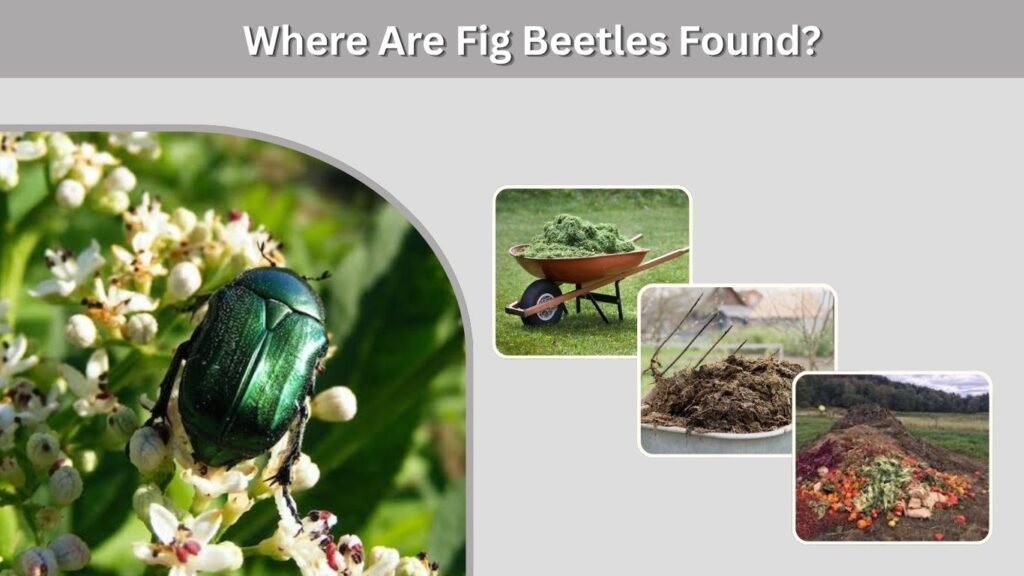
Fig beetles are strongly associated with the western and southwestern United States. They are especially familiar in California gardens, where adults commonly appear from late spring through early fall.
They may be found around:
- Fig and peach trees
- Vineyards
- Compost piles
- Manure
- Lawn clippings
- Garden mulch
- Fallen or fermenting fruit
They are frequently reported in Southern California, but their range also extends into other warm western areas, including parts of Arizona and nearby regions.
Fig Beetles in California
The large green beetles buzzing around California gardens are often fig beetles rather than Japanese beetles. Japanese beetles are smaller, usually about half an inch long, and have distinctive patches of white hair around the abdomen. They are not considered established throughout California, whereas fig beetles are familiar native garden visitors.
What Do Fig Beetles Eat?
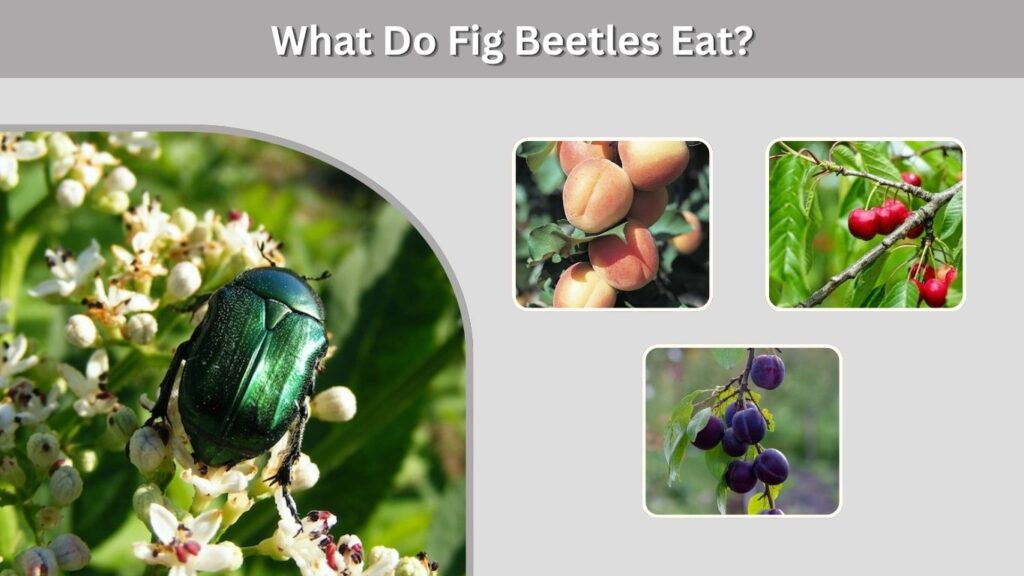
Adult fig beetles feed mainly on soft, ripe, damaged, or fermenting fruit. They are attracted both to the fruit itself and to the odors released as it ripens or begins to decay.
Common foods include:
- Figs
- Peaches
- Plums
- Apricots
- Cherries
- Grapes
- Caneberries
- Other soft-skinned fruits
Adults scrape or chew through the fruit’s skin and consume the soft flesh inside. They are usually unable to cause serious damage to firm, unbroken fruit, so they often begin feeding where birds, mammals, weather, or natural splitting have already damaged the skin.
Do Fig Beetles Kill Fig Trees?
Fig beetles do not normally kill trees. Adults feed on fruit rather than boring into trunks, while their larvae consume decomposing organic material instead of healthy roots.
However, numerous beetles can ruin part of a fruit crop. Their feeding creates holes, damages the flesh, and may leave stains on the fruit. Damaged figs can also become more vulnerable to decay and other insects.
Fig Beetle Larvae and Grubs
Fig beetle larvae are large, cream-colored or dirty-white grubs with brown heads and short legs. Mature grubs can reach approximately two inches long.
They are commonly discovered in:
- Compost piles
- Manure
- Organic mulch
- Leaf litter
- Grass clippings
- Rich soil containing decomposing material
Unlike many lawn grubs, fig beetle larvae do not normally feed on living plant roots. They mainly consume decomposing matter and contribute to its breakdown.
Why Do Fig Beetle Grubs Crawl on Their Backs?
When exposed, fig beetle larvae may turn onto their backs and move using rows of stiff hairs. Their small legs are not well suited for travelling across an open surface.
This unusual movement can help distinguish them from certain other scarab grubs. When placed back on loose organic material, they generally attempt to burrow away from sunlight.
Fig Beetle Life Cycle
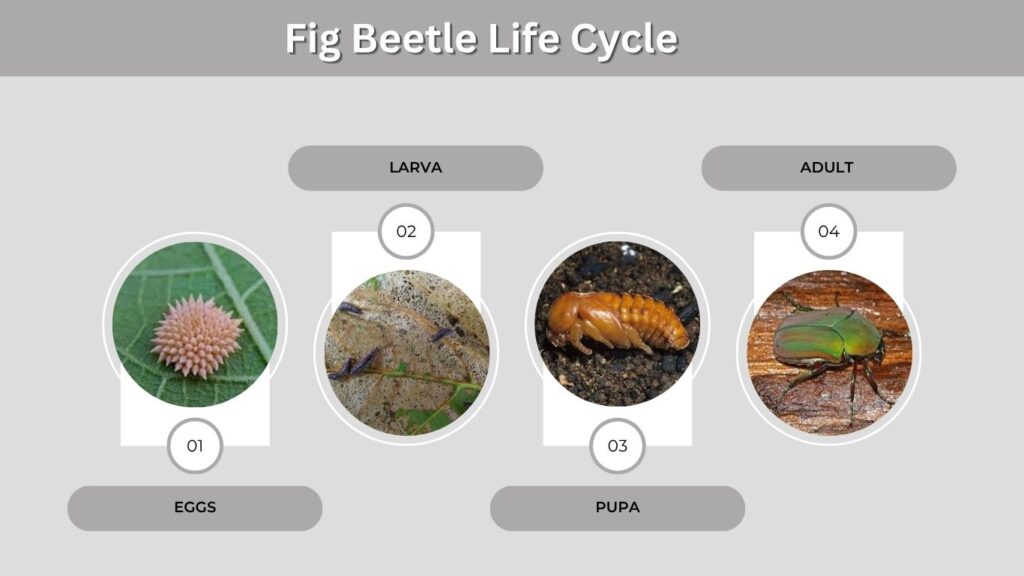
Fig beetles undergo complete metamorphosis through four stages:
- Egg
- Larva
- Pupa
- Adult
Females deposit small white eggs just beneath compost, manure, mulch, grass clippings, or other decomposing organic material. The eggs hatch in about a week.
The larvae feed and grow through three stages, spending much of the year beneath the surface. They survive winter as grubs and form protective soil cells in spring. Inside these cells, they become pupae before emerging as adults.
Fig beetles typically produce one generation per year, with adults most visible between late spring and early fall.
Fig Beetle vs June Bug
Fig beetles are sometimes called western green June beetles, which causes confusion with the closely related green June beetle, Cotinis nitida.
| Feature | Fig beetle | Green June beetle | Japanese beetle |
| Scientific name | Cotinis mutabilis | Cotinis nitida | Popillia japonica |
| Typical size | ¾–1⅓ inches | About ⅗–⅞ inch | About ½ inch |
| Color | Green with tan margins | Green to bronze | Green body with copper wings |
| White hair patches | Absent | Absent | Present around abdomen |
| Common range | Western United States | Eastern and southeastern U.S. | Primarily eastern U.S. |
| Main adult food | Ripe soft fruit | Fruit and plant material | Leaves, flowers, and fruit |
Fig beetles and green June beetles are so similar that confident identification may sometimes require expert examination. Geographic location is often the most useful clue.
Are Fig Beetles Blind?
Fig beetles are not blind. They have functioning compound eyes and can navigate toward food, light, vegetation, and potential mates.
The myth probably comes from their noisy, seemingly uncontrolled flight. They sometimes fly close to people or bump into walls, windows, and other objects. This does not mean they cannot see. Their large body and direct flight simply make them appear less agile than flies, bees, or smaller beetles.
A fig beetle flying around you is probably navigating through the area rather than deliberately following or attacking you.
Do Fig Beetles Bite?
Fig beetles do not normally bite people. They have chewing mouthparts for feeding on soft fruit, but they are not aggressive and do not seek humans as food.
They also:
- Do not sting
- Are not venomous
- Are not poisonous
- Do not suck blood
- Are not known to spread human diseases
UC Agriculture and Natural Resources describes them as noisy and potentially startling but states that they pose no direct threat to people.
They can usually be picked up carefully, although their legs may feel scratchy as they grip the skin. Handling should be gentle to avoid injuring the beetle.
How to Get Rid of Fig Beetles
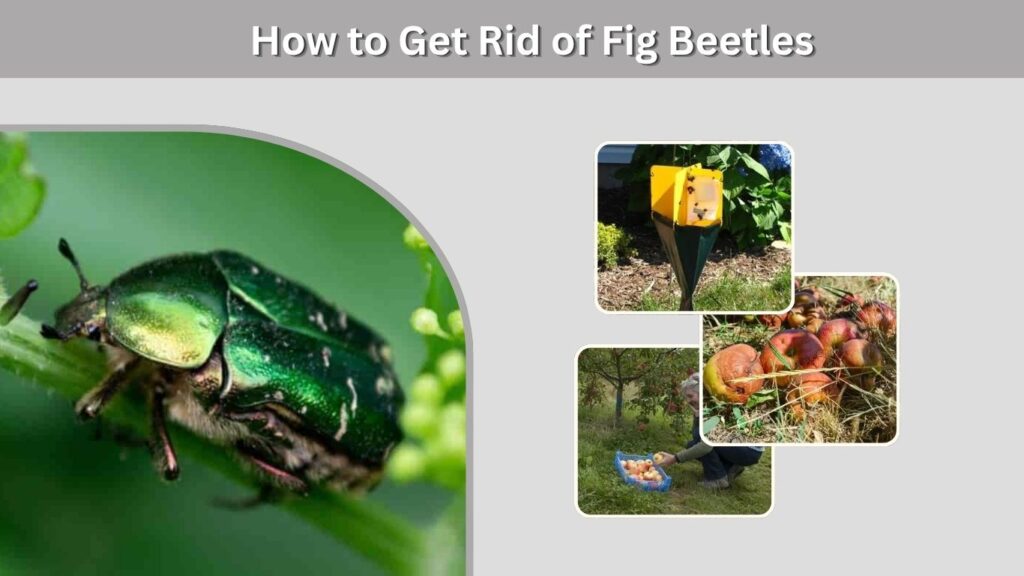
Control is usually unnecessary when only a few beetles are present. Where adults are damaging fruit, prevention is generally more effective than applying insecticides.
1. Harvest Ripe Fruit Promptly
Pick figs, peaches, plums, and other fruits as soon as they ripen. Do not allow overripe fruit to remain on the tree.
2. Remove Fallen Fruit
Collect and discard fallen, split, or fermenting fruit regularly. Its odor can attract adult beetles from considerable distances.
3. Manage Compost and Organic Waste
Cover compost, use screened bins, or move piles away from fruit trees. Frequently turning compost exposes larvae to birds and makes them easier to remove.
4. Use a Fig Beetle Trap
Mix equal quantities of grape or peach juice and water. Pour several inches into a one-gallon container and place a mesh funnel in its opening, with the narrow end pointing downward. Beetles enter toward the bait but have difficulty escaping.
5. Avoid Unnecessary Insecticides
UC IPM does not recommend insecticide applications for fig beetles. Sprays may be ineffective against incoming adults and could harm pollinators and other beneficial insects. Sanitation, compost management, early harvesting, and trapping are preferred.
FAQs
Are fig beetles dangerous?
Fig beetles are not dangerous to people. They do not sting, are not venomous, and rarely attempt to bite. Their large size, buzzing sound, and low flight can be intimidating, but they usually focus on ripe fruit and decomposing organic material.
Why do fig beetles fly into people?
Their flight can appear clumsy, and they may accidentally collide with people, buildings, or garden objects. They are not attacking or deliberately following humans. Nearby ripe fruit, compost, flowers, or fermenting odors may be attracting them to the area.
How long do fig beetles live?
Fig beetles generally complete one generation each year. Most of that period is spent as a larva beneath organic matter. Adults emerge from late spring onward and usually disappear during fall after mating and laying eggs.
Are fig beetle grubs harmful?
The grubs are generally harmless to healthy plants because they feed primarily on decomposing organic material rather than living roots. Large numbers in compost may eventually produce adults that damage ripe fruit, so managing breeding material can reduce future beetle activity.
What is the difference between a fig beetle and a Japanese beetle?
A fig beetle is considerably larger and is mostly metallic green with tan edges. A Japanese beetle is about half an inch long, has copper-colored wing covers, and displays recognizable white hair patches along the sides and rear of its abdomen.