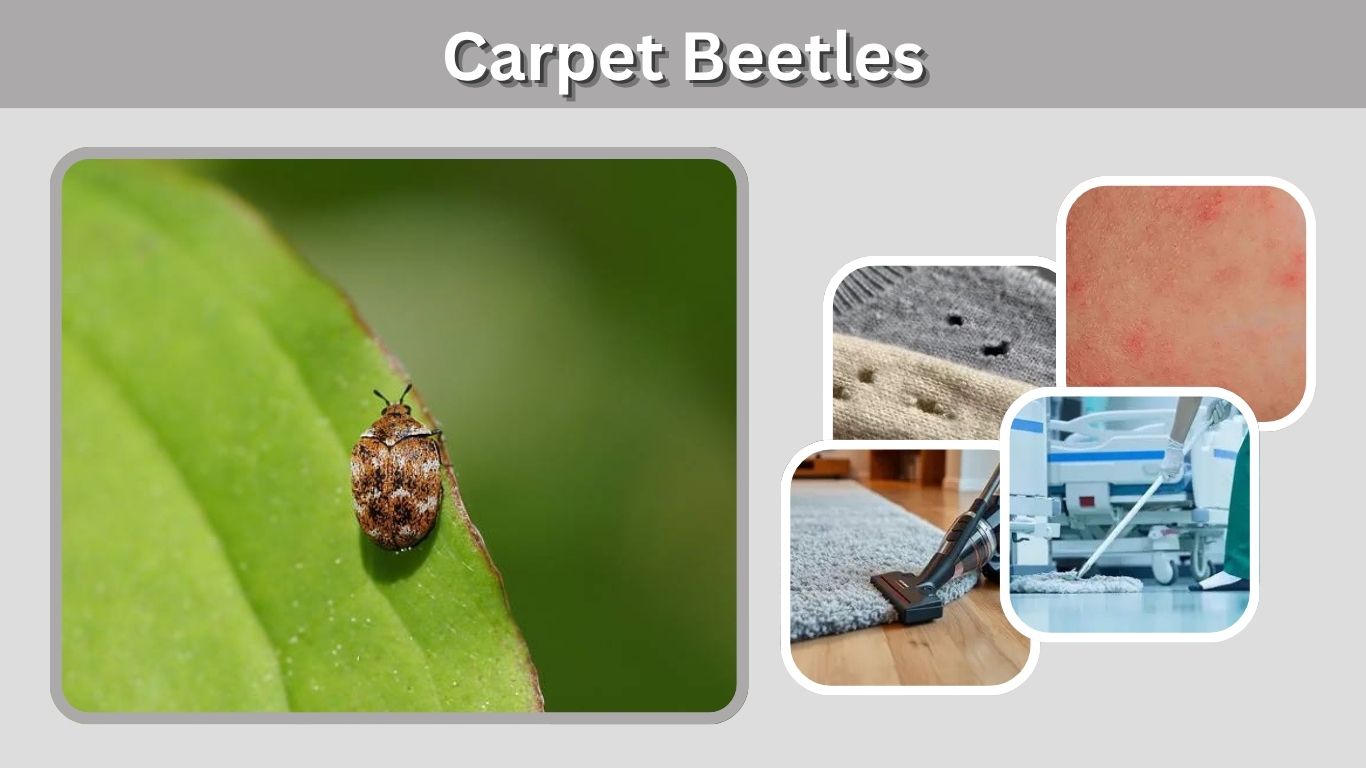
A carpet beetle is a small household insect whose larvae can damage wool, silk, fur, feathers, leather, and other animal-based materials. Adult beetles often appear near windows, while their hairy larvae hide beneath furniture, along carpet edges, inside closets, and in other quiet spaces. Although carpet beetles do not bite people, larval hairs can sometimes produce an itchy skin reaction that resembles insect bites.
What Are Carpet Beetles?
Carpet beetles are members of the beetle family Dermestidae. Several species can live inside buildings, including varied carpet beetles, furniture carpet beetles, common carpet beetles, and black carpet beetles.
Adult beetles mainly feed on pollen and nectar outdoors. The larvae are responsible for household damage because they consume dried animal materials and debris containing hair, feathers, skin, or natural fibers. Finding one adult does not necessarily mean that the home has a serious infestation.
| Feature | Description |
|---|---|
| Adult size | Usually about 2–5 mm |
| Adult shape | Small, oval, and hard-bodied |
| Larval appearance | Brown, fuzzy, segmented, and caterpillar-like |
| Main damage stage | Larva |
| Common foods | Wool, fur, feathers, silk, hair, lint, and dead insects |
| Bite risk | They do not bite |
| Flight | Adult carpet beetles can fly |
| Common locations | Closets, carpets, furniture, vents, and window areas |
What Do Carpet Beetles Look Like?
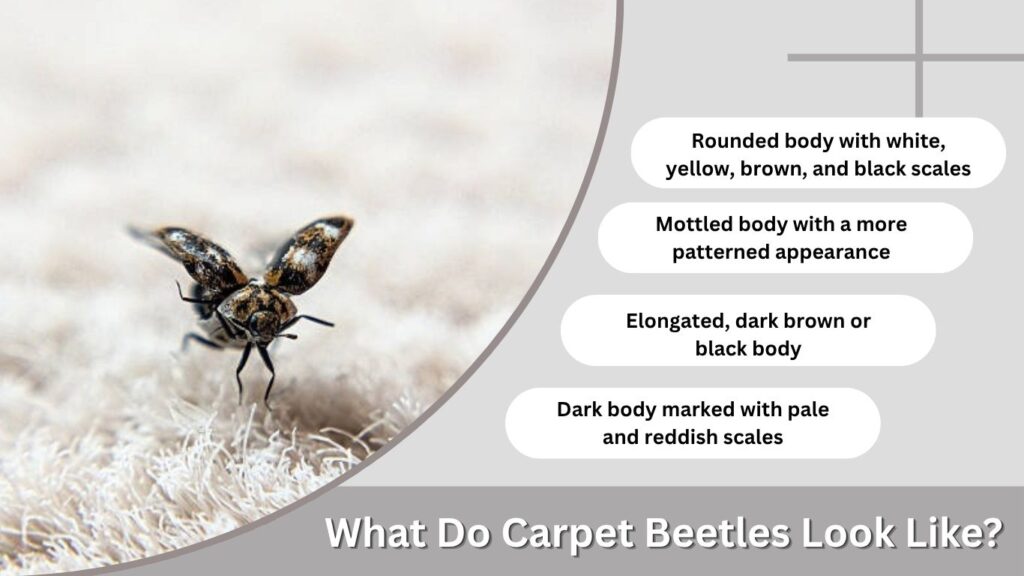
Adult and larval carpet beetles look so different that homeowners may not realize they are the same insect.
Adult Carpet Beetle
Adults are small, oval beetles with six legs, short antennae, and hardened wing covers. Depending on the species, they may be mottled, brown, or completely black.
Common types include:
- Varied carpet beetle: Rounded body with white, yellow, brown, and black scales
- Furniture carpet beetle: Mottled body with a more patterned appearance
- Black carpet beetle: Elongated, dark brown or black body
- Common carpet beetle: Dark body marked with pale and reddish scales
Adult carpet beetles have functional wings and can fly. They may enter through open windows and doors or appear indoors after developing from larvae already hidden in the building.
Carpet Beetle Larvae
Carpet beetle larvae are elongated, brown, and covered with bristly hairs. Many are broader near the head and narrower toward the rear, giving them a carrot-like shape.
Varied carpet beetle larvae often have alternating light and dark bands and a noticeable tuft of hairs at the rear. Black carpet beetle larvae are more elongated and may have a smoother-looking body with a tail-like cluster of hairs.
What Causes Carpet Beetles?
Adult beetles can fly indoors from gardens, where they feed on flowers. They may also arrive on cut flowers, secondhand furniture, stored clothing, rugs, animal products, or other infested objects.
Once inside, females lay eggs near a suitable larval food source. Common breeding areas include:
- Lint and pet hair beneath furniture
- Wool rugs and stored clothing
- Upholstered furniture
- Air vents and heating ducts
- Dead insects around windows or inside walls
- Bird, rodent, bee, or wasp nests
- Feather pillows and decorations
- Dried pet food and animal-based products
Locating and removing the breeding source is the most important part of carpet beetle control. Adults may travel away from the source, so the area where they are seen may not be where the larvae are developing.
Signs of a Carpet Beetle Infestation
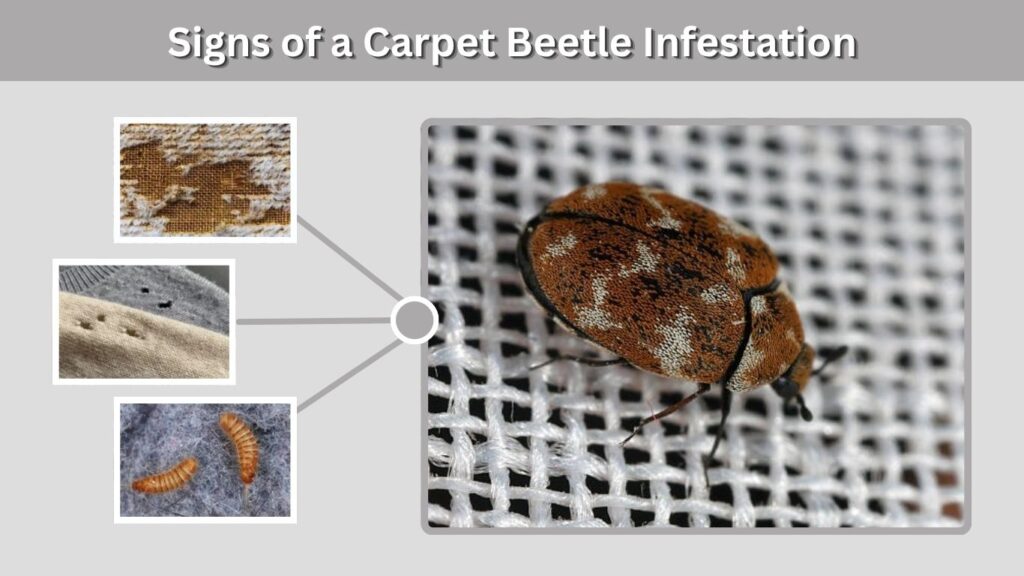
Carpet beetles often remain unnoticed until fabric damage or shed larval skins appear.
Common Infestation Signs
Look for:
- Small irregular holes in wool or silk clothing
- Bare patches on wool rugs
- Damage along carpet edges or beneath furniture
- Fuzzy larvae in closets and drawers
- Empty, brown larval skins
- Small adult beetles near windows
- Damage to feathers, fur, or stored animal products
- Larvae around baseboards, vents, or mattress edges
Larvae prefer quiet, dark areas and may remain beneath heavy furniture for long periods. They commonly shed their skins several times while growing, leaving hollow, brown shells behind.
Carpet Beetles in a Mattress
Carpet beetles do not live in mattresses to drink blood. However, larvae may occur around a bed when they find hair, lint, feathers, wool blankets, or natural-fiber materials.
Inspect mattress seams, the bed frame, underneath the bed, carpet edges, and nearby upholstered furniture. Finding fuzzy larvae or shed skins supports carpet beetle activity, while reddish stains, dark fecal spots, and flat insects around mattress seams may suggest bed bugs instead.
Do Carpet Beetles Bite?
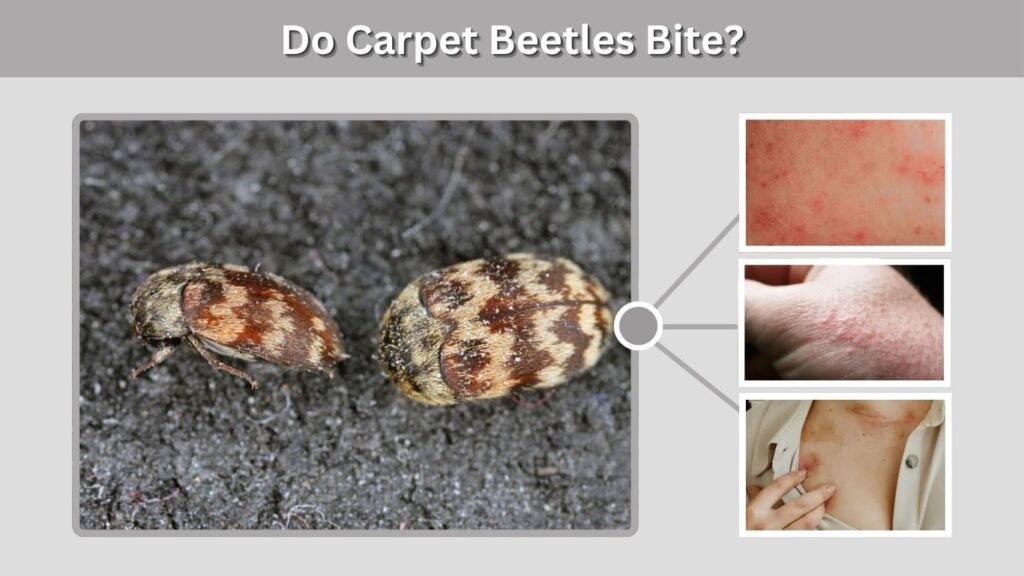
Carpet beetles do not bite humans or pets. Adult beetles feed on pollen, while larvae consume fibers and dried organic materials rather than blood.
The so-called carpet beetle bites reported by homeowners are usually reactions to the microscopic hairs of the larvae. These hooked hairs can become trapped against the skin and cause allergic contact dermatitis in sensitive people.
Carpet Beetle Rash
A reaction may include:
- Small red bumps
- Itching or burning
- Raised patches
- Irritation beneath clothing
- A rash resembling flea or bed bug bites
Not everyone in the same home will react. The irritation may be confused with other skin conditions, so the presence of a rash alone cannot confirm carpet beetles.
Avoid scratching, wash exposed clothing and bedding, and clean the affected room thoroughly. Seek medical advice when irritation is severe, spreading, infected, persistent, or accompanied by breathing problems. A healthcare professional should diagnose unexplained skin symptoms.
Carpet Beetle vs Bed Bug
Carpet beetles and bed bugs require different control methods, making correct identification important.
| Feature | Carpet Beetle | Bed Bug |
| Adult shape | Small, rounded beetle | Flat and broadly oval |
| Adult color | Mottled, brown, or black | Reddish brown |
| Larvae | Hairy and caterpillar-like | No larval stage |
| Feeding | Fabrics and animal debris | Blood |
| Bites | Do not bite | Bite exposed skin |
| Wings | Adults can fly | Cannot fly |
| Common evidence | Shed hairy skins and fabric damage | Dark spots, blood stains, and bites |
Carpet beetle larvae have bristles, while young bed bugs look like smaller, pale versions of adult bed bugs. A pest-control professional or local insect-identification service can help when the specimen is unclear.
Carpet Beetle Eggs and Life Cycle
The carpet beetle life cycle has four stages: egg, larva, pupa, and adult.
Females lay tiny white or cream eggs in cracks, fabrics, lint, nests, or other places containing food for the larvae. After hatching, larvae begin feeding and repeatedly shed their skins as they grow.
The larval stage may last much longer than the adult stage, especially when food is limited or indoor conditions are unfavorable. Mature larvae pupate in sheltered areas before emerging as winged adults. Adults are frequently attracted to windows and sunlight as they attempt to reach outdoor flowers.
How to Get Rid of Carpet Beetles
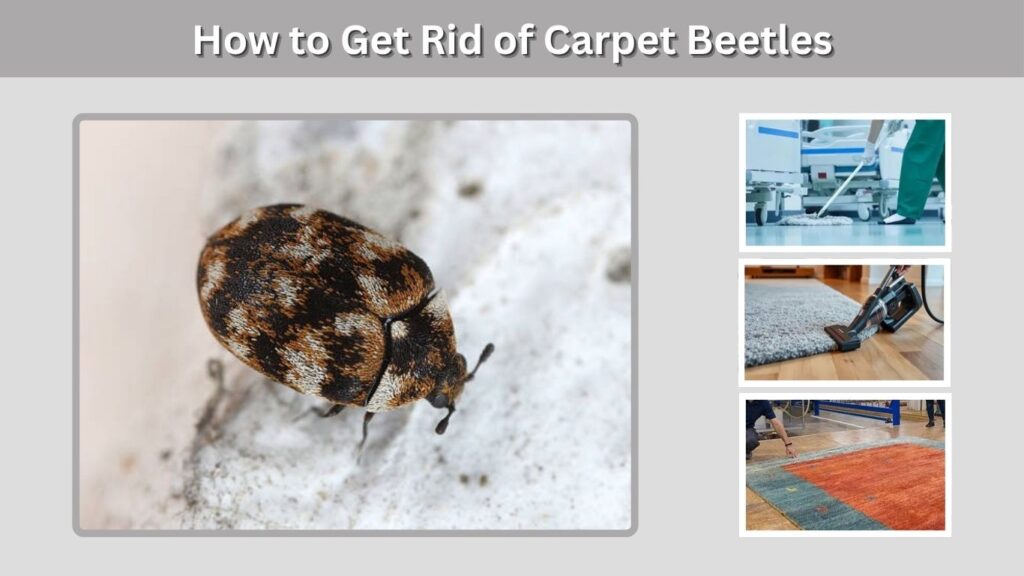
Successful treatment must remove larvae, eggs, shed hairs, and the materials supporting the infestation.
1. Find the Main Food Source
Inspect closets, rugs, stored clothing, upholstered furniture, vents, pet areas, attics, and spaces under heavy furniture. Check for dead insects, abandoned animal nests, feathers, lint, and hair.
Dispose of heavily infested objects when they cannot be cleaned or saved.
2. Vacuum Thoroughly
Vacuum carpet edges, baseboards, furniture seams, closets, vents, cracks, and the areas beneath beds and furniture. Dispose of the vacuum contents in a sealed bag outside the home.
Repeat vacuuming regularly because one cleaning may not remove every egg or hidden larva. Mechanical removal is also helpful for reducing loose larval hairs that may irritate the skin.
3. Clean Infested Fabrics
Wash and dry washable clothing, bedding, and curtains using the hottest settings considered safe by their care labels. Dry-clean valuable wool, silk, or delicate garments when appropriate.
Clean items should be placed in sealed containers or garment bags so adult beetles cannot lay new eggs on them.
4. Remove Hidden Breeding Materials
Clean pet hair from vents and furniture, remove dead insects from light fixtures, and dispose of abandoned bird or wasp nests when it is safe and legal to do so. Store dried pet food and other vulnerable products in tightly sealed containers.
5. Use Insecticide Carefully
Non-chemical cleaning should be the foundation of control. When an insecticide is necessary, select a product whose current label specifically permits use against carpet beetles in the intended location.
Treat only the areas allowed by the label, such as cracks, carpet edges, baseboards, empty storage spaces, or other hiding places. Never spray clothing, bedding, mattresses, or food-storage surfaces unless the product label explicitly allows that use. EPA-approved labels may limit carpet applications to spot treatments.
When to Call Pest Control
Professional treatment may be necessary when larvae continue appearing after repeated cleaning, valuable carpets or collections are at risk, the source is inside a wall or duct, or beetles are widespread throughout several rooms.
A technician can identify the species, locate hidden breeding sites, and apply targeted treatment without unnecessarily spraying the entire home.
FAQs
Are carpet beetles harmful?
They are not dangerous blood-feeding pests, but their larvae can damage valuable clothing, rugs, furniture, and animal-based materials. Larval hairs may also cause an allergic rash in sensitive individuals.
Can carpet beetles fly?
Adult carpet beetles can fly and are commonly attracted to sunlight and windows. Larvae cannot fly. Adults may enter from outdoors, especially when flowers and vegetation are close to open doors or windows.
What kills carpet beetles instantly?
Vacuuming can immediately remove visible beetles and larvae. An insecticide specifically labelled for carpet beetles may kill exposed insects, but killing individual adults will not eliminate hidden eggs, larvae, or their food source.
Do carpet beetle traps work?
Sticky or pheromone traps may help detect adult activity and identify areas requiring inspection. They rarely eliminate an infestation by themselves because most damage is caused by hidden larvae.
Can carpet beetles return after treatment?
Yes. They may return when lint, pet hair, dead insects, natural-fiber materials, or animal nests remain available. Continued cleaning, sealed storage, exclusion, and regular inspection are necessary to prevent another infestation.