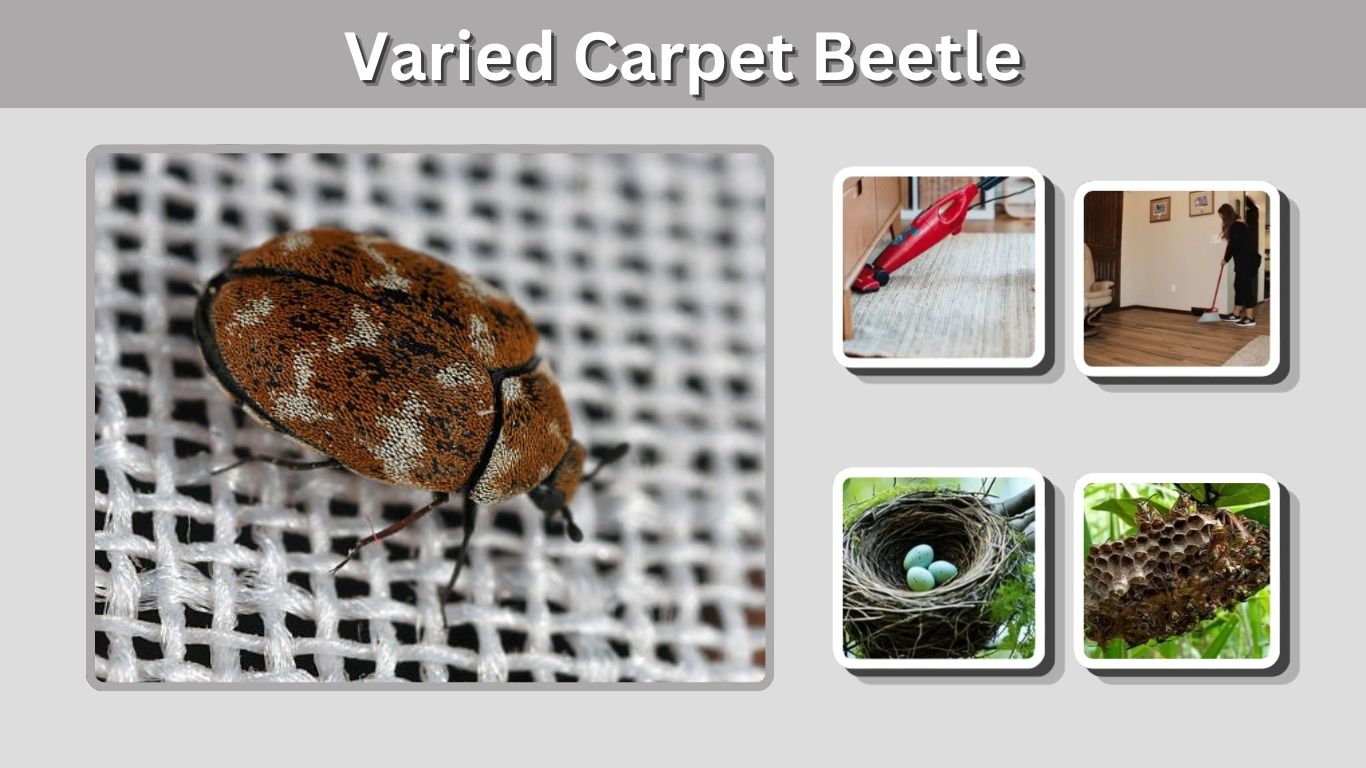
The varied carpet beetle is a tiny, rounded insect whose larvae can damage wool carpets, clothing, feathers, fur and other animal-based materials. Adults commonly appear near windows or on flowers, while the hairy larvae remain hidden in closets, beneath furniture and along carpet edges. Varied carpet beetles do not bite people, but larval hairs can trigger an itchy allergic rash in sensitive individuals. Controlling them requires finding the larval food source, cleaning thoroughly and treating infested belongings.
What Is a Varied Carpet Beetle?
The varied carpet beetle, Anthrenus verbasci, belongs to the dermestid beetle family. It is a widespread household and museum pest found across Europe, North America, Australia and many other regions.
Adults feed mainly on pollen and nectar and do not damage carpets or clothing. The larvae, sometimes called “woolly bears,” cause household damage by eating dry materials rich in animal proteins.
| Feature | Description |
| Scientific name | Anthrenus verbasci |
| Adult size | About 1.5–3.5 mm |
| Larval size | Usually around 4–4.5 mm |
| Adult color | Mottled white, yellow, orange and black |
| Larval color | Banded light and dark brown |
| Main concern | Damage caused by larvae |
| Human risk | Possible irritation from larval hairs |
Varied Carpet Beetle Identification
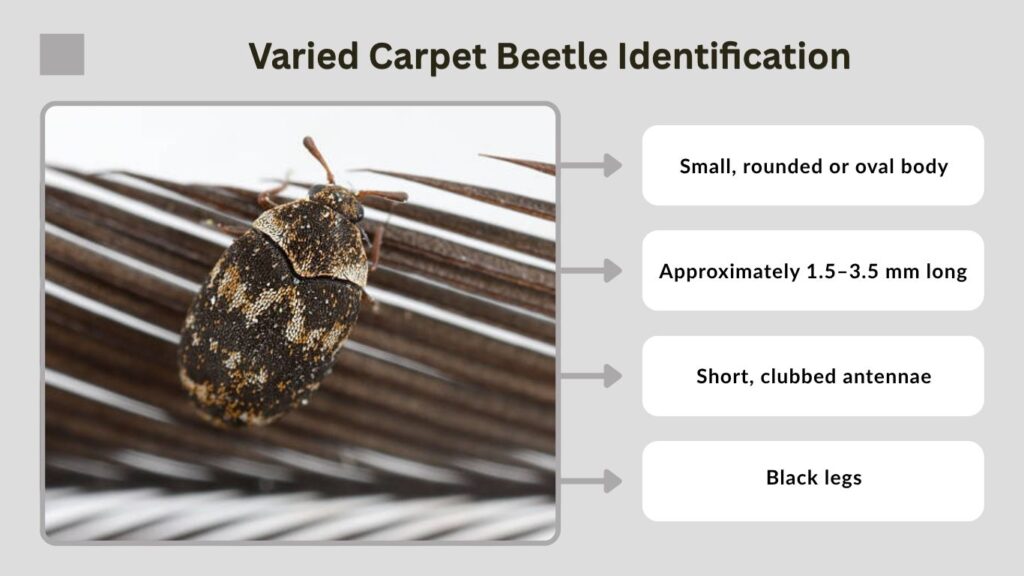
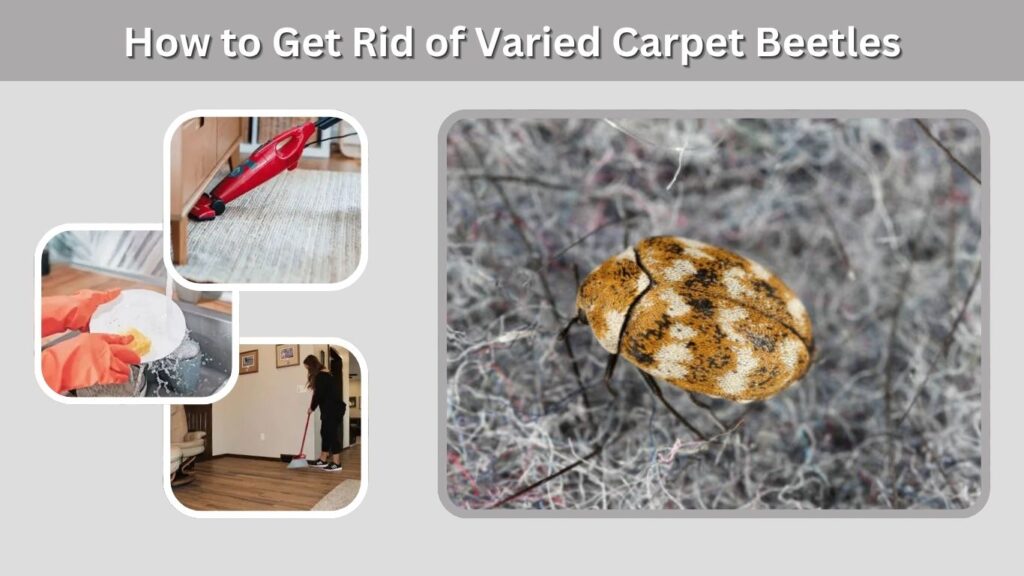
Adults are extremely small and may be mistaken for tiny lady beetles. Their oval wing cases are covered with irregular patches of white, golden-yellow, orange and black scales. Older beetles can look darker because these scales gradually wear away.
Adult Identification
- Small, rounded or oval body
- Approximately 1.5–3.5 mm long
- Mottled white, yellow, orange and black scales
- Short, clubbed antennae
- Black legs
- Small head partly hidden beneath the thorax
- Ability to fly
- Frequently found near windows during spring and summer
Finding one adult near a window does not always prove that a damaging infestation exists. Adults may simply have flown indoors from flowers. Repeated adults combined with larvae, cast skins or fabric damage provide stronger evidence.
Varied Carpet Beetle Larvae
The larvae are elongated, segmented and covered with dense brown hairs. They are narrower near the head and broader toward the rear, where they carry several distinctive tufts of backward-pointing hairs.
Their bodies commonly show alternating light and dark bands. When disturbed, mature larvae may raise their rear hair tufts into a rounded plume. Their tiny size and variable appearance can make exact species identification difficult without magnification.
Where Do Varied Carpet Beetles Come From?
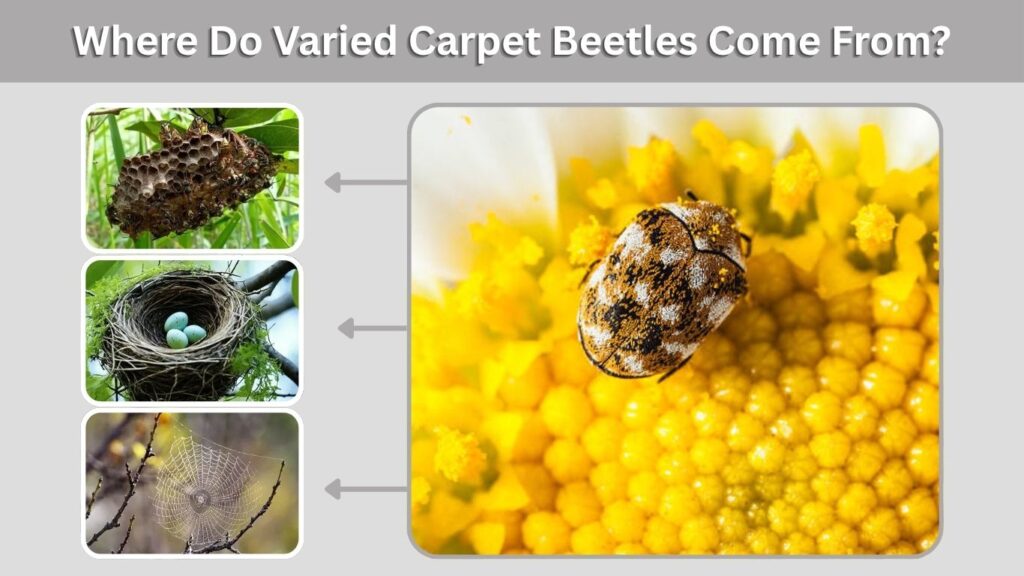
Adult beetles normally live outdoors and visit flowers for pollen. They may enter through open windows, doors, damaged screens and vents or arrive on cut flowers.
Females place their eggs close to materials suitable for larval feeding. Outdoors, these may include bird nests, wasp nests, spider webs and accumulations of dead insects. Indoors, eggs may be deposited near wool, feathers, fur, pet hair, dried insects, natural-bristle brushes or stored animal products.
Common Places to Find Them
Varied carpet beetle larvae prefer dark, quiet locations, including beneath furniture, around carpet edges, inside closets, behind baseboards and within stored boxes.
They may also develop in air ducts containing lint and pet hair, abandoned animal nests, dried pet food, insect collections or dead insects trapped in attics and wall spaces. They do not create a structured nest; a “nest” usually refers to a concentrated feeding area containing larvae, shed skins and debris.
Varied Carpet Beetles in Beds
A varied carpet beetle found on a bed is not attempting to feed on a sleeping person. Adults may land there accidentally, while larvae may wander from nearby food sources.
Bedrooms can provide suitable materials through wool blankets, feather pillows, natural-fiber rugs, upholstered furniture, pet hair and lint beneath the bed. Inspect mattress seams and bed frames, but also examine the carpet edges, closets, headboard, box spring and floor beneath nearby furniture.
Carpet beetles do not usually infest clean synthetic mattresses. However, they may enter bedding or furniture filled with wool, feathers or animal hair. Spraying a mattress is not recommended unless a pesticide label specifically permits that use.
Do Varied Carpet Beetles Bite?
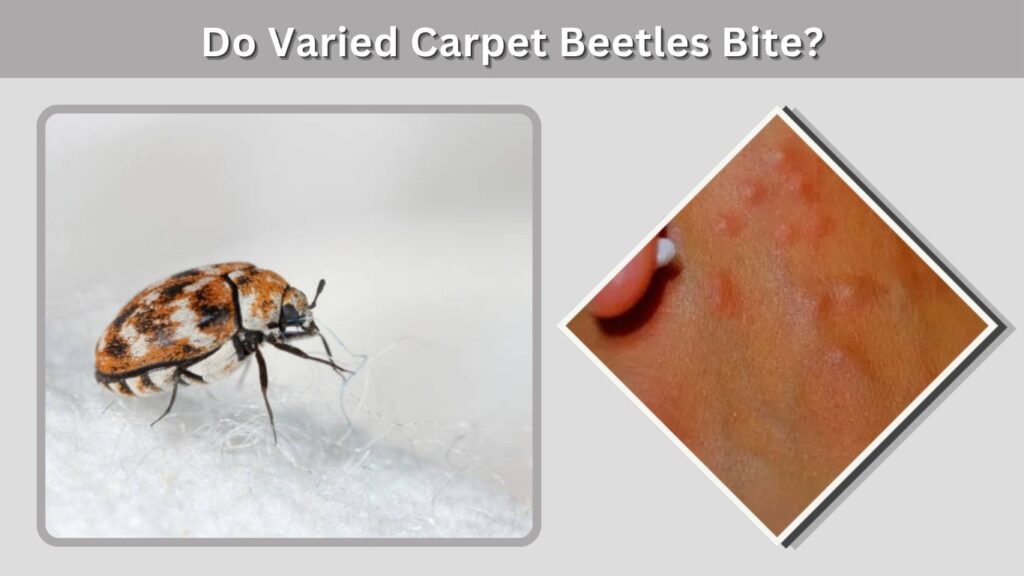
Varied carpet beetles do not bite humans or drink blood. Adults feed on pollen, while larvae eat dry organic materials.
Reports of “varied carpet beetle bites” usually involve irritation caused by larval hairs. These sharp hairs can become embedded in fabrics, carpets and bedding and may produce an allergic skin reaction known as carpet beetle dermatitis.
Possible symptoms include itching, red bumps, papules and small blister-like eruptions. Eye or respiratory irritation can also occur in sensitized individuals. Wash exposed skin and fabrics, and consult a medical professional when symptoms are severe, persistent or difficult to identify.
Varied Carpet Beetle vs. Bed Bug
Bed bugs and varied carpet beetles behave very differently.
| Feature | Varied carpet beetle | Bed bug |
| Body | Adult is tiny, rounded and mottled | Flat, oval and reddish-brown |
| Larva or nymph | Hairy larva | Smooth, pale nymph |
| Food | Animal fibers and dry organic matter | Blood |
| Bites people | No | Yes |
| Typical evidence | Cast skins and fabric damage | Dark fecal spots and blood marks |
| Common hiding areas | Closets, carpets and stored fabrics | Mattress seams and bed-frame cracks |
Bed bugs have no larval stage. Their young are called nymphs and resemble smaller versions of adults. A hairy, banded larva is therefore not a bed bug.
What Do Varied Carpet Beetles Eat?
Adult varied carpet beetles eat flower pollen and nectar. Larvae may feed on:
- Wool carpets and clothing
- Fur, feathers and animal skins
- Silk and leather
- Pet hair and human hair
- Dead insects and spider remains
- Taxidermy and insect collections
- Natural-bristle brushes
- Dried foods and certain plant products
They normally cannot digest completely synthetic fibers. However, they may damage blended fabrics or synthetic materials contaminated with sweat, food, skin oils or animal hair.
Signs of a Varied Carpet Beetle Infestation
The larvae can remain hidden for long periods, so damage may be discovered before live insects are seen.
Common signs include irregular holes in wool clothing, threadbare carpet sections, damaged fur and brown bristly cast skins. Larvae also leave tiny fecal pellets resembling grains of salt.
Unlike clothes moth larvae, carpet beetle larvae do not create silk webbing. Cast skins, dusty droppings and an absence of webbing are useful identification clues.
Varied Carpet Beetle Life Cycle
Varied carpet beetles undergo complete metamorphosis through egg, larva, pupa and adult stages.
A female typically lays about 40 eggs, which hatch after approximately 10–20 days under suitable conditions. The larval stage can last around 220–630 days, depending on temperature, food and environmental conditions. Pupation takes approximately 10–13 days.
Adult females generally survive for two to six weeks, while males live for about two to four weeks. Adults often emerge during warmer months when pollen is readily available.
How to Get Rid of Varied Carpet Beetles
Find and Remove the Source
Inspect woolens, carpets, upholstered furniture, feather items, stored fabrics and natural-fiber decorations. Check lint-filled areas, old spider webs, pet bedding, dead insects and abandoned bird or wasp nests.
Discard badly damaged objects in sealed bags. Cleaning or removing the feeding source is more important than killing the few adults visible near windows.
Vacuum Thoroughly
Vacuum carpet edges, baseboards, closets, rugs, curtains, upholstery, vents and areas beneath heavy furniture. Vacuuming removes larvae, eggs, cast skins and the lint or hair they consume.
Empty the vacuum outdoors immediately or seal and discard the bag because insects may remain alive inside it. Repeat cleaning regularly until no new larvae or cast skins appear.
Treat Infested Fabrics
Wash suitable items in hot water and dry them thoroughly. Dry-clean wool, silk and delicate clothing when appropriate. Clean belongings before placing them in airtight bags or storage containers.
Items that tolerate cold can be sealed and frozen. UC IPM recommends approximately two weeks below 18°F, while heat-tolerant objects may be treated for at least 30 minutes at 120°F or above. Confirm that heat or freezing will not damage the item.
Use Traps for Monitoring
Sticky traps can help reveal where adult beetles are active. Plain traps may be placed near windows, while species-specific pheromone traps attract males.
Traps help monitor an infestation but cannot eliminate hidden larvae or eggs. They should support cleaning and source removal rather than replace them.
Consider Insecticide Carefully
An insecticide labeled for carpet beetles may be applied to cracks, carpet edges, beneath furniture and other larval hiding areas when cleaning alone is insufficient.
Never spray clothing, bedding or pillows unless the label explicitly permits it. Avoid applying dust where it could be inhaled, and follow all label directions. Professional pest control is appropriate when larvae originate inside walls, ducts or heavily infested furniture.
FAQs
Are varied carpet beetles harmful?
They do not bite or transmit disease. However, their larvae damage animal-based materials, and their detachable hairs can cause skin, eye or respiratory irritation in sensitive people.
Can varied carpet beetles fly?
Yes. Adult varied carpet beetles can fly and may enter homes through windows, doors and vents. They are often seen near windows because they are attracted to light.
Why do I keep seeing varied carpet beetles on walls?
Larvae sometimes wander away from their feeding source before pupating. Search along carpet edges, behind furniture and inside nearby closets rather than treating only the visible wall.
Do varied carpet beetles eat clothes?
The larvae can damage wool, silk, fur and clothing containing animal fibers. Adults do not eat clothing because they normally feed on pollen and nectar.
What is the best treatment for varied carpet beetles?
Thorough vacuuming, source removal and laundering or dry cleaning infested fabrics provide the foundation of control. Insecticides are usually secondary and should be limited to labeled cracks, edges and inaccessible areas.