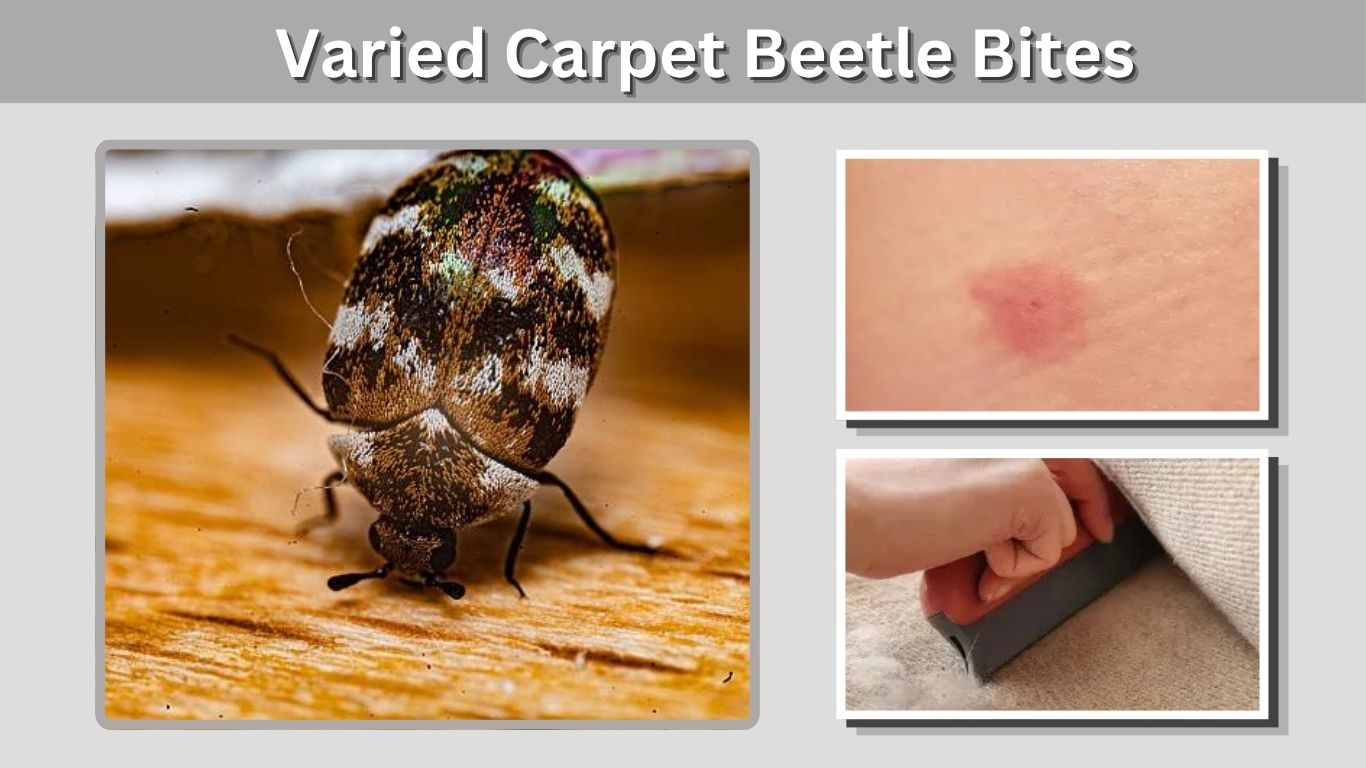
Varied carpet beetles do not bite humans. Neither adult beetles nor their larvae feed on blood or intentionally attack people. However, the stiff microscopic hairs covering varied carpet beetle larvae can irritate the skin and cause an allergic reaction that resembles insect bites. This condition, known as carpet beetle dermatitis, may produce itching, red bumps, rashes or small blisters. Removing the larvae, shed skins and contaminated materials is essential for stopping recurring symptoms.
Do Varied Carpet Beetles Bite?
The varied carpet beetle, Anthrenus verbasci, is a small dermestid beetle commonly found in homes. Adults feed mainly on pollen outdoors, while the larvae eat wool, fur, feathers, hair, dead insects and other dry animal-based materials.
They have chewing mouthparts, but they are not adapted to puncture human skin or obtain blood. Reports of “varied carpet beetle bites” are therefore usually reactions to the larvae’s detachable hairs rather than actual bite wounds.
Why Does the Rash Look Like Bites?
Varied carpet beetle larvae are covered with dense defensive hairs. These hairs can break away and accumulate in:
- Carpets and rugs
- Bedding and mattresses
- Upholstered furniture
- Clothing and blankets
- Closets and drawers
- Pet bedding
- Dust beneath furniture
When the hairs contact sensitive skin, they may produce an allergic or irritant reaction. Published medical reports describe itchy papules, hives, papulovesicular eruptions and, occasionally, blistering lesions associated with carpet beetle larvae.
What Does a Varied Carpet Beetle Rash Look Like?
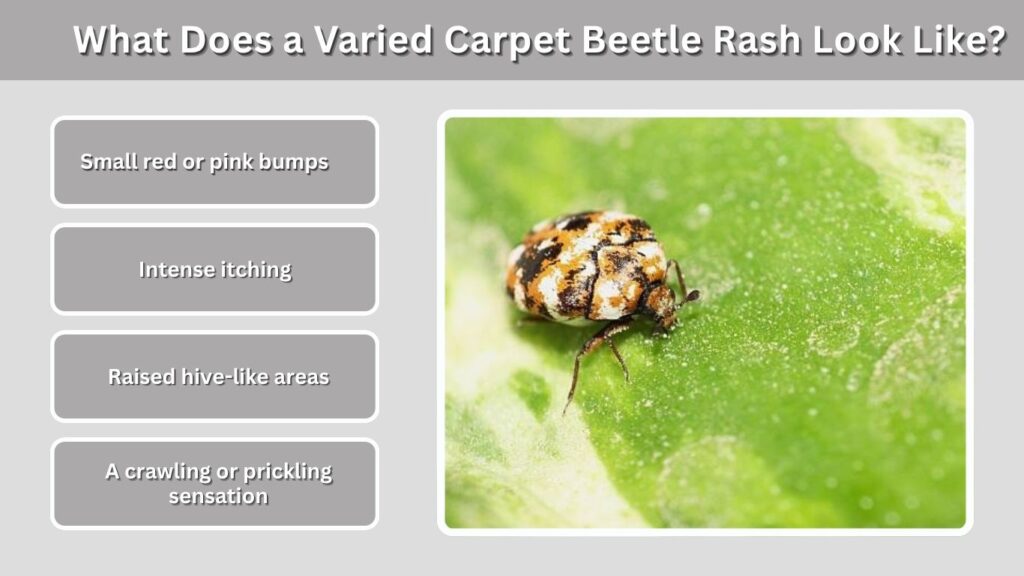
There is no single appearance that confirms carpet beetle dermatitis. Reactions vary according to a person’s sensitivity and the amount of contact with larval hairs.
Possible Symptoms
A reaction may include:
- Small red or pink bumps
- Intense itching
- Raised hive-like areas
- Scattered patches of redness
- Tiny fluid-filled blisters
- A crawling or prickling sensation
- Irritation after sleeping or wearing affected clothing
Lesions may appear on the arms, neck, face, shoulders, torso or other areas exposed to contaminated fabrics. Symptoms can resemble bed bug bites, flea bites, eczema, scabies or contact dermatitis. Medical literature notes that dermestid dermatitis is sometimes misidentified as bites from other arthropods.
Can You Identify Carpet Beetles From a Rash?
No. A skin rash alone cannot confirm the presence of carpet beetles. Diagnosis requires environmental evidence such as live larvae, adults, shed skins or damage to animal-based fabrics.
Other skin conditions can produce an almost identical appearance. Consult a healthcare professional when the cause is uncertain, particularly if symptoms continue after the suspected insects have been removed.
Varied Carpet Beetle Larvae Identification
The larvae—not the adult beetles—are responsible for most skin reactions and household damage.
Varied carpet beetle larvae are small, elongated and densely hairy. They have alternating light and dark brown bands and are broader toward the rear. Mature larvae possess tufts of defensive hairs at the end of the abdomen.
Adult varied carpet beetles are about 1/10 inch long. Their rounded wing covers have irregular patterns of white, brown and dark-yellow scales. Adults commonly appear near windows because they can fly and are attracted to light.
Shed Skins Can Continue Causing Irritation
As larvae grow, they repeatedly shed their exoskeletons. These dry, hollow casings retain many irritating hairs and can remain inside carpets or bedding after the live larvae have moved elsewhere.
A person may therefore continue experiencing symptoms even when few living insects are visible. Thorough cleaning must remove larvae, cast skins and loose hairs—not only adult beetles.
Varied Carpet Beetle Rash vs. Bed Bug Bites
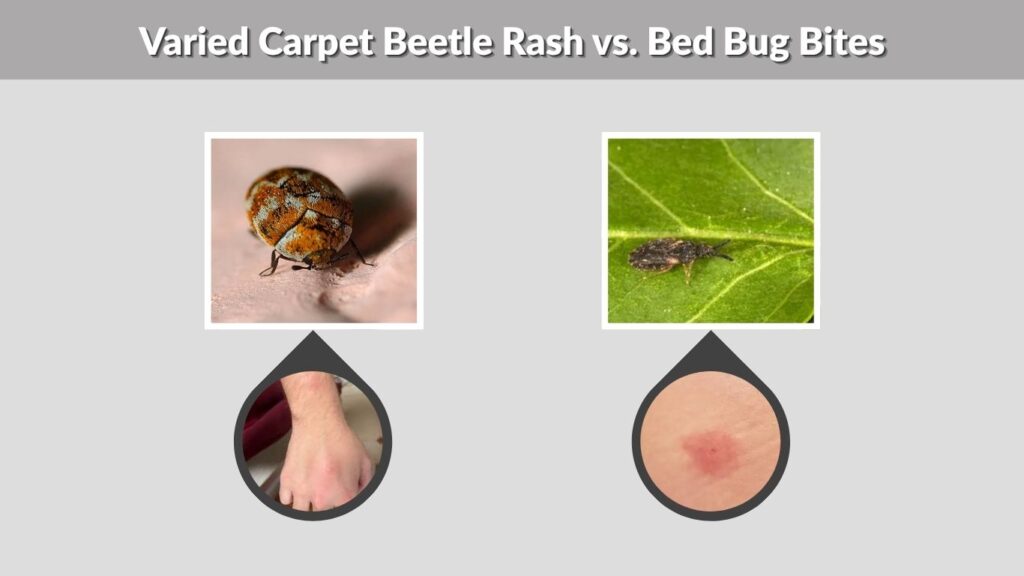
Carpet beetle dermatitis and bed bug bites are easily confused, especially when symptoms appear after sleeping.
| Feature | Carpet beetle reaction | Bed bug bites |
| Cause | Larval hairs and allergens | Blood-feeding bites |
| Beetle or bug feeds on humans | No | Yes |
| Typical insect evidence | Hairy larvae and bristly casings | Flat bugs, fecal spots and eggs |
| Fabric damage | Possible on wool or feathers | None |
| Lesion pattern | Variable and scattered | Sometimes grouped or linear |
| Main hiding areas | Carpets, closets and natural fibers | Bed frames, mattress seams and cracks |
Skin lesions cannot reliably distinguish the two. Bed bug confirmation requires finding actual insects or characteristic evidence in the sleeping area.
Why Are Varied Carpet Beetles Found in Beds?
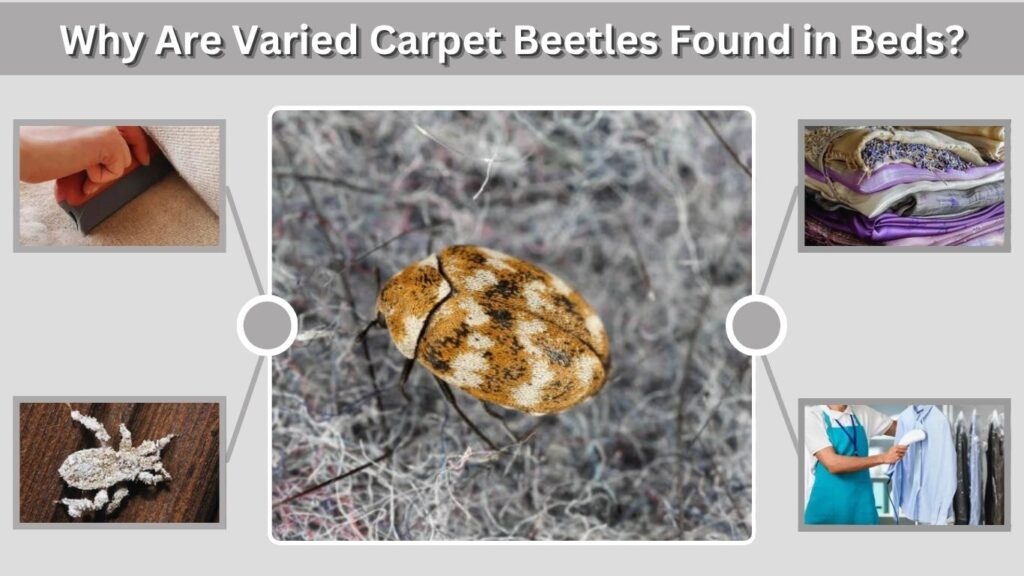
Varied carpet beetles do not enter beds to feed on people. Larvae may appear there because the sleeping area contains suitable food or because they have wandered from a nearby infestation.
Potential food sources include feather pillows, wool blankets, natural-fiber rugs, animal-hair stuffing, pet hair, lint and dead insects. Larval hairs may also be transferred onto sheets from infested clothing or upholstered furniture.
Inspect the mattress seams, but also check beneath the bed, around carpet edges, inside the headboard and box spring, behind furniture and within nearby closets.
What to Do After Skin Contact
Wash the affected area gently with soap and lukewarm water. Change clothing and wash any bedding or fabric that may contain larval hairs. A cool compress may help reduce temporary itching and discomfort.
Avoid scratching because broken skin can become infected. A pharmacist or healthcare professional can advise whether an over-the-counter treatment is appropriate for your symptoms.
Seek medical care when:
- The rash is severe or continues returning
- Blisters, swelling or signs of infection develop
- The eyes or breathing passages become irritated
- A child has a widespread reaction
- You cannot determine whether the marks are bites or dermatitis
Removing the environmental source is important because treatment of the skin alone will not prevent repeated exposure.
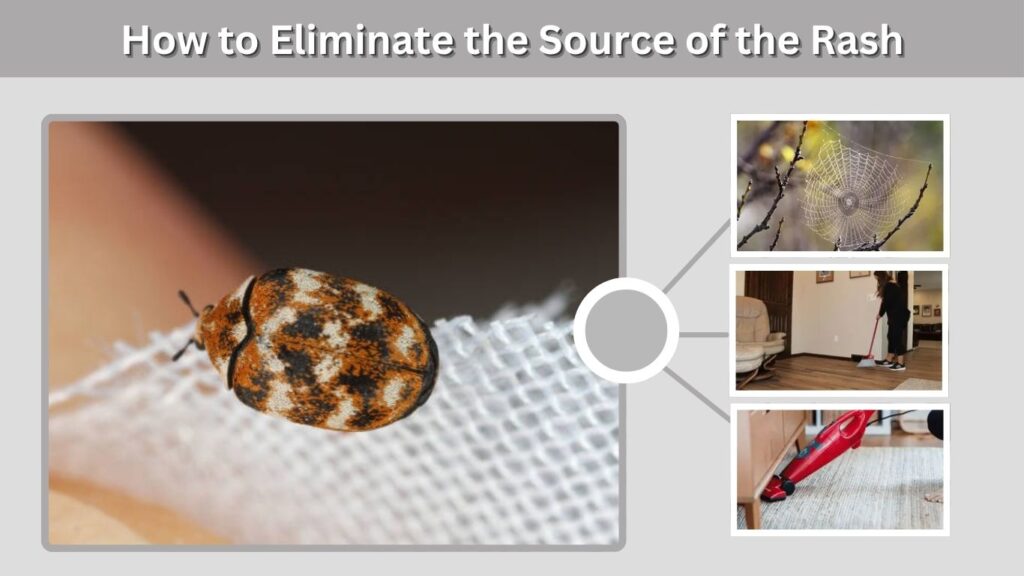
How to Eliminate the Source of the Rash
Vacuum Thoroughly
Vacuum carpet edges, baseboards, closets, mattress seams, upholstered furniture and the spaces beneath beds and cabinets. Use a crevice attachment around floor cracks, heating vents and furniture joints.
Dispose of vacuum contents in a sealed outdoor bin. Repeat vacuuming frequently until larvae and cast skins stop appearing. Vacuuming removes both the pests and the hair, lint and dead insects they consume.
Clean Clothing and Bedding
Wash suitable fabrics according to their care labels and dry them thoroughly. Dry-clean wool, silk, fur and delicate natural-fiber items when necessary.
After cleaning, store vulnerable clothing and blankets in sealed containers. Inspect feather items, wool rugs and upholstered furniture for larvae or damage.
Locate Hidden Food Sources
Check for accumulations of pet hair, old spider webs, dead insects, dried pet food and abandoned bird or rodent nests. Larvae can survive in obscure locations such as vents, attics and wall spaces.
Finding and removing the breeding source is more effective than spraying the adults seen near windows.
Use Insecticide Only When Necessary
An insecticide labeled for carpet beetles may help treat cracks, carpet edges and inaccessible hiding places after cleaning. It should not be applied to skin, clothing, pillows or bedding unless the label specifically authorizes that use.
Professional pest control may be necessary when the infestation affects several rooms or originates inside walls, ducts or valuable furniture.
FAQs
Can varied carpet beetle larvae bite?
No. Their mouthparts are used to eat dry organic materials, not human skin. Their hairs can nevertheless cause an itchy reaction that resembles bites.
Are varied carpet beetle bites dangerous?
There are no true bites. Most hair-related reactions are limited to the skin, but severe allergic symptoms, breathing problems or eye irritation require medical attention.
How long does carpet beetle dermatitis last?
The duration varies. Symptoms may improve after exposure ends, but they can recur while larval hairs remain in bedding, carpets or clothing. Persistent symptoms should be professionally evaluated.
Do varied carpet beetles live on humans?
No. They do not live on the skin, scalp or hair and cannot establish a parasitic infestation on the human body.
How do you stop the rash from returning?
Remove larvae, shed skins and loose hairs by vacuuming thoroughly, cleaning affected textiles and eliminating hidden food sources. Medical treatment without pest removal may provide only temporary relief.