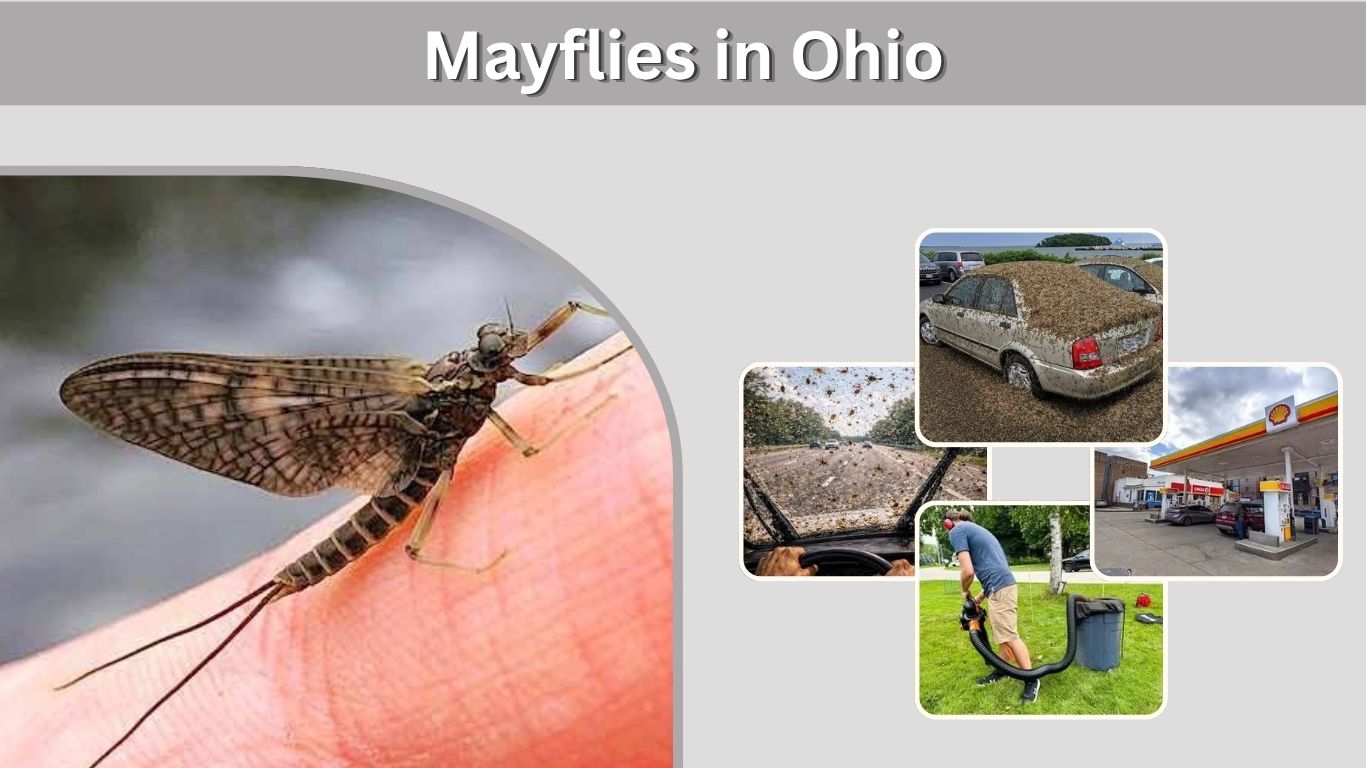
Mayflies are familiar seasonal insects across Ohio, especially in communities bordering Lake Erie. During major hatches, thousands or even millions of adults may gather around streetlights, buildings, boats, windows, and parked vehicles. Port Clinton, Sandusky, Toledo, Put-in-Bay, Huron, Lorain, and other northern Ohio communities often experience the most noticeable swarms.
Although their sudden appearance can be overwhelming, mayflies are harmless to people. They do not bite, sting, infest houses, or damage property. Their presence is closely connected to freshwater, and healthy mayfly populations can provide valuable food for fish and other wildlife.
What Do Mayflies in Ohio Look Like?
Adult mayflies are delicate insects with slender bodies, transparent wings, and long tail filaments. Unlike ordinary flies, they usually hold their wings upright while resting.
Ohio has numerous mayfly species, so their exact size and coloring vary. The large burrowing mayflies associated with Lake Erie’s famous hatches commonly belong to the genus Hexagenia.
Identification
- Slender, soft body
- Two large, triangular front wings
- Smaller rear wings in many species
- Wings held vertically while resting
- Two or three long tail filaments
- Short antennae
- Pale yellow, tan, brown, gray, or olive coloring
- Weak, fluttering flight
- Frequently found near freshwater and lights
Mayflies are sometimes mistaken for mosquitoes, midges, caddisflies, or small moths. Their upright wings and long tails are the easiest identification features.
When Is Mayfly Season in Ohio?
Ohio’s mayfly season generally begins during late spring and continues into summer. Large Lake Erie emergences are most often noticed from June through early July, although some activity can begin during May or continue later into summer.
There is no guaranteed annual hatch date. Water temperature, spring weather, species, oxygen levels, and the development of underwater nymphs all influence when adults emerge. A warmer spring may encourage earlier activity, while prolonged cool weather can delay it. Ohio reports have described the broader season as extending from around mid-May into July.
How Long Does Mayfly Season Last?
The most intense local swarm may last only a few nights. However, Ohio residents may continue seeing mayflies for several weeks because different groups do not all emerge simultaneously.
Individual adult mayflies usually survive for only a short time. New adults continuously emerging from the water make the season appear much longer than the lifespan of one insect.
When Do Mayflies Go Away?
Mayflies disappear after the local emergence ends and the adults complete reproduction. Heavy rain, strong wind, cooler temperatures, and changes in water conditions can temporarily reduce visible activity.
Large numbers may return on another evening when conditions improve. The overall population usually declines naturally as summer progresses.
Why Does Ohio Have So Many Mayflies?
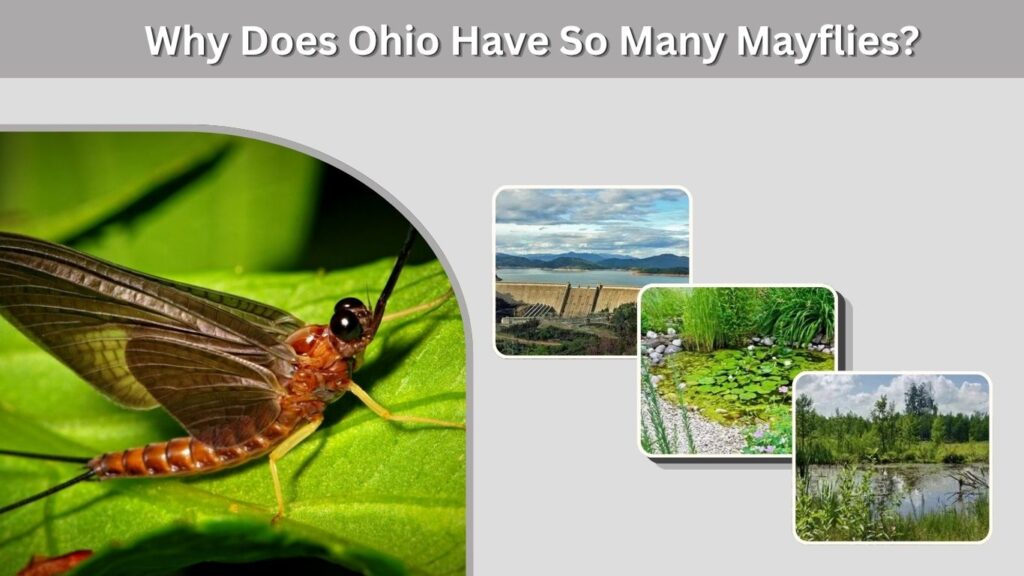
Mayflies require freshwater during their immature development. Ohio contains Lake Erie, the Ohio River, reservoirs, ponds, wetlands, and thousands of rivers and streams that provide potential habitat.
The largest swarms generally occur along western Lake Erie because burrowing mayfly nymphs can develop in the lake’s soft bottom sediment. USGS research has found that western Lake Erie nymph densities are often highest in fine-grained offshore substrate.
Their Underwater Development
Mayflies spend most of their lives underwater as nymphs. Depending on the species, nymphs may live among rocks, vegetation, gravel, or soft sediment.
Burrowing species construct tunnels in the bottom and move water through them to obtain oxygen. They feed on small particles of organic material before becoming mature enough to leave the water.
During emergence, a nymph rises to the surface and sheds its aquatic skin. It becomes a winged subadult known as a subimago. Mayflies are unusual because they molt once more after developing functional wings.
Their Brief Adult Stage
Adult mayflies do not live long because their main purpose is reproduction. Males form mating swarms, females enter the swarm, and mating generally occurs in flight.
Females later return to the water and release their eggs. After completing reproduction, the adults die, and the next generation begins developing underwater.
Where Are Mayflies Most Common in Ohio?
Mayflies can occur throughout Ohio wherever suitable freshwater habitat is available. However, the size and visibility of the hatch vary widely.
Port Clinton and Lake Erie Islands
Port Clinton is one of Ohio’s best-known mayfly locations. Large numbers can cover docks, boats, businesses, sidewalks, and waterfront buildings.
Catawba Island, Put-in-Bay, Lakeside Marblehead, and other nearby areas may experience similar activity. Wind direction can strongly affect which community receives the greatest number of insects on a particular night.
Toledo and Northwestern Ohio
Toledo, Oregon, Point Place, and other northwestern Ohio communities are close to the productive western basin of Lake Erie. Mayflies may be blown inland and gather around bright commercial or residential lighting.
Sandusky and Huron
Sandusky, Cedar Point, Huron, and surrounding shoreline areas can receive significant seasonal swarms. Mayflies may accumulate around marina lights, hotel windows, amusement facilities, parking lots, and waterfront roads.
Cleveland, Lorain, and Geneva-on-the-Lake
Mayflies also occur along central and eastern portions of Ohio’s Lake Erie shoreline. Swarms may be smaller or more localized than those in the shallow western basin, but shoreline lighting can still attract large numbers.
Central and Southern Ohio
Mayflies occur around rivers and streams in central and southern Ohio, including waterways near Columbus and communities along the Ohio River. These insects may not form the enormous Lake Erie clouds, but local hatches can still be noticeable around bridges, parks, and waterfront lighting.
Why Do Ohio Mayflies Swarm Around Lights?
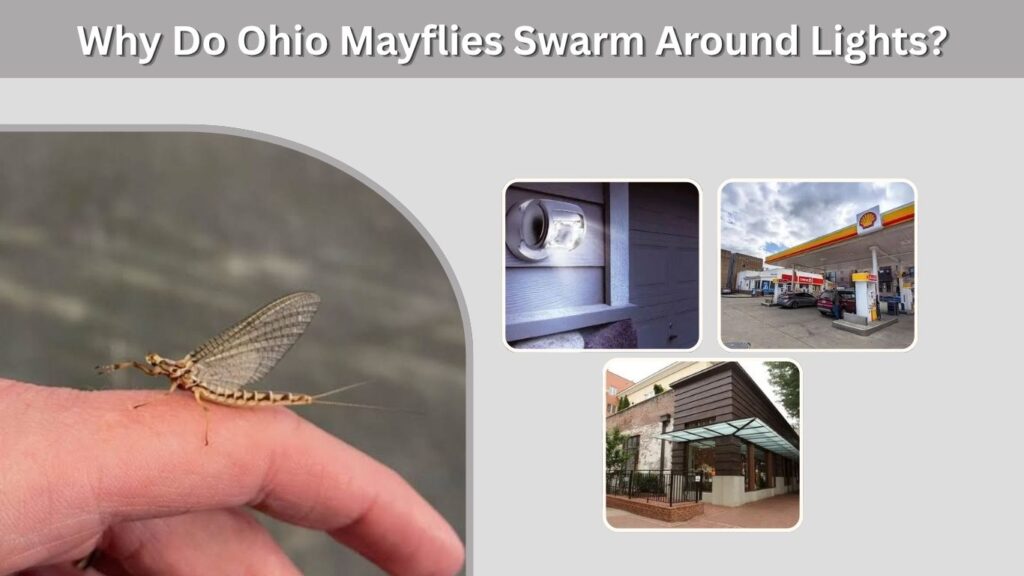
Mayflies emerging after sunset use natural light patterns to orient themselves. Artificial lighting can disrupt this behavior and pull them away from the water.
They commonly gather around:
- Streetlights
- Porch and security lights
- Gas stations
- Storefronts
- Illuminated bridges
- Marinas and docks
- Boats
- Stadiums
- Bright windows
Warm amber lighting is generally less attractive to flying insects than cool white or bluish lighting. Turning off unnecessary exterior lights during a hatch can significantly reduce the number gathering around a building.
Can Ohio Mayflies Appear on Radar?
Extremely dense mayfly swarms can produce visible returns on weather radar. A biological radar return may initially resemble light rainfall spreading away from a lake or river.
The National Weather Service has documented radar time-lapse imagery in which yellow and orange returns represented large numbers of airborne mayflies. Radar can show the approximate movement of a major emergence, but it is not a dedicated mayfly forecasting system.
People checking for current Ohio mayfly activity can review local weather radar, shoreline reports, marina updates, fishing reports, and recent observations from Lake Erie communities.
Are Ohio Mayflies Dangerous?
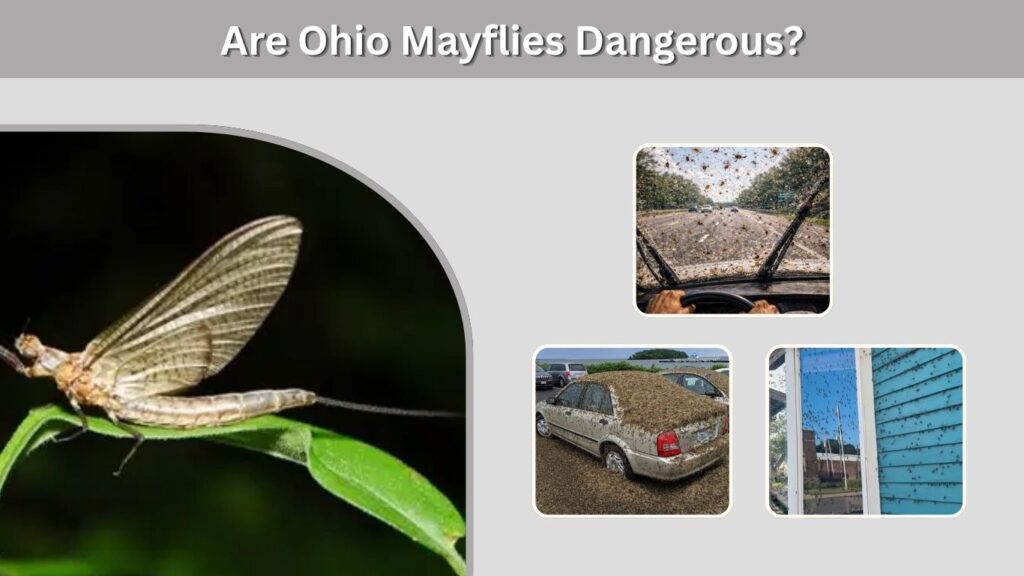
Mayflies are harmless to people and pets. Adults do not bite or sting, and they are not known for transmitting diseases to humans.
They also do not eat clothing, wood, plants, stored food, or household materials. Mayflies found indoors have entered accidentally and cannot establish an indoor infestation.
The main concerns are caused by their numbers. Dead insects may:
- Cover windows, siding, and vehicles
- Produce an unpleasant odor
- Clog outdoor fixtures
- Make roads and sidewalks slippery
- Require frequent cleanup
Drivers should be careful during extremely heavy swarms because clouds of insects can reduce visibility. Crushed mayflies may also create slick conditions on roads, bridges, and parking areas.
Are Mayflies a Sign of Healthy Ohio Water?
Mayfly nymphs require suitable oxygen, sediment, and water conditions. Many species are sensitive to pollution, which makes their presence useful when evaluating aquatic ecosystems.
Burrowing mayflies disappeared from much of western Lake Erie for approximately four decades after pollution and eutrophication severely degraded their habitat. They recolonized the basin during the 1990s as conditions improved. Scientists consequently use their populations as one indicator of Lake Erie’s ecological condition.
However, one large swarm does not prove that the entire lake is free from environmental problems. Population trends, distribution, bottom oxygen, nutrient levels, and other organisms must also be considered.
Why Mayflies Matter to Ohio Wildlife
Mayflies are a major seasonal food source for numerous animals. Their aquatic nymphs are eaten by walleye, yellow perch, bass, and other fish. Emerging and adult mayflies feed birds, bats, spiders, frogs, and dragonflies.
Their importance to fish can also affect Lake Erie anglers. During a heavy hatch, fish may consume so many natural nymphs that they become less interested in ordinary bait. Anglers sometimes respond by using smaller presentations that resemble emerging mayflies.
How to Manage Mayflies Around an Ohio Home
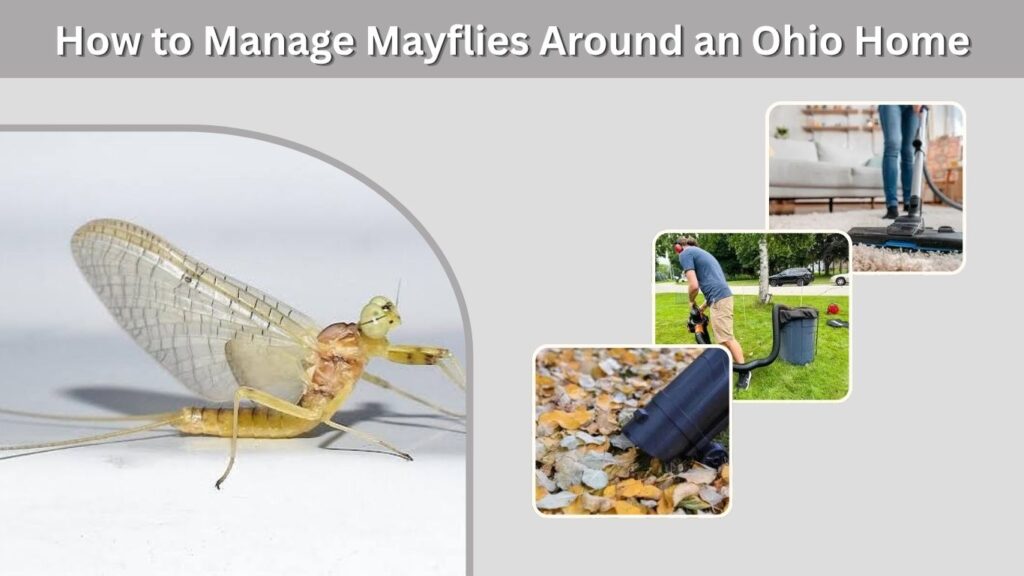
Mayflies cannot realistically be eliminated from nearby lakes or rivers. Control should focus on preventing entry, reducing attraction, and cleaning up adults.
Turn off unnecessary exterior lights and close curtains before dark. Replace bright white outdoor bulbs with warmer yellow or amber bulbs. Repair window screens, improve door seals, and keep entrances closed during evening hatches.
Use a vacuum to remove insects indoors. Outside, a broom, leaf blower, or shop vacuum can clear dead mayflies from patios, docks, driveways, and walkways. Clean accumulations promptly before they begin decomposing.
Avoid widespread pesticide applications. Spraying resting adults provides only temporary relief because more mayflies may emerge the following night. Broad treatments can also affect beneficial insects and aquatic wildlife.
FAQs
Do mayflies bite in Ohio?
No. Ohio mayflies do not bite or sting people or pets. Their adult mouthparts are reduced, and their short winged stage is devoted primarily to mating and egg laying.
How long do Ohio mayflies live?
The winged adult stage may last from several hours to a few days, depending on the species. The underwater nymphal stage is much longer and may continue for months or more than a year.
Why are mayflies covering cars in Ohio?
Mayflies are attracted to light and reflective surfaces. A shiny vehicle may reflect light in a way that resembles water, encouraging adults to land on it. Parking away from waterfront lights may reduce the accumulation.
Are lake flies and mayflies the same?
The name “lake fly” is sometimes used for mayflies, but it can also refer to non-biting midges. True mayflies have two or three long tails and hold their triangular wings upright while resting.
Can mayflies reproduce inside an Ohio home?
No. Their eggs and nymphs require aquatic habitat. Adults that enter a house cannot breed in carpets, drains, walls, or stored food. Removing them and sealing their entry points is normally sufficient.