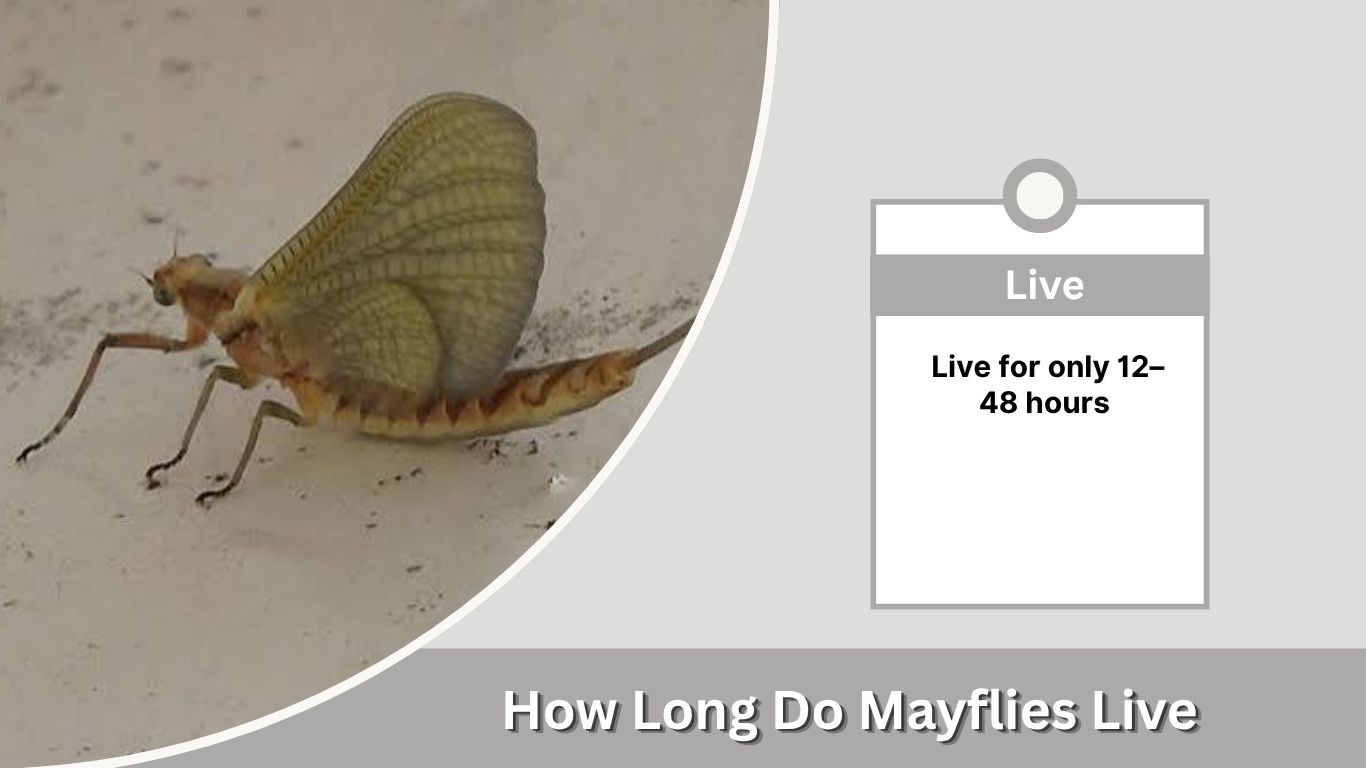
Mayflies are famous for having one of the shortest adult lifespans in the insect world. Many adults live for only 12–48 hours, while some species survive for several days. However, this brief flying stage represents only a small part of their complete life. Before becoming adults, mayflies usually spend several months to two years underwater as eggs and nymphs. Some species may remain aquatic even longer. Their total lifespan is therefore much greater than one day. Mayflies devote most of their lives to underwater growth, while their short adult stage is mainly used for mating and laying eggs.
How Long Do Mayflies Live?
A mayfly’s complete lifespan can range from several months to approximately two or three years, depending on its species, water temperature, habitat, food supply, and local climate.
The familiar winged adult usually lives for only a few hours to several days. It does not spend its entire life flying above the water.
| Life stage | Typical duration |
| Egg | Several days to several months |
| Aquatic nymph | Several months to 1–2 years |
| Subimago | Minutes to about two days |
| Reproductive adult | Several hours to a few days |
| Total lifespan | Several months to 2–3 years |
These are general estimates. Mayflies include thousands of species with different developmental periods and adult lifespans.
Do Mayflies Live for Only One Day?
Some adult mayflies live for approximately one day, but this is not true for every species. Depending on the species and environmental conditions, winged adults may survive for only a few hours, approximately 24 hours, or several days.
The belief that every mayfly lives for only one day ignores its long aquatic development. A mayfly may spend a year or more underwater before emerging as a flying adult.
One extreme example is a small burrowing mayfly whose adult female may survive for only a few minutes after completing its final molt. However, other species have adults that remain alive for several days.
How Long Do Adult Mayflies Live?
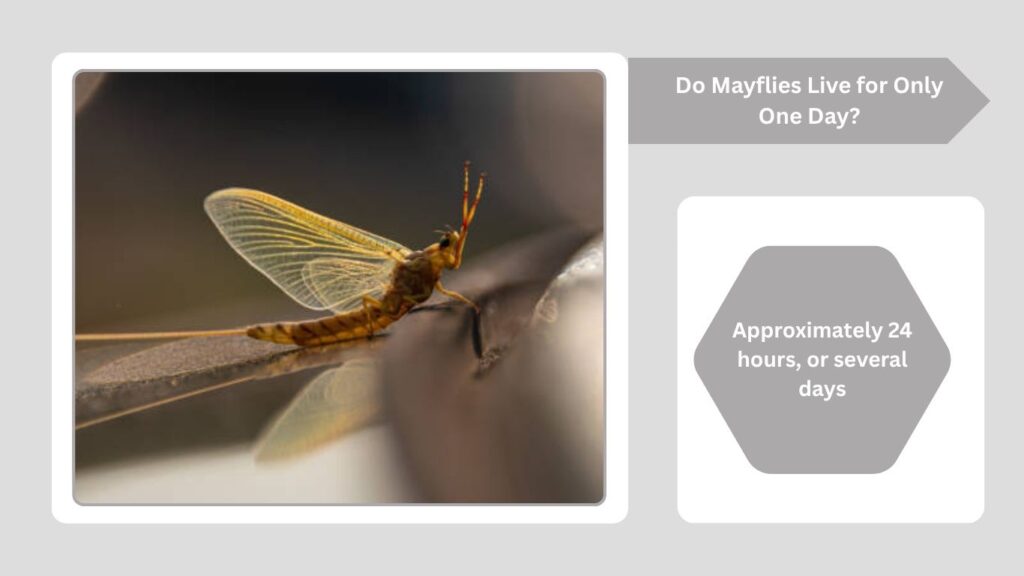
Most adult mayflies live for approximately 12–48 hours. Some die within several hours, while others survive for nearly a week under suitable conditions.
Adult longevity depends on:
- Mayfly species
- Air temperature
- Humidity
- Wind and storms
- Energy stored during the nymph stage
- Predation
- Mating activity
- Time required to lay eggs
The adult stage is so short because mayflies do not need to build nests, care for young, or search extensively for food. Their main purpose is reproduction.
How Long Do Male Mayflies Live?
Male mayflies usually live until they successfully participate in a mating swarm. They may survive for several hours or a few days, depending on the species.
Males often gather above water, roads, vegetation, or other noticeable landmarks. They fly up and down in groups while waiting for females to enter the swarm. After mating, males generally die soon afterward.
How Long Do Female Mayflies Live?
Female mayflies usually survive long enough to mate, develop or carry mature eggs, and return to the water to lay them.
A female may release her eggs directly onto the surface, dip her abdomen into the water, or crawl below the surface, depending on the species. She normally dies shortly after egg laying.
Females of some species live slightly longer than males because they need additional time to deposit their eggs. In other species, their adult lives are equally brief.
How Long Do Mayflies Live in Water?
Mayflies spend most of their lives underwater as nymphs. This stage commonly lasts from several months to one or two years.
Species living in warm climates may develop faster and produce more than one generation per year. Species living in cold lakes, mountain streams, or northern regions may need two or more years to mature.
Mayfly Nymph Development
Mayfly nymphs live in freshwater environments, where they feed and grow through repeated molts. Depending on the species, they may:
- Burrow into soft sediment
- Crawl beneath stones
- Cling to rocks in fast currents
- Hide among aquatic plants
- Swim through still water
- Live within accumulated organic debris
Nymphs feed on algae, microorganisms, decaying plant matter, or small organic particles. A few species may also consume small aquatic animals.
During the aquatic stage, a mayfly nymph may molt numerous times before it is ready to leave the water.
The Mayfly Life Cycle
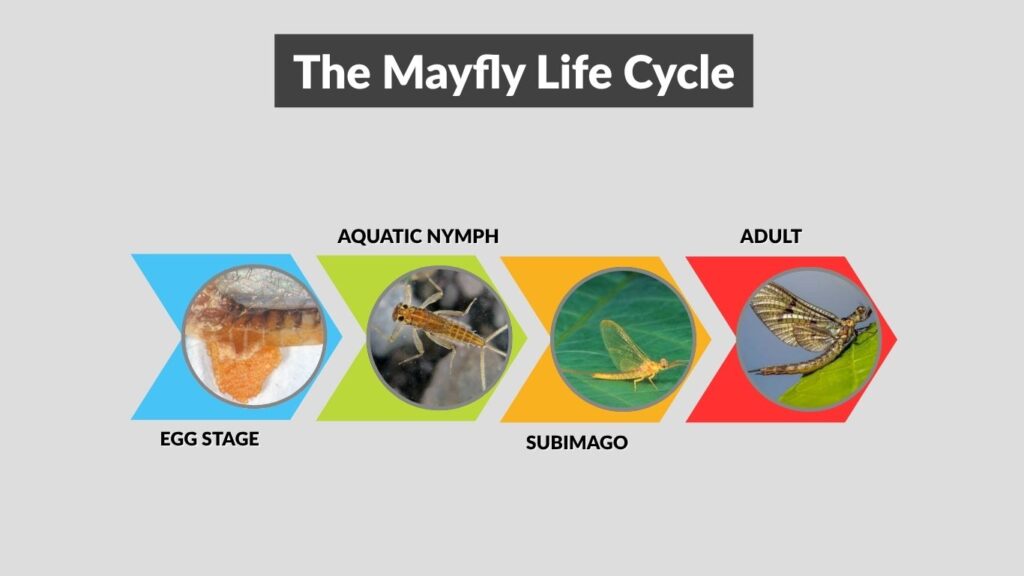
Mayflies undergo incomplete metamorphosis, meaning they do not have a pupal stage. Their life cycle includes an egg, aquatic nymph, winged subadult, and reproductive adult.
Stage 1: Egg
The life cycle begins when a female deposits eggs in freshwater. Depending on the species, she may lay hundreds or thousands of eggs.
The eggs usually sink and settle among rocks, plants, gravel, or bottom sediment. Some are covered with structures that help them attach to underwater surfaces.
Hatching may occur within days or weeks. In certain species, eggs remain dormant for several months until water temperature and seasonal conditions become suitable.
Stage 2: Aquatic Nymph
After hatching, the young mayfly becomes an aquatic nymph. It resembles a small wingless insect with six legs, external gills, and usually two or three tail filaments.
The nymph spends most of its time feeding and avoiding predators. Fish, dragonfly larvae, aquatic beetles, amphibians, and other animals consume mayfly nymphs.
This is the longest stage of the mayfly’s life. The nymph grows gradually and sheds its outer covering many times.
Stage 3: Subimago
When development is complete, the nymph swims or floats toward the surface. It sheds its aquatic skin and becomes a winged subadult called a subimago, or dun.
The subimago looks similar to an adult but usually has duller coloring, cloudy wings, shorter tails, and a slightly hairy body. It may rest on nearby vegetation, rocks, docks, or buildings.
This stage may last from several minutes to approximately two days.
Mayflies are unique among living insects because they molt again after developing functional wings.
Stage 4: Reproductive Adult
The subimago sheds its skin one final time and becomes a mature adult, called an imago or spinner.
The reproductive adult generally has:
- Clearer wings
- Brighter or darker body coloring
- Longer legs and tails
- Fully developed reproductive organs
- Improved ability to form mating swarms
Adults mate, females lay eggs, and both sexes die shortly afterward. Their bodies then provide food for fish, birds, spiders, bats, and other wildlife.
Why Do Mayflies Live Such Short Adult Lives?
Mayflies have evolved to complete almost all feeding and growth during the aquatic nymph stage. The adult body is designed mainly for reproduction.
Adults Usually Do Not Eat
Most adult mayflies have reduced or nonfunctional mouthparts. Their digestive systems are also greatly reduced, so they cannot feed normally after emerging.
They survive on energy stored while they were aquatic nymphs. Once those reserves are used, the adult cannot replace them.
Their Only Purpose Is Reproduction
Adult mayflies do not need to grow, defend a permanent territory, build a nest, or care for offspring. Males need to locate females, while females need to mate and return their eggs to suitable water.
Once reproduction is complete, there is little biological advantage to remaining alive.
Synchronized Emergence Improves Survival
Large numbers of mayflies often emerge together. This gives short-lived adults a better chance of finding mates quickly.
Mass emergence also overwhelms predators. Fish, birds, bats, and spiders may consume many insects, but enough mayflies survive to reproduce.
Where Do Mayflies Live?
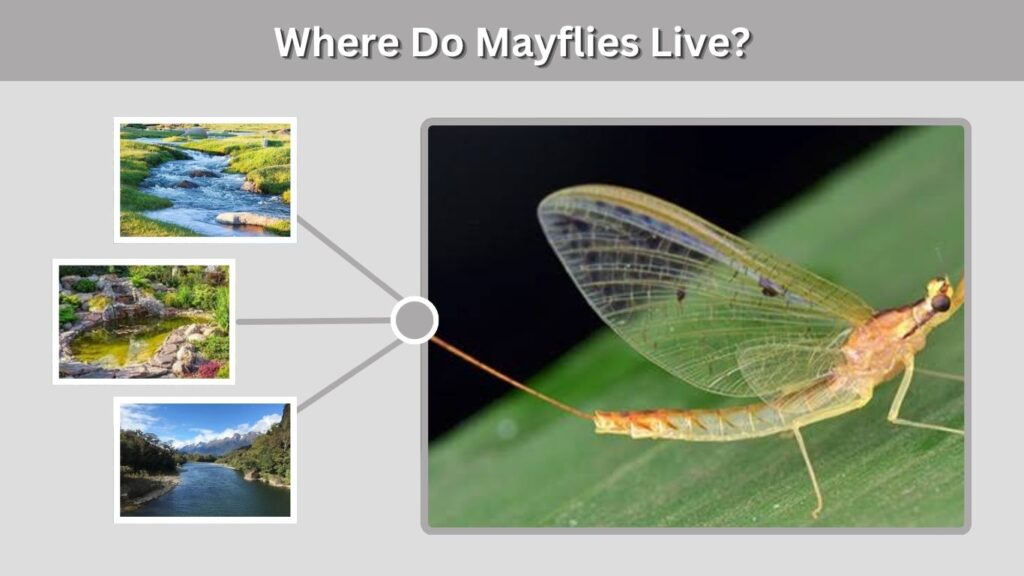
Mayflies are associated with freshwater. Their nymphs occur in clean or moderately clean aquatic habitats, although tolerance to pollution varies among species.
Common habitats include:
- Lakes
- Rivers
- Streams
- Ponds
- Wetlands
- Reservoirs
- Spring-fed channels
- Temporary freshwater pools
Some species prefer fast, oxygen-rich streams, while burrowing mayflies live in soft lake or river sediment. Others are adapted to slow-moving water and aquatic vegetation.
Adult mayflies normally remain close to the water where they developed. Wind may carry them into nearby neighborhoods, fields, roads, and buildings.
How Long Do Mayflies Live in a House?
Mayflies found inside a house generally live for only several hours or a few days. They cannot reproduce in carpets, drains, walls, trash, or stored food because their eggs and nymphs require freshwater.
Indoor mayflies usually enter through:
- Open doors
- Unscreeened windows
- Torn window screens
- Gaps around frames
- Vents
- Openings near outdoor lights
Turning off lights near windows, repairing screens, and vacuuming adults are usually enough to manage them.
Why Do Dead Mayflies Keep Appearing?
Repeated appearances do not mean that individual insects are living for weeks. New adults may continue emerging from nearby water on multiple evenings.
A large hatch can continue for several days or weeks because:
- Different species emerge at different times
- Nymphs mature gradually
- Weather interrupts emergence
- Wind carries insects in different directions
- Multiple areas of a lake or river produce adults
Each adult is short-lived, but overlapping groups make the overall event seem much longer.
FAQs
What is the shortest mayfly lifespan?
Adult females of certain mayfly species may live for only several minutes after their final molt. However, they previously spent months underwater as eggs and nymphs, so their complete lifespan is much longer.
What is the longest a mayfly can live?
Some mayflies may spend two or three years developing underwater before becoming adults. Their winged stage still usually lasts only several hours or days.
Why do mayflies die after mating?
Adults have limited energy reserves and usually cannot eat. Their bodies are specialized for reproduction, so males generally die after mating and females die shortly after laying their eggs.
Do mayflies live longer in water than on land?
Yes. Mayflies spend almost their entire lives underwater as nymphs. The aquatic stage may last months or years, while their winged life above water usually lasts only hours or days.
Can mayflies survive away from water?
Adult mayflies can fly or rest some distance from water, especially when carried by wind. However, females must return to freshwater to lay viable eggs, and the aquatic nymphs cannot develop on dry land.