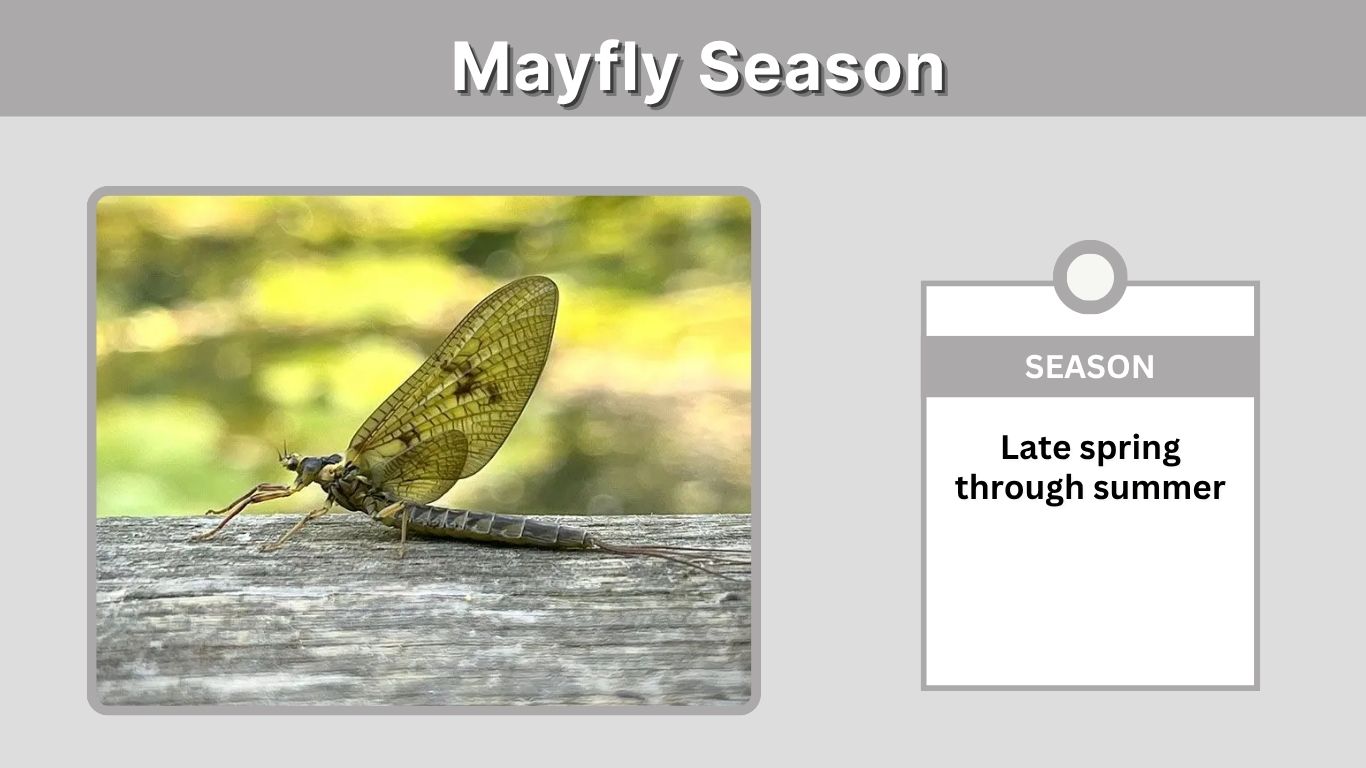
Mayfly season generally occurs from late spring through summer, but there is no single date that applies everywhere. Timing depends on mayfly species, water temperature, location, and weather. Around Lake Erie, Ohio, and southeastern Michigan, the most noticeable mass hatches usually occur during June and early July. Smaller or later emergences can continue into August. Ohio Sea Grant has reported that major Lake Erie hatches commonly peak around June 20, although activity can extend much later.
What Is Mayfly Season?
Mayfly season is the period when aquatic mayfly nymphs rise from lakes, rivers, and streams and transform into winged insects. Some species emerge gradually, while burrowing mayflies such as Hexagenia can appear simultaneously in enormous numbers.
These mass emergences may cover buildings, docks, sidewalks, roads, vehicles, and shoreline vegetation. They are especially visible at night because adult mayflies gather around streetlights, porch lights, illuminated signs, and other bright sources.
The insects spend most of their lives underwater. Great Lakes Hexagenia may remain as aquatic nymphs for approximately two years before emerging during summer. The winged adult period is extremely brief and is used primarily for mating and laying eggs.
When Does Mayfly Season Start?
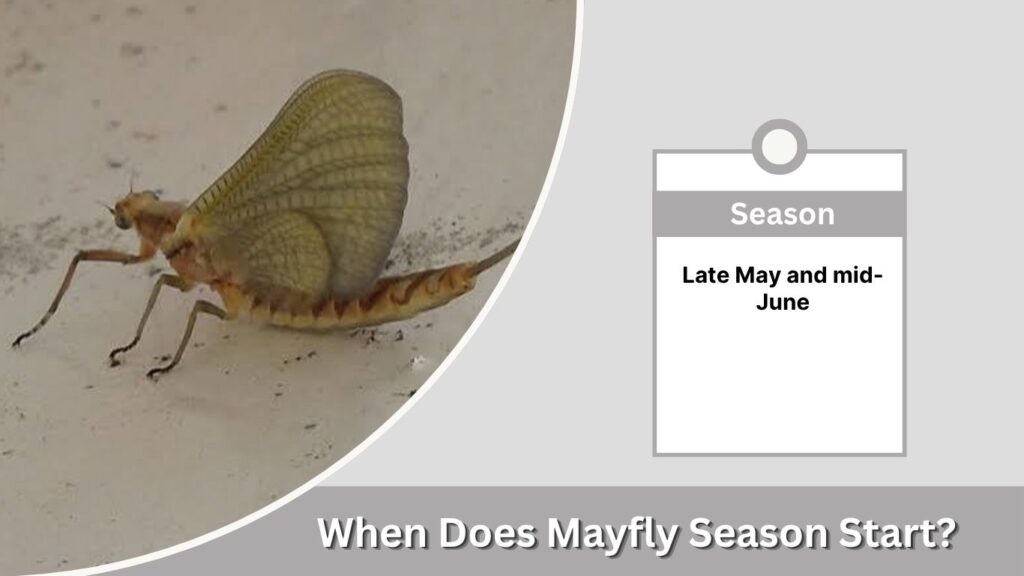
In warmer regions, some mayfly species may begin emerging in spring. Across the Great Lakes and northern United States, noticeable activity usually begins between late May and mid-June.
The season may start earlier following an unusually warm spring because lake and river temperatures rise more quickly. A cool spring can delay development and push major emergences later into June or July.
A few insects appearing around the shoreline do not necessarily indicate that the main hatch has started. Early, scattered activity may occur for several days or weeks before a large synchronized emergence.
Typical Mayfly Season by Region
| Region | General period | Most noticeable activity |
| Lake Erie shoreline | Late May–August | Mid-June to early July |
| Northern Ohio | June–July | Usually late June |
| Southern Michigan | June–July | Late June to early July |
| Upper Midwest lakes | Late spring–summer | Varies by lake and species |
| Warmer southern states | Spring–summer | Often earlier than Great Lakes hatches |
These are general seasonal windows rather than guaranteed dates. Even within one region, a shallow bay may warm and produce a hatch before a deeper nearby lake.
How Long Does Mayfly Season Last?
The overall mayfly season can last several weeks or a few months, but the heaviest local swarm may last only a few nights.
Different groups of nymphs do not always mature simultaneously. One large hatch may be followed by several smaller waves. Separate species can also emerge at different times, extending the apparent season.
Around western Lake Erie, major activity often centers on a short period in June, but some mayflies may continue emerging into August. The strength and duration of the hatch can change considerably from one year to another.
How Long Does One Hatch Last?
A major emergence may remain intense for one to three nights. Another wave can appear days later if additional nymphs reach maturity.
After emerging, a mayfly first enters a winged stage known as the subimago or dun. It later molts once more and becomes a reproductive adult. Depending on the species and conditions, these winged stages may collectively last from several hours to a few days.
The insects found dead beneath lights each morning are therefore not evidence of a disease or pesticide exposure. Their naturally short adult lifespan ends soon after mating.
Mayfly Season Around Lake Erie
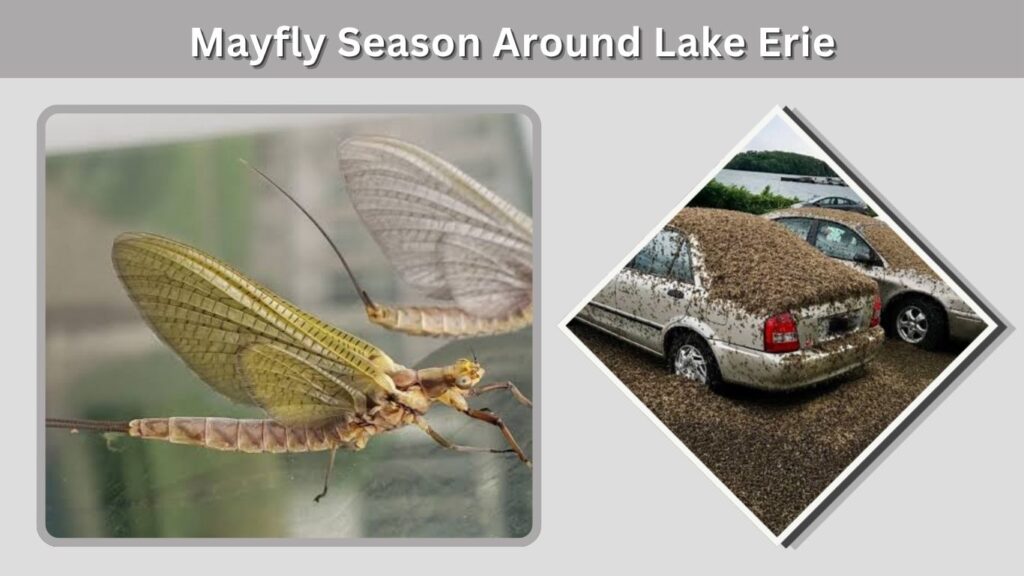
Lake Erie is famous for spectacular emergences of burrowing mayflies, especially in its shallow western basin. The insects develop as nymphs in soft bottom sediments before swimming toward the surface and becoming winged adults.
Communities around Port Clinton, Put-in-Bay, Kelleys Island, Toledo, Sandusky, and nearby shoreline areas can receive particularly dense swarms. Wind direction determines where the insects accumulate after leaving the water.
A north or northeast wind may push large numbers toward parts of the Ohio shoreline. A different wind pattern can carry them toward Michigan, islands, offshore areas, or other sections of the lake.
Why Lake Erie Produces Huge Swarms
Lake Erie is the shallowest and warmest of the Great Lakes, making it highly productive biologically. Western Lake Erie also contains extensive areas of soft sediment suitable for burrowing mayfly nymphs.
The return of large Hexagenia populations during the 1990s followed decades when they were absent or uncommon because of poor water quality and low oxygen. Their recovery has consequently been viewed as an important sign of ecological improvement.
However, mayfly abundance does not prove that every aspect of the lake is healthy. Low oxygen, excessive nutrients, harmful algal blooms, and other water-quality problems still affect Lake Erie.
Mayfly Season in Ohio
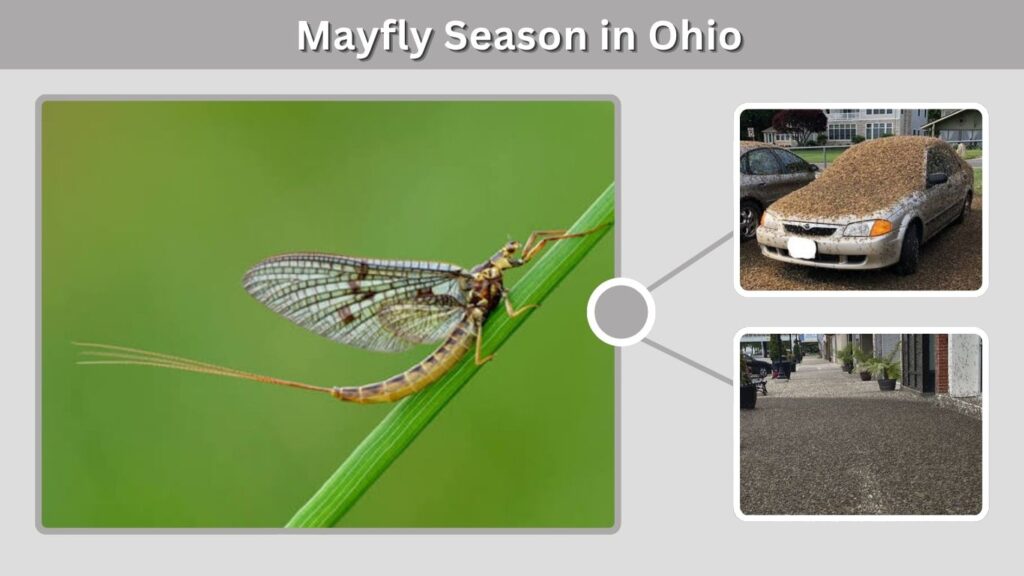
Ohio’s most dramatic mayfly activity occurs near Lake Erie. Port Clinton, Sandusky, Marblehead, Put-in-Bay, Kelleys Island, and Toledo may experience heavy accumulations during June.
Cleveland can also receive mayflies, although the intensity may differ from western-basin communities. Local abundance depends on nearby nymph populations, emergence location, wind direction, and nighttime lighting.
Visitors planning trips to Cedar Point or the Lake Erie islands during the second half of June should be prepared for possible swarms. Mayflies do not normally stop attractions or outdoor activities, but they can collect around parking lots, hotel entrances, waterfront restaurants, and illuminated walkways.
Mayfly Season in Michigan
Michigan has many mayfly species associated with lakes, streams, and rivers. Southern communities near Lake Erie, Lake St. Clair, and the Detroit River can experience large Hexagenia hatches during June and July.
Northern Michigan also has seasonal emergences, but timing varies because cooler waters generally warm later. Hatches on inland lakes may not correspond with Lake Erie activity.
Michigan residents sometimes use the term “fishfly” for large mayflies. True fishflies belong to a different insect group, but both can emerge near water and gather around outdoor lights.
What Triggers a Mayfly Hatch?
Mayfly emergence is controlled by a combination of biological development and environmental conditions.
Water Temperature
Warming water accelerates nymphal growth and helps trigger transformation. This is why a warm spring can produce an earlier hatch while prolonged cool conditions may delay it.
Calm, Warm Weather
Large emergences are often most noticeable during warm, relatively calm evenings. Strong wind or storms may disperse adults, delay visible flight, or move the swarm away from the shoreline.
Species and Life Cycle
Different mayfly species have different schedules. Some produce one generation annually, while others require longer development or have multiple generations.
In the St. Marys River between Lakes Superior and Huron, researchers found that one Hexagenia limbata cohort emerged each season roughly two years after its eggs were deposited.
Water Quality and Oxygen
Mayfly nymphs live in bottom sediments and require suitable oxygen conditions. Extended low-oxygen periods can reduce survival and reproductive success. Research in western Lake Erie linked weak recruitment in some years with temporary stratification and oxygen depletion near the lake bottom.
Are Mayflies Dangerous?
Mayflies do not sting, and adult mayflies do not have functional mouthparts for biting people. They are temporary nuisance insects rather than household pests.
The largest danger comes from their numbers. Dead insects can create slippery conditions on roads, bridges, docks, stairs, and sidewalks. Thick accumulations may also reduce visibility or produce an unpleasant odor as they decompose.
Drivers should slow down when roads are covered with mayflies, especially at night or after rain.
How to Handle Mayfly Season

Mayflies cannot be permanently eliminated from shoreline communities because they emerge from large natural bodies of water. However, their accumulation around a property can be reduced.
Turn off unnecessary outdoor lights during major hatches. Close curtains or blinds so indoor light does not shine through windows. Use warm-colored, lower-intensity lighting where illumination is necessary.
Sweep or blow dead insects away before they become wet and slippery. A shop vacuum can remove mayflies from porches, garages, and entrances. Avoid spraying broad-spectrum insecticides because new insects will continue arriving, and the treatment may kill beneficial species.
When Does Mayfly Season End?
The heaviest Lake Erie activity usually declines during July, but smaller hatches can continue into August. The season ends gradually rather than on one exact date.
A community may appear free of mayflies for several days and then receive another swarm due to a new emergence or changing wind. Activity finally ends when local nymphs have completed their seasonal transformation and water conditions no longer support additional major hatches.
FAQs
When is peak mayfly season?
Around Lake Erie and northern Ohio, peak activity commonly occurs from mid-June through early July. Timing can shift earlier or later depending on water temperature, species, weather, and location.
How long do mayfly swarms last?
An individual heavy swarm may last one to three nights. However, several separate hatches can occur, making seasonal activity continue for weeks.
Are mayflies worse every year?
No. Their abundance varies with nymph survival, oxygen levels, water temperature, weather, and wind. A location receiving a huge swarm one year may experience fewer insects the next.
Why do mayflies gather around lights?
Adult mayflies are strongly attracted to artificial light. Streetlights, signs, windows, and waterfront buildings can draw them away from the water and concentrate them in urban areas.
Are mayflies a sign of clean water?
Large populations generally indicate that bottom habitat can support pollution-sensitive aquatic life. Their return to western Lake Erie was associated with improved conditions, although their presence does not mean the lake has no remaining environmental problems.