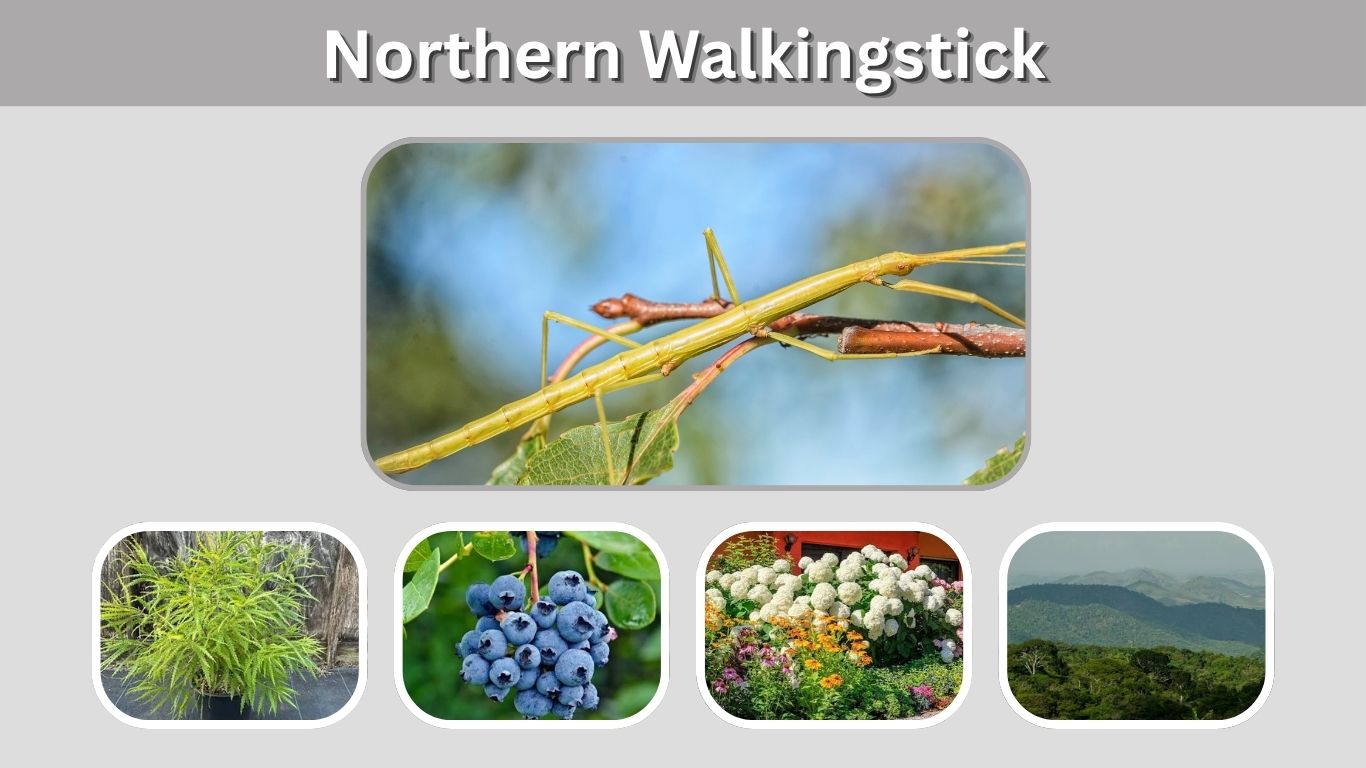
The northern walkingstick (Diapheromera femorata), also called the common American walkingstick, is a slender, wingless insect famous for looking almost exactly like a twig. Native to much of North America, it spends most of its life among hardwood trees, where its brown or green body provides excellent camouflage. Northern walkingsticks are harmless herbivores that mainly eat leaves from oak, hazelnut, and other deciduous plants. Their unusual life cycle includes eggs dropped onto the forest floor, green juveniles that resemble miniature adults, and remarkable adaptations for avoiding predators.
What Is a Northern Walkingstick?
The northern walkingstick is a stick insect belonging to the order Phasmatodea.
Its scientific name is Diapheromera femorata.
Unlike grasshoppers or many other large insects, adult northern walkingsticks have no wings. Instead, they depend heavily on camouflage and slow movement to avoid predators.
Northern Walkingstick Classification
| Classification | Name |
| Kingdom | Animalia |
| Phylum | Arthropoda |
| Class | Insecta |
| Order | Phasmatodea |
| Family | Diapheromeridae |
| Genus | Diapheromera |
| Species | D. femorata |
The species is also commonly called the common walkingstick or common American walkingstick.
What Does a Northern Walkingstick Look Like?
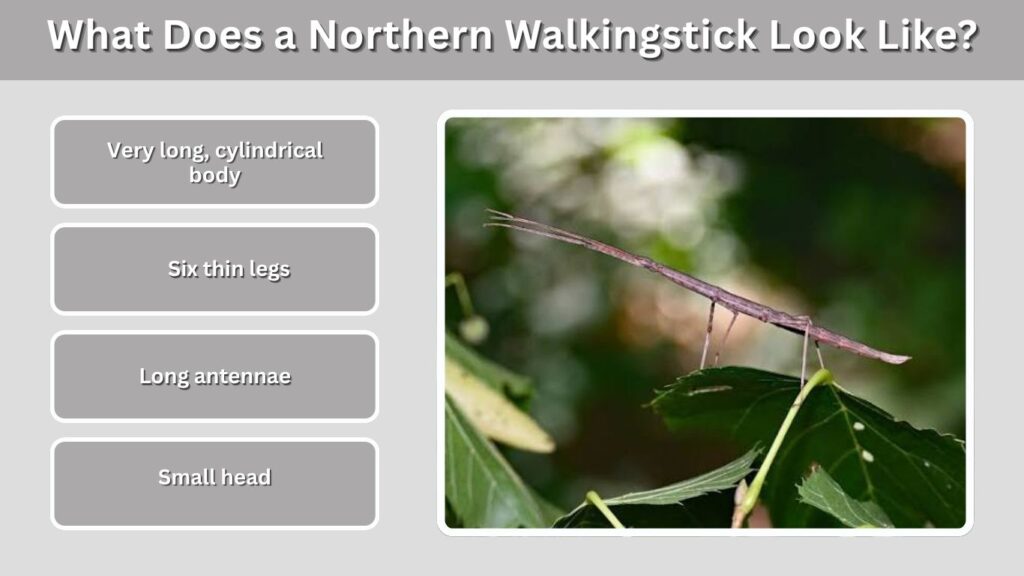
The northern walkingstick has an extremely long, narrow body resembling a small branch.
Its coloration ranges from green to tan and brown, allowing it to disappear visually among leaves and twigs.
Identification Features
Look for:
- Very long, cylindrical body
- Six thin legs
- Long antennae
- Green, brown, or mixed coloration
- Small head
- No wings
- Twig-like appearance
- Slow, deliberate movements
The antennae can measure more than half the length of the body.
Northern Walkingstick Size
Northern walkingsticks are relatively large insects.
Adult males average about 75 mm (3 inches) long, while females average around 95 mm (3.7 inches). Large individuals can approach approximately 4 inches. Females are generally noticeably larger and heavier than males.
Northern Walkingstick Range
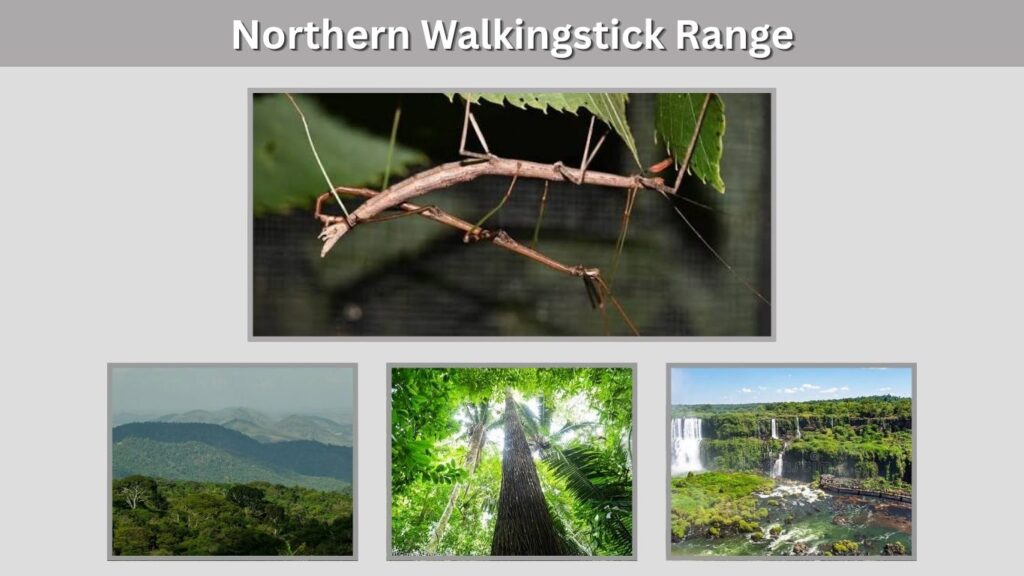
The northern walkingstick has a broad distribution across North America.
It occurs across much of the eastern United States and extends westward into parts of the central and southwestern U.S. Its northern range reaches southern Canada.
It has been recorded from Canadian provinces including:
- Manitoba
- Ontario
- Quebec
Within the United States, it occurs from the Atlantic Coast into parts of the interior, with records extending west toward New Mexico.
Northern Walkingstick in Minnesota
Northern walkingsticks occur in forested regions of Minnesota.
They are associated with hardwood trees such as oak, basswood, and American hazelnut. Adults are often most noticeable in late summer, although their camouflage makes them surprisingly difficult to find.
Northern Walkingstick Habitat
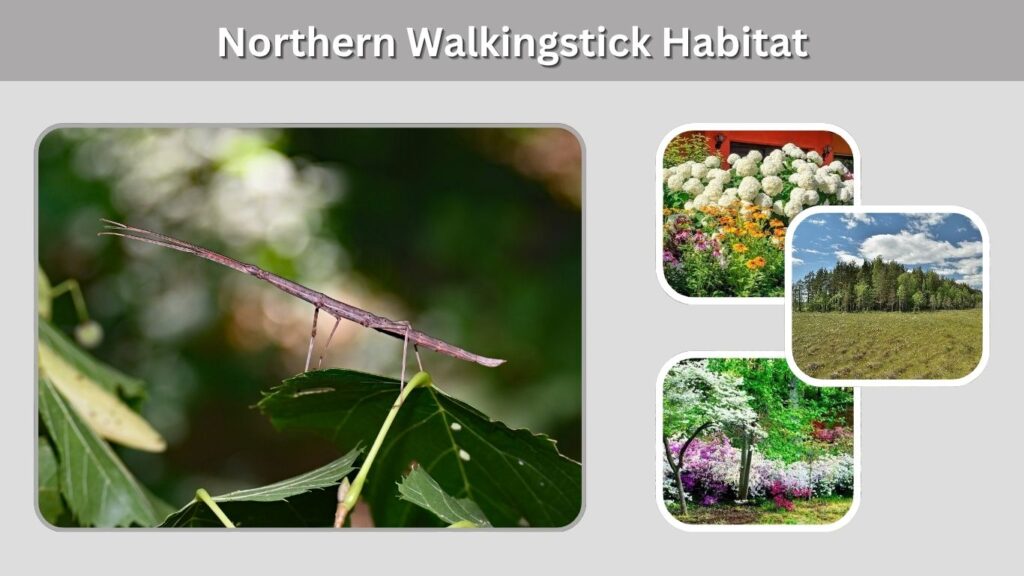
The preferred northern walkingstick habitat is deciduous woodland.
These insects spend much of their time on trees and shrubs where both food and camouflage are readily available.
Common habitats include:
- Oak forests
- Mixed deciduous woodland
- Forest edges
- Shrubby areas
- Gardens
- Residential yards
- Areas with hazelnut and other host plants
They are primarily arboreal, meaning much of their activity takes place in vegetation above the ground.
What Do Northern Walkingsticks Eat?
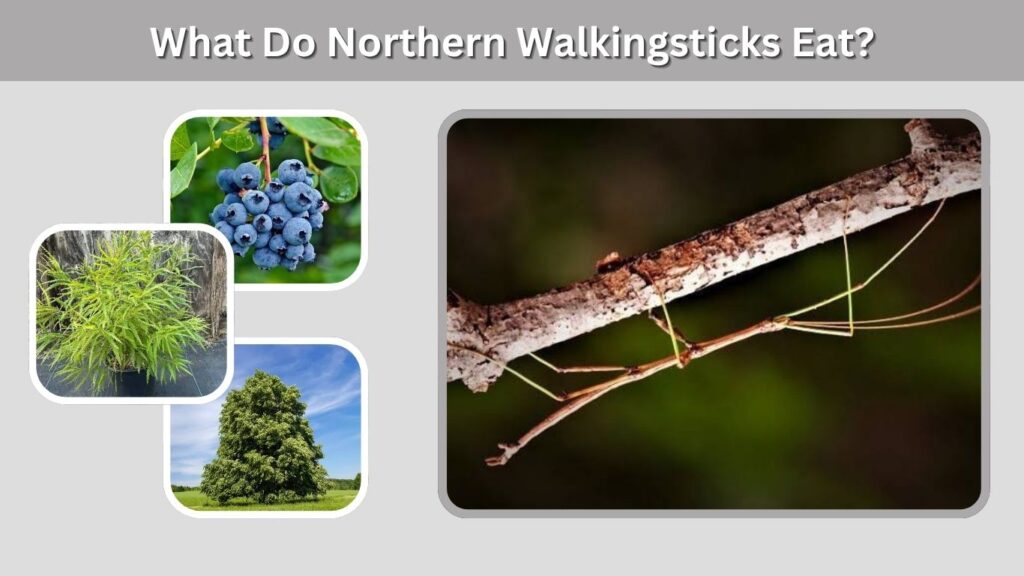
Northern walkingsticks are completely herbivorous.
They use chewing mouthparts to consume foliage from trees and shrubs.
Northern Walkingstick Diet
Frequently used food plants include:
- Oak
- Hazelnut
- Black cherry
- Basswood
- Sweetfern
- Blueberry
- Strawberry plants
Oak and hazelnut are particularly important food sources.
Young nymphs may feed on hazel and black cherry, while adults often consume substantial amounts of oak foliage.
Can Northern Walkingsticks Damage Trees?
Usually, a few walkingsticks cause little noticeable damage.
However, unusually large population outbreaks can strip substantial foliage from trees. Northern walkingsticks may leave major leaf veins behind while consuming much of the softer leaf tissue.
Localized outbreaks have occasionally caused serious defoliation, particularly among oaks.
Northern Walkingstick Life Cycle
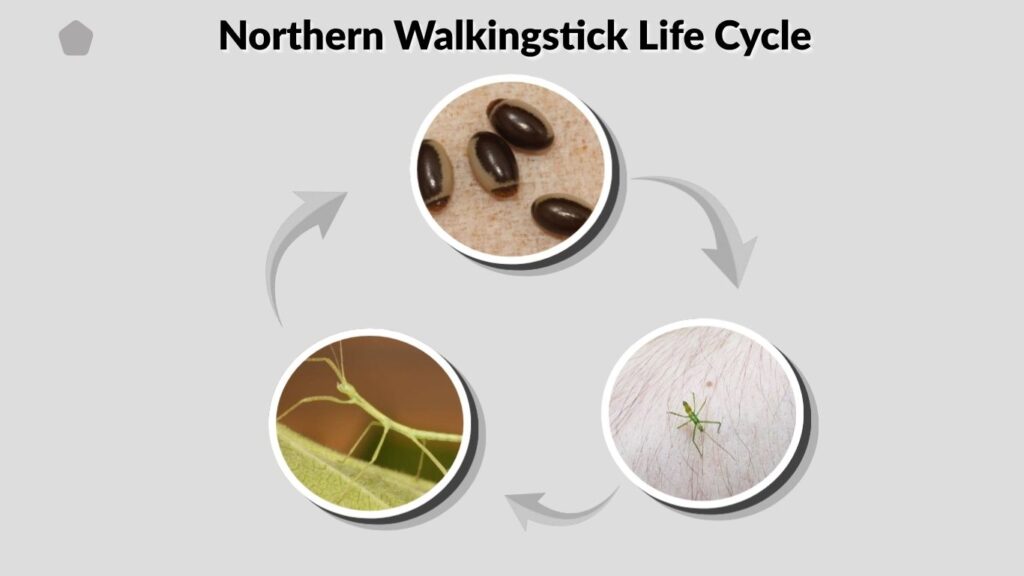
Northern walkingsticks undergo incomplete metamorphosis.
There is no caterpillar or pupal stage.
Their life cycle consists of:
Egg → Nymph → Adult
Northern Walkingstick Eggs
Females produce small eggs that resemble seeds.
Rather than carefully constructing a nest, a female commonly drops individual eggs from trees onto the forest floor.
The eggs settle into leaf litter, where many spend the winter protected by fallen leaves.
Females provide no parental care after laying them.
How Do Northern Walkingsticks Overwinter?
In much of their range, northern walkingsticks survive winter primarily in the egg stage.
The adults eventually die as cold weather arrives, while their eggs remain among leaf litter.
Depending on population and climate, eggs may remain dormant for an extended period before hatching.
In northern populations, development can sometimes follow a two-year cycle rather than producing a new adult generation every year.
Juvenile Northern Walkingstick
Baby walking sticks are called nymphs.
When they first hatch, northern walkingstick nymphs are typically bright green and look like tiny versions of the adults.
They do not hatch with wings because this species remains wingless throughout its life.
As nymphs grow, they repeatedly shed their exoskeleton in a process called molting.
Most undergo around five molts, although the number can vary between individuals and sexes. Their coloration generally becomes browner as they mature.
Northern Walkingstick Lifespan
An exact average lifespan for Diapheromera femorata has not been firmly established.
Their active nymph and adult stages are strongly seasonal. Research cited by Animal Diversity Web found that nymphs may take approximately 75–85 days to reach adulthood, although development varies according to temperature and local conditions.
The overall cycle may be much longer because eggs can remain dormant over winter and, in some northern populations, through a longer developmental cycle.
For that reason, it is better to describe their lifespan in terms of life stages rather than claim a precise number of months or years.
Do Northern Walkingsticks Bite?
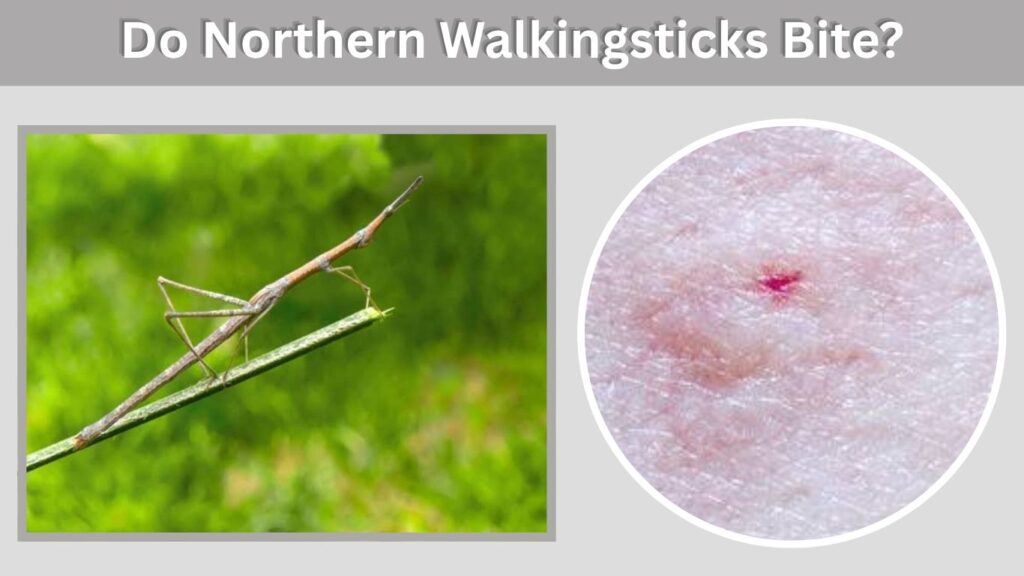
Northern walking sticks are considered harmless to humans.
They are not aggressive, have no venomous sting, and do not seek out people to bite. Their mouthparts are designed for chewing vegetation.
Their primary response to danger is to remain motionless and rely on camouflage.
This species should not be confused with certain two-striped walkingsticks, which can release an irritating defensive spray. Most North American walkingsticks, including the northern walkingstick, do not pose that type of hazard.
How Does a Northern Walkingstick Defend Itself?
Its most important defense is camouflage, or crypsis.
The insect’s body shape and coloration closely resemble a twig. When resting among branches, it can be extremely difficult for predators to recognize.
Northern walkingsticks may also:
- Remain completely motionless
- Align their bodies with branches
- Sway slightly like vegetation
- Drop from vegetation to escape
- Shed a leg when grabbed
Young walkingsticks may even regenerate some lost leg tissue during later molts.
Northern Walkingstick vs. Giant Walking Stick
The name “giant walkingstick” usually refers to larger stick insect species, so it should not automatically be applied to D. femorata.
| Feature | Northern Walkingstick | Giant Walkingsticks |
| Scientific name | Diapheromera femorata | Varies by species |
| Typical size | Around 3–4 inches | Often considerably larger |
| Wings | None | Depends on species |
| Color | Green to brown | Varies |
| North American species | Yes | Depends on species |
| Main defense | Camouflage | Species dependent |
Identification should therefore be based on species characteristics rather than size alone.
Northern Walkingstick vs. Two-Striped Walkingstick
These insects are also easily confused by their common names.
The northern walkingstick (Diapheromera femorata) is a thin, plain green or brown species widespread across much of North America.
The two-striped walkingstick (Anisomorpha buprestoides) is a different species found mainly in the southeastern United States and has obvious longitudinal stripes.
Most importantly, the two-striped walkingstick can spray an irritating defensive chemical that may seriously irritate human eyes. The northern walkingstick does not share this well-known chemical defense.
Interesting Northern Walkingstick Facts
- Its scientific name is Diapheromera femorata.
- It is completely wingless.
- Females are usually larger than males.
- Young nymphs are often bright green.
- Adults become greener-brown or brown.
- They mainly feed on deciduous tree leaves.
- Their eggs resemble seeds.
- Females simply drop eggs to the forest floor.
- Eggs commonly overwinter among leaf litter.
- They rely heavily on twig-like camouflage.
- They are harmless to humans.
- Large populations can occasionally defoliate trees.
FAQs
1. What is a northern walkingstick?
The northern walkingstick (Diapheromera femorata) is a wingless North American stick insect. It has a long, slender body that resembles a twig and lives primarily in deciduous forests, where it feeds on the leaves of oak, hazelnut, and other plants.
2. How big does a northern walkingstick get?
Adult males average approximately 3 inches long, while females average around 3.7 inches and may approach 4 inches. Their extremely thin bodies and long legs often make them appear even larger when fully extended.
3. Can a northern walkingstick bite you?
Northern walkingsticks are not considered dangerous to people. They do not sting or inject venom and are not aggressive. Their chewing mouthparts are adapted for eating leaves, while their primary defense against threats is camouflage rather than attacking.
4. What does a northern walkingstick eat?
Northern walkingsticks eat foliage from deciduous trees and shrubs. Oak and hazelnut are particularly important food plants, while they may also consume basswood, black cherry, blueberry, sweetfern, and other vegetation available in their habitat.
5. Where do northern walkingsticks go in winter?
Adults generally do not survive cold northern winters. Instead, females drop eggs onto the ground, where they remain protected among leaf litter. The eggs stay dormant during winter and hatch when environmental conditions become favorable for young nymphs.