
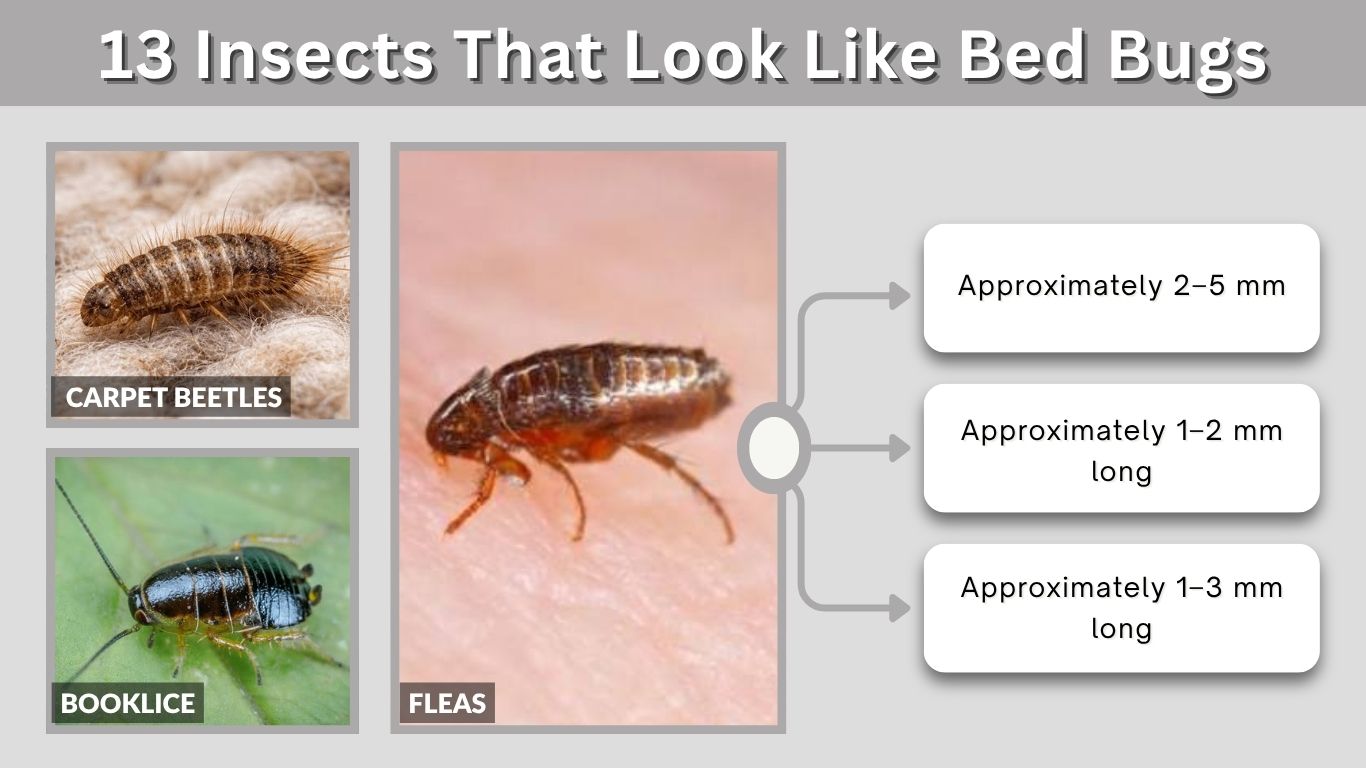
Many small household insects resemble bed bugs, making it difficult to identify what is crawling on your mattress, furniture, or walls. Several insects that look like bed bugs share similar body shapes, reddish-brown colors, and small sizes, but their feeding habits and behavior can be completely different. Common bed bug lookalikes include bat bugs, carpet beetles, spider beetles, booklice, and cockroach nymphs. Some bite humans, while others are harmless household visitors. Understanding their appearance, habitat, and distinguishing features can help you identify these 13 bed bug-like insects and avoid unnecessary pest treatments.
1. Bat Bugs
Bat bugs are small, blood-feeding insects that closely resemble common bed bugs. They belong to the same insect family, Cimicidae, and have similar flattened bodies and reddish-brown coloring. However, bat bugs primarily feed on bats rather than humans, making their habitat and feeding behavior different.
Identification
- Size: Approximately 4–6 mm long.
- Color: Reddish-brown to dark brown.
- Body Shape: Oval, flattened, and wingless.
- Legs: Six legs with two antennae.
- Distinctive Feature: Longer hairs around the thorax than common bed bugs.
Habitat and Where They Live
Bat bugs commonly inhabit locations where bats roost, including attics, chimneys, wall cavities, and roof spaces. They remain near their hosts to obtain regular blood meals. When bats leave a building, bat bugs may wander into bedrooms and other living areas searching for alternative hosts.
Do Bat Bugs Bite Humans?
Bat bugs can bite humans, especially when their preferred bat hosts are unavailable. Their bites may cause redness, itching, and skin irritation similar to bed bug bites. However, humans are not their preferred hosts.
Bat Bugs vs. Bed Bugs
The main difference is their preferred host. Bat bugs primarily feed on bats, while common bed bugs usually feed on humans. Bat bugs also have longer hairs around their thorax, but this difference generally requires magnification to identify. Both insects are wingless and have nearly identical body shapes.
2. Swallow Bugs
Swallow bugs are small, blood-feeding insects that closely resemble common bed bugs. They belong to the family Cimicidae and primarily feed on swallows and other associated bird hosts. Because of their flattened, reddish-brown bodies, swallow bugs are frequently mistaken for bed bugs when discovered around houses, windows, or nesting areas.
Identification
- Size: Approximately 3–5 mm long.
- Color: Brown to reddish-brown.
- Body Shape: Oval, flattened, and wingless.
- Legs: Six legs with short antennae.
- Distinctive Feature: Fine, relatively long hairs around the thorax.
Habitat and Where They Live
Swallow bugs mainly inhabit bird nests, particularly those built beneath roof edges, bridges, and building overhangs. They hide inside nest materials and surrounding cracks while waiting for their bird hosts. When swallows migrate or abandon their nests, these insects may enter nearby living spaces searching for blood meals.
Do Swallow Bugs Bite Humans?
Swallow bugs primarily feed on birds but occasionally bite humans when their preferred hosts are unavailable. Their bites can produce itchy, red marks similar to those caused by common bed bugs. Human encounters are often associated with buildings containing abandoned or seasonally occupied swallow nests.
Swallow Bugs vs. Bed Bugs
Swallow bugs and bed bugs have nearly identical body shapes, making visual identification difficult. However, swallow bugs are more closely associated with bird nests, while bed bugs typically inhabit sleeping areas. Swallow bugs also have longer body hairs, a characteristic usually examined under magnification.
3. Carpet Beetles
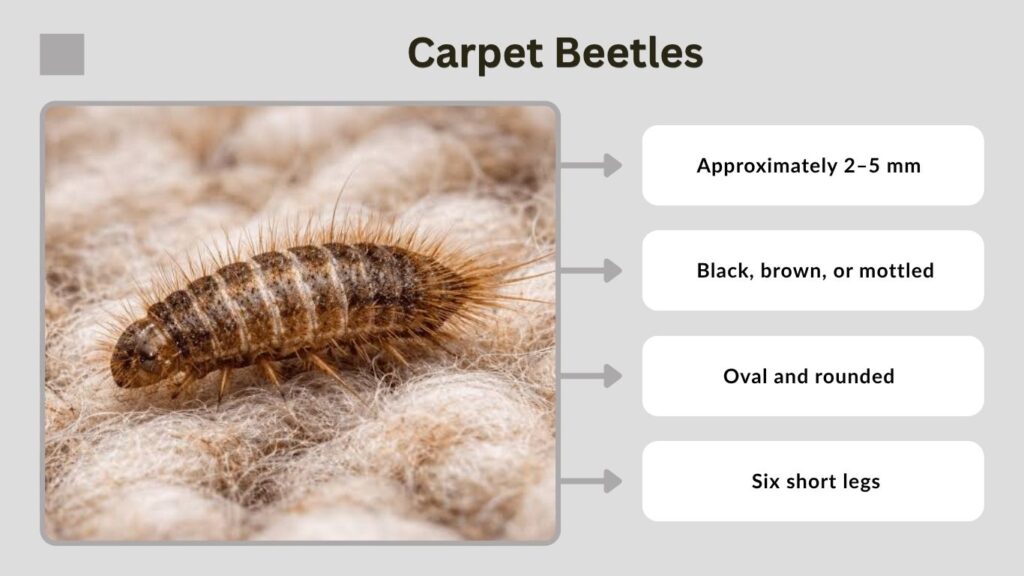
Carpet beetles are small household insects that can sometimes be mistaken for bed bugs because of their size, dark coloration, and presence around bedrooms. They belong to the family Dermestidae and commonly infest carpets, clothing, upholstery, and other materials containing animal fibers. Unlike bed bugs, carpet beetles do not feed on human blood.
Identification
- Size: Approximately 2–5 mm long as adults.
- Color: Black, brown, or mottled with white and yellowish markings.
- Body Shape: Oval and rounded.
- Legs: Six short legs.
- Distinctive Feature: Hard wing covers and hairy larvae.
Habitat and Where They Live
Carpet beetles commonly inhabit carpets, closets, upholstered furniture, and storage areas. Their larvae feed on materials containing wool, fur, feathers, and other animal-derived substances. Adult carpet beetles may also appear near windows because they are attracted to light and can fly.
Do Carpet Beetles Bite Humans?
Carpet beetles do not bite humans or feed on blood. However, the tiny hairs covering their larvae can cause skin irritation in sensitive individuals. This irritation may produce itchy bumps or rashes that are sometimes confused with bed bug bites. The reaction results from contact with larval hairs rather than actual biting.
Carpet Beetles vs. Bed Bugs
Carpet beetles have rounded, dome-shaped bodies, while bed bugs are broad and flattened. Adult carpet beetles possess functional wings, unlike bed bugs. Another important difference is feeding behavior: carpet beetle larvae damage natural fibers, whereas bed bugs feed on blood.
4. Spider Beetles
Spider beetles are tiny household insects that resemble both spiders and bed bugs. They belong to the family Ptinidae and are commonly found in stored food products, old buildings, and storage areas. Their rounded bodies and long, slender legs can make them appear similar to bed bugs when viewed from a distance.
Identification
- Size: Approximately 1.5–4 mm long.
- Color: Reddish-brown, dark brown, or nearly black.
- Body Shape: Rounded or globe-shaped.
- Legs: Six relatively long legs.
- Distinctive Feature: Shiny, rounded abdomen and spider-like appearance.
Habitat and Where They Live
Spider beetles usually inhabit pantries, food storage areas, warehouses, and older buildings. They feed on dried grains, cereals, spices, animal materials, and various stored products. Their ability to hide inside small cracks allows them to remain unnoticed for extended periods. Some species are particularly active at night.
Do Spider Beetles Bite Humans?
Spider beetles do not normally bite humans or feed on blood. They are primarily scavengers that consume stored food and organic materials. Although they may occasionally wander into bedrooms, their presence does not indicate a bed bug infestation or a blood-feeding insect problem.
Spider Beetles vs. Bed Bugs
Spider beetles have a more rounded, raised body, while bed bugs are noticeably flattened. Their legs are generally longer relative to their body size, giving them a spider-like appearance. Spider beetles also have hardened wing covers, which bed bugs lack.
5. Booklice
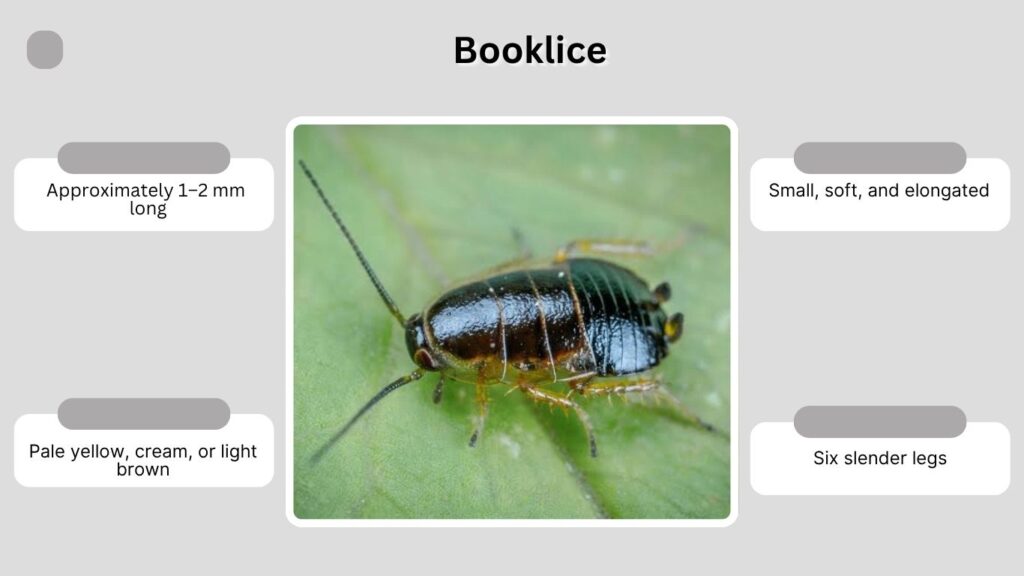
Booklice are extremely small insects that can resemble baby bed bugs, particularly when found crawling on furniture, walls, or bedding. They belong to the group Psocodea and are commonly associated with damp indoor environments. Despite their name, booklice are not true lice and do not feed on human blood.
Identification
- Size: Approximately 1–2 mm long.
- Color: Pale yellow, cream, or light brown.
- Body Shape: Small, soft, and elongated.
- Legs: Six slender legs.
- Distinctive Feature: Relatively large head and long antennae.
Habitat and Where They Live
Booklice commonly inhabit humid areas such as bathrooms, kitchens, basements, and poorly ventilated rooms. They may also occur around books, cardboard boxes, wallpaper, and stored food. These insects primarily consume mold, fungi, and microscopic organic materials that develop in moist environments.
Do Booklice Bite Humans?
Booklice do not bite humans or animals. They have no interest in blood and generally pose little direct health risk. Their presence is usually associated with excessive indoor humidity rather than poor hygiene. Reducing moisture and improving ventilation can help control their populations.
Booklice vs. Bed Bugs
Booklice are generally smaller and more elongated than bed bugs. Their heads are proportionally larger, and their antennae are longer and more noticeable. Baby bed bugs have broader, oval bodies and feed on blood, while booklice feed on mold and other organic materials.
6. Cockroach Nymphs
Cockroach nymphs are immature cockroaches that can sometimes resemble bed bugs because of their small size, brown coloration, and wingless appearance. These young insects have not yet developed the wings present in many adult cockroach species. They are common household pests and may appear in kitchens, bathrooms, bedrooms, and other sheltered locations.
Identification
- Size: Approximately 2–10 mm or more, depending on species and age.
- Color: Light brown, reddish-brown, or dark brown.
- Body Shape: Oval, flattened, and somewhat elongated.
- Legs: Six legs, often with noticeable spines.
- Distinctive Feature: Very long antennae and rapid movement.
Habitat and Where They Live
Cockroach nymphs commonly inhabit warm, dark, and sheltered areas. They may hide beneath appliances, inside cabinets, behind refrigerators, and around plumbing. Some species also occupy bedrooms and furniture cracks, particularly when food, moisture, or suitable shelter is available.
Do Cockroach Nymphs Bite Humans?
Cockroach nymphs do not normally bite humans. They primarily consume food scraps, decaying organic matter, and other available materials. However, cockroach infestations may contribute to indoor allergen exposure, particularly through their droppings and shed body parts.
Cockroach Nymphs vs. Bed Bugs
Cockroach nymphs generally have longer antennae, more elongated bodies, and faster movements than bed bugs. They also tend to have more prominent, spiny legs. Unlike bed bugs, cockroach nymphs do not depend on blood meals for survival.
7. Fleas
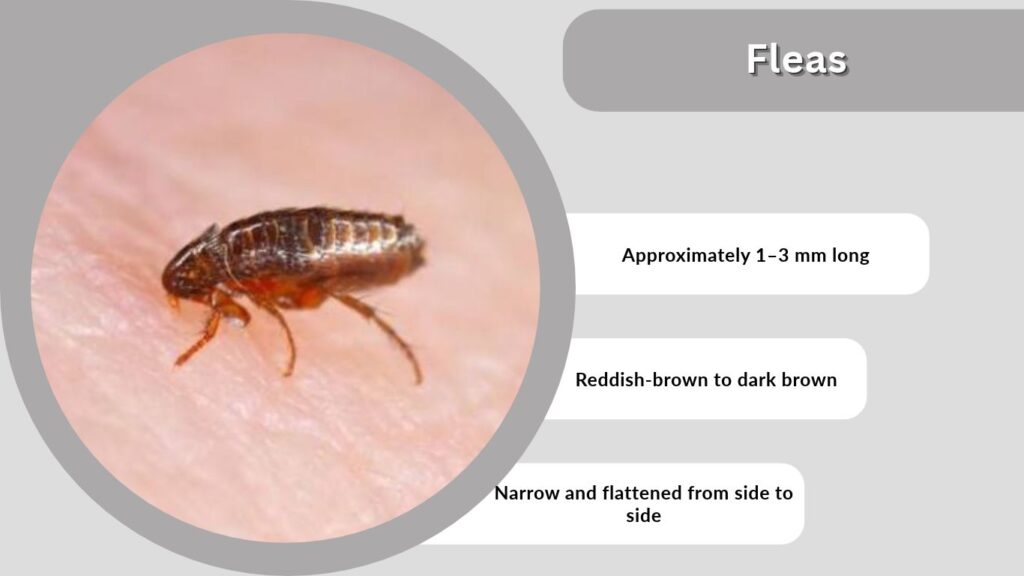
Fleas are tiny, wingless insects that are frequently confused with bed bugs because both feed on blood and can cause itchy bites. They belong to the order Siphonaptera and commonly infest mammals, including cats, dogs, and humans. Although fleas and bed bugs share some feeding characteristics, their body structures and movements are noticeably different.
Identification
- Size: Approximately 1–3 mm long.
- Color: Reddish-brown to dark brown.
- Body Shape: Narrow and flattened from side to side.
- Legs: Six legs with enlarged hind legs.
- Distinctive Feature: Powerful jumping ability.
Habitat and Where They Live
Fleas commonly inhabit pet bedding, carpets, upholstered furniture, and areas frequented by animals. Adult fleas often live on their hosts, while eggs and developing stages may accumulate in the surrounding environment. Homes with pets are particularly susceptible, although fleas can also enter buildings through rodents and other wildlife.
Do Fleas Bite Humans?
Fleas bite humans to obtain blood meals, frequently targeting the ankles and lower legs. Their bites may produce small, itchy red bumps that sometimes resemble bed bug bites. However, bite appearance alone cannot reliably identify the responsible insect.
Fleas vs. Bed Bugs
The most obvious difference is movement. Fleas can jump using their powerful hind legs, while bed bugs can only crawl. Fleas also have narrow, side-flattened bodies, whereas bed bugs are broad and flattened from top to bottom. Bed bugs usually hide near sleeping areas, while fleas are commonly associated with animals and their surroundings.
8. Head Lice
Head lice are tiny, wingless insects that can sometimes be confused with bed bugs because of their small size, brownish coloration, and blood-feeding behavior. They belong to the species Pediculus humanus capitis and primarily live on the human scalp. Unlike bed bugs, head lice remain closely associated with human hair and rarely survive long away from their hosts.
Identification
- Size: Approximately 2–3 mm long.
- Color: Tan, grayish-white, or light brown.
- Body Shape: Elongated and flattened.
- Legs: Six short legs with specialized claws.
- Distinctive Feature: Strong claws adapted for gripping human hair.
Habitat and Where They Live
Head lice primarily inhabit the scalp, especially behind the ears and near the back of the neck. They attach their eggs, commonly called nits, directly to hair shafts close to the scalp. Head lice spread mainly through direct head-to-head contact between people.
Do Head Lice Bite Humans?
Head lice feed exclusively on human blood and bite the scalp several times throughout their lives. Their bites can cause itching, irritation, and discomfort. Persistent scratching may occasionally lead to secondary skin infections.
Head Lice vs. Bed Bugs
Head lice have narrower, more elongated bodies than bed bugs. They also possess specialized claws for holding onto hair. While bed bugs typically hide in mattresses and furniture, head lice live directly on the scalp and attach their eggs to individual hair strands.
9. Body Lice
Body lice are small, blood-feeding insects that resemble head lice and may occasionally be mistaken for bed bugs. They belong to the species Pediculus humanus humanus and primarily inhabit clothing rather than mattresses or furniture. Their flattened bodies and brownish coloration can create confusion when they are discovered crawling on bedding or fabric.
Identification
- Size: Approximately 2.3–3.6 mm long.
- Color: Tan, grayish-white, or light brown.
- Body Shape: Narrow, elongated, and flattened.
- Legs: Six short legs with gripping claws.
- Distinctive Feature: Commonly found inside clothing seams.
Habitat and Where They Live
Body lice primarily inhabit clothing, particularly seams and folds that remain close to human skin. They move onto the body to obtain blood meals before returning to clothing. Infestations are most associated with crowded living conditions and limited access to regular bathing or clean clothing.
Do Body Lice Bite Humans?
Body lice feed on human blood and can cause intense itching, red bumps, and skin irritation. Unlike bed bugs, body lice can transmit certain bacterial diseases, including epidemic typhus and trench fever. Heavy infestations require appropriate hygiene measures and medical attention when necessary.
Body Lice vs. Bed Bugs
Body lice are generally smaller and more elongated than bed bugs. Their primary hiding places are clothing seams, while bed bugs usually hide near sleeping areas. Body lice also lay their eggs on clothing fibers, whereas bed bugs attach eggs to protected surfaces.
10. Masked Hunter Bugs
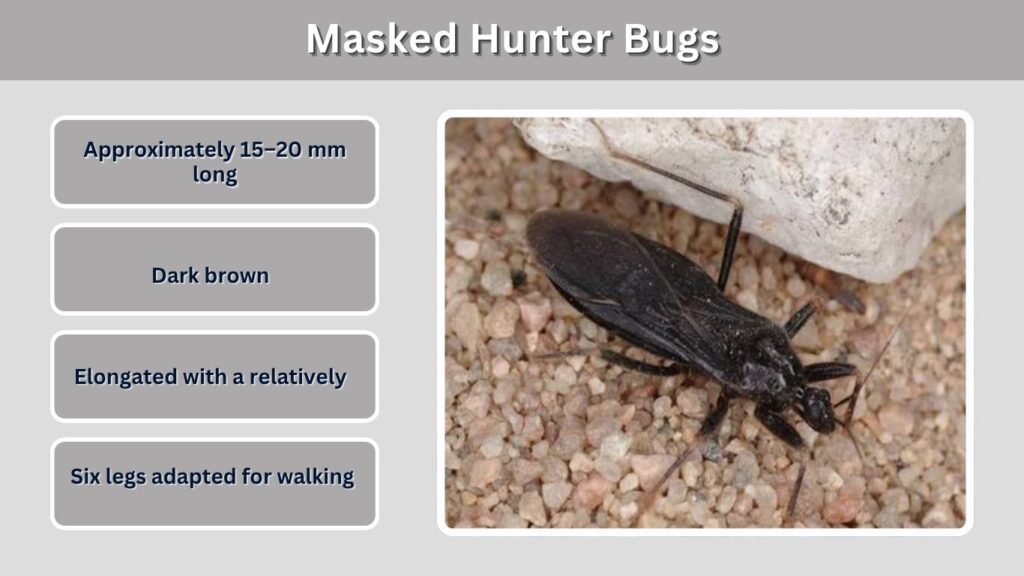
Masked hunter bugs are predatory insects that can sometimes resemble bed bugs during their immature stages. Their scientific name is Reduvius personatus, and they belong to the assassin bug family, Reduviidae. Unlike bed bugs, masked hunters feed on other insects, including household pests. Their immature stages are particularly distinctive because they often cover themselves with dust and debris.
Identification
- Size: Adults are approximately 15–20 mm long; nymphs are smaller.
- Color: Dark brown to nearly black as adults.
- Body Shape: Elongated with a relatively narrow head.
- Legs: Six legs adapted for walking and hunting.
- Distinctive Feature: Nymphs often appear covered in dust and lint.
Habitat and Where They Live
Masked hunter bugs commonly inhabit older buildings, storage areas, wall cracks, and other sheltered locations. They hunt various household insects, including bed bugs, silverfish, and small beetles. Their immature stages may remain hidden among dust and debris, making them difficult to recognize.
Do Masked Hunter Bugs Bite Humans?
Masked hunter bugs do not feed on human blood. However, they can deliver a painful defensive bite when handled or trapped against the skin. Their bites are usually immediately painful, unlike typical bed bug bites, which often go unnoticed during feeding.
Masked Hunter Bugs vs. Bed Bugs
Masked hunter bugs have longer, narrower bodies than bed bugs. Adult masked hunters possess functional wings and are considerably larger. Their dust-covered nymphs also differ from the smooth, oval bodies of bed bug nymphs. Masked hunters are predators rather than blood-feeding parasites.
11. Minute Pirate Bugs
Minute pirate bugs are extremely small predatory insects that sometimes resemble baby bed bugs because of their compact bodies and dark or pale coloration. They belong to the family Anthocoridae and are commonly found around flowers, gardens, and agricultural plants. These insects help control populations of aphids, thrips, and other small pests.
Identification
- Size: Usually approximately 2–5 mm long.
- Color: Black, black-and-white, or pale yellow in immature stages.
- Body Shape: Small, oval, and somewhat flattened.
- Legs: Six slender legs.
- Distinctive Feature: Adults have contrasting dark and pale wing markings.
Habitat and Where They Live
Minute pirate bugs commonly inhabit gardens, flowering plants, agricultural fields, and vegetation containing small insects. They actively hunt aphids, mites, and thrips. Adults may occasionally enter buildings or appear around windows, especially during seasonal changes.
Do Minute Pirate Bugs Bite Humans?
Minute pirate bugs occasionally bite humans, particularly during the fall. Their bites can produce a sudden, sharp sensation followed by temporary irritation. However, they do not feed on human blood or spread diseases through their bites.
Minute Pirate Bugs vs. Bed Bugs
Adult minute pirate bugs possess functional wings, while bed bugs are wingless. Minute pirate bugs also have contrasting body markings and primarily feed on smaller insects. Bed bugs are usually associated with sleeping areas, whereas minute pirate bugs are commonly found around outdoor vegetation.
12. Ground Beetles
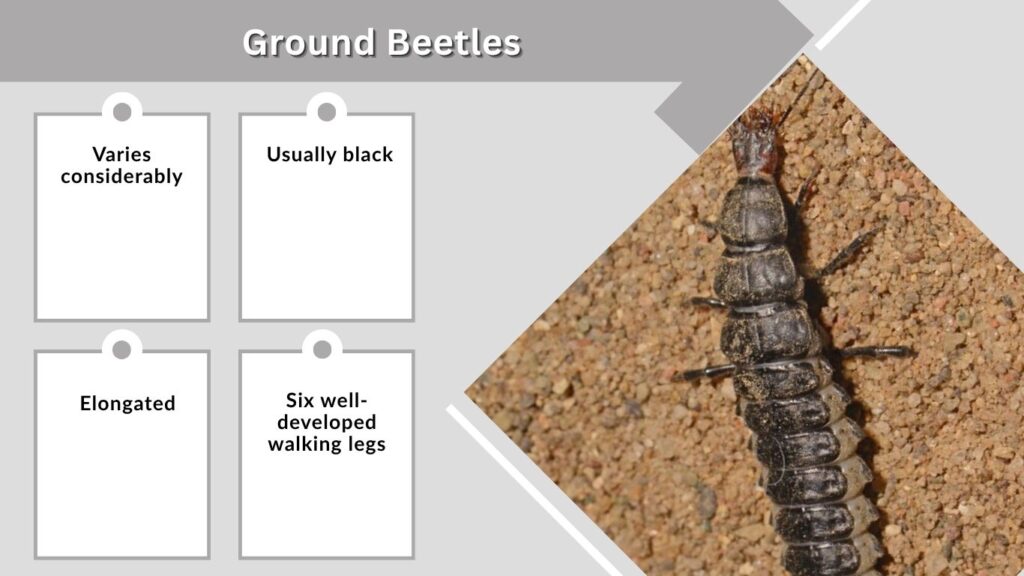
Ground beetles are a large group of predatory insects belonging to the family Carabidae. Some smaller, dark-colored species may occasionally be mistaken for bed bugs when discovered indoors. However, ground beetles typically have harder, more elongated bodies and move rapidly across surfaces. Most species are beneficial insects that help control other small pests.
Identification
- Size: Varies considerably, from a few millimeters to several centimeters.
- Color: Usually black, dark brown, or metallic.
- Body Shape: Elongated, oval, and relatively firm.
- Legs: Six well-developed walking legs.
- Distinctive Feature: Hard wing covers, often with visible ridges.
Habitat and Where They Live
Ground beetles commonly inhabit gardens, forests, agricultural fields, and areas beneath rocks, logs, and fallen leaves. They prefer protected environments where they can hunt insects and other small invertebrates. Some species accidentally enter houses through doors, windows, and foundation gaps.
Do Ground Beetles Bite Humans?
Ground beetles do not feed on human blood and generally avoid contact with people. Some species can pinch the skin when handled roughly, but they are not considered common biting household pests. They mainly feed on insects, larvae, and other small organisms.
Ground Beetles vs. Bed Bugs
Ground beetles usually have harder, more elongated bodies than bed bugs. Their wing covers form a visible line along the back, while bed bugs have no functional wings. Ground beetles also move rapidly and are primarily outdoor predators rather than indoor blood-feeding parasites.
13. Poultry Bugs
Poultry bugs are blood-feeding insects that closely resemble common bed bugs. One recognized species is Haematosiphon inodorus, which belongs to the family Cimicidae. These insects primarily feed on chickens and other birds, making them common around poultry roosting areas. Their flattened bodies and reddish-brown coloring can make them difficult to distinguish from bed bugs without close examination.
Identification
- Size: Small, generally several millimeters long.
- Color: Reddish-brown to grayish-brown.
- Body Shape: Oval, flattened, and wingless.
- Legs: Six short legs with two antennae.
- Distinctive Feature: Closely resembles bed bugs but is associated with poultry hosts.
Habitat and Where They Live
Poultry bugs primarily inhabit chicken houses, poultry shelters, bird nesting areas, and cracks around roosting sites. They remain hidden during the day and emerge at night to feed on resting birds. Their presence is closely associated with locations where suitable bird hosts regularly gather.
Do Poultry Bugs Bite Humans?
Poultry bugs primarily feed on chickens and other birds, but they may occasionally bite humans. Human bites are uncommon and usually occur when people spend time close to poultry roosting areas, particularly overnight. Their bites can produce itching and irritation similar to bed bug bites.
Poultry Bugs vs. Bed Bugs
Poultry bugs and common bed bugs have nearly identical flattened body shapes and reddish-brown coloration. The most important difference is their preferred hosts. Poultry bugs are associated with birds, while common bed bugs usually feed on humans. Accurate identification may require microscopic examination of body structures.
FAQs
1. What Insects Are Most Commonly Mistaken for Bed Bugs?
Bat bugs, carpet beetles, spider beetles, booklice, and cockroach nymphs are commonly mistaken for bed bugs. These insects share similar sizes, colors, or body shapes. However, their feeding habits, movement, and preferred habitats can help distinguish them from actual bed bugs.
2. What Small Insects Look Like Baby Bed Bugs?
Booklice, young cockroaches, and minute pirate bug nymphs can resemble baby bed bugs. They are small and may have pale or brownish bodies. Baby bed bugs are typically oval, flattened, and initially translucent or pale yellow. They become reddish after taking a blood meal.
3. What Insects Look Like Bed Bugs but Have Wings?
Carpet beetles, spider beetles, and adult minute pirate bugs are examples of insects that may resemble bed bugs but possess wings. Adult bed bugs have only tiny, nonfunctional wing pads and cannot fly. If an insect flies around your bedroom, it is not a common bed bug.
4. What Insect Bites Look Like Bed Bug Bites?
Flea bites, mosquito bites, and bites from bat bugs or swallow bugs can produce itchy red bumps resembling bed bug bites. However, skin reactions vary between individuals, and bite appearance alone cannot identify the responsible insect. Finding the actual insect provides more reliable identification.
5. How Can You Tell if an Insect Is a Bed Bug?
Adult bed bugs are approximately 4–7 mm long, reddish-brown, oval, and flattened. They have six legs, two antennae, and no functional wings. Check mattress seams, bed frames, and nearby furniture for live insects, dark fecal spots, eggs, or shed skins. These signs can help distinguish bed bugs from similar household insects.
