
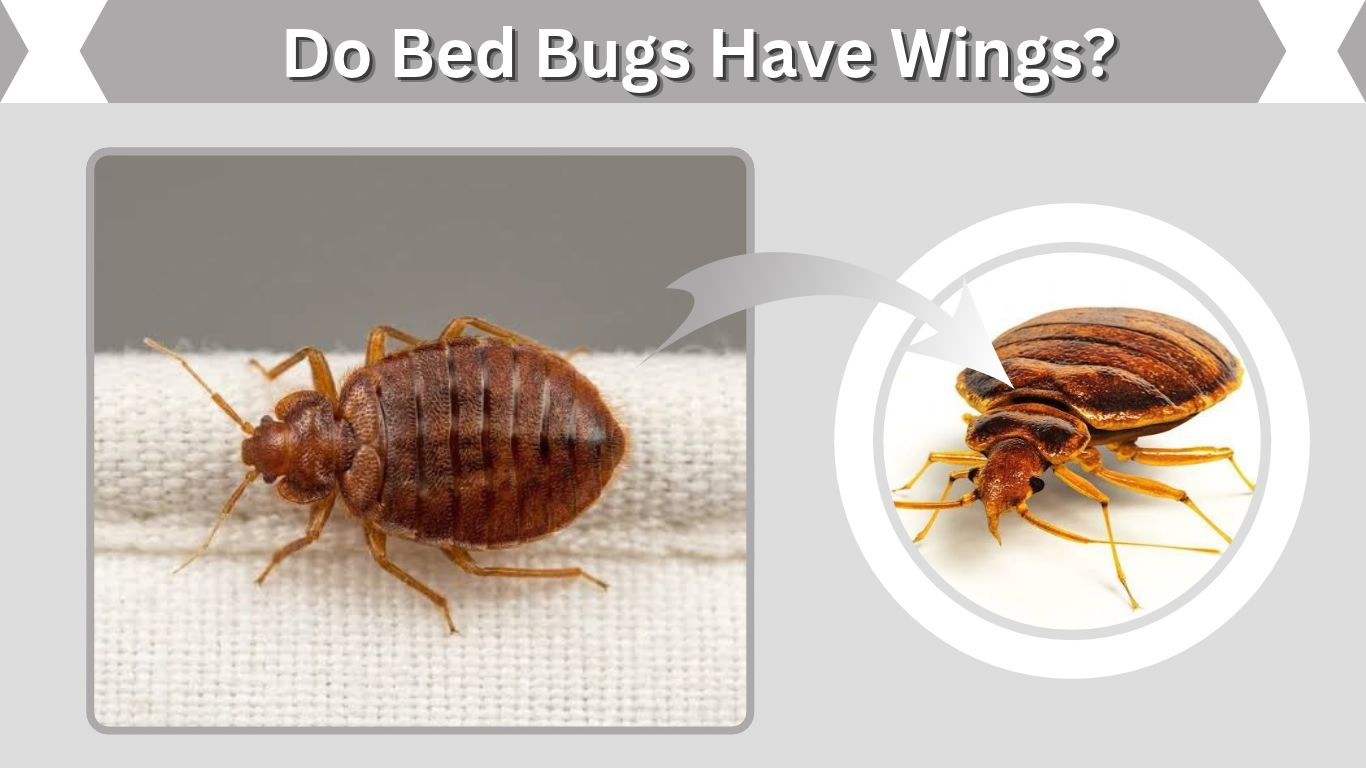
Bed bugs are small, reddish-brown insects commonly found in bedrooms, mattresses, and furniture. Their appearance often causes confusion, especially when people notice unusual insects crawling or flying near their beds. One of the most frequently asked questions is: Do bed bugs have wings?
No, bed bugs do not have functional wings, and they cannot fly. Adult bed bugs have tiny, undeveloped wing structures called wing pads, but these cannot support flight. Baby bed bugs are also wingless. Unlike fleas, bed bugs cannot jump either. Instead, they move by crawling across surfaces and hiding in small cracks.
Understanding their appearance and movement can help you identify bed bugs correctly and distinguish them from other household insects.
Do Bed Bugs Have Wings?
Bed bugs are considered wingless insects because they lack the developed wings necessary for flying. Although they belong to the order Hemiptera, which includes many winged insects, bed bugs have evolved to live without functional wings.
Adult bed bugs have two tiny structures known as vestigial wing pads. These are remnants of wings that no longer serve their original purpose. They remain attached to the upper body and cannot expand or move sufficiently to allow flight.
Their wingless bodies help them squeeze into narrow spaces, including mattress seams, bed frames, furniture joints, and wall cracks.
Here are some important facts about bed bug wings:
- Adult bed bugs have small, nonfunctional wing pads.
- Baby bed bugs have no developed wings.
- Bed bugs cannot fly at any stage of life.
- They do not have transparent or clear flying wings.
- Their bodies are flattened, oval, and reddish-brown.
- They travel by crawling rather than flying or jumping.
Even when fully grown, bed bugs never develop the large wings commonly seen on mosquitoes, flies, or other flying insects.
Do Bed Bugs Fly or Jump?
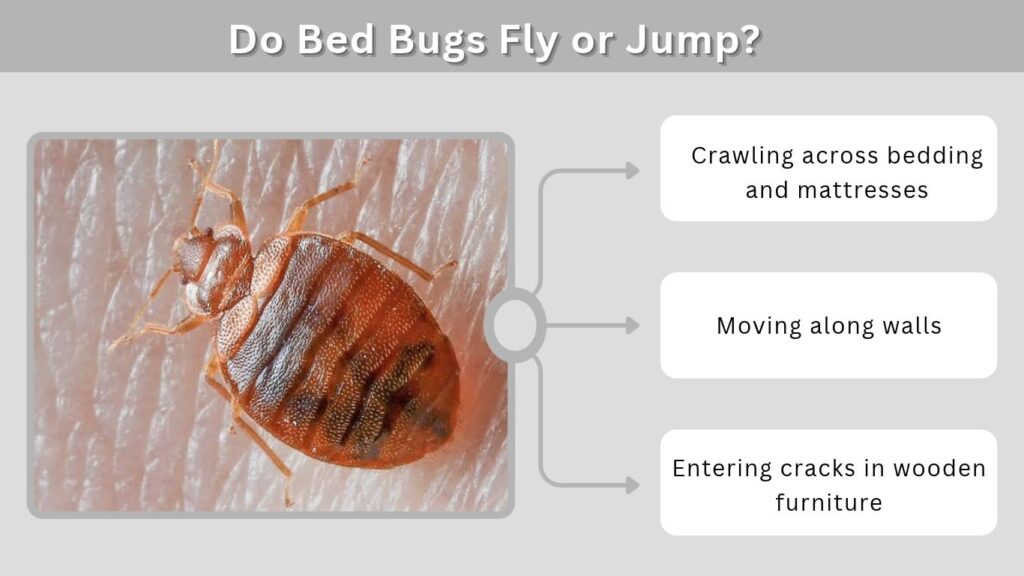
Bed bugs cannot fly or jump. Their primary method of movement is crawling, using their six legs to travel across floors, mattresses, walls, and furniture.
Although they cannot fly, bed bugs can move surprisingly quickly over short distances. This ability allows them to reach sleeping people and return to hiding places after feeding.
How Do Bed Bugs Move?
Bed bugs typically crawl across surfaces to locate food and shelter. They are attracted to cues associated with potential hosts, including body warmth and exhaled carbon dioxide.
Their movements commonly include:
- Crawling across bedding and mattresses.
- Moving along walls and baseboards.
- Entering cracks in wooden furniture.
- Traveling between nearby rooms.
- Hiding inside clothing, luggage, and personal belongings.
They can also climb many relatively rough surfaces, although very smooth surfaces can be difficult for them to grip.
How Do Bed Bugs Spread Without Flying?
Bed bugs frequently spread by hitchhiking on objects.
They may accidentally be transported through luggage, backpacks, used furniture, clothing, and other belongings.
In apartment buildings, they can also move between neighboring units through gaps and openings.
Therefore, the absence of wings does not prevent bed bugs from spreading throughout a home or building.
What Do Bed Bugs Look Like Without Wings?
Bed bugs have a distinctive appearance that makes them recognizable when examined closely.
Adult bed bugs are generally about 4–7 millimeters long. Their bodies are broad, oval, and flattened, often resembling small apple seeds.
Their color ranges from brown to reddish-brown, depending on their age and whether they have recently fed.
| Feature | Bed Bug Appearance |
| Body shape | Oval and flattened |
| Adult size | Approximately 4–7 mm |
| Color | Brown to reddish-brown |
| Legs | Six |
| Antennae | Two short antennae |
| Functional wings | Absent |
| Wing pads | Tiny structures on adults |
| Movement | Crawling |
| Flying ability | None |
After feeding, a bed bug’s abdomen becomes larger and more elongated. Its color may also appear darker because of the blood inside its body.
The abdomen has visible segments that sometimes look like horizontal stripes. However, these markings are not wings.
Do Baby Bed Bugs Have Wings?
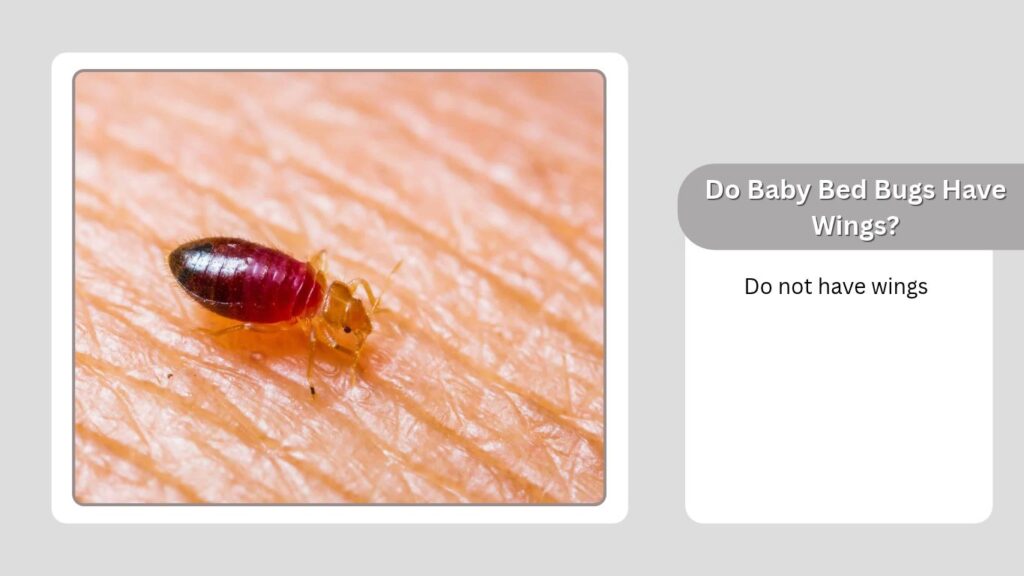
Baby bed bugs, known as nymphs, do not have wings.
Nymphs resemble miniature adult bed bugs, but they are smaller and usually lighter in color.
Newly hatched bed bugs can appear pale yellow or almost translucent. After taking a blood meal, their bodies may look reddish because the blood is visible through their relatively thin outer covering.
Bed bugs develop through five nymph stages before becoming adults.
During each stage, they shed their outer skin as they grow. They must feed on blood to progress through these stages.
Unlike many other insects, bed bugs do not develop functional wings as they mature.
Even after reaching adulthood, their wings remain reduced to tiny, nonfunctional structures.
Consequently, both young and adult bed bugs rely entirely on crawling for movement.
Do Bed Bugs Have Clear Wings or Wing Pads?
Bed bugs do not have clear, transparent wings like flies or mosquitoes.
However, adult bed bugs possess tiny wing pads located near the back of the thorax, just behind the head.
These structures can sometimes create confusion when viewed under magnification.
Wing pads are not true, fully developed flying wings. They cannot unfold, flap, or lift the insect into the air.
People occasionally mistake the following body features for wings:
- The segmented abdomen.
- The edges of the thorax.
- The overlapping appearance of body plates.
- The small vestigial wing pads.
If an insect has long, transparent wings extending over its abdomen, it is unlikely to be a bed bug.
What Bugs Look Like Bed Bugs but Have Wings?
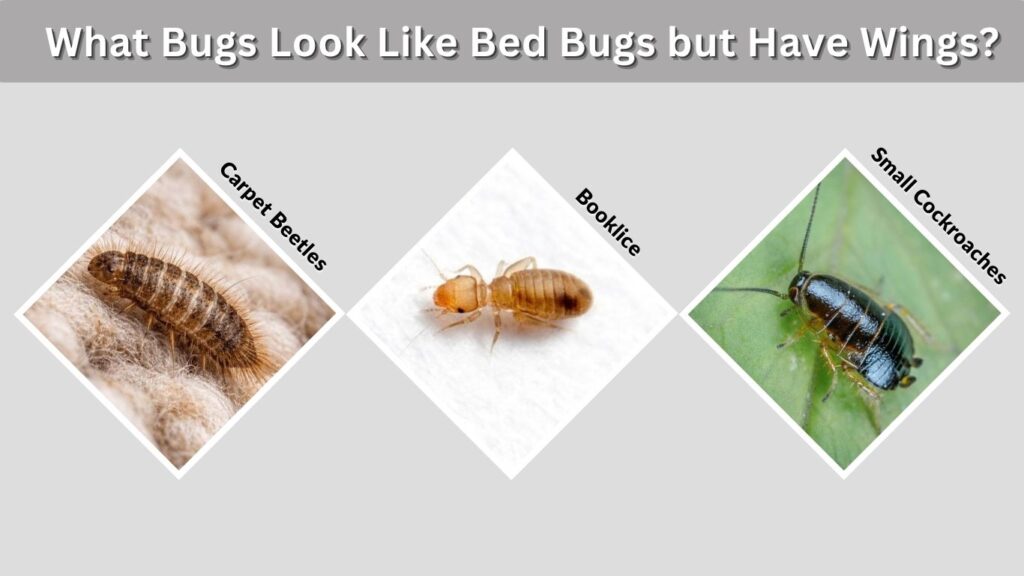
Several household insects resemble bed bugs, especially when viewed from a distance. Some of these insects have functional wings and can fly.
Understanding the differences helps prevent incorrect identification.
1. Carpet Beetles
Adult carpet beetles are small insects that may appear brown, black, or patterned.
Unlike bed bugs, adult carpet beetles have hardened wing covers and functional wings beneath them.
They can fly and are sometimes found near windows, carpets, and furniture.
Their bodies are generally more rounded or dome-shaped than the flattened bodies of bed bugs.
2. Booklice
Booklice are tiny insects commonly found in humid environments.
Some species have wings, while others are wingless.
They may appear around books, cardboard, stored materials, and damp surfaces.
Unlike bed bugs, booklice do not feed on human blood.
3. Small Cockroaches
Young cockroaches can occasionally be mistaken for bed bugs because of their brown coloration.
However, cockroaches generally have longer antennae, a different body shape, and faster movements.
Many adult cockroach species develop wings, although their flying abilities vary.
Cockroach nymphs are typically wingless.
4. Fleas
Fleas are another common source of confusion.
They are small, dark insects that feed on blood, but unlike bed bugs, they can jump considerable distances relative to their body size.
Fleas do not have wings.
Their narrow, side-flattened bodies and enlarged hind legs help distinguish them from bed bugs.
5. Bat Bugs
Bat bugs are extremely similar to common bed bugs.
They are also wingless and feed on blood, primarily from bats.
Distinguishing bat bugs from bed bugs often requires magnification to examine the tiny hairs around the thorax.
Because they look so similar, professional identification may be necessary.
How to Identify Bed Bugs on a Mattress
Finding a small insect on your mattress does not automatically mean you have bed bugs.
However, several physical signs can help confirm their presence.
Look for Live Bed Bugs
Inspect mattress seams, tags, headboards, bed frames, and nearby furniture.
Bed bugs often hide in narrow, protected spaces during the day.
Check for Dark Spots
Bed bug droppings appear as small, dark brown or black spots.
These marks may be visible on mattresses, sheets, wooden furniture, and surrounding surfaces.
Search for Shed Skins
As young bed bugs grow, they shed their outer coverings.
These pale, empty skins often accumulate around their hiding places.
Examine Eggs and Eggshells
Bed bug eggs are tiny, whitish, and approximately 1 millimeter long.
They may be attached to surfaces inside cracks or furniture joints.
Finding multiple signs together provides stronger evidence of an infestation than identifying bite marks alone.
What Should You Do if You Find Bed Bugs?
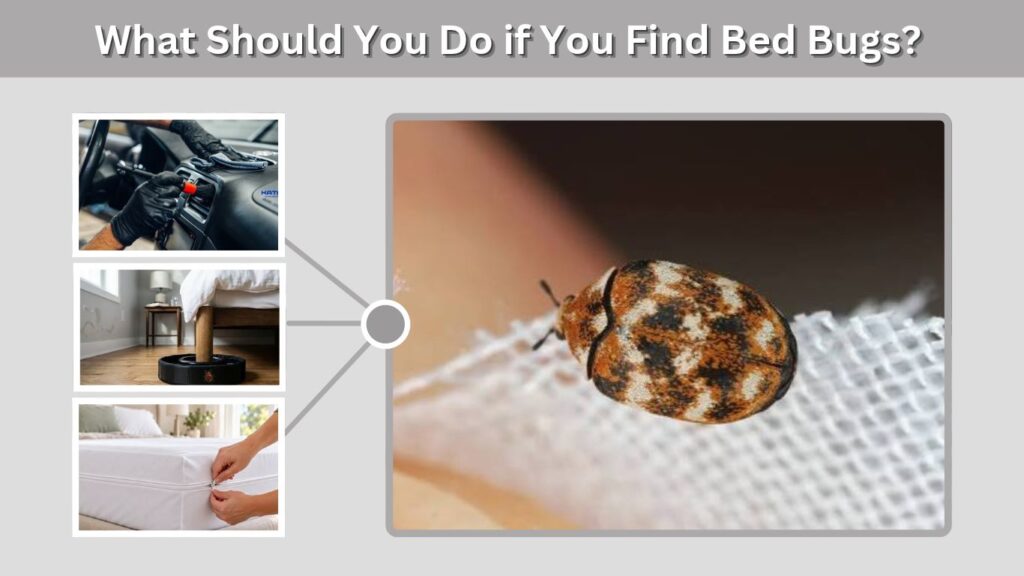
If you discover an insect that resembles a bed bug, begin by confirming its identity.
Avoid assuming that every small brown insect is a bed bug.
Once bed bugs are identified, take the following steps:
- Inspect mattresses, bed frames, and surrounding furniture.
- Carefully vacuum accessible cracks, seams, and other hiding places.
- Place suitable bedding and clothing in a dryer on high heat for 30 minutes.
- Use bed bug-proof mattress and box spring encasements.
- Install bed bug interceptors beneath bed legs to monitor activity.
- Reduce unnecessary clutter around sleeping areas.
- Contact a qualified pest control professional if the infestation persists or is widespread.
Avoid moving infested furniture or belongings into unaffected rooms, as doing so may spread bed bugs.
Also, do not rely exclusively on insect foggers or homemade chemical mixtures. Effective elimination usually requires a combination of inspection, monitoring, physical treatment, and appropriate pest management methods.
FAQs
1. Do Adult Bed Bugs Have Wings?
Adult bed bugs have tiny vestigial wing pads, but they do not have functional wings. These structures cannot open or support flight. Adult bed bugs move exclusively by crawling.
2. Do Bed Bugs Ever Grow Wings?
No. Bed bugs never develop functional wings during their life cycle. Young bed bugs are wingless, and adults develop only small, nonfunctional wing pads.
3. Can Bed Bugs Fly Around Your Bedroom?
No. Bed bugs cannot fly around bedrooms or other indoor spaces. If you see an insect flying near your bed, it is probably another species, such as a mosquito, small beetle, or flying household insect.
4. Do Bed Bugs Have Wings on a Mattress?
Bed bugs found on mattresses have the same body structure as those found elsewhere. They do not have functional wings, regardless of their location. Adult bed bugs may have tiny wing pads, but they cannot fly.
5. Can Bed Bugs Jump From One Bed to Another?
No. Bed bugs cannot jump like fleas. However, they can crawl between nearby surfaces and travel through furniture, bedding, or personal belongings. They may also spread when infested items are moved between rooms.
