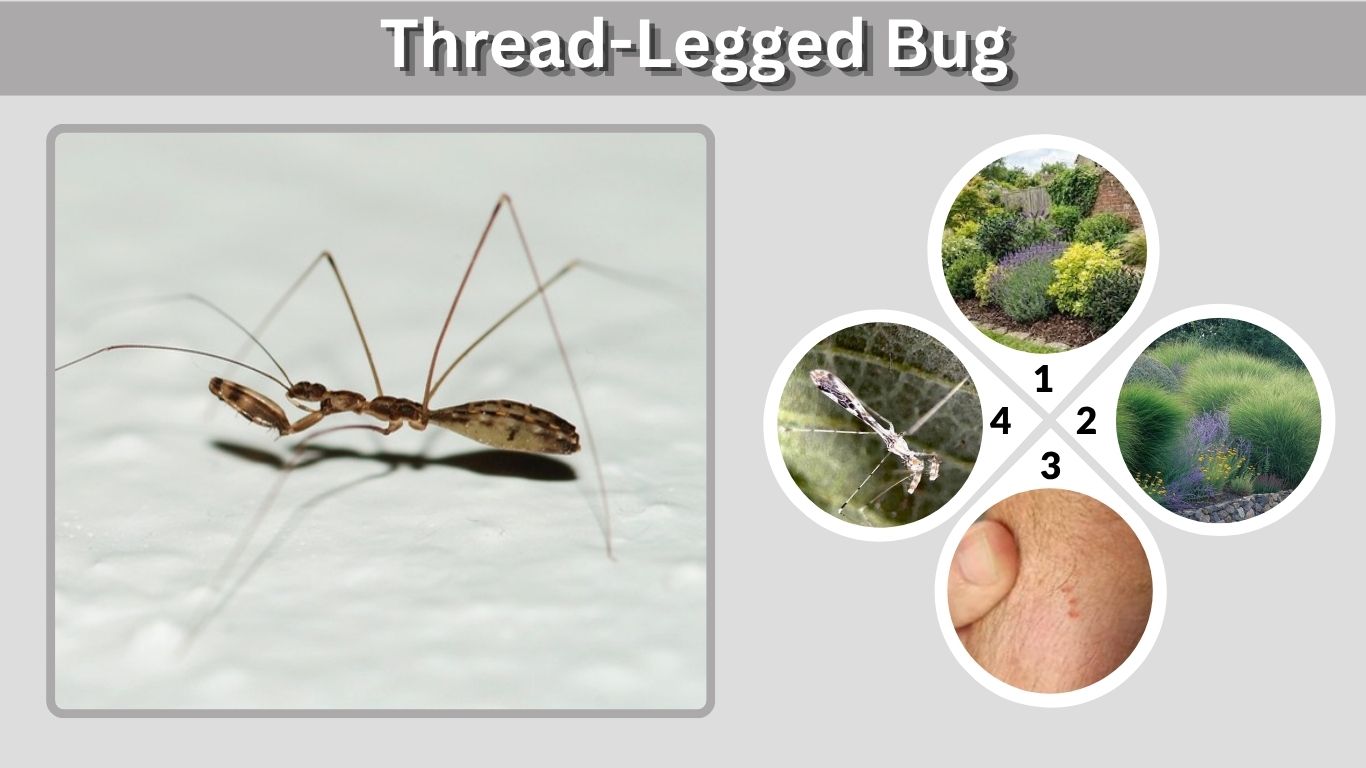
The thread-legged bug is an unusually thin predatory insect that can easily be mistaken for a tiny walking stick, crane fly, or even a spider. Thread-legged bugs belong to the assassin bug family Reduviidae and the subfamily Emesinae. Their bodies and legs may be extremely slender, but their front legs are specialized for grabbing prey. These insects live in forests, gardens, buildings, caves, and even spider webs, where they hunt small insects and sometimes steal captured prey. Despite their intimidating “assassin bug” name, they generally avoid people.
What Is a Thread-Legged Bug?
Thread-legged bugs are a specialized group of assassin bugs in the subfamily Emesinae.
More than 1,000 species in roughly 100 genera are recognized worldwide, with considerable diversity in tropical regions. In North America, more than 60 species have been recorded.
Thread-Legged Bug Classification
| Classification | Group |
| Kingdom | Animalia |
| Phylum | Arthropoda |
| Class | Insecta |
| Order | Hemiptera |
| Suborder | Heteroptera |
| Family | Reduviidae |
| Subfamily | Emesinae |
Although they resemble walking sticks, they are true bugs and close relatives of other assassin bugs.
What Does a Thread-Legged Bug Look Like?
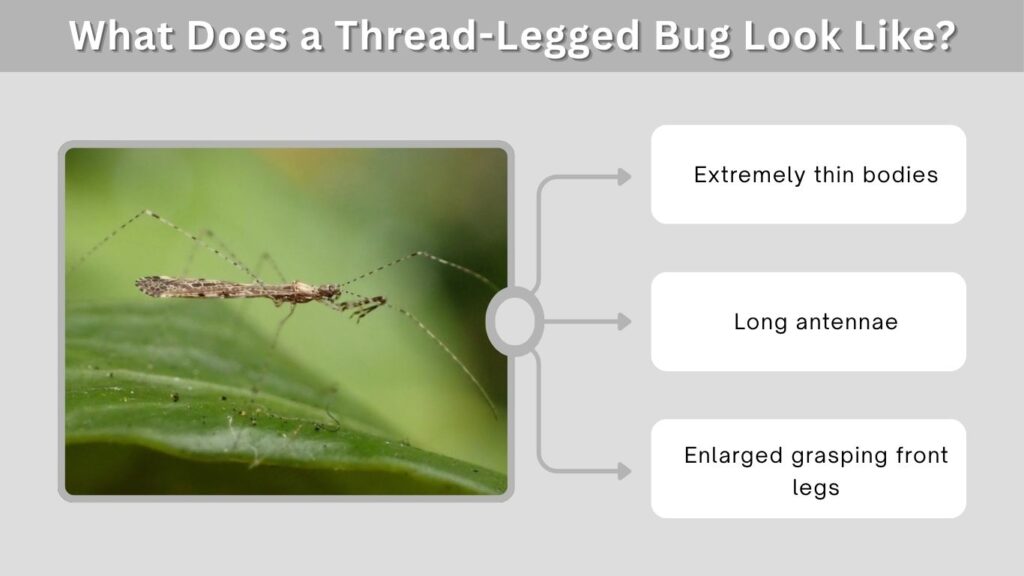
Their appearance is highly distinctive once you know what to look for.
Identification Features
Thread-legged bugs generally have:
- Extremely thin bodies
- Very long, thread-like legs
- Long antennae
- Small, elongated heads
- Piercing-sucking mouthparts
- Enlarged grasping front legs
- Brown, gray, tan, or dark coloration
- Four long legs mainly used for walking
Depending on species, they range approximately 3–40 mm long, although many species are less than 10 mm.
Their delicate appearance provides excellent camouflage among twigs, dead vegetation, spider webs, and other fine structures.
Why Does a Thread-Legged Bug Look Like It Has Fewer Legs?
Thread-legged bugs are normal insects and therefore have six legs.
However, the front pair looks and functions differently from the other four.
Thread-Legged Bug Raptorial Legs
The front legs are raptorial, meaning they are modified to capture and hold prey.
A thread-legged bug normally walks mainly on its middle and hind pairs of legs while keeping its front legs ready to seize another insect. This characteristic helps distinguish thread-legged bugs from walking sticks, which normally use all six legs for walking.
Because the front legs may be held close to the body, people sometimes mistakenly describe these insects as “three-legged bugs” or think they have missing legs.
What Do Thread-Legged Bugs Eat?
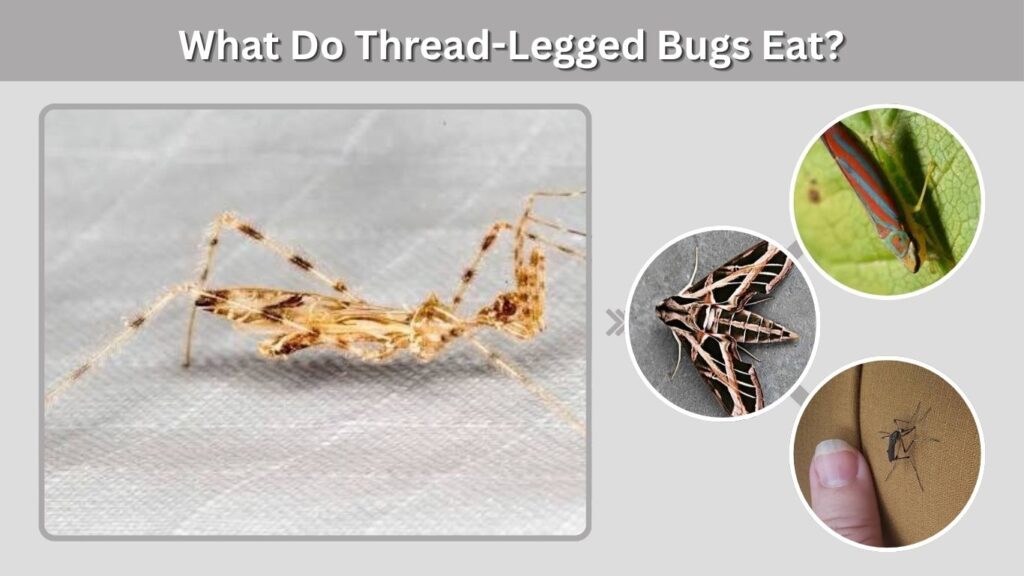
Thread-legged bugs are predators, not plant feeders.
They commonly eat:
- Small flies
- Mosquito-sized insects
- Moths
- Small true bugs
- Other soft-bodied insects
- Spiders
- Insects trapped in spider webs
They seize prey with their specialized front legs and use a piercing mouthpart called a rostrum or beak to feed.
Some species actively stalk prey, while others hunt around spider webs. Certain thread-legged bugs even steal insects already caught by a spider, a feeding behavior known as kleptoparasitism.
Thread-Legged Bugs and Spider Webs
One of the most fascinating behaviors within Emesinae is their relationship with spiders.
Some species intentionally enter or live around spider webs.
Instead of immediately becoming prey themselves, they may:
- Steal trapped insects
- Hunt small spiders
- Capture insects visiting the web
- Move carefully along web strands
A thread-legged assassin bug identified from a cave in India, for example, was collected in association with a spider web. Similar spider-web associations are known from other members of the group.
Their extremely slender legs may help them move delicately around web structures.
Where Do Thread-Legged Bugs Live?
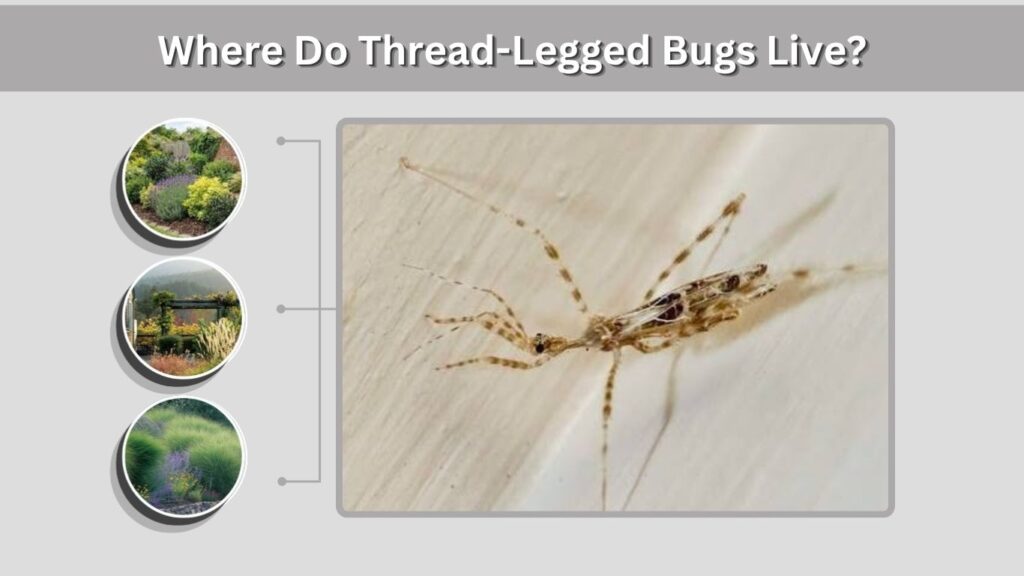
Thread-legged bugs occur worldwide and occupy many different environments.
Common habitats include:
- Forests
- Shrubs
- Grass
- Gardens
- Beneath loose bark
- Brush piles
- Old buildings
- Barns
- Cellars
- Caves
- Spider webs
Many species are primarily nocturnal and remain hidden during daylight.
Thread-Legged Bugs in the Garden
Finding one in a garden is usually a good sign rather than a reason for concern.
Because they prey on other insects, thread-legged bugs can contribute to the natural predator community in gardens. They do not chew leaves or suck plant sap like common garden pests.
There is generally no need to remove or kill one simply because it appears on vegetation.
Thread-Legged Bugs in Caves
Some thread-legged assassin bugs have evolved unusual relationships with cave habitats.
Caves offer:
- High humidity
- Stable temperatures
- Darkness
- Spider populations
- Small arthropod prey
Scientists have documented cave-dwelling members of Emesinae, including species associated closely with spiders and their webs.
These species demonstrate just how adaptable thread-legged bugs can be.
Can a Thread-Legged Bug Bite?
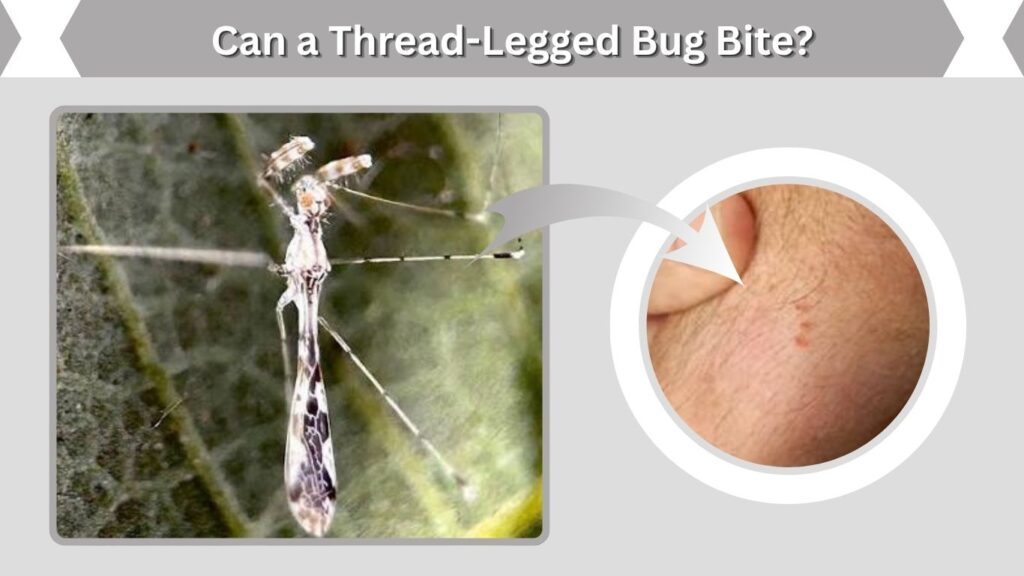
Thread-legged bugs possess piercing mouthparts capable of penetrating prey, so handling one roughly could potentially result in a defensive bite.
However, they are predators of other arthropods and do not seek humans for food.
Assassin bugs as a family can bite defensively when handled carelessly; well-known examples such as masked hunters and wheel bugs can produce painful bites.
Thread-legged species are generally slender and secretive, and human bites are not commonly reported.
Are Thread-Legged Bug Bites Dangerous?
A thread-legged bug should not be confused with a kissing bug, another group within the assassin bug family.
Kissing bugs feed on vertebrate blood and can transmit the parasite responsible for Chagas disease in parts of their range.
Thread-legged bugs, by contrast, prey primarily on insects and spiders.
If you encounter one, simply avoid squeezing or handling it unnecessarily.
Thread-Legged Bug Life Cycle
Like other true bugs, thread-legged bugs undergo incomplete metamorphosis.
Their life cycle follows:
Egg → Nymph → Adult
Eggs
Females deposit eggs in protected areas suitable for the species.
Nymphs
Nymphs resemble miniature adults but lack fully developed wings and reproductive structures.
They molt several times while growing.
Adults
After the final molt, the insect becomes sexually mature. Adult wing development varies among species, with some forms having reduced wings.
There is no caterpillar or pupal stage.
Thread-Legged Bug vs. Walking Stick
These two insects can look surprisingly similar.
| Feature | Thread-Legged Bug | Walking Stick |
| Group | Assassin bug | Stick insect |
| Diet | Predatory | Herbivorous |
| Front legs | Raptorial | Used for walking |
| Mouthparts | Piercing-sucking | Chewing |
| Main prey/food | Small insects and spiders | Leaves |
| Body shape | Extremely thin | Twig-like |
| Human risk | May bite defensively | Usually harmless |
The easiest clue is often the front legs. Thread-legged bugs hold them like miniature grabbing arms, whereas walking sticks use their front legs normally for locomotion.
Thread-Legged Bug vs. Praying Mantis
Thread-legged bugs and praying mantises both possess raptorial forelegs.
However, they belong to completely different insect groups.
Thread-legged assassin bugs are much thinner and generally smaller, with piercing mouthparts. Mantises have triangular heads, much larger grasping forelegs, and chewing mouthparts.
Both use an ambush or stalking strategy to capture other insects.
Are Thread-Legged Bugs Beneficial?
In many situations, yes.
Thread-legged bugs consume small arthropods and are part of the natural biological-control community.
Their prey can include insects humans consider pests.
However, they are generalist predators, meaning they do not distinguish between pest insects and other small arthropods.
Because they normally cause no plant damage, there is usually no reason to control them in gardens.
Interesting Thread-Legged Bug Facts
- Thread-legged bugs belong to the assassin bug family.
- Their scientific subfamily is Emesinae.
- More than 1,000 species occur worldwide.
- Many species are less than 10 mm long.
- Their front legs are adapted for catching prey.
- They mainly walk using their other four legs.
- Some species live around spider webs.
- They may steal prey captured by spiders.
- Some species occur inside caves.
- They are predators rather than plant pests.
- Their thin bodies help them resemble twigs and plant fibers.
- Many species are active mainly at night.
FAQs
1. What is a thread-legged assassin bug?
A thread-legged assassin bug is a slender predatory true bug belonging to the subfamily Emesinae. It has extremely thin legs and body, with specialized raptorial front legs used to seize small insects and other arthropods.
2. Do thread-legged bugs bite humans?
They do not normally attack or feed on people. Because they possess piercing mouthparts, rough handling could potentially provoke a defensive bite. The safest approach is simply to observe them without picking them up.
3. Are thread-legged bugs good for gardens?
Yes, they are generally beneficial predators. Thread-legged bugs feed on small insects and other arthropods instead of damaging plants. Their presence usually does not require pest-control treatment.
4. Why does a thread-legged bug look like a walking stick?
Its extremely narrow body and long legs provide camouflage among twigs and vegetation. Unlike a walking stick, however, it is predatory and has modified front legs for capturing prey rather than eating leaves.
5. Do thread-legged bugs live in spider webs?
Some species frequently enter or live around spider webs. They may steal insects caught in the web, attack small spiders, or hunt other arthropods nearby. Several cave-associated species also have close ecological relationships with spider webs.