
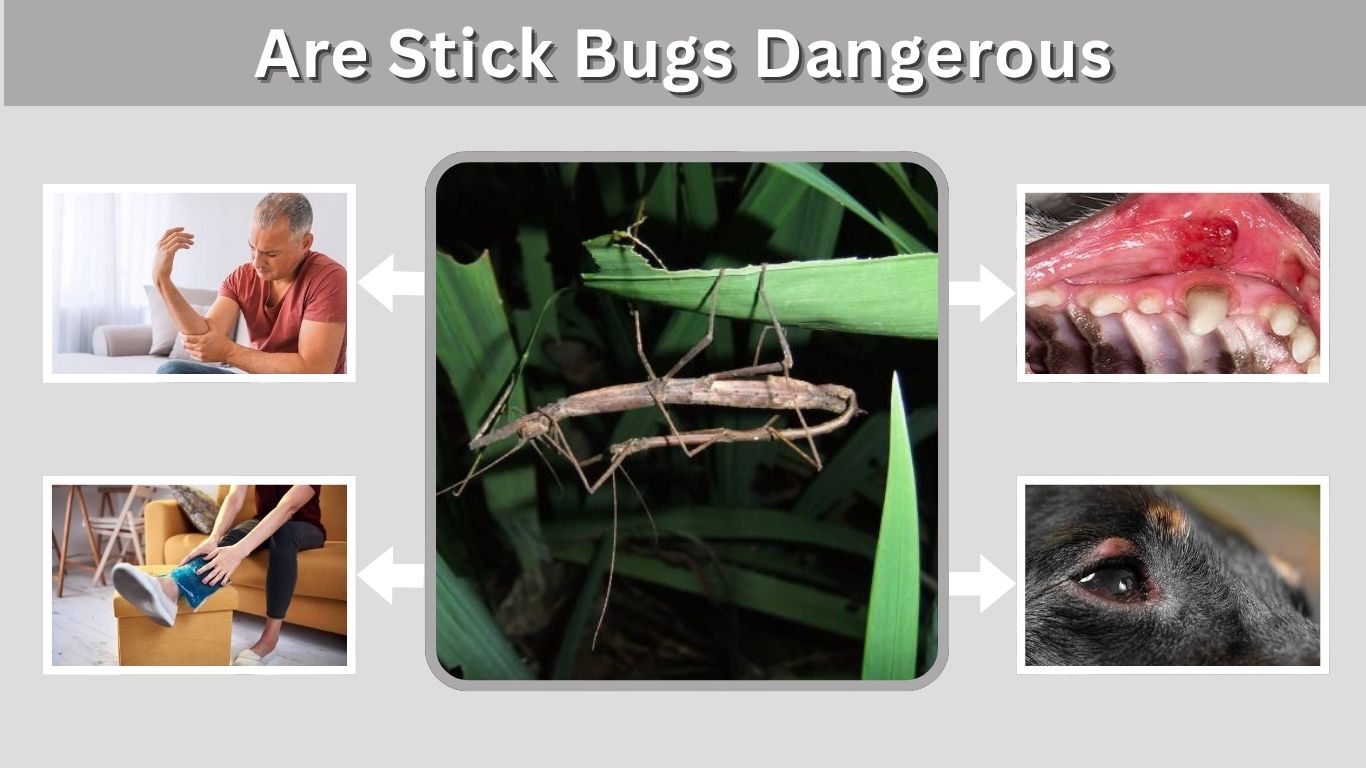
Are stick bugs dangerous? In most cases, no. Stick bugs, also called walking sticks or stick insects, are generally harmless plant-eating insects that rely on camouflage rather than aggression. They do not normally sting, attack people, or spread diseases. However, a few species have defensive behaviors such as pinching, kicking, or releasing irritating chemical sprays. These defenses can cause discomfort, especially if the spray reaches the eyes. Here is what you should know about their risks to humans, children, dogs, and other pets.
Are Stick Bugs Dangerous to Humans?
Most stick bugs are not dangerous to humans. They are slow-moving, non-aggressive insects that spend most of their lives feeding on leaves and hiding among branches. Their stick-like appearance helps them avoid predators instead of fighting them. Even when disturbed, most species prefer to remain still, sway like a twig, drop to the ground, or move away.
Common Risks Around Stick Bugs
Most encounters with walking sticks cause no problems, but possible risks include:
- Mild pinching from larger species
- Scratches from spiny legs
- Irritating defensive secretions
- Eye irritation from chemical sprays
- Minor skin irritation in sensitive people
- Startling defensive movements
These reactions are usually defensive rather than aggressive.
Do Stick Bugs Attack People?
Stick bugs do not normally attack humans.
They do not hunt people, chase them, or intentionally seek opportunities to bite. Their primary food consists of leaves from trees, shrubs, and other plants.
When threatened, many species freeze and rely on camouflage. Others may drop from vegetation or sway their bodies to resemble moving branches.
A few larger species can use their legs defensively if grabbed or restrained.
Can Stick Bugs Bite?
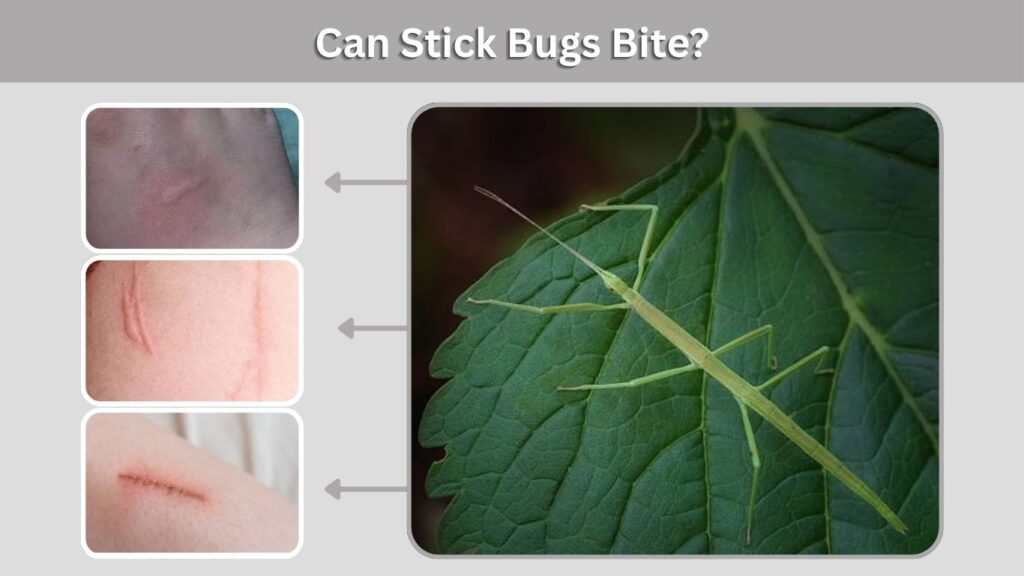
Stick bugs have mouthparts designed for chewing plant material. Although they technically possess chewing mouthparts, biting humans is extremely uncommon. A frightened or roughly handled insect might occasionally pinch or use its legs defensively, but this is not comparable to the bite of a predatory insect.
What Does a Stick Bug Bite Feel Like?
If a stick insect manages to pinch or scrape the skin, you might notice:
- Mild pain
- Slight redness
- Temporary irritation
- A tiny scratch
- Mild swelling in sensitive skin
Serious injuries are unusual.
Most species are physically incapable of causing significant harm through their mouthparts.
Large stick insects may feel more intimidating because of their size, but they still generally prefer escaping to fighting.
Can Walking Stick Bugs Spray Chemicals?
Some walking stick species possess more effective chemical defenses. When disturbed, they can release defensive secretions from glands located near the front of the body. These chemicals are intended to discourage predators, but they may also irritate humans.
This is one of the few situations where a stick bug can cause a more noticeable problem.
Defensive Spray and Eye Irritation
Certain walking sticks can spray irritating chemicals toward a perceived threat.
Possible effects include:
- Burning eyes
- Excessive tearing
- Redness
- Temporary blurred vision
- Skin irritation
- Burning around the nose or face
The two-striped walking stick, particularly species in the genus Anisomorpha, is well known for producing a defensive spray that can strongly irritate the eyes.
If you encounter an unfamiliar walking stick, avoid holding it close to your face.
What Should You Do After Being Sprayed?
If defensive chemicals enter your eyes, rinse them immediately with plenty of clean water.
Avoid rubbing your eyes because this may increase irritation.
Persistent pain, severe redness, vision changes, or continuing irritation should be evaluated by a healthcare professional.
Chemical defense is uncommon among many familiar stick insects, but it is one reason these insects should still be handled respectfully.
Are Stick Bugs Poisonous or Venomous?
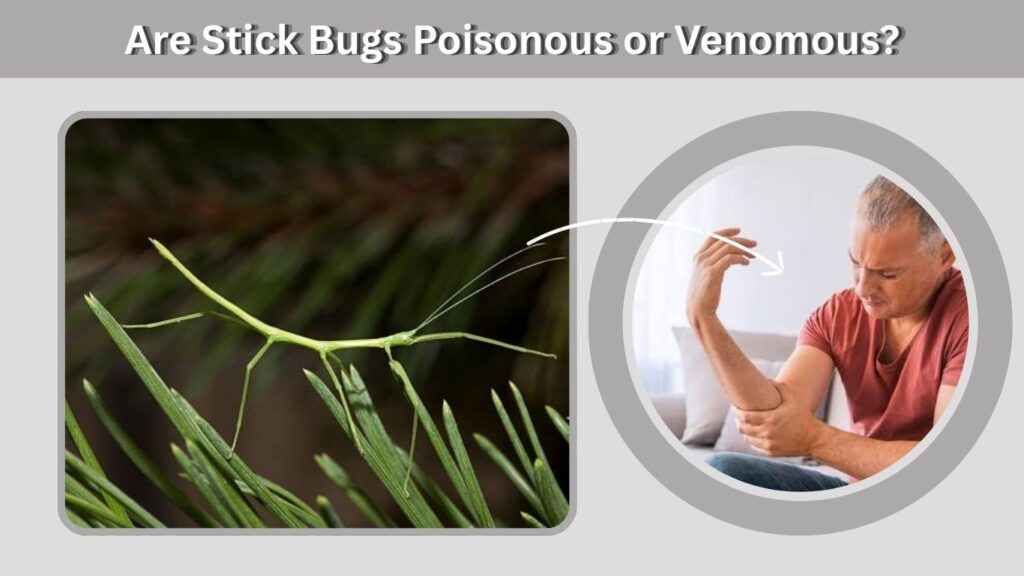
Stick bugs are generally not considered venomous. They do not possess venomous fangs or stingers for injecting toxins into people. Some species produce chemical secretions for defense, but this is different from venom.
Most walking stick encounters involve no toxin exposure at all.
Poison vs. Defensive Chemicals
The difference can be summarized as follows:
| Feature | Stick Bugs |
| Venomous bite | No |
| Stinger | No |
| Aggressive toward humans | No |
| Defensive spray | Some species |
| Dangerous to touch | Usually no |
| Serious human threat | Very low |
Because there are thousands of stick insect species worldwide, defensive abilities vary considerably.
Avoid assuming that every unfamiliar species behaves exactly the same way.
Are Stick Bugs Dangerous to Dogs?
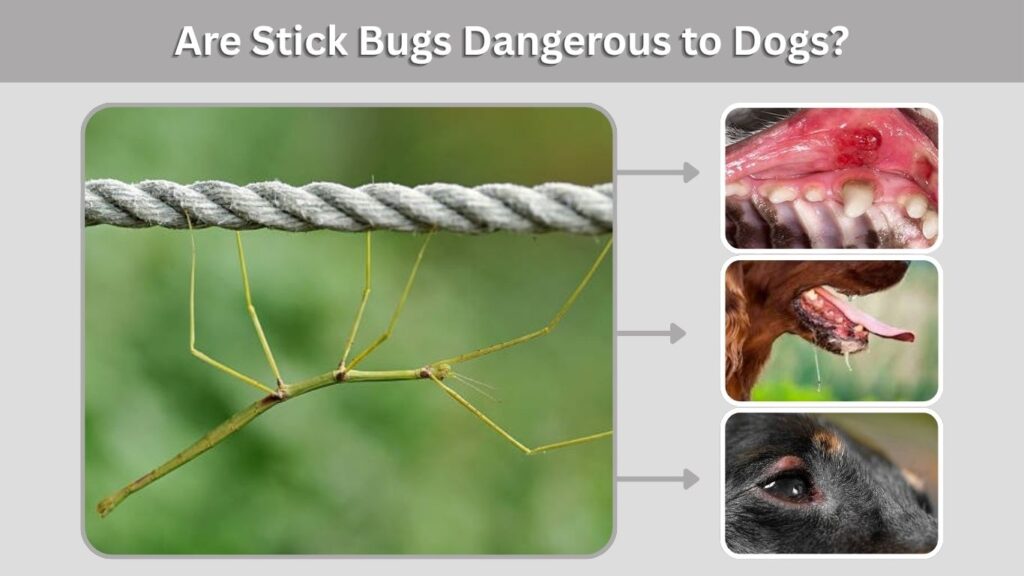
Stick bugs are generally not considered a major danger to dogs. However, dogs often investigate insects with their noses and mouths, which can cause problems when they encounter species capable of releasing irritating chemicals.
A curious dog may sniff, lick, bite, or swallow a walking stick.
Possible Problems for Dogs
A dog interacting with a stick insect may experience:
- Mouth irritation
- Excessive drooling
- Pawing at the face
- Eye irritation
- Vomiting after eating an insect
- Temporary digestive discomfort
Most ordinary stick bugs are unlikely to produce serious poisoning.
However, an insect’s defensive spray could cause considerable discomfort if it reaches a dog’s eyes or nose.
If your dog develops severe symptoms after interacting with an unknown insect, contact a veterinarian.
Are Stick Bugs Dangerous to Cats?
Cats may also chase or play with walking sticks because of their slow movements and unusual appearance. Most stick bugs do not present a major toxic threat to cats, but defensive chemicals or spiny body parts can still cause irritation.
It is better to prevent pets from chewing unfamiliar insects.
Signs to Watch For
After a cat interacts with a walking stick, watch for:
- Drooling
- Repeated licking
- Pawing at the mouth
- Squinting
- Watery eyes
- Vomiting
- Unusual agitation
Minor irritation often passes quickly, but significant eye exposure or persistent symptoms deserve veterinary attention.
Are Stick Bugs Dangerous to Children?
Stick insects can be fascinating for children because they resemble twigs and branches. Many captive species are kept as educational pets because they are quiet and generally docile.
Still, children should be taught not to squeeze, grab, or place unfamiliar insects near their faces.
Safe Handling Tips
When observing stick bugs:
- Handle only known, safe species.
- Avoid touching wild insects unnecessarily.
- Keep insects away from the eyes and face.
- Never squeeze or restrain them.
- Wash hands afterward.
- Supervise young children.
- Avoid handling species known to spray defensive chemicals.
Gentle handling also protects the insect because stick bugs have fragile legs that can be injured easily.
Can Stick Bugs Hurt You With Their Legs?
Some large stick insect species have spines on their legs. When threatened, they may raise their legs, kick, or clamp them around an attacker.
These defensive movements can occasionally scratch or pinch human skin.
Large Stick Insects
Large tropical species are more capable of causing noticeable discomfort than smaller walking sticks.
A defensive pinch may hurt temporarily, especially if the insect has strong, spiny legs.
Even so, these insects are not actively trying to attack humans.
Most incidents happen when someone handles the insect roughly or tries to restrain it.
Allowing the insect to walk naturally across your hand is safer than grabbing it around the body.
Are Stick Bugs Dangerous in the House?
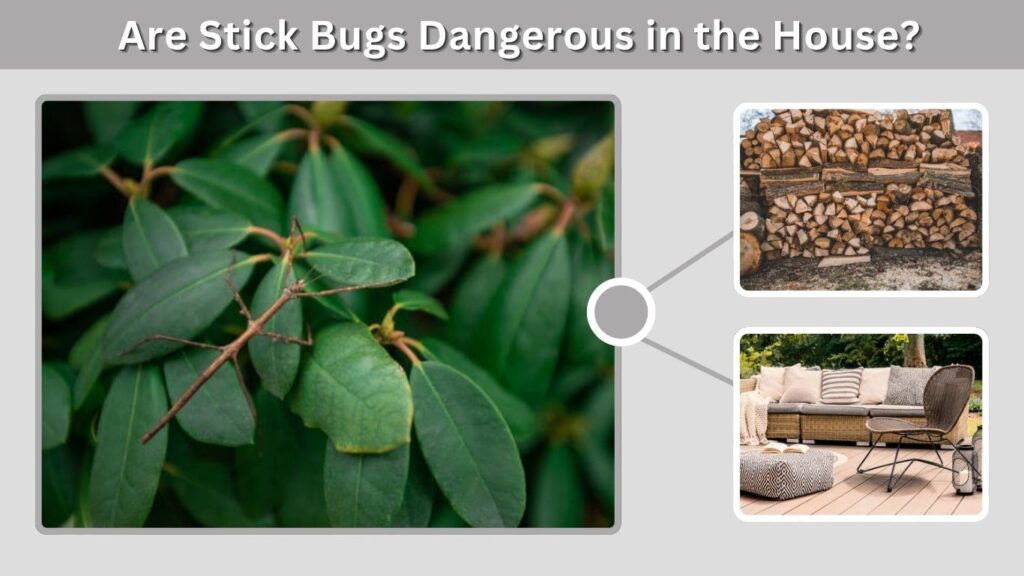
Finding a walking stick indoors may look alarming, especially because some species grow several inches long. However, stick bugs generally do not create dangerous household infestations.
They usually enter accidentally from nearby plants, trees, firewood, or outdoor furniture.
What to Do if You Find One Indoors
You can usually remove a walking stick safely by:
- Placing a container over it
- Sliding cardboard underneath
- Carrying it outside
- Releasing it near vegetation
- Avoiding direct contact with unfamiliar species
There is usually no need for pesticides when dealing with a single walking stick indoors.
They do not normally reproduce throughout houses like cockroaches, bed bugs, or pantry pests.
Are Walking Stick Bugs Harmful to Plants?
Walking sticks are herbivores, meaning they feed primarily on leaves. In natural ecosystems, this feeding is usually part of normal insect activity.
However, large populations can occasionally damage trees, shrubs, or ornamental plants by consuming substantial amounts of foliage.
Signs of Stick Bug Feeding
Possible signs include:
- Chewed leaf edges
- Missing sections of leaves
- Partially stripped branches
- Reduced foliage
- Numerous walking sticks on vegetation
A few insects rarely cause serious damage.
Heavy populations can sometimes defoliate plants, although this is more of a gardening concern than a danger to humans.
Should You Be Afraid of Stick Bugs?
There is usually no reason to fear walking sticks. Their unusual size and shape can make them look intimidating, but most are peaceful insects whose main defense is avoiding detection.
They are far more interested in leaves than people.
Species capable of spraying irritating chemicals deserve extra caution, but even these insects use their defenses only when they feel threatened.
Observing from a comfortable distance is the safest approach when you cannot identify the species.
FAQs
Are Walking Stick Bugs Dangerous?
Most walking stick bugs are harmless to humans. They usually rely on camouflage and escape behaviors rather than biting or attacking. However, some species can pinch, use spiny legs defensively, or release irritating chemical sprays when threatened.
Can a Stick Bug Bite You?
Stick bugs can technically chew because they have mouthparts for eating leaves, but biting humans is very uncommon. Larger species may occasionally pinch or scratch when handled roughly. Such injuries are usually mild and do not pose a serious health risk.
Can Stick Bugs Spray Poison?
Some walking sticks release defensive chemical secretions when threatened. These chemicals are not injected like venom, but they can strongly irritate the eyes and sometimes the skin. Avoid holding unfamiliar walking sticks close to your face.
Are Stick Bugs Dangerous to Dogs?
Most stick bugs are unlikely to seriously harm dogs. However, defensive chemicals from certain species can irritate a dog’s eyes, nose, or mouth. Dogs that chew unfamiliar insects may also develop drooling, vomiting, or temporary stomach irritation.
Should You Touch a Stick Bug?
Known captive stick insects can usually be handled gently, but unnecessary handling of wild walking sticks is best avoided. Some species have defensive sprays or spiny legs, and the insects themselves are fragile. Observe unfamiliar species without bringing them close to your face.
