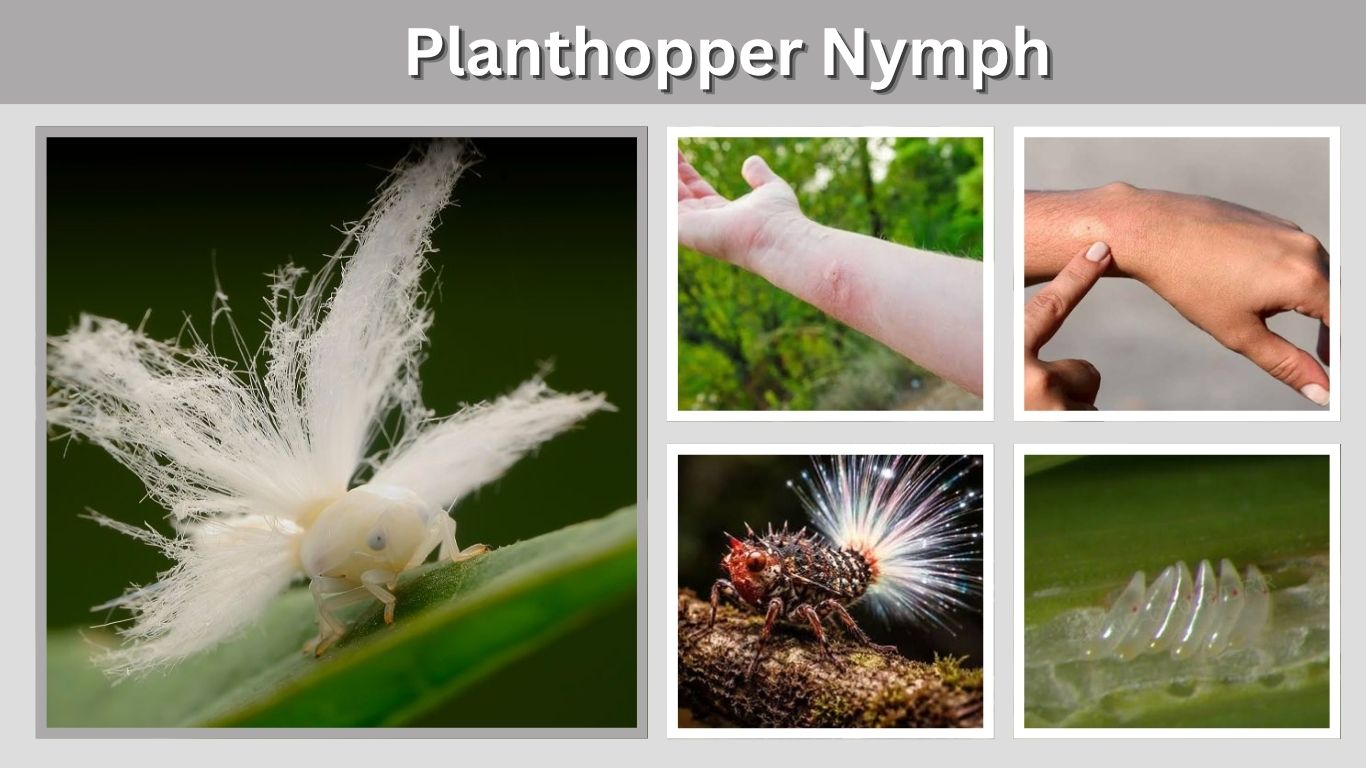
A planthopper nymph is the immature stage of a planthopper, a sap-feeding insect known for its powerful jumping ability. These tiny insects can look surprisingly unusual, especially species covered in white wax or long fuzzy filaments. Planthopper nymphs are commonly found on stems, leaves, shrubs, grasses, and crop plants. Although most are harmless to people, some species can damage plants when populations become large. Their strange appearance, jumping behavior, and waxy tails make them easy to notice once you know what to look for.
What Is a Planthopper Nymph?
A planthopper nymph is a young planthopper that has hatched from an egg but has not yet developed into a winged adult. Planthoppers undergo incomplete metamorphosis, meaning there is no caterpillar-like larval or pupal stage. Instead, nymphs gradually become more adult-like each time they molt.
Planthopper Nymph Identification
Typical features include:
- Small oval or flattened body
- No fully developed wings
- Strong hind legs for jumping
- White, green, brown, gray, or orange coloration
- Short antennae
- Piercing-sucking mouthparts
- Waxy coating in some species
- Long white or fluffy tail filaments
- Habit of resting on leaves and stems
The exact appearance varies considerably among planthopper families.
Is a Planthopper Nymph a Larva?
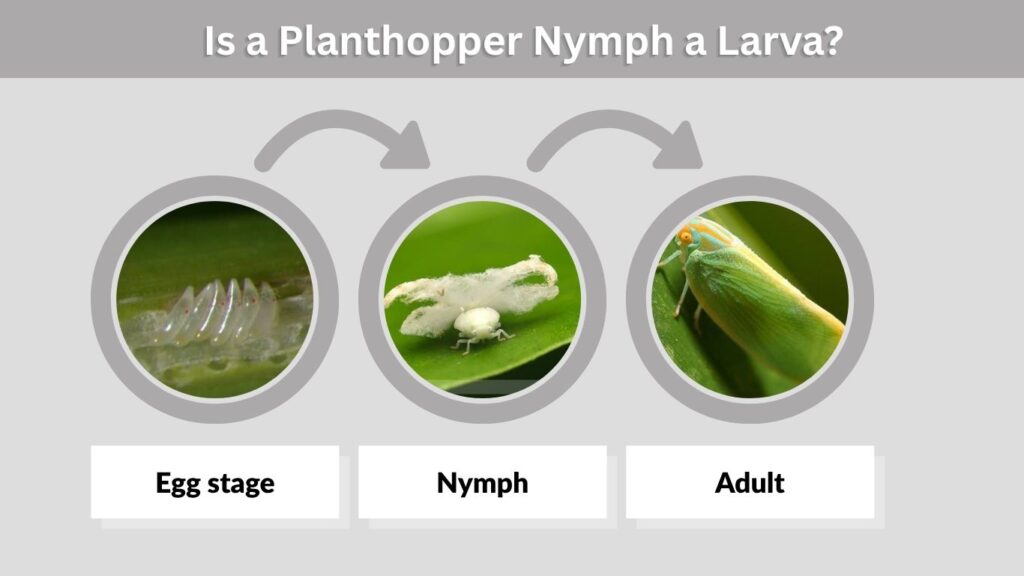
No. A planthopper nymph is not technically a larva.
Butterflies, beetles, flies, and many other insects undergo complete metamorphosis and have a larval stage. Planthoppers undergo incomplete metamorphosis.
Their life cycle follows:
Egg → Nymph → Adult
The nymph passes through several stages called instars before becoming an adult.
Why Are Some Planthopper Nymphs White and Fuzzy?
White fuzzy planthopper nymphs are among the strangest-looking insects found in gardens. Many species, particularly flatid planthoppers, produce waxy material from glands on the abdomen. This wax can form long strands that resemble feathers, cotton, snowflakes, or even tiny fiber-optic cables.
What Is the White Wax?
The white material is a waxy secretion rather than hair.
It may help the insect by:
- Reducing moisture loss
- Making it harder for predators to grab
- Protecting the body from sticky substances
- Providing camouflage
- Preventing contamination from honeydew
- Creating a visual distraction when escaping
The wax is especially noticeable on young flatid planthoppers.
Why Do They Have Fluffy Tails?
The long tail-like filaments extending behind some nymphs are made from wax.
These structures are not true tails and contain no bones or muscles. They can break away or become disturbed without causing the same type of injury that losing a real body part would cause.
The strange filaments make some species look like tiny walking snowflakes.
Flatid Planthopper Nymph
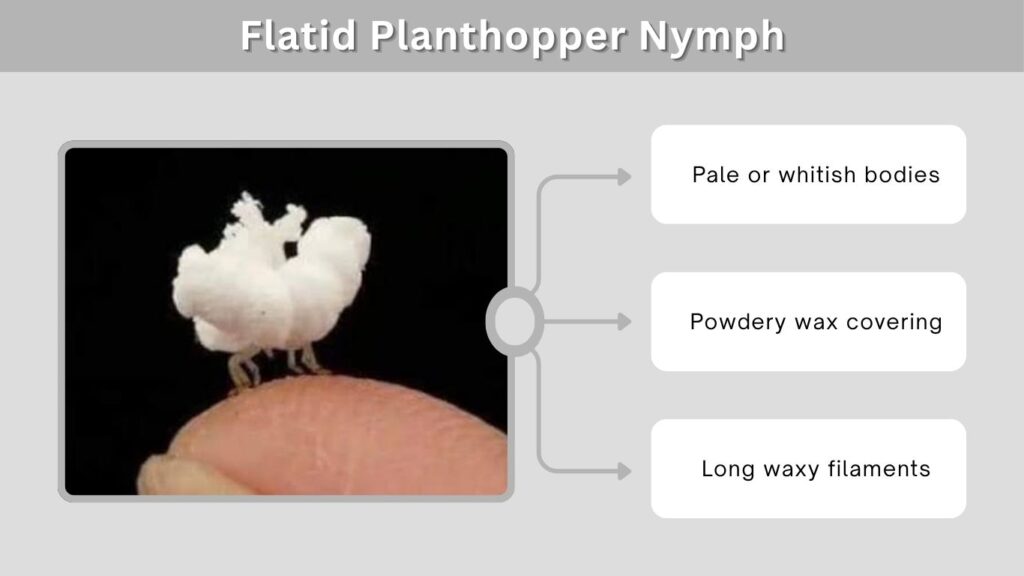
Flatid planthopper nymphs belong to the family Flatidae. They are among the most commonly noticed planthopper nymphs because their bodies are often covered in conspicuous white wax.
They feed on sap from a wide variety of trees, shrubs, and garden plants.
What Does a Flatid Planthopper Nymph Look Like?
Flatid nymphs commonly have:
- Pale or whitish bodies
- Powdery wax covering
- Long waxy filaments
- Strong jumping legs
- Small rounded bodies
- Quick escape movements
Some people mistake them for mealybugs, woolly aphids, or pieces of cotton until the insect suddenly jumps.
Citrus Flatid Planthopper Nymph
The citrus flatid planthopper is one well-known example.
Its nymphs can occur on:
- Citrus trees
- Grapevines
- Fruit trees
- Shrubs
- Ornamentals
- Garden plants
They may produce honeydew while feeding, which can encourage sooty mold when infestations become heavy.
Green, Brown, and White Planthopper Nymphs
Planthopper nymphs occur in many colors depending on species and developmental stage. Color alone is usually not enough for exact identification, but it can provide a useful clue when combined with body shape, host plant, and location.
Green Planthopper Nymph
Green nymphs blend easily into leaves and fresh stems.
Common traits include:
- Pale to bright green body
- Small size
- Strong rear legs
- Quick hopping behavior
- Little or no wax in some species
Green coloration provides excellent camouflage against vegetation.
Brown Planthopper Nymph
Brown planthopper nymphs can be important agricultural pests, especially in rice-growing areas.
The brown planthopper, Nilaparvata lugens, feeds near the base of rice plants. Both nymphs and adults remove plant sap.
Heavy infestations may lead to yellowing, wilting, and eventually hopperburn.
White Planthopper Nymph
White nymphs are frequently members of groups that produce wax.
A white planthopper nymph may look:
- Cottony
- Powdery
- Snow-like
- Fuzzy
- Feather-tailed
The white appearance may come partly from the insect itself and partly from the wax coating surrounding its body.
Planthopper Nymph vs. Leafhopper Nymph
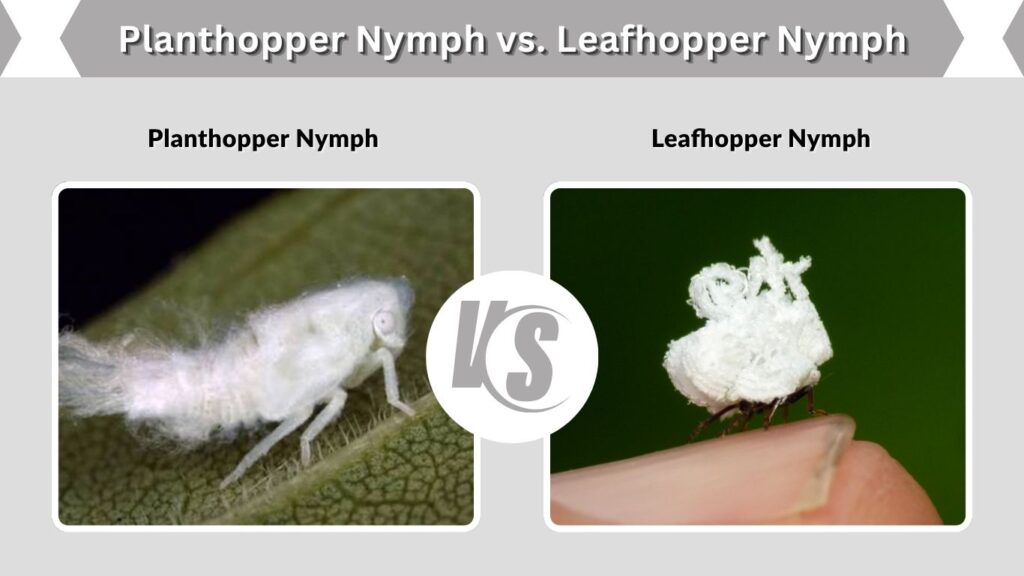
Planthopper and leafhopper nymphs can easily be confused because both are tiny plant-feeding insects capable of jumping. However, they belong to different groups and often differ in body shape and appearance.
Main Differences
Planthopper nymphs often:
- Have broader or more rounded bodies
- Produce wax in some families
- Carry fluffy tail filaments
- Jump suddenly when disturbed
- Show great variation in body shape
Leafhopper nymphs often:
- Have narrow, wedge-shaped bodies
- Move sideways quickly
- Lack long waxy tails
- Have rows of small spines on the hind legs
- Appear more streamlined
Leafhoppers may also run rapidly across a leaf instead of immediately jumping away.
How Does a Planthopper Nymph Jump?
Planthopper nymphs are extremely powerful jumpers for their size. Their enlarged hind legs store energy and release it rapidly, allowing the insect to launch away from predators or disturbances.
Some species have an especially unusual mechanism that synchronizes both hind legs.
Planthopper Nymph Gears
Certain planthopper nymphs have tiny interlocking structures often described as biological gears.
These gear-like teeth help coordinate the movement of the two hind legs so they push at almost exactly the same moment.
Without precise synchronization, one leg could fire before the other and send the insect spinning.
Interestingly, these gear structures are associated with the immature stage and are lost when the insect becomes an adult.
Are Planthopper Nymphs Dangerous?
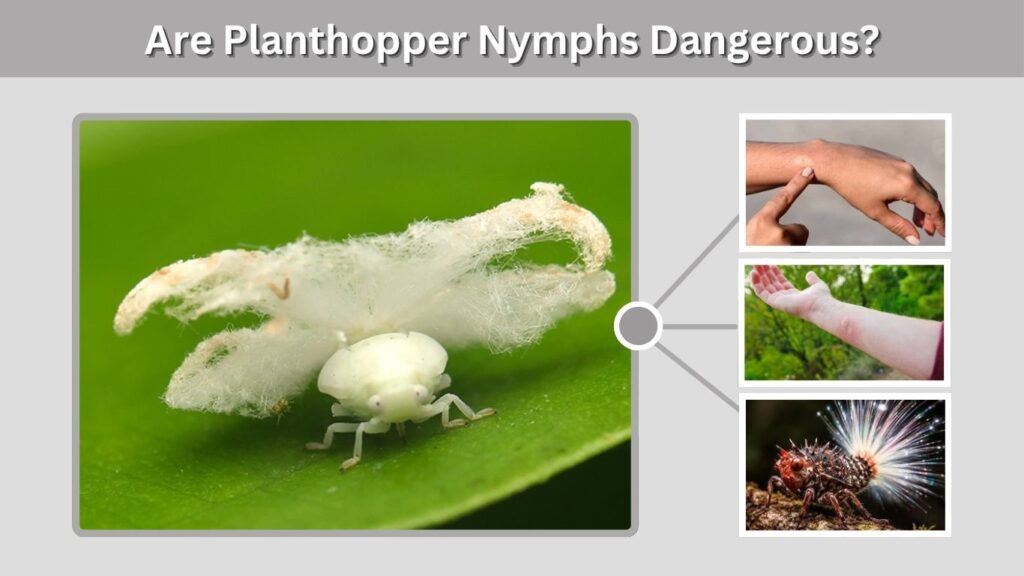
Planthopper nymphs can look strange enough to make people wonder whether they are poisonous, venomous, or capable of biting. In reality, they are adapted to feed on plants rather than humans.
Are Planthopper Nymphs Dangerous to Humans?
No. Planthopper nymphs are generally harmless to people.
They do not:
- Feed on human blood
- Sting
- Normally bite humans
- Inject venom
- Chase or attack people
If touched, their usual response is simply to jump away.
Are Flatid Planthopper Nymphs Poisonous?
Flatid planthopper nymphs are not considered poisonous to humans.
Their waxy coating may appear unusual, but it is primarily a protective secretion rather than dangerous poison.
Normal accidental contact with one is not generally a health concern.
Are Planthopper Nymphs Bad for Plants?
Planthopper nymphs use piercing-sucking mouthparts to remove sap from plants. A small number usually causes little noticeable harm, especially on healthy established plants.
Large populations, however, can cause problems.
Signs of Planthopper Nymph Damage
Possible symptoms include:
- Yellowing leaves
- Wilting
- Reduced plant vigor
- Distorted young growth
- Sticky honeydew
- Sooty mold
- Groups of nymphs on stems
- Premature drying
- Hopperburn in heavily infested rice
Some planthoppers can also transmit plant pathogens while feeding.
How to Get Rid of Planthopper Nymphs
Most home gardens do not require aggressive treatment when only a few planthopper nymphs are present. Natural predators frequently keep populations under control.
Simple Control Methods
Try these approaches:
- Spray affected plants with water.
- Remove heavily infested stems.
- Reduce weeds around valuable plants.
- Encourage spiders and beneficial insects.
- Check leaf undersides regularly.
- Use insecticidal soap when appropriate.
- Consider horticultural oil for persistent infestations.
- Avoid unnecessary broad-spectrum insecticides.
For important agricultural pests such as brown planthoppers in rice, integrated pest management is generally more effective than relying only on repeated pesticide applications.
Planthopper Nymph Life Cycle
Planthopper development begins when eggs hatch on or within plant tissue. The newly emerged nymph starts feeding almost immediately.
As it grows, the insect sheds its exoskeleton several times.
From Nymph to Adult
Development generally follows these steps:
- Egg hatches.
- First-stage nymph begins feeding.
- Nymph molts repeatedly.
- Wing pads gradually develop.
- Body size increases.
- Final molt produces the adult.
- Adults develop functional wings and reproduce.
The exact development time varies according to species, temperature, food availability, and environmental conditions.
Interesting Planthopper Nymph Facts
Planthopper nymphs are more unusual than their tiny size suggests. Some resemble pieces of cotton, while others have evolved remarkable jumping mechanisms that have attracted scientific attention.
Why People Call Them Popcorn Bugs
Some wax-covered nymphs have informal nicknames such as “popcorn bugs” because their fluffy white appearance can resemble tiny pieces of popcorn moving across vegetation.
The term is descriptive rather than a scientific name.
When disturbed, the tiny white insect suddenly jumping away makes the resemblance even more memorable.
Why Nymphs Look Different From Adults
A fluffy white nymph may mature into an adult that looks brown, gray, green, or completely different in shape.
As the insect molts, wax patterns may change and wing structures gradually develop.
For this reason, people often photograph nymphs without realizing what the adult version of the same insect looks like.
FAQs
What Is a Planthopper Nymph?
A planthopper nymph is an immature planthopper that has hatched from an egg but has not developed full adult wings. It feeds on plant sap and passes through several molts before becoming an adult. Nymphs can be green, brown, white, or covered in wax.
Why Is My Planthopper Nymph White and Fuzzy?
Many flatid planthopper nymphs produce white wax from abdominal glands. The wax can form long fluffy filaments that resemble cotton or feathers. It helps protect the small insect and may make it more difficult for predators to capture.
Are Planthopper Nymphs Dangerous?
No. Planthopper nymphs are generally harmless to humans. They do not sting or normally bite people and are not blood feeders. Their main impact is on plants because they use specialized mouthparts to remove sap from leaves and stems.
What Is the Difference Between a Leafhopper and Planthopper Nymph?
Leafhopper nymphs are typically narrow and wedge-shaped and often move rapidly sideways. Planthopper nymphs vary more in body shape, and some species produce distinctive white wax or long tail-like filaments. Both groups can jump quickly when disturbed.
How Do I Get Rid of Planthopper Nymphs?
Small numbers can often be removed with a strong spray of water or by pruning heavily infested growth. Natural predators should be encouraged. For persistent infestations, insecticidal soap or horticultural oil may help when used correctly on suitable plants.