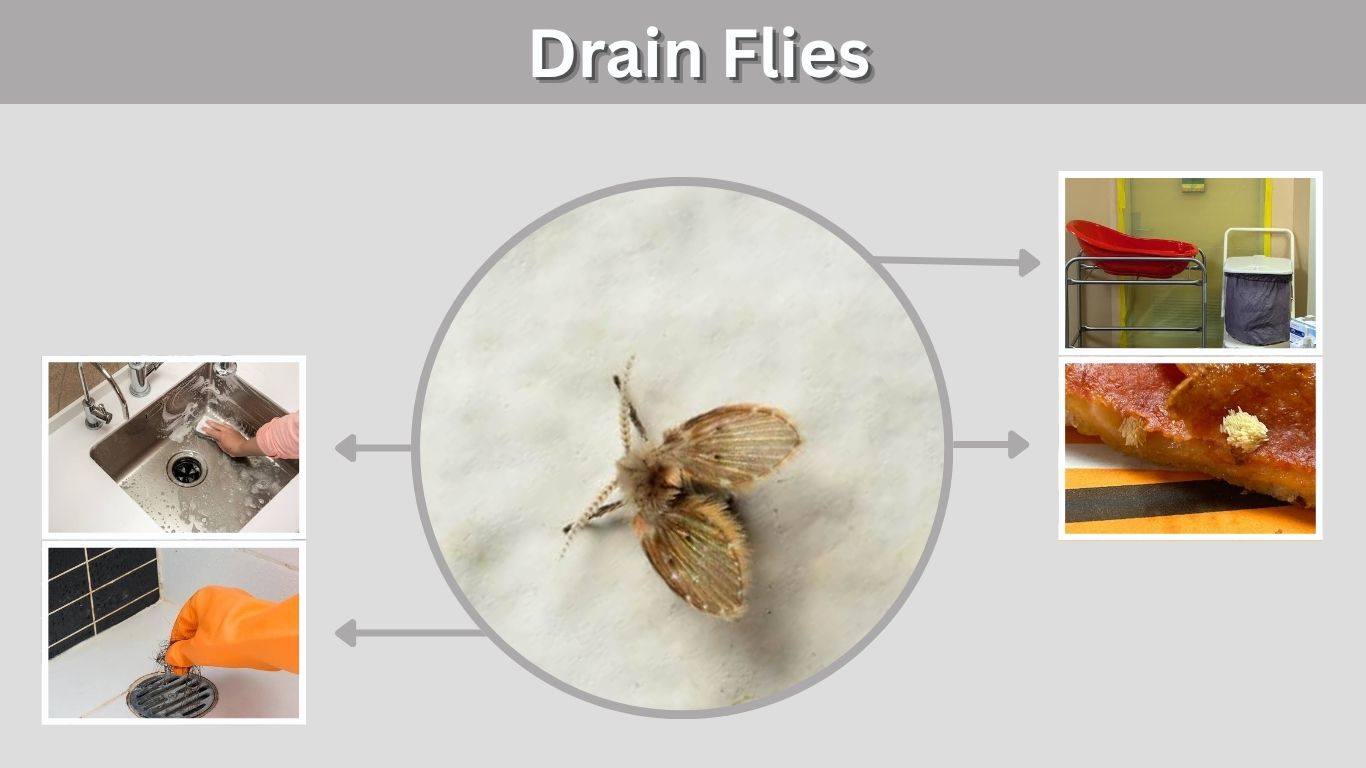
Drain flies are tiny, moth-like insects commonly found around sinks, showers, floor drains, and toilets. Although they do not usually bite or spread serious diseases, their presence often indicates a buildup of moist organic material inside a drain. Killing the visible adults provides only temporary relief because eggs and larvae may remain hidden within the pipes. Effective drain fly treatment requires locating the breeding source, thoroughly cleaning it, and monitoring the area until the infestation disappears.
What Is a Drain Fly?
A drain fly is a small fly belonging to the family Psychodidae. It is also called a moth fly, sewer fly, or filter fly. These insects develop in wet, decaying organic matter. Indoor infestations usually begin in neglected drains, but drain flies can also breed in septic systems, sewage leaks, dirty garbage containers, and consistently damp areas.
What Does a Drain Fly Look Like?
Adult drain flies have several recognizable features:
- Approximately 1/16 to 1/4 inch long
- Broad, rounded wings covered with fine hairs
- Gray, brown, tan, or nearly black coloring
- A fuzzy body resembling a miniature moth
- Wings held over the body like a roof
- Short, weak, hopping flights
Unlike house flies, drain flies are not strong fliers. They often remain on bathroom walls or close to the drain where they developed.
Where Do Drain Flies Come From?
Drain flies usually emerge from the gelatinous film coating the inside of a drain. This material contains hair, soap residue, food particles, grease, skin cells, and microorganisms.
Common breeding locations include kitchen sinks, bathroom drains, shower pans, floor drains, garbage disposals, sump pits, condensate lines, mop buckets, and damaged sewer pipes. A rarely used drain may become especially attractive because water and organic debris remain undisturbed.
Drain Fly Eggs, Larvae, and Life Cycle
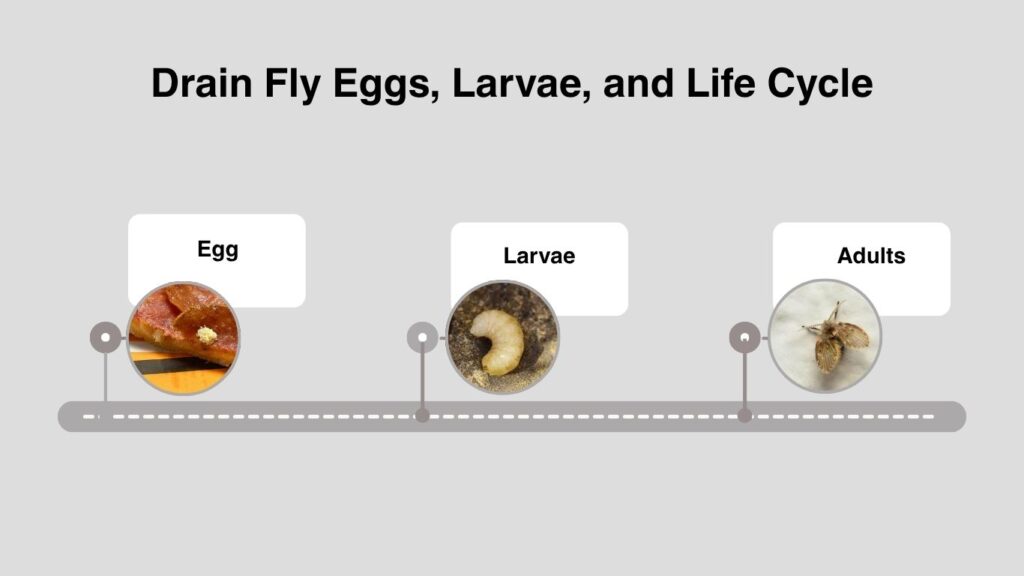
Removing an infestation becomes easier when you understand its life cycle. Warm temperatures, constant moisture, and available organic material allow drain flies to reproduce quickly. Several developmental stages may be present inside the drain simultaneously, which is why treatment must continue after the adult flies appear to be gone.
Drain Fly Eggs
Females lay clusters of tiny eggs in moist organic slime. The eggs are usually cream-colored or translucent and are difficult to see without magnification. One female may lay around 30 to 100 eggs, depending on the species and environmental conditions.
The eggs often hatch within about two days. Cleaning away the slime removes both eggs and their food source.
What Do Drain Fly Larvae Look Like?
Drain fly larvae resemble tiny, slender worms or maggots. Their main characteristics include:
- A pale, cream, gray, or translucent body
- A darker head and breathing tube
- A length that may reach approximately 1/4 inch
- A segmented, slightly flattened appearance
- Slow, wriggling movement through wet debris
Black drain fly larvae may look dark because internal material is visible through their bodies. Larvae found in a shower or toilet often came from organic buildup, a damaged seal, or a nearby plumbing problem.
Drain Fly Pupae and Adults
After feeding for roughly 9 to 15 days, larvae enter the pupal stage. Adults emerge a short time later and begin reproducing near the same source. The entire life cycle may be completed in one to three weeks under favorable conditions.
An adult drain fly generally lives for about two weeks. However, an infestation can continue indefinitely when new generations keep developing inside an untreated drain.
Drain Fly vs. Fruit Fly vs. Gnat
Drain flies are often mistaken for fruit flies or gnats. Correct identification matters because each pest may require a different removal method. Drain flies breed in wet organic film, while fruit flies are usually associated with fermenting food. Fungus gnats generally develop in damp soil around houseplants.
Important Differences
| Feature | Drain Fly | Fruit Fly | Fungus Gnat |
| Appearance | Fuzzy and moth-like | Smooth, tan or brown | Slender and mosquito-like |
| Wings | Broad and hairy | Clear and narrow | Long and delicate |
| Typical location | Drains and sewage areas | Fruit, trash, and spills | Damp plant soil |
| Flight | Short, hopping movement | Fast, active flight | Weak flight around plants |
| Main breeding material | Organic drain slime | Fermenting food | Moist soil and fungi |
Small flies near a sink are not automatically drain flies. Check fruit bowls, recycling containers, garbage cans, and potted plants before selecting a treatment.
How to Find a Drain Fly Infestation
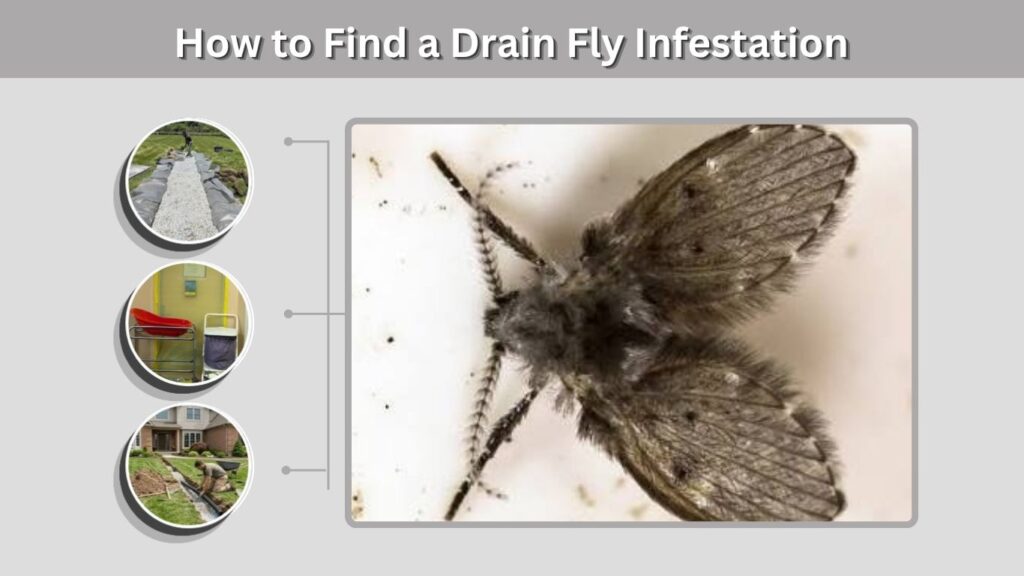
The visible flies may gather near one drain even when their actual breeding source is elsewhere. Inspect every nearby moisture source, particularly drains that are rarely used. A simple overnight test can help determine whether adults are emerging from a particular pipe.
Test the Drains
Follow these steps:
- Dry the drain opening and surrounding area.
- Place a strip of clear tape across part of the opening with the sticky side facing downward.
- Leave enough space for airflow rather than sealing the drain completely.
- Check the tape the following morning for trapped flies.
- Repeat the test for several nights if necessary.
You can also place a clear cup or container upside down over a suspected drain. Flies trapped beneath it suggest that the drain is an active source.
How to Get Rid of Drain Flies
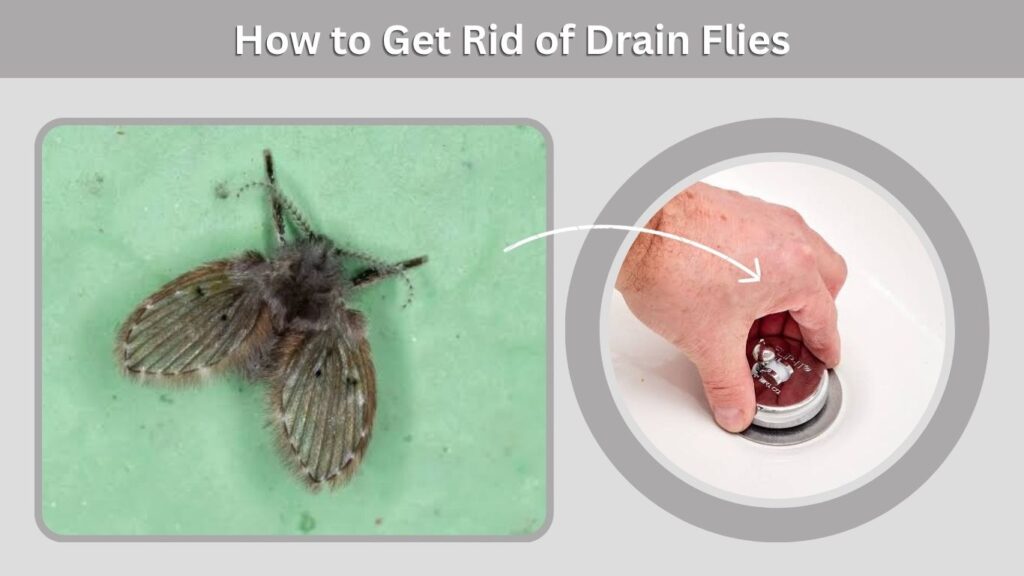
The most reliable treatment is physical cleaning. Pouring a product into the opening may not reach all the slime attached to pipe walls. You must remove the breeding material, address excess moisture, and continue treatment long enough to interrupt the life cycle.
Clean the Drain Thoroughly
Use this process:
- Remove the stopper, strainer, or drain cover.
- Pull out visible hair and debris with a drain tool.
- Scrub the inside of the drain and overflow opening using a stiff, long-handled pipe brush.
- Clean the underside of the stopper and surrounding fixtures.
- Flush away loosened material with hot tap water.
- Apply an enzyme or microbial drain cleaner according to its label.
- Repeat the cleaning for several days if flies continue appearing.
Use caution with very hot water, especially around PVC plumbing and porcelain fixtures. Never mix bleach, ammonia, acids, commercial drain openers, or other cleaning chemicals because the combination can release dangerous gases.
Choosing a Drain Fly Killer
Enzyme-based or microbial drain gels are usually more useful than ordinary insect sprays because they help break down the organic film supporting the larvae. Choose a product labeled for the drain or plumbing system you need to treat.
Aerosol insecticides may kill exposed adults but rarely eliminate eggs and larvae inside pipes. Always follow the product label and check whether it is suitable for septic systems.
DIY Drain Fly Trap
A homemade trap can reduce adult numbers while you clean the breeding source:
- Pour apple cider vinegar into a small bowl.
- Add one or two drops of liquid dish soap.
- Place the bowl near the affected drain.
- Empty and refresh it daily.
The vinegar attracts some small flies, while the soap reduces surface tension and causes them to sink. However, an apple cider vinegar trap cannot clean the pipe or eliminate developing larvae.
How to Prevent Drain Flies
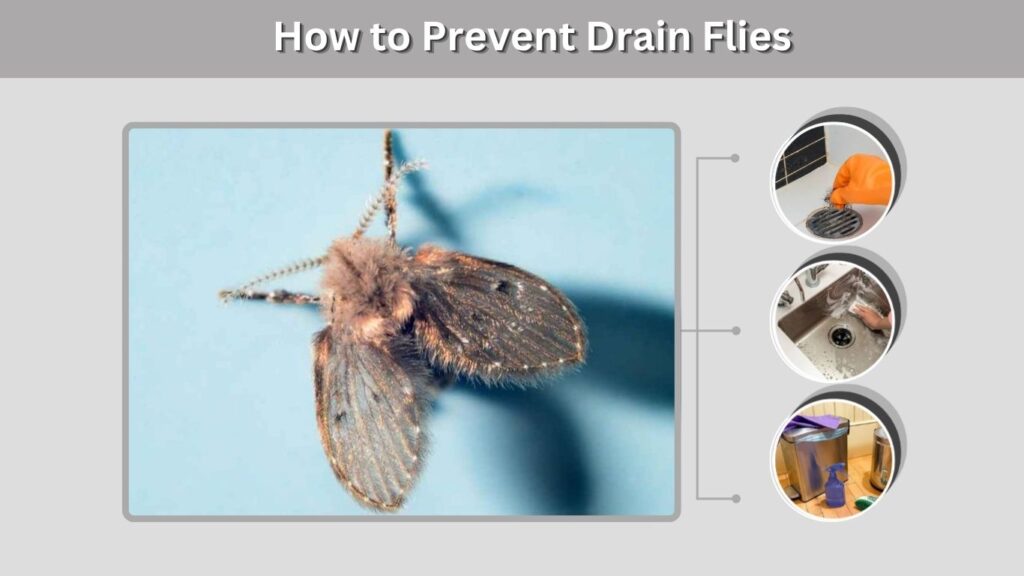
Prevention depends on keeping drains clean, functional, and reasonably dry. Rooms with plumbing leaks or unused fixtures require particular attention because persistent moisture supports larvae and microbial growth.
Preventive Measures
- Remove hair and food debris from drain covers regularly.
- Clean garbage disposals and sink overflow openings.
- Run water through rarely used drains to maintain the trap seal.
- Repair leaking faucets, pipes, and toilet seals.
- Keep mop buckets, drip trays, and garbage bins clean.
- Avoid allowing grease or food residue to enter kitchen drains.
- Investigate sewage odors, slow drainage, or recurring moisture.
- Keep floors and spaces beneath appliances dry.
When Should You Call an Exterminator or Plumber?
Professional help is appropriate when drain flies continue appearing after one to two weeks of careful cleaning. A pest-control professional can identify unusual breeding sites, but a plumber may be more useful when the infestation involves a cracked pipe, failed toilet seal, sewer leak, blocked drain, or septic problem.
Large numbers of larvae in a toilet may indicate contamination or a plumbing fault rather than a simple dirty drain. Drain fly larvae normally live in wet organic material and do not typically infest healthy humans. Any suspected larva in a wound, body opening, or biological sample requires medical evaluation instead of home treatment.
FAQs
Do drain flies bite humans?
No. Adult drain flies do not normally bite people or pets. They are primarily a nuisance, although heavy infestations may indicate unsanitary organic buildup or a plumbing problem.
Does bleach kill drain flies?
Bleach may kill some organisms it contacts, but it often flows past the film coating the pipe and may not remove the breeding material. Physical scrubbing and an appropriate drain cleaner are generally more effective.
Can drain flies come from a toilet?
Yes. They may develop beneath the rim, around a damaged wax seal, in an unused toilet, or within contaminated plumbing. Frequent reappearance warrants a careful plumbing inspection.
How long does it take to eliminate drain flies?
A small infestation may improve within several days, but complete control often takes one to three weeks. Treatment must remove eggs, larvae, pupae, adults, and the material supporting them.
Why do drain flies keep coming back?
Recurring drain flies usually mean that an overlooked breeding source remains. Possible causes include incomplete pipe cleaning, a leaking drain line, an unused floor drain, a dirty garbage disposal, or moisture beneath a fixture.