
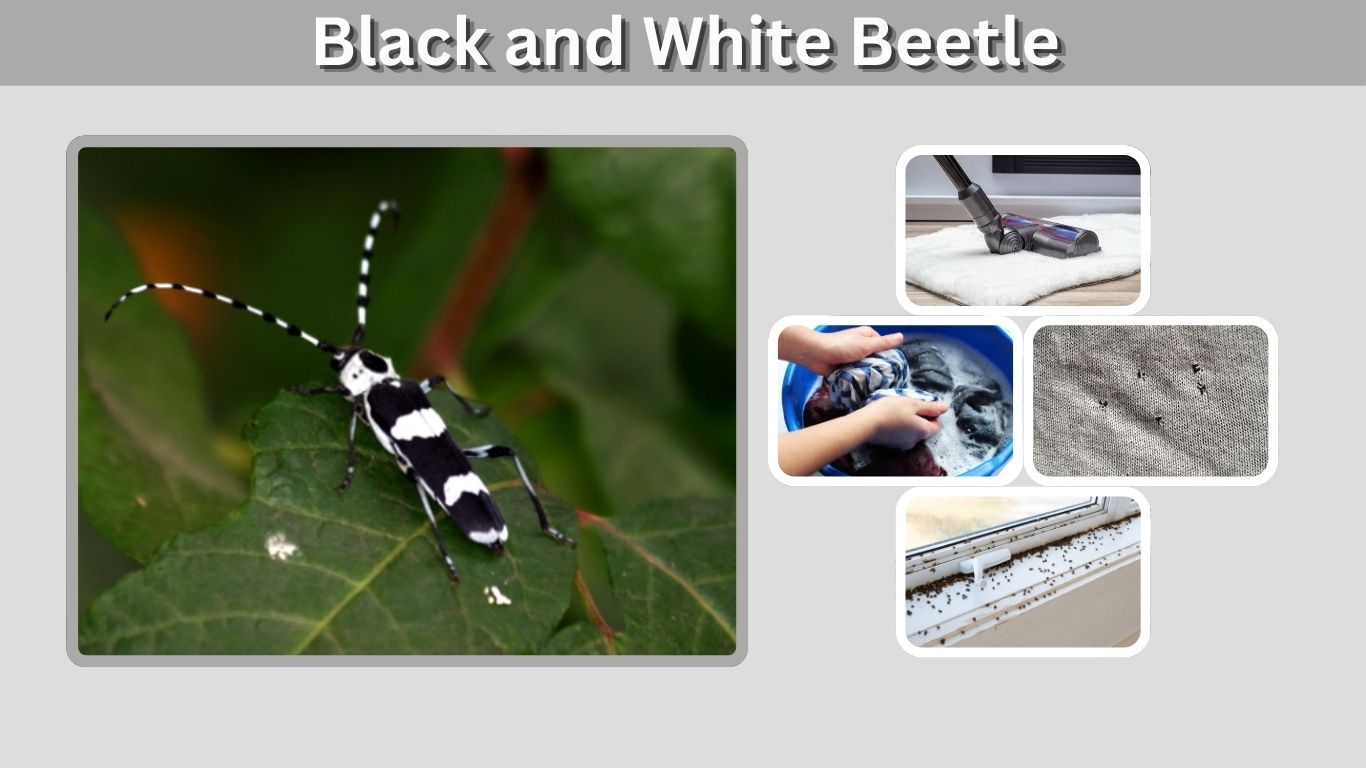
A black and white beetle can belong to several different species, ranging from tiny carpet beetles found indoors to large longhorn beetles living around trees. Color alone is rarely enough for accurate identification because spots, stripes, body shape, antenna length, and size all provide important clues. Some black-and-white beetles are harmless visitors, while others may damage fabrics, stored materials, or trees. This guide explains the most common types, identification features, indoor concerns, habitat, behavior, and what to do when you find one.
How to Identify a Black and White Beetle
Black-and-white coloring appears in many beetle families, so identification should begin with physical structure rather than color alone. Look closely at the insect’s approximate size, whether the body is round or elongated, the shape of the antennae, and whether the white areas appear as scales, spots, bands, or solid markings. Where you found the beetle also provides an important clue.
Key Identification Features
Check for these characteristics:
- Body size: Tiny beetles may measure only a few millimeters, while some longhorn beetles exceed an inch.
- Body shape: Carpet beetles are rounded, whereas longhorn beetles are usually elongated.
- White pattern: Look for spots, stripes, speckles, bands, or patches.
- Antennae: Long antennae may indicate a longhorn beetle.
- Texture: Some species appear shiny, while others are covered with fine scales or hairs.
- Location: Indoor fabrics, tree trunks, flowers, or wood can help narrow identification.
- Movement: Some species fly readily, while others are usually found crawling.
Photographing the beetle from above and beside a ruler can make identification easier.
Black Beetle With White Spots
A black beetle with white spots may be a carpet beetle, longhorn beetle, or another spotted species. Tiny round beetles found around windows, carpets, closets, or stored fabrics are especially likely to be adult carpet beetles.
Larger black beetles with clear white spots and very long antennae are more likely to belong to one of the longhorn beetle groups. These insects generally develop in woody plants rather than household fabrics.
Common Types of Black and White Beetles
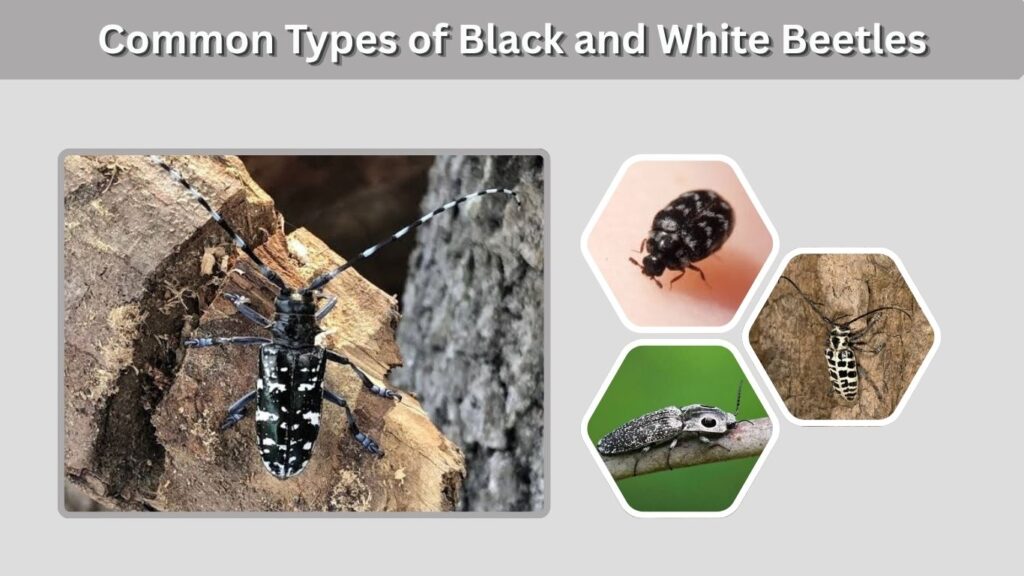
Several beetles can match a general black-and-white description. Some are primarily indoor pests, while others are outdoor insects associated with trees, flowers, or decaying vegetation. Correct identification matters because control methods for a carpet beetle inside a bedroom are completely different from those for a large beetle visiting a tree outdoors.
Black and White Carpet Beetle
Varied carpet beetles are among the most common small black-and-white beetles found in homes. Adults are tiny, rounded, and patterned with combinations of black, white, brown, or yellowish scales.
Adults are frequently noticed near windows because they are attracted to light. The larvae are the damaging stage and can feed on animal-based materials such as wool, feathers, fur, hair, and some stored products.
Cottonwood Borer
The cottonwood borer is a large, striking beetle with bold black-and-white markings and very long antennae. It belongs to the longhorn beetle family.
Adults may be seen around cottonwood, poplar, and willow trees. Their larvae develop inside the roots and lower parts of host trees. Because of its large body and dramatic pattern, this species is very different from the tiny black-and-white beetles usually encountered indoors.
Eyed Click Beetle
Some click beetles have strongly contrasting black, gray, and white patterns. Eyed click beetles are especially recognizable because of the large false eye markings on the pronotum behind the head.
These markings can make the insect appear to have unusually large eyes. They are generally outdoor beetles associated with woodlands and decaying wood rather than household infestations.
Other Black-and-White Beetles
Other possible matches include:
- Black-and-white longhorn beetles
- Checkered beetles
- Spotted flower beetles
- Certain bark and wood-boring beetles
- Small dermestid beetles
- Beetles with pale scales that appear white from a distance
Geographic location can significantly change which species is most likely.
Small Black Beetle With White Spots in the House
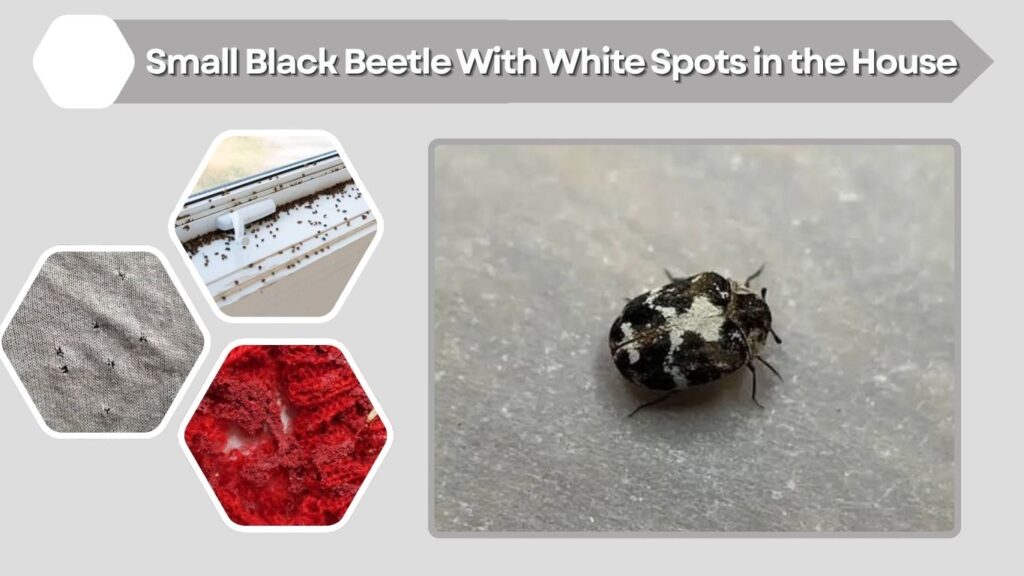
A small round black beetle with white spots found indoors is often associated with the carpet beetle family. Adults themselves usually cause little damage, but their presence can indicate that larvae are feeding somewhere inside the home. Larvae prefer dark, undisturbed locations where lint, hair, dead insects, feathers, wool, or other suitable food accumulates.
Signs of Carpet Beetles Indoors
Possible signs include:
- Tiny patterned beetles near windows
- Hairy or bristly larvae
- Shed larval skins
- Small irregular holes in wool or natural-fiber fabrics
- Damage to rugs, blankets, or stored clothing
- Larvae behind furniture or along baseboards
- Activity around stored animal products
- Dead insects accumulating in hidden areas
Seeing one adult does not automatically mean there is a serious infestation. Repeated sightings, larvae, shed skins, or fabric damage deserve closer inspection.
Why They Appear Near Windows
Adult carpet beetles often move toward light, which is why homeowners commonly discover them on windowsills. They may have developed indoors or entered from outside.
Adults can feed on pollen and nectar outdoors, whereas larvae require different food. Therefore, finding adults around windows should lead to an inspection of closets, rugs, furniture edges, pet-hair accumulations, stored textiles, and other quiet areas.
Black and White Striped Beetles
A beetle with black and white stripes can be more difficult to identify because similar patterns occur in unrelated groups. Body size and antenna length are particularly helpful. Large striped beetles with very long antennae are often wood-associated longhorn beetles, while tiny patterned beetles in houses are more likely to be dermestids or other small household insects.
Beetles With Long Antennae
Longhorn beetles get their common name from antennae that may equal or exceed the length of the body. Black-and-white patterns are common in several species.
Most spend their larval stage inside wood, roots, branches, or stems. Finding one adult outdoors does not usually indicate a household problem. However, repeated emergence from firewood or structural wood deserves closer investigation because the exact species determines whether there is any reason for concern.
Stripes, Spots, and Speckles
What appears to be a stripe from a distance may actually consist of many tiny white scales. This is especially true in small beetles.
Lighting also changes appearance. A beetle that looks completely black indoors may reveal pale gray or cream markings under bright light. For this reason, examining the insect closely is more reliable than depending on a quick impression of its color.
Are Black and White Beetles Harmful?
Most black-and-white beetles are not dangerous to people. They generally do not seek humans or behave aggressively. The more important question is whether the particular species damages household materials, stored food, crops, or trees. Carpet beetle larvae can damage fabrics, while certain wood-boring beetles may affect stressed or susceptible trees.
Can Black and White Beetles Bite?
Most common black-and-white household beetles do not routinely bite people. Carpet beetles, for example, are not blood-feeding insects.
Some people may confuse irritation from contact with carpet beetle larval hairs with insect bites. The larvae have bristles that can cause skin irritation in sensitive individuals.
Large outdoor beetles may have strong jaws, but they generally use them for feeding or defense rather than actively attacking people. Avoid handling an unidentified beetle roughly.
How to Get Rid of Black and White Beetles Indoors
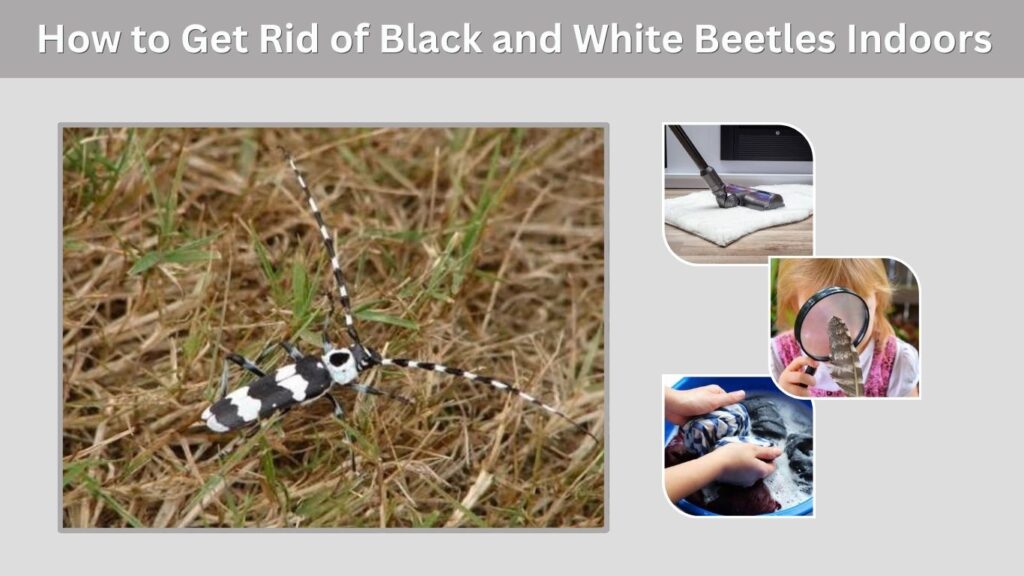
Control should begin with identification. A single outdoor beetle that accidentally enters a home usually requires nothing more than removal. Repeated sightings of tiny carpet beetles, however, may require cleaning and removal of larval food sources. Chemical treatment should not replace sanitation and inspection, especially when the source has not been located.
Steps for Indoor Control
If you suspect carpet beetles:
- Vacuum carpets, baseboards, closets, furniture edges, and vents thoroughly.
- Remove accumulations of pet hair, lint, and dead insects.
- Inspect wool, feathers, fur, and other animal-based materials.
- Wash or appropriately clean affected clothing and textiles.
- Store vulnerable items in sealed containers.
- Check seldom-used drawers, boxes, and closets.
- Vacuum window areas where adult beetles accumulate.
- Inspect flowers or other materials brought indoors.
Dispose of vacuum contents carefully after cleaning an infested area.
Preventing Another Infestation
Regular cleaning removes many of the materials carpet beetle larvae use for food. Pay particular attention beneath heavy furniture, around carpet edges, inside closets, and wherever pet hair accumulates.
Screens and properly sealed windows can reduce insects entering from outdoors. Natural-fiber clothing that will remain unused for long periods should be cleaned before storage and kept in tightly closed containers.
Black and White Beetles Outdoors
Outdoor black-and-white beetles are often normal parts of local ecosystems. Many species develop in dead wood, roots, stems, or soil, and adults may visit flowers for pollen or nectar. A beetle sitting on a tree does not automatically mean the tree is being seriously damaged.
Habitat and Behavior
Large longhorn beetles are commonly associated with woody plants. Females deposit eggs in suitable host material, and the larvae develop by feeding within plant tissue.
Other black-and-white beetles may hunt smaller insects, feed on pollen, consume decaying material, or use dead wood.
If an unusual beetle repeatedly appears on a valuable tree, identifying the species before attempting treatment is important. Some wood-boring beetles attack weakened or dying trees, while others have little economic importance.
FAQs
1. What is the small black beetle with white spots in my house?
A tiny round beetle with black, white, brown, or yellowish markings may be an adult carpet beetle. Look for hairy larvae, shed skins, or damage to natural-fiber materials to help confirm an infestation.
2. What is a large black and white beetle with long antennae?
Large black-and-white beetles with unusually long antennae are often longhorn beetles. The cottonwood borer is one well-known example in North America.
3. Are black and white carpet beetles harmful?
Adult carpet beetles are not dangerous to people, but their larvae can damage wool, fur, feathers, carpets, and other animal-based materials.
4. Why do I keep finding black and white beetles by my window?
Small adult carpet beetles are attracted to light and commonly gather near windows. Repeated sightings may indicate larvae are developing somewhere inside the home.
5. Should I kill a black and white beetle outside?
Usually not. Many outdoor beetles are harmless and play useful ecological roles. Identify the beetle first, especially if it is associated with a tree or plant that appears damaged.
