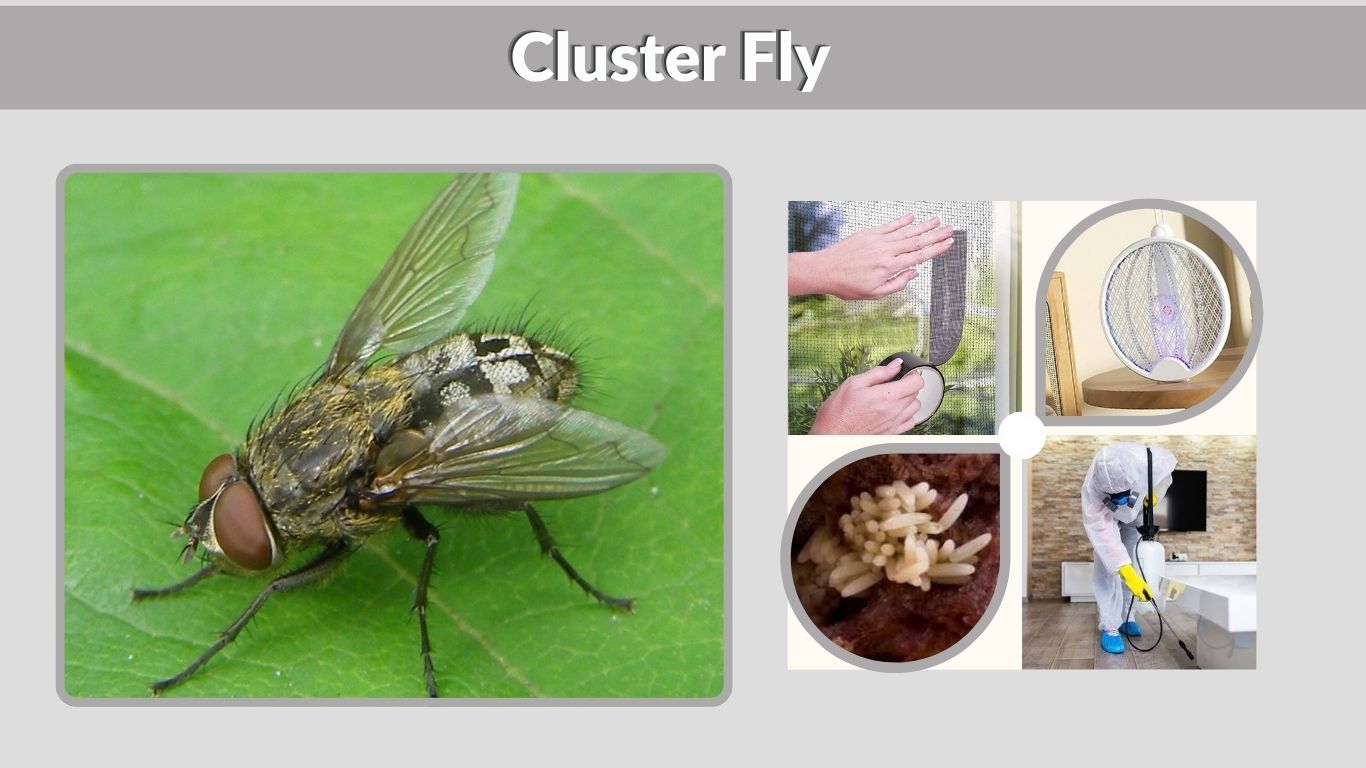
Cluster flies are slow-moving flies that commonly appear around windows, attics, and upper floors during fall, winter, and early spring. Unlike house flies, they do not breed in garbage or reproduce inside homes. Instead, cluster flies enter buildings mainly to overwinter in protected wall voids and other sheltered spaces. Large numbers can become an annoying seasonal problem, especially on warm sunny days. Understanding cluster fly identification, life cycle, control, traps, and prevention makes these recurring infestations much easier to manage.
What Is a Cluster Fly?
Cluster flies belong to the genus Pollenia and are members of the blow fly family. They are primarily nuisance insects rather than destructive household pests. Adults commonly enter houses in late summer and fall and remain dormant inside protected spaces through cold weather. Their immature stages develop outdoors in association with earthworms rather than household waste.
Cluster Fly Identification
A cluster fly can usually be identified by several characteristics:
- Adults are approximately 3/8 to 1/2 inch long.
- Their bodies are dull gray to grayish-black.
- Short golden-yellow hairs occur on the thorax.
- The abdomen can have irregular lighter patches.
- Their wings overlap when resting.
- They tend to fly slowly and sluggishly indoors.
- They commonly gather around sunny windows and upper floors.
The yellowish or golden hairs on the thorax are especially useful for separating cluster flies from many similar-looking flies.
Cluster Fly vs House Fly
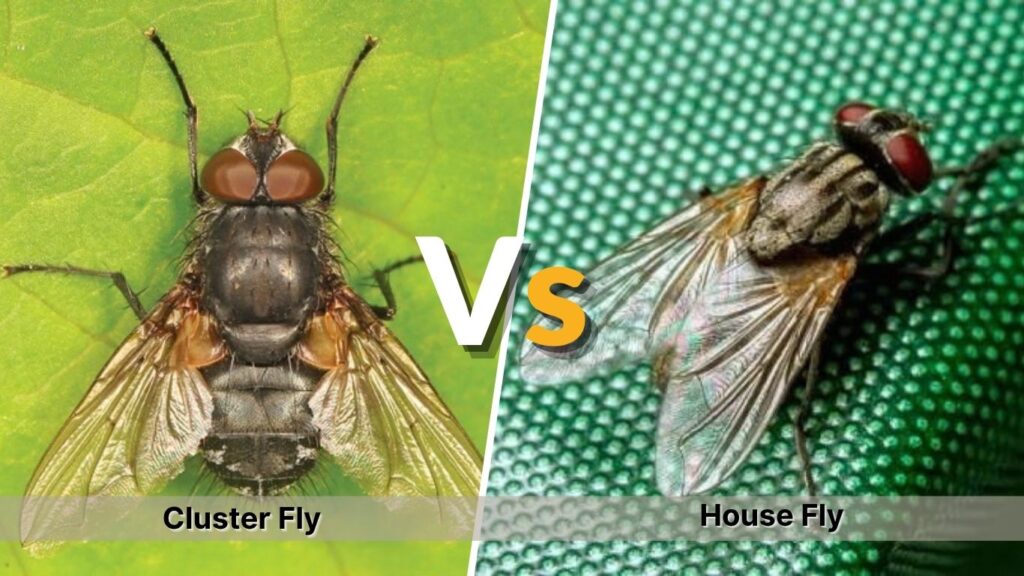
Although cluster flies and house flies can look similar at first glance, their biology is very different. Cluster flies mainly use houses as winter shelters, whereas house flies may enter buildings while searching for food and suitable breeding material. Correct identification matters because removing garbage or cleaning drains will not solve a true cluster fly problem.
Key Differences Between Cluster Flies and House Flies
| Feature | Cluster Fly | House Fly |
| Appearance | Dull gray with yellowish hairs | Gray with dark thoracic stripes |
| Movement | Usually slow and sluggish | Faster and more active |
| Indoor breeding | No | Can breed around suitable organic waste |
| Larval habitat | Associated with earthworms | Decaying organic material |
| Common season indoors | Fall through early spring | Often warmer months |
| Main indoor problem | Overwintering nuisance | Sanitation and nuisance pest |
Finding sluggish flies around windows during winter strongly suggests overwintering flies rather than an active indoor breeding population.
Cluster Fly Life Cycle
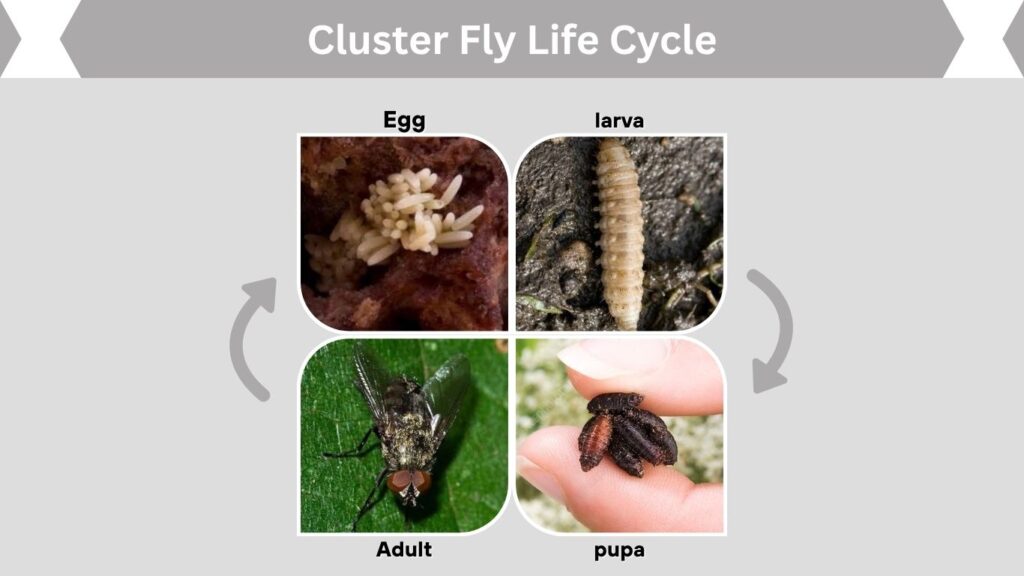
The cluster fly life cycle occurs primarily outdoors. Adults emerge from winter shelter during spring and return to outdoor environments. Females deposit eggs in soil where earthworms are present. After hatching, larvae move through the soil and develop by feeding on earthworms. Pupation occurs before new adults emerge and repeat the cycle.
Eggs, Larvae and Adults
The basic cluster fly life cycle includes:
- Egg: Eggs are deposited in soil containing suitable earthworm hosts.
- Larva: Newly hatched maggots locate earthworms and develop in association with them.
- Pupa: Mature larvae pupate before becoming adults.
- Adult: Adults live outdoors during warmer months and later seek winter shelter.
Multiple generations can occur during a growing season. Penn State reports three to four or more generations in Pennsylvania, while numbers vary with location and environmental conditions.
Why Are Cluster Flies in the House?
Cluster flies normally enter buildings because they are searching for protected places to survive winter, not because they have found food indoors. During late summer and early fall, adults gather on sun-warmed exterior walls before entering through tiny gaps around siding, windows, roofs, vents, fascia, and other openings. They frequently accumulate in upper wall voids and attics.
Signs of a Cluster Fly Infestation
Common signs include:
- Numerous sluggish flies around windows
- Flies appearing on warm winter days
- Activity concentrated on upper floors
- Flies emerging from attics or wall spaces
- Groups collecting near sunny windows
- Dead flies accumulating on windowsills
- Increased activity during fall and early spring
Seeing cluster flies indoors during winter does not usually mean they are reproducing inside. Warm temperatures can simply awaken dormant adults hidden in structural cavities.
How to Get Rid of Cluster Flies
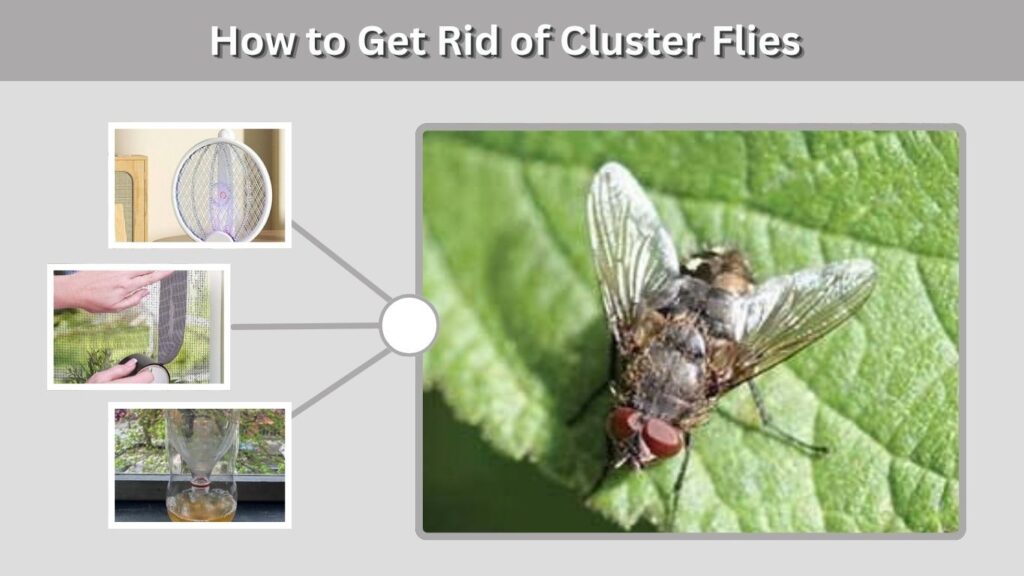
Effective cluster fly control combines removal of existing adults with preventing future entry. Because these insects may already be hidden deep inside walls by the time they appear indoors, eliminating every overwintering fly can be difficult. Long-term control therefore focuses heavily on sealing the building before fall migration begins.
Indoor Cluster Fly Control
For cluster flies already inside the living area:
- Vacuum visible flies from windows and walls.
- Use a fly swatter for isolated adults.
- Install suitable indoor fly traps near recurring activity.
- Repair damaged window and door screens.
- Seal interior gaps that connect rooms with attics or wall voids.
- Remove dead flies regularly.
Vacuuming is particularly useful because cluster flies are relatively slow-moving and often gather in predictable locations.
Cluster Fly Traps
Cluster fly traps can reduce adults that have already entered occupied rooms, particularly when positioned near windows where flies move toward daylight. Traps should be considered a supporting measure rather than the main prevention strategy.
A trap may catch exposed adults, but it cannot necessarily reach the larger number of flies hiding behind walls or inside an attic. Sealing exterior entry points generally provides better long-term control.
Cluster Fly Prevention
Preventing cluster flies before they enter the building is usually more effective than trying to remove them after winter begins. Exclusion should ideally be completed before adults begin gathering on buildings during late summer and early fall. Special attention should be paid to warm, sun-exposed sides and upper portions of the structure.
Where to Seal Your Home
Inspect and seal:
- Gaps around windows and doors
- Cracks behind siding
- Openings around utility pipes
- Roof and attic gaps
- Areas around chimneys
- Soffits and fascia
- Ventilation openings
- Damaged screens
Quality exterior caulk and properly fitted screens can substantially reduce the number of flies able to reach wall voids.
Cluster Fly Spray, Insecticide and Professional Control
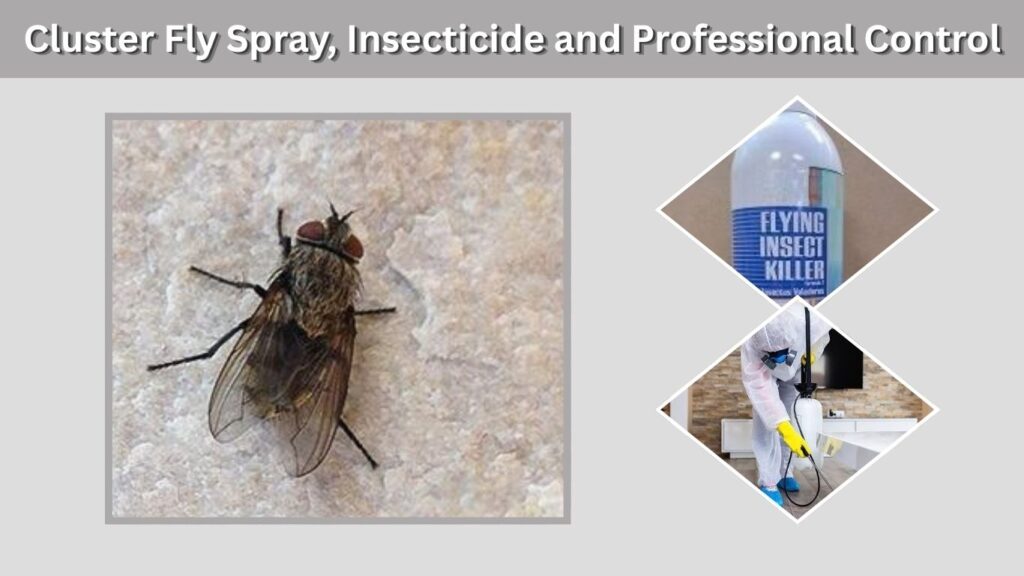
Insecticides may sometimes be used as part of a broader cluster fly management program. Exterior treatments are generally most useful when applied to likely entry areas before flies move indoors. Penn State notes that certain appropriately labeled exterior insecticides may provide some relief, although sunlight and weather can shorten residual effectiveness.
When to Consider a Cluster Fly Exterminator
Professional pest control may be worthwhile when large infestations return every year, entry points are difficult to locate, or flies are emerging from inaccessible attic and wall spaces.
A pest professional can inspect likely overwintering sites, identify exterior gaps, and determine whether an appropriately labeled treatment is useful. Insecticides should always be used according to the product label and local requirements.
Do Cluster Flies Bite or Damage Homes?
Cluster flies are primarily nuisance pests. They are not known for biting people, damaging household materials, or reproducing inside buildings. Penn State also notes that they are not known to transmit diseases of medical importance to humans. Large infestations can, however, leave small dark spots on windows and walls and create substantial annoyance.
Why They Keep Coming Back
Recurring infestations usually occur because suitable overwintering entry points remain available. Adult flies outdoors can return to the same type of protected building cavities each fall.
Therefore, repeatedly killing visible adults without improving exclusion may only provide temporary relief. Sealing cracks, repairing screens, and addressing structural openings before autumn offers a more sustainable approach.
FAQs
1. What attracts cluster flies to a house?
Cluster flies are mainly attracted to buildings as protected overwintering sites. During late summer and fall, they often gather on warm, sunny exterior walls before entering cracks and cavities.
2. Where do cluster flies nest?
Cluster flies do not normally build nests inside houses. Adults simply gather together in sheltered areas such as wall voids, attics, false ceilings, and other protected structural spaces.
3. How long do cluster flies live indoors?
Cluster flies may remain dormant inside protected building spaces throughout the cool season. Adults that become active and enter heated rooms often survive for a much shorter period; Colorado State notes that those wandering into living spaces usually die within a couple of weeks.
4. What is the best way to control cluster flies?
The most reliable long-term approach is exclusion. Seal exterior cracks, repair screens, and close gaps around windows, roofs, vents, siding, and utility penetrations before flies begin entering in late summer or fall. Visible indoor flies can then be vacuumed or trapped.
5. Are cluster flies harmful?
Cluster flies are mainly an annoyance. They do not normally breed indoors, damage the building, or pose a significant health threat. Their biggest problem is the large number of adults that can emerge around windows and living spaces during warm periods in winter or early spring.