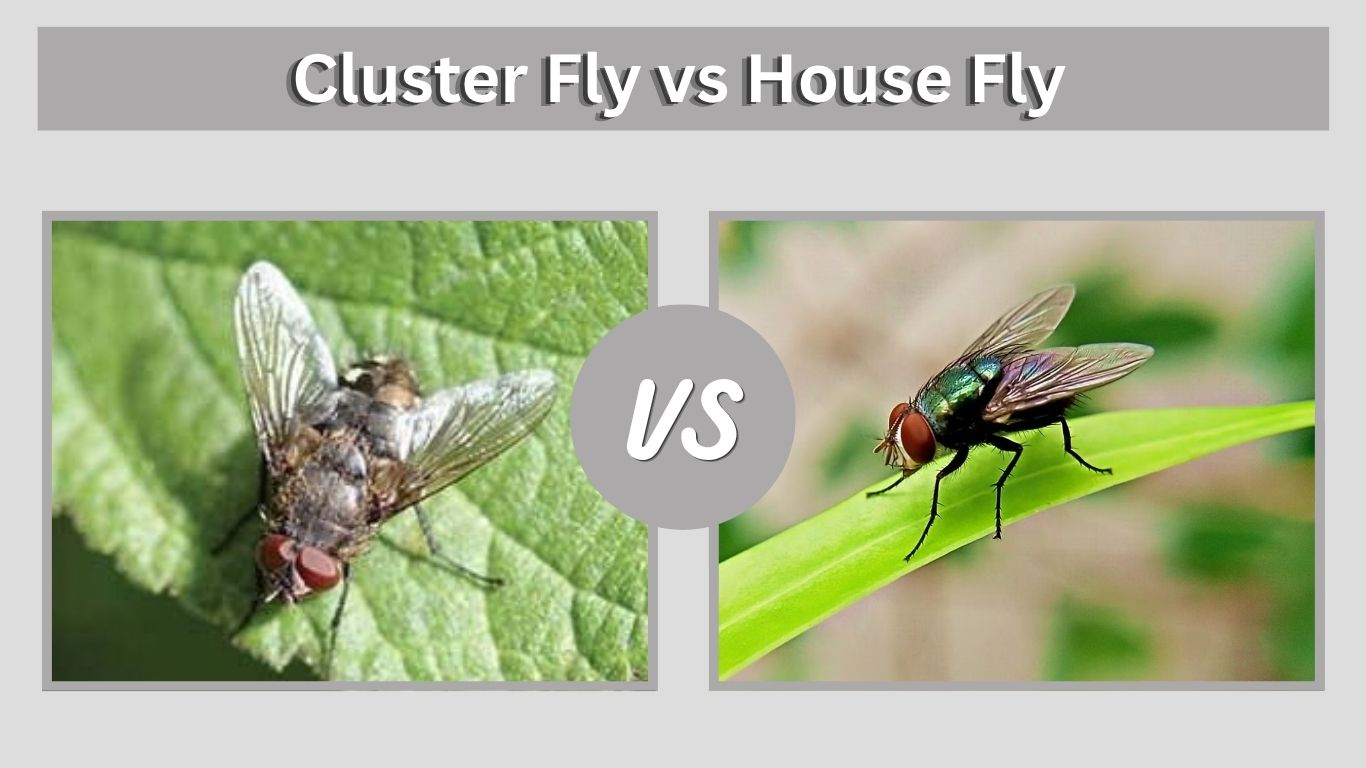
A cluster fly vs house fly comparison can help you determine why flies are appearing indoors and what type of control will actually work. Although the two flies can look similar, their behavior, breeding sites, seasonal activity, and appearance are quite different. Cluster flies usually enter homes in fall to overwinter, while house flies are more closely associated with decaying organic material and sanitation problems. Knowing these differences can help you identify the insect correctly and choose the right prevention or removal method.
Cluster Fly vs House Fly: Quick Comparison
Cluster flies and house flies belong to different groups and behave differently inside buildings. Cluster flies are mainly seasonal invaders that use walls, attics, and other protected spaces as winter shelter. House flies are more active around food, garbage, manure, and other organic materials where breeding may occur. Size, coloration, flight behavior, and season are useful identification clues.
Main Differences at a Glance
| Feature | Cluster Fly | House Fly |
| Typical appearance | Dull gray with golden-yellow hairs | Gray with dark thoracic stripes |
| Size | Slightly larger | Slightly smaller |
| Movement | Slow and sluggish | Faster and more active |
| Indoor breeding | Generally does not reproduce indoors | Can breed where suitable organic material exists |
| Larval habitat | Associated with earthworms | Decaying organic matter |
| Common indoor season | Fall, winter, early spring | Often warmer months |
| Common location | Windows, attics, upper floors | Kitchens, garbage areas, animal areas |
These differences are especially helpful when large numbers of flies suddenly appear around windows during cool weather.
How to Identify a Cluster Fly
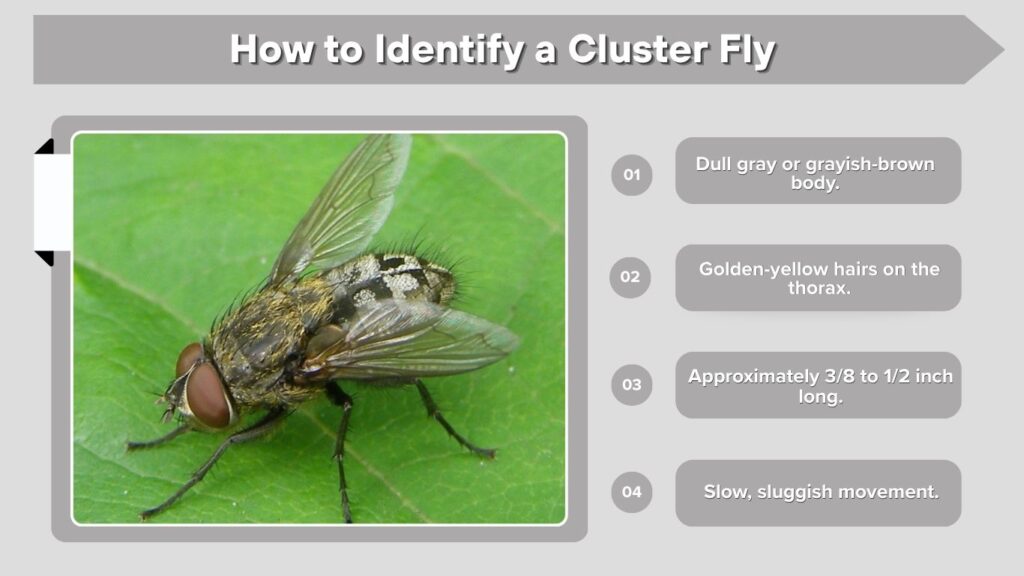
Cluster flies are generally dull gray or grayish-brown and are slightly larger than common house flies. One of their most useful identifying characteristics is the presence of golden or yellowish hairs on the thorax. They also tend to move slowly and may fly lazily or awkwardly when disturbed.
Cluster Fly Identification Features
Look for the following characteristics:
- Dull gray or grayish-brown body
- Golden-yellow hairs on the thorax
- Approximately 3/8 to 1/2 inch long
- Slow, sluggish movement
- Irregular pale patches may appear on the abdomen
- Frequent activity around sunny windows
- Large numbers may gather together
- Often found on upper floors or in attics
Cluster flies may become active indoors when winter sunshine warms walls or attic spaces. They then move toward windows while attempting to get outside.
How to Identify a House Fly
House flies, Musca domestica, are familiar household flies that commonly occur around human activity. They are generally gray and have four darker longitudinal stripes across the thorax. Unlike cluster flies, they are usually fast-moving and actively search for food and breeding materials instead of gathering indoors mainly for winter shelter.
House Fly Identification Features
Common characteristics include:
- Gray body coloration
- Four dark stripes on the thorax
- Faster, more active flight
- Common around food and waste
- Frequently encountered during warm weather
- Often lands repeatedly on surfaces
- Can reproduce around suitable organic material
House flies commonly develop around decaying plant material, manure, garbage, and other suitable organic matter. This breeding behavior is fundamentally different from that of cluster flies.
Cluster Fly in House: Why Are They Indoors?
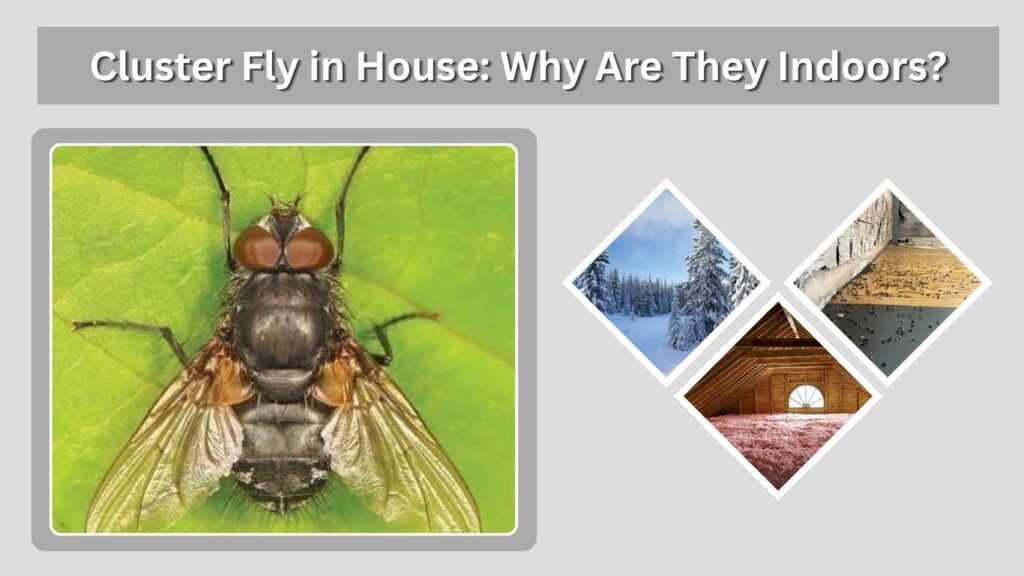
Finding a cluster fly in the house usually does not mean there is an indoor breeding site. Adult cluster flies intentionally enter buildings during late summer and fall as they search for sheltered places to survive winter. They commonly enter through small openings around roofs, siding, windows, soffits, and other structural gaps.
Why Cluster Flies Appear Around Windows
During winter, cluster flies remain semi-dormant inside wall voids, attics, false ceilings, and similar protected areas. Warm indoor temperatures or sunny weather can cause some flies to become active.
Once active, they often move toward daylight and appear around windows. This explains why a cluster fly infestation in a house may suddenly seem worse on a warm winter afternoon even though no new flies have entered.
Cluster flies also tend to move upward when entering structures, which is why upper floors and attics often experience the heaviest activity.
Do Cluster Flies Nest or Lay Eggs in Houses?
Cluster flies do not normally create nests inside houses, despite phrases such as “cluster fly nest in house” commonly being used to describe groups of flies hidden in wall cavities. Adults simply congregate in sheltered spaces while overwintering.
What About Cluster Fly Eggs and Larvae Indoors?
The cluster fly life cycle occurs outdoors:
- Adults lay eggs in soil.
- Eggs hatch into larvae.
- Larvae locate earthworms.
- The larvae develop in association with earthworms.
- Pupation occurs in the soil.
- Adults later emerge.
Because their larvae depend on earthworms, cluster flies are not normally reproducing in kitchens, attics, garbage, drains, or wall cavities.
If numerous maggots are genuinely appearing inside a home, another fly species or a separate source such as decaying animal material should be considered rather than automatically assuming they are cluster fly larvae.
Cluster Fly vs House Fly Control
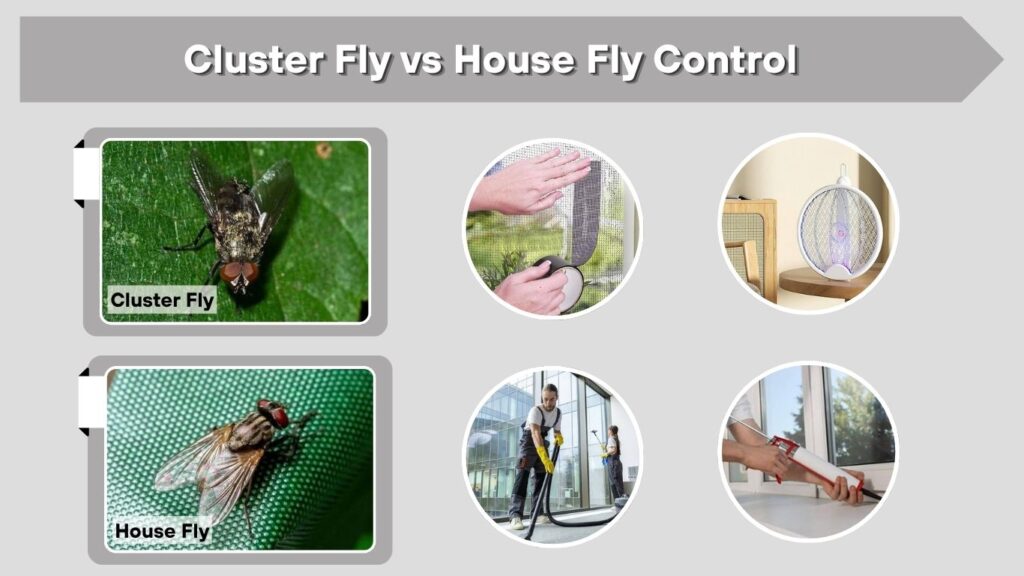
Correct identification is important because the two flies require different control strategies. Cleaning garbage and removing decaying organic matter can reduce house fly breeding, but those steps alone may have little effect on cluster flies already hiding behind walls. Cluster fly management relies much more heavily on exclusion and blocking entry before autumn.
How to Control Cluster Flies
For cluster flies:
- Vacuum visible adults around windows.
- Repair damaged screens.
- Seal cracks around windows and doors.
- Caulk gaps near siding and rooflines.
- Inspect soffits, fascia, vents, and utility penetrations.
- Focus on upper parts of the building.
- Complete exterior exclusion before late-summer migration when possible.
Cluster flies already hidden inside wall cavities may continue appearing periodically throughout winter.
How to Control House Flies
House fly management focuses more heavily on removing potential breeding materials. Garbage should be contained, animal waste managed, screens repaired, and decaying organic matter removed.
Fly traps can supplement sanitation and exclusion, but recurring house flies usually warrant inspection for an ongoing breeding source.
Cluster Fly Infestation in House Remedies
A cluster fly infestation can look dramatic when dozens of flies suddenly gather at a window. However, indoor sprays alone rarely address the underlying issue because many insects may remain inaccessible inside wall cavities. Physical removal and structural exclusion are generally more useful for long-term prevention.
Practical Steps for Indoor Infestations
You can:
- Vacuum active flies and dispose of the vacuum contents.
- Use suitable indoor fly traps near windows.
- Seal gaps between living areas and attic spaces.
- Repair window screens.
- Inspect the building exterior before the next fall.
- Seal likely overwintering entry points.
Professional pest control may be useful when very large infestations recur every year or when structural entry points are difficult to identify.
FAQs
1. What is the easiest way to tell a cluster fly from a house fly?
Look for golden-yellow hairs on the cluster fly’s thorax and its slow, sluggish movement. House flies have four darker stripes on the thorax and generally move more quickly.
2. Why do I have cluster flies in my house in fall?
Cluster flies enter buildings in late summer and fall to find protected overwintering sites. Sunny exterior walls can attract adults before they move into cracks, attics, and wall cavities.
3. Can cluster flies reproduce inside my house?
Usually no. Cluster flies lay eggs outdoors in soil, and their larvae develop in association with earthworms. Adults hiding inside buildings are primarily overwintering rather than breeding.
4. Are cluster flies more harmful than house flies?
Cluster flies are primarily nuisance insects and are not typical indoor filth flies. House flies have a stronger association with garbage, manure, and decaying organic material, so identifying which species is present is important when deciding how to manage the problem.
5. Why do cluster flies keep returning every year?
Recurring infestations usually indicate that the building still provides accessible overwintering spaces. Sealing cracks, repairing screens, and closing openings before late summer and fall can significantly reduce future entry.