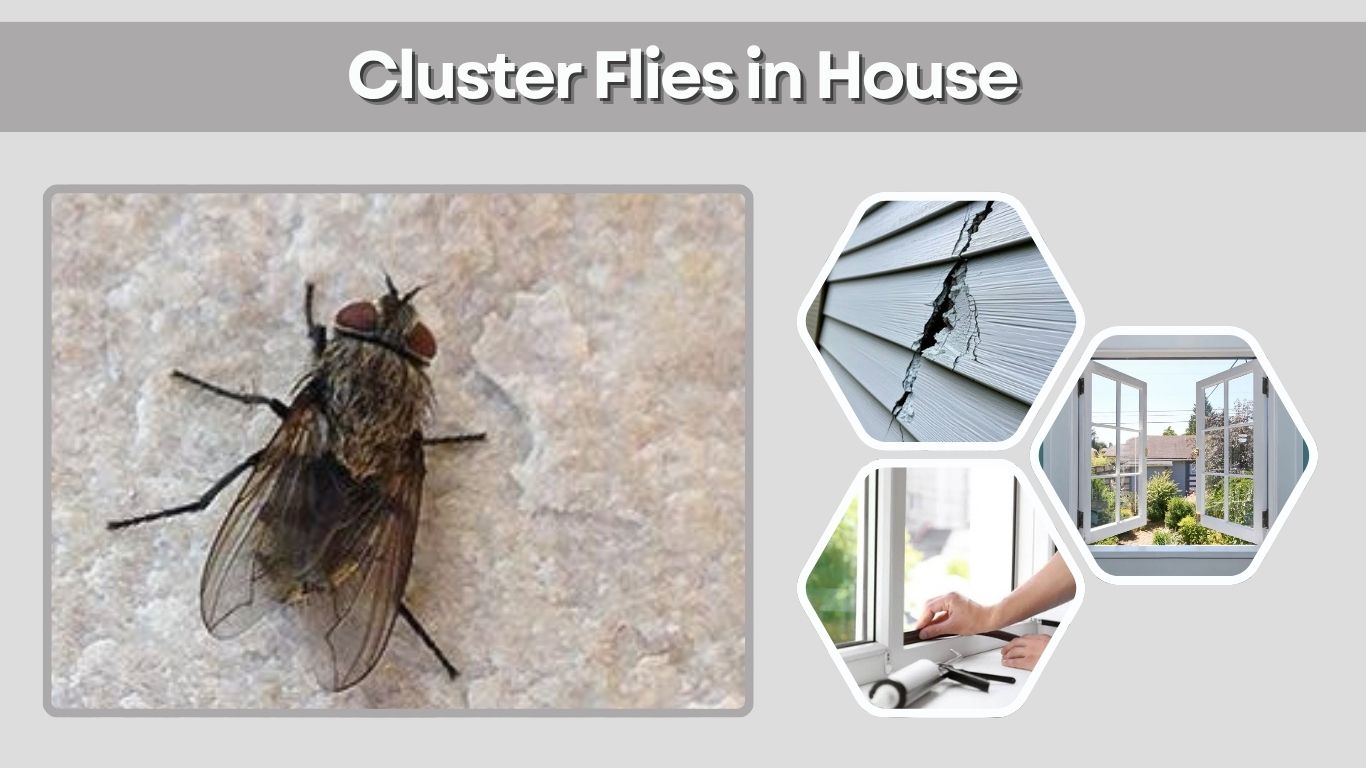
Finding cluster flies in your house can be confusing, especially when dozens suddenly appear around windows on a warm day. These large, slow-moving flies usually are not breeding in garbage, drains, or houseplants. Instead, adults enter buildings during late summer or fall and hide inside attics, wall voids, and other protected spaces for winter. When sunlight or indoor heat warms these hiding places, the flies become active and move into rooms. Understanding this seasonal behavior makes controlling and preventing them much easier.
What Are Cluster Flies in the House?
Cluster flies are overwintering flies in the genus Pollenia. They are slightly larger than typical house flies and often have short yellow or golden hairs on the thorax. Their most important difference is behavioral: cluster flies develop outdoors in association with earthworms and use houses only as temporary winter shelters. They do not normally establish breeding populations inside homes.
How to Identify Cluster Flies
Cluster flies are often mistaken for house flies or blow flies. Look for several characteristics:
- About 3/8 to 1/2 inch long
- Dark gray or blackish body
- Short yellow or golden hairs on the thorax
- Wings overlapping when resting
- Slow, sluggish flight indoors
- Large groups gathering at sunny windows
Their slow behavior is especially noticeable during winter because the flies have recently emerged from a dormant state.
Cluster Flies vs. House Flies
House flies are commonly associated with garbage, manure, food waste, and other decaying organic matter. Cluster flies have a completely different life cycle.
Their larvae develop outdoors by parasitizing earthworms. Adults later enter buildings to survive cold weather. Finding cluster flies therefore does not usually mean your house is dirty or that something is rotting indoors.
Why Are Cluster Flies in My House All of a Sudden?
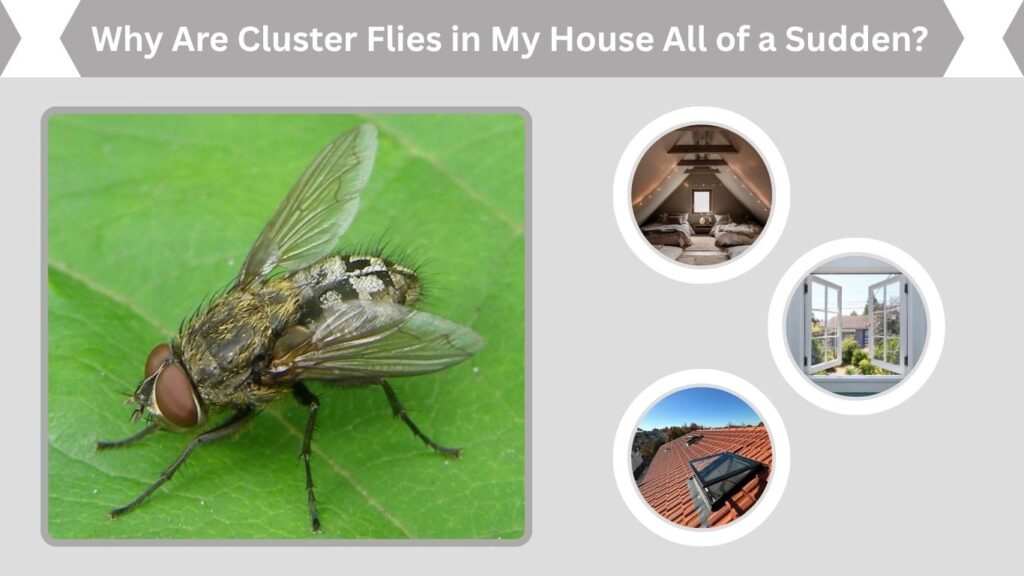
A sudden appearance can make it seem as though hundreds of flies hatched somewhere inside your home. In most cases, they were already there. Cluster flies may spend months hidden behind walls or in an attic. A sunny winter afternoon, rising indoor temperatures, or seasonal warming can awaken many flies around the same time.
Warm Temperatures Wake Dormant Flies
Cluster flies enter a dormant state during cool weather. When the space around them warms, some begin moving again.
This explains sudden outbreaks around:
- South-facing windows
- Upstairs bedrooms
- Attic spaces
- Skylights
- Warm ceilings
- Window frames
- Sunlit walls
The flies naturally move toward light, which is why a large number may collect on one window even when they were hiding throughout several wall cavities.
Sudden Flies Do Not Usually Mean Indoor Breeding
One of the most important facts about cluster flies is that they do not normally reproduce inside houses.
Colorado State University notes that an increase in cluster flies during winter does not indicate indoor breeding. Instead, previously dormant adults are becoming active inside wall cavities and moving into occupied rooms.
How Do Cluster Flies Get in the House?
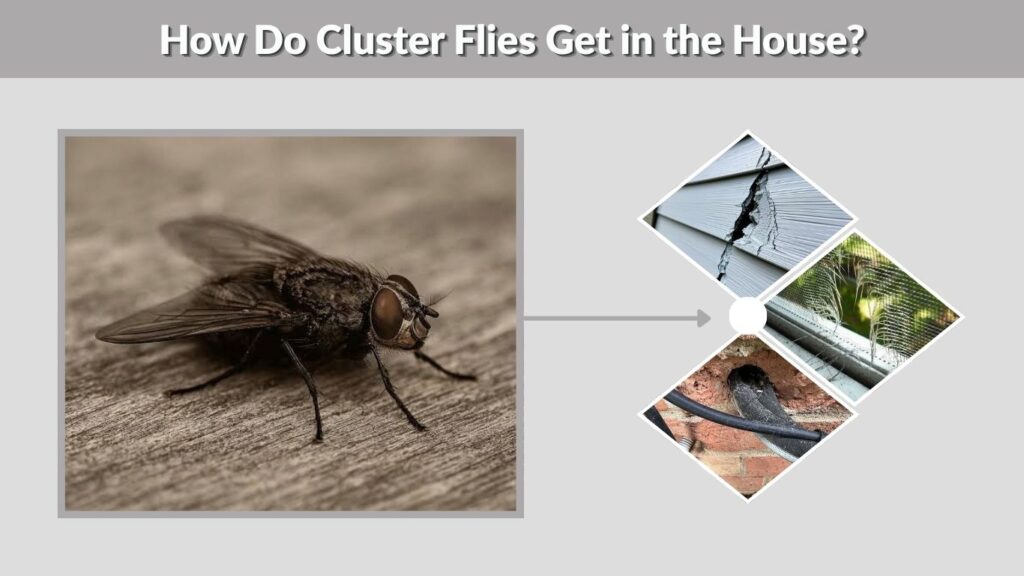
Cluster flies spend spring and summer outside. As days shorten during late summer and early autumn, adults begin searching for dry, protected places to survive winter. Buildings provide excellent shelter, particularly upper walls and attics warmed by afternoon sunlight. Even relatively small exterior gaps can allow flies to reach hidden areas behind walls.
Common Cluster Fly Entry Points
Inspect the exterior for openings such as:
- Gaps around windows and doors
- Cracks underneath siding
- Openings around rooflines and soffits
- Unscreened attic vents
- Gaps around utility cables
- Spaces around pipes
- Chimney openings
- Damaged window screens
- Loose fascia boards
Cluster flies particularly favor sun-warmed south- and west-facing portions of buildings. Upper stories are also frequent entry areas.
Where Do Cluster Flies Hide?
After entering, the flies normally move into protected spaces rather than immediately entering living rooms.
Large numbers may remain concealed inside wall voids, attics, roof spaces, unused rooms, and cavities around windows. They can remain relatively inactive there for months before warmth stimulates movement.
This hiding behavior explains why the problem can seem to develop overnight even though entry occurred much earlier.
Cluster Flies in the House During Winter and Summer
Season strongly influences cluster fly activity. Their behavior in a house during winter is different from what happens outdoors during summer. Recognizing these seasonal patterns can also help distinguish cluster flies from house flies, fruit flies, and blow flies.
Cluster Flies in Winter
Winter is when homeowners often notice the most surprising indoor activity. Although the flies usually remain dormant, warm sunny periods can heat wall voids enough to wake them.
The flies then move toward windows because they are attempting to reach daylight and return outside. They may fly slowly for a while before becoming inactive again or dying.
Cluster flies can remain sheltered within a building for many months, with most surviving insects eventually leaving again in spring.
Cluster Flies in Summer
Seeing a few cluster flies around a house during summer is normal because adults are active outdoors throughout the warmer season.
Their immature stages are associated with earthworms in soil, rather than indoor materials. Colorado State University reports that several generations may occur during the growing season before the final adults switch from reproduction to seeking winter shelter.
A major summer indoor infestation may therefore be worth checking carefully to confirm that the insects truly are cluster flies rather than another fly species breeding inside.
How to Get Rid of Cluster Flies in the House
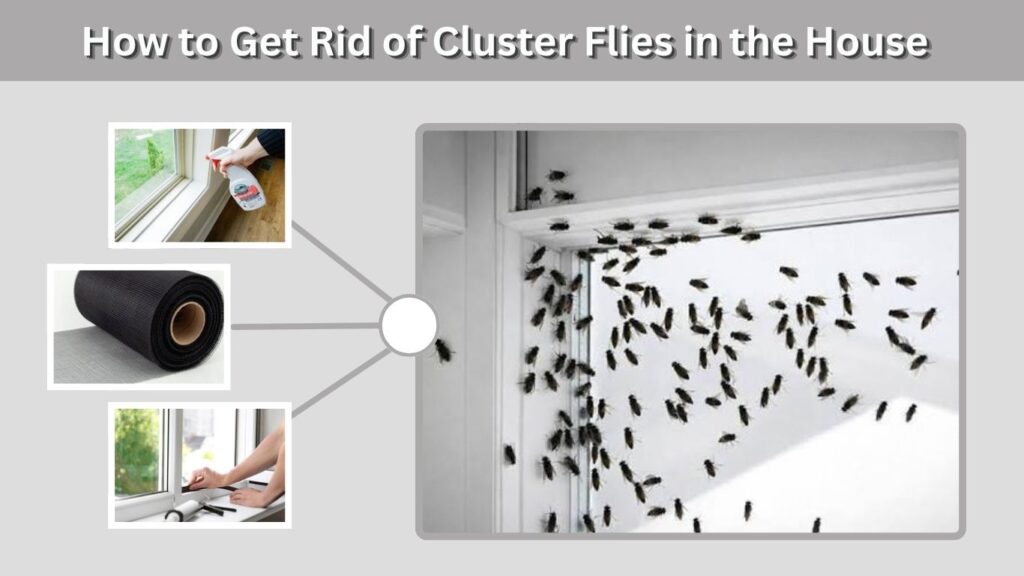
Once cluster flies are already inside walls, completely eliminating them immediately can be difficult. The practical approach is to remove adults entering rooms and prevent hidden flies from moving through interior openings. Long-term management depends primarily on stopping the next generation from entering the structure before winter.
Remove Visible Cluster Flies
For flies already inside:
- Vacuum them from windows and walls.
- Use a flyswatter for isolated individuals.
- Empty vacuum contents outside.
- Check upper-floor windows regularly.
- Seal cracks where flies emerge from walls.
- Repair damaged indoor screens.
Because cluster flies are relatively sluggish, vacuuming can remove large numbers quickly without widespread indoor pesticide use.
Seal Interior Openings
Check around window trim, baseboards, ceiling lights, exhaust fans, attic doors, and other openings connected to hidden cavities.
Caulking these gaps will not necessarily kill flies already behind the wall, but it can prevent them from continually entering bedrooms and other living areas.
Penn State Extension advises locating and sealing the openings through which overwintering flies move from wall voids into rooms.
How to Prevent Cluster Flies From Returning
The most effective time to deal with cluster flies is before they enter the house. Exclusion should ideally be completed before late-summer migration begins. Once large numbers are already hidden behind walls, treatment options become more limited and less reliable. Prevention should therefore focus on carefully sealing the exterior of buildings.
Cluster Fly Prevention Checklist
Before autumn:
- Seal cracks around exterior windows.
- Repair damaged door and window screens.
- Caulk gaps beneath siding where appropriate.
- Screen attic vents properly.
- Seal openings around utility pipes and cables.
- Inspect soffits and fascia.
- Check the upper floors carefully.
- Focus on sunny south- and west-facing walls.
- Repair obvious structural gaps before cold weather.
Colorado State University identifies physical exclusion as the fundamental measure for preventing recurring cluster fly problems.
Will Pest Control Stop Cluster Flies?
Exterior pesticide treatments may sometimes supplement exclusion when infestations are severe, but they are not a substitute for sealing entry points. Timing is also important because treatments are most useful before flies move into the structure.
Indoor foggers and general spraying are usually poor long-term solutions once flies are hidden in walls. Penn State notes that such treatments may kill exposed flies but do not reliably stop additional insects from emerging from wall voids.
Are Cluster Flies in the House Dangerous?
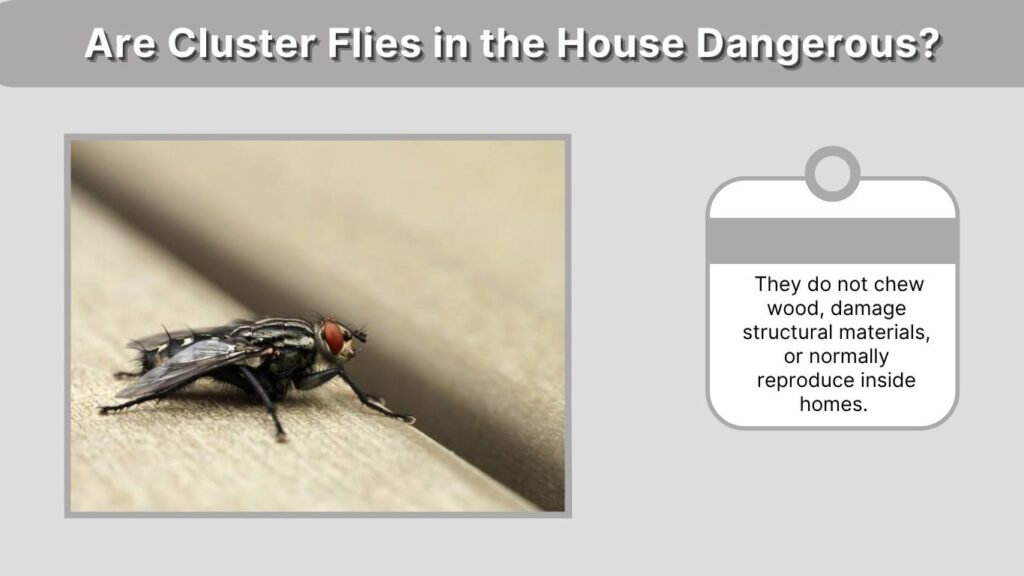
Despite appearing in large numbers, cluster flies are mainly nuisance pests. They do not chew wood, damage structural materials, or normally reproduce inside homes. Their presence may be unpleasant, and large numbers can leave spotting around windows, but an infestation is very different from a pest that is actively feeding or reproducing within the building.
Do Cluster Flies Spread Disease?
Cluster flies are not considered important disease-transmitting pests in homes. Penn State Extension states that they are not known to carry diseases of medical importance to humans.
However, dead flies can accumulate in attics and other hidden spaces. Very large accumulations may occasionally attract scavenging insects, so accessible piles of dead flies should be vacuumed or removed when practical.
FAQs
Cluster flies behave differently from many familiar indoor flies. These answers address some of the most common concerns homeowners have when large numbers suddenly appear.
1. Why are there suddenly so many cluster flies in my house?
The flies probably entered the building during late summer or fall and remained dormant inside walls or the attic. Warm temperatures can activate many simultaneously, making the infestation appear sudden.
2. Where are cluster flies coming from inside my house?
They commonly emerge from wall cavities, attics, gaps around window trim, ceiling fixtures, vents, and other openings connected to their overwintering spaces.
3. How long do cluster flies live in a house?
Overwintering adults can remain sheltered in a building for several months. Many eventually leave during spring, while flies that accidentally enter heated living spaces may survive for a much shorter period.
4. Do cluster flies lay eggs inside houses?
No. Cluster flies normally reproduce outdoors. Their larvae develop in association with earthworms in soil rather than household garbage, drains, plants, or stored food.
5. How can I permanently stop cluster flies in my house?
The most effective long-term strategy is exterior exclusion. Seal cracks, repair screens, protect vents, and close gaps around siding, soffits, windows, and utility penetrations before flies begin seeking winter shelter in late summer.