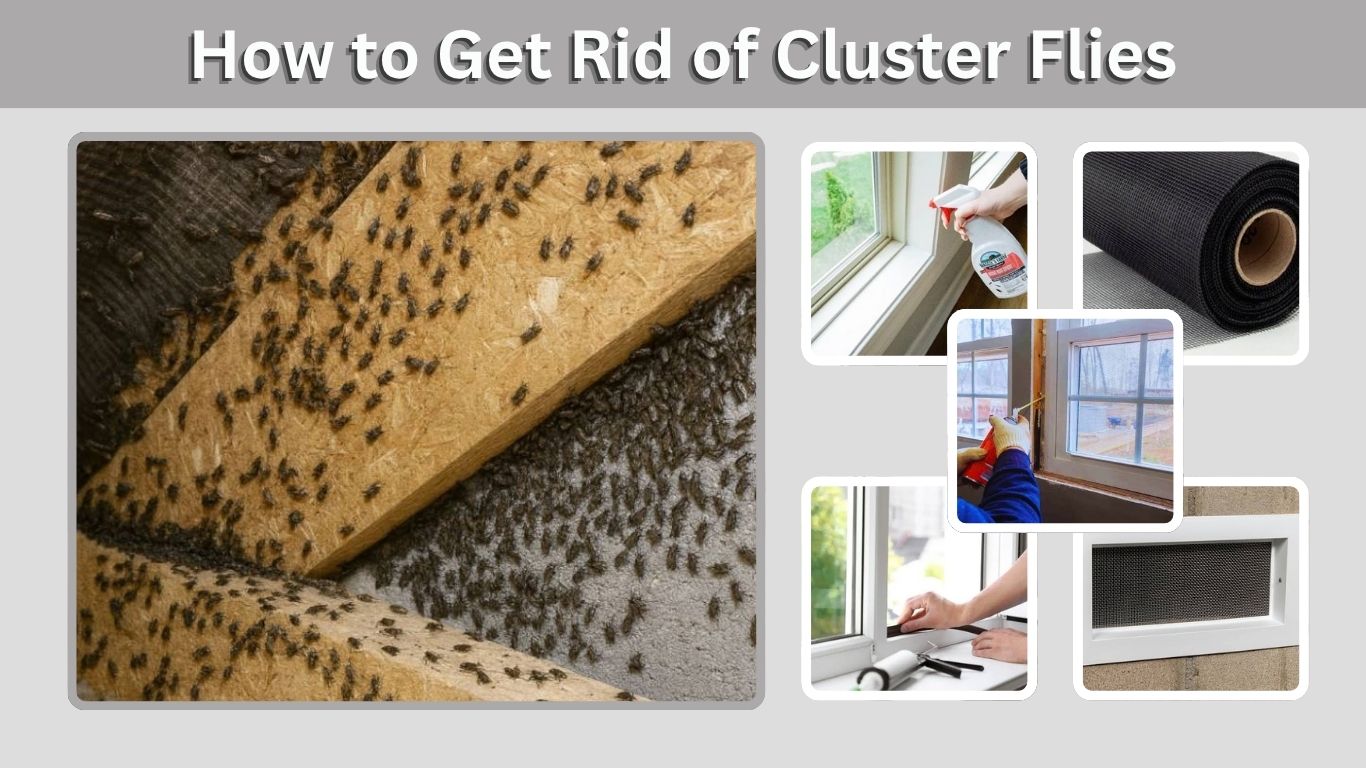
Cluster flies can suddenly appear around windows, attics, lofts, basements, and upper rooms, especially during fall, winter, and early spring. Unlike house flies, they usually do not breed in garbage or food inside your home. Instead, adults enter buildings to overwinter in protected wall voids and attics. Penn State Extension Learning how to get rid of cluster flies requires removing the adults already indoors while sealing the openings that allow new flies to enter. Here is how to control them effectively and prevent recurring infestations.
How to Get Rid of Cluster Flies in the House
Cluster flies usually enter homes during late summer and fall, then remain sheltered inside attics, wall cavities, and other protected areas through winter. Warm indoor temperatures or sunny winter days can wake them, causing sluggish flies to appear around windows. Because they do not normally reproduce inside buildings, indoor control should focus on removing emerging adults and blocking their routes into living spaces.
Vacuum Up Visible Cluster Flies
A vacuum is one of the simplest ways to remove cluster flies indoors. They tend to move slowly, particularly after emerging from cold wall cavities, making them relatively easy to collect.
For immediate control:
- Vacuum flies from windows, ceilings, and walls.
- Check sunny windows where adults naturally gather.
- Empty the vacuum contents outside after use.
- Repeat whenever another group emerges.
- Use a flyswatter for isolated flies.
Vacuuming does not prevent future infestations, but it quickly reduces the number of flies in occupied rooms without requiring indoor pesticide applications. University extension guidance specifically recommends vacuuming or swatting cluster flies that emerge indoors.
Use Light to Concentrate the Flies
Cluster flies are strongly attracted to light. If several are scattered throughout a room, darken most of the room while leaving one bright window exposed.
The flies often move toward that window, making them much easier to vacuum. This technique can be especially useful in spare bedrooms, upstairs rooms, garages, and enclosed porches where large numbers emerge simultaneously.
How to Get Rid of Cluster Flies in Attics and Walls
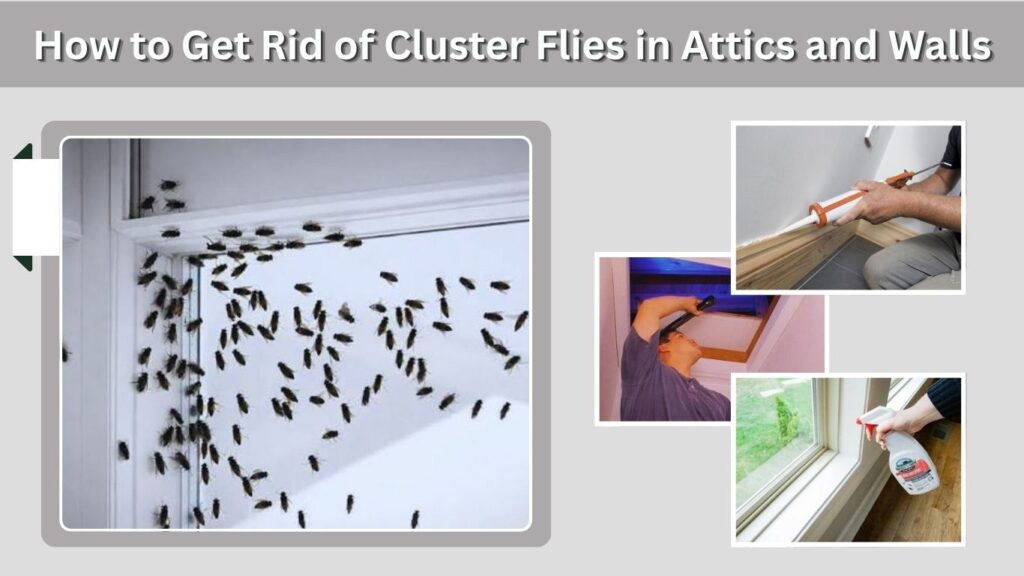
Attics and upper wall spaces are among the most common overwintering locations for cluster flies. They may remain largely unnoticed for months before warm weather activates them. Unfortunately, once hundreds or thousands of flies have already entered inaccessible wall voids, eliminating every fly immediately can be difficult. Preventing them from entering those spaces in the first place is therefore the most important long-term strategy.
Seal Routes From the Attic Into Rooms
Look carefully for openings connecting hidden spaces with living areas.
Common locations include:
- Gaps around ceiling lights
- Attic access doors
- Exhaust fan openings
- Cracks behind baseboards
- Window and door trim
- Utility penetrations
- Gaps around vents
Seal appropriate interior cracks with caulk or another suitable material after determining where flies are emerging.
Penn State Extension notes that cluster flies commonly move from wall voids through openings around baseboards, windows, doors, lights, and exhaust fans.
Avoid Relying on Attic Foggers
Spraying or fogging an attic may kill exposed flies, but it does not necessarily reach insects hidden deep inside walls. It also does little to prevent new flies from entering the following fall.
Penn State Extension cautions that killing large numbers inside inaccessible voids may leave dead insects that can provide food for pests such as carpet beetles. Prevention and exclusion therefore offer better long-term results than repeatedly fogging hidden spaces.
How to Get Rid of Cluster Flies Naturally
If you want to get rid of cluster flies without chemicals, physical removal and exclusion are the most practical approaches. Unlike fruit flies or drain flies, cluster flies usually are not reproducing around an indoor food source that needs to be treated. Their presence is mainly a seasonal sheltering problem, which means home remedies aimed at killing breeding larvae inside the house are generally unnecessary.
Natural Cluster Fly Control Methods
Useful nonchemical approaches include:
- Vacuuming adults as they appear
- Repairing damaged window screens
- Caulking cracks around windows
- Sealing gaps beneath eaves
- Screening attic and ventilation openings
- Repairing loose siding where practical
- Sealing openings around pipes and cables
Pay particular attention to upper, sun-exposed parts of the building. Cluster flies commonly gather on warm south- and west-facing walls before finding small openings through which they can enter.
Do Homemade Cluster Fly Remedies Work?
Vinegar mixtures, essential oils, and other home remedies may kill or repel individual insects in some situations, but they do not solve the underlying entry problem.
If cluster flies can still reach the attic or wall cavities every autumn, another infestation can occur regardless of how many adults were killed during winter. Physical exclusion remains the foundation of long-term management.
How to Get Rid of Cluster Flies Outside
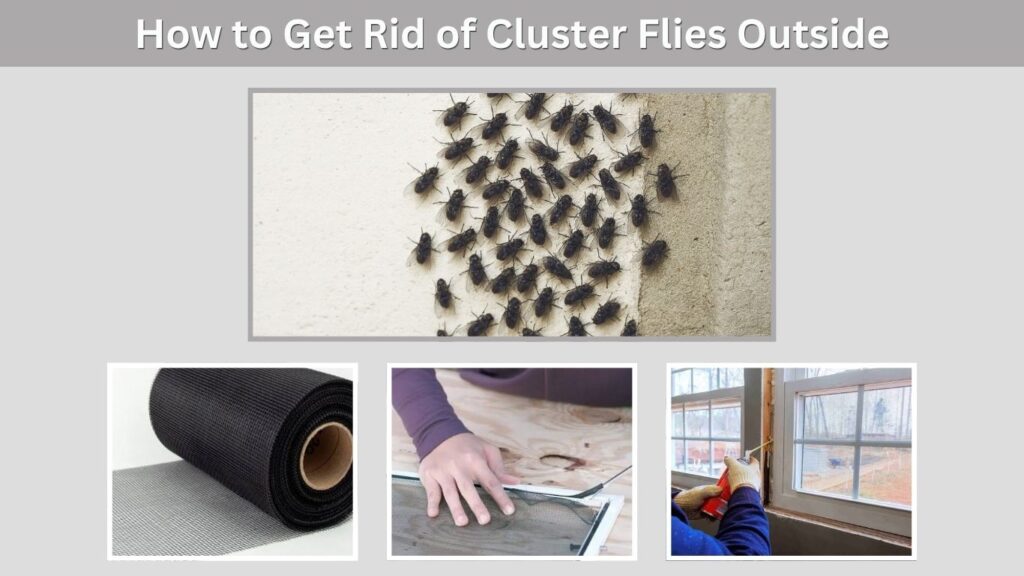
Cluster flies live differently from common household flies. Their immature stages develop in association with earthworms in soil rather than garbage inside the home. Adult flies spend warmer months outdoors before seeking protected buildings as temperatures decline. Penn State Extension Because of this life cycle, attempting to eliminate all cluster flies from a lawn or garden is neither realistic nor generally necessary.
Stop Outdoor Flies Before They Enter
Before the seasonal migration begins:
- Repair damaged screens.
- Caulk cracks around exterior windows.
- Inspect gaps beneath siding and fascia.
- Screen vents appropriately.
- Seal openings around utility lines.
- Inspect soffits and roof edges.
- Pay extra attention to sunny upper walls.
The timing is important. Sealing should be completed before cluster flies begin entering for winter shelter. In colder North American climates, this commonly occurs from late summer through early fall, although exact timing varies with location and weather.
Are Outdoor Insecticides Necessary?
Exterior residual insecticides can sometimes supplement exclusion when a building has a history of severe infestations. However, they are not a substitute for sealing openings, and their effectiveness may be temporary.
If an exterior pesticide is considered, use only a product labeled for the pest and application site and follow all label directions. Professional treatment may be more appropriate for large or difficult-to-access structures.
How to Get Rid of Cluster Flies in Winter
Seeing cluster flies during winter does not usually mean a new infestation has suddenly developed. The insects probably entered months earlier and were resting in protected spaces. Heating systems and sunlight can warm these areas enough to activate the flies, which then move toward windows while attempting to reach the outdoors.
Why Cluster Flies Appear Around Windows
Windows provide both warmth and light. When dormant cluster flies become active, they naturally move toward bright areas.
This explains why you may suddenly find dozens around one upstairs window while seeing almost none elsewhere in the house. Removing these flies solves the immediate nuisance, but exterior sealing before the next overwintering season is what reduces future problems.
What to Do During Winter
When cluster flies emerge during cold weather:
- Vacuum them instead of chasing them individually.
- Seal indoor openings where they emerge.
- Check attic-access gaps and window trim.
- Repair screens before spring.
- Plan exterior sealing before the next fall.
- Avoid unnecessary treatment of outdoor flies in spring.
Cluster flies leaving the building during spring are moving back outdoors, so killing them at that point has little effect on the number that could enter the following autumn.
How to Get Rid of Cluster Flies Permanently
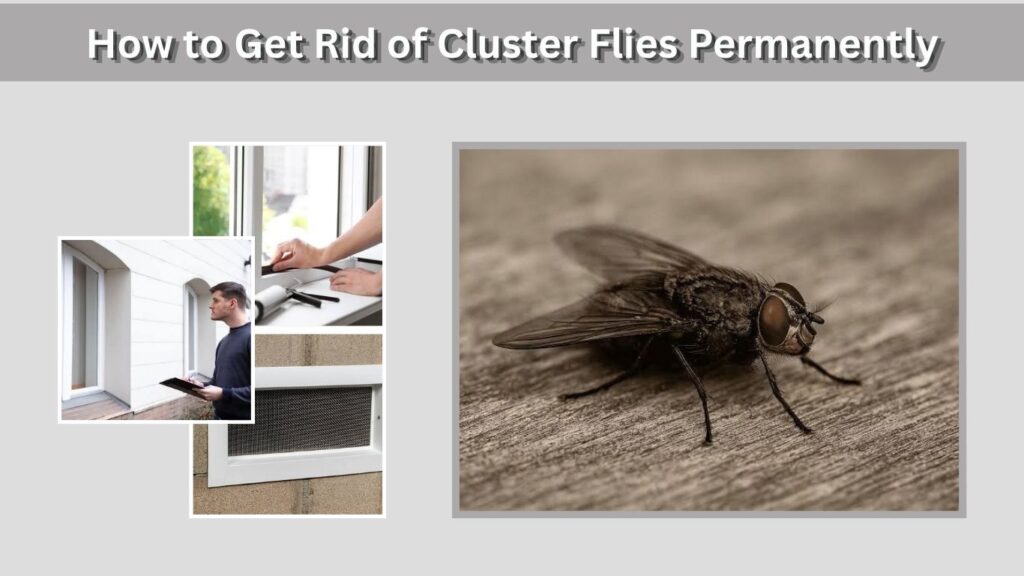
There is no practical way to guarantee that an outdoor cluster fly will never approach a building again. However, recurring indoor infestations can often be greatly reduced by making the structure harder to enter. Because cluster flies use very small cracks and gaps, thorough inspection is more valuable than repeatedly treating adults after they are already indoors.
Long-Term Cluster Fly Prevention
Focus on exclusion before late summer:
- Inspect the exterior every year.
- Seal cracks around windows and doors.
- Repair damaged siding and fascia.
- Screen vents without blocking ventilation.
- Seal gaps around utility penetrations.
- Repair torn screens.
- Check upper stories carefully.
- Vacuum occasional indoor flies promptly.
Colorado State University Extension describes physical exclusion as the fundamental step in cluster fly management, with other measures functioning mainly as supplements.
Why Cluster Flies Keep Coming Back
A recurring infestation usually means adults are still finding suitable openings into the structure each year. Because they can enter hidden attic and wall spaces before cold weather arrives, you may not notice the problem until weeks or months later.
The goal is therefore not simply to kill the flies you see. It is to interrupt their annual entry into the building.
FAQs
Cluster flies can be confusing because their behavior differs from many other household flies. Understanding where they come from and why they appear indoors makes controlling them much easier.
1. What is the fastest way to get rid of cluster flies?
Vacuuming is one of the fastest ways to remove cluster flies already inside a room. For long-term control, locate their entry points and seal them before the next fall migration.
2. Why do I suddenly have cluster flies in my house?
The flies probably entered during late summer or fall and spent months hidden inside walls or the attic. Warm temperatures can activate them, causing many to appear around windows at once.
3. Do cluster flies reproduce inside the house?
No. Cluster flies found overwintering in buildings do not normally reproduce indoors. Their larvae develop outdoors in association with earthworms.
4. How do I get rid of cluster flies in the attic naturally?
Vacuum accessible flies, seal gaps between the attic and living areas, repair screens, and identify exterior openings they use to enter. Complete exterior exclusion before the next late-summer migration.
5. Are cluster flies harmful?
Cluster flies are primarily nuisance pests. They do not damage the structure, and Penn State Extension reports that they are not known to transmit diseases of medical importance to humans. They may, however, leave small dark spots on windows or walls when present in large numbers.