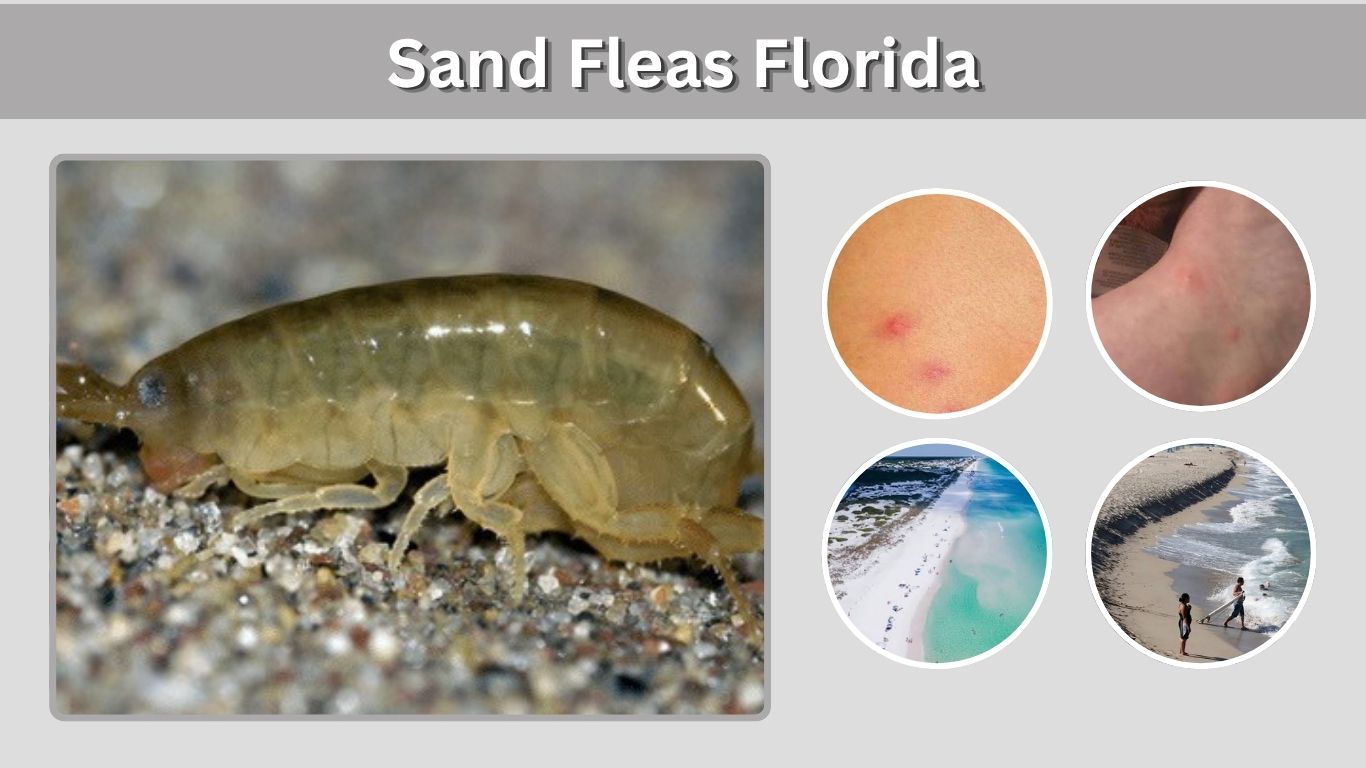
Sand fleas in Florida are common along sandy beaches, especially where waves repeatedly wash over the shoreline. These tiny crustaceans, also called mole crabs, live beneath wet sand and are popular bait for catching pompano and other coastal fish. However, many beach visitors confuse harmless sand fleas with biting insects that cause itchy skin irritation. Understanding the difference is important for safe beach activities. This guide explains what Florida sand fleas look like, where to find them, when they are most active, how to catch them, and whether they bite humans.
What Are Sand Fleas in Florida?
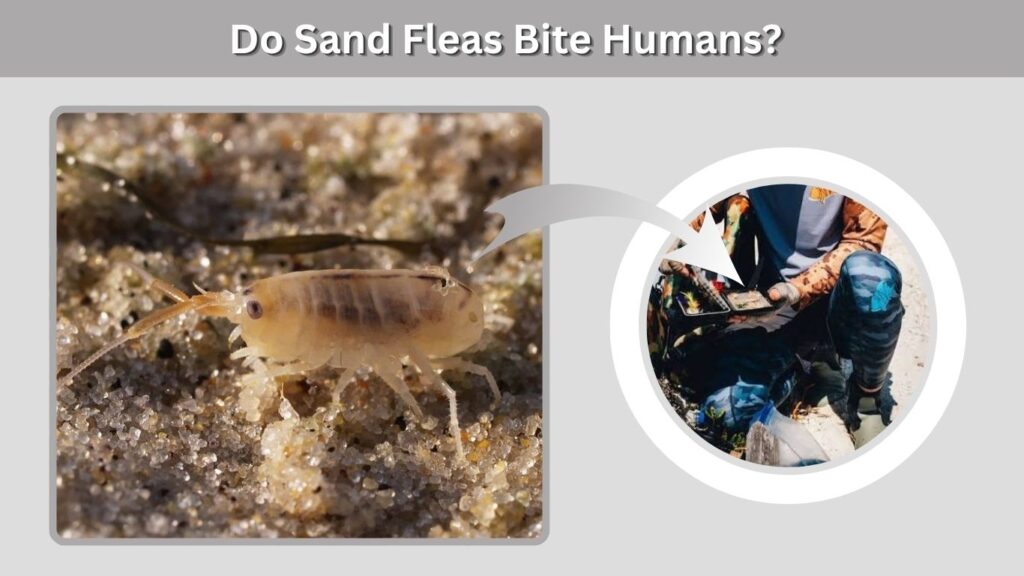
Florida sand fleas are small marine crustaceans commonly known as mole crabs. They belong to the genus Emerita and live in the swash zone, where incoming waves wash across the sand. Despite their name, these creatures are not true fleas or insects. They are closely related to crabs and feed on tiny organic particles carried by seawater.
Florida Sand Fleas Identification
- Common Name: Sand flea, mole crab, or sand crab.
- Scientific Name: Emerita species, including Emerita talpoida.
- Size: Commonly about 0.5–1 inch, although sizes vary.
- Body Color: Light gray, sandy brown, or pale beige.
- Body Shape: Oval, rounded, and covered by a smooth shell.
- Legs: Five pairs of appendages adapted for moving and burrowing.
- Antennae: Feathery structures used to filter food from seawater.
- Claws: No large claws for pinching humans.
What Do Florida Sand Fleas Look Like?
Florida sand fleas resemble tiny oval-shaped crabs with smooth shells. Their pale coloration helps them blend into wet beach sand.
When waves retreat, they quickly burrow backward into the sand, often disappearing within seconds.
Unlike ordinary fleas, mole crabs do not jump onto humans or animals to feed on blood.
Where Are Sand Fleas Found in Florida?
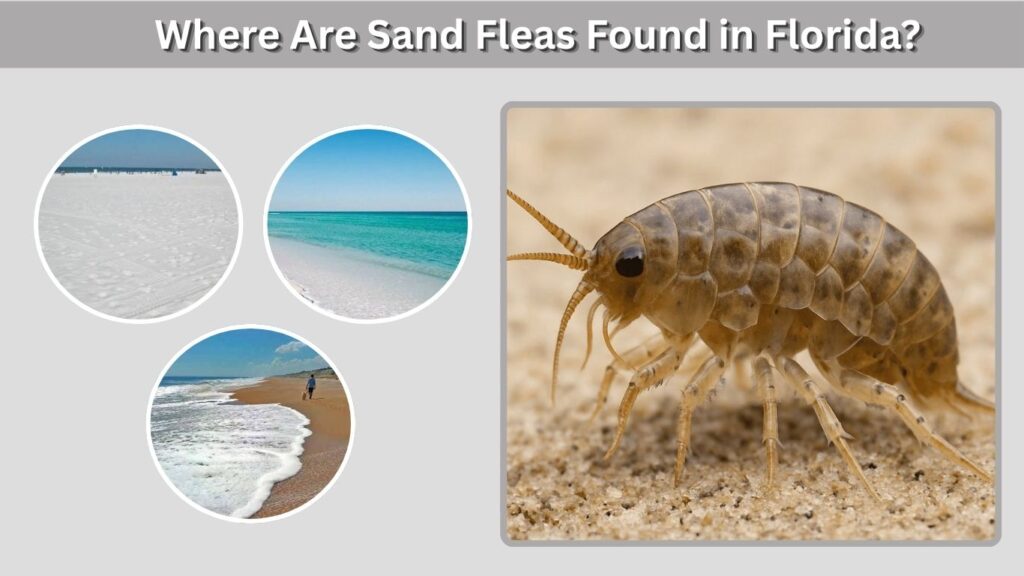
Sand fleas occur along many Florida beaches with suitable sandy shorelines and wave activity. They prefer the intertidal swash zone rather than dry dunes or deep offshore water. Their numbers change with beach conditions, season, and local populations. Visitors may notice them where retreating waves expose small moving shapes beneath the sand.
Sand Fleas in Destin, Florida
Destin and nearby Panhandle beaches provide suitable sandy environments for mole crabs.
These crustaceans may appear in the wet sand along the Gulf shoreline, particularly where waves repeatedly wash over shallow sandy areas.
Surf anglers commonly search for them as natural bait.
Sand Fleas in South Florida and Naples
South Florida and Naples also have sandy beaches where mole crabs may occur.
Look along the waterline rather than dry upper beaches. Their abundance varies with local wave conditions, shoreline characteristics, and seasonal movement.
Sand Fleas in the Florida Keys
The Florida Keys have a mixture of sandy beaches, rocky shorelines, and marine habitats.
Mole crabs are most likely to occur where suitable sandy surf zones exist. They are not equally common along every Keys shoreline.
Do Florida Sand Fleas Bite Humans?
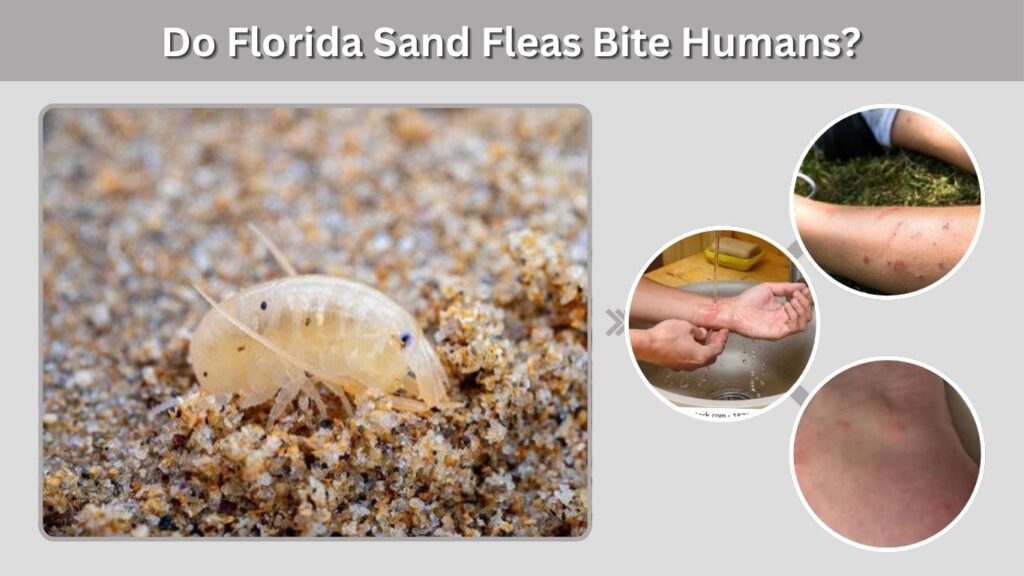
Florida beach sand fleas are generally harmless mole crabs that cannot bite or sting humans. However, the name “sand flea” is sometimes incorrectly applied to biting midges, also known as no-see-ums. These tiny flying insects can cause itchy bites along coastal areas. Distinguishing mole crabs from biting flies helps identify the actual cause of skin irritation.
Florida Sand Flea Bite Symptoms
When people report sand flea bites in Florida, the cause may be biting midges or another biting insect.
Common symptoms include:
- Small, itchy red bumps.
- Localized swelling around bite sites.
- Burning or stinging sensations.
- Multiple irritated spots on exposed skin.
- Persistent itching lasting several days.
- Occasionally, blisters or more pronounced allergic reactions.
Actual mole crabs do not produce these bites.
How to Treat Suspected Sand Flea Bites
Wash the affected skin gently with soap and water.
Apply a cold compress for approximately 10–15 minutes to reduce swelling and discomfort.
Calamine lotion or an appropriate over-the-counter anti-itch treatment may help relieve symptoms.
Avoid scratching because damaged skin can develop secondary infections.
Seek medical attention for spreading redness, fever, pus, or severe swelling. Difficulty breathing or facial or throat swelling requires emergency care.
When Is Sand Flea Season in Florida?
Florida sand flea activity changes throughout the year based on water temperature, wave conditions, and beach characteristics. Mole crabs can be found during different seasons, but their abundance is not consistent across every shoreline. Warmer months often provide opportunities to observe them, while changing surf conditions can influence where they gather beneath the sand.
Best Time to Find Sand Fleas
Spring through fall can be productive for finding sand fleas along Florida beaches, although local populations vary.
The most useful conditions are moderate waves that expose the wet sand without creating excessively rough surf.
Sand fleas may be easier to spot when waves retreat and reveal groups of small crustaceans rapidly burrowing into the shoreline.
When Do Florida Sand Fleas Come Out?
Mole crabs remain buried in wet sand and extend their antennae into passing water to collect food.
They move with the changing waterline and may become visible when waves uncover them.
Unlike nocturnal biting insects, their activity is closely connected to surf movement rather than a specific time of day.
How to Catch Sand Fleas in Florida
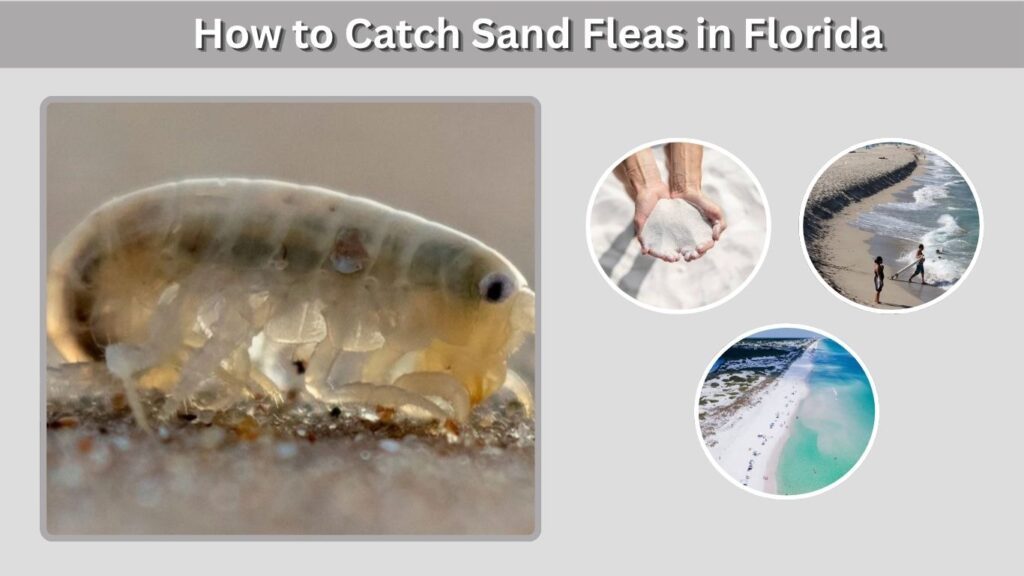
Catching sand fleas is a popular activity among Florida surf anglers because mole crabs are effective natural fishing bait. They can be collected from wet sand using a specialized sand flea rake. Learning to recognize their location, digging behavior, and preferred shoreline conditions makes collection easier while reducing unnecessary disturbance to beach habitats.
Steps for Catching Sand Fleas
- Choose a sandy beach: Look for a shoreline with moderate wave action.
- Locate the swash zone: Search where incoming waves wash over the wet sand.
- Watch for movement: Look for small V-shaped disturbances or groups of crabs burrowing.
- Use a sand flea rake: Scoop gently beneath the surface as waves retreat.
- Rinse away sand: Allow water to pass through the rake, leaving mole crabs behind.
- Keep only what you need: Collect a reasonable quantity for fishing and release unwanted crabs promptly.
UF/IFAS describes this rake-based collection method as a traditional practice among Florida Gulf Coast anglers.
Best Time to Catch Sand Fleas in Florida
The best collection opportunities occur when mole crabs are concentrated in accessible wet sand.
Moderate surf and favorable beach conditions are often more important than a particular hour.
Check local beach restrictions before collecting. Florida’s wildlife agency lists mole crabs as unregulated recreationally, but site-specific restrictions can still apply.
Fishing With Sand Fleas in Florida
Florida sand fleas are especially valuable to surf anglers because several coastal fish naturally feed on them. Their small size and soft bodies make them suitable bait for fish searching the shallow surf zone. Fresh mole crabs are commonly used when targeting pompano, although other species also consume them along sandy beaches.
What Fish Eat Sand Fleas in Florida?
- Florida Pompano: One of the best-known fish targeted using sand flea bait.
- Red Drum: Commonly called redfish, these fish consume various bottom-dwelling crustaceans.
- Whiting: Can feed on small crustaceans found near sandy bottoms.
- Sheepshead: Opportunistically consume crabs and other hard-shelled invertebrates.
- Black Drum: Feed on crabs, mollusks, and other bottom-dwelling animals.
Can You Use Frozen Sand Fleas for Fishing?
Yes, frozen sand fleas can be used as fishing bait. However, fresh mole crabs are often preferred because they retain their natural texture and appearance.
Frozen bait may become softer after thawing, making careful hook placement important.
Live sand fleas are commonly hooked through the body and fished near the bottom in the surf zone.
How to Avoid Biting Insects on Florida Beaches
Although Florida mole crabs cannot bite humans, coastal visitors may encounter biting midges, mosquitoes, and other small flies. These insects can be particularly troublesome in humid, sheltered environments near marshes and vegetation. Understanding their behavior and using appropriate protective measures can reduce itchy bites during beach trips and outdoor activities.
Preventing Florida Beach Insect Bites
- Use insect repellent: Choose an EPA-registered product labeled for the relevant biting insects, such as no-see-ums.
- Wear protective clothing: Long sleeves, lightweight pants, and socks help reduce exposed skin.
- Avoid sheltered biting areas: Biting midges may be more troublesome near marshes and during calm conditions.
- Use fine-mesh screens: Very small biting midges can pass through ordinary window screens.
- Avoid peak activity: Some biting midges are particularly active around dawn and dusk.
- Check your pets: Use veterinarian-approved flea prevention for dogs and cats.
Repellents containing DEET or picaridin can help prevent bites when used according to product instructions.
FAQs
Florida sand fleas are frequently misunderstood because their common name is also used for unrelated biting insects. Beach visitors may wonder whether they are dangerous, where they live, or why anglers collect them. These answers clarify the most common questions about mole crabs, seasonal activity, and their role in Florida’s coastal environment.
1. Are There Sand Fleas on Florida Beaches?
Yes. Mole crabs, commonly called sand fleas, occur along many Florida beaches. They live in wet sand where waves wash across the shoreline and feed on tiny particles suspended in seawater.
2. Do Florida Sand Fleas Bite Dogs?
No. Florida mole crabs do not bite dogs or feed on animal blood. However, ordinary fleas and coastal biting flies may affect pets, so unexplained itching should not automatically be blamed on sand fleas.
3. Are There Sand Fleas in Clearwater, Florida?
Suitable sandy beaches around Clearwater may support mole crabs. Their presence and abundance depend on local shoreline conditions, wave movement, and seasonal changes.
4. Can You Eat Florida Sand Fleas?
Mole crabs are crustaceans, and some people consume them after cooking. However, they are more commonly collected as fishing bait in Florida. Avoid eating specimens from potentially contaminated beaches, and do not consume them if you have a crustacean shellfish allergy.
5. Why Do Florida Beaches Sometimes Have Sand Flea Swarms?
Large groups of mole crabs may gather in productive sections of the swash zone where waves deliver food and suitable burrowing conditions exist. These concentrations are natural and generally harmless to beach visitors.