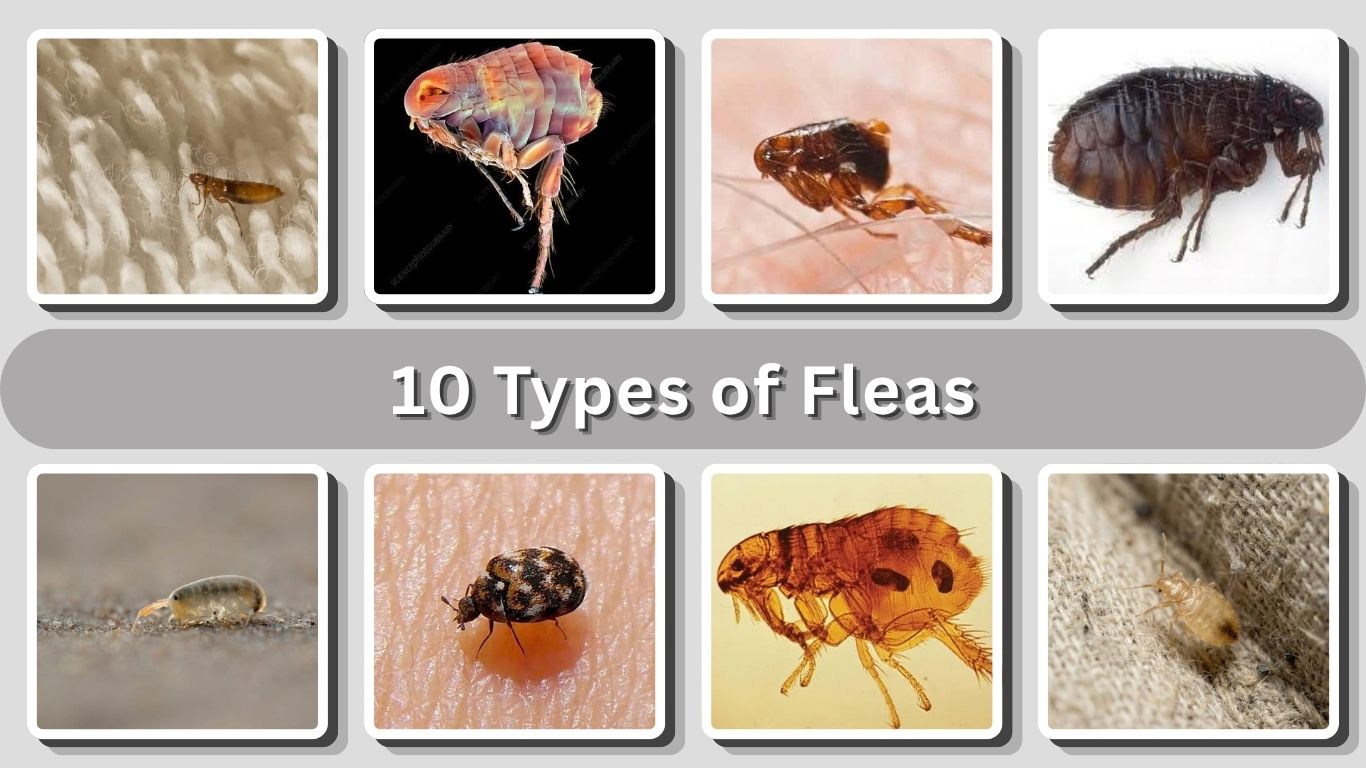
Fleas are tiny, wingless, blood-feeding insects that affect humans, pets, livestock, and wildlife. Although most fleas look similar, different species vary in size, appearance, habitat, and host preferences. Some commonly infest cats and dogs, while others live on rodents, rabbits, and birds. Certain types of fleas can also transmit diseases or cause allergic skin reactions. Understanding these differences makes flea identification easier and helps prevent infestations. In this guide, we’ll explore 10 types of fleas, including their identification features, habitats, feeding behavior, and life cycles.
1. Cat Flea (Ctenocephalides felis)
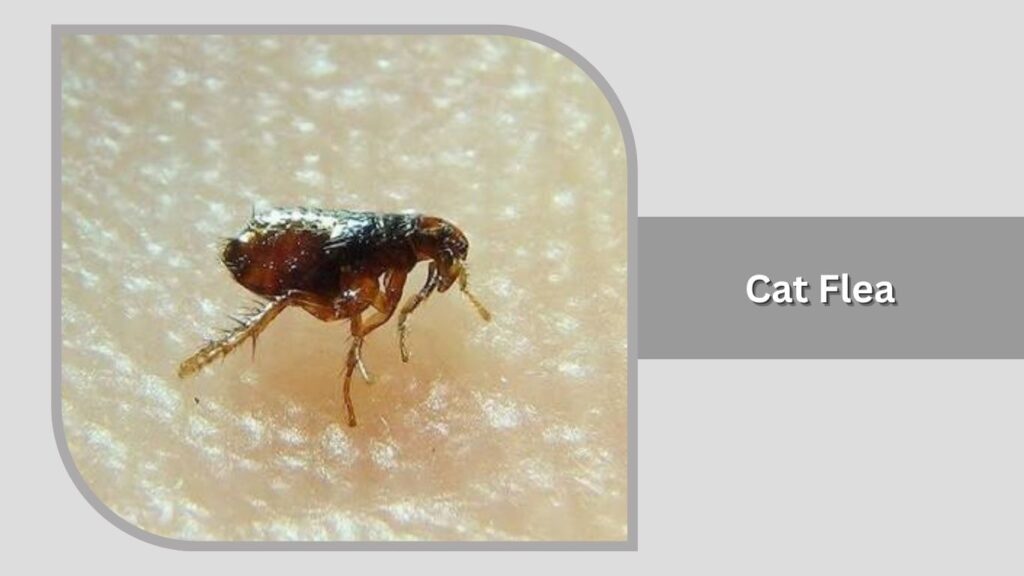
The Cat Flea is one of the most common types of fleas found worldwide. Despite its name, this tiny parasitic insect affects cats, dogs, and various other mammals, including humans. Belonging to the Pulicidae family, cat fleas survive by feeding on blood and reproduce rapidly under favorable conditions. They are commonly found in homes, animal shelters, gardens, and places where pets frequently rest.
Identification
Cat Fleas have several distinctive physical characteristics that help distinguish them from other flea species.
- Size: Adults typically measure 1–3 mm long.
- Body Color: Dark reddish-brown to nearly black.
- Body Shape: Small, oval-looking body flattened from side to side.
- Wings: Completely wingless, relying on jumping to move between locations.
- Legs: Six legs, with powerful hind legs adapted for jumping.
- Head: Relatively elongated head with backward-pointing spines.
- Mouthparts: Specialized piercing and sucking structures used to feed on blood.
Habitat and Distribution
Cat Fleas occur worldwide, particularly in regions with warm temperatures and moderate to high humidity. They commonly infest domestic cats and dogs but can also survive on wildlife.
Inside homes, flea eggs, larvae, and pupae may be found in carpets, pet bedding, furniture, and floor cracks. Adult fleas usually live on their animal hosts, where they obtain regular blood meals.
Behavior and Diet
Cat Fleas are external parasites that feed on the blood of mammals. Both males and females consume blood, and their bites can cause itching, redness, and allergic reactions.
These insects use their powerful hind legs to jump onto potential hosts. Heavy infestations may cause flea allergy dermatitis in pets and contribute to anemia, particularly in young animals.
Lifespan and Life Cycle
Cat Fleas undergo complete metamorphosis through four stages: egg, larva, pupa, and adult.
Females lay eggs after feeding on blood. The eggs fall from the host into surrounding environments, where larvae hatch and feed on organic debris, including adult flea feces.
Under favorable conditions, the life cycle can be completed in approximately 2–4 weeks, although development may take much longer. Adult fleas can survive for several weeks or longer with suitable hosts and environmental conditions.
2. Dog Flea (Ctenocephalides canis)
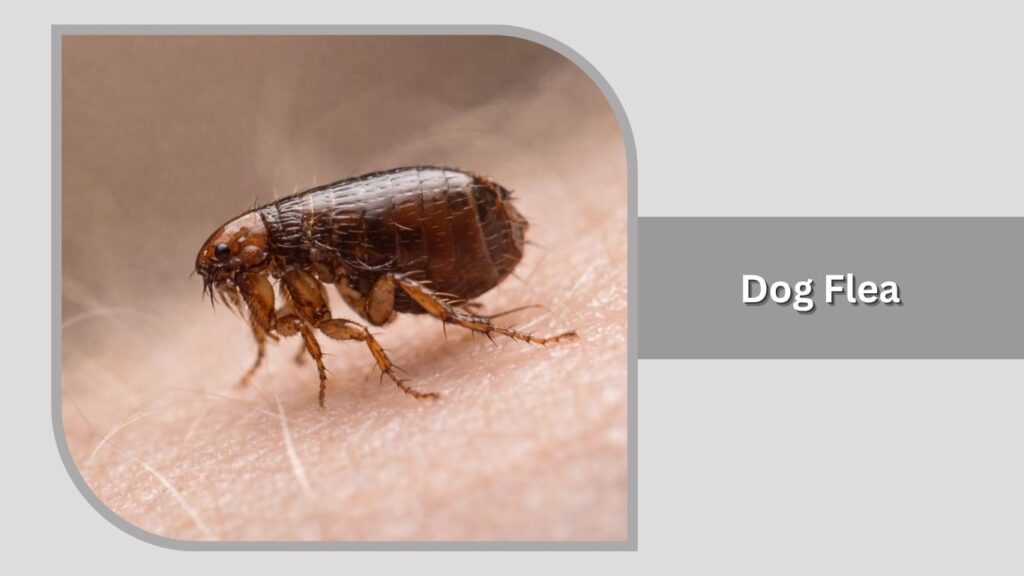
The Dog Flea is a small, blood-feeding insect commonly associated with domestic dogs, wild canines, and occasionally cats. Belonging to the Pulicidae family, this flea resembles the Cat Flea but has a slightly different head shape and arrangement of spines. Although Dog Fleas occur worldwide, Cat Fleas are responsible for most flea infestations found on domestic dogs in many regions.
Identification
Dog Fleas have several physical characteristics that help distinguish them from other types of fleas.
- Size: Adults typically measure 2–3.25 mm long.
- Body Color: Dark reddish-brown to nearly black.
- Body Shape: Small, flattened body that allows easy movement through animal fur.
- Wings: Completely wingless.
- Head: Shorter and more rounded than the head of a Cat Flea.
- Legs: Six legs, including enlarged hind legs for jumping.
- Distinctive Features: Comb-like spines on the head and thorax, with the first head-comb spine noticeably shorter than the second.
Habitat and Distribution
Dog Fleas occur worldwide and are particularly associated with domestic dogs, foxes, and other canine mammals.
They commonly inhabit homes, kennels, animal shelters, and outdoor areas where infested animals spend time.
Adult fleas live primarily on their hosts, while immature stages develop in bedding, carpets, soil, and other protected environments.
Behavior and Diet
Dog Fleas feed on mammalian blood using specialized piercing mouthparts. Both males and females require blood meals.
Their bites can cause itching, redness, and allergic skin reactions in sensitive animals.
Heavy infestations may contribute to anemia, particularly in puppies. Dog Fleas can also serve as intermediate hosts for certain tapeworms.
Lifespan and Life Cycle
Dog Fleas undergo complete metamorphosis through egg, larva, pupa, and adult stages.
Females deposit eggs on animal hosts, but the eggs commonly fall into surrounding environments.
Larvae feed on organic debris, including flea feces, before spinning protective cocoons.
Under favorable conditions, development from egg to adult may take approximately three weeks, although cooler temperatures can delay emergence.
3. Human Flea (Pulex irritans)
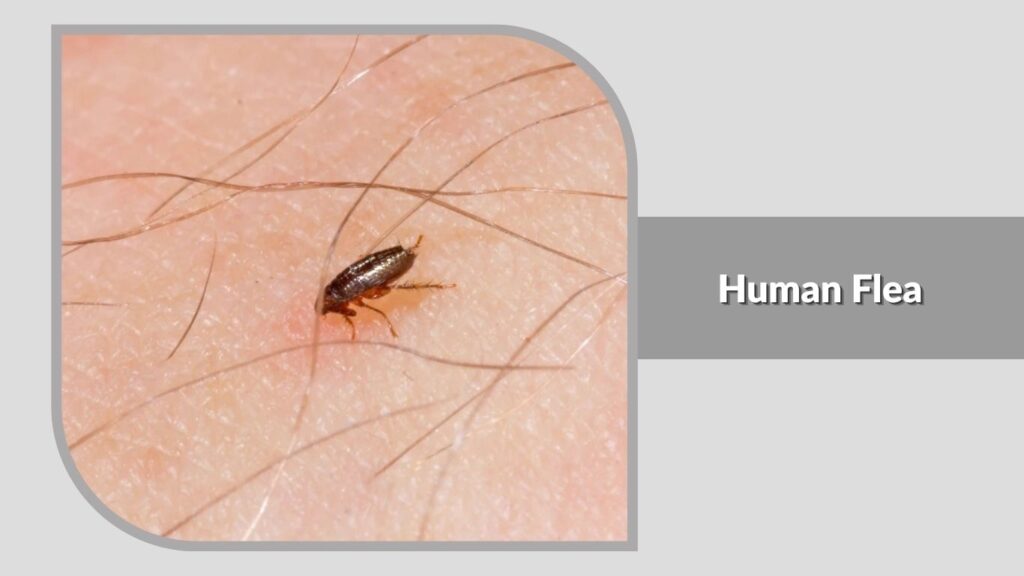
The Human Flea is a blood-feeding parasite that can infest humans, pigs, dogs, cats, and various wild mammals. Despite its name, this insect does not exclusively depend on human hosts. Belonging to the Pulicidae family, Human Fleas have historically been associated with crowded living conditions, farms, and animal shelters. They remain important because their bites can cause intense itching and allergic reactions.
Identification
Human Fleas have several distinguishing characteristics that separate them from Cat Fleas and Dog Fleas.
- Size: Adults typically measure 1–4 mm long.
- Body Color: Dark reddish-brown or brownish-black.
- Body Shape: Flattened from side to side.
- Wings: Completely absent.
- Head: Broadly rounded forehead with relatively short antennae.
- Legs: Strong hind legs adapted for jumping.
- Distinctive Features: No comb-like spines on the head or pronotum, unlike Cat Fleas and Dog Fleas.
Habitat and Distribution
Human Fleas occur worldwide, although they are less common in modern households in many industrialized regions.
They may inhabit farms, livestock shelters, animal bedding, and buildings where suitable hosts are present.
Pigs are important hosts in some agricultural environments. Immature fleas develop in protected locations containing organic debris.
Behavior and Diet
Human Fleas feed on the blood of humans and other mammals.
Their bites may produce itchy red bumps, swelling, and discomfort, especially in individuals sensitive to flea saliva.
Unlike lice, Human Fleas do not spend their entire life attached to one person. They can move between hosts and sheltered environments.
Although not considered an efficient vector of major flea-borne diseases, they can serve as intermediate hosts for certain tapeworms.
Lifespan and Life Cycle
Human Fleas undergo four developmental stages: egg, larva, pupa, and adult.
Females lay eggs after obtaining blood meals. Eggs fall into bedding, floor cracks, or other protected environments.
Larvae feed on organic material before forming cocoons and entering the pupal stage.
Development depends on temperature, humidity, and food availability. Adults may survive for weeks or longer under favorable conditions.
4. Oriental Rat Flea (Xenopsylla cheopis)
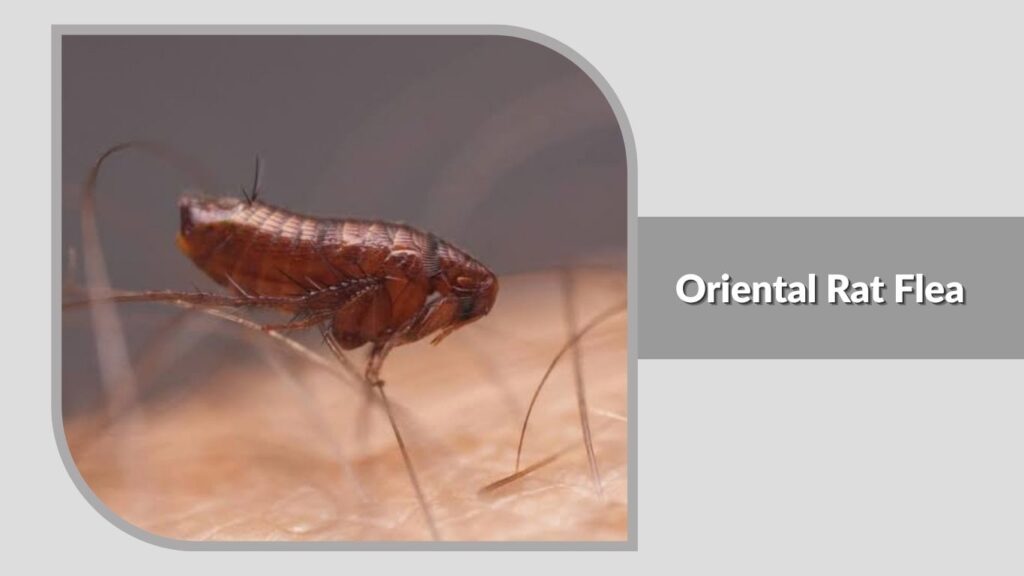
The Oriental Rat Flea is a blood-feeding parasite best known for its role in transmitting plague and flea-borne typhus. Belonging to the Pulicidae family, this species primarily infests rats but can also feed on humans and other mammals. It is particularly significant in tropical and subtropical environments where rodents and humans live close together. Its small size and jumping ability make it difficult to detect.
Identification
Oriental Rat Fleas have several distinctive physical characteristics that help distinguish them from other flea species.
- Size: Adults typically measure 1.5–4 mm long.
- Body Color: Reddish-brown to dark brown.
- Body Shape: Narrow, flattened from side to side.
- Wings: Completely wingless.
- Head: Rounded head with relatively small eyes.
- Legs: Six legs, including powerful hind legs for jumping.
- Distinctive Features: Absence of comb-like spines on both the head and thorax.
- Mouthparts: Piercing and sucking structures adapted for blood feeding.
Habitat and Distribution
Oriental Rat Fleas occur worldwide, particularly in warmer tropical and subtropical regions.
They are closely associated with black rats, brown rats, and other rodents.
These fleas commonly inhabit rodent nests, warehouses, agricultural buildings, and locations where rats find food and shelter.
Immature stages develop in sheltered environments containing organic debris.
Behavior and Diet
Oriental Rat Fleas feed on mammalian blood. Rats are their preferred hosts, although they may bite humans when suitable opportunities arise.
This species is an important vector of Yersinia pestis, the bacterium responsible for plague.
It can also transmit Rickettsia typhi, which causes flea-borne typhus.
The flea’s medical importance makes rodent management and flea prevention essential in affected environments.
Lifespan and Life Cycle
Oriental Rat Fleas undergo complete metamorphosis through egg, larva, pupa, and adult stages.
Females lay eggs after feeding on blood. Eggs fall into rodent nesting material, where larvae hatch and consume organic debris.
Larvae eventually form protective cocoons and develop into pupae.
Under favorable conditions, development may take several weeks. Adult survival depends on host availability, temperature, and humidity.
5. Northern Rat Flea (Nosopsyllus fasciatus)
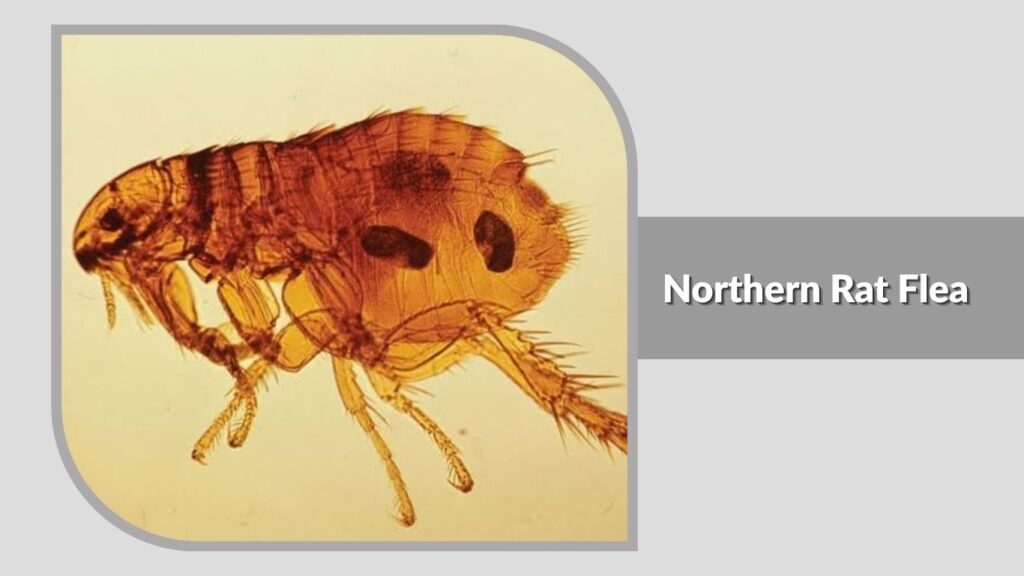
The Northern Rat Flea is a small parasitic insect commonly associated with domestic rats and other rodents. Belonging to the Ceratophyllidae family, this species is particularly common in temperate regions. Although it resembles the Oriental Rat Flea, it has different anatomical features and geographic preferences. Northern Rat Fleas can occasionally bite humans and are capable of carrying certain disease-causing microorganisms.
Identification
Northern Rat Fleas have several recognizable characteristics that help distinguish them from other types of fleas.
- Size: Adults commonly measure approximately 3–4 mm long.
- Body Color: Reddish-brown to dark brown.
- Body Shape: Elongated and flattened from side to side.
- Wings: Completely absent.
- Head: Rounded head with visible eyes.
- Legs: Six legs, including enlarged hind legs designed for jumping.
- Distinctive Features: A well-developed pronotal comb behind the head but no genal comb.
- Body Surface: Covered with backward-pointing bristles that help maintain contact with the host.
Habitat and Distribution
Northern Rat Fleas originated in Europe but have spread to many temperate regions worldwide.
They are found throughout parts of North America and are particularly associated with brown rats.
These parasites commonly inhabit rodent burrows, nesting materials, warehouses, agricultural buildings, and residential locations experiencing rodent activity.
Their immature stages prefer protected environments with suitable humidity and organic matter.
Behavior and Diet
Northern Rat Fleas primarily feed on rodent blood but may occasionally feed on other mammals, including humans.
Their powerful hind legs allow them to jump between suitable surfaces and animal hosts.
Although this species can carry pathogens associated with plague and flea-borne typhus, it is generally considered a less important disease vector than the Oriental Rat Flea.
Their presence often indicates nearby rodent populations.
Lifespan and Life Cycle
Northern Rat Fleas undergo complete metamorphosis through egg, larva, pupa, and adult stages.
Females deposit eggs that fall into rodent nests and surrounding materials.
Larvae consume organic debris before constructing cocoons and entering the pupal stage.
Development may take several weeks to months, depending on temperature and humidity.
Adults can survive for extended periods when suitable conditions and regular blood meals are available.
6. Sticktight Flea (Echidnophaga gallinacea)
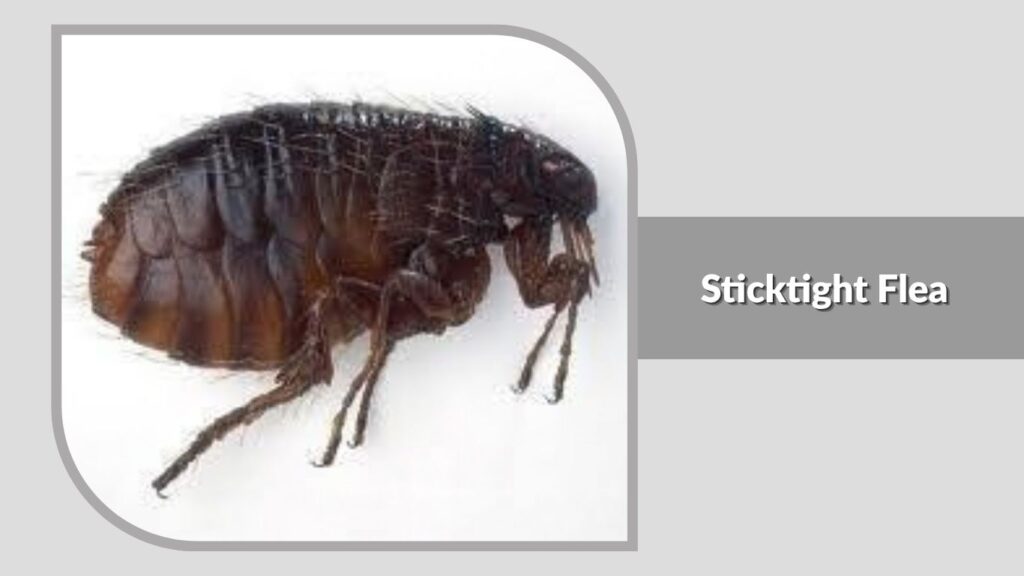
The Sticktight Flea, also called the Stickfast Flea, is a tiny parasitic insect commonly associated with chickens and other domestic birds. Belonging to the Pulicidae family, this species differs from most fleas because adult females attach firmly to their hosts and remain in one feeding location for extended periods. Severe infestations can cause significant irritation, especially around the eyes, combs, and wattles of poultry.
Identification
Sticktight Fleas have several distinctive physical characteristics that make them recognizable.
- Size: Females typically measure approximately 1–1.5 mm long; males are smaller.
- Body Color: Dark reddish-brown to nearly black.
- Body Shape: Small, compact, and flattened from side to side.
- Wings: Completely wingless.
- Head: Distinctively angular or squared-off forehead.
- Legs: Six legs, with enlarged hind legs adapted for jumping before attachment.
- Distinctive Features: Absence of both genal and pronotal combs.
- Attachment: Females remain firmly attached to the skin while feeding.
Habitat and Distribution
Sticktight Fleas occur in warm regions worldwide, including parts of the southern United States.
They commonly infest chickens, turkeys, wild birds, and occasionally dogs, cats, rabbits, and other mammals.
These fleas are frequently found around poultry houses, backyard chicken coops, nesting materials, and areas containing dry soil or organic debris.
Adult females often attach around the eyes, combs, and wattles of birds.
Behavior and Diet
Sticktight Fleas feed on the blood of birds and mammals.
Unlike many flea species that move frequently through animal fur, adult females remain attached to one feeding location for prolonged periods.
Their bites can produce irritation, swelling, crusted lesions, and secondary infections.
Heavy infestations may cause anemia and reduced health in poultry, particularly young or weakened birds.
Lifespan and Life Cycle
Sticktight Fleas undergo complete metamorphosis through egg, larva, pupa, and adult stages.
Females remain attached while producing eggs, which are released into the surrounding environment.
The larvae develop in soil, bedding, or organic debris near animal resting areas.
After feeding and growing, larvae form cocoons and pupate.
Under favorable conditions, development from egg to adult can take approximately four weeks.
7. Chigoe Flea (Tunga penetrans)
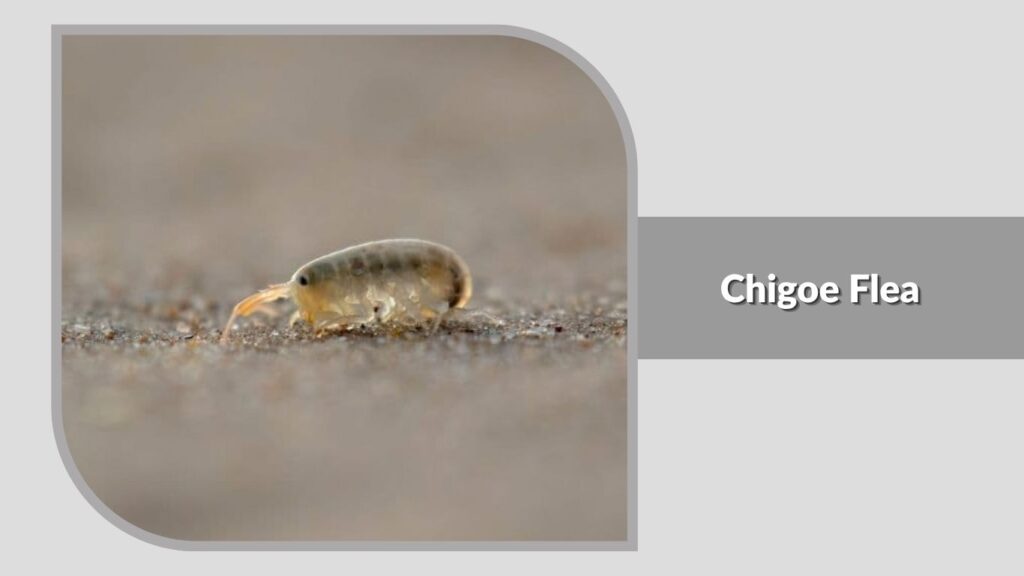
The Chigoe Flea, also called the Jigger Flea or Sand Flea, is a tiny parasitic insect belonging to the Tungidae family. Unlike most flea species, fertilized female Chigoe Fleas burrow into the skin of humans and animals, causing a condition called tungiasis. These parasites are primarily found in tropical and subtropical regions and can cause painful skin lesions and serious complications when left untreated.
Identification
Chigoe Fleas have several distinctive physical characteristics that help distinguish them from other types of fleas.
- Size: Adults are approximately 1 mm long before becoming embedded.
- Body Color: Reddish-brown to dark brown.
- Body Shape: Small and flattened from side to side.
- Wings: Completely wingless.
- Legs: Six legs adapted for jumping and moving across surfaces.
- Head: Small with specialized piercing mouthparts.
- Distinctive Features: No genal or pronotal combs.
- Embedded Females: Can expand considerably, producing pale raised skin lesions with dark central openings.
Habitat and Distribution
Chigoe Fleas occur in tropical regions of Africa, South America, and the Caribbean.
They commonly inhabit dry, sandy soil, particularly around homes with earthen floors, animal shelters, and communities where people frequently walk barefoot.
Humans, pigs, dogs, and several other mammals can serve as hosts.
Behavior and Diet
Chigoe Fleas feed on mammalian blood. Both males and females take blood meals, but only fertilized females penetrate the skin.
Once embedded, females enlarge as their eggs develop. Infestations most commonly affect the feet, especially around the toes and nails.
Severe cases can cause inflammation, bacterial infections, and difficulty walking. Suspected embedded fleas require medical assessment rather than attempted removal with unsterilized tools.
Lifespan and Life Cycle
Chigoe Fleas develop through egg, larva, pupa, and adult stages.
Females release eggs into the environment while embedded in a host. The eggs hatch into larvae that feed on organic debris.
After pupation, adults emerge and seek suitable hosts. The embedded female typically survives for several weeks before dying.
8. Rabbit Flea (Spilopsyllus cuniculi)
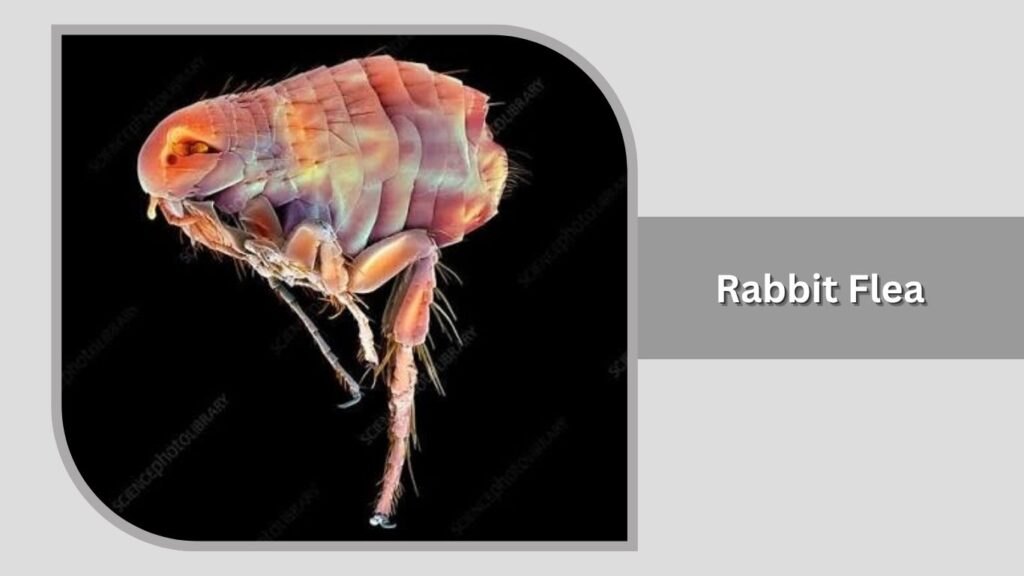
The Rabbit Flea is a small blood-feeding parasite primarily associated with European rabbits and other closely related mammals. Belonging to the Pulicidae family, this species is particularly interesting because its reproductive cycle is closely connected to hormonal changes in its host. Rabbit Fleas can also transmit myxomatosis, a serious viral disease affecting rabbits, making them important parasites in wild rabbit populations.
Identification
Rabbit Fleas have several physical characteristics that distinguish them from other common flea species.
- Size: Adults typically measure approximately 1.5–2.25 mm long.
- Body Color: Reddish-brown to dark brown.
- Body Shape: Small, narrow body flattened from side to side.
- Wings: Completely absent.
- Head: Relatively short, with specialized blood-feeding mouthparts.
- Legs: Six legs, including enlarged hind legs for jumping.
- Distinctive Features: Pronotal and genal combs, with five rounded spines in the genal comb.
- Attachment: Frequently found around the ears and head of rabbits.
Habitat and Distribution
Rabbit Fleas are particularly associated with European rabbits in Europe and regions where these rabbits have been introduced.
They commonly inhabit rabbit burrows, nests, grasslands, and environments supporting wild rabbit populations.
Adults spend much of their time on their hosts, while developing fleas occupy nesting materials containing organic debris.
Behavior and Diet
Rabbit Fleas feed primarily on rabbit blood, although they occasionally use other mammals as hosts.
Their reproductive behavior is unusual because female flea development responds to hormonal changes in pregnant rabbits.
After rabbit kits are born, fleas move into the nest, where they feed and reproduce.
Rabbit Fleas are also important vectors of the myxoma virus, which causes myxomatosis in rabbits.
Lifespan and Life Cycle
Rabbit Fleas undergo complete metamorphosis through egg, larva, pupa, and adult stages.
Female fleas commonly reproduce around the time their rabbit hosts give birth.
Eggs deposited in nesting environments hatch into larvae that consume organic material.
The larvae eventually pupate before emerging as adults.
Development and reproductive timing depend heavily on host biology and environmental conditions.
9. Mouse Flea (Leptopsylla segnis)
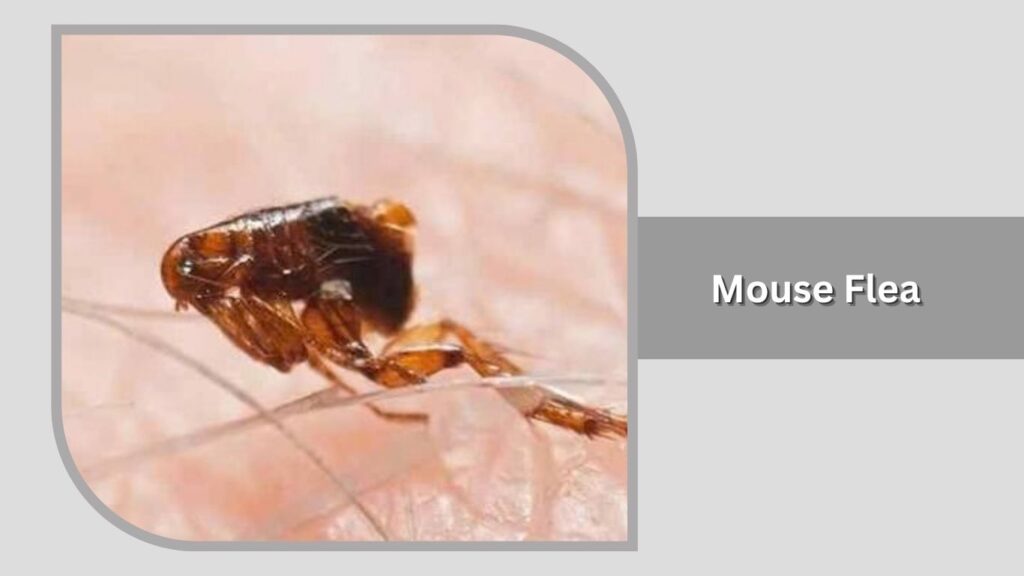
The Mouse Flea, commonly called the European Mouse Flea, is a small parasitic insect associated with house mice, rats, and other rodents. Belonging to the Leptopsyllidae family, this flea feeds on mammalian blood and commonly inhabits rodent nests and sheltered environments. Although it primarily parasitizes rodents, it can occasionally bite humans when infested animals live near residential or agricultural buildings.
Identification
Mouse Fleas have several distinctive characteristics that help distinguish them from other types of fleas.
- Size: Adults are generally a few millimeters long.
- Body Color: Reddish-brown to dark brown.
- Body Shape: Small, elongated body flattened from side to side.
- Wings: Completely wingless.
- Head: Rounded head with specialized piercing mouthparts.
- Legs: Six legs, including powerful hind legs adapted for jumping.
- Distinctive Features: Four rounded spines in the genal comb and a well-developed pronotal comb.
- Body Surface: Covered with backward-pointing bristles that help movement through animal fur.
Habitat and Distribution
Mouse Fleas occur across many parts of the world, including Europe, Asia, and North America.
They commonly inhabit rodent burrows, nesting materials, warehouses, agricultural facilities, and buildings where mice or rats are present.
Adults feed on rodents, while larvae develop in protected environments containing organic debris.
Behavior and Diet
Mouse Fleas feed primarily on the blood of house mice and rats.
They use their powerful hind legs to jump between surfaces and potential hosts.
Although humans are not their preferred hosts, occasional bites may occur when rodent populations inhabit buildings.
These fleas can harbor certain disease-causing microorganisms, but they are generally considered less important disease vectors than Oriental Rat Fleas.
Lifespan and Life Cycle
Mouse Fleas undergo complete metamorphosis through egg, larva, pupa, and adult stages.
Females deposit eggs that fall into rodent nesting materials.
After hatching, larvae consume organic debris, including flea feces, before entering the pupal stage.
Adults eventually emerge and seek suitable blood-feeding hosts.
Development time varies according to temperature, humidity, food availability, and environmental conditions.
10. Ground Squirrel Flea (Oropsylla montana)
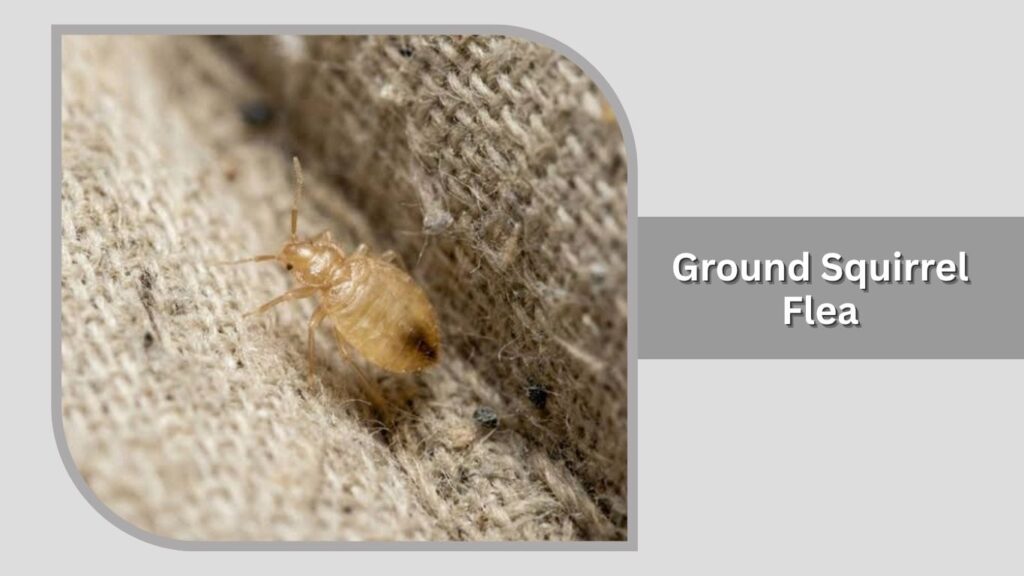
The Ground Squirrel Flea is a small blood-feeding insect commonly associated with ground squirrels and other wild rodents in western North America. Belonging to the Ceratophyllidae family, this species is particularly important because it can transmit the bacterium responsible for plague. Ground Squirrel Fleas usually inhabit rodent burrows and nesting environments but may occasionally bite humans who encounter infested wildlife.
Identification
Ground Squirrel Fleas have several physical characteristics that help distinguish them from other flea species.
- Size: Adults are small, generally measuring a few millimeters long.
- Body Color: Reddish-brown to dark brown.
- Body Shape: Narrow body flattened from side to side.
- Wings: Completely absent.
- Head: Small with specialized piercing and sucking mouthparts.
- Legs: Six legs, including strong hind legs adapted for jumping.
- Distinctive Features: A pronotal comb behind the head, with no genal comb.
- Body Surface: Covered with fine bristles that assist movement through host fur.
Habitat and Distribution
Ground Squirrel Fleas occur primarily in western North America, particularly in regions supporting ground squirrel populations.
They are associated with grasslands, open woodlands, mountainous environments, and dry landscapes.
Adults commonly live on ground squirrels, while immature fleas develop in burrows and nesting materials.
Behavior and Diet
Ground Squirrel Fleas feed on rodent blood and may occasionally bite humans.
Their most important medical significance is their ability to transmit Yersinia pestis, the bacterium responsible for plague.
Infected ground squirrel fleas are important vectors of plague in the western United States.
However, not every Ground Squirrel Flea carries this bacterium, and human plague cases remain uncommon.
Avoid direct contact with wild rodents and their nesting areas.
Lifespan and Life Cycle
Ground Squirrel Fleas undergo complete metamorphosis through egg, larva, pupa, and adult stages.
Females deposit eggs that fall into rodent burrows or nesting material.
The larvae feed on organic debris before spinning protective cocoons and pupating.
Adult fleas emerge when environmental conditions are suitable and seek mammalian hosts for blood meals.
FAQs
1. What Are the Most Common Types of Fleas?
Cat Fleas and Dog Fleas are among the most familiar flea species affecting domestic animals. Cat fleas are particularly common on both cats and dogs. Other notable species include Human Fleas, Oriental Rat Fleas, Rabbit Fleas, and Sticktight Fleas.
2. Which Types of Fleas Bite Humans?
Several flea species can bite humans, including Cat Fleas, Dog Fleas, Human Fleas, Oriental Rat Fleas, and Ground Squirrel Fleas. Chigoe Fleas can also infest humans, with fertilized females burrowing into the skin. Most flea bites cause itching, redness, and localized irritation.
3. What Is the Difference Between Cat Fleas and Dog Fleas?
Cat Fleas and Dog Fleas look similar, but their head shapes and comb-like spines differ. Cat Fleas generally have more elongated heads, while Dog Fleas have shorter, rounder heads. Both species can infest cats and dogs, although Cat Fleas are more common on household pets in many regions.
4. Which Types of Fleas Are Most Dangerous?
Oriental Rat Fleas and Ground Squirrel Fleas are medically important because they can transmit plague. Chigoe Fleas can cause tungiasis, a skin infestation that may produce serious complications. Cat Fleas can also transmit certain pathogens and serve as intermediate hosts for tapeworms.
5. How Can You Identify Different Types of Fleas?
Flea identification involves examining body size, head shape, coloration, host preference, and microscopic structures. Features such as genal and pronotal combs are especially useful for distinguishing species. Because most fleas look similar to the naked eye, accurate species identification often requires magnification and specialized entomological knowledge.